The Heritage Habitat of Alsancak


Idea projektu
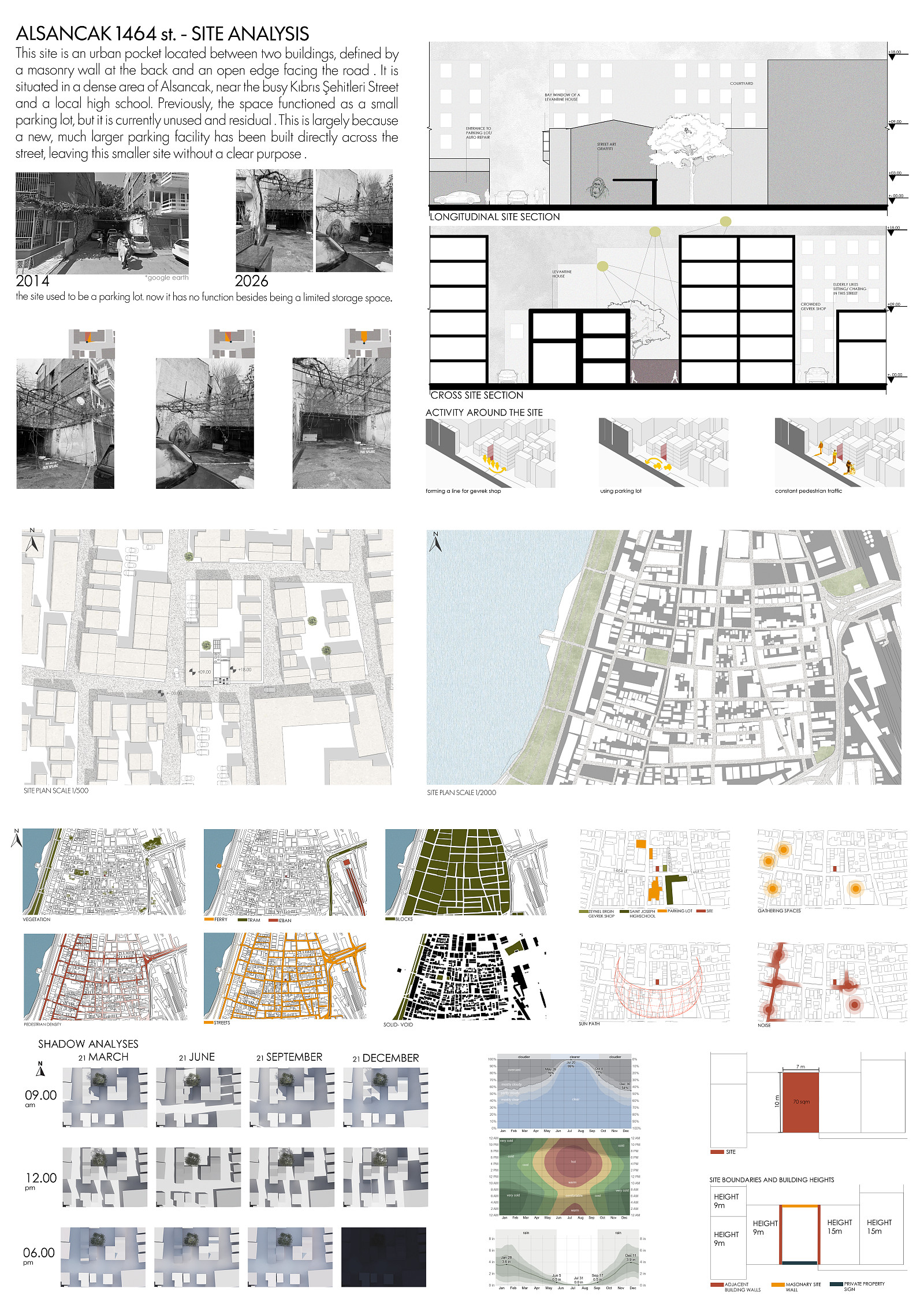
Situated in the historically layered district of Alsancak—formerly known as Punta—this project addresses the fragile intersection of urban memory and spatial preservation. Over time, the area has witnessed the erasure of much of its original architectural fabric, risking the complete loss of its collective historical identity and monuments.
The core concept revolves around the design of a symbiotic habitat—a combined permanent residence and active workshop—for a dedicated model-maker character who lives on-site. Because the character resides within this environment, their daily domestic life is intimately woven into their archival work. This space is fundamentally designed to resurrect, document, and archive the lost monuments of the Punta era through the meticulous craft of architectural modeling. The architecture acts as a living, tangible archive where historical memory is continuously reconstructed and physically preserved through the resident's daily existence and craft.
Popis projektu
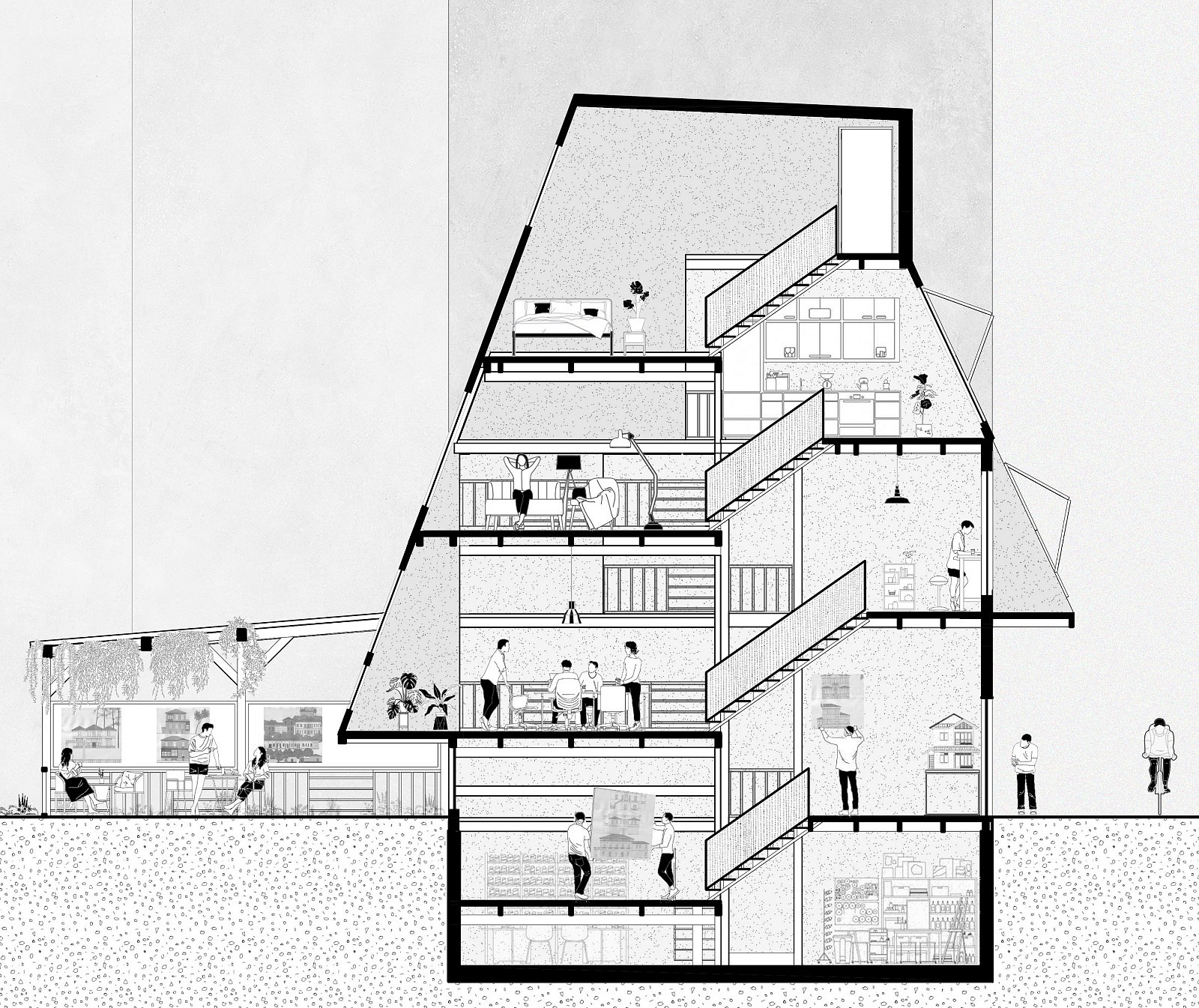
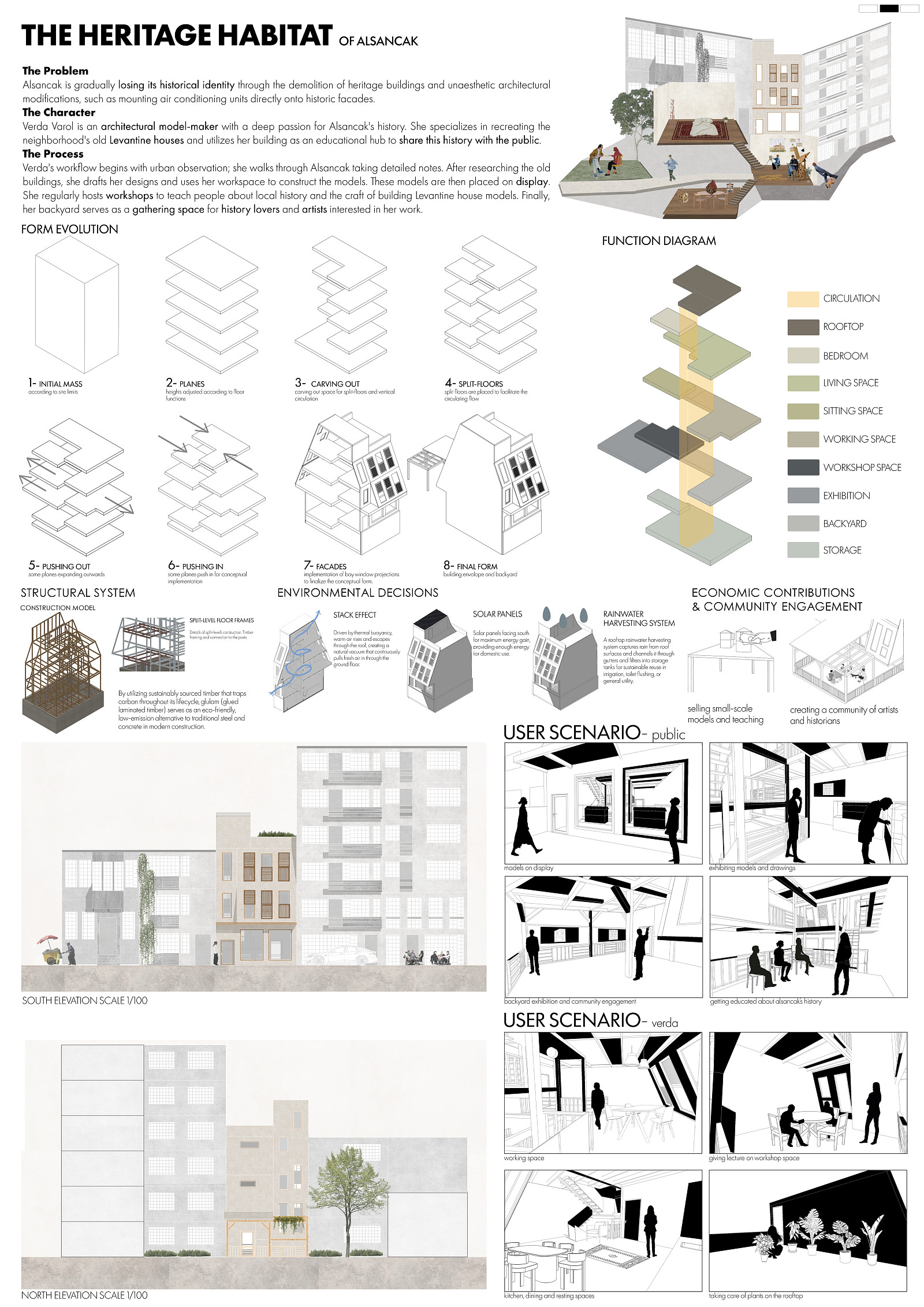
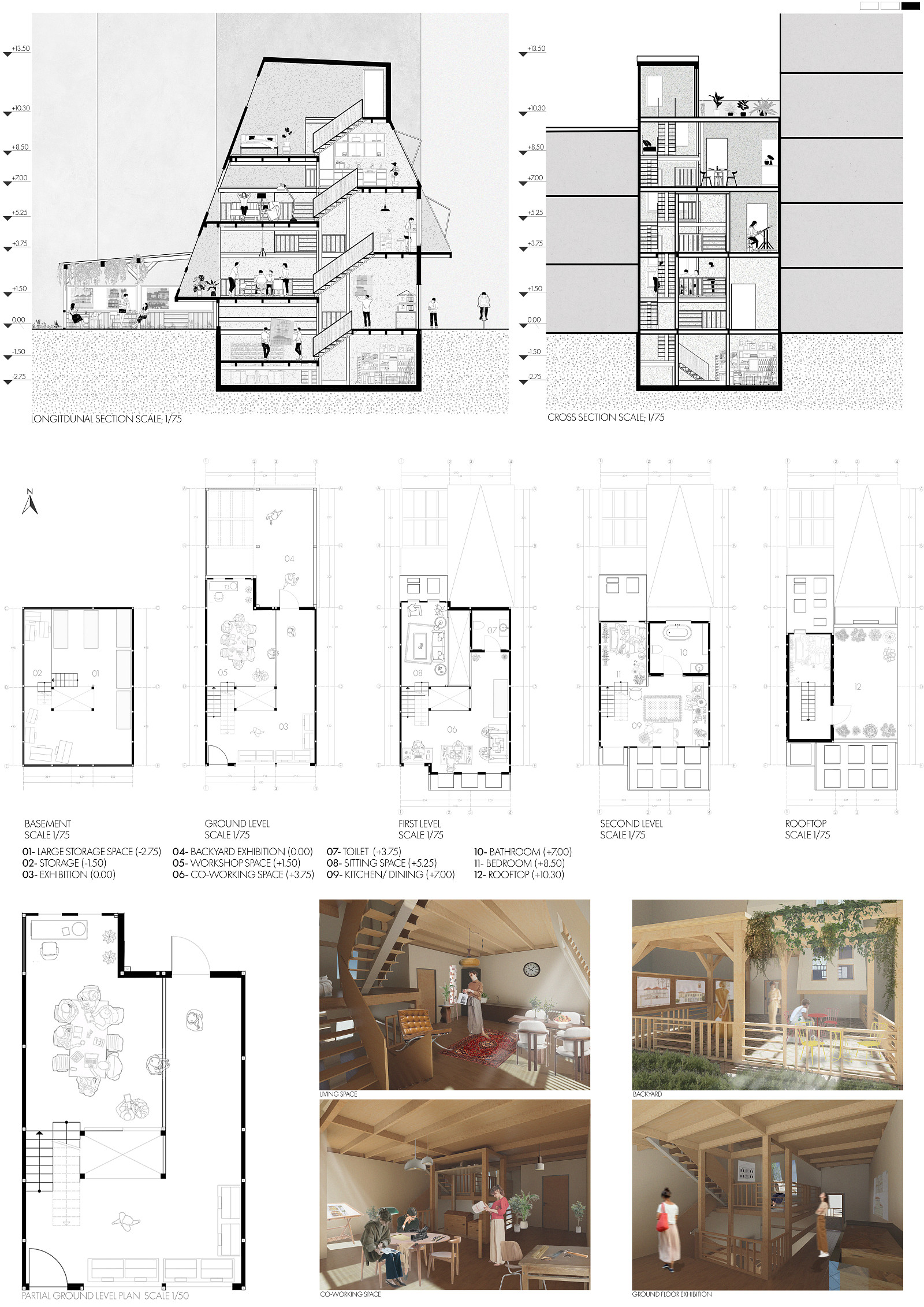
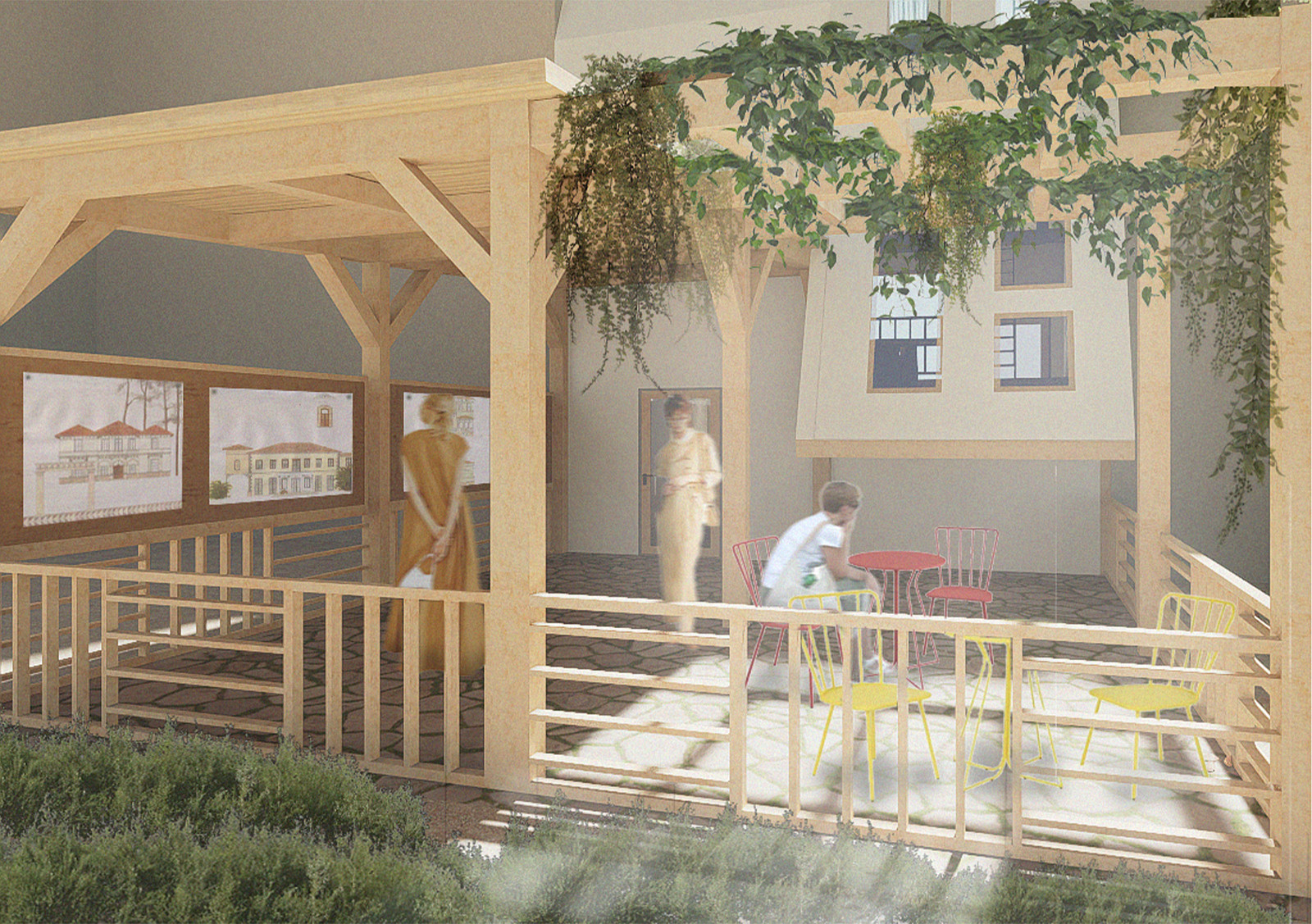
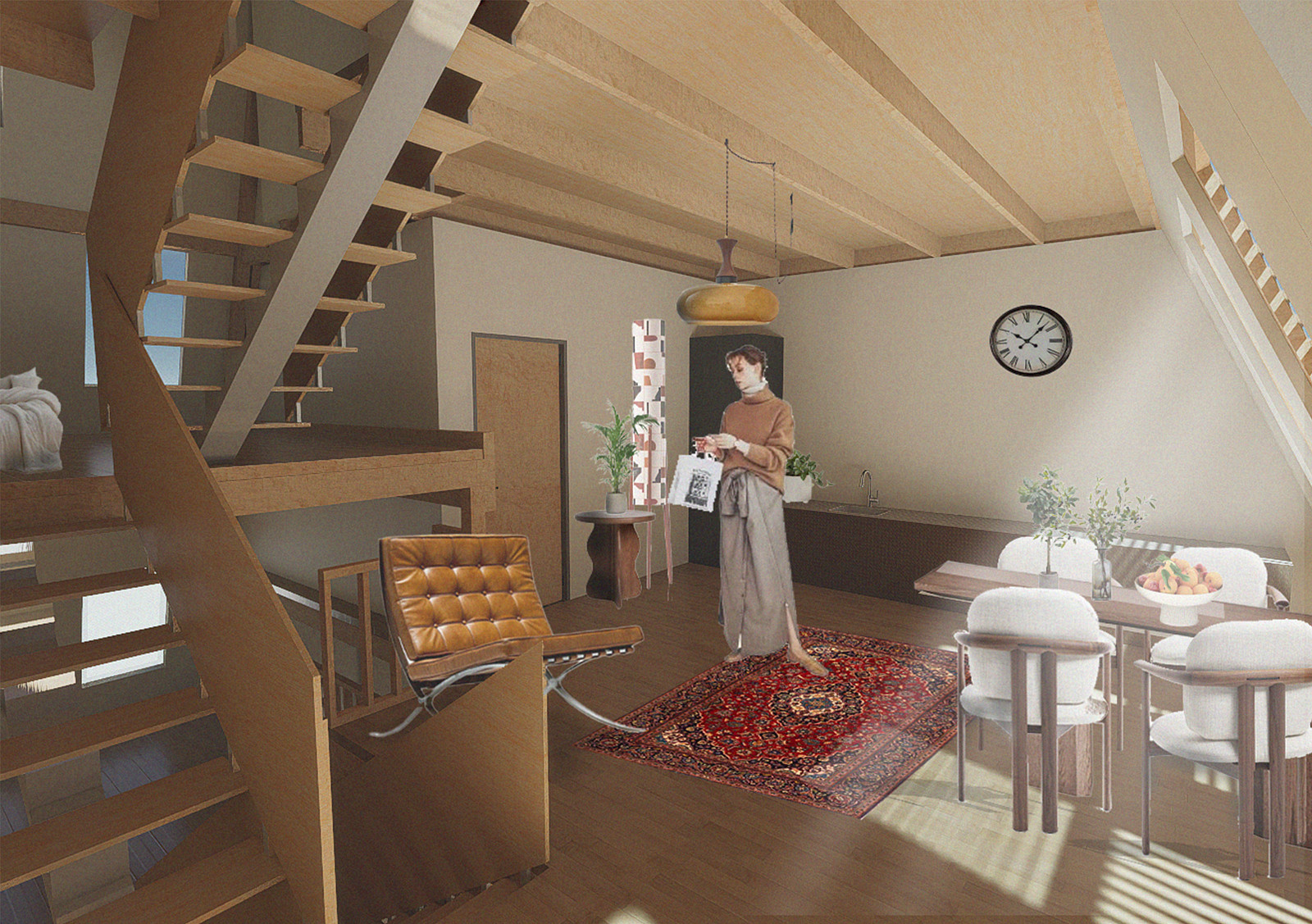
The Heritage Habitat of Alsancak operates on a strict vertical gradient of intimacy, organized around a central Circulation core that physically and visually binds a series of staggered functional volumes. At the ground level, the Backyard anchors the project to its urban context, while the Exhibition space serves as a public threshold where the experiencer first encounters the completed models of Punta’s lost monuments. As one ascends the central vertical artery, the spaces transition into the active heart of the habitat: the Workshop Space and Working Space, where the physical crafting and reconstruction occur. A crucial logistical axis is embedded within this circulation core—a dedicated freight elevator that establishes a direct connection between these work areas and the Storage level, ensuring the effortless transport of heavy raw materials and delicate models. Elevating the resident away from the public eye, the upper levels crown the structure with the domestic envelope, consisting of the Sitting Space, Living Space, and Bedroom, ultimately culminating in an isolated Rooftop for panoramic moments of pause. Despite this deliberate vertical separation of public, archival, and private zones, the continuous flow of the building allows the resident character to move fluidly between their daily life and their craft, creating a deeply symbiotic relationship between their domestic existence and their architectural archiving.
Technické informace
Structural Framework
The project utilizes a highly articulated skeletal framework specifically designed to accommodate the complex verticality and staggered layout of the habitat. The primary load-bearing system is constructed entirely from engineered wood.
Materiality: Glulam (Glued Laminated Timber)
Glulam serves as the core structural material for the project. Selected for both its structural integrity and environmental benefits, this sustainably sourced timber acts as an eco-friendly, low-emission alternative to traditional steel and concrete construction. By utilizing timber, the building actively traps carbon throughout its lifecycle, significantly minimizing the project's ecological footprint.
Split-Level Floor Frames
To achieve the intricate vertical gradient and separated functional zones, the construction model employs split-level floor frames. This system relies on precise timber framing and secure connections to the primary vertical posts. This structural strategy allows the individual floor plates (such as the storage, workshop, and living spaces) to be suspended at varying elevations, wrapping around the central circulation core.
Foundation
The lightweight timber superstructure is securely anchored to a solid, monolithic base (plinth), providing necessary structural stability and grounding the delicate timber framework firmly within its urban site.

Copyright © 2026 INSPIRELI | All rights reserved. Use of this website signifies your agreement to the Terms of Use, Privacy Policy, and use of cookies.
