WYOBRAŹ SOBIE


Idea projektu
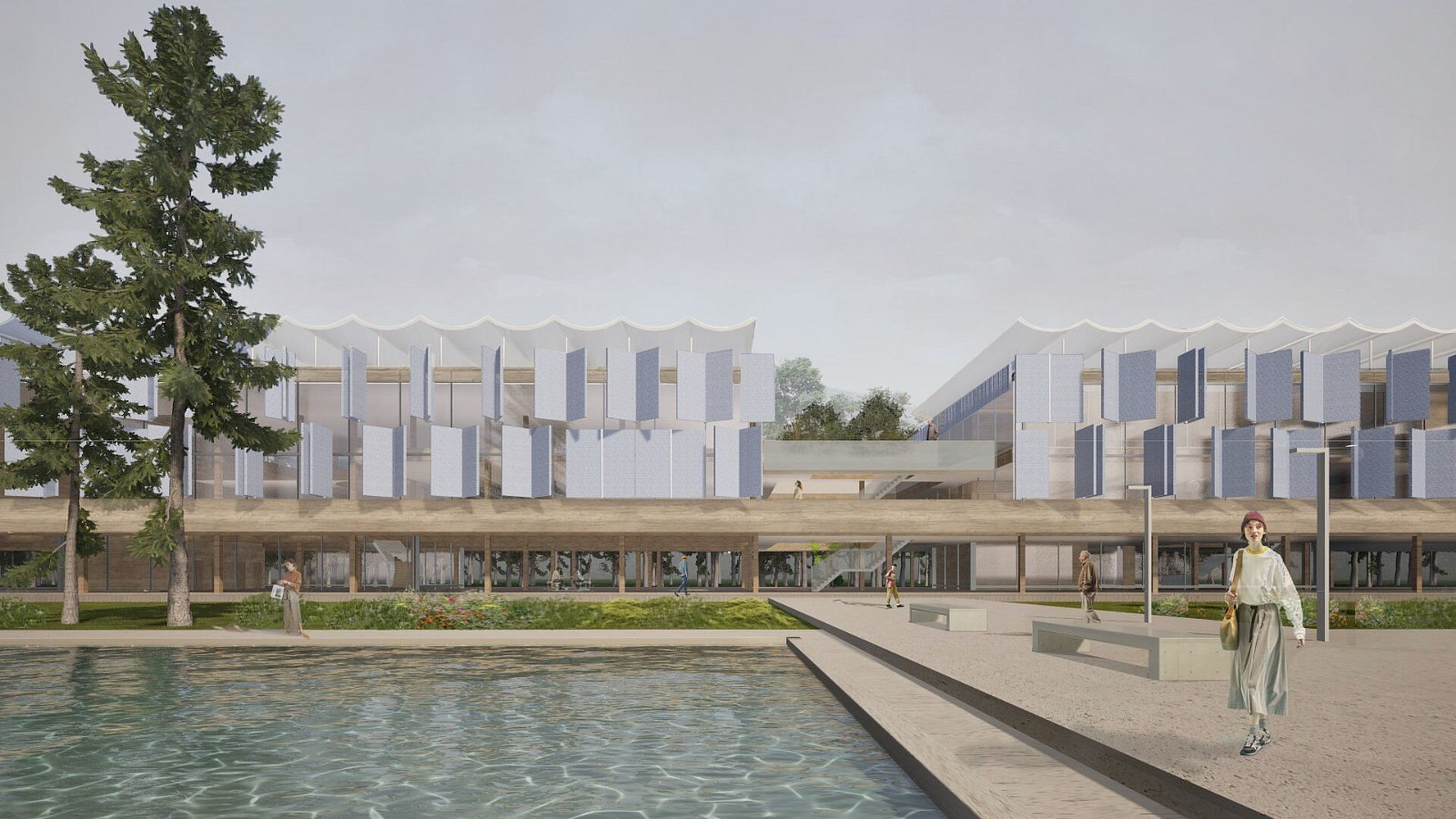
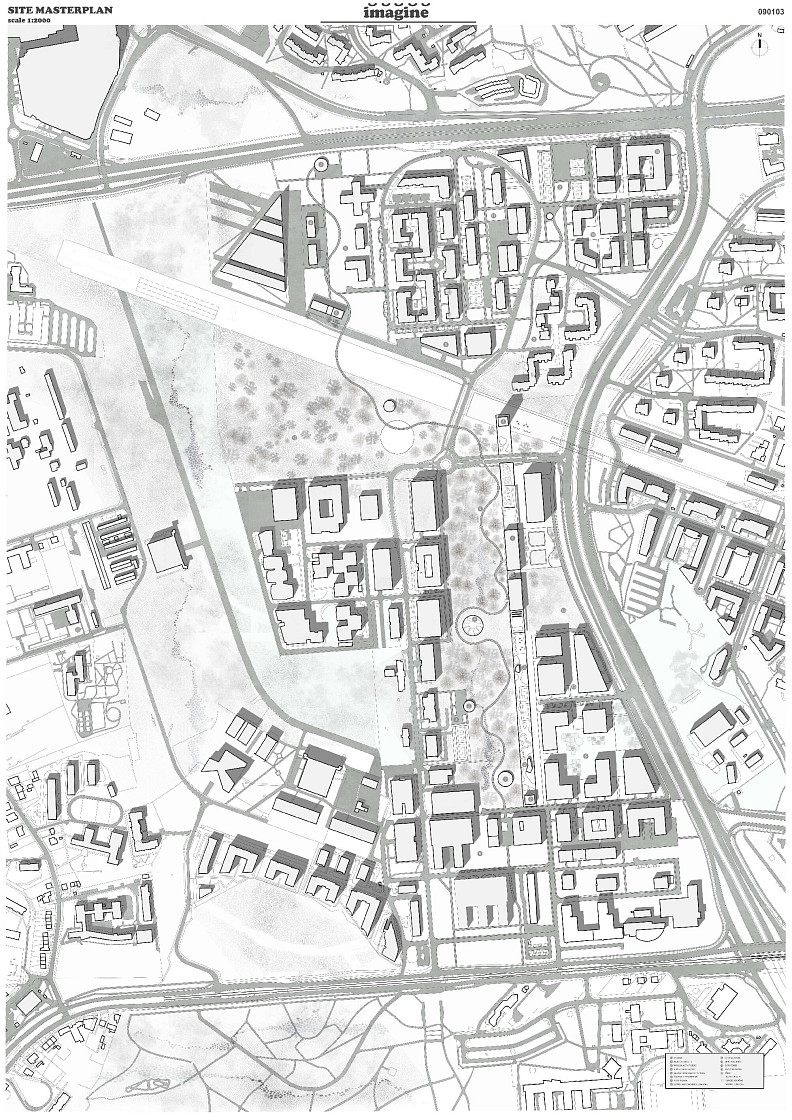
Imagine a project based on a holistic approach to shaping space — one that seamlessly integrates architecture, design, urban planning, and modern art. This is not a static building, but a dynamic system of relationships between users, materials, and the urban context. The site actively stimulates social life, nurtures a sense of community, and sparks creativity and interaction. Thoughtfully responding to its urban surroundings and natural environment, the design merges them into a flexible, cohesive whole.
Imagine spaces defined by openness and multifunctionality, easily adapting to the evolving needs of students, faculty, and residents. As a result, the design promotes flexibility of use and longevity of the facility. Depending on the time of day or event, the pavilion can serve as a lecture hall, a venue for academic debates, or an educational space supporting interdisciplinary meetings between students and faculty. In the afternoons, the interior can transform into a creative coworking space with opportunities for design workshops, consultations and quiet individual work. This adaptability ensures the facility remains vibrant and relevant over time.
Popis projektu
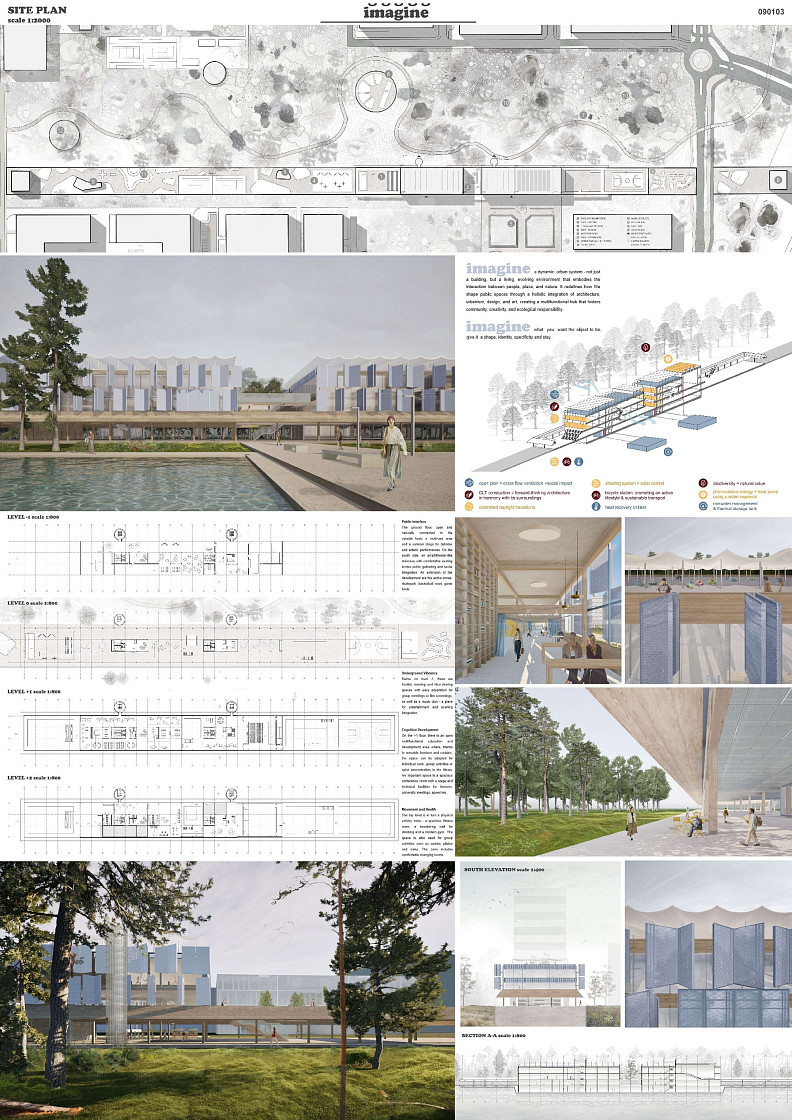
Imagine a space created by people for people. It's a place created for relaxation and rest, while also bustling with cultural and sports events. The ground floor, open and naturally connected to the outside, hosts an exhibition area and a summer stage for debates and artistic performances. An amphitheater-like staircase with comfortable seating invites public gathering and social integration. Adjacent to the pavilion, a basketball court and a skatepark provide active zones that attract diverse users.
Imagine the interior zones of the building designed for a variety of activities . Below, on level -1, there are flexible coworking spaces with easy adaptation for individual work, meetings or workshops, as well as a music club - a place for entertainment and evening integration. On the +1 floor is a multifunctional educational and development zone, where, thanks to movable catwalks, the space can be adapted for individual work, group team activities or quiet concentration at the library. The top level, +2, on the other hand, is a physical activity zone - a multifunctional fitness room, a bouldering wall and a state-of-the-art gym, complemented by comfortable locker rooms that promote a healthy lifestyle and social integration.
Technické informace
SYSTEM OF ELEVATION PANELS
Movable elevation panels allow control of sunlight access inside to prevent building overheating in summer and to provide natural lighting during autumn and winter.
SUMMER
Strong sunlight is blocked, with rays scattering gently as they pass through a perforated texture inward, reducing glare and heat.
SPRING
Open, spacious rooms are naturally illuminated, while meeting rooms can be shaded as needed for comfort.
AUTUMN
Elevated structures ensure direct light access on less sunny days, with adjustable openings to suit changing conditions.
WINTER
Elevated panels maximize light penetration during the darker winter months, allowing wide access to natural daylight.
Imagine a building that actively cooperates with nature. Beneath it lie concealed rainwater retention tanks collecting precipitation for passive cooling, irrigation, and technical uses. This system reduces potable water consumption, mitigates urban drought effects, and supports the local micro-ecosystem. This makes possible a passive water cooling system that uses the natural circulation of water to stabilize the temperature inside the building without the need for energy-intensive air conditioners. This approach not only minimizes energy consumption, but also creates a healthy and comfortable microclimate for users.
Imagine a building generating its own energy through rooftop photovoltaic panels converting sunlight into clean electricity. This makes the building partially independent of external power suppliers, significantly reducing its carbon footprint and operating costs. The energy from the panels is used to power lighting, facade automation and ventilation systems, among other things. Coupled with energy-efficient technologies, the building approaches near energy self-sufficiency, embodying sustainable architecture that builds a climate-responsible future.
Imagine a structure designed with deep ecological awareness and sustainable principles from the outset. Instead of conventional carbon-heavy materials, it employs cross-laminated timber (CLT), a modern, mechanically robust material with a far smaller carbon footprint than concrete or steel. Prefabricated CLT components enable faster, quieter construction with less waste and environmental disruption. The timber structure infuses interiors with warmth and natural beauty, enhancing occupants’ well-being. This building meets contemporary needs while standing as a model of responsible, forward-thinking architecture in harmony with its surroundings.
Dokumentace
Vytvořeno pomocí:


Copyright © 2026 INSPIRELI | All rights reserved. Use of this website signifies your agreement to the Terms of Use, Privacy Policy, and use of cookies.