ALAPON (আলাপন) - A Dialogue of Community & Resilience


Idea projektu
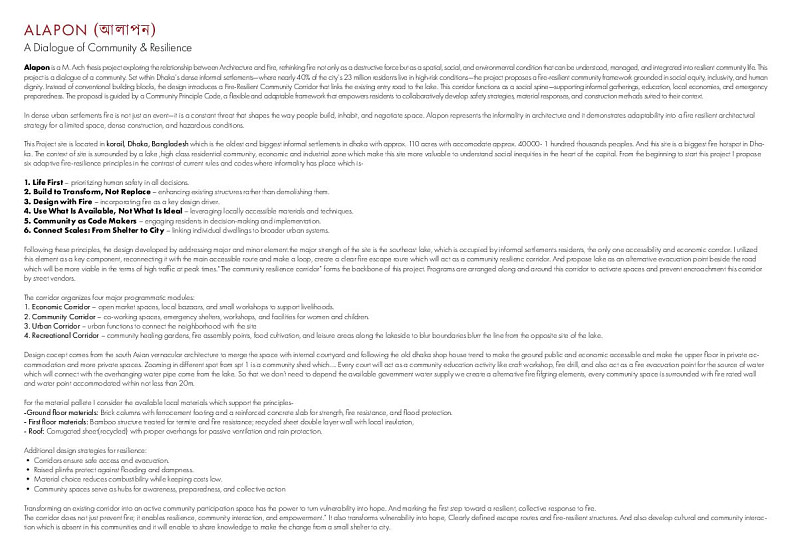
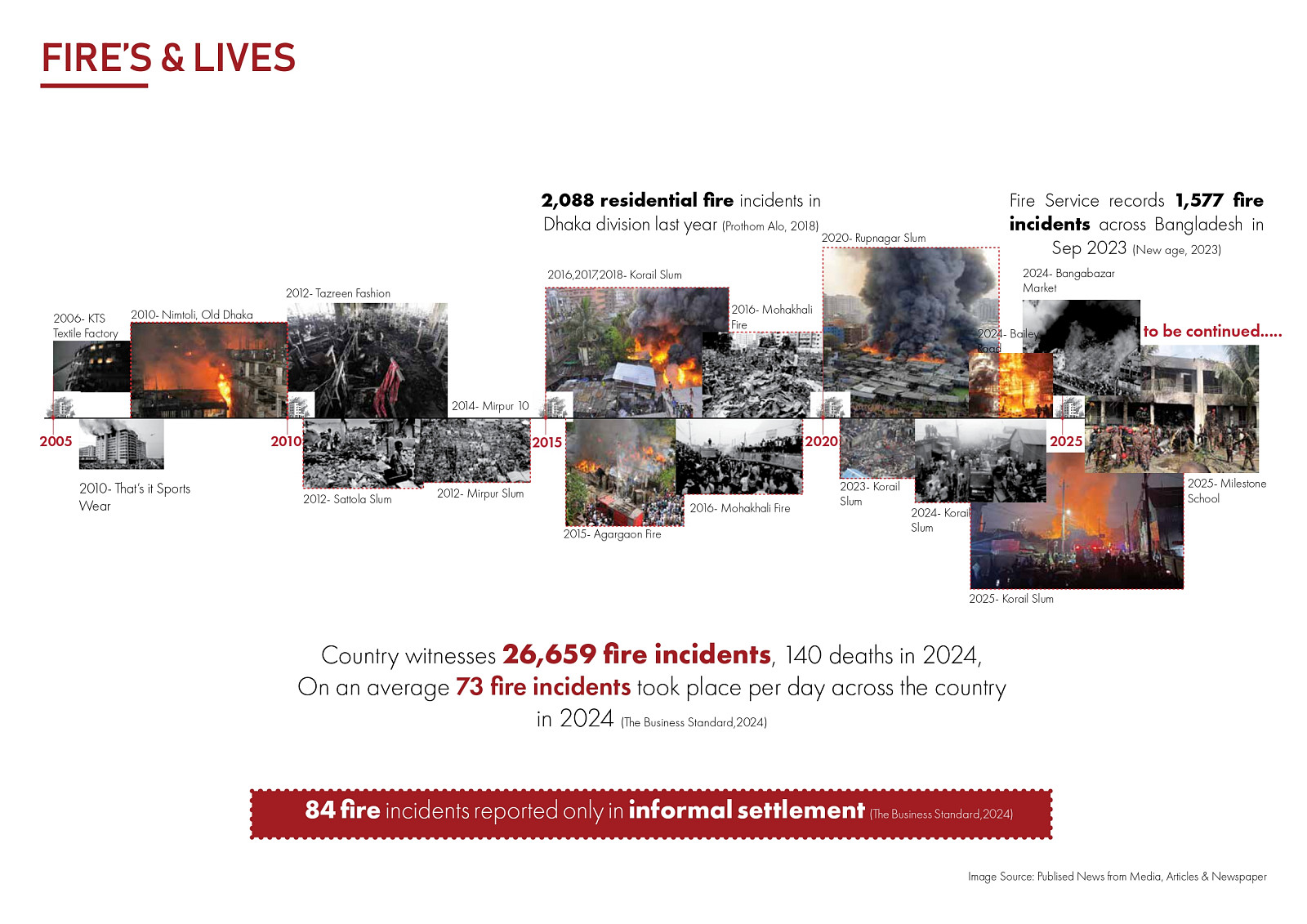
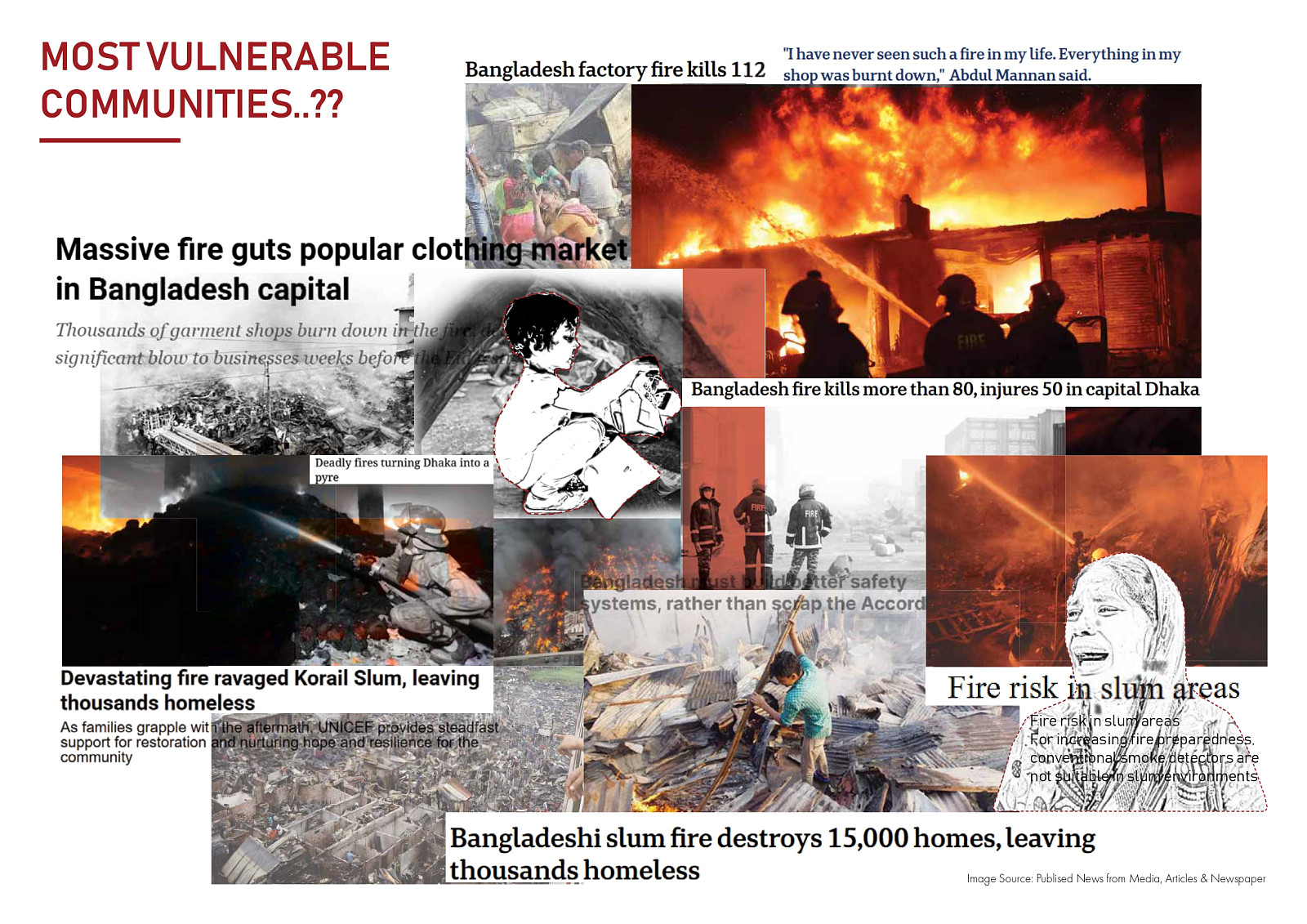
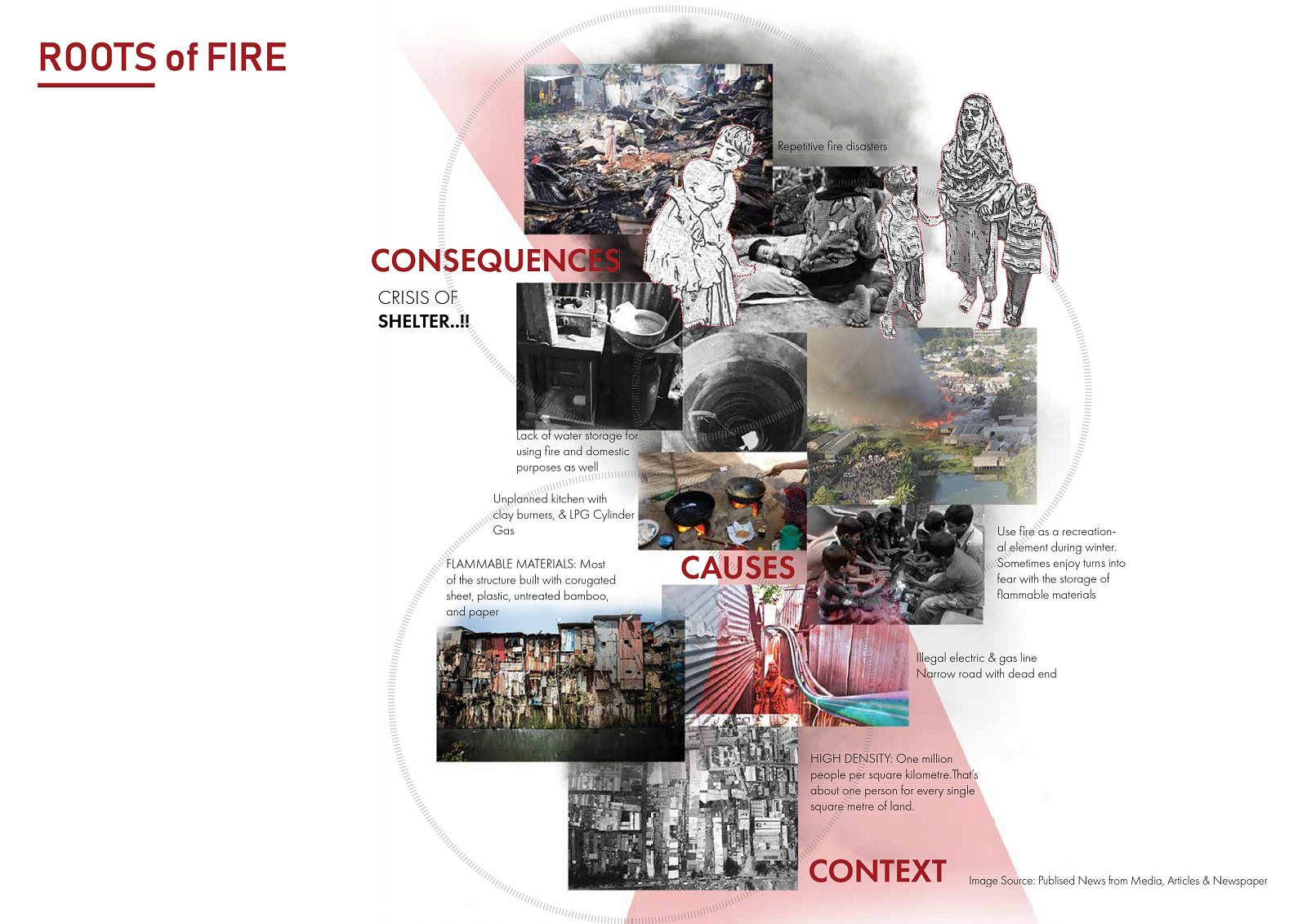
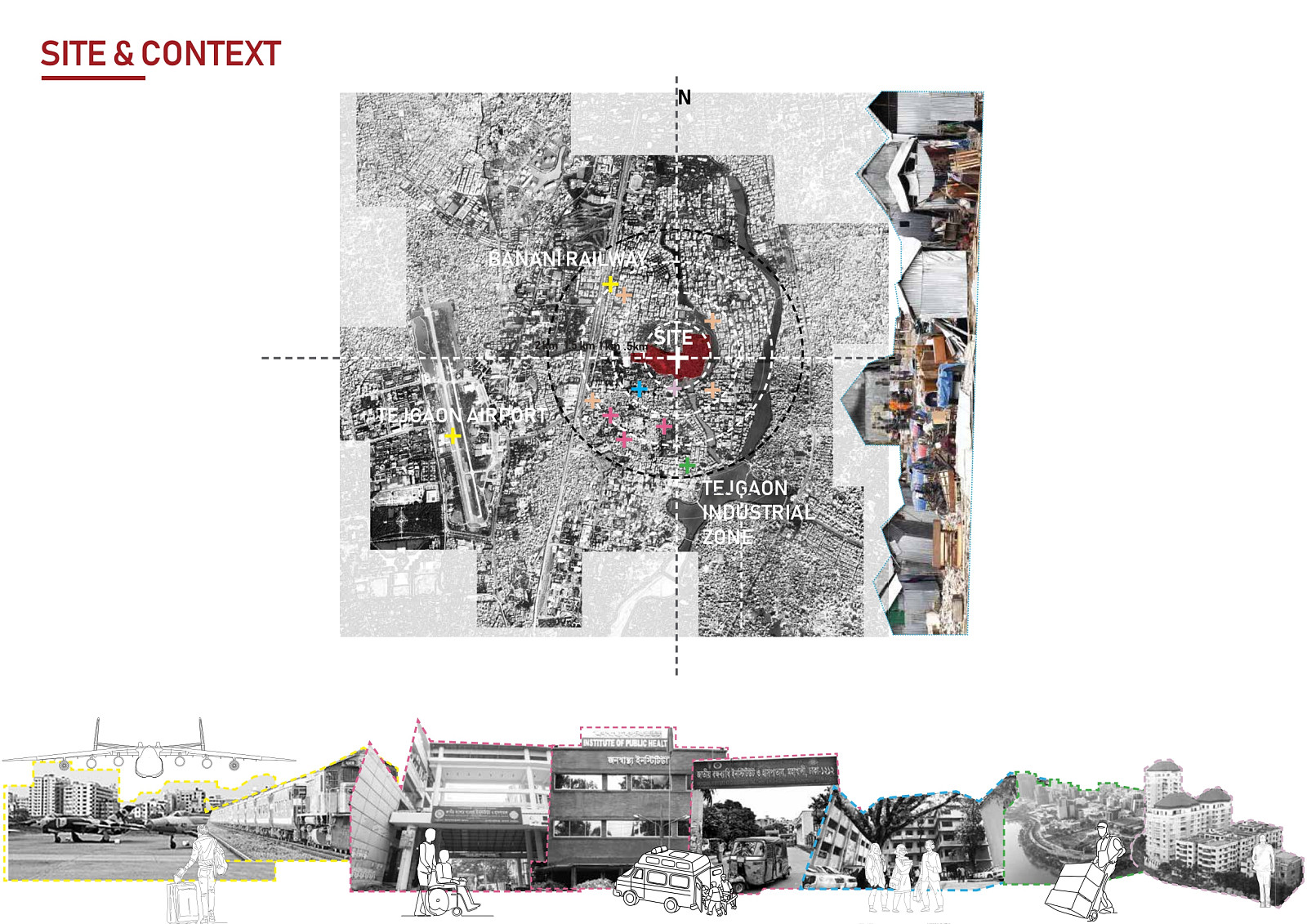
Alapon is exploring the relationship between Architecture and Fire, rethinking fire not only as a destructive force but also as a spatial, social, and environmental condition that can be understood, managed, and integrated into resilient community life. This project is a dialogue of a community. Set within Dhaka’s dense informal settlements—where nearly 40% of the city’s 23 million residents live in high-risk conditions—the project proposes a fire-resilient community framework grounded in social equity, inclusivity, and human
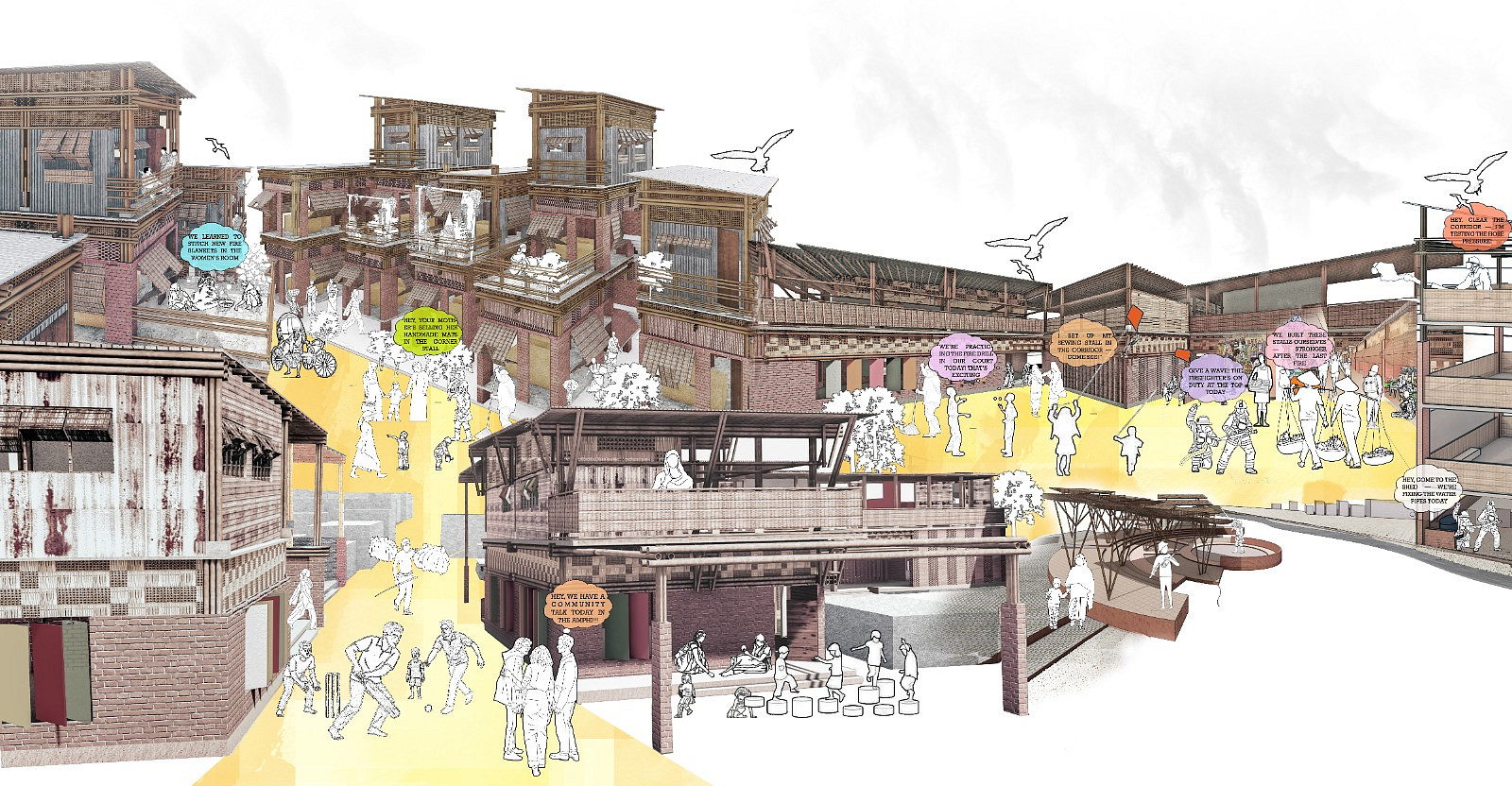
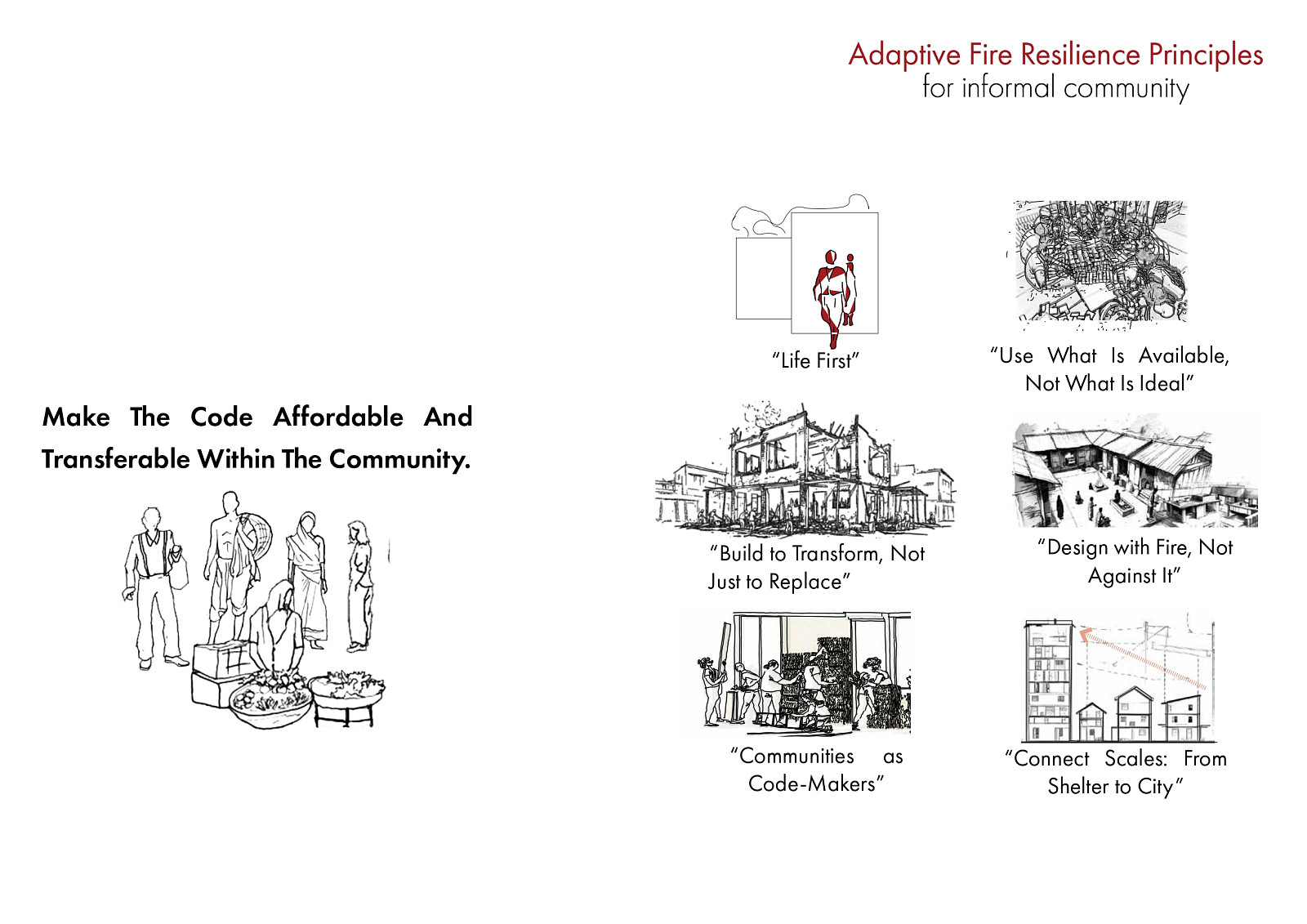
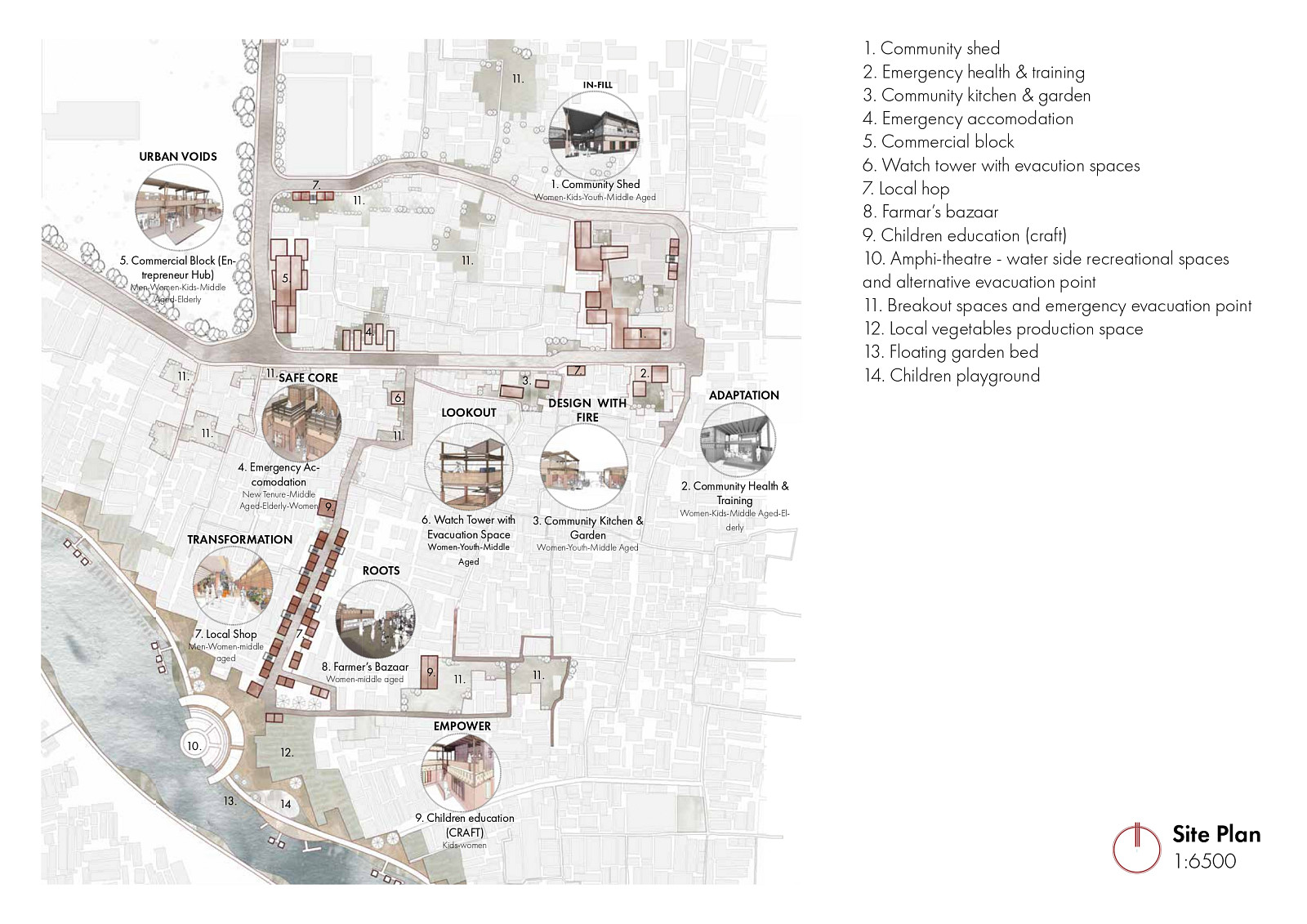
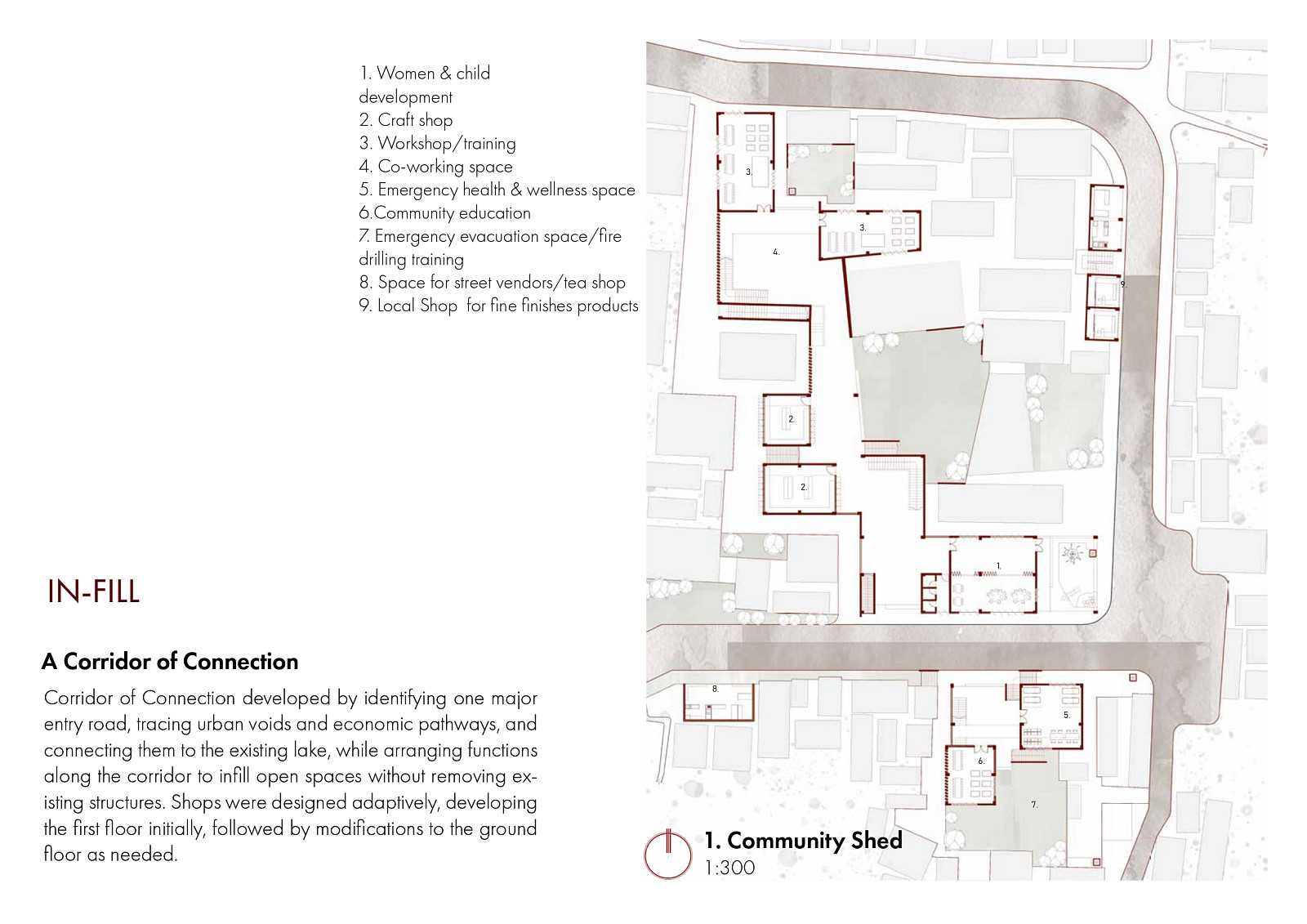
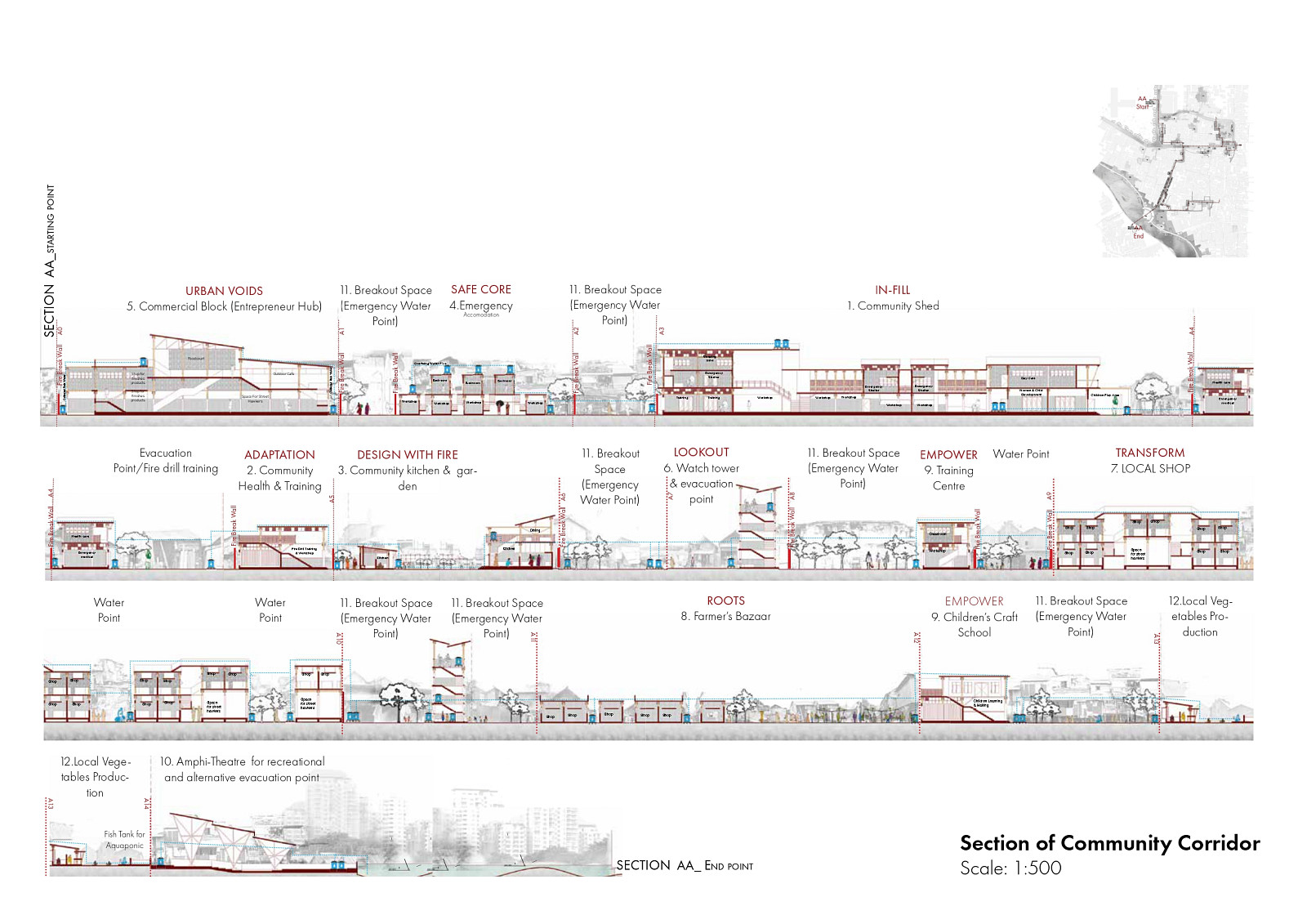
dignity. Instead of conventional building blocks, the design introduces a Fire-Resilient Community Corridor that links the existing entry road to the lake. This corridor functions as a social spine—supporting informal gatherings, education, local economies, and emergency preparedness. The proposal is guided by a Community Principle Code, a flexible and adaptable framework that empowers residents to collaboratively develop safety strategies, material responses, and construction methods suited to their context.
Popis projektu
Alapon aims to develop an architectural solution that responds to the social, environmental, and spatial challenges faced by vulnerable communities in Bangladesh. The project focuses on creating a resilient, community-oriented, and culturally responsive environment that supports everyday living, social interaction, safety, and long-term sustainability.
The scope of the project includes:
Designing a community-focused architectural intervention that addresses issues of climate vulnerability, fire safety, and informal living conditions.
Integrating locally available materials, passive environmental strategies, and low-cost construction methods suitable for the Bangladeshi context.
Creating spaces that encourage social connection, shared learning, and community participation.
Developing a flexible spatial system that can adapt to changing community needs over time.
Exploring the relationship between architecture, public space, and human well-being through culturally sensitive design approaches.
Considering environmental resilience, including ventilation, natural lighting, water management, and sustainable resource use.
Proposing a design framework that can act as a replicable model for future community-based developments in similar contexts.
The project scope is limited to conceptual architectural design, spatial planning, environmental strategies, and community engagement approaches rather than full technical construction documentation or policy implementation.
Technické informace
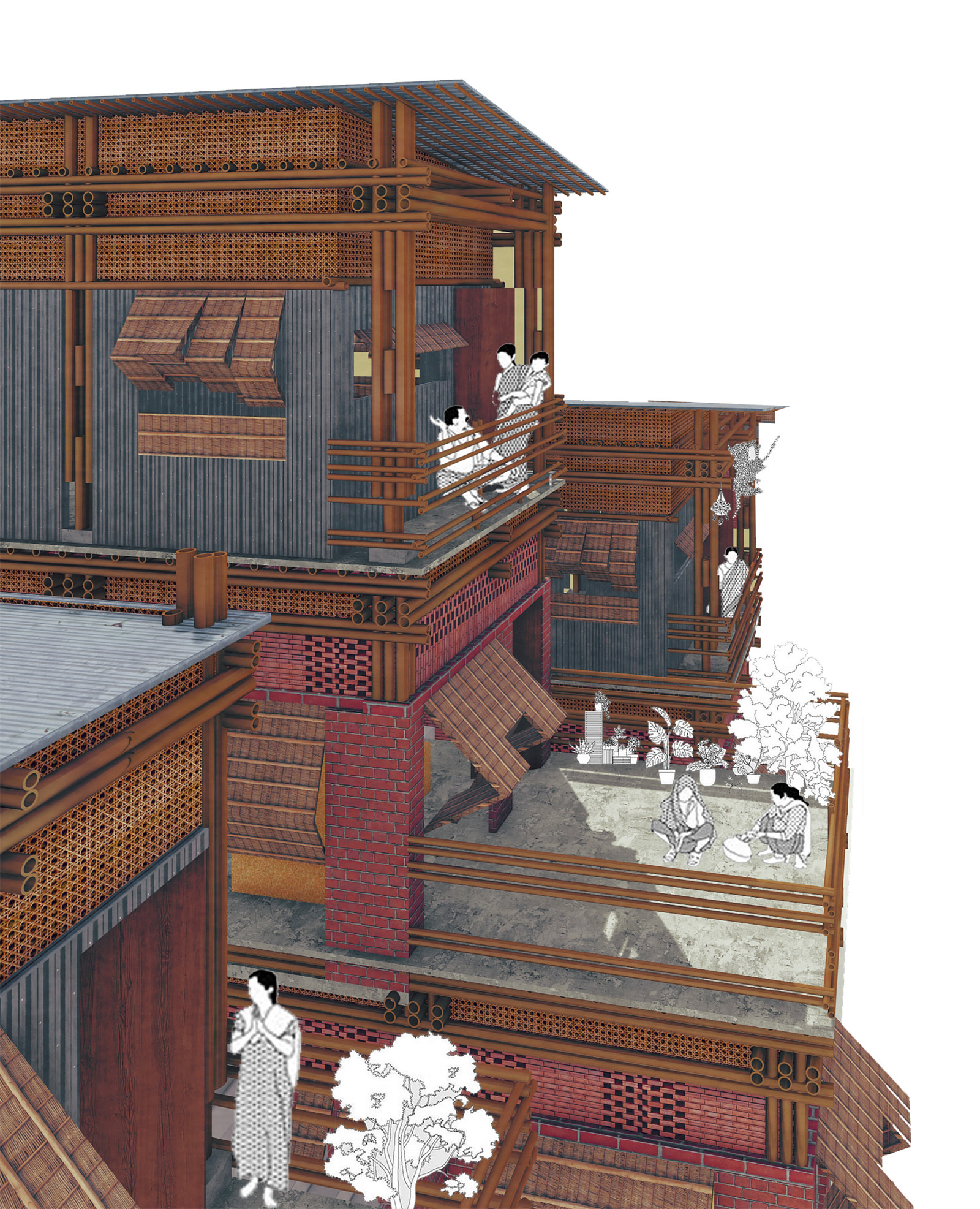
Alapon is a fire-resilient, community-driven infrastructure framework located in Korail Slum, designed for high-density informal urban conditions in Dhaka. The technical approach focuses on low-cost construction, adaptive systems, and locally available materials while improving fire safety, flood resilience, and environmental comfort.
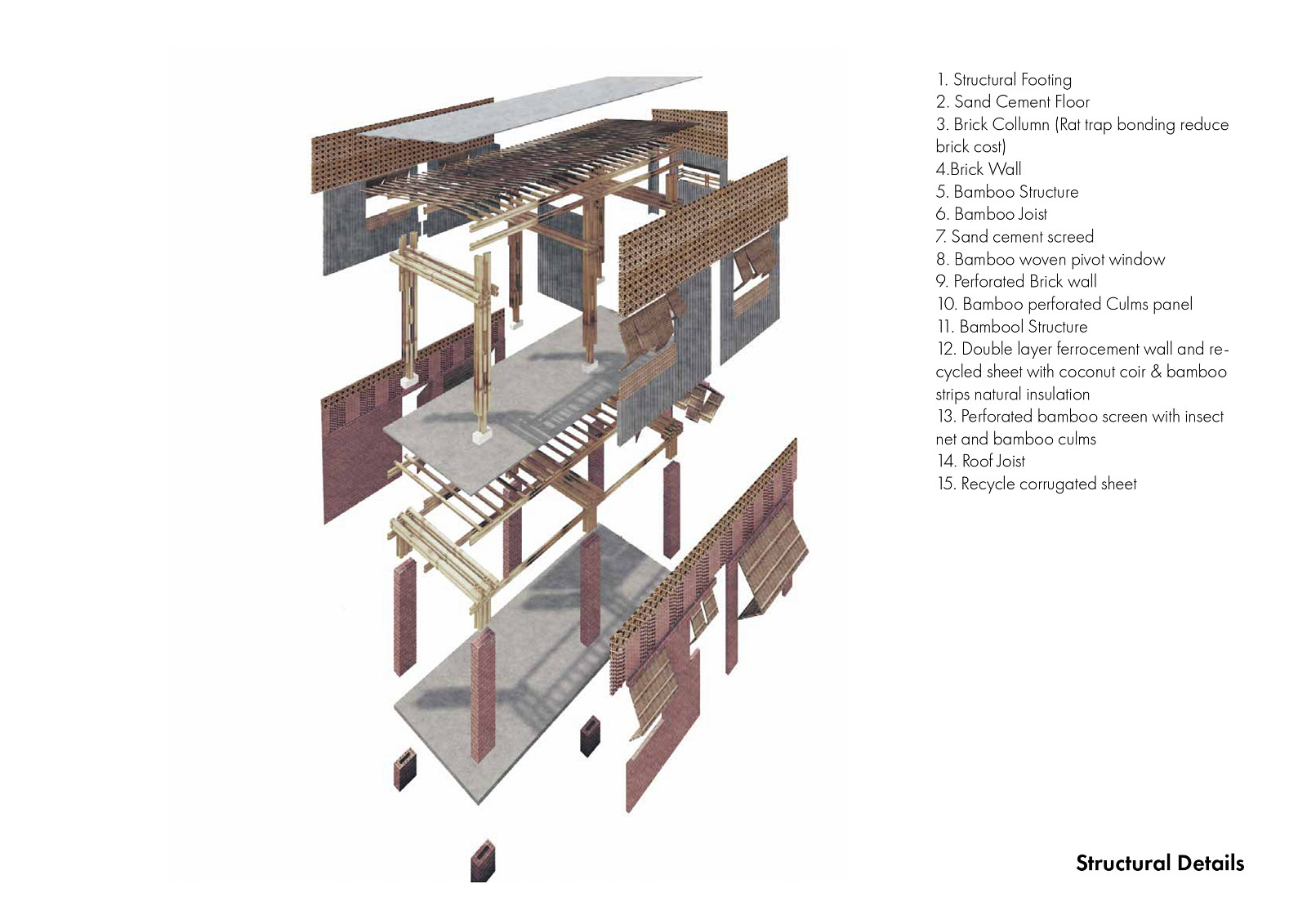
1. Structural System
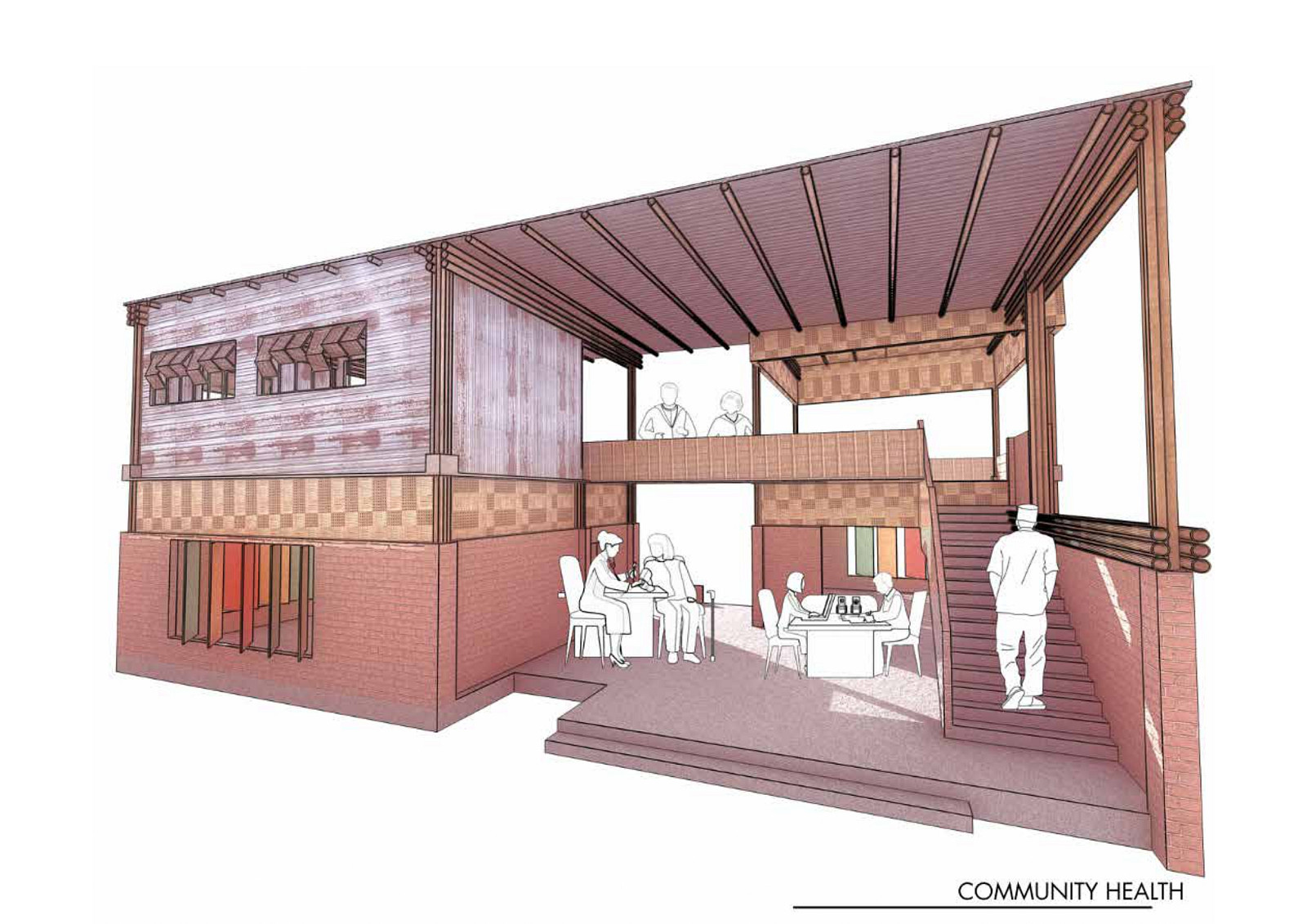
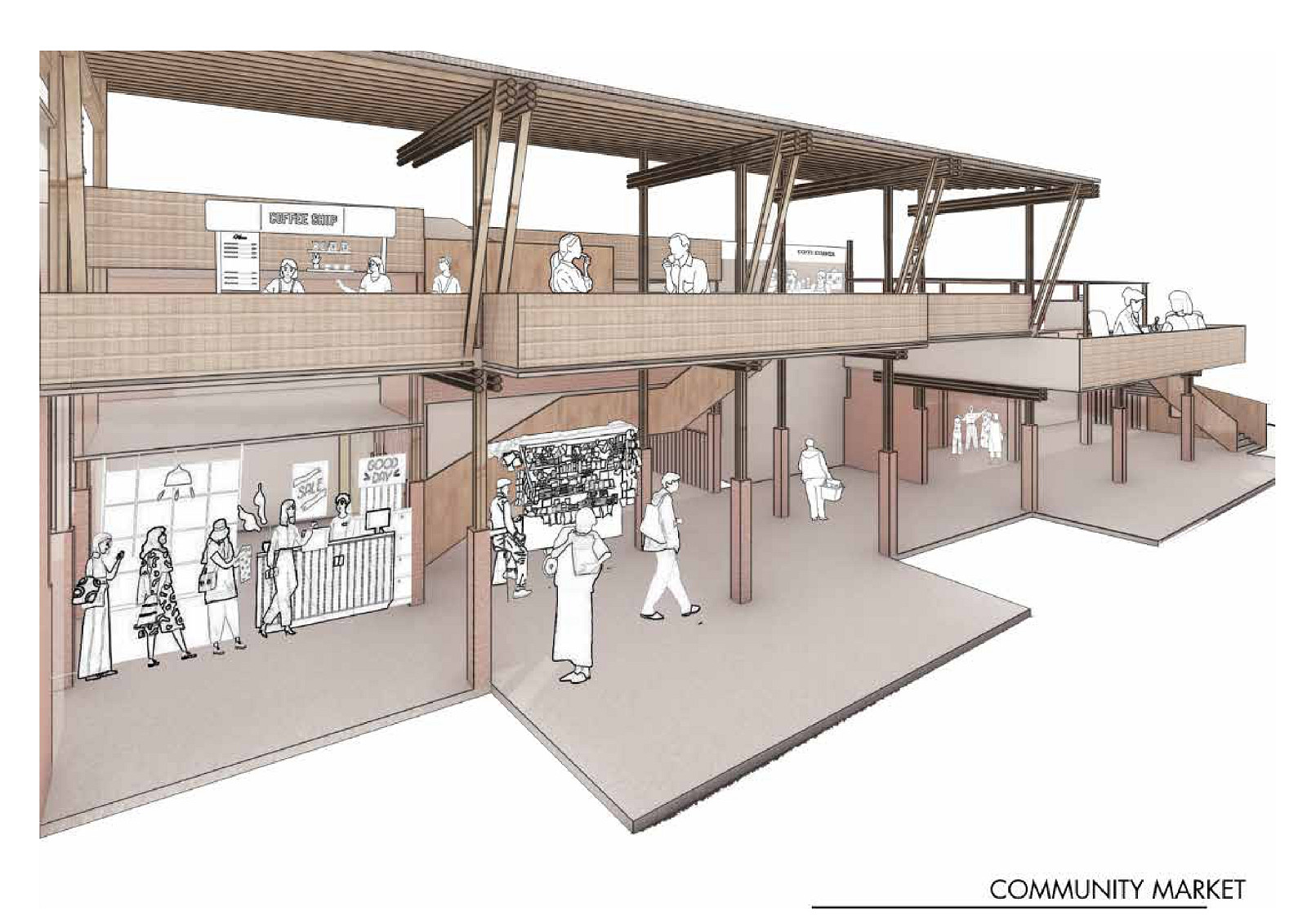
• Primary system: Hybrid load-bearing system combining brick masonry columns and lightweight bamboo framing
• Ground level: Reinforced brick columns with ferrocement footings and RCC slab (for flood protection and fire resistance)
• Upper levels: Modular bamboo frame system with bolted connections for easy repair and adaptation
• Courtyards: Open structural voids acting as light wells, ventilation zones, and firebreak buffers
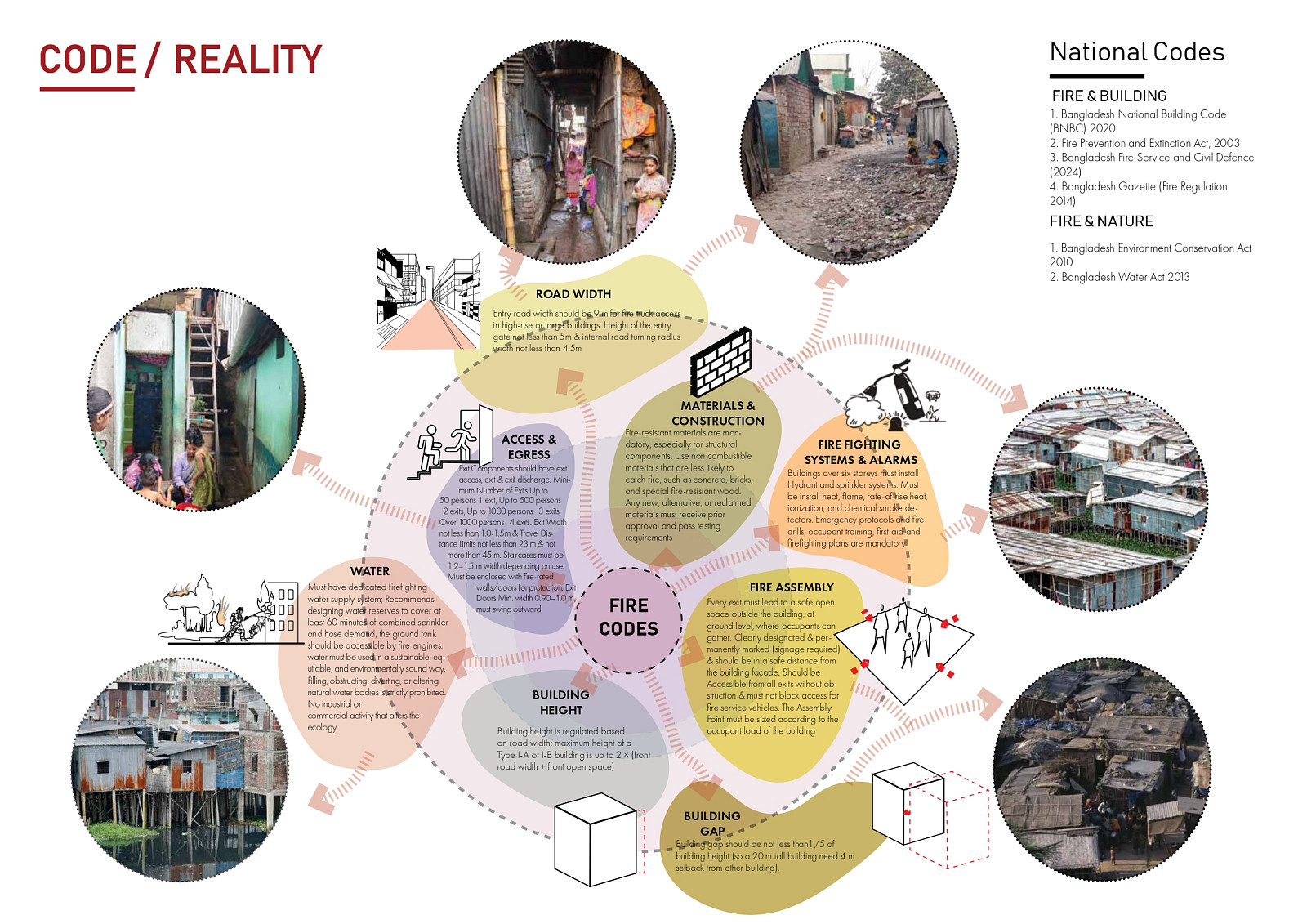
2. Fire-Resilience Strategy
• Minimum 20m fire-safe activity zones integrated within community nodes
• Fire-rated boundary walls at key spatial divisions
• Water distribution system connected to lake-based supply network for emergency firefighting
• Elevated water pipelines integrated into corridor structure for rapid access
• Designated fire assembly points within courtyards and corridor intersections
• Continuous Fire-Resilient Community Corridor functioning as evacuation spine
3. Material Specification
• Ground Floor:
o Brick masonry (locally sourced fired clay bricks)
o Ferrocement footings for moisture and flood resistance
o RCC slab for structural stability in high-risk zones
• Upper Floors:
o Treated bamboo structural members (termite + fire treated)
o Recycled corrugated sheet wall (double-layer system with insulation in local materials like coconut coir)
o Lightweight bamboo infill panels for flexibility
• Roof System:
o Corrugated recycled sheets
o Extended overhangs for shading and rain protection
o Passive ventilation ridge openings
4. Environmental & Passive Design Systems
• Cross ventilation through courtyard-based planning
• Stack ventilation via vertical voids and light wells
• Raised plinths to mitigate flooding and waterlogging
• Shading through continuous corridor canopies and overhangs
• Permeable ground zones along recreational corridors for stormwater absorption
5. Infrastructure & Services
• Decentralized water system using lake-fed emergency storage tanks
• Gravity-based water distribution for firefighting points
• Basic electrical distribution integrated into corridor spine
• Shared sanitation nodes placed at strategic corridor intersections
• Waste collection points integrated into economic corridor zones
6. Spatial Framework
• Modular, expandable units based on incremental housing logic
• Four interconnected systems:
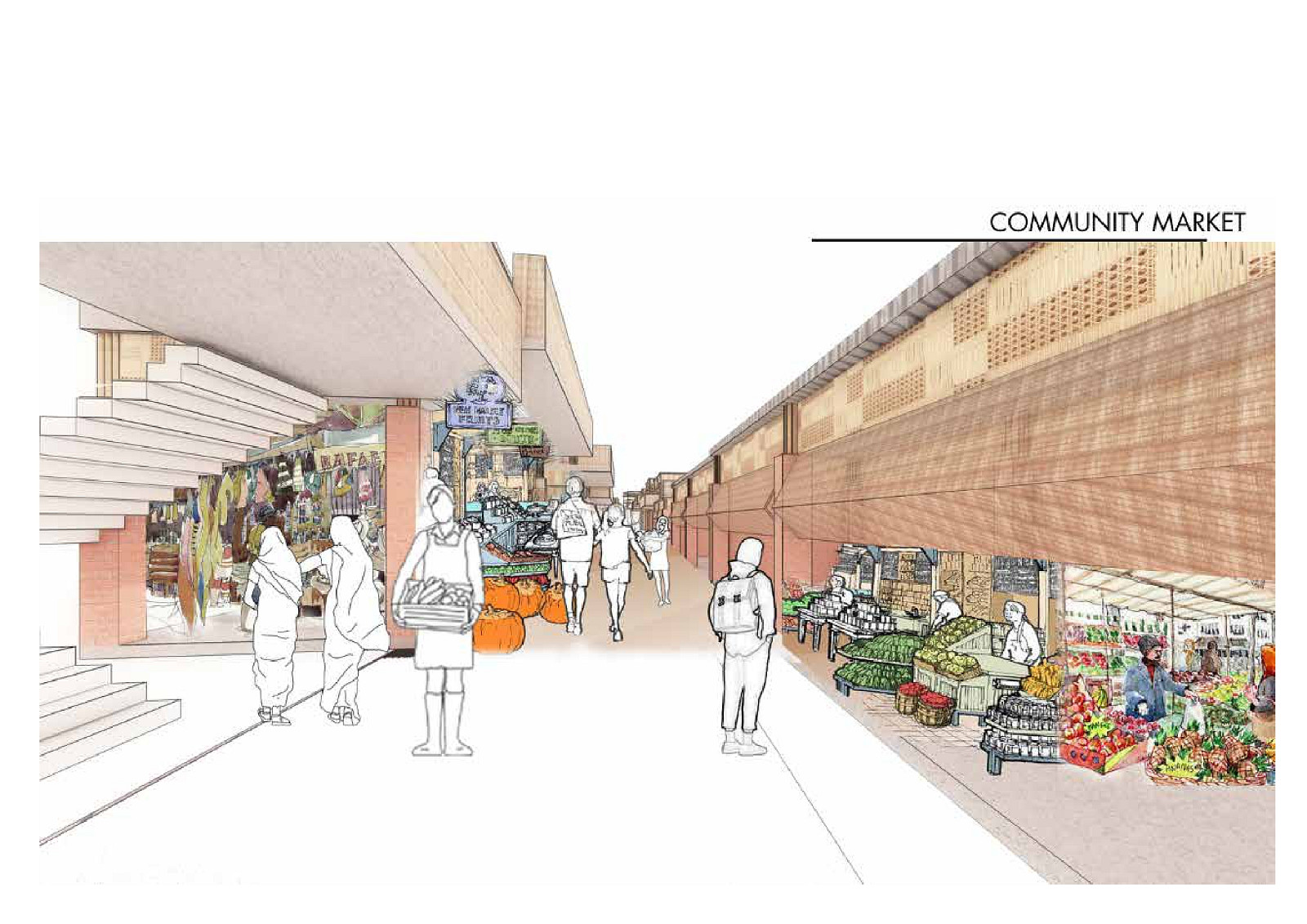
o Economic corridor (markets + workshops)
o Community corridor (education + emergency + social services)
o Urban corridor (city connection interface)
o Recreational corridor (green + lakeside public space)
7. Construction Approach
• Incremental(phase-wise), community-led construction model
• Use of local labor and vernacular building knowledge
• Prefabricated lightweight bamboo modules for rapid assembly
• Repairable and replaceable components to support long-term adaptability
Dokumentace

Copyright © 2026 INSPIRELI | All rights reserved. Use of this website signifies your agreement to the Terms of Use, Privacy Policy, and use of cookies.