THE CONTRAST

Idea projektu
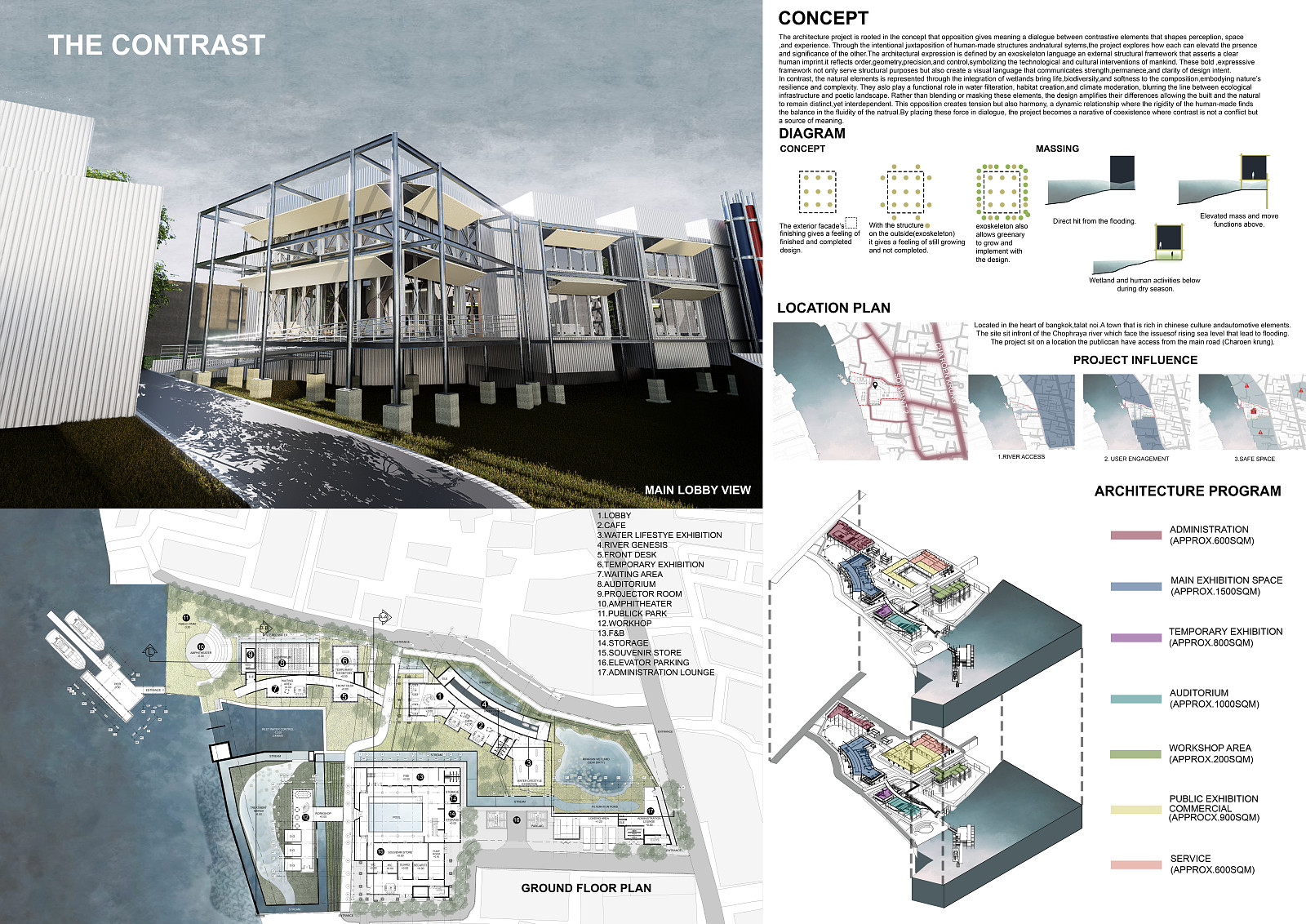
This architectural project is rooted in the concept that opposition gives meaning a dialogue between contrastive
elements that shapes perception, space, and experience. Through the intentional juxtaposition of human-made structures
and natural systems, the project explores how each can elevate the presence and significance of the other.
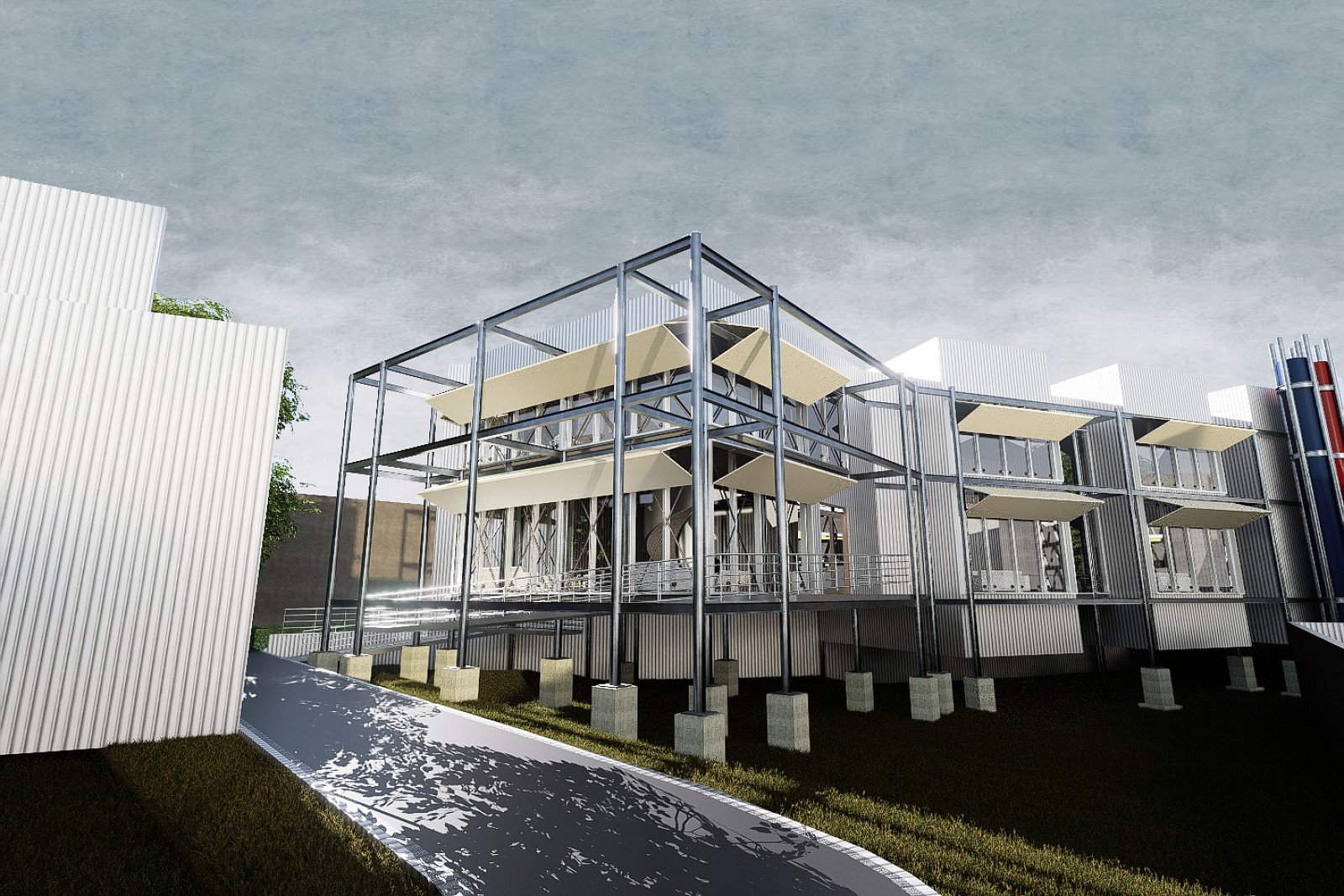
The architectural expression is defined by an exoskeletal language an external structural framework that asserts a clear
human imprint. It reflects order, geometry, precision, and control, symbolizing the technological and cultural interventions of
mankind. These bold, expressive frameworks not only serve structural purposes but also create a visual language that
communicates strength, permanence, and clarity of design intent. In contrast, the natural environment is represented
through the integration of wetlands and landscape design. These elements are organic, fluid, adaptive, and responsive to
time and season. The wetlands bring life, biodiversity, and softness to the composition, embodying nature’s resilience and
complexity. They also play a functional role in water filtration, habitat creation, and climate moderation, blurring the line
between ecological infrastructure and poetic landscape. Rather than blending or masking these elements, the design
amplifies their differences allowing the built and the natural to remain distinct, yet interdependent. This opposition creates
tension, but also harmony; a dynamic relationship where the rigidity of the human-made finds balance in the fluidity of the
natural. By placing these forces in dialogue, the project becomes a narrative of coexistence where contrast is not a conflict,
but a source of meaning.
Popis projektu
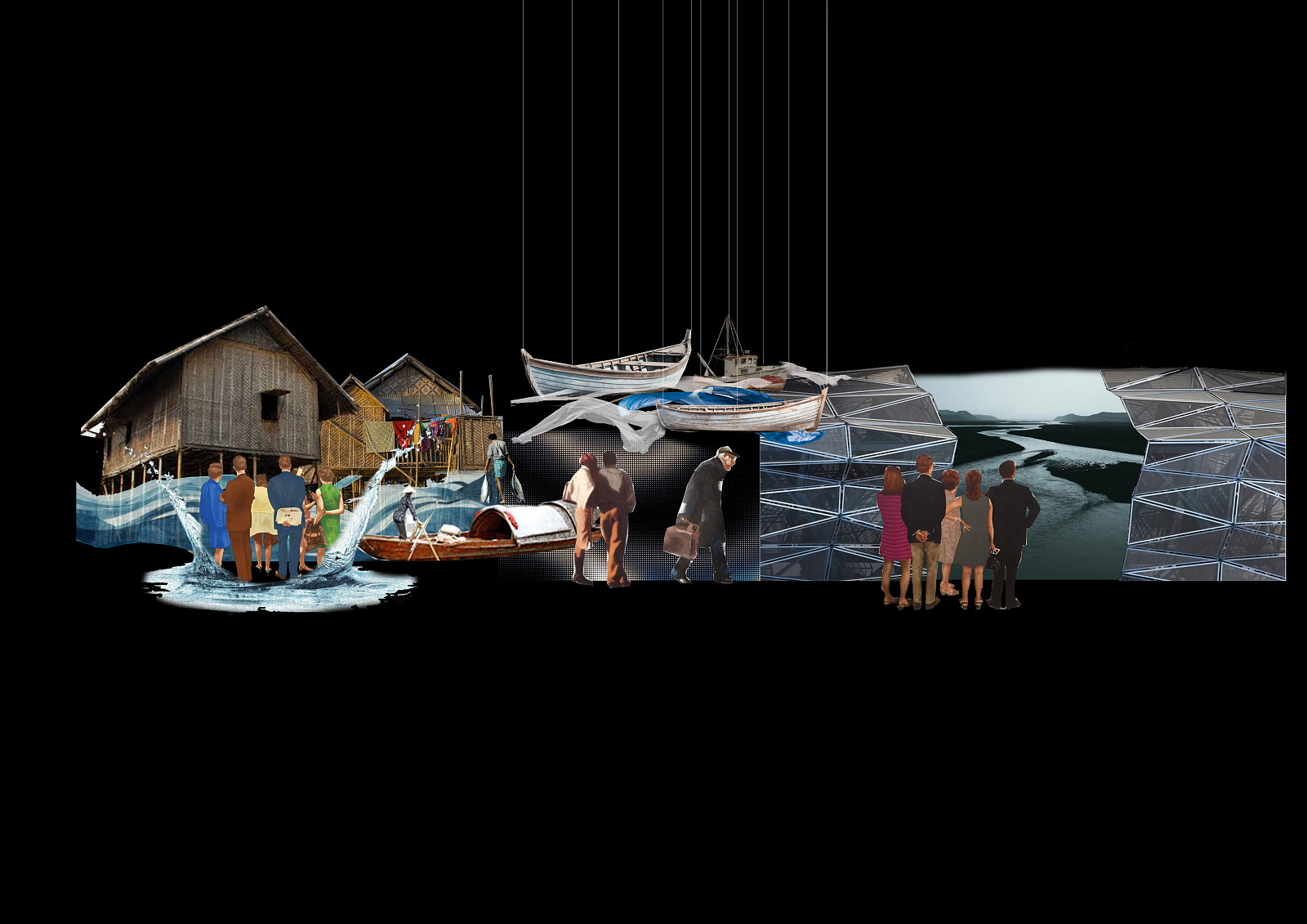
The scope of the project includes the design of a museum complex integrated with wetland landscapes and ecological infrastructure within a flood-prone area in Thailand. The project aims to address both experiential and environmental challenges by combining cultural programming with flood mitigation strategies. Wetlands, retention landscapes, and water management systems are incorporated as active environmental infrastructure to assist in stormwater retention, water filtration, biodiversity restoration, and climate adaptation.
Technické informace
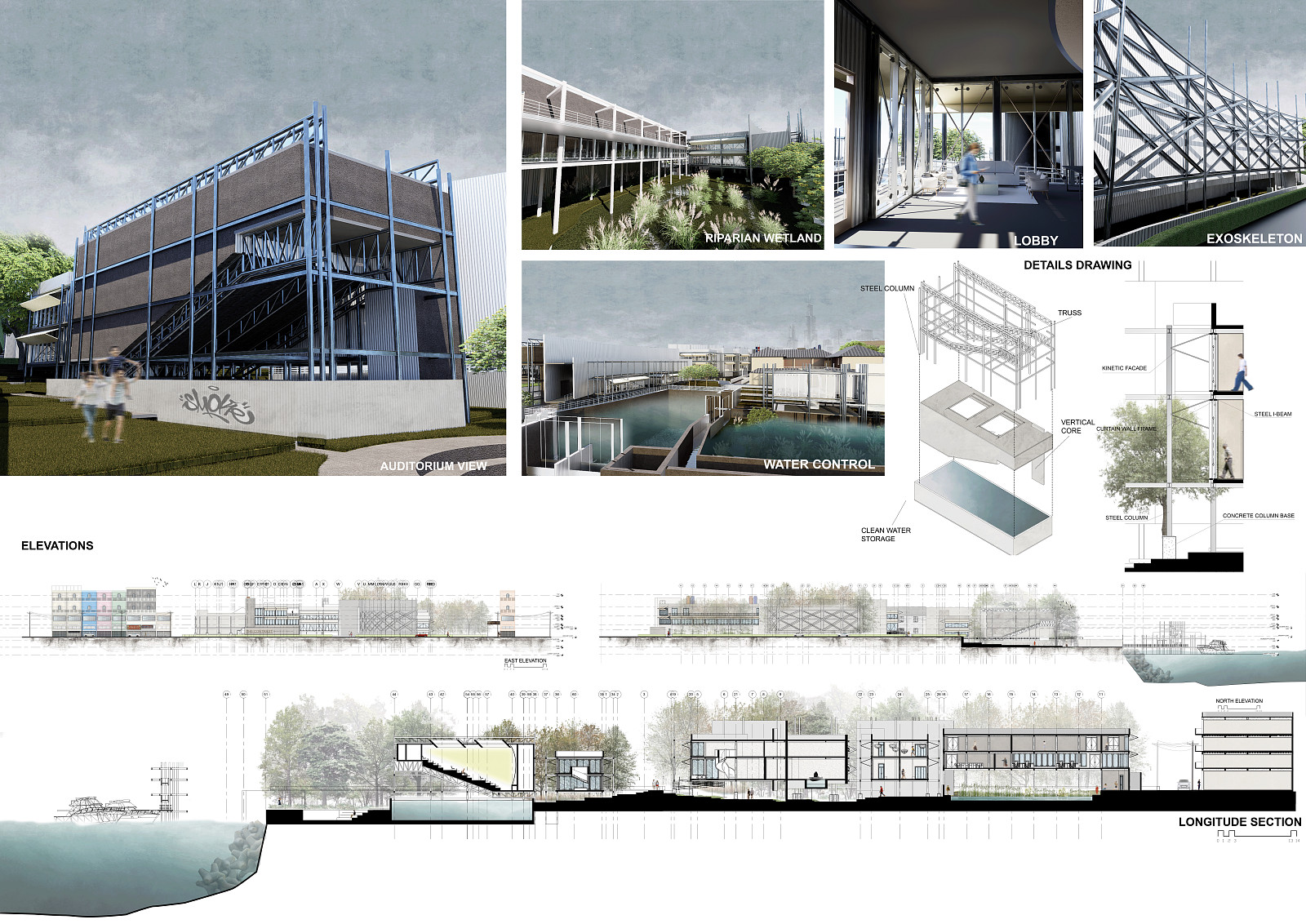
The project is designed as a flood-resilient museum and ecological infrastructure located along the Chao Phraya River in Thailand. The architectural structure utilizes a large exposed steel exoskeleton combined with reinforced concrete cores and deep pile foundations to provide structural stability within flood-prone soft soil conditions. The museum spaces are elevated above ground level to allow floodwater to flow naturally beneath the building during seasonal flooding periods, reducing hydraulic obstruction and minimizing flood damage to occupied areas.
The project integrates constructed wetlands, retention basins, water filtration landscapes, and mechanical pumping systems as part of its environmental infrastructure. These systems are designed to assist in stormwater retention, ecological rehabilitation, sediment filtration, and partial purification of water from the Chao Phraya River. Native wetland vegetation and permeable landscape materials are incorporated to support biodiversity, passive cooling, erosion control, and natural water absorption.
Dokumentace

Copyright © 2026 INSPIRELI | All rights reserved. Use of this website signifies your agreement to the Terms of Use, Privacy Policy, and use of cookies.
