Wild Atlantic Wellness Centre
Idea projektu
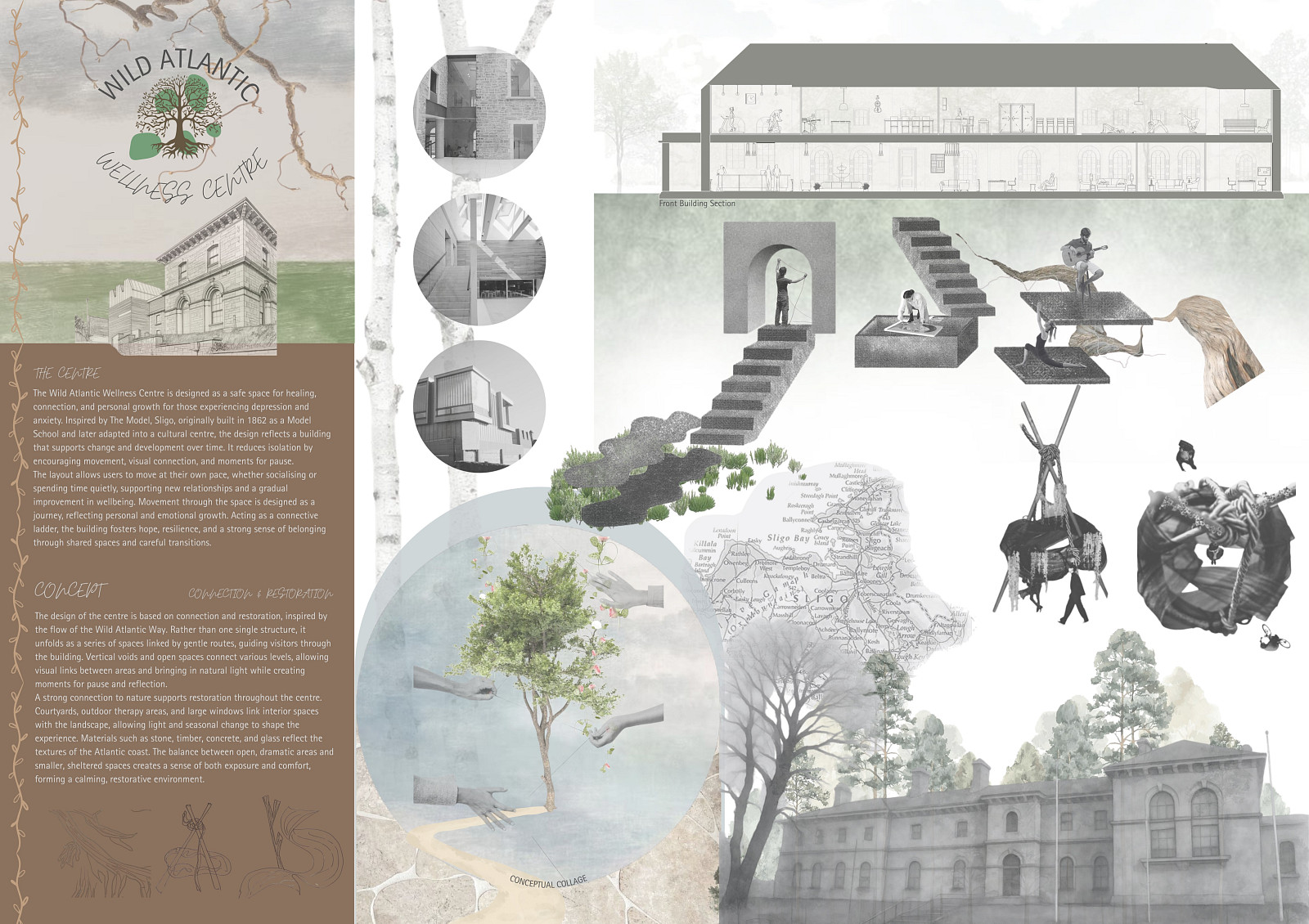
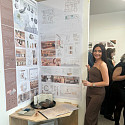
The Wild Atlantic Wellness Centre is conceived as an architectural response to the growing need for spaces that support mental health, wellbeing, and human connection. The central idea of the project is to create a calm, restorative environment where individuals can step away from daily pressures and engage in healing, reflection, and social interaction.
Inspired by the natural landscape of the Atlantic coast and the concept of connection and restoration, the design explores how architecture can positively influence emotional and psychological wellbeing. The project is based on the idea that space can guide experience; therefore, it is structured as a journey rather than a single destination. Movement through the building reflects personal growth, allowing users to transition between spaces for activity, interaction, and quiet retreat.
The proposal reimagines the historic Model building in Sligo as a contemporary wellness centre, combining its cultural legacy with new therapeutic functions. By integrating natural elements, soft transitions, and a balance of open and intimate spaces, the design seeks to reduce isolation, encourage connection, and promote a sense of belonging.
At its core, the project idea is to use architecture as a tool for healing and creating an environment that supports both the individual and the wider community through thoughtful, human-centred design.
Popis projektu
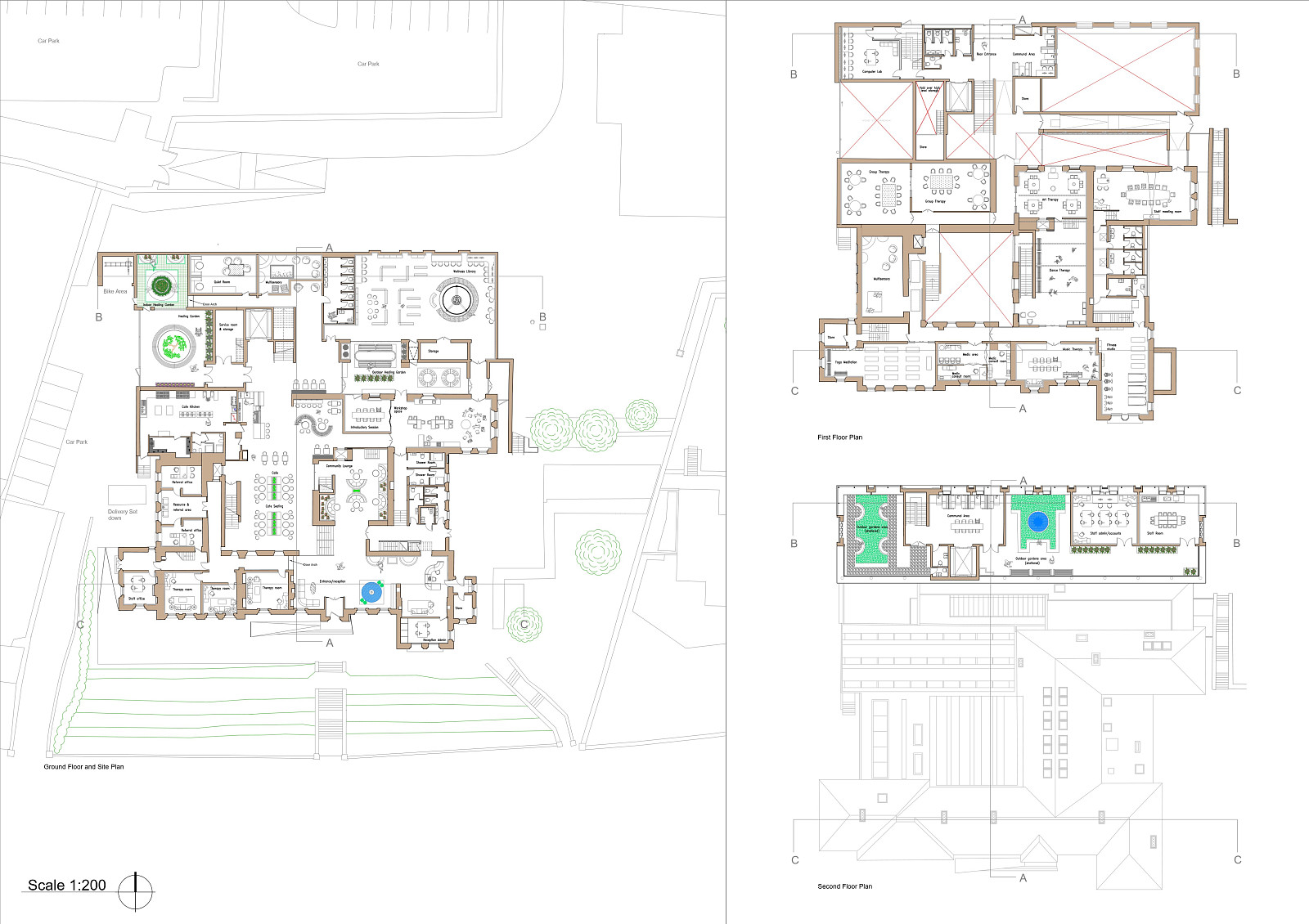
The Wild Atlantic Wellness Centre is an adaptive reuse proposal that transforms the historic Model building in Sligo into a contemporary space dedicated to wellbeing. The project focuses on reconfiguring the existing structure to accommodate a range of therapeutic, social, and restorative functions while maintaining its architectural character.
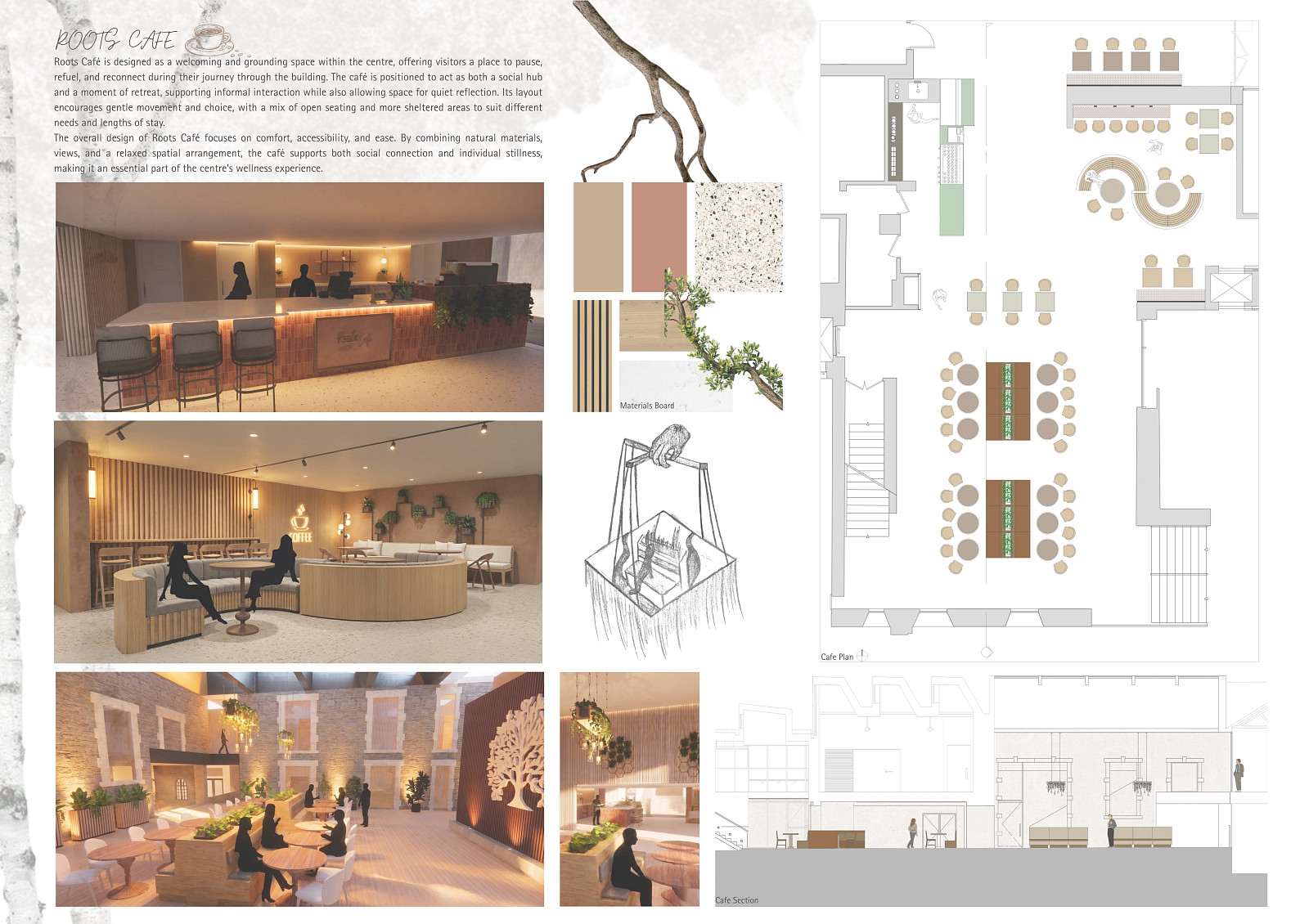
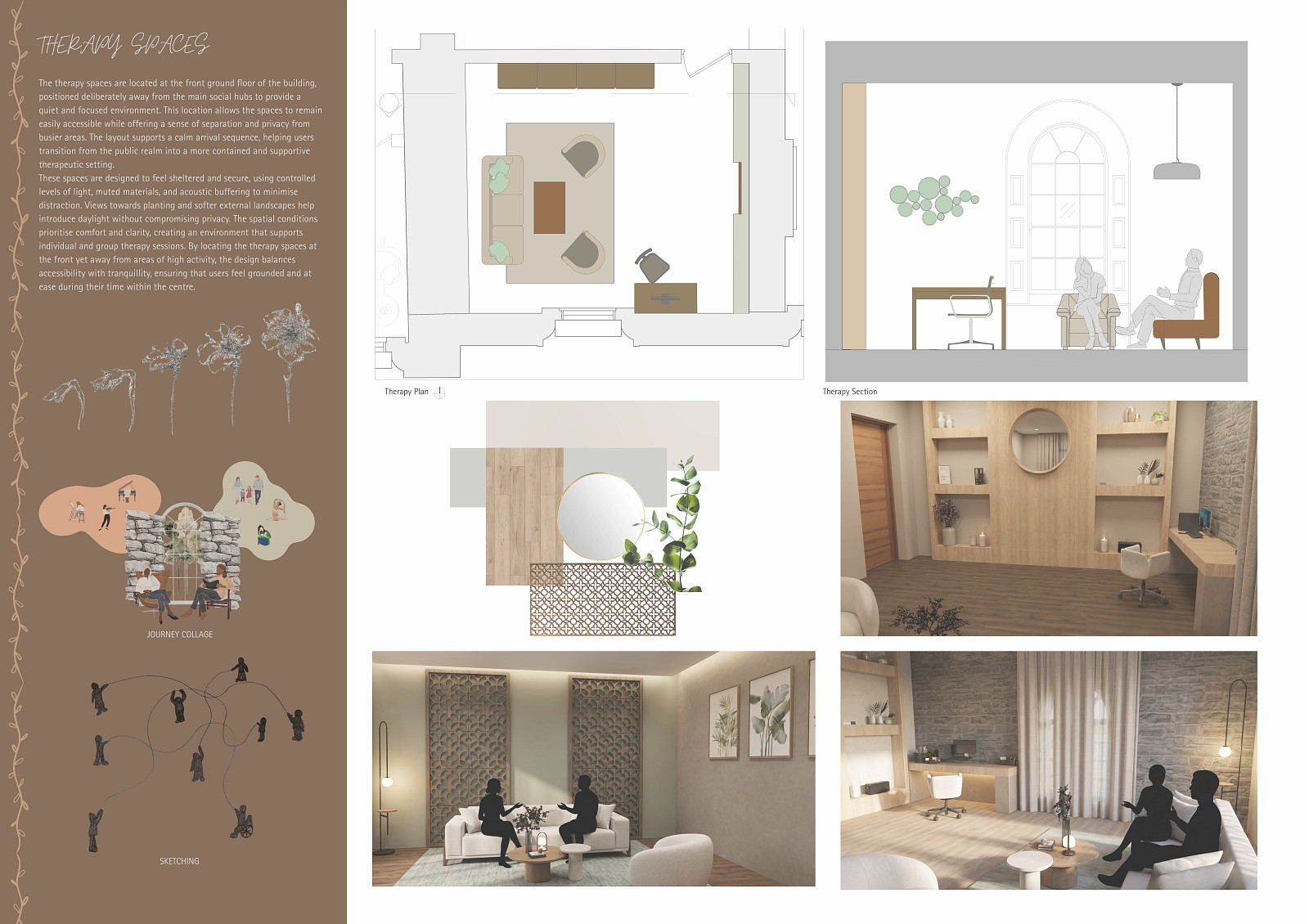
The design introduces a clear spatial framework that organizes the building into a sequence of functional zones. These include areas for group activities, counselling and therapy, quiet reflection, and informal social interaction. Circulation is carefully considered to create intuitive movement throughout the building, linking spaces through gradual transitions rather than abrupt divisions.
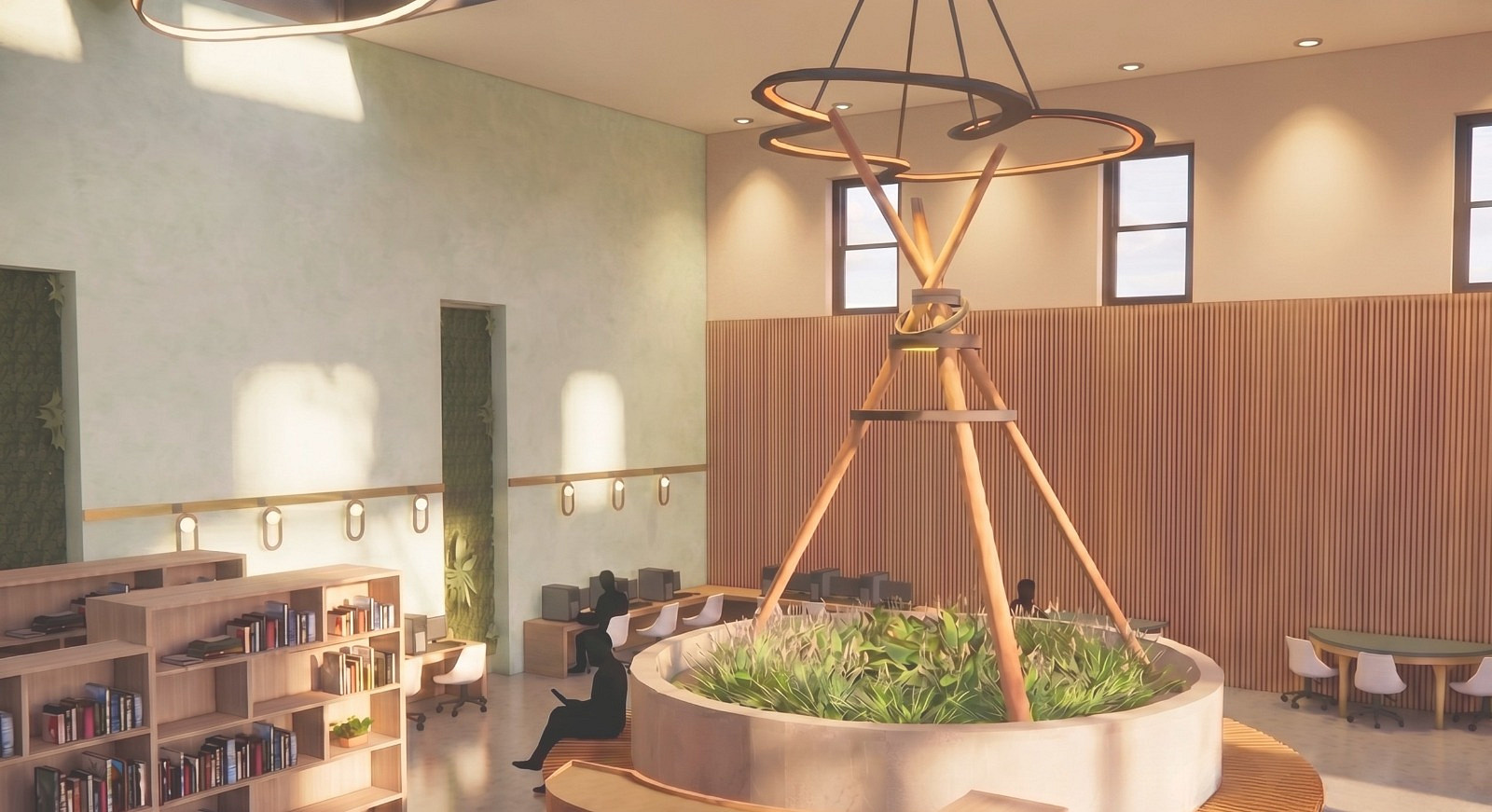
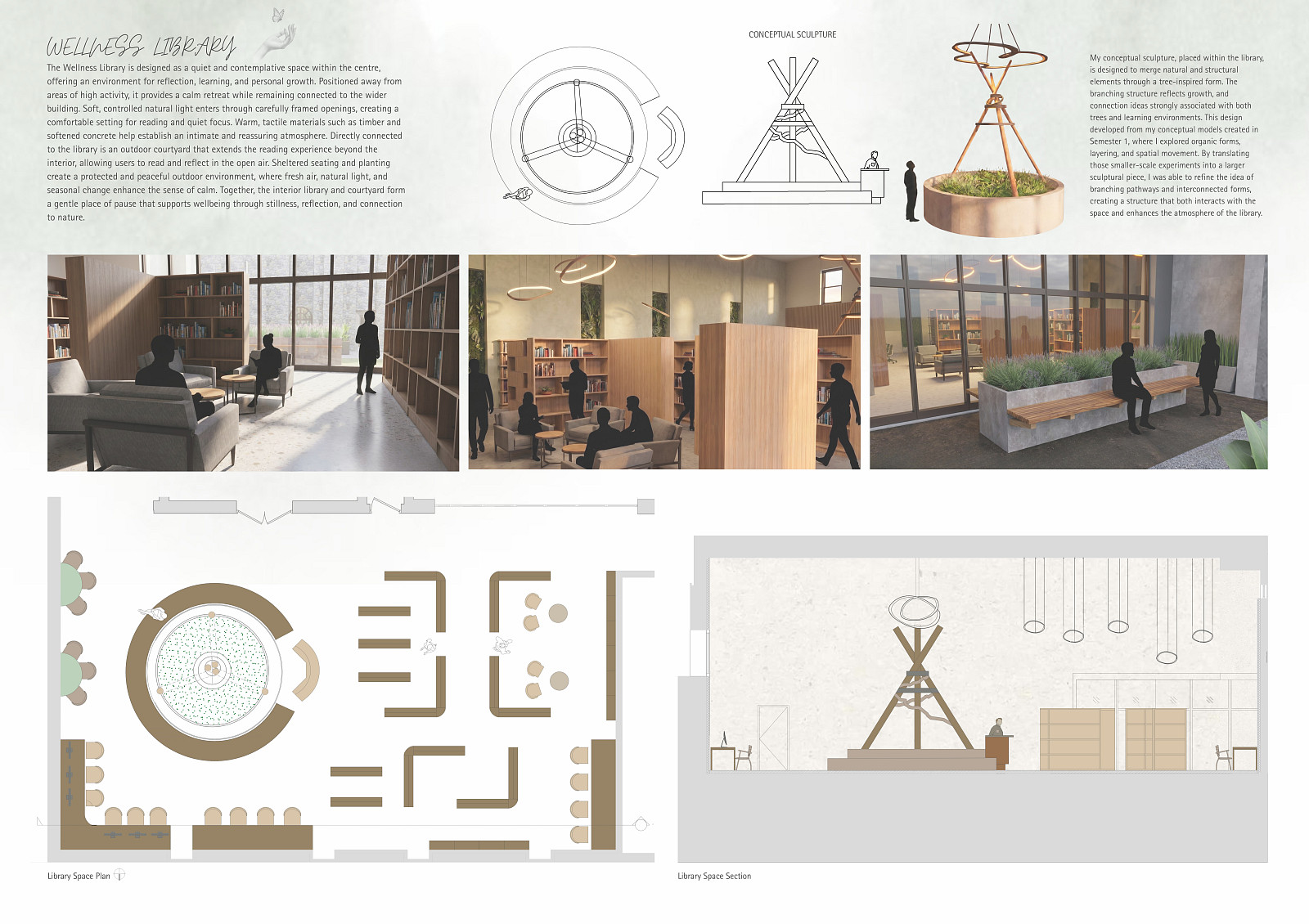
A key aspect of the proposal is the integration of natural elements within the architectural layout. External courtyards, controlled openings, and visual connections to the surrounding landscape enhance spatial quality and provide moments of relief within the interior environment. Material choices and lighting conditions are used to support comfort, clarity, and a balanced sensory experience.
The project aims to deliver a practical and responsive environment that supports a variety of user needs, ensuring flexibility, accessibility, and long-term usability. By combining preservation with targeted intervention, the design establishes a cohesive and functional wellness centre within an existing cultural landmark.
Technické informace
Materials and Finishes
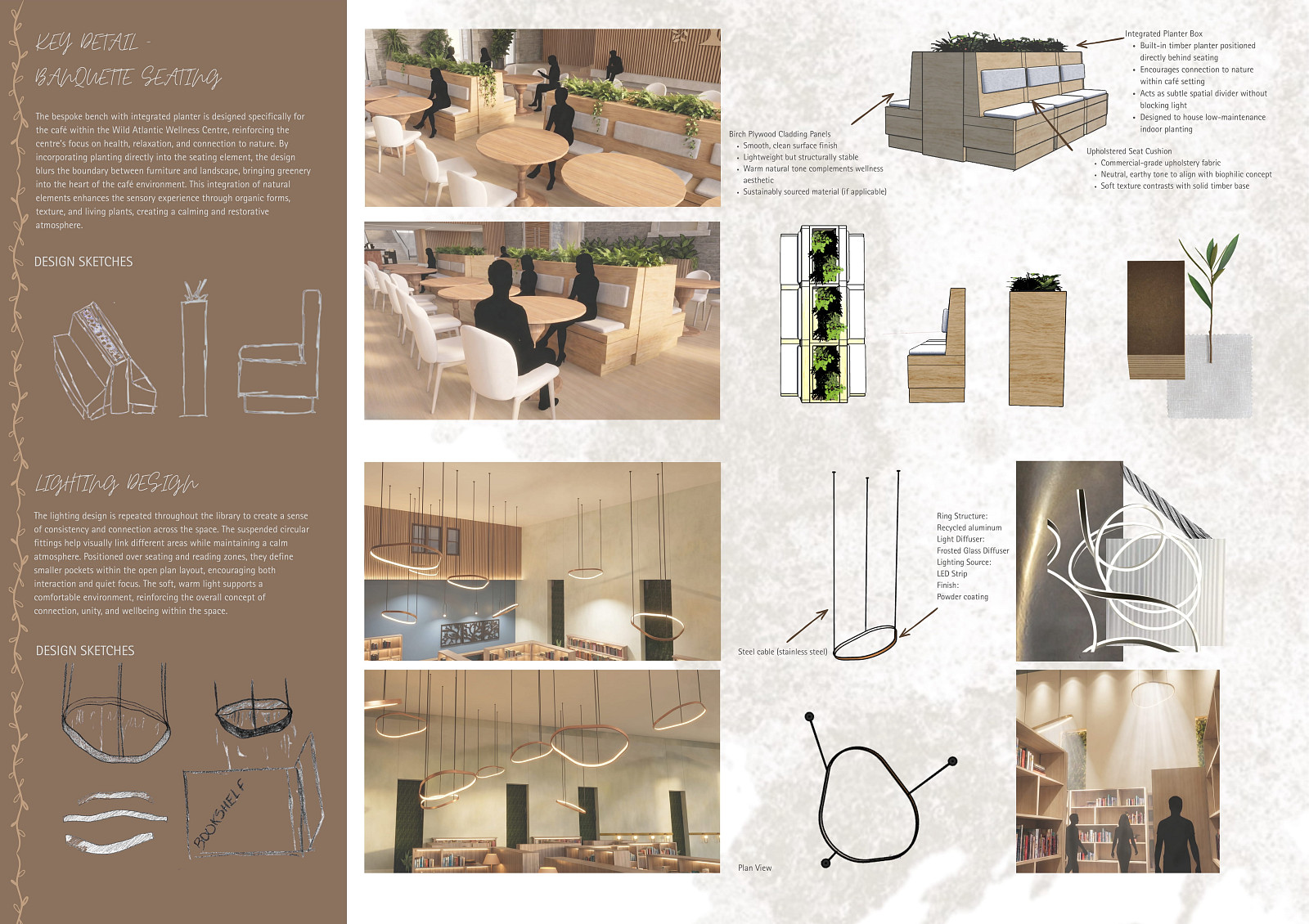
A restrained palette of natural materials is used to enhance sensory quality and durability. Locally sourced stone, timber, and concrete are combined with glass elements to balance solidity and transparency. Interior finishes are selected for their tactile qualities, low environmental impact, and acoustic performance, contributing to a calm and comfortable environment.
Where required, energy-efficient mechanical systems are introduced to maintain stable internal conditions suitable for wellbeing spaces.
Lighting Strategy
A combination of natural and artificial lighting is used to create a balanced and adaptable atmosphere. Diffused daylight is prioritized in primary spaces, while artificial lighting is designed with adjustable intensity to support different activities, from active use to relaxation and therapy.
Acoustic Performance
Acoustic control is essential to the function of the wellness centre. Sound-absorbing materials and spatial zoning are used to minimize noise transfer between active and quiet areas, ensuring privacy and comfort for users.
Accessibility and Safety
The design ensures full compliance with accessibility standards. Step-free access, clear circulation routes, and inclusive facilities are integrated throughout the building. Fire safety is addressed through compartmentation, appropriate escape routes, and updated fire detection and protection systems in accordance with current regulations.
Building Services Integration
Mechanical, electrical, and plumbing systems are discreetly integrated within the existing structure to minimize visual impact. Consideration is given to maintenance access and long-term operational efficiency.


Copyright © 2026 INSPIRELI | All rights reserved. Use of this website signifies your agreement to the Terms of Use, Privacy Policy, and use of cookies.