ARSENAL MEMORY PARK


Idea projektu
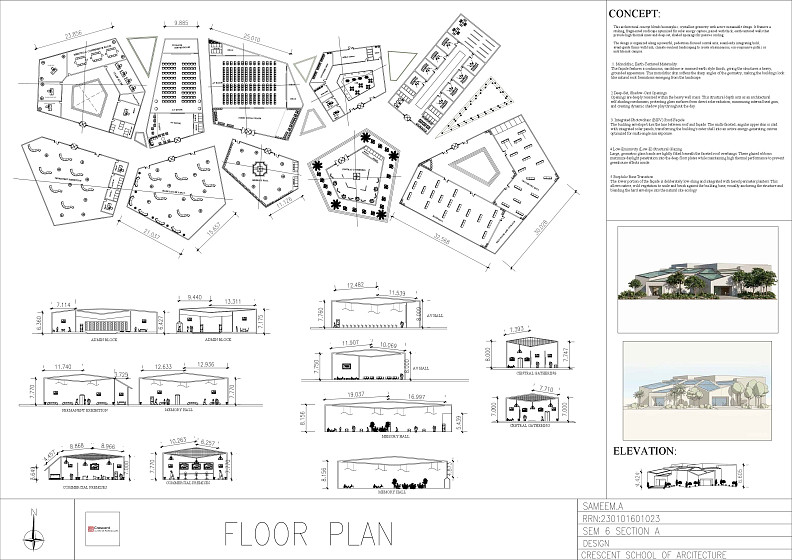
An architectural concept that blends biomorphic, crystalline geometry with active sustainable design, featuring fragmented roofscapes optimized for solar energy capture, paired with thick earth-textured walls that provide high thermal mass and deep-set shaded openings for passive cooling.
Popis projektu
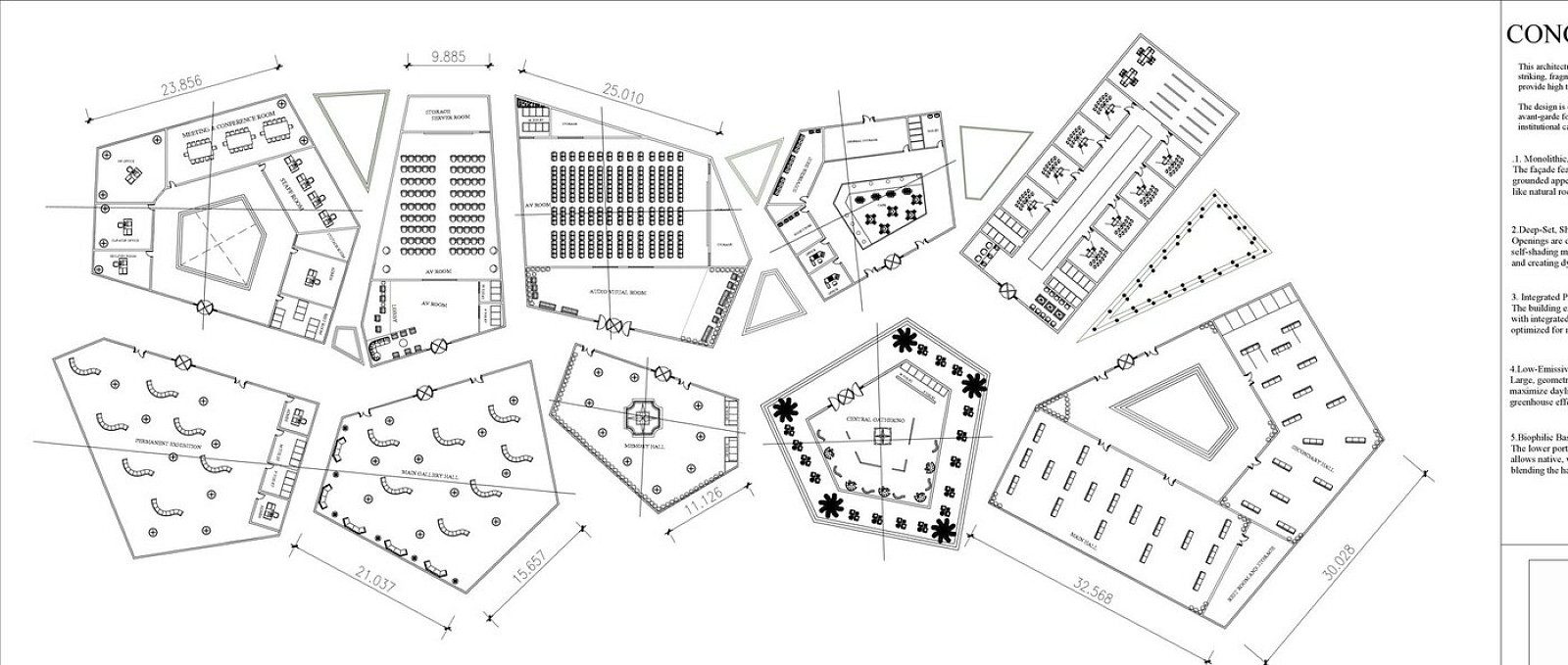
The design is organized along a powerful, pedestrian-focused central axis, seamlessly integrating bold, avant-garde forms with lush, climate-resilient landscaping to create a harmonious, eco-responsive public or institutional campus. The program includes permanent exhibition spaces, memory halls, AV halls, central gathering areas, admin blocks, commercial premises, and conference rooms. The facade features a continuous sandstone or rammed-earth style finish giving the structure a heavy grounded appearance, with deep-set shadow-cast openings acting as architectural self-shading mechanisms. The building envelope blurs the line between roof and facade with integrated photovoltaic (BIPV) roof-facade panels, transforming the building's outer shell into an active energy-generating canvas. Large geometric glass bands are lightly lifted beneath faceted roof overhangs providing daylight penetration while maintaining high thermal performance. The lower portion of the facade is deliberately low-slung and integrated with tiered perimeter planters allowing native wild vegetation to visually anchor the structure and blend the hard envelope into the natural site ecology.
Technické informace
Key facade strategies include: 1. Monolithic earth-textured materiality with continuous sandstone or rammed-earth style finish softening sharp angles. 2. Deep-set shadow-cast openings within heavy wall mass protecting glass surfaces from direct solar radiation and creating dynamic shadow play. 3. Integrated Photovoltaic (BIPV) roof-facade with multi-faceted angular upper skin clad with solar panels optimized for multi-angle sun exposure. 4. Low-Emissivity (Low-E) structural glazing with large geometric glass bands maintaining high thermal performance to prevent greenhouse effects. 5. Biophilic base transition with tiered perimeter planters blending the structure into natural site ecology.
Dokumentace

Copyright © 2026 INSPIRELI | All rights reserved. Use of this website signifies your agreement to the Terms of Use, Privacy Policy, and use of cookies.