Interpretation Center - Ruins to Resilience


Idea projektu
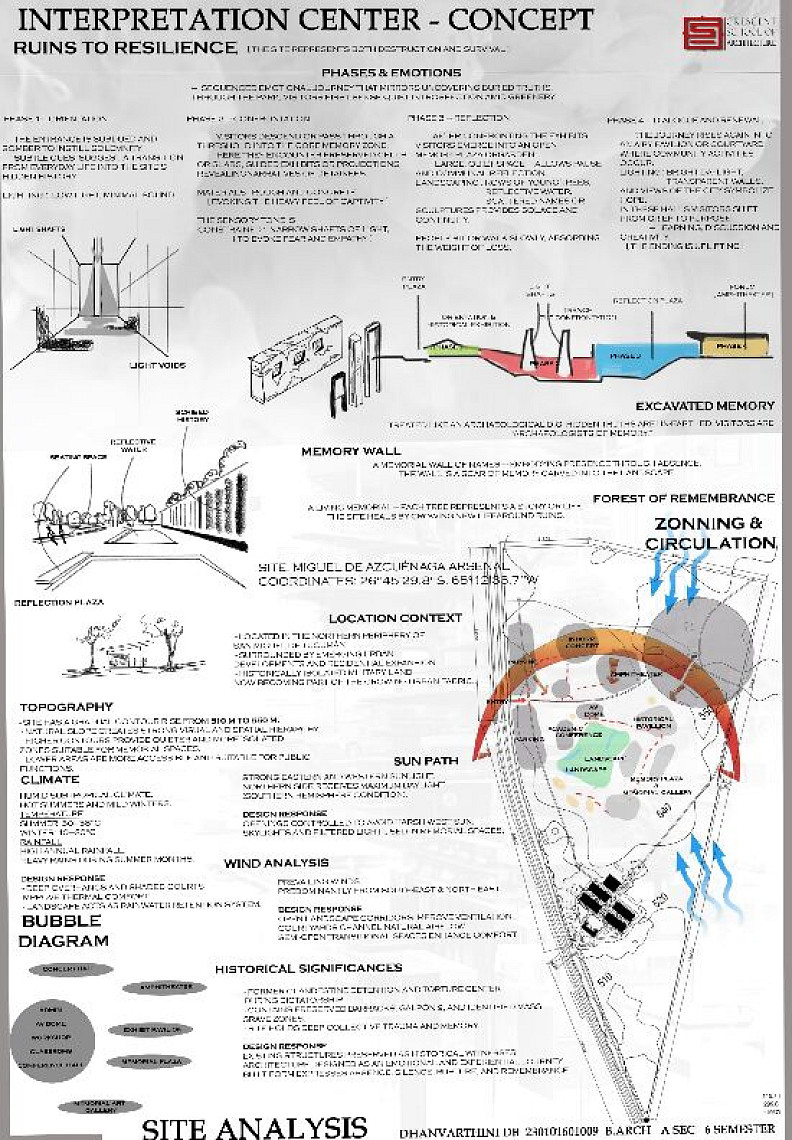
An interpretation center conceptualized as an archaeological dig of memory, where the site of a former clandestine detention and torture center is transformed into a space of remembrance, dialogue, and renewal. The site represents both destruction and survival.
Popis projektu
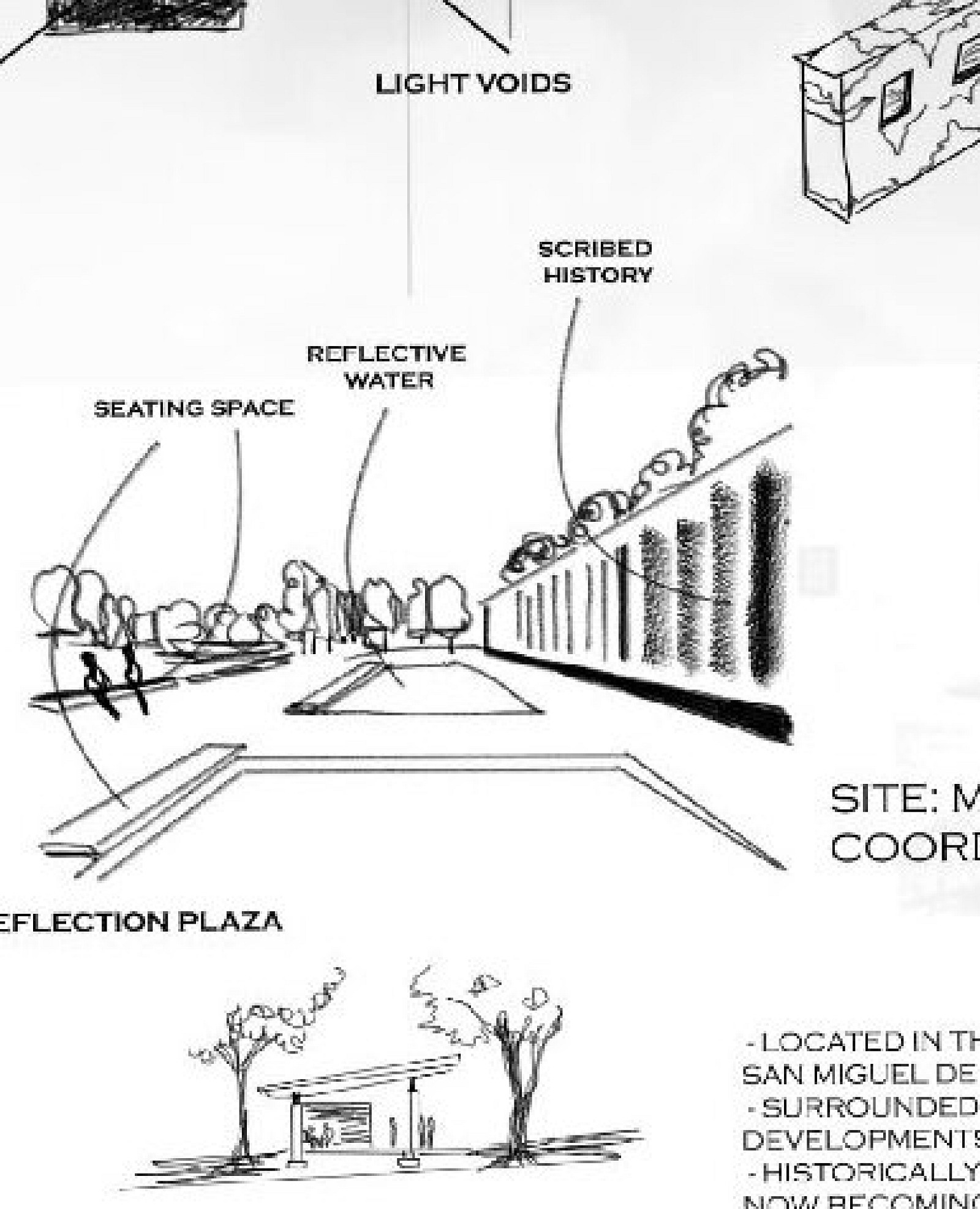
The project is organized as a sequenced emotional journey through four phases: Orientation, Confrontation, Reflection, and Dialogue & Renewal. Visitors first sense quiet introspection amid greenery, then descend into the core memory zone encountering preserved cells and guided exhibits revealing narratives of detainees. After confronting the exhibits, visitors emerge into an open memory plaza or garden with rows of young trees, reflective water, and scattered names providing solace and continuity. The journey culminates in an airy pavilion or courtyard where community activities occur. Key design elements include a Memory Wall of names embodying presence through absence, a Forest of Remembrance where each tree represents a story of life, light shafts and voids evoking fear and empathy, and a Reflection Plaza. The program includes a concert hall, amphitheater, AV dome, workshop spaces, classrooms, conference hall, exhibit pavilion, memorial plaza, and memorial art gallery.
Technické informace
Located at the Miguel de Azcuénaga Arsenal in the northern periphery of San Miguel de Tucumán, Argentina. The site has a gradual contour rise from 510m to 550m with a humid subtropical climate. Design responses include deep overhangs and shaded courts for thermal comfort, landscape acting as rainwater retention system, openings controlled to avoid harsh western sun, skylights and filtered light in memorial spaces, and open landscape corridors for natural ventilation. The project is phased across four construction phases corresponding to the emotional journey sequence.
Dokumentace


Copyright © 2026 INSPIRELI | All rights reserved. Use of this website signifies your agreement to the Terms of Use, Privacy Policy, and use of cookies.
