The Interrupted Continuum - Arsenal Memory Park


Idea projektu
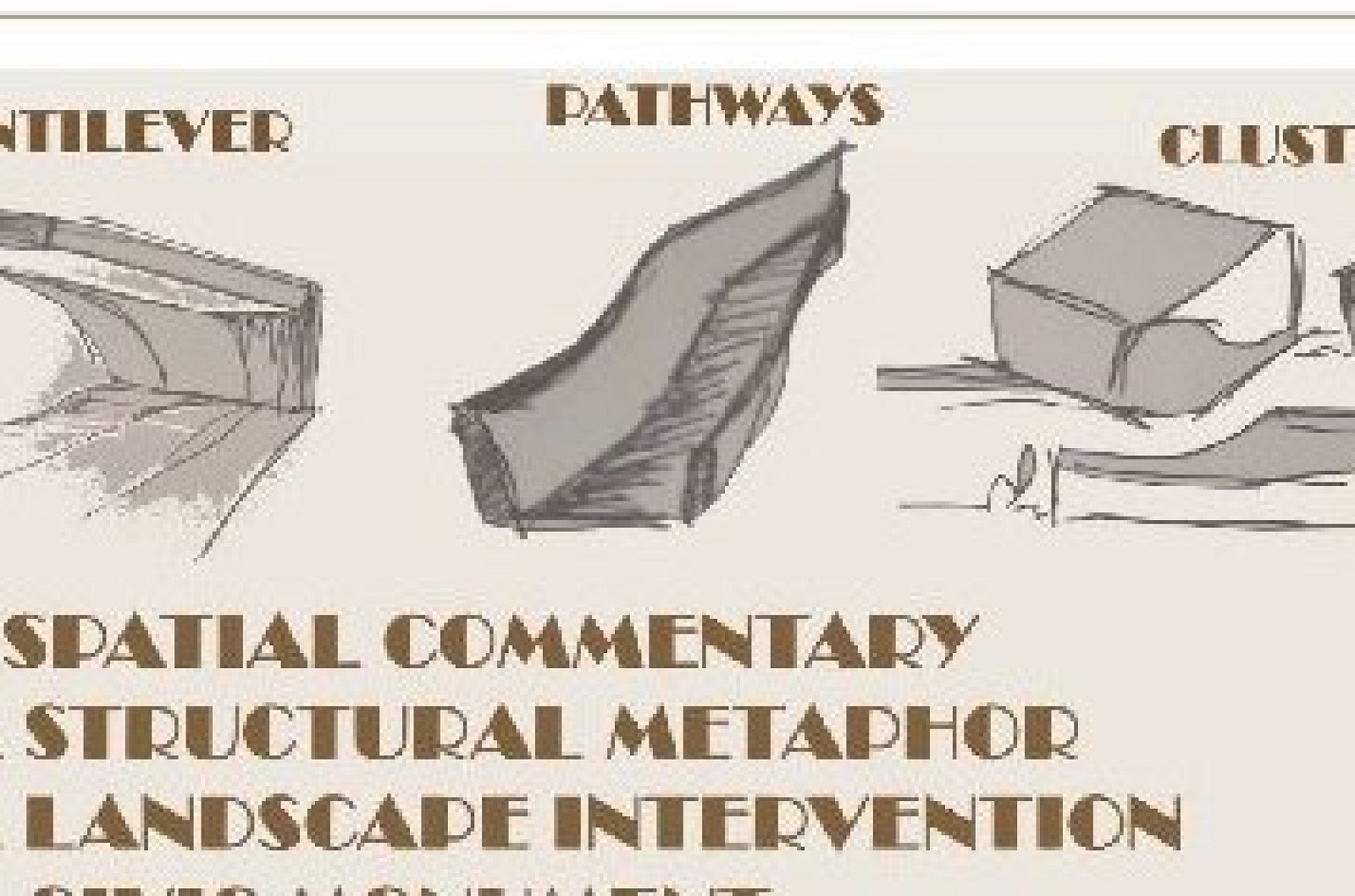
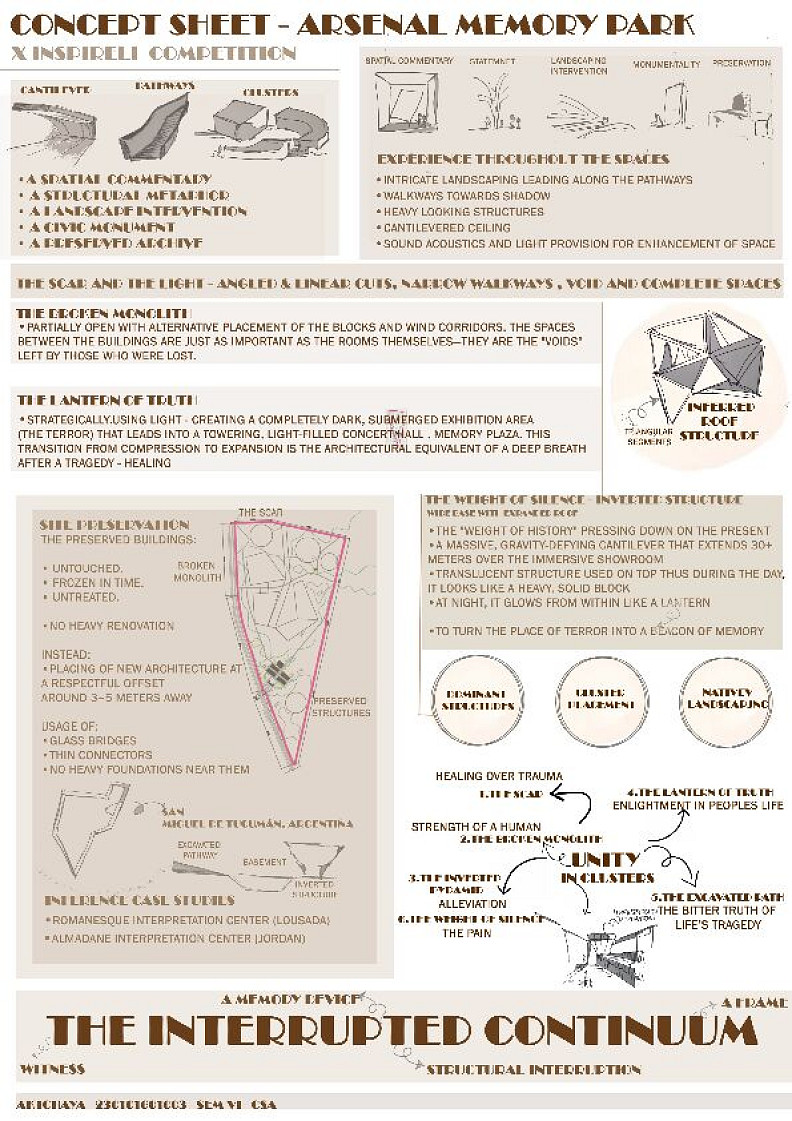
A memory device and structural interruption that transforms a place of terror into a beacon of memory, functioning as a spatial commentary, structural metaphor, landscape intervention, civic monument, and preserved archive.
Popis projektu
The project for the Arsenal Memory Park uses six key design strategies: The Scar (angled and linear cuts, narrow walkways, void and complete spaces), The Broken Monolith (partially open with alternative placement of blocks and wind corridors where spaces between buildings are as important as rooms themselves), The Lantern of Truth (strategically using light to create a dark submerged exhibition area leading to a towering light-filled concert hall and memory plaza), The Inverted Pyramid, The Weight of Silence (a massive gravity-defying cantilever extending 30+ meters over an immersive showroom with translucent structure that glows at night like a lantern), and The Excavated Path. Preserved buildings remain untouched, frozen in time, with new architecture placed at a respectful offset of 3-5 meters away, connected via glass bridges and thin connectors with no heavy foundations nearby.
Technické informace
Inferred roof structure using triangular segments. Inverted structure with wide base and expanded roof. Cantilevered ceiling design. Dominant structures with cluster placement and native landscaping. Sound acoustics and light provision for enhancement of space. Excavated pathway with basement level. Case study references include Romanesque Interpretation Center (Lousada) and Almadane Interpretation Center (Jordan).
Dokumentace


Copyright © 2026 INSPIRELI | All rights reserved. Use of this website signifies your agreement to the Terms of Use, Privacy Policy, and use of cookies.
