Rethinking Urban Slums


Idea projektu
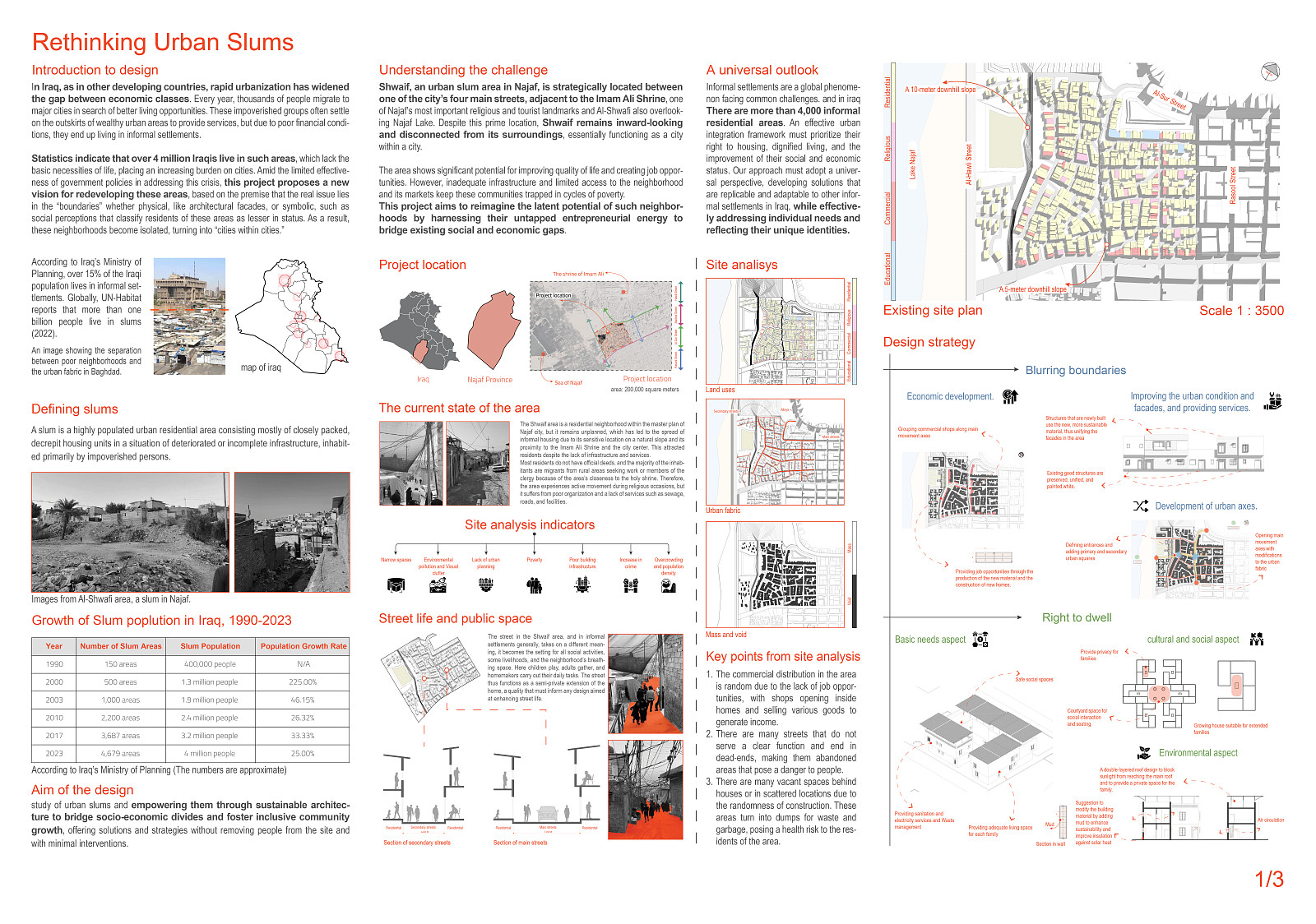
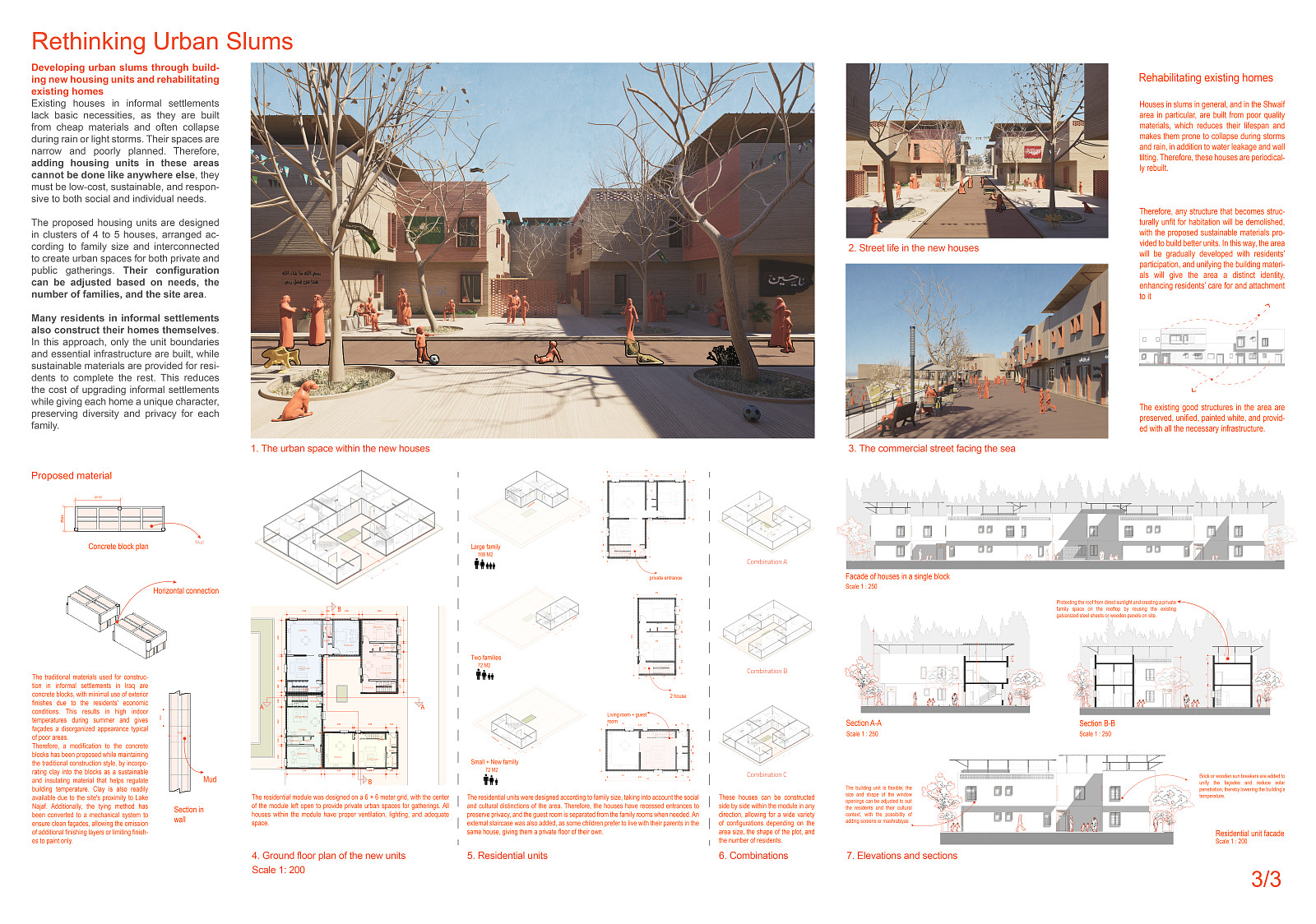
This project rethinks informal settlements in Najaf through an urban integration strategy that addresses both the physical and social boundaries separating slums from the surrounding city. Rather than treating informal settlements as isolated urban problems to be demolished, the project views them as communities with strong social structures that require inclusive and sustainable development. The proposal focuses on empowering residents through participatory urban design, gradual in-place redevelopment, affordable housing solutions, and improved public spaces and infrastructure. By strengthening social cohesion, enhancing economic opportunities, and reconnecting the area with the urban fabric of Najaf, the project aims to transform marginalized neighborhoods into integrated and resilient communities while preserving residents’ social identity and minimizing displacement.
Popis projektu
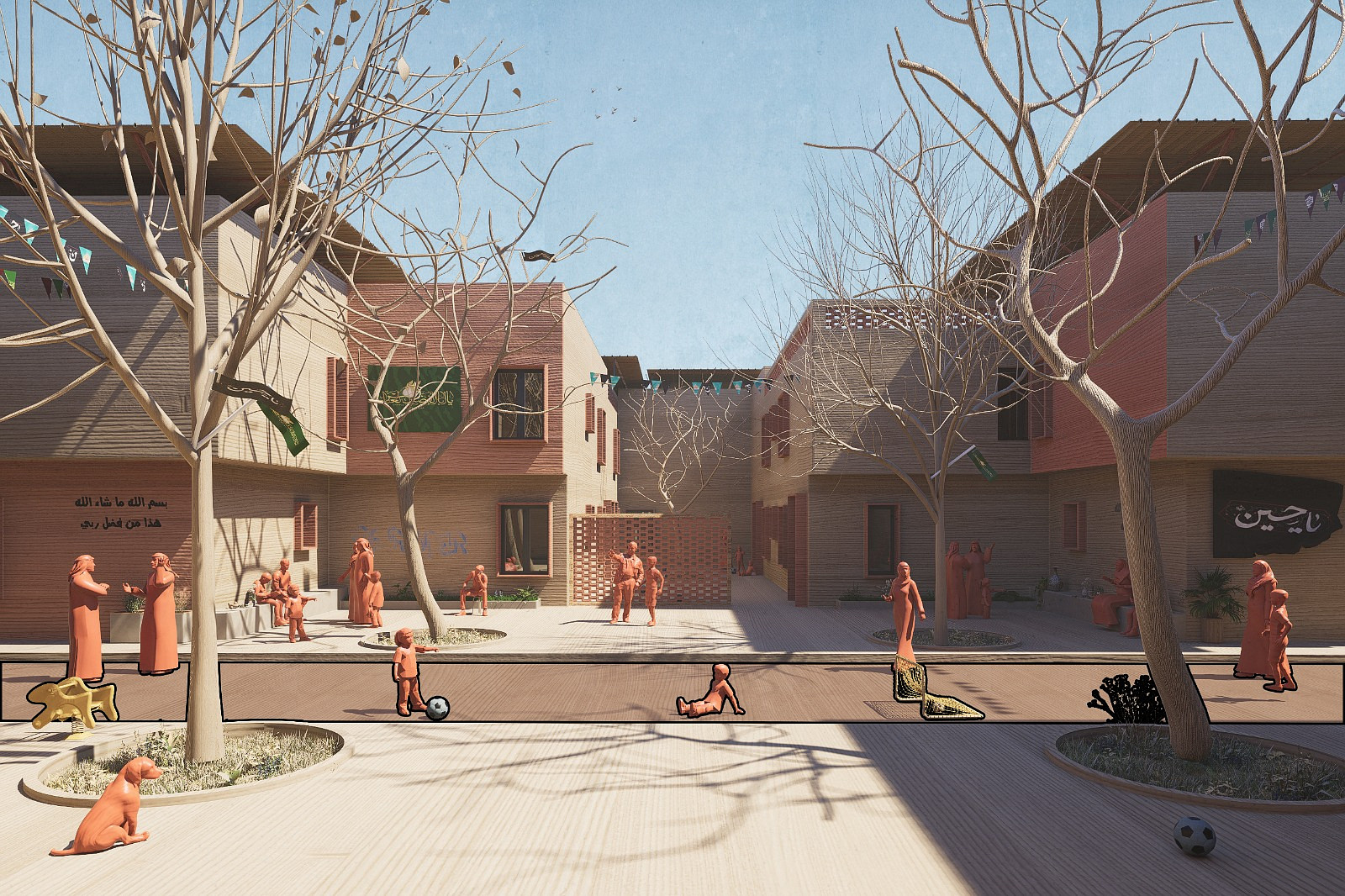
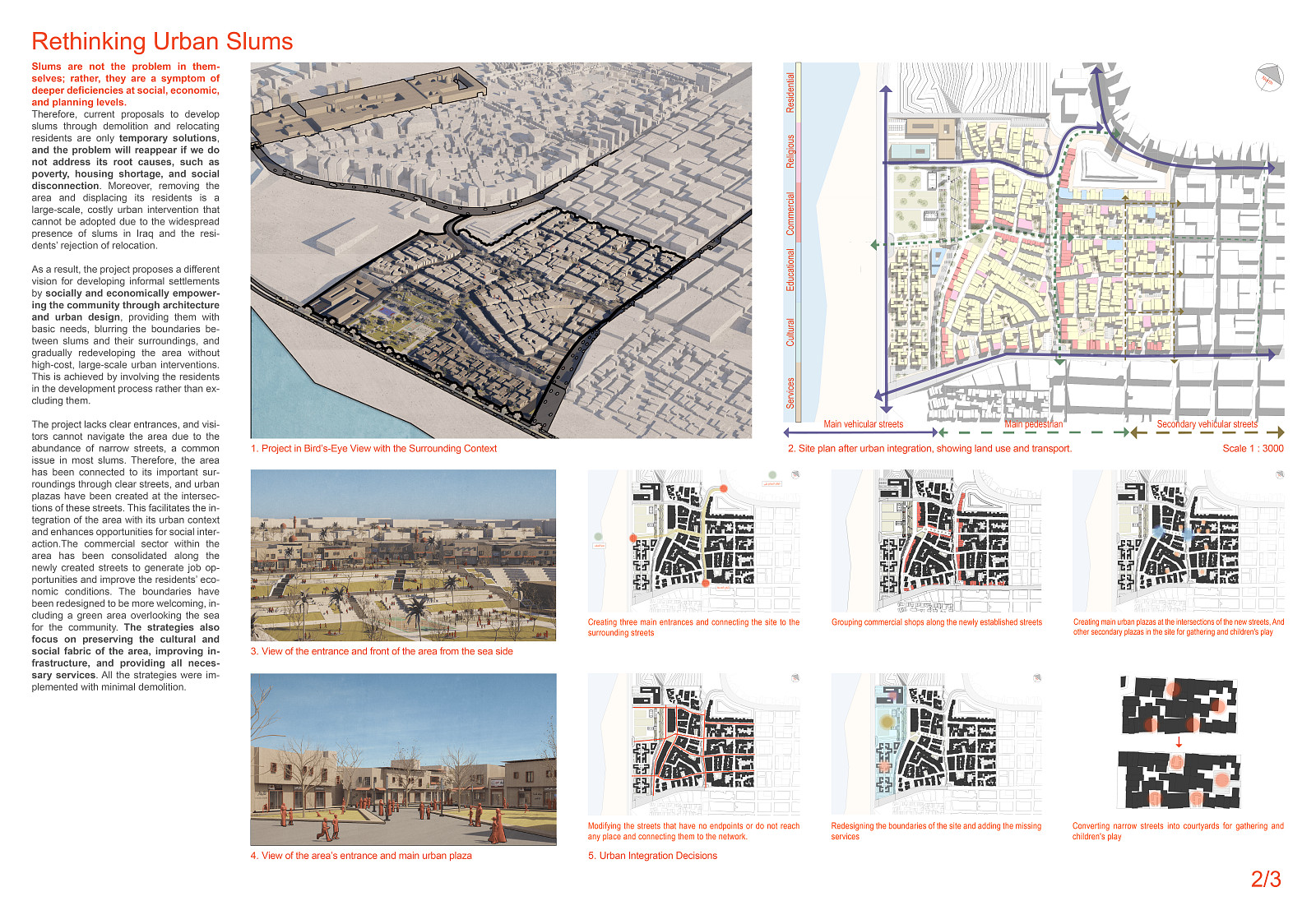
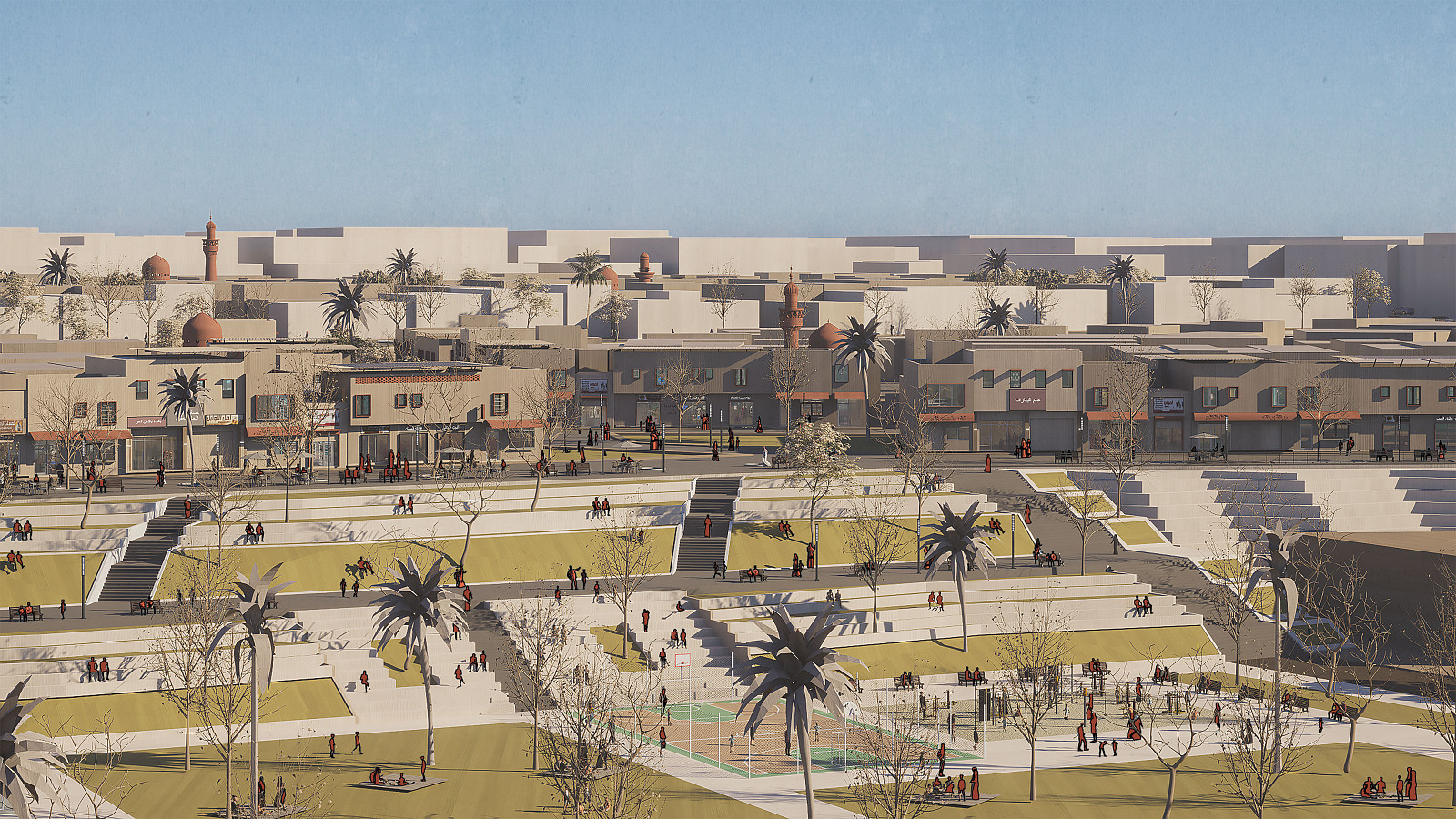
The project is located in Al-Shwafi area near the Imam Ali Shrine in Najaf, Iraq, and focuses on the redevelopment of informal housing through sustainable urban integration. The proposal includes upgrading infrastructure networks such as water supply, sewage, electricity, streets, and pedestrian pathways while improving environmental and living conditions. The masterplan introduces public spaces, community centers, green areas, mixed-use zones, and flexible low-cost housing prototypes designed according to residents’ social and economic needs. The project adopts incremental redevelopment strategies that allow gradual transformation without forced relocation. It also emphasizes community participation in decision-making and implementation processes to ensure long-term sustainability and local ownership. Through urban connectivity, social empowerment, and adaptable architectural interventions, the project creates a realistic and scalable model for upgrading informal settlements in Iraq and similar contexts.
Technické informace
The project combines urban planning strategies with sustainable architectural solutions to create a flexible and economically achievable redevelopment model. Housing units are designed using modular and incremental construction systems that allow future expansion according to residents’ financial capacities and family needs. Locally available and environmentally responsive materials are proposed to reduce construction costs and improve durability and thermal performance in Najaf’s hot climate. The urban strategy prioritizes walkability, shaded public spaces, green corridors, and integrated infrastructure networks to improve environmental quality and social interaction. Existing structures are rehabilitated whenever possible to reduce demolition waste and preserve community continuity. The proposal also incorporates phased implementation strategies to ensure realistic execution with minimal disruption to residents’ daily lives.

Copyright © 2026 INSPIRELI | All rights reserved. Use of this website signifies your agreement to the Terms of Use, Privacy Policy, and use of cookies.