ANAMNESIS


Idea projektu
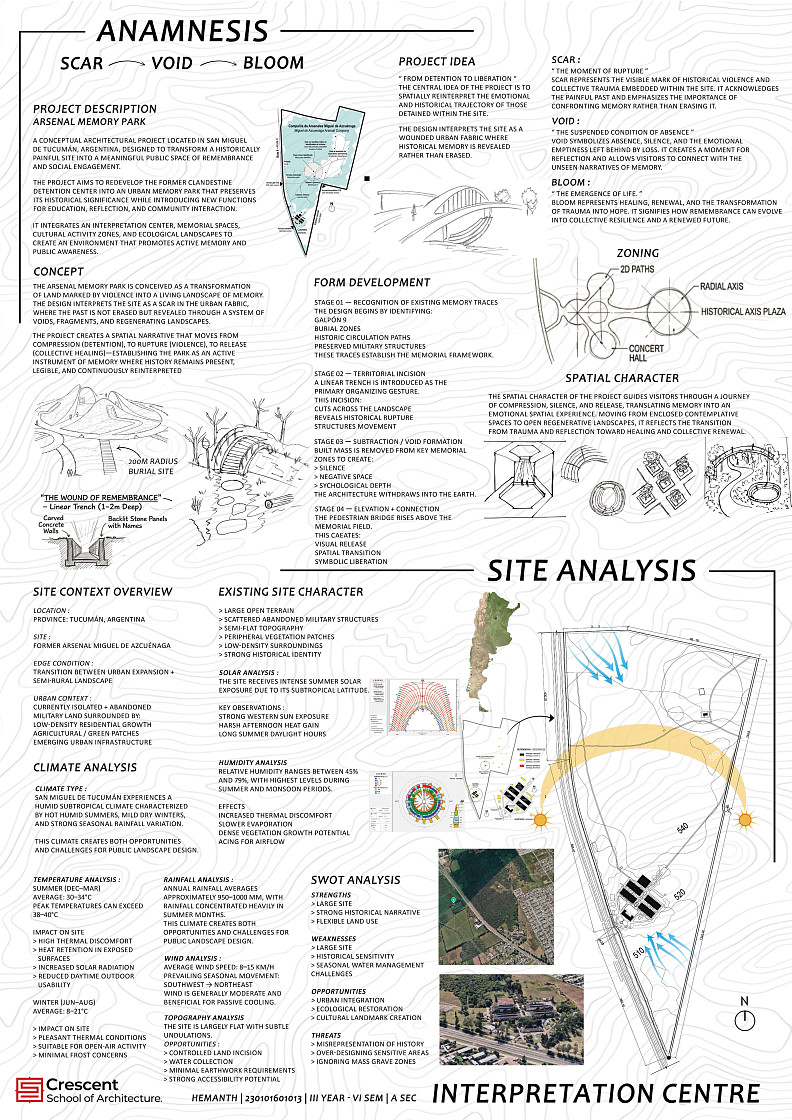
ANAMNESIS – Scar, Void, Bloom envisions the Arsenal Memory Park as a transformative landscape where memory is experienced through architecture, movement, and reflection. Rooted in the idea of healing historical trauma, the project interprets the site as a journey from rupture to renewal. The concept of Scar–Void–Bloom symbolizes traces of conflict, spaces of emotional pause, and eventual collective regeneration. Rather than preserving history through static monumentality, the proposal creates immersive spatial experiences that encourage remembrance and public engagement. Through the integration of built form and landscape, memory becomes an active and evolving experience.
Popis projektu
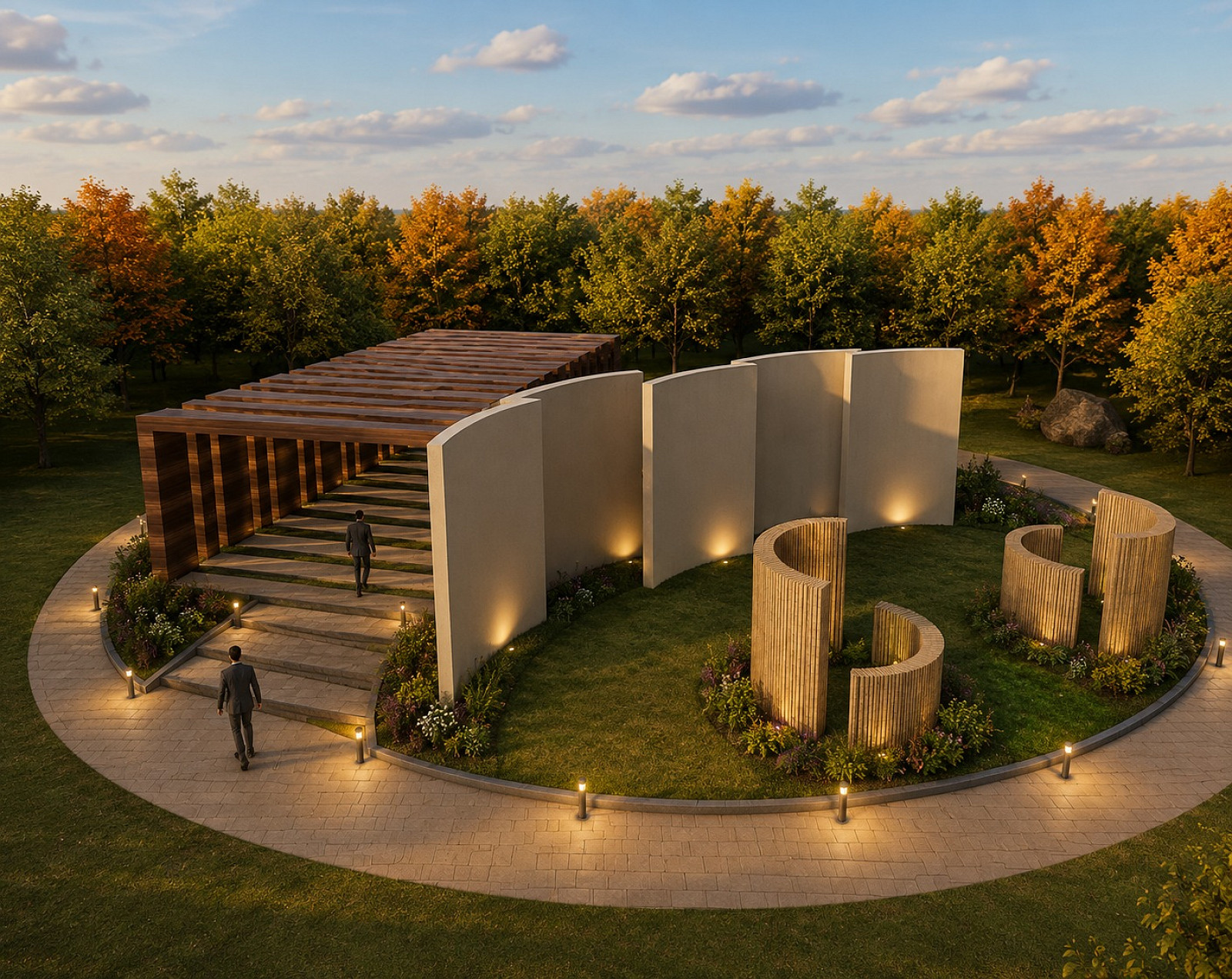
The Arsenal Memory Park reimagines a historically significant military site into a memorial and cultural environment that promotes remembrance, education, and social interaction. Organized around a central Memory Plaza, the project establishes a radial network of educational, exhibition, performance, and contemplative spaces. Curvilinear forms, controlled natural light, and landscape integration reinforce the emotional transition from loss to healing embedded within the project concept. Each architectural intervention is designed to foster both individual reflection and collective participation. Rather than presenting history as a fixed narrative, the proposal creates an immersive environment where memory remains relevant, accessible, and continuously reinterpreted by future generations.
Technické informace
The project adopts a radial planning strategy, organizing functional zones around a central commemorative core to ensure intuitive movement and spatial cohesion. Climatic responsiveness is achieved through low-rise massing, passive ventilation, recessed built forms, and controlled daylighting strategies tailored to the environmental conditions of Tucumán. Curvilinear geometries enhance pedestrian circulation while reinforcing the conceptual language of continuity, reflection, and emotional transition. Landscape integration plays a crucial role in improving thermal comfort, visual softness, and experiential quality throughout the site. The proposal emphasizes accessibility, environmental sensitivity, and spatial sequencing to create a cohesive and emotionally responsive memorial environment.
Dokumentace

Copyright © 2026 INSPIRELI | All rights reserved. Use of this website signifies your agreement to the Terms of Use, Privacy Policy, and use of cookies.