Arsenal Memory Park Interpretation Centre


Idea projektu
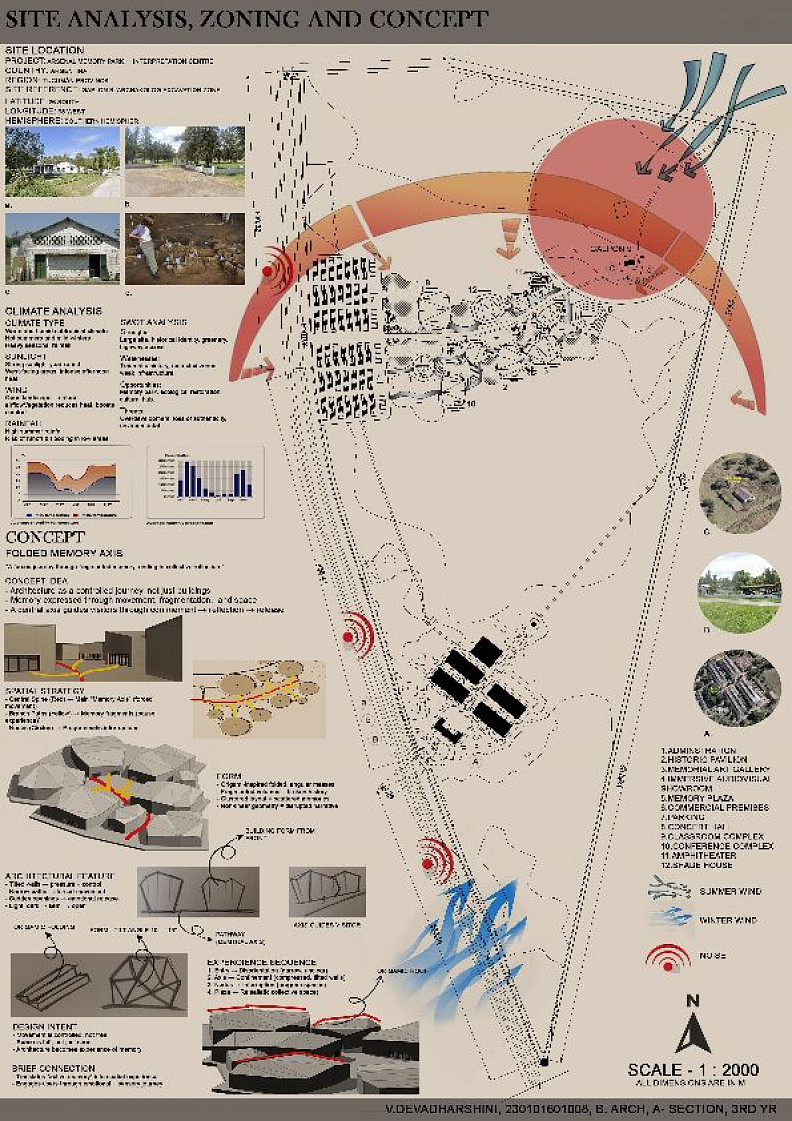
A forced journey through fragmented memory, ending in collective reflection. Architecture as a controlled journey, not just buildings. Memory expressed through movement, fragmentation, and space. A central axis guides visitors through confinement, reflection, and release.
Popis projektu
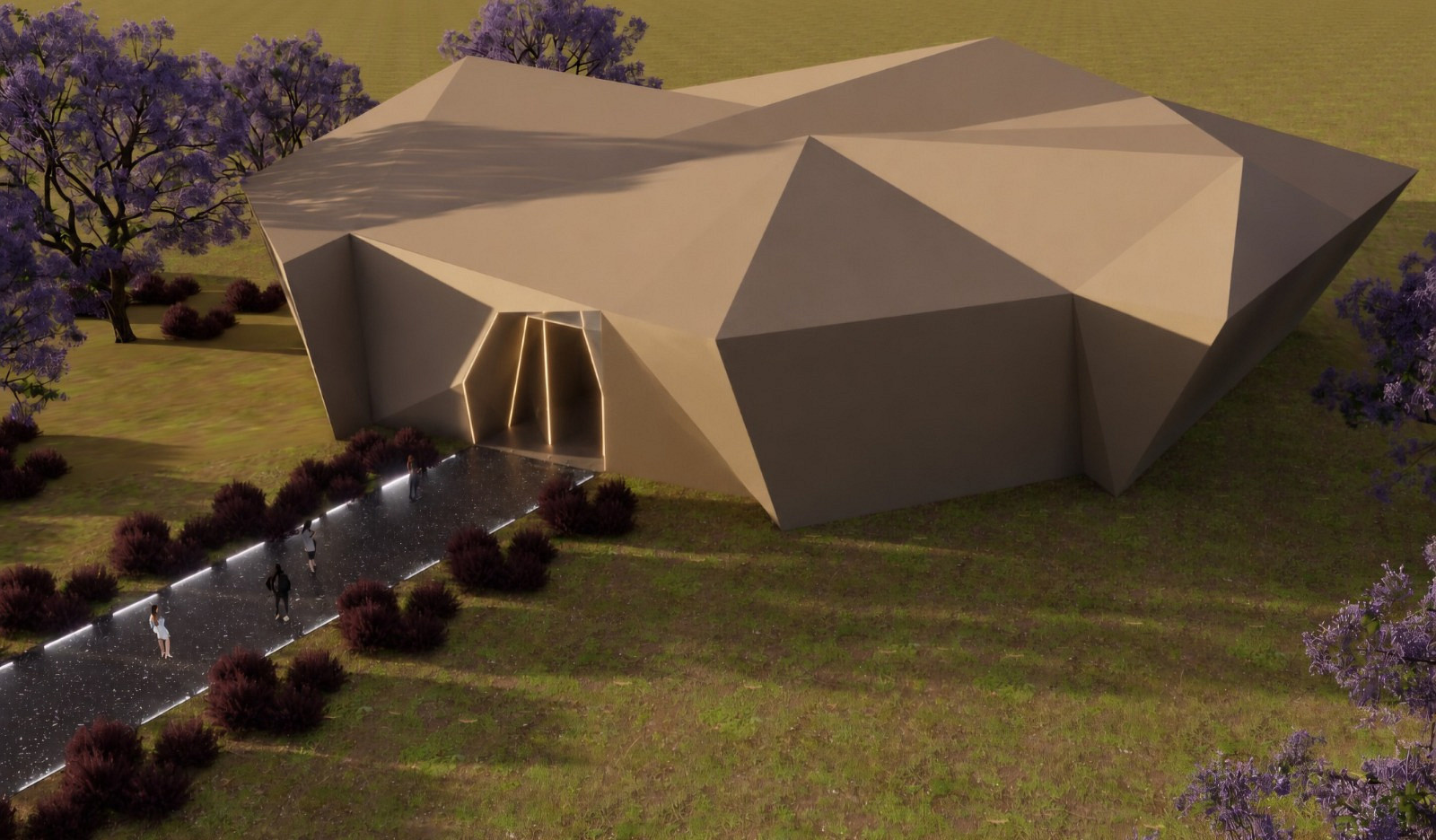
The project is an interpretation centre located at the Arsenal Memory Park in Tucumán Province, Argentina, at the Galpon 9 archaeological excavation zone. The concept, titled 'Folded Memory Axis,' uses origami-inspired folded angular masses to create fragmented volumes symbolizing broken history. The clustered layout represents scattered memories with non-linear geometry creating a disrupted narrative. The spatial strategy employs a central spine as the main 'Memory Axis' for forced movement, branch paths as memory fragments for pause and experience, and nodes as programmatic interruptions. The program includes administration, historic pavilion, memorial art gallery, immersive audiovisual showroom, memory plaza, commercial premises, parking, concert hall, classroom complex, conference complex, amphitheater, and shade house.
Technické informace
Scale 1:2000, all dimensions in meters. The site is located at latitude 28 South, longitude 65 West in the Southern Hemisphere. Climate type is warm and humid subtropical with hot summers, mild winters, and heavy seasonal rainfall. Architectural features include tilted walls for pressure and control, narrow paths for forced movement, sudden openings for emotional release, and light transitions from dark to semi to open. Form uses tilt angles of 10-15 degrees. Origamic roof design with central axis pathway guiding visitors. The experience sequence progresses from entry/disorientation through axis/confinement with compressed tilted walls, to nodes/interruption at program spaces, and finally plaza/release as collective space.
Dokumentace

Copyright © 2026 INSPIRELI | All rights reserved. Use of this website signifies your agreement to the Terms of Use, Privacy Policy, and use of cookies.
