A Journey Through Memory and Knowledge


Idea projektu
The idea of this project is to transform the historically significant Arsenal site into a memorial landscape where memory, movement, and nature become part of a continuous spatial experience. Instead of creating a single monument, the entire site acts as a journey of reflection and awareness. Through landscape, circulation, water elements, and contemplative spaces, the project encourages visitors to emotionally connect with history while creating a peaceful public environment for future generations.
Popis projektu
The project is designed as an experiential memorial landscape located on the Arsenal site in San Miguel de Tucumán, Argentina. The proposal combines architecture, landscape, and public space to preserve the historical identity of the site while introducing new spaces for reflection, gathering, and learning.
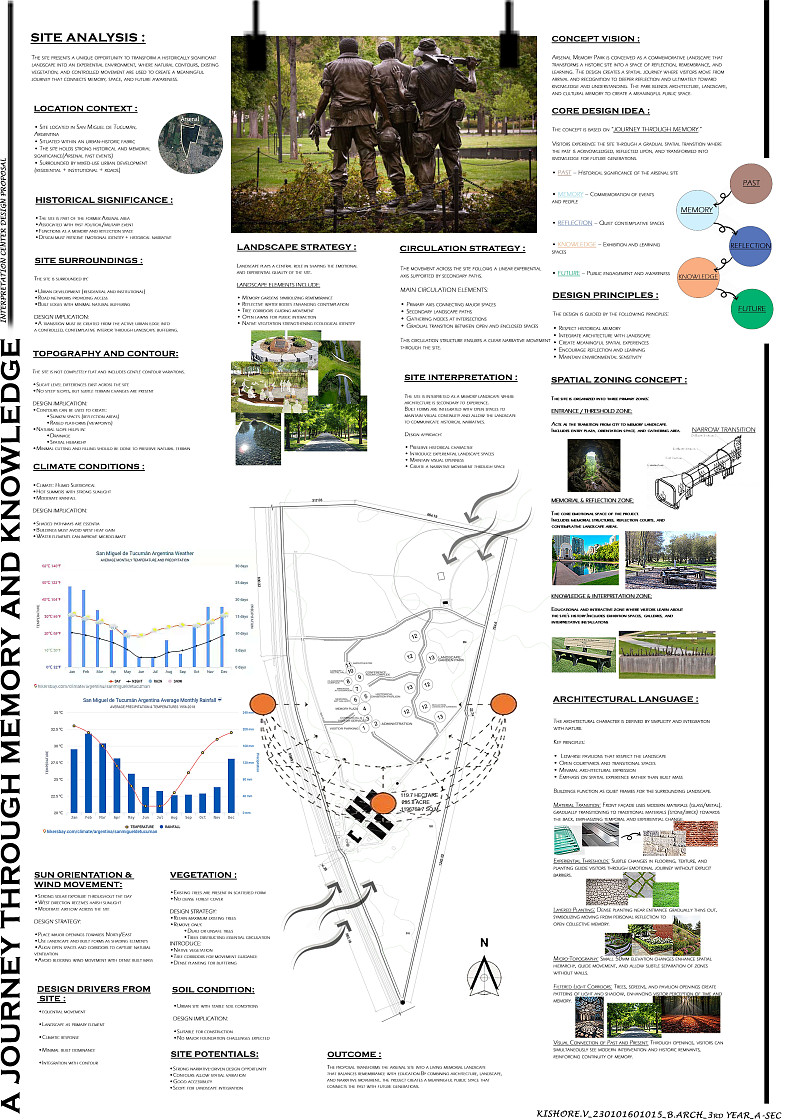
The master plan is organized through a strong circulation spine that connects memorial plazas, landscape gardens, water bodies, shaded pathways, gathering spaces, and contemplative zones. The movement across the site is carefully designed to create sequential emotional experiences through open and enclosed spatial transitions.
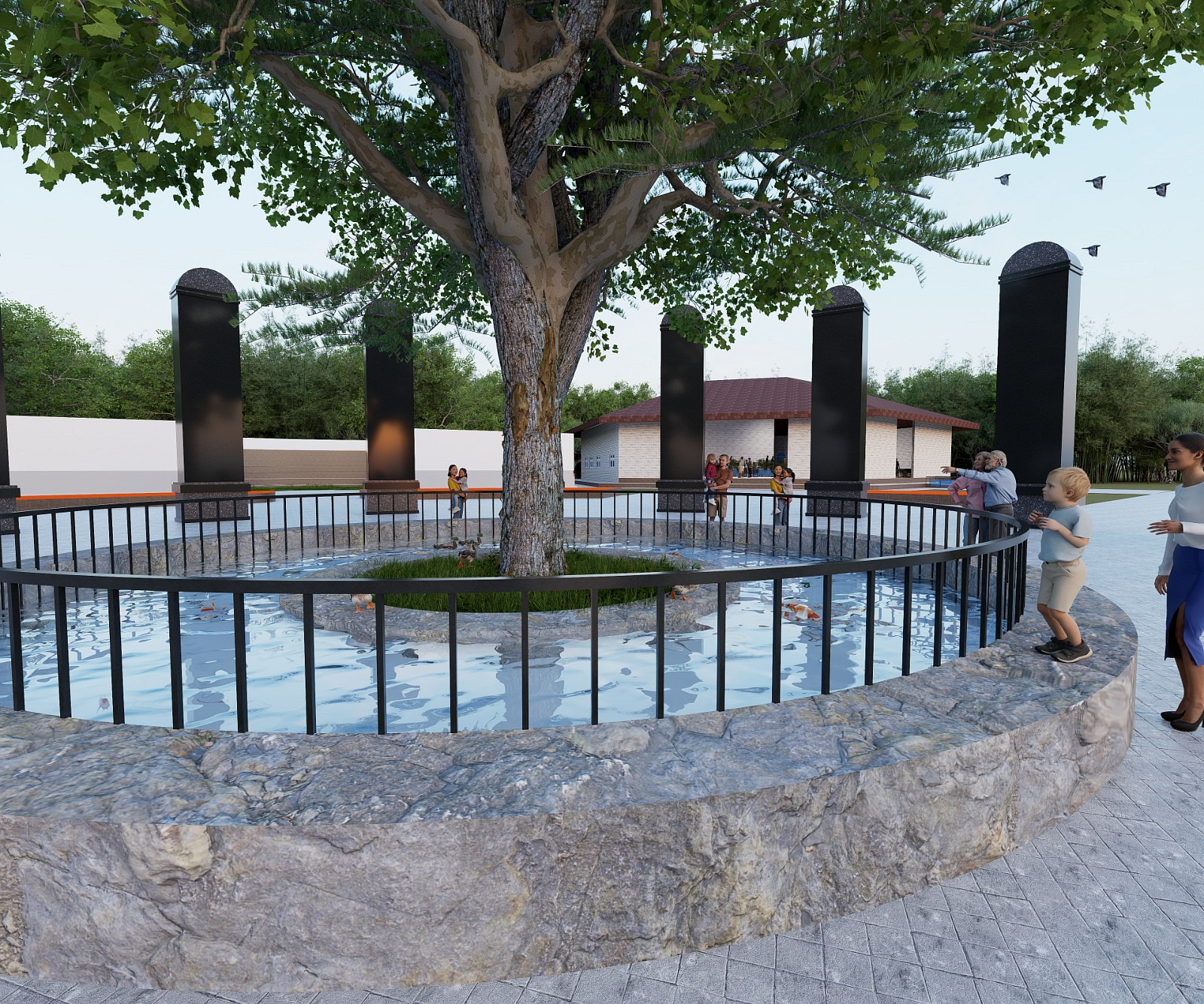
Landscape acts as the primary architectural element. Existing vegetation is retained wherever possible, while native planting and ecological landscape strategies strengthen environmental sustainability. Water features and shaded pathways improve thermal comfort and enhance the sensory experience of the users.
The project ultimately transforms the Arsenal site into a living memorial where memory, public interaction, and nature coexist through architecture and landscape.
Technické informace
The project is designed using a combination of landscape planning and lightweight architectural interventions integrated with the natural terrain. The primary materials include exposed concrete, natural stone paving, weather-resistant steel, timber elements, and permeable paving systems.
The design minimizes site disturbance by preserving existing vegetation and reducing excessive earthwork. Native landscape species are used to improve ecological balance and reduce maintenance requirements. Water bodies and shaded circulation systems help create passive cooling and improve thermal comfort within the site.
The project was developed using AutoCAD, SketchUp, Lumion / D5 Render, and Adobe Photoshop.
Dokumentace


Copyright © 2026 INSPIRELI | All rights reserved. Use of this website signifies your agreement to the Terms of Use, Privacy Policy, and use of cookies.