Interpretation Centre


Idea projektu
An interpretation centre designed around the concept “Axis of Disorientation”, inspired by the fractured cultural and political memory of Argentina. The project explores themes of conflict, fragmentation, uncertainty, and eventual realignment through spatial experience. The architecture uses fragmented forms, angular circulation paths, and controlled visual connections to create an immersive journey that guides visitors from confusion toward clarity and reflection. The centre combines exhibition, memorial, and interactive spaces to create an emotionally engaging environment for cultural interpretation and public experience.
Popis projektu
The project is an interpretation centre that translates the idea of disorientation and reconciliation into architectural form. The design is developed through fragmented masses and intersecting axes that symbolize broken histories and conflicting narratives. Visitors move through compressed and expanded spaces that create changing spatial experiences, reinforcing the concept of uncertainty and rediscovery.
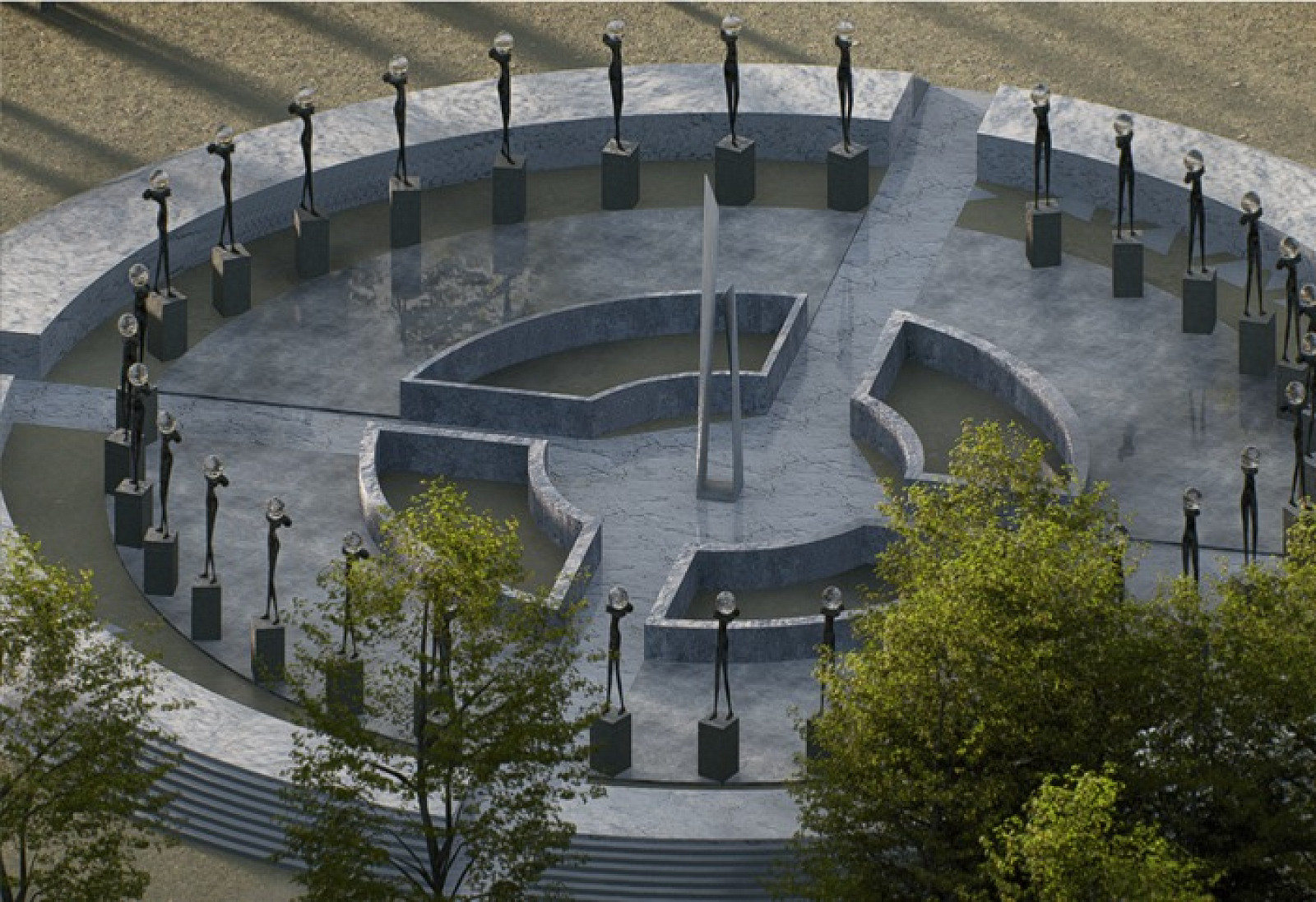
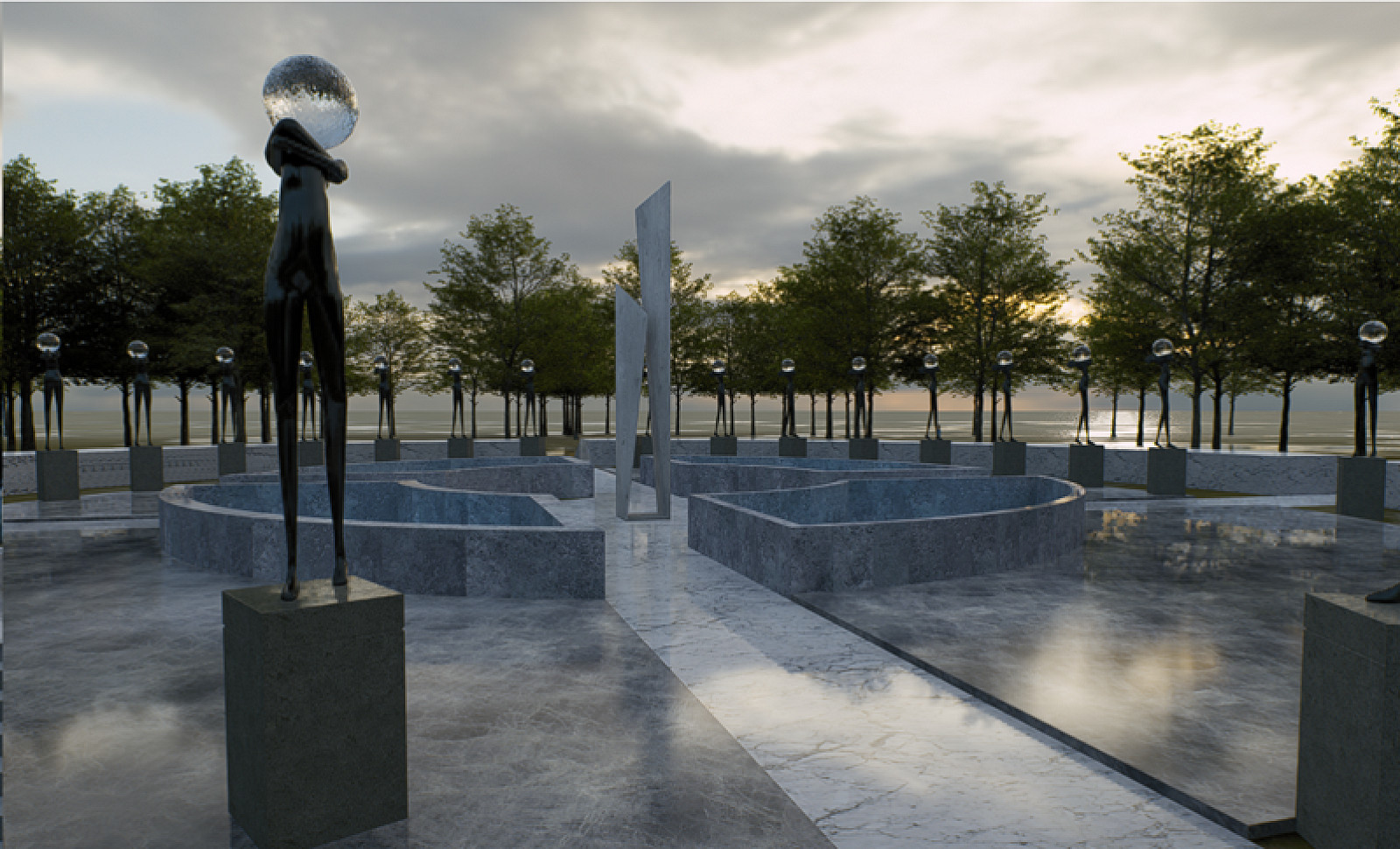
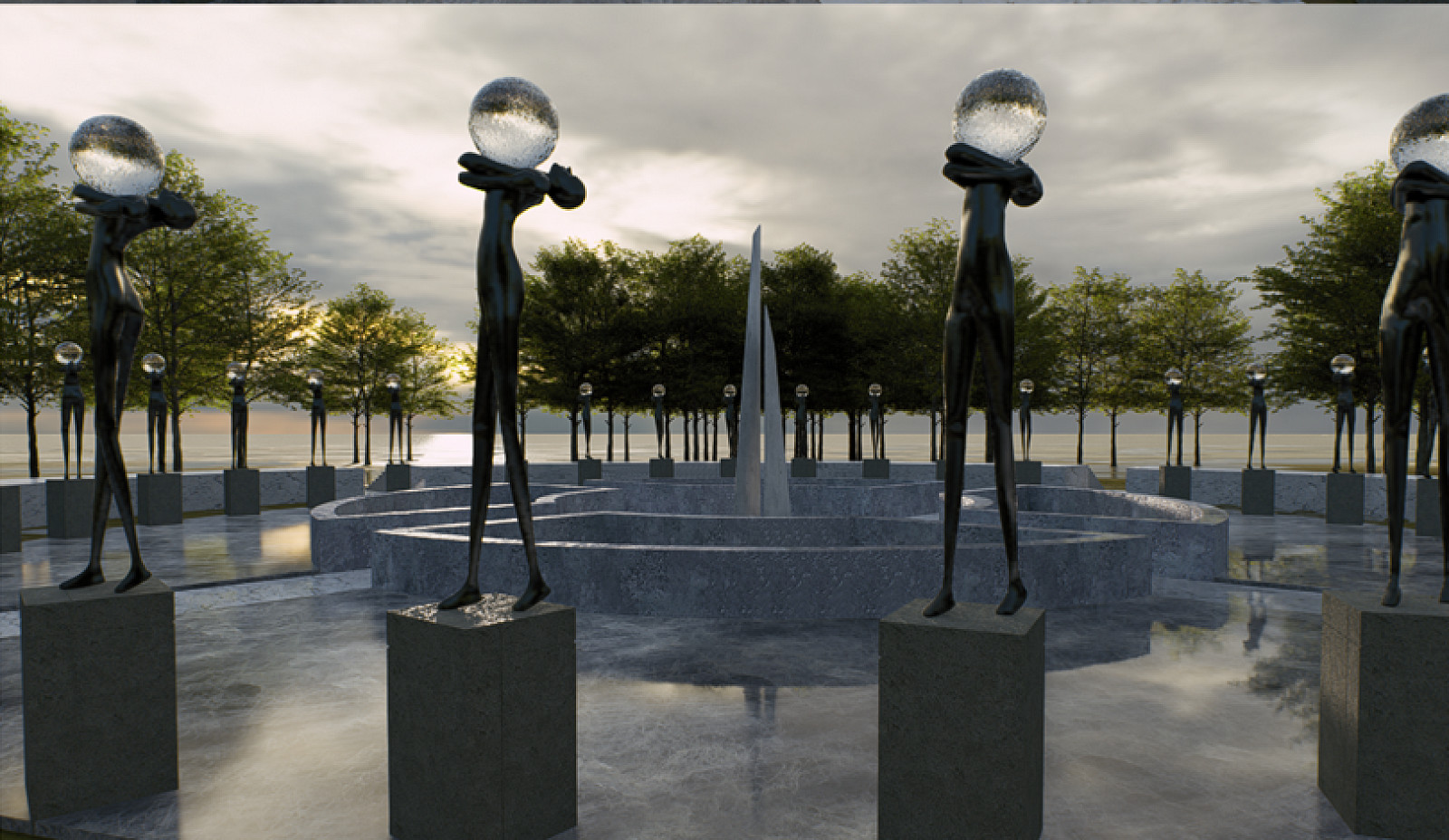
The building consists of exhibition galleries, memorial spaces, interactive audiovisual zones, and transitional courtyards connected through a central circulation spine. The form development evolves from a simple base volume into fragmented architectural masses surrounding a memory plaza. Angular walls, varying roof heights, and contrasting solid–void relationships enhance the feeling of movement and tension within the space.
Landscape elements and water features are integrated to create moments of pause and reflection. Natural lighting is strategically introduced through cuts, openings, and transitional spaces to symbolize realignment and hope. The overall design creates a narrative architectural experience that blends memory, conflict, and cultural interpretation.
Technické informace
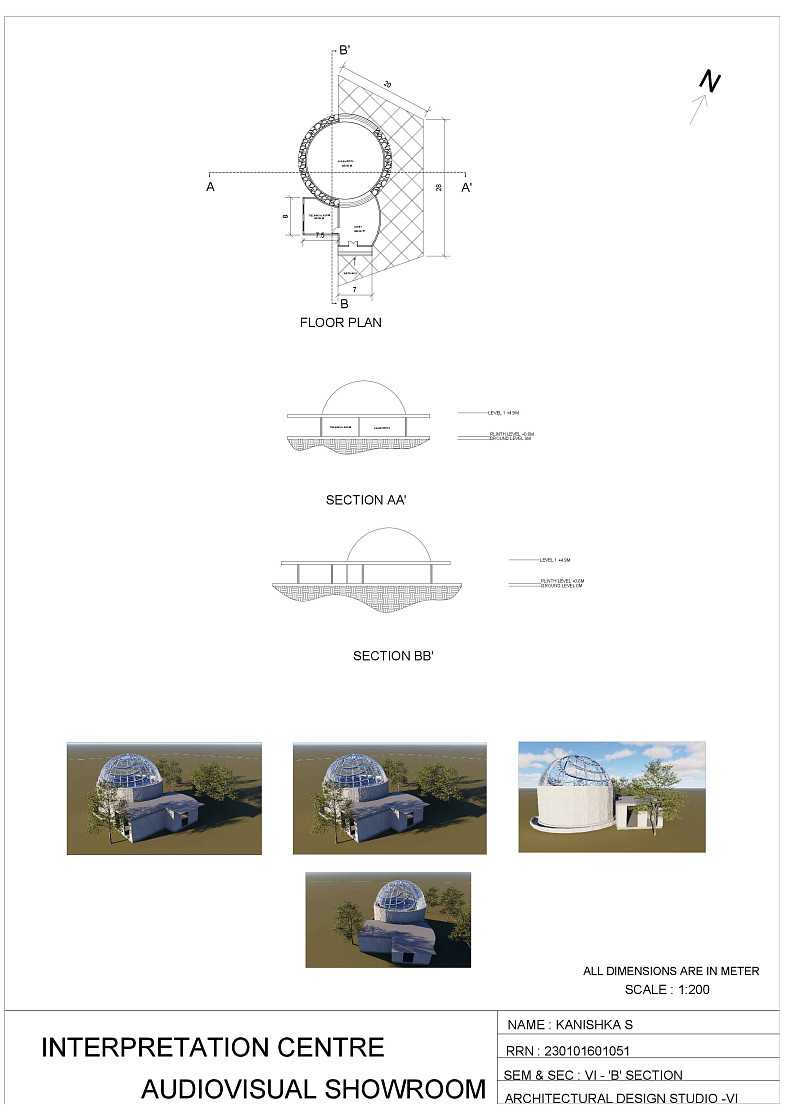
Scale: 1:200. All dimensions are in meters.
The project consists of an interpretation centre with exhibition and memorial functions. The design includes fragmented building masses organized around a central memory plaza and connected through angular circulation paths. The structure contains exhibition galleries, audiovisual spaces, memorial zones, administration spaces, and service areas.
The architectural form is developed using geometric fragmentation and directional axes. Sections AA’ and BB’ illustrate the varying roof profiles, spatial transitions, and changing floor levels within the project. The structure combines concrete walls, steel framing, glass openings, and textured landscape surfaces to reinforce the concept of conflict and realignment. Natural light, shaded transitional areas, and water elements are incorporated as major environmental and experiential features throughout the design.
Dokumentace

Copyright © 2026 INSPIRELI | All rights reserved. Use of this website signifies your agreement to the Terms of Use, Privacy Policy, and use of cookies.