National Museum of Sacrifice: An Architecture of Remembrance Beyond the Battlefield


Idea projektu
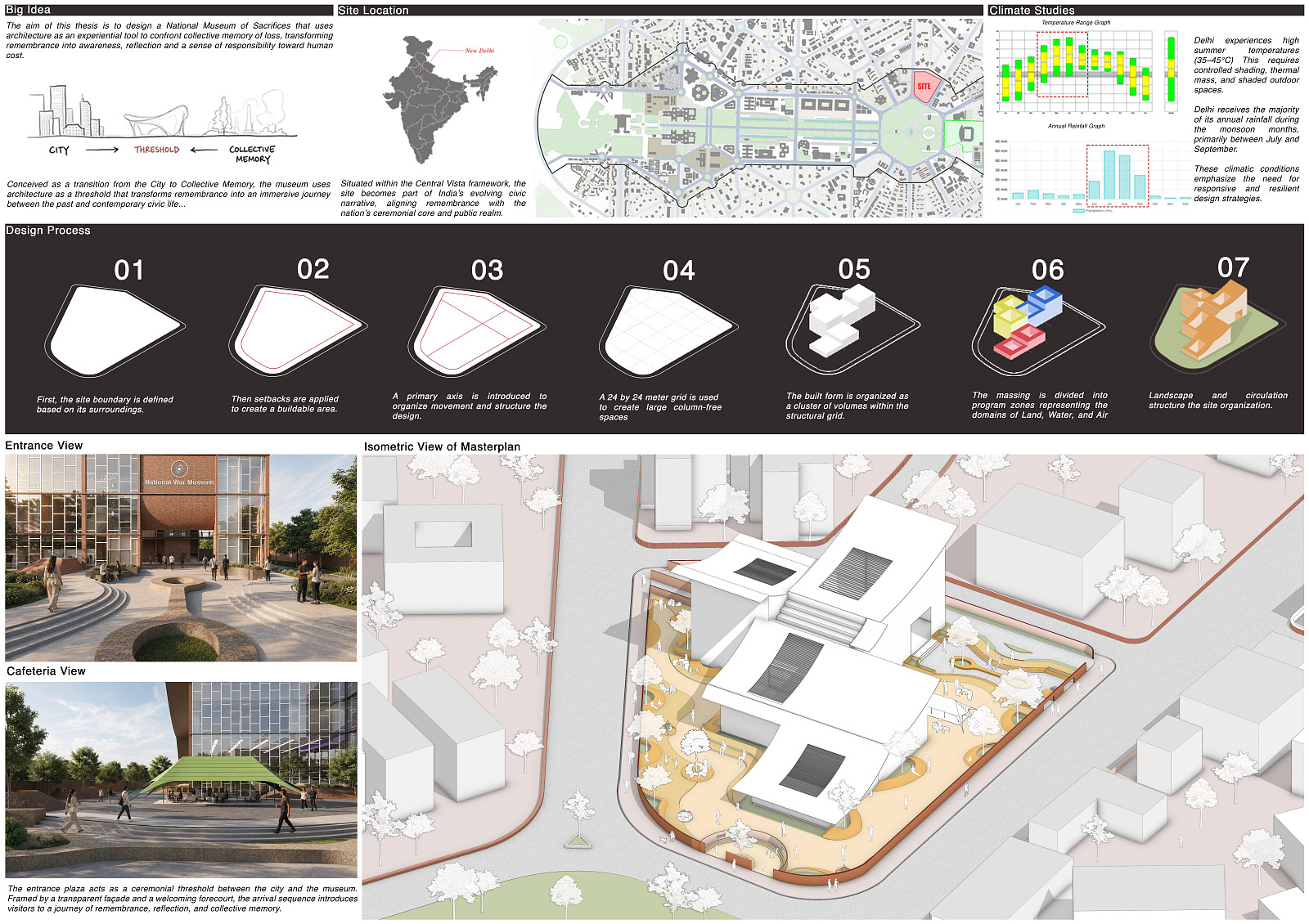
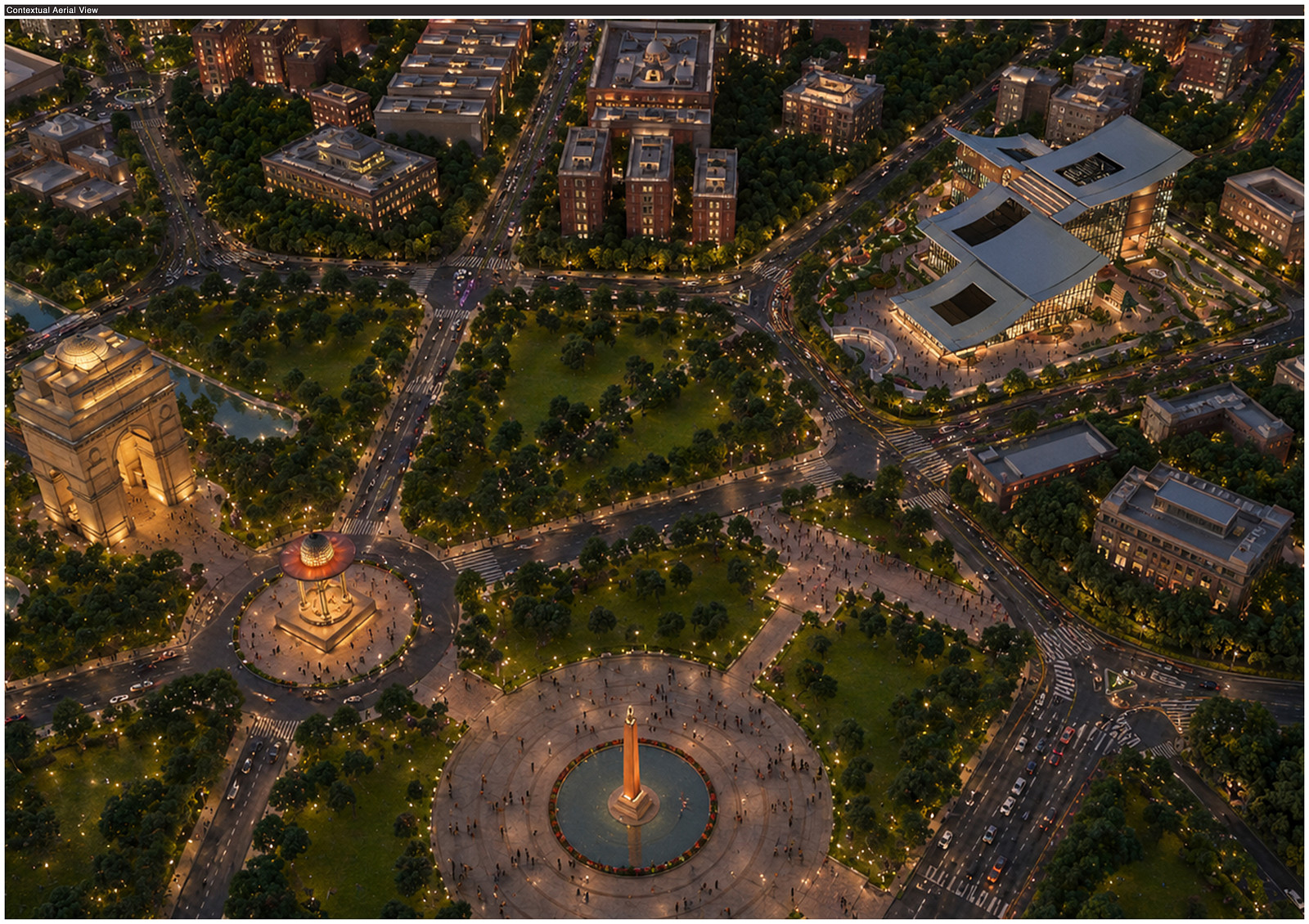
The National War Museum is conceived as an architecture of remembrance that transforms collective memory into a meaningful public experience. Located within the ceremonial landscape of Central Vista, New Delhi, the project seeks to bridge the gap between historical sacrifice and contemporary civic consciousness. Rather than functioning solely as a repository of artifacts, the museum is envisioned as an immersive journey through stories of courage, loss, resilience, and national identity.
The design interprets remembrance as a spatial experience. Visitors move through a sequence of galleries, memorial spaces, and contemplative environments that gradually transition from the realities of conflict to reflection and collective memory. Through architecture, the project aims to preserve the legacy of those who served the nation while fostering awareness, empathy, and responsibility among future generations.
Popis projektu
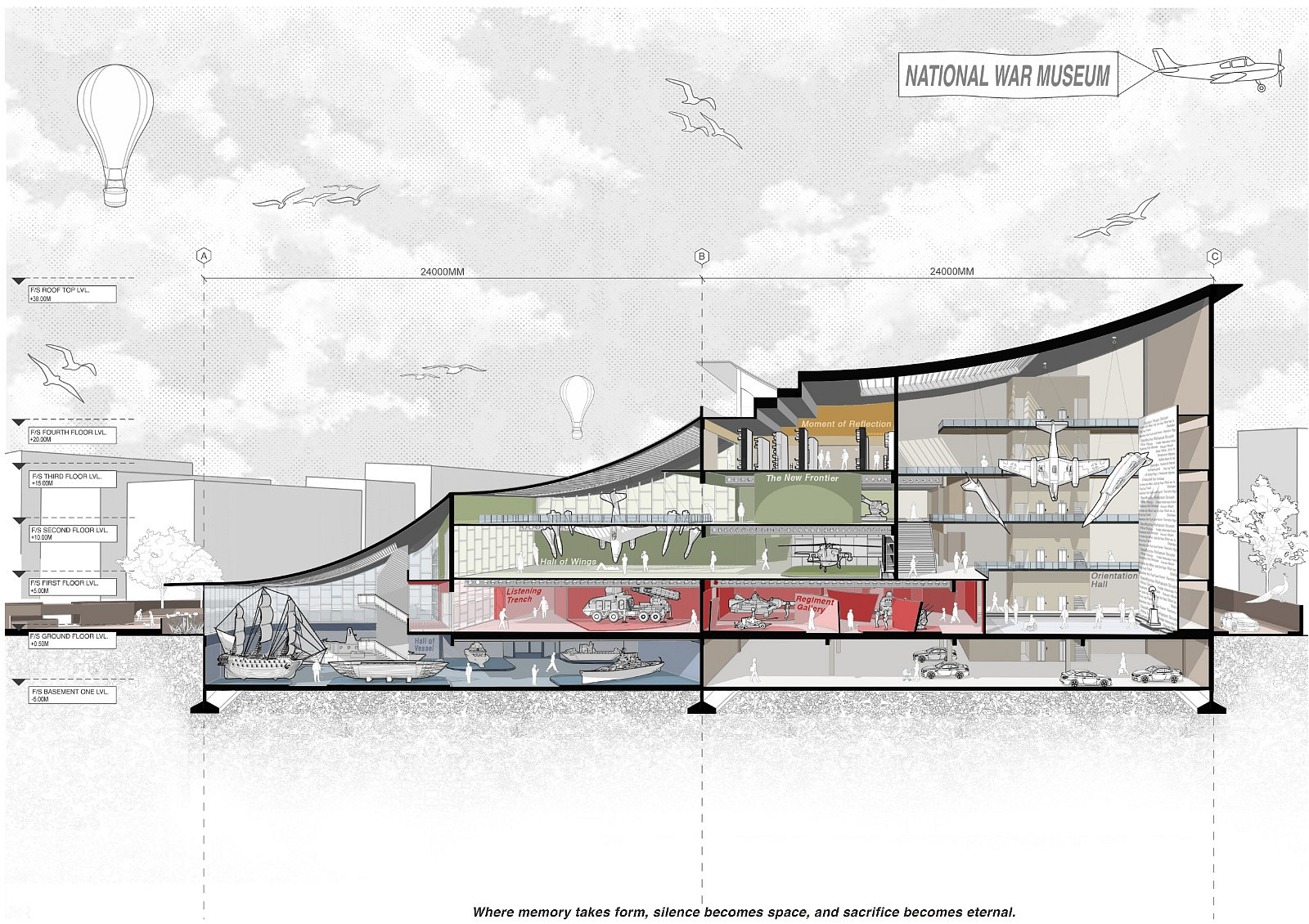
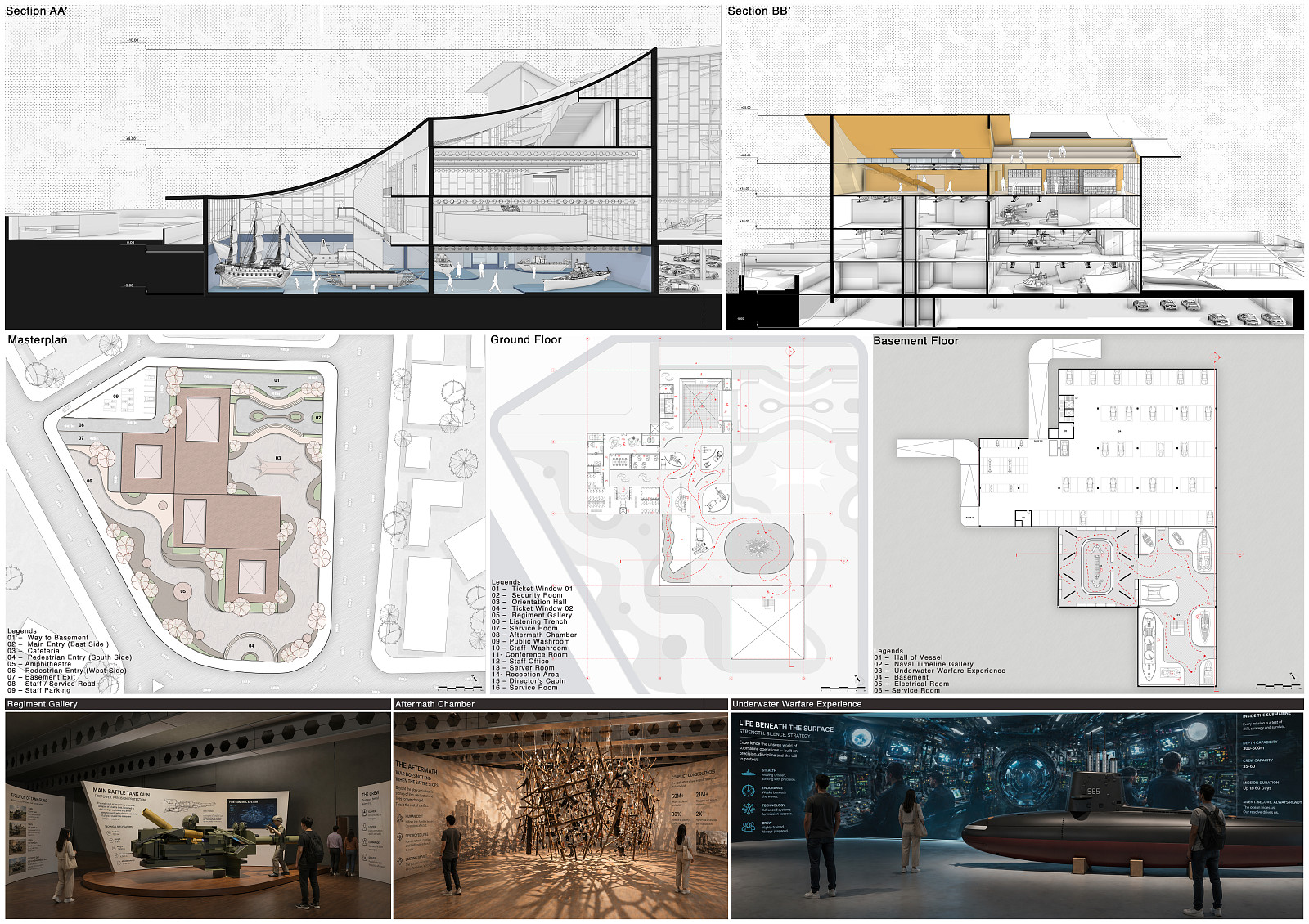
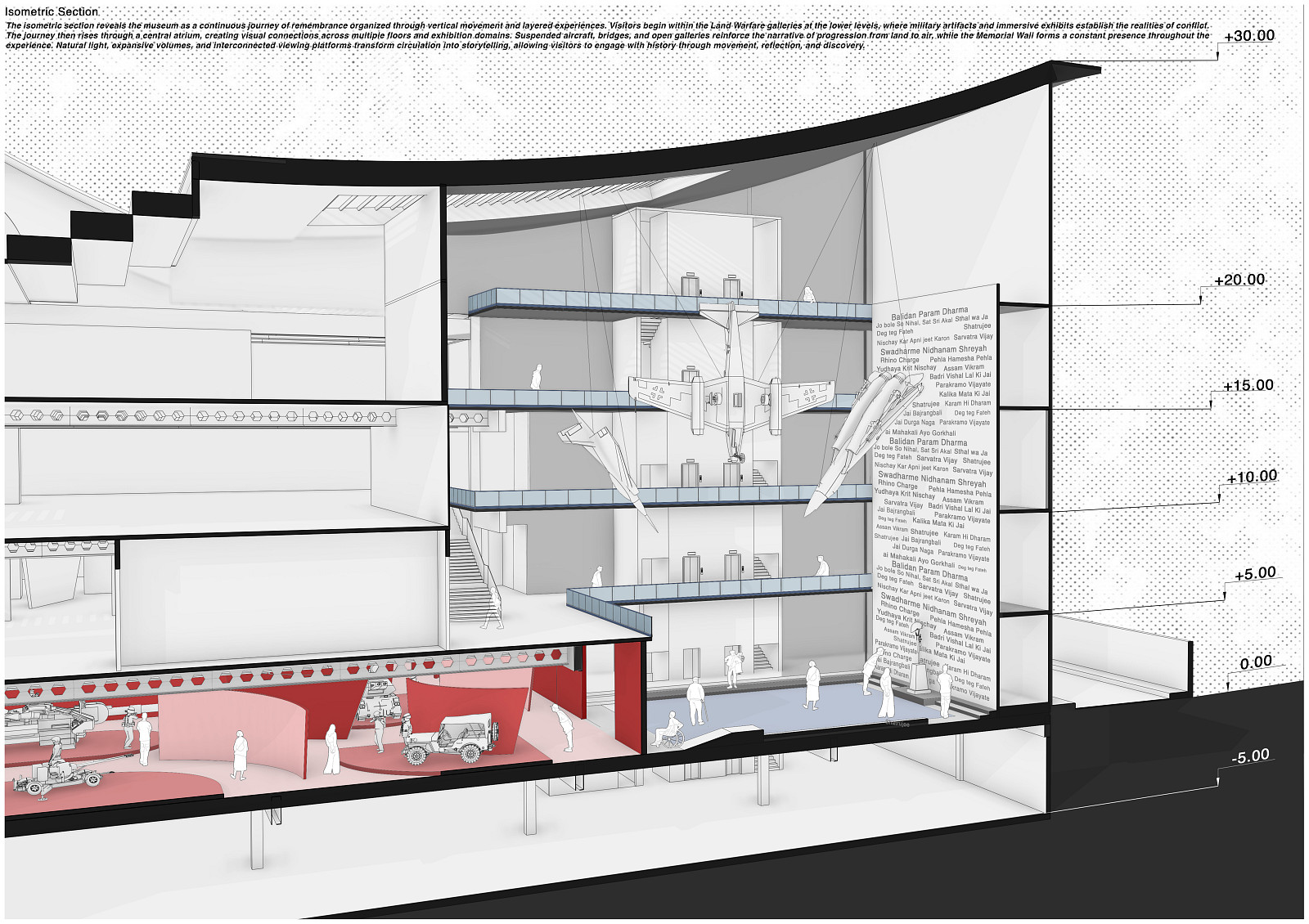
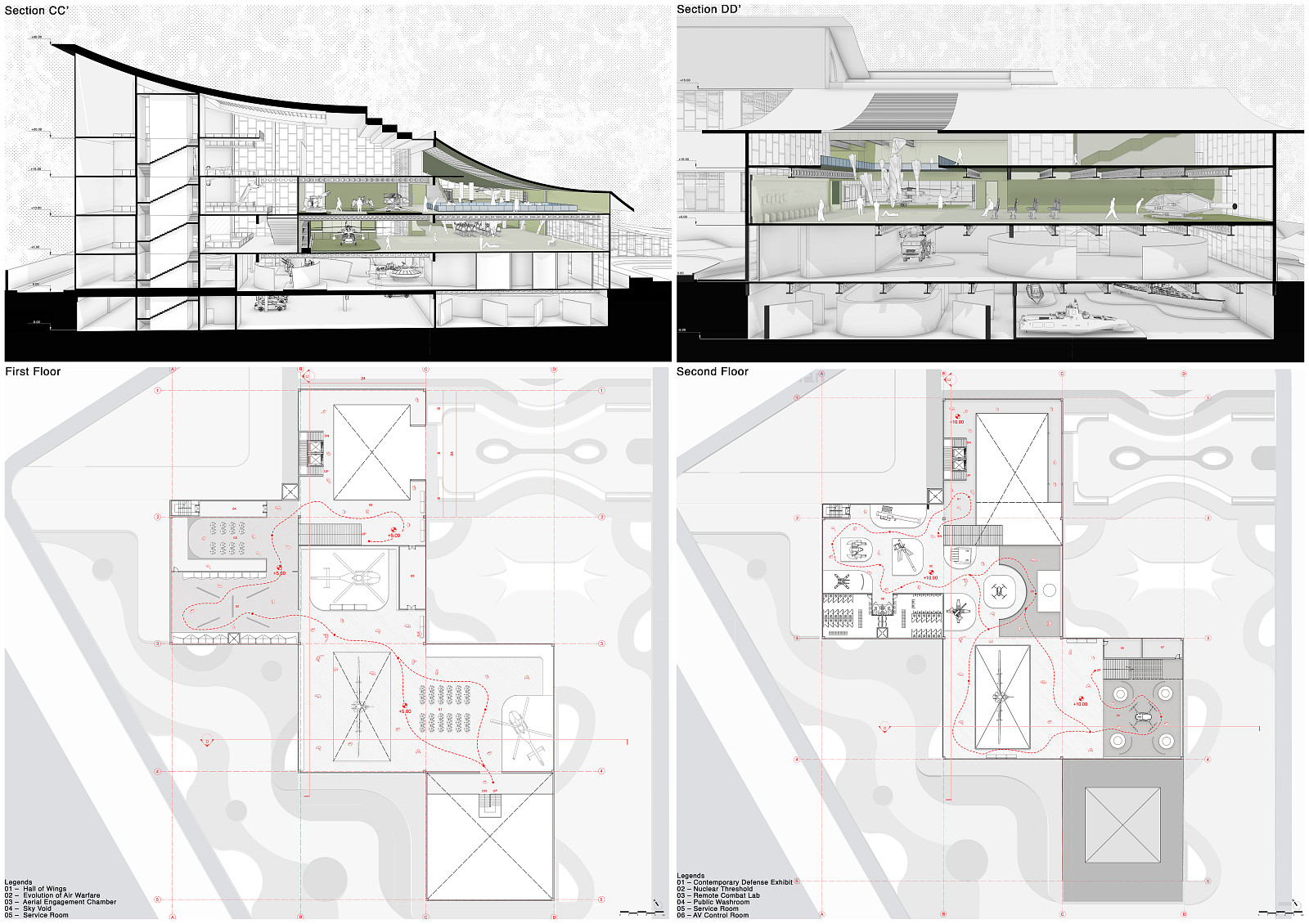
The museum is organized around a narrative journey that guides visitors through different domains of warfare, sacrifice, and remembrance. The lower levels house immersive galleries dedicated to land, naval, and air warfare, displaying military artifacts, interactive exhibits, and educational installations. As visitors ascend through the building, the experience shifts from historical interpretation toward reflection and commemoration.
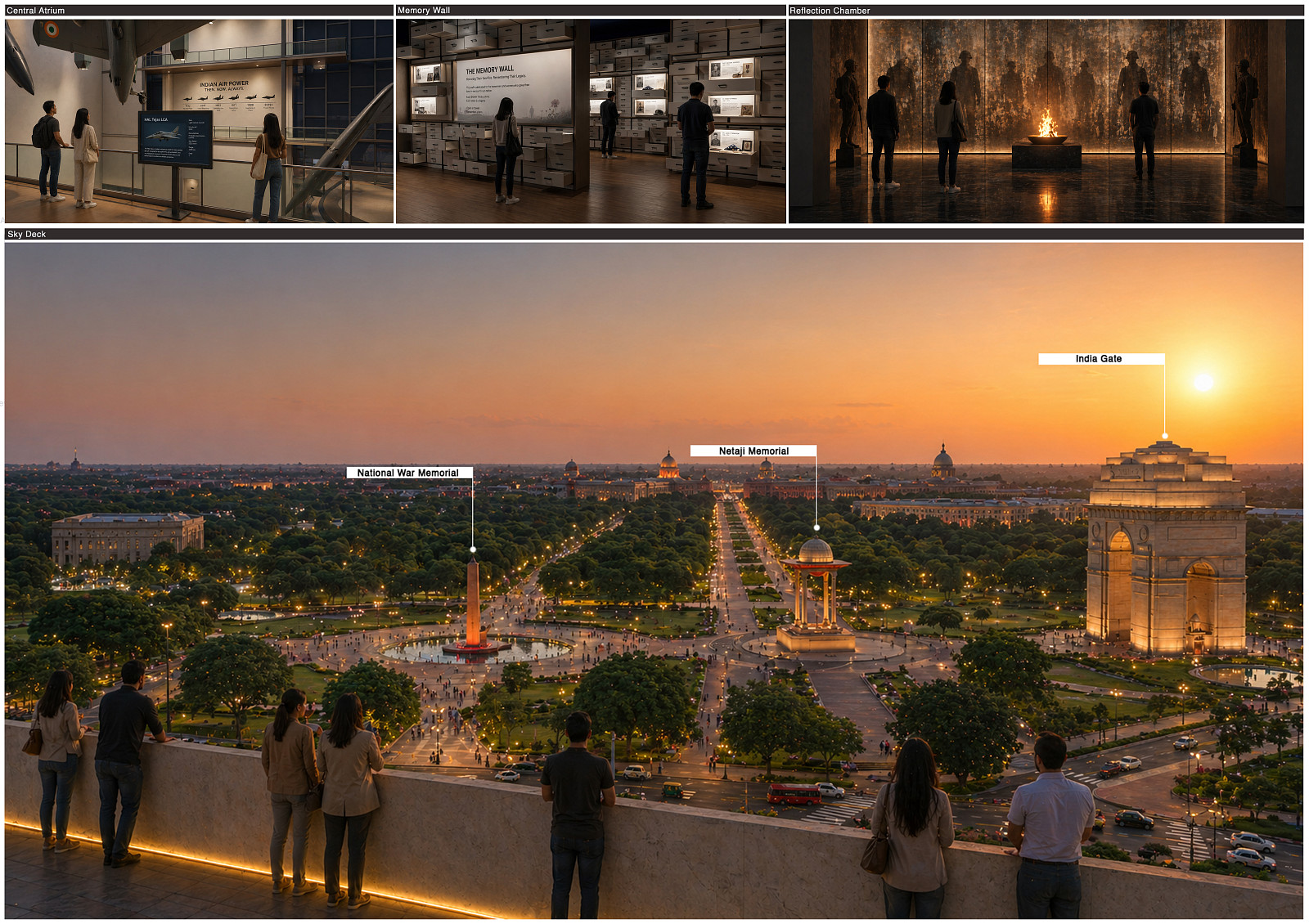
A central memorial atrium forms the heart of the museum, connecting multiple levels through visual and spatial continuity. Key program elements include permanent and temporary exhibition galleries, a memorial wall, reflection chamber, educational spaces, archives, research facilities, a cafeteria, public gathering areas, and a sky deck overlooking the National War Memorial and India Gate. The architectural form integrates landscape, circulation, and exhibition spaces into a unified experience that celebrates national memory while engaging the public realm.
Technické informace
The project is designed on a structural grid system that enables large-span, column-free exhibition spaces and flexible gallery layouts. The building consists of reinforced concrete structural cores combined with a steel roof structure that creates the museum's distinctive sweeping form. Extensive glazed facades provide visual connectivity between interior spaces and the surrounding landscape.
Environmental strategies include shaded public plazas, landscaped open spaces, natural daylight integration through skylights, and climate-responsive building orientation suitable for New Delhi's conditions. The museum incorporates accessible circulation systems, including ramps, elevators, and interconnected exhibition platforms, ensuring an inclusive visitor experience. The design balances functional requirements, structural efficiency, environmental performance, and symbolic architectural expression.

Copyright © 2026 INSPIRELI | All rights reserved. Use of this website signifies your agreement to the Terms of Use, Privacy Policy, and use of cookies.