Informační centrum Vltavské filharmonie


Idea projektu
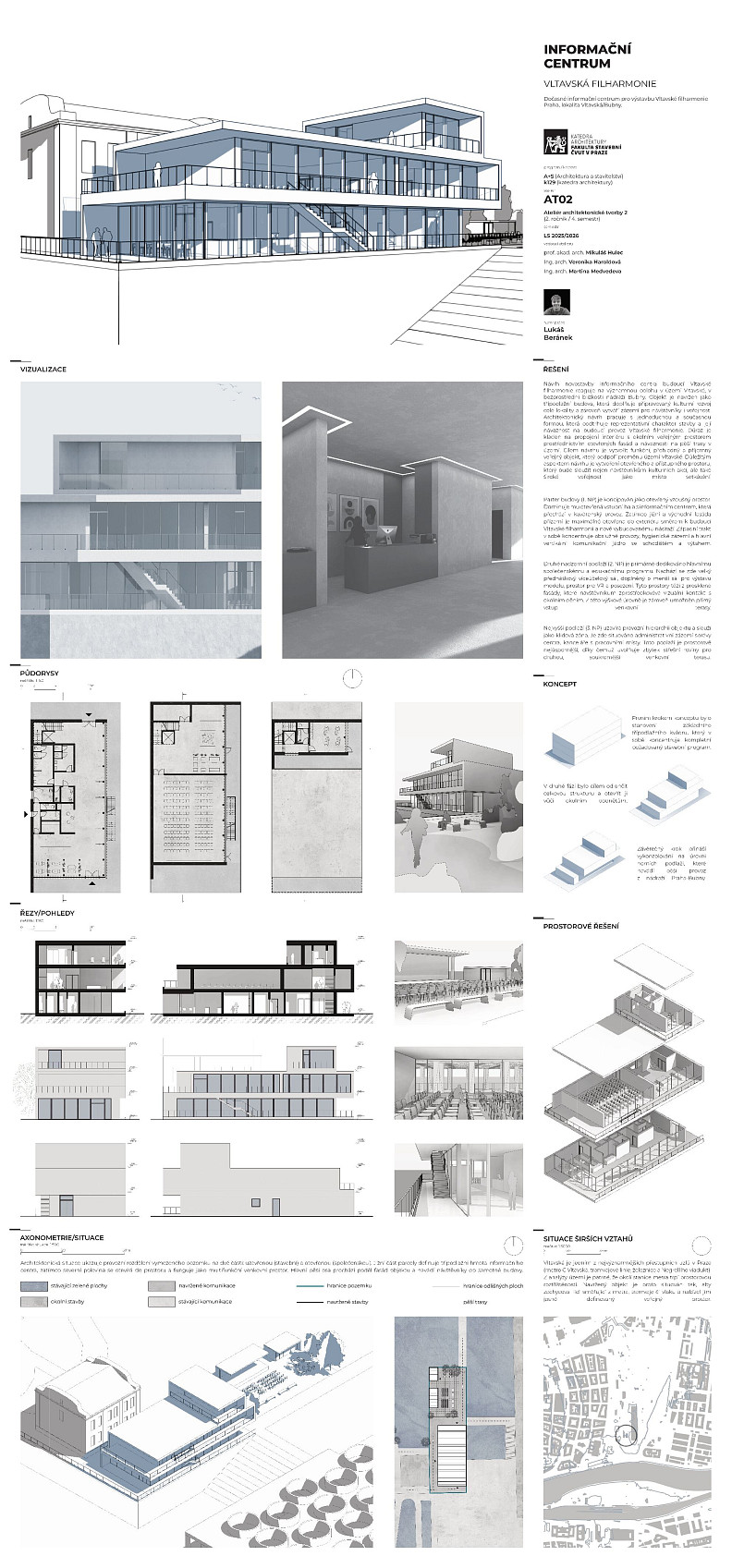
Design of a temporary information center for the construction of the Vltava Philharmonic Hall, located in the immediate vicinity of the Prague-Bubny railway station, serving as a cultural hub and gateway to the future development.
Popis projektu
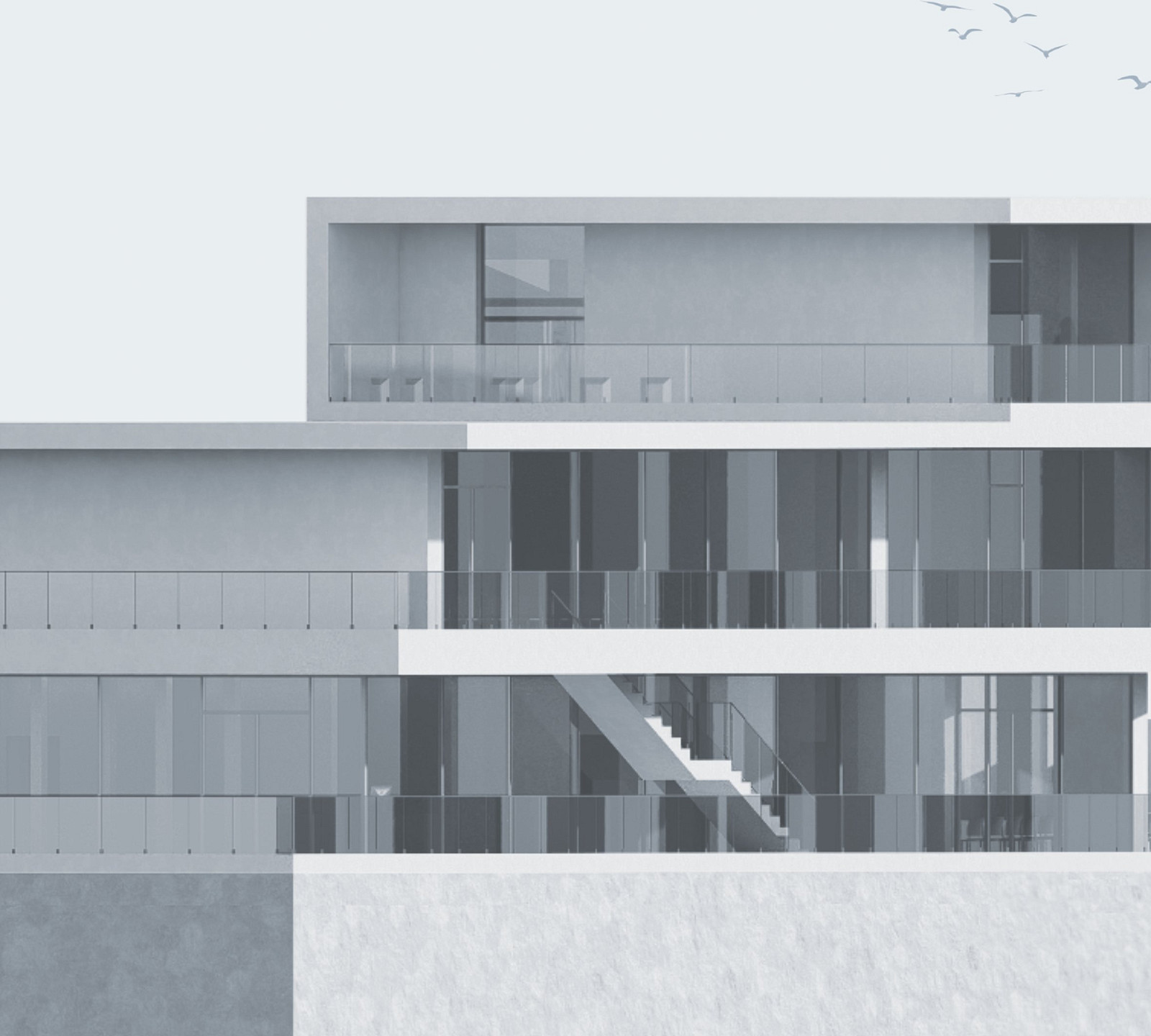
The building is conceived as a tri-part structure that brings together a cultural program combining exhibition spaces and facilities for visitors. The architectural approach works with a simple yet sculptural form that reflects the representative character of the site and its connection to the future Vltava Philharmonic Hall. The design emphasizes the relationship between interior and exterior through generous glazed facades and connections to pedestrian routes in the urban plan. The ground floor (1st NP) is designed as an openly arranged exhibition space serving as a main information center with a glazed facade enabling maximum openness to the exterior. The second floor (2nd NP) contains community and educational programs including a large multipurpose hall, smaller meeting rooms, and spaces for workshops. The top floor (3rd NP) houses the operational hierarchy of the building including administrative facilities, office spaces, and a staff room, with a rooftop terrace.
Technické informace
The concept was developed in three phases: establishing a five-story cubic volume concentrating the required building program, then shaping the mass to relate to its surroundings, and finally creating cut-outs on the upper floors that offer views toward the Prague-Bubny railway station. The site is located near major transportation hubs in Prague including Vltavská metro station, Holešovice train station, and a tram network.
Dokumentace

Copyright © 2026 INSPIRELI | All rights reserved. Use of this website signifies your agreement to the Terms of Use, Privacy Policy, and use of cookies.