Reclaiming Lost Spaces. A design for a monastery with a nursing home function on the site of a former energy bunker in Gdańsk


Idea projektu
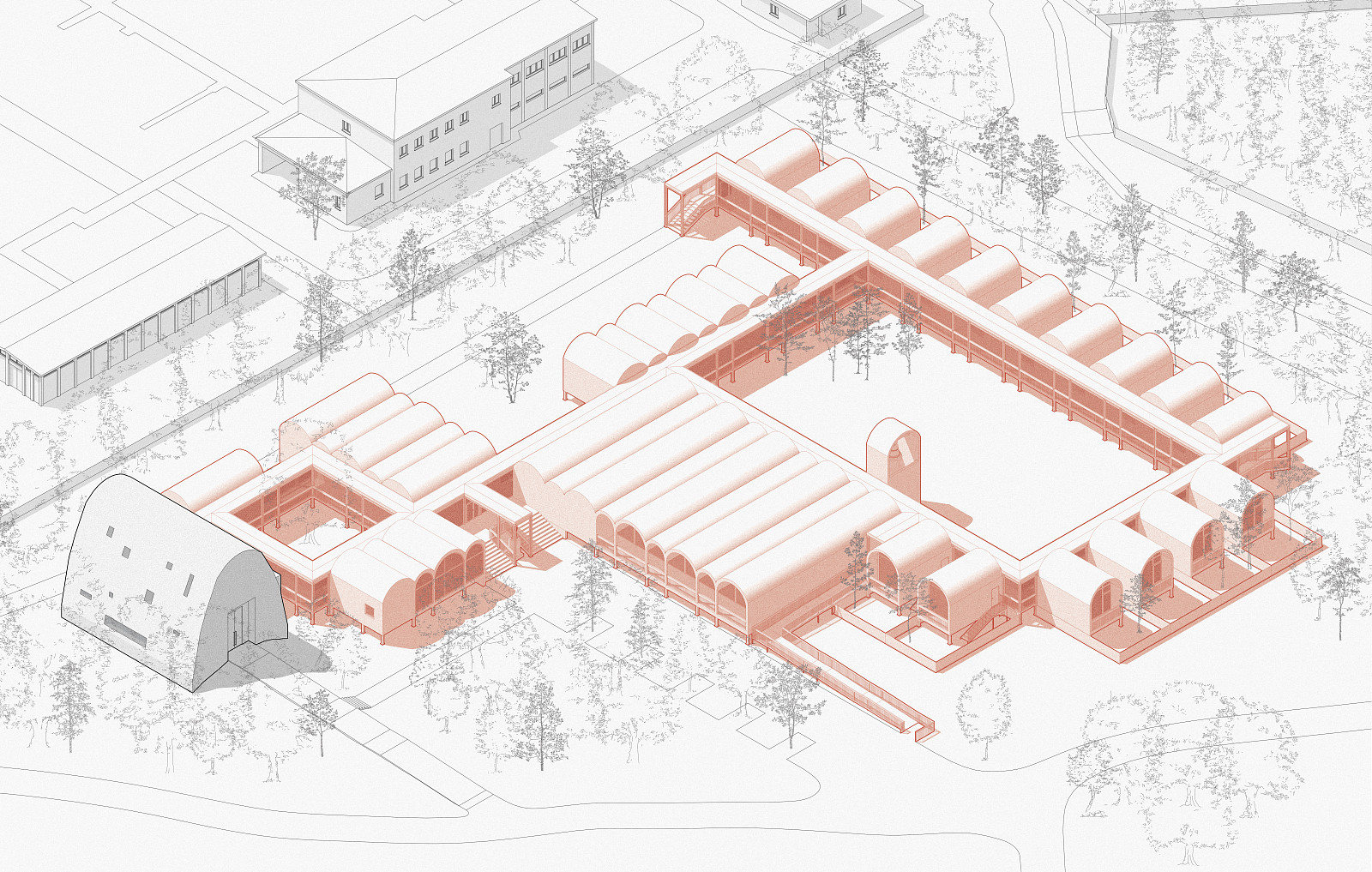
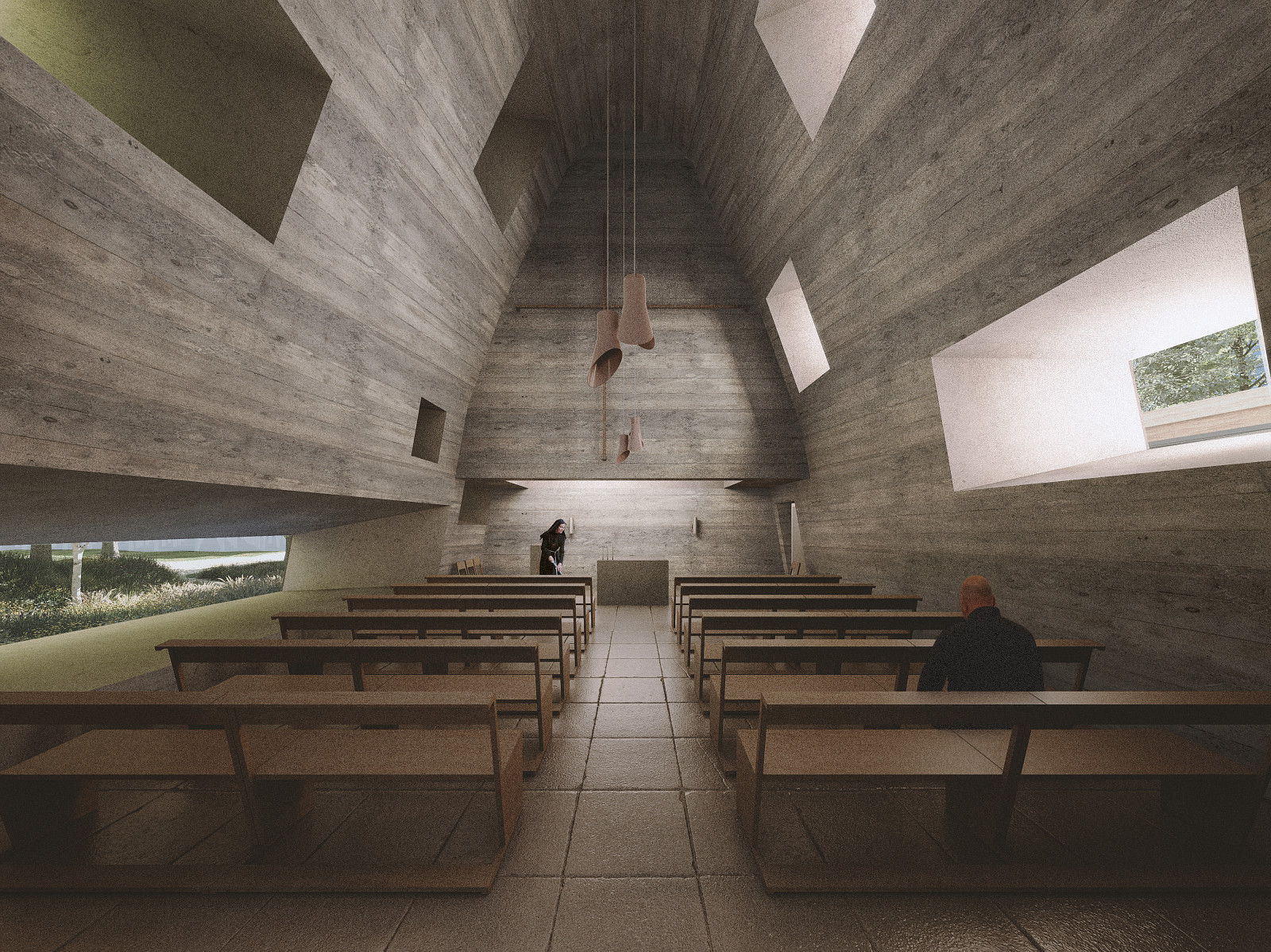
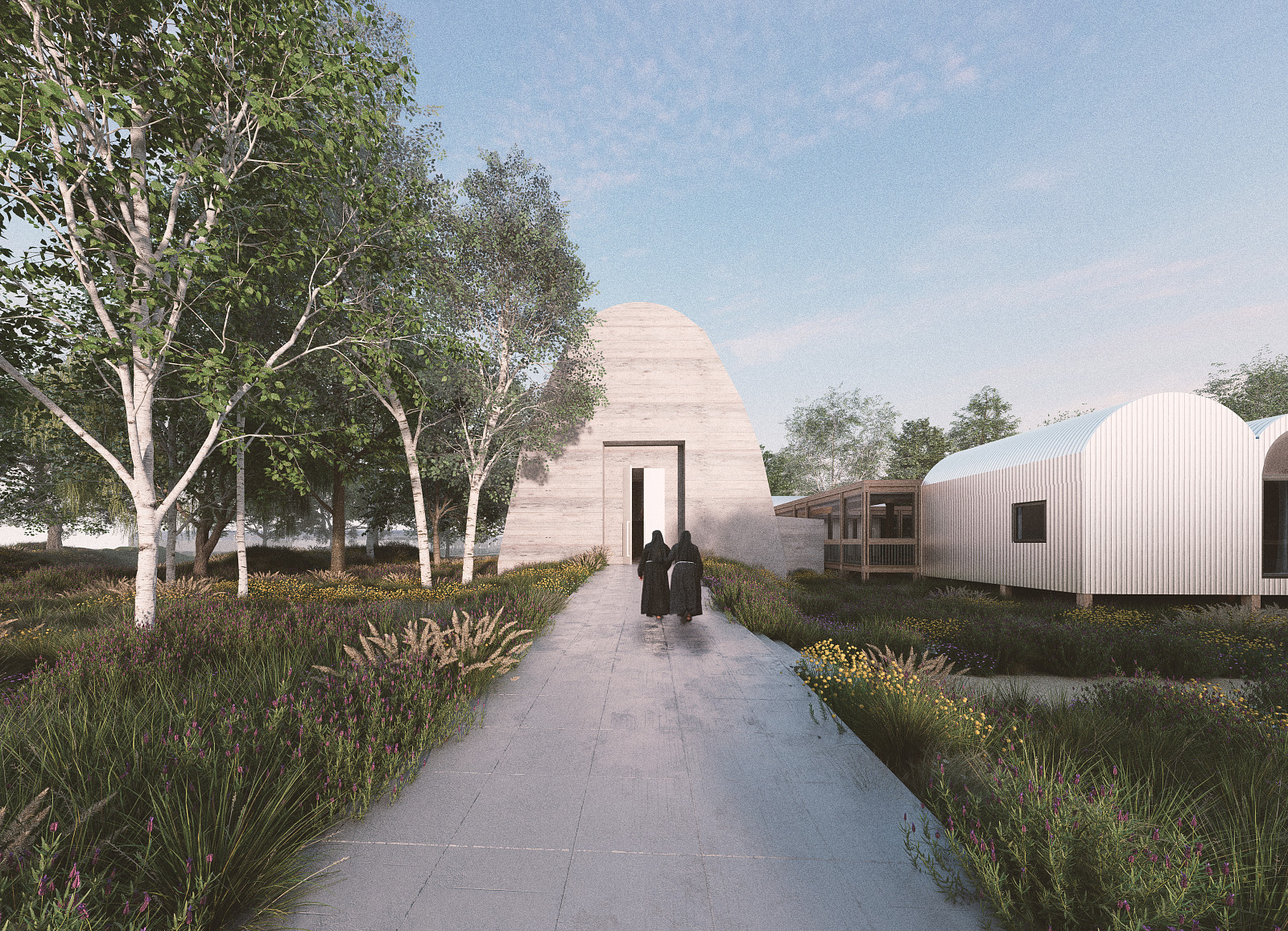
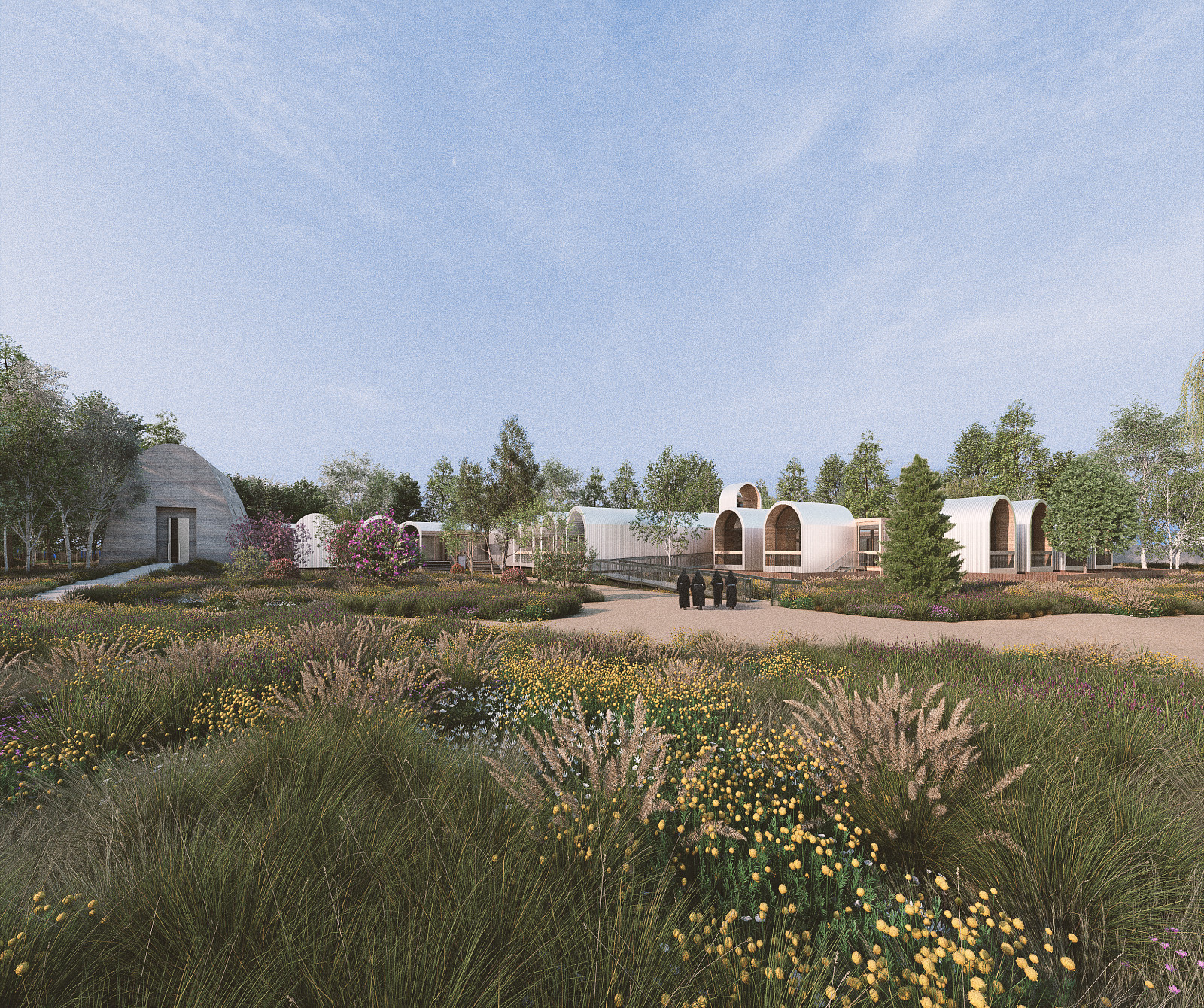
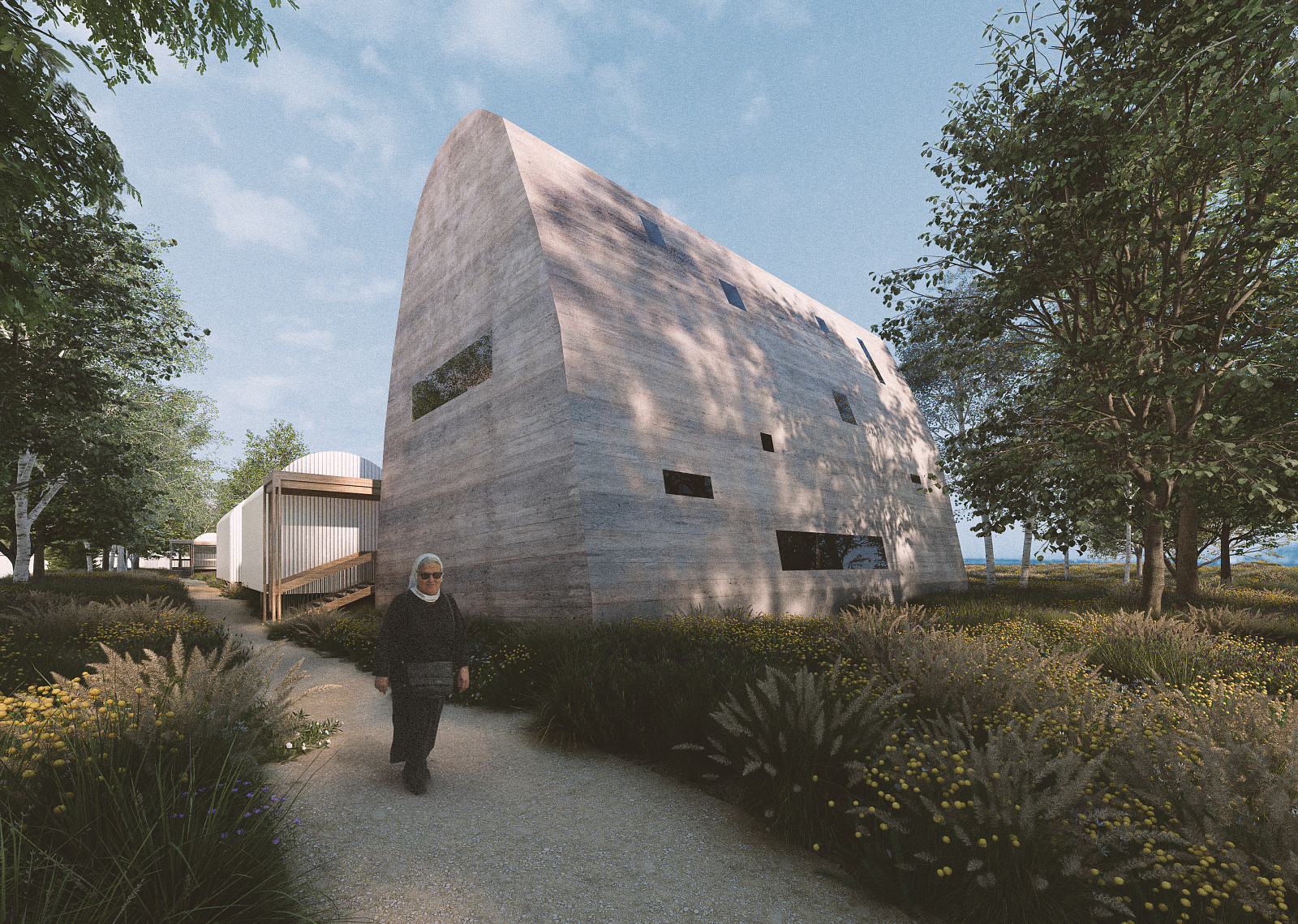
The project proposes a reinterpretation of a historical World War II bunker located in the Olszynka district of Gdańsk by assigning it a new humanitarian and spiritual function as a monastery combined with a social care home. The bunker forms the central and symbolic element of the entire complex. Its austere and monumental form, reminiscent of a chapel, has been preserved and incorporated into the new architectural structure, becoming a place for prayer and reflection on the memory of the site.
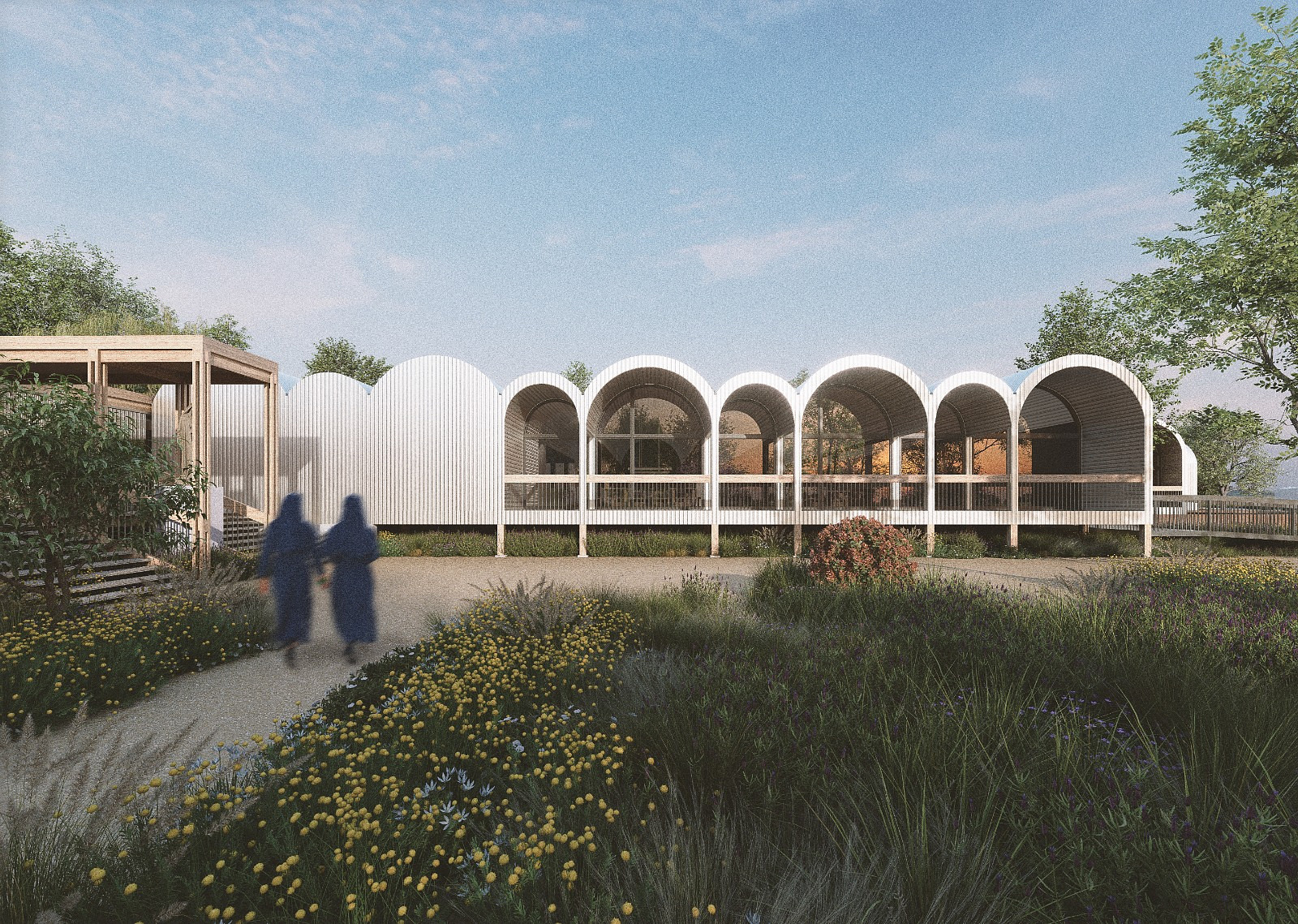
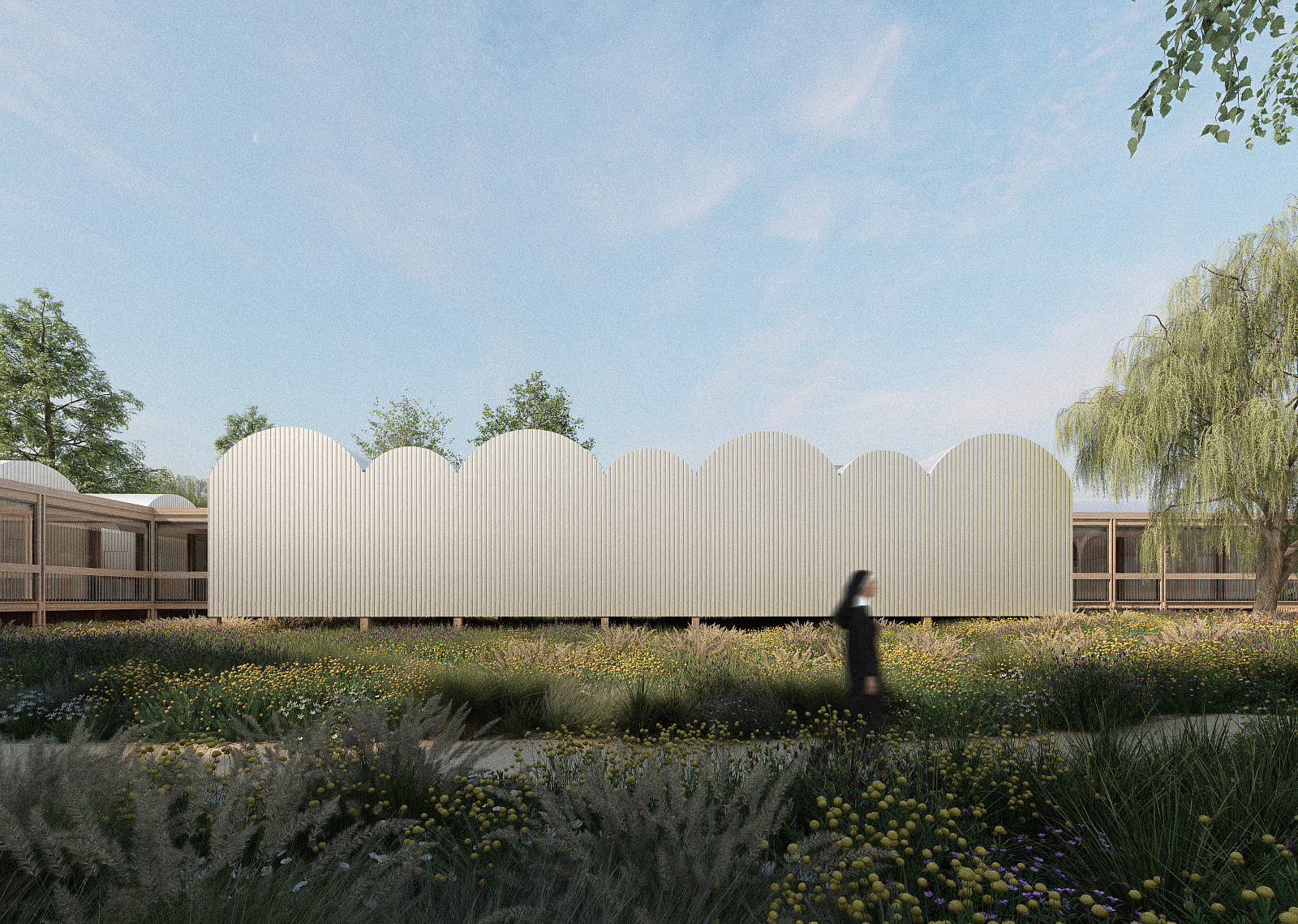
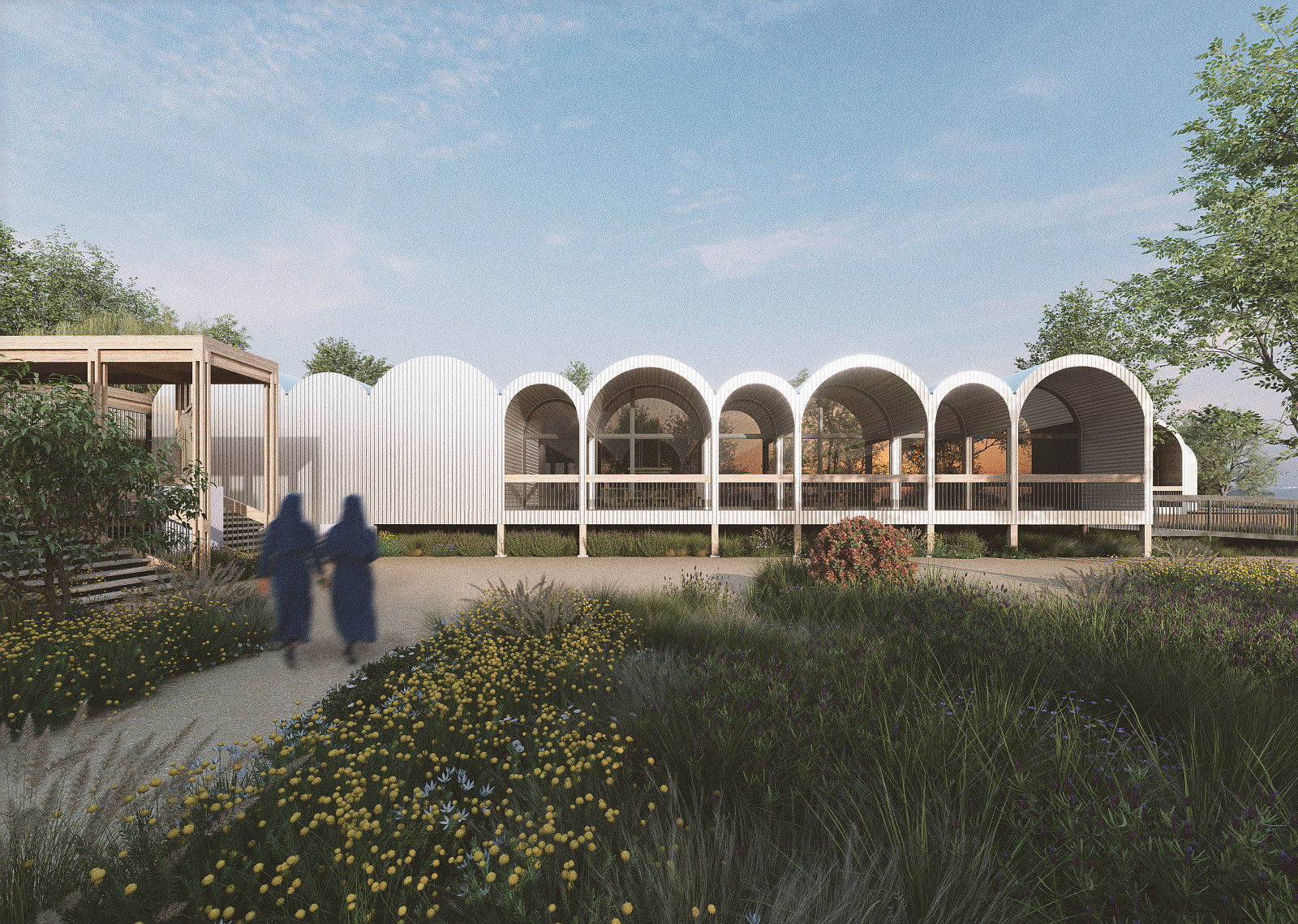
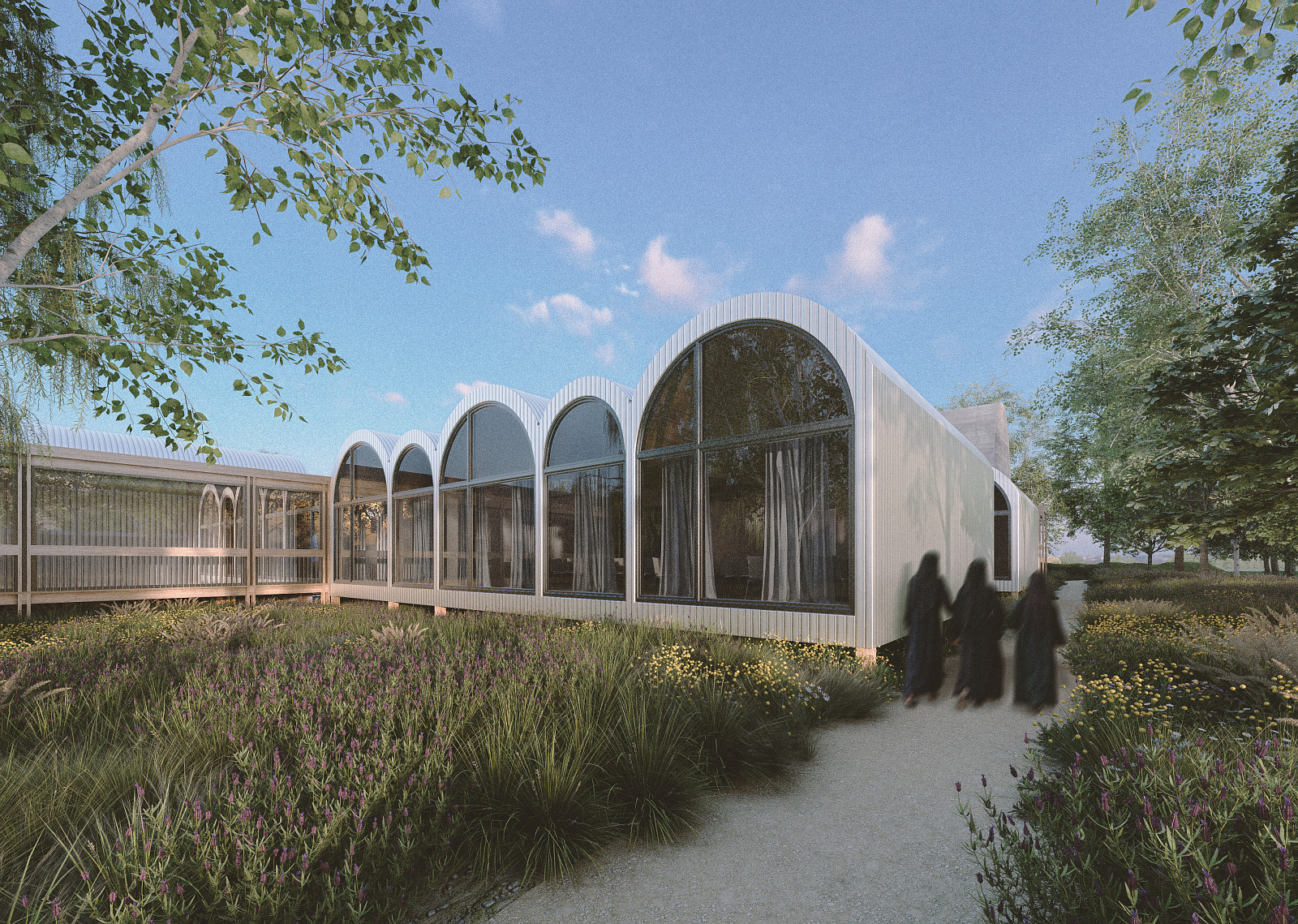
The architectural form of the project derives directly from the shape of the bunker and its relationship with the flat, depression landscape. Newly designed buildings are subordinated to the existing structure and reference its parabolic cross-section through a system of repeated barrel-vaulted roofs. This approach ensures formal coherence within the complex while maintaining a clear distinction between the historical structure and contemporary architectural intervention.
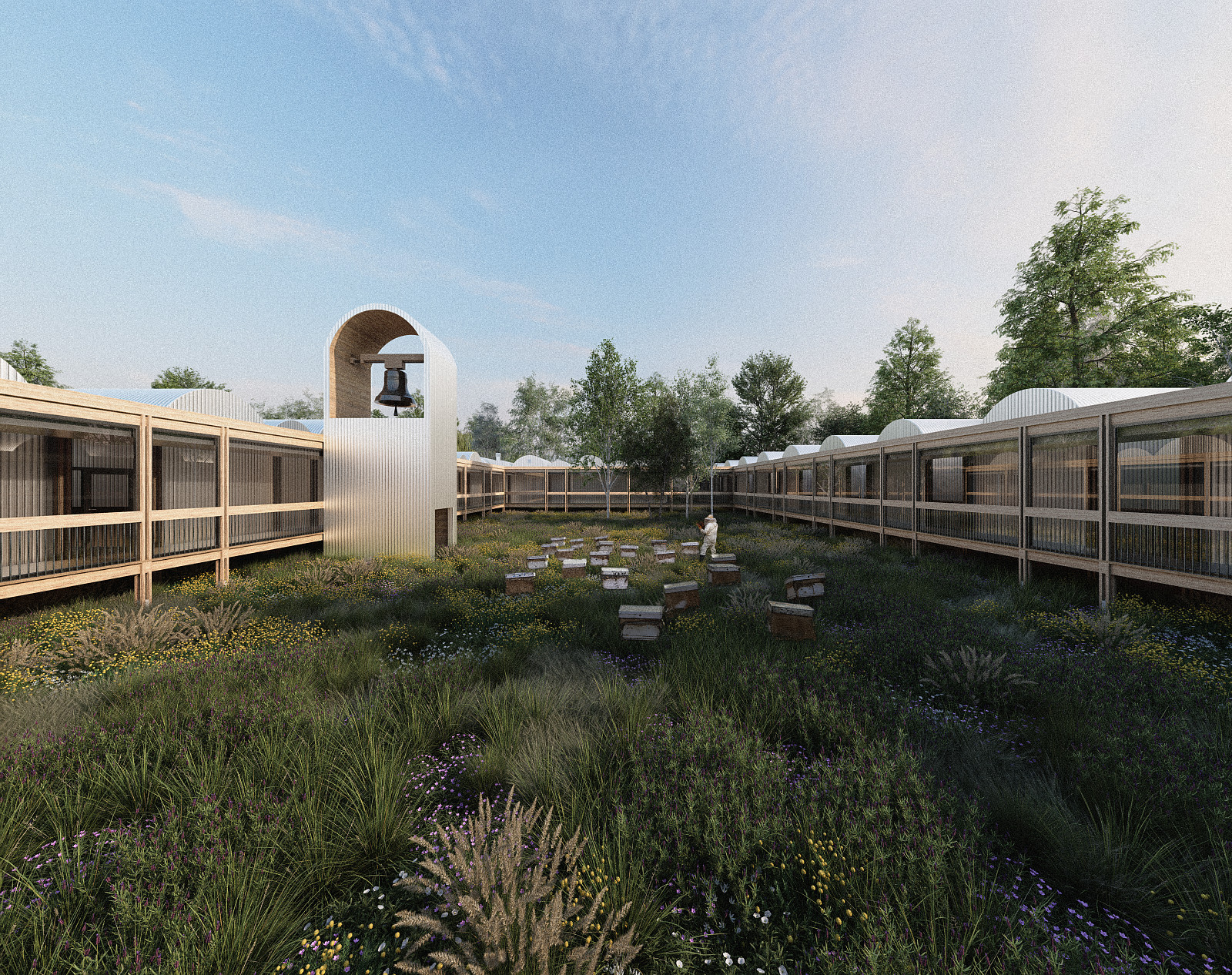
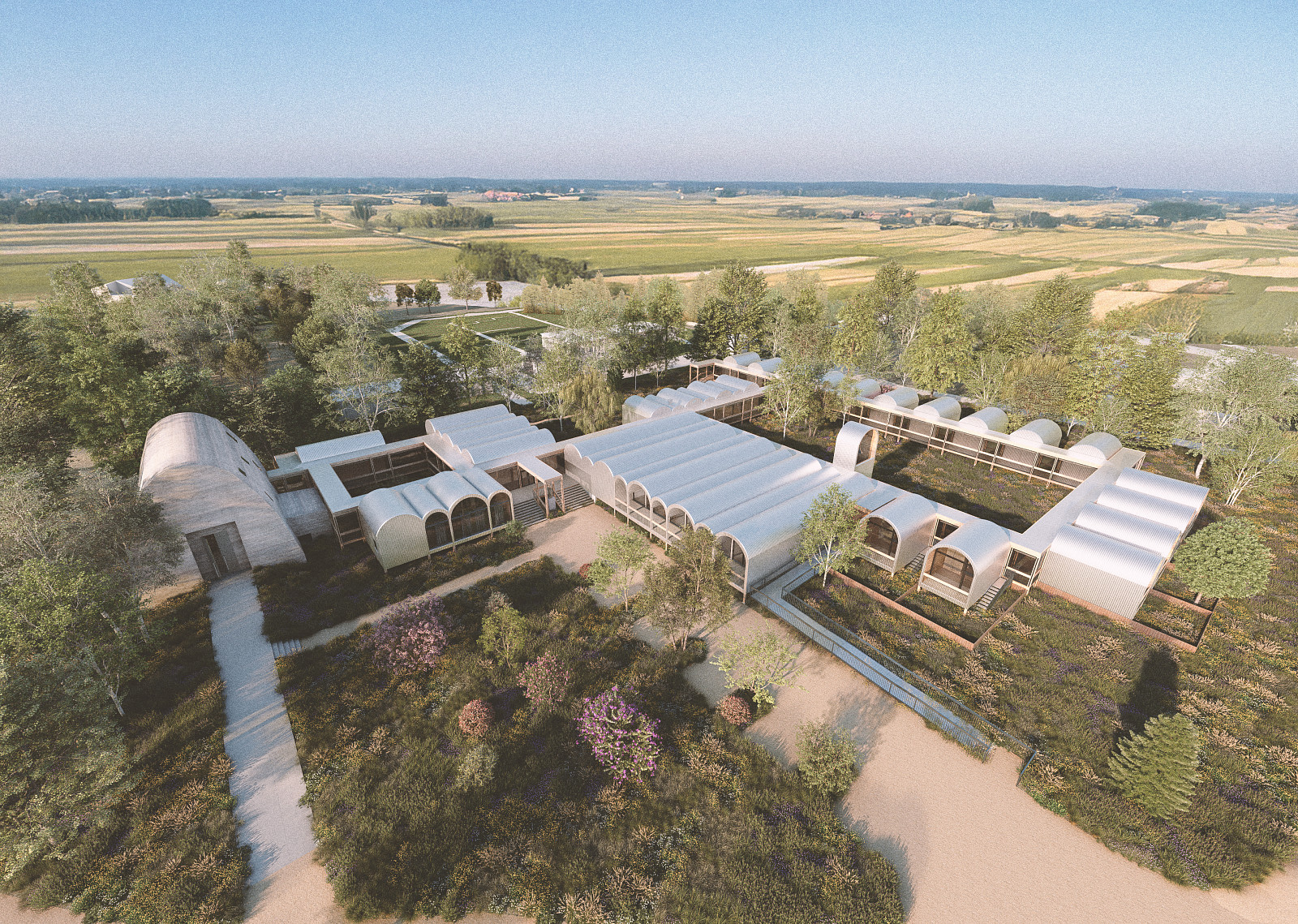
The functional programme combines ideas derived from the Carthusian monastery and the beguinage. From the Carthusian tradition, the spatial organization based on two cloisters was adopted: a smaller cloister connected with the monastic buildings and a larger one surrounded by hermitages. From the beguinage tradition, the project adopts the concept of a community open to the needs of others, combining spiritual life with charitable activities, particularly care for the elderly and people in need.
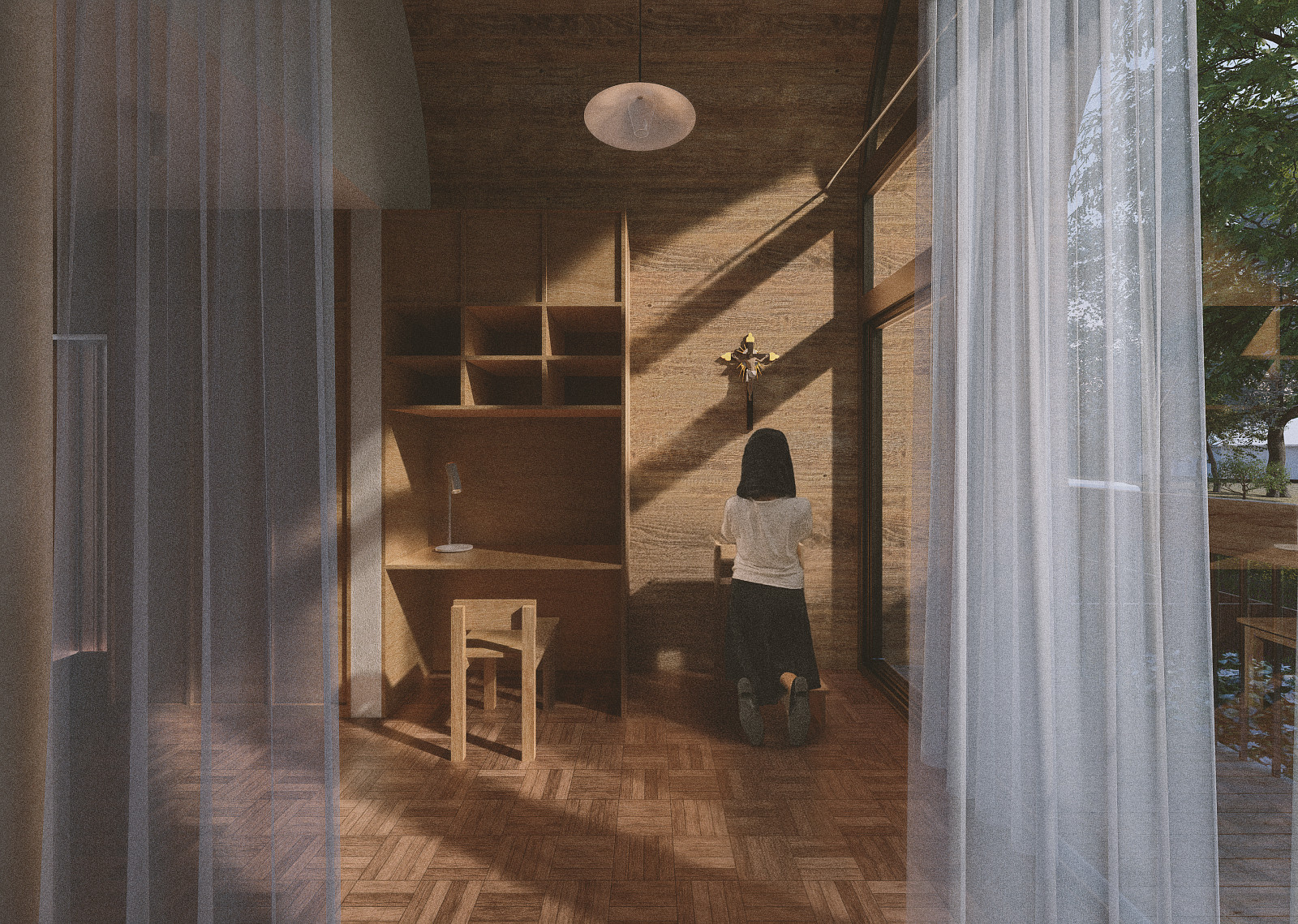
The project aims to create a place promoting the idea of the “heroism of everyday life” — a life based on simplicity, modesty, and service to others. The monastery with a social care home becomes a refuge both for its residents and for visitors seeking support, silence, and spiritual reflection, transforming a former military structure into a space of community, care, and memory.
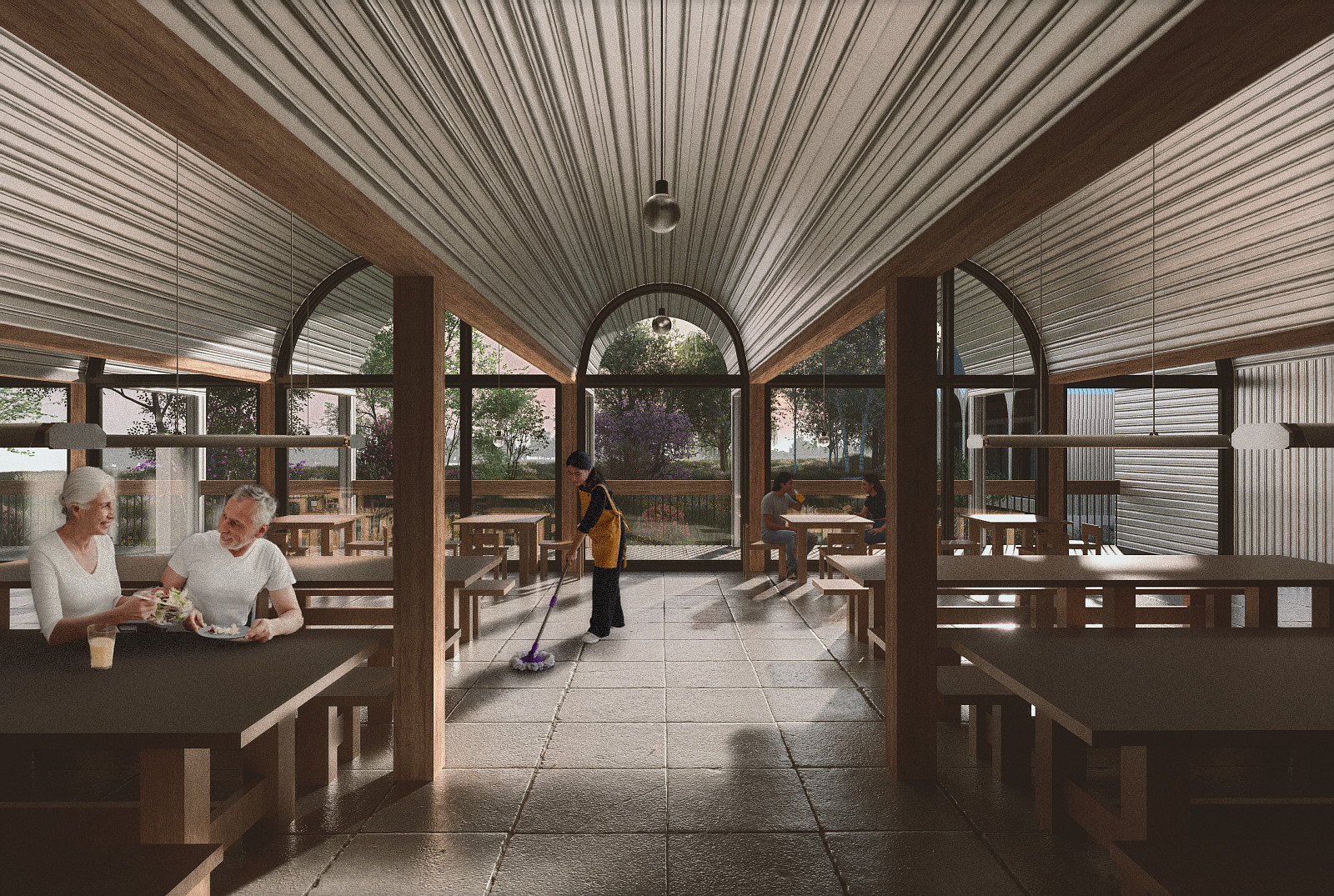
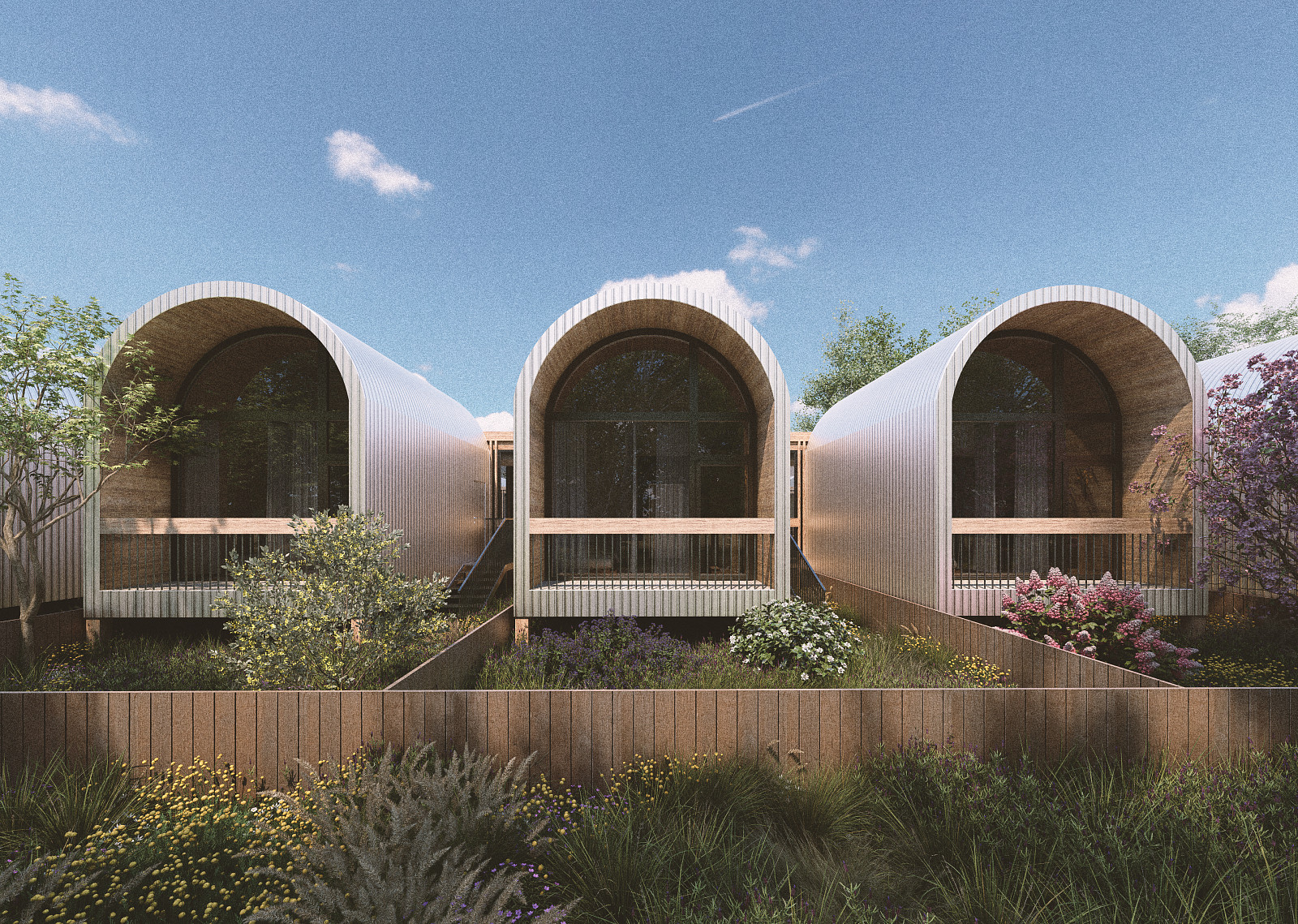
The complex consists of an existing reinforced concrete bunker and a newly designed building constructed using a timber-frame structural system. The building features barrel-vaulted roofs formed by glued laminated timber arches with spans ranging from 2.5 m to 4 m. Due to its location within a flood-prone area, the structure has been elevated on columns to a height of 1.4 m above the surrounding ground level.
Popis projektu
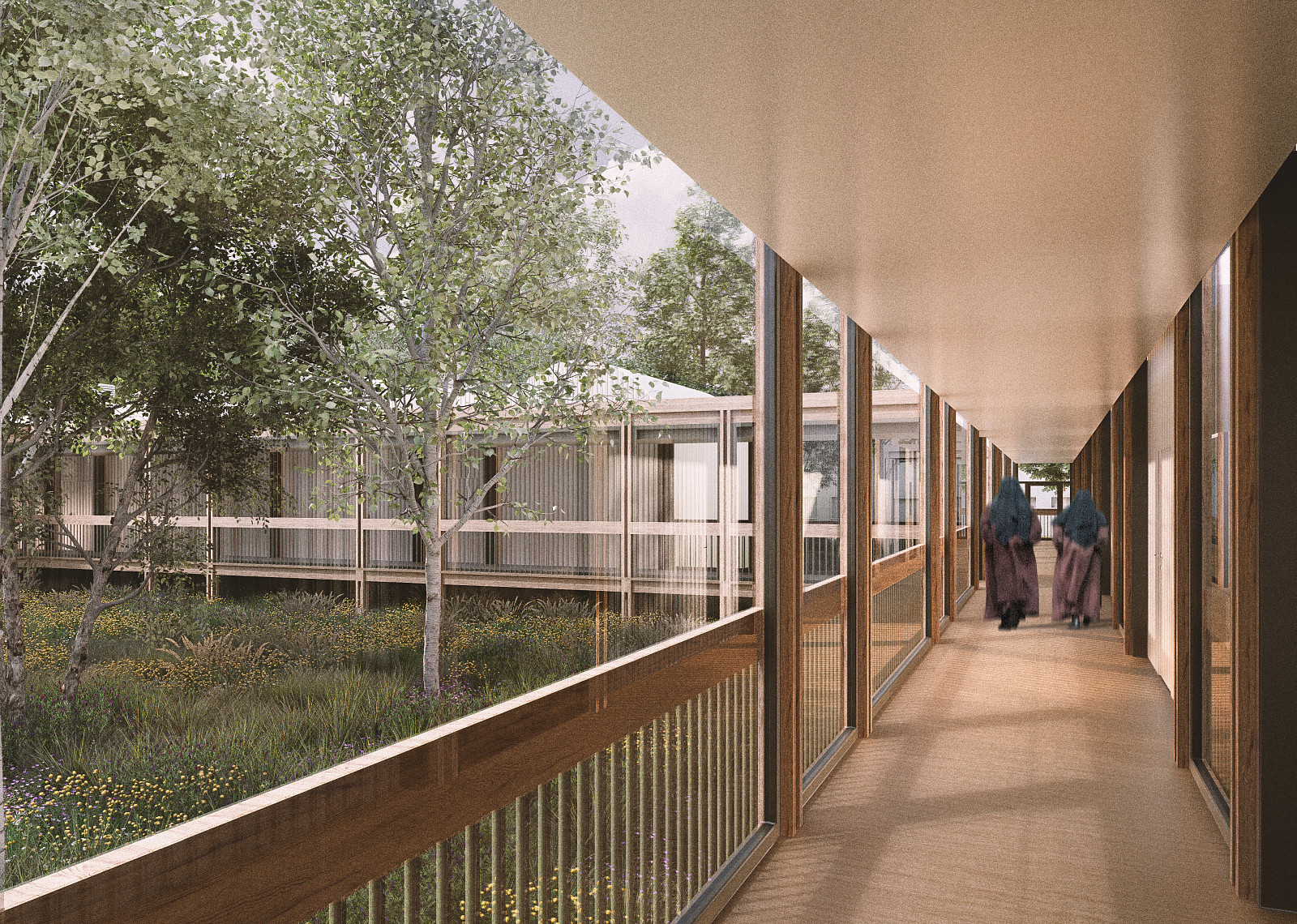
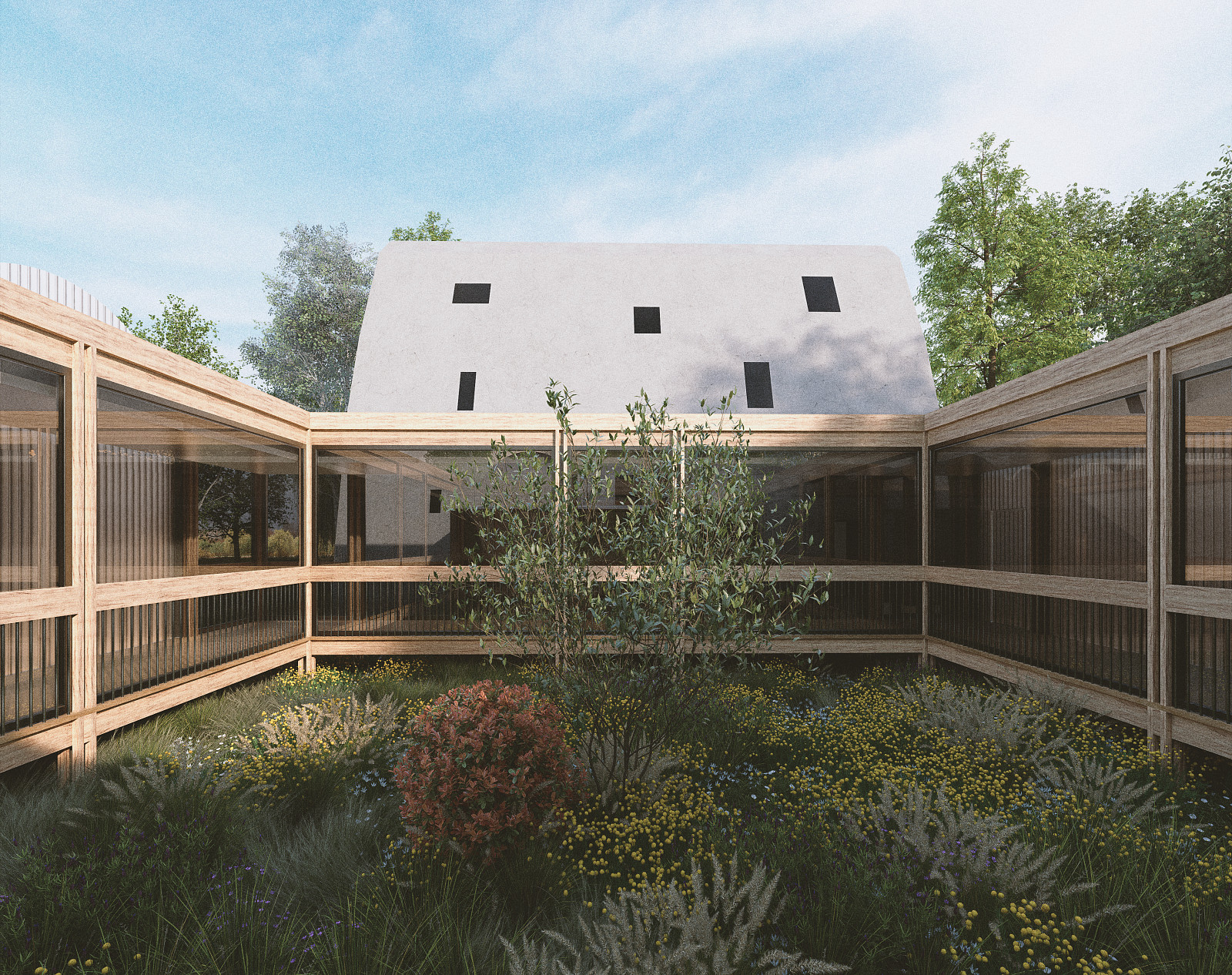
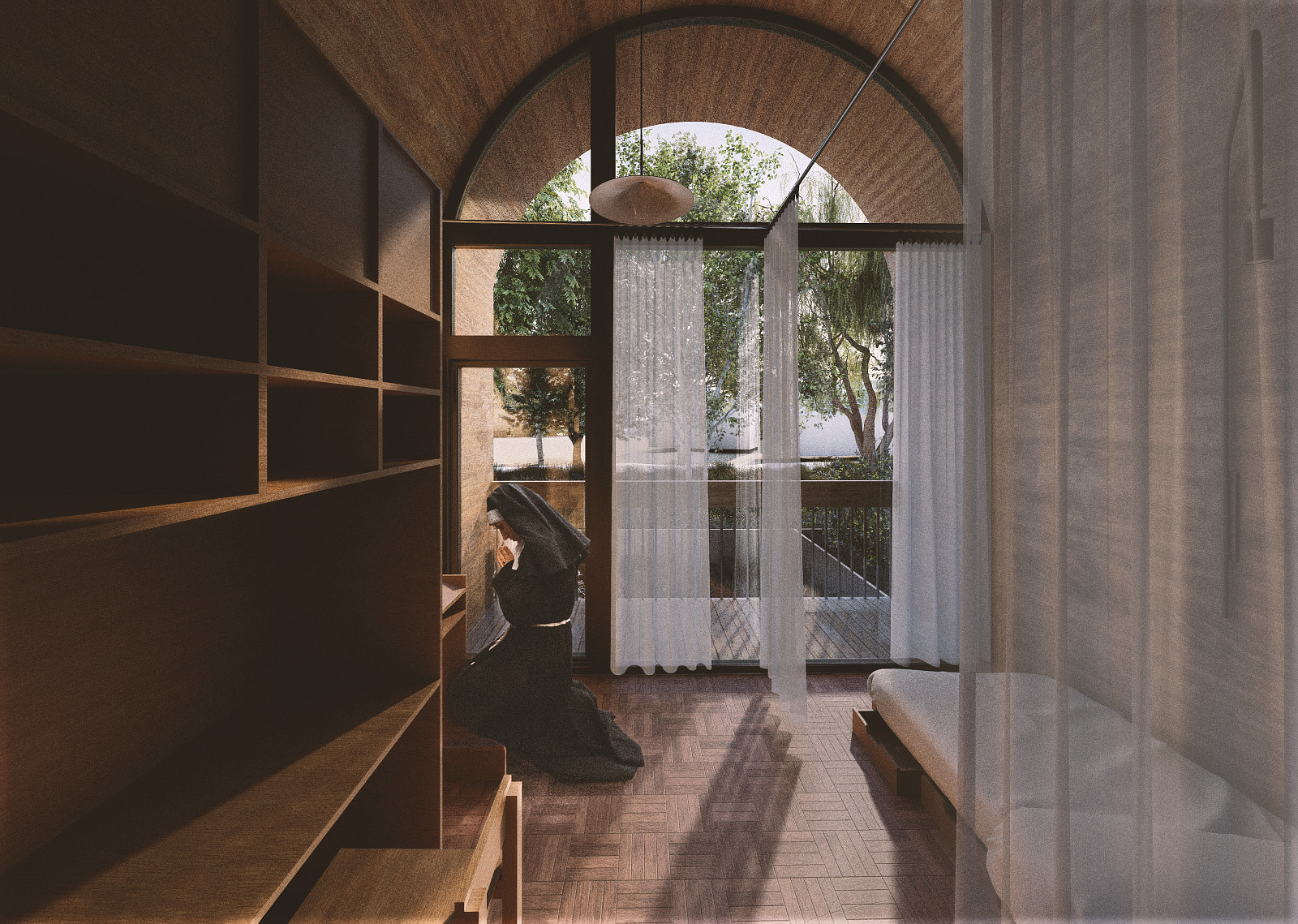
The new development has been designed on a regular structural grid with alternating bays of 2.5 m and 4 m. The building is elevated on piles approximately 1.4 m above ground level, corresponding to the floor level of the existing bunker. The monastery complex comprises 16 residential units (hermitages), four public-use buildings (refectory, administration, library and chapter house) and one storage building, all connected by a common glazed corridor. The newly designed buildings have rectangular floor plans and feature barrel-vaulted roofs, multiplied in larger structures. The vault spacing alternates between 2.5 m and 4 m. The complex is single-storey, reaching heights of 6.10 m. The bell tower reaching a height of 9.6 m. All buildings are linked by a glazed corridor of constant width, forming two courtyards: a larger rectangular cloister and a smaller square cloister. An existing air-raid shelter on the site is converted into a chapel. All hermitages are identical in size and consist of three spaces: an entrance vestibule, a bathroom, and a living room. The living area opens onto a terrace. Each unit has a private garden. The entire complex is designed to be fully accessible to people with disabilities, including wheelchair users. In the southern part of the plot there is a vegetable garden with an orchard and five greenhouses.
Technické informace
The complex consists of an existing reinforced concrete bunker and a newly designed building constructed using a timber-frame structural system. The building features barrel-vaulted roofs formed by glued laminated timber arches with spans ranging from 2.5 m to 4 m. Due to its location within a flood-prone area, the structure has been elevated on columns to a height of 1.4 m above the surrounding ground level.
Dokumentace

Copyright © 2026 INSPIRELI | All rights reserved. Use of this website signifies your agreement to the Terms of Use, Privacy Policy, and use of cookies.