Nursery School in rural areas of Sub-Saharan Africa


Idea projektu
In the heart of Medina Yoro Foulah, a rural area in Kolda where children are deprived of secure and engaging environments in which to learn, rest, play, and cultivate their innate creativity. Many villages still do not have proper nursery schools—places that care for children’s sleep, meals, clothing, and emotional growth. Designing a nursery school here directly addresses those shortages, creating a holistic educational environment where children are welcomed with care and respect.
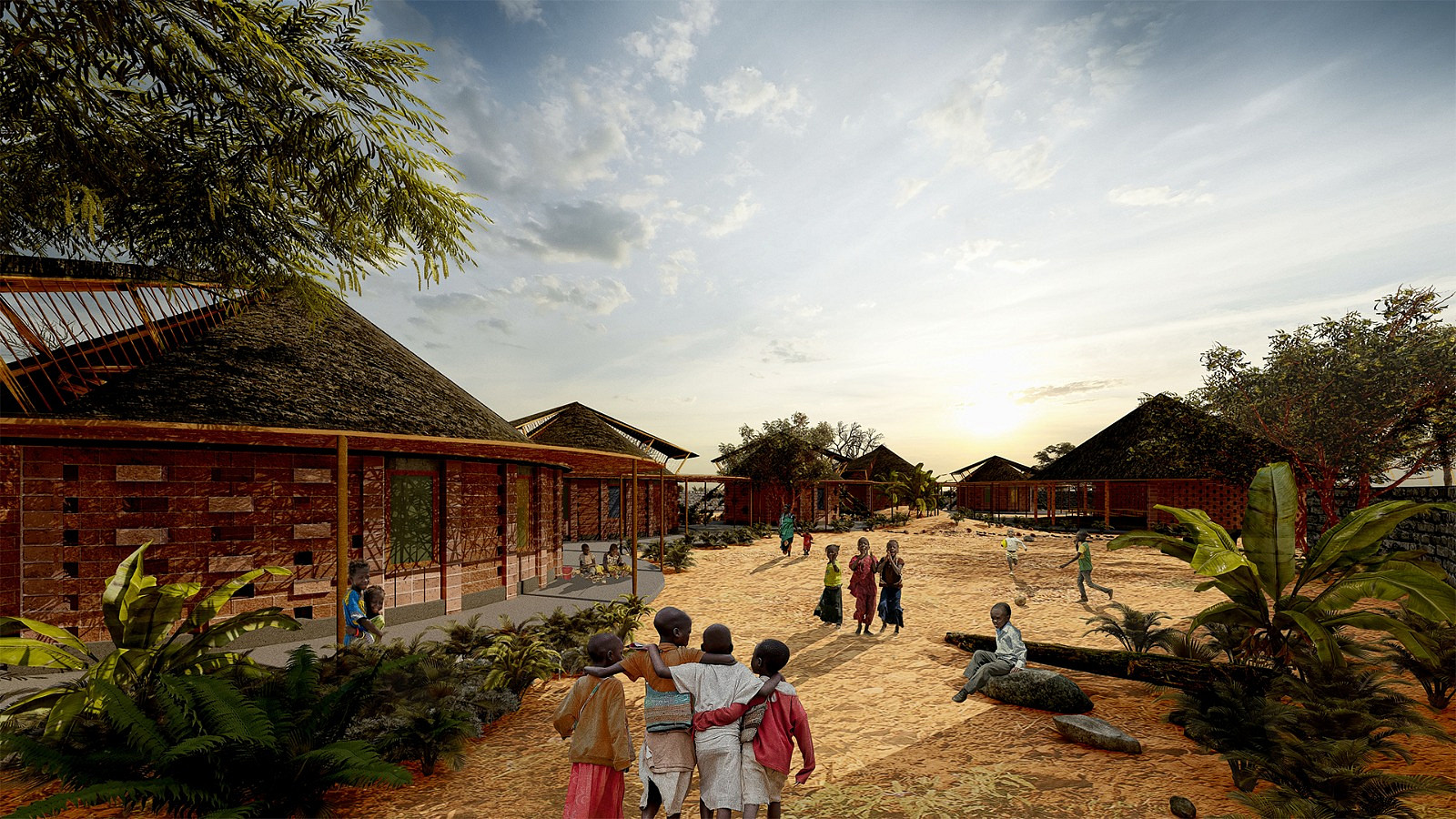
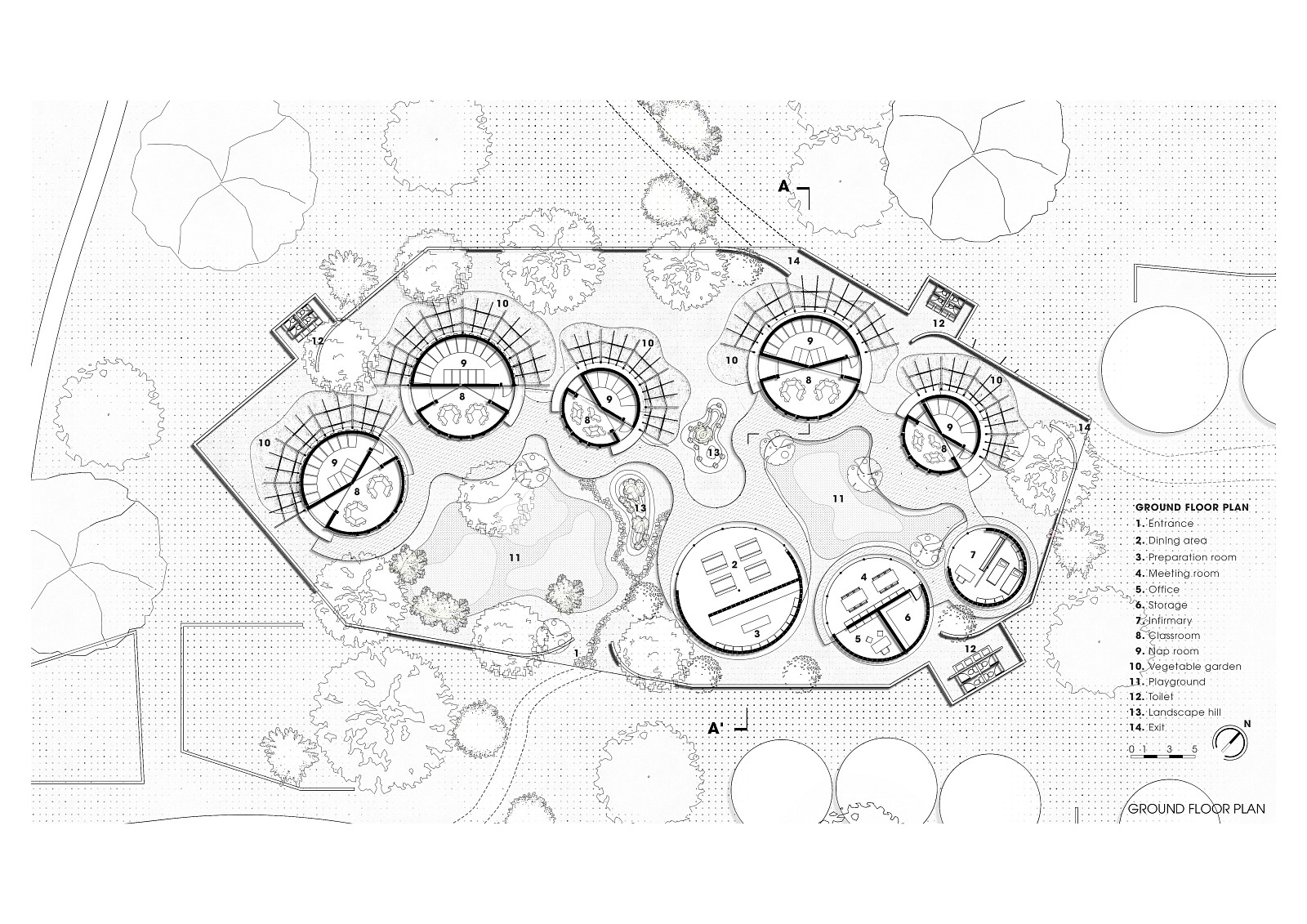
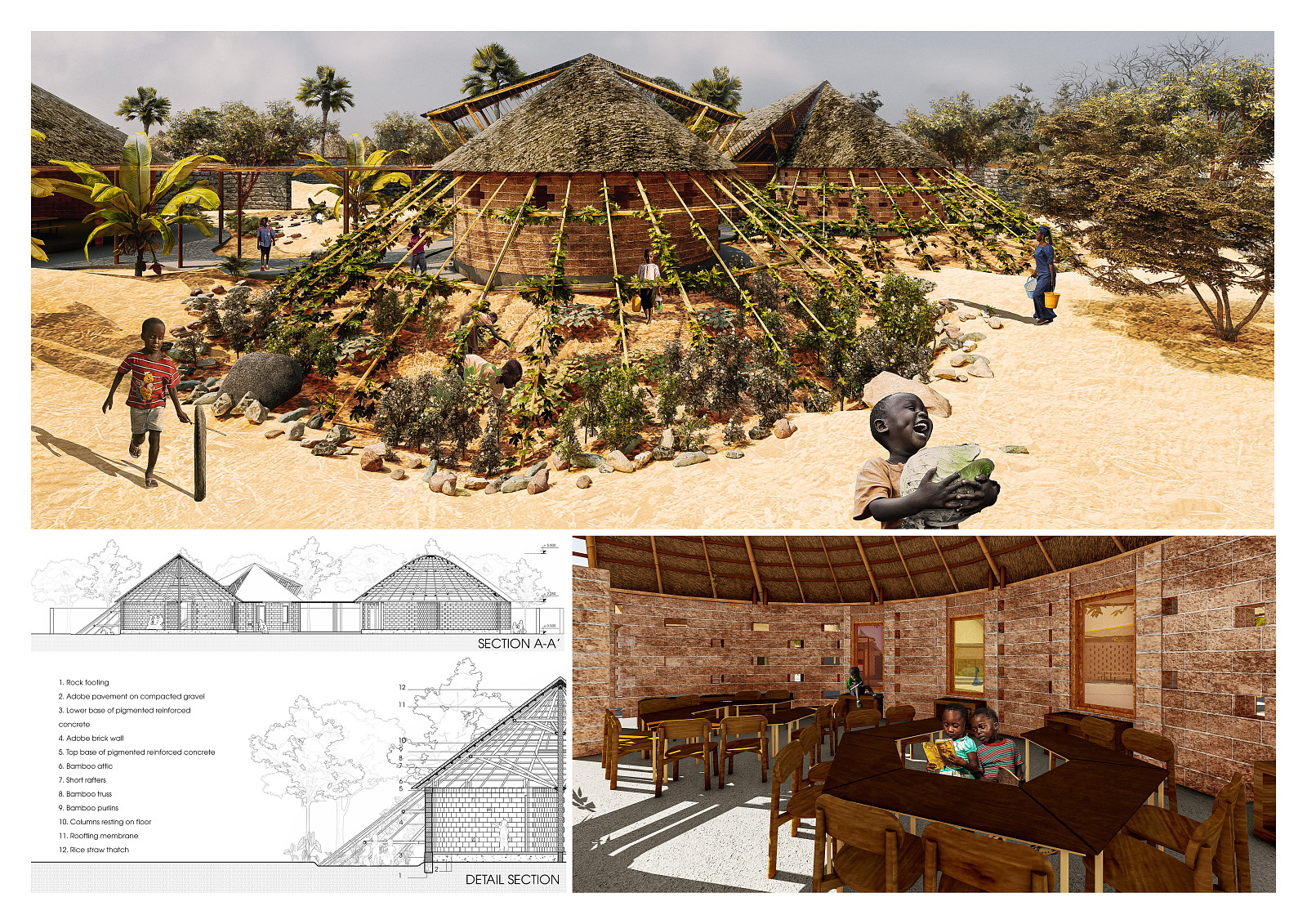
The geometric idea of the school draws inspiration from Senegal's vernacular huts which are characterized by a pyramidal thatched roof and a circular ground plan. Each rounded structure serves a different purpose: classrooms for children aged 3–5, offices for staff, a dining, medical area, toilets and communal spaces that function as indoor and outdoor gathering areas. The classrooms are multipurpose designed and connected creating courtyards that serve as safe, shaded hubs for play and communal activities.
The spatial layout is guided by light. The roof enclosure is opened in calibrated gaps and openings to generate a dynamic light channel throughout the day. These openings convey more than just light; they also mark the passage of time throughout the day, helping children intuitively sense the rhythms of nature while enhancing the atmosphere of each space. As the sun rises and sets, its rays form a pathway through the spaces, leading children through different areas, encouraging exploration, and creating zones of warmth and visual intrigue.
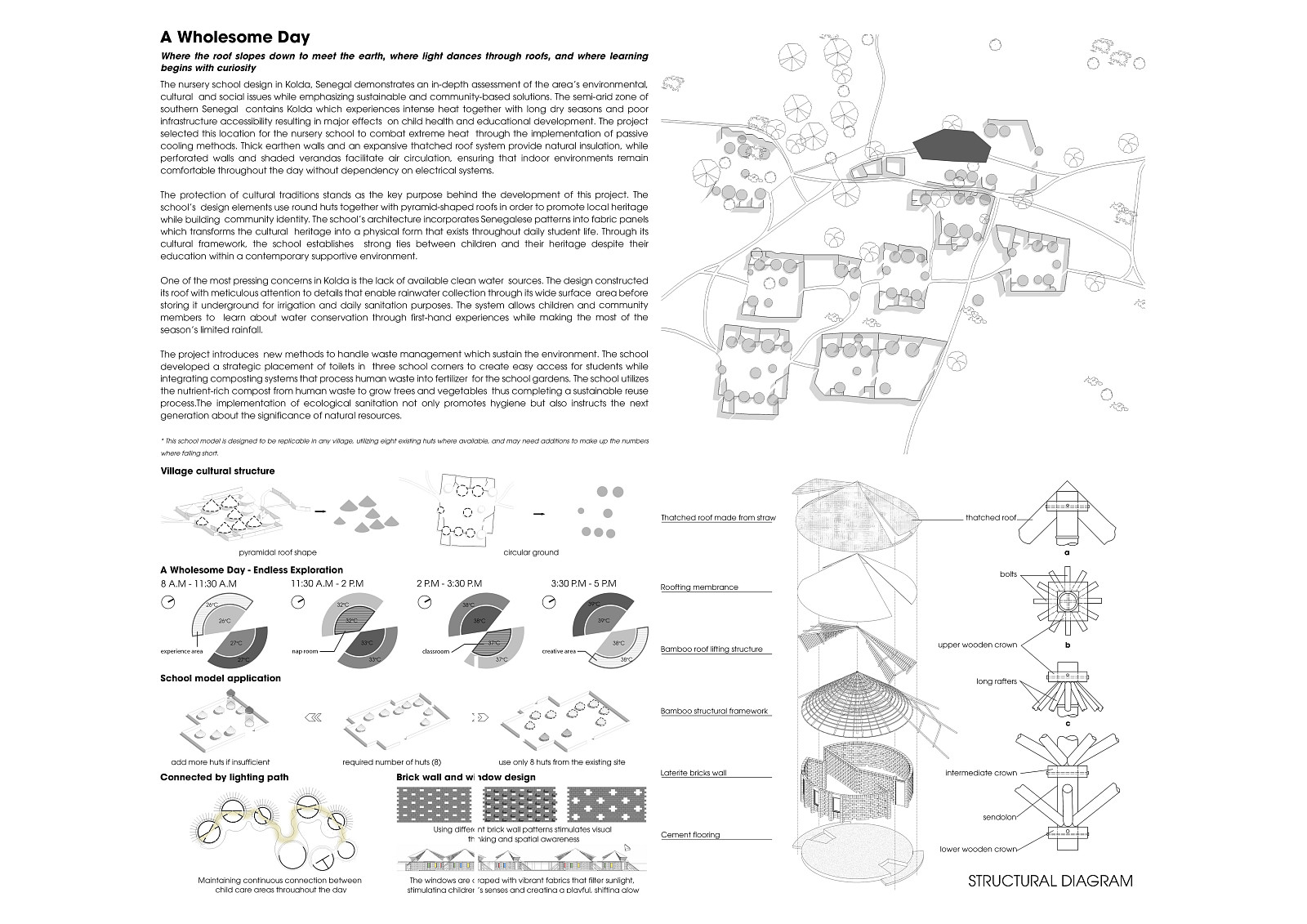
Each of the classrooms is segregated into four different layers, each serving a specific purpose throughout the day. This architecture leads children through spaces of varying temperatures, suited to their daily regimen and comfort.
On morning sessions from 8 a.m to 11:30 a.m (26–27°C), the day begins in the shaded garden area—Layer 1—where children are engaged in experiential farming activities. They care for small plots of okra, tomatoes, and peanuts under the gently sloping roof that just grazes the ground. From the basic foundation of farming, they learn patience, responsibility, and pride. Harvests are shared with families, sold at local markets or used in school meals, teaching the value of self-reliance and nutrition.
From 11:30 a.m to 2 p.m when the temperature rises to 32–33°C, children cluster in the nap area—Layer 2—a calm, cool space with passive thermal insulation for rest and recovery. These spaces are acoustically quiet, softly illuminated, and physically bounded to create an environment of peace and security, especially for the smaller children.
During the early afternoon from 2 p.m to 3:30 p.m (37–38°C), the children move on to Layer 3, the middle classroom space, where they engage in theoretical lessons and group collaboration. The spaces are naturally ventilated and well lit, with conditions for focused concentration and collaboration.
By late afternoon (38–39°C), children shift to the creative zone—Layer 4—that is half-open and half-shaded. Here, they can experiment with handcrafts, narration, music, or simple DIY courses. This space is also an exhibition yard, where their work is showcased to parents as well as foreign tourists, giving a sense of recognition and pride.
Hence, children experience a wholesome day in these four consecutive layers with endless exploration. The sensitive layering of the environment ensures every activity in harmony with the changing temperatures and quality of light, complementing the indigenous climate. It not only brings daily comfort but also significantly reduces energy needs.
Popis projektu
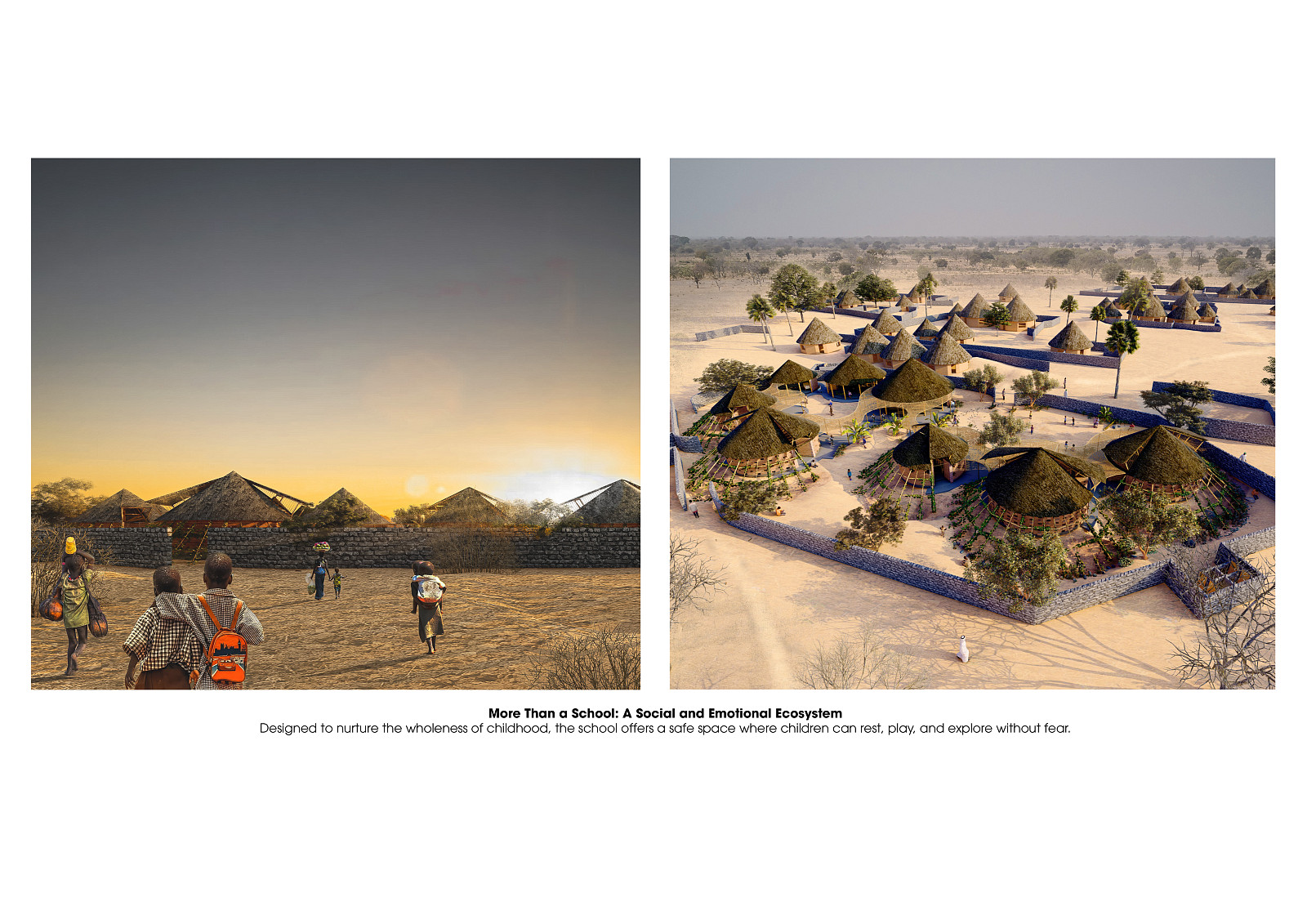
[More Than a School: A Social and Emotional Ecosystem]
Designed to nurture the wholeness of childhood, the school offers a safe space where children can rest, play, and explore without fear.
Here, a curved pergola links classrooms with the dining area and infirmary, creating a seamless, unified environment. Along shaded paths, children find quiet reading nooks and storytelling trees that spark imagination. Hygienic composting toilets, shaded and close to handwashing stations, teach early habits of sanitation and self-care. The infirmary offers comfort for the unwell, and the canteen ensures no child goes hungry.
More than a school, this is a foundation of dignity, care, and hope for every child’s future.
Technické informace
[Materials]
Surrounding the school is a region that does not have contemporary materials. As such, the school is built using sustainable, locally available materials.
The nursery school’s roof is made from thatched straw laid over a bamboo framework, providing strong insulation from the midday heat and blending naturally into the rural setting of Medina Yoro Foulah. In the nap rooms, colorful Senegalese fabrics hang beneath the bamboo structure, forming a soft canopy above the sleeping mats. These textiles, decorated with traditional patterns, offer more than shade—they surround children with familiar cultural symbols. As they rest and look up, children are gently reminded of their heritage, turning a simple nap into a moment of comfort, identity, and connection to their community.
The walls of the school, constructed using laterite bricks stabilized with cement, possess thermal mass that keeps the insides warm during the night and cool during the day. Creative perforations in the walls enhance natural ventilation and cast decorative patterns of light and shadow across the interior spaces. The windows are adorned with vibrant, colorful fabrics that gently filter the sunlight—stimulating children’s visual senses while bathing the interiors in a playful, ever-changing glow.
[Construction Process]
The construction process is community-driven and intentionally simple. It begins with preparing the site—leveling and cleaning the ground, then laying a compacted earth foundation. Local residents and volunteers, including parents, help stack earth bricks to form the walls. Bamboo, harvested and prepared on-site, is cut into uniform pieces and assembled into a load-bearing frame.
Once the modular bamboo structures are in place, the thatched roof is installed. Where the roof slopes to the ground, garden beds are created under the shaded eaves. A pergola connects classrooms and functional rooms, integrating with the extended roof. Tall native trees are planted around the playground, offering shade and a cooler, more inviting space for children to play.
Dokumentace

Copyright © 2026 INSPIRELI | All rights reserved. Use of this website signifies your agreement to the Terms of Use, Privacy Policy, and use of cookies.