Edificio Alvarez


Idea projektu
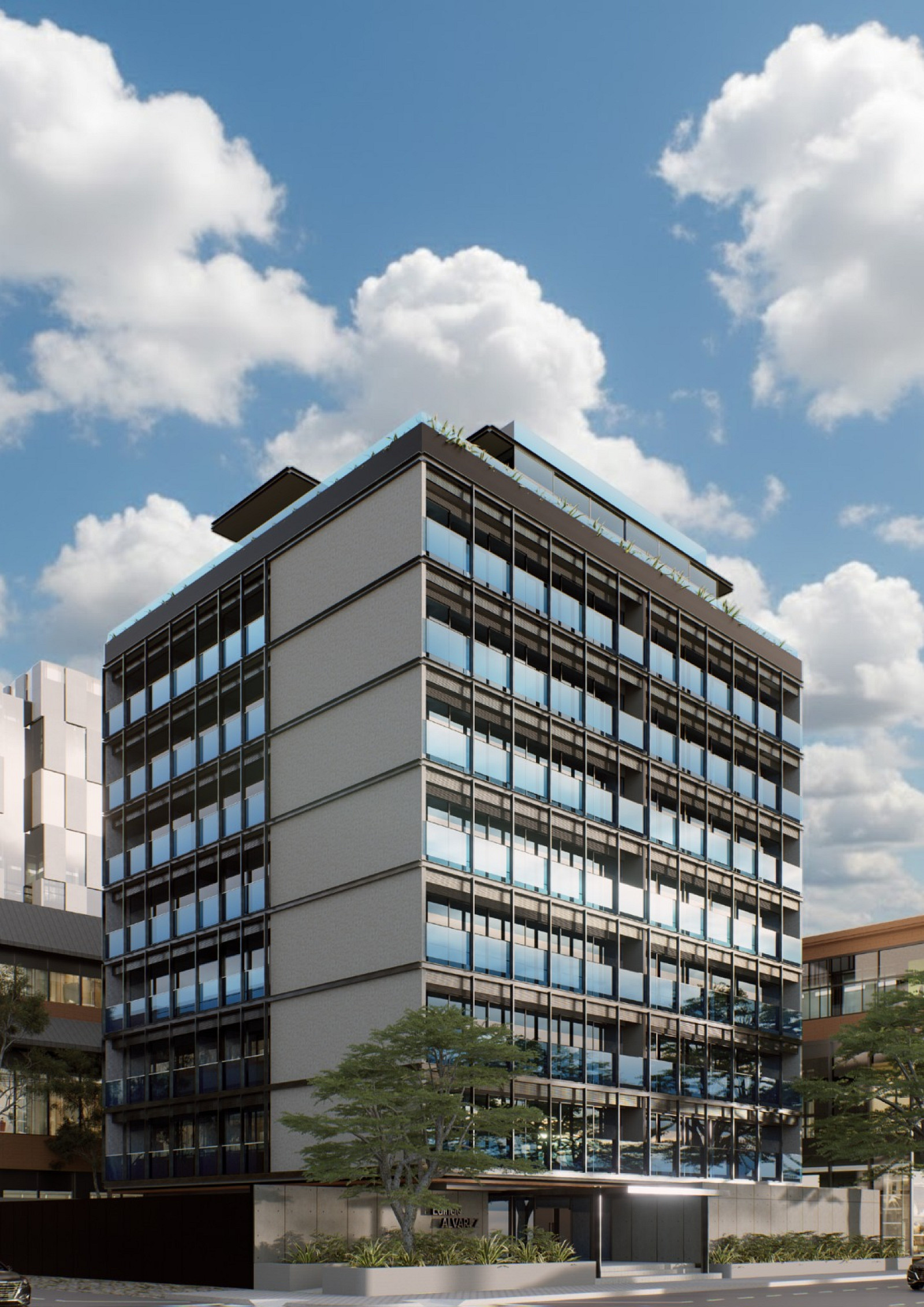
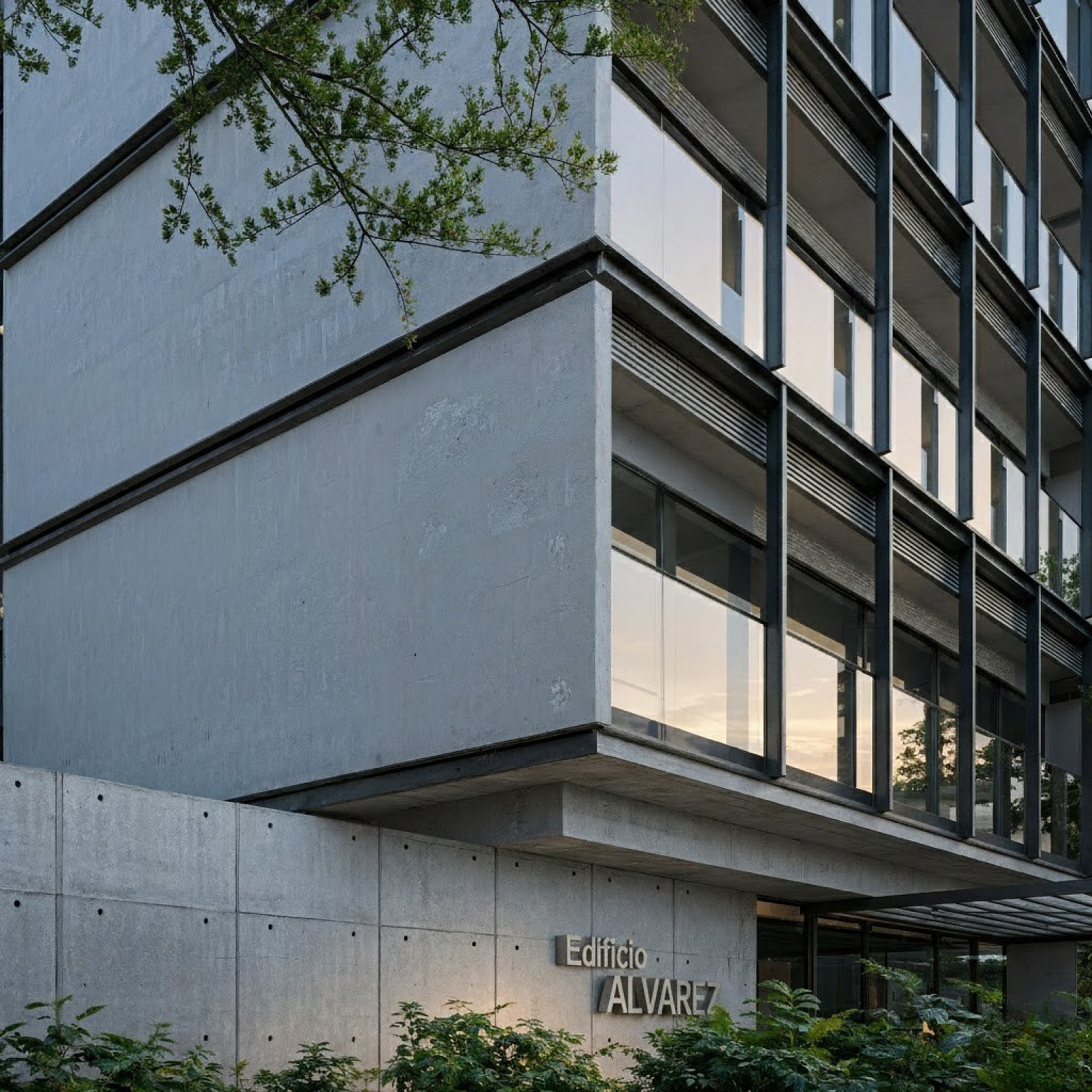
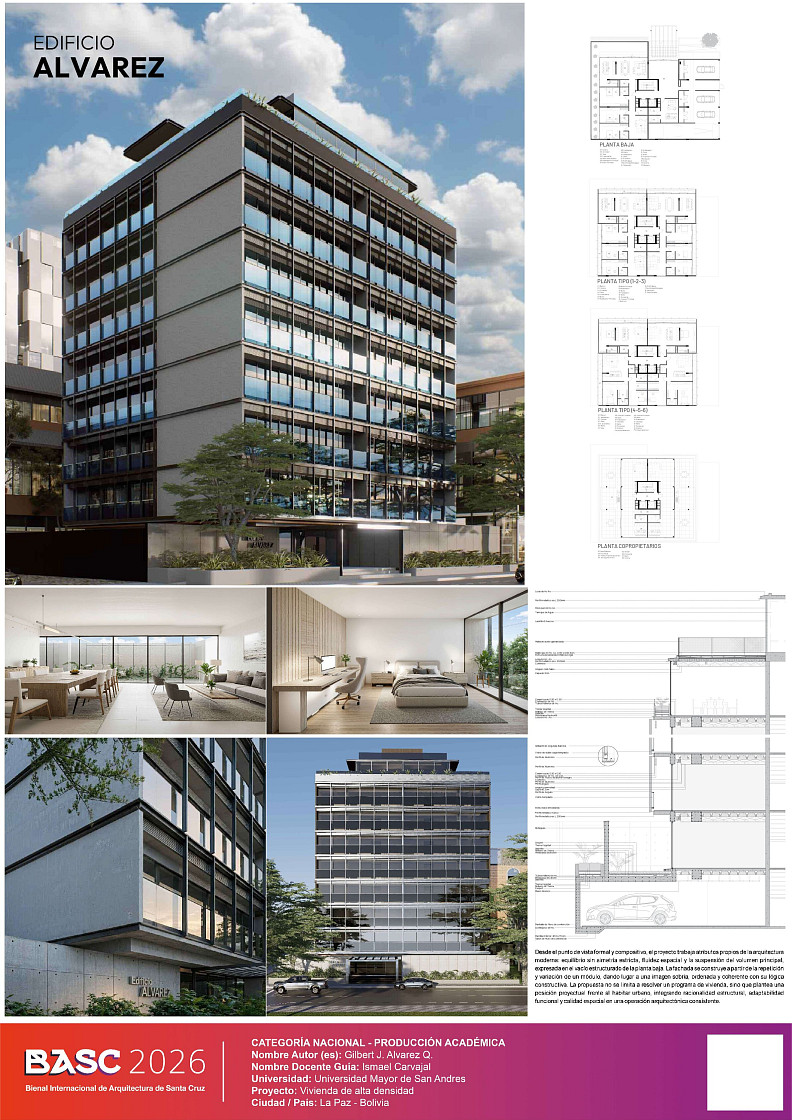
A high-density housing building that works with attributes of modern architecture: equilibrium without strict symmetry, spatial fluidity, and the suspension of the main volume expressed in the structured void of the ground floor.
Popis projektu
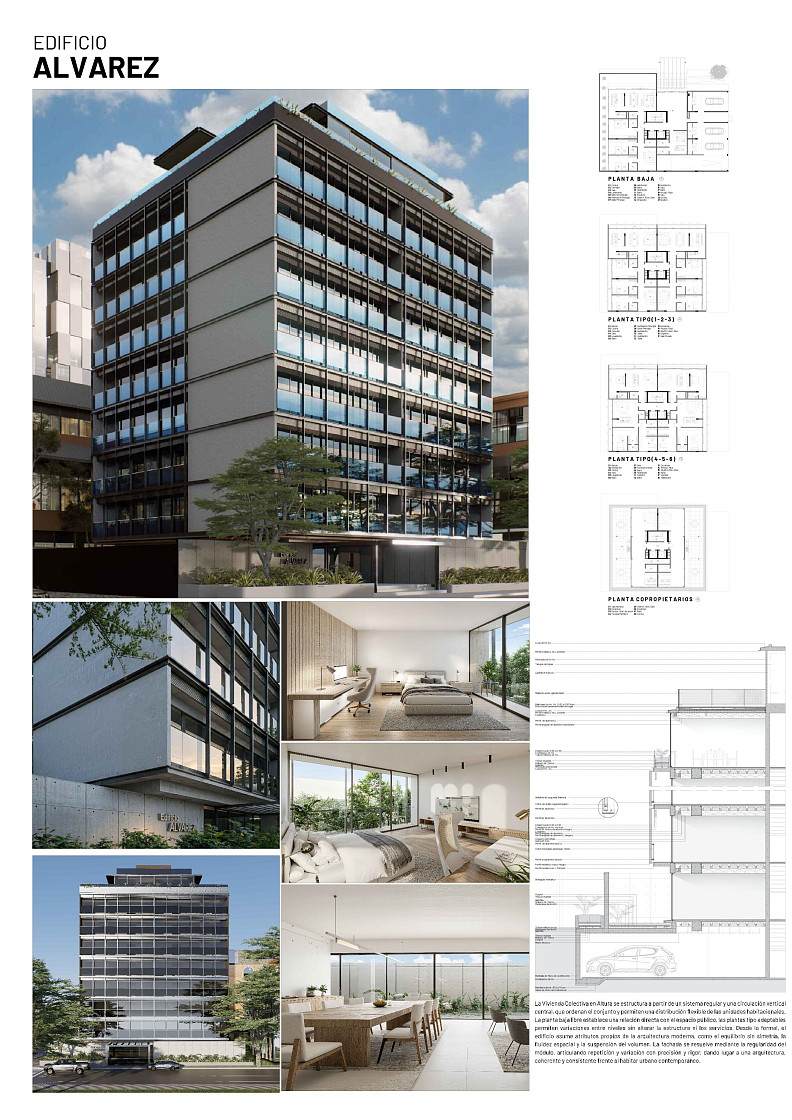
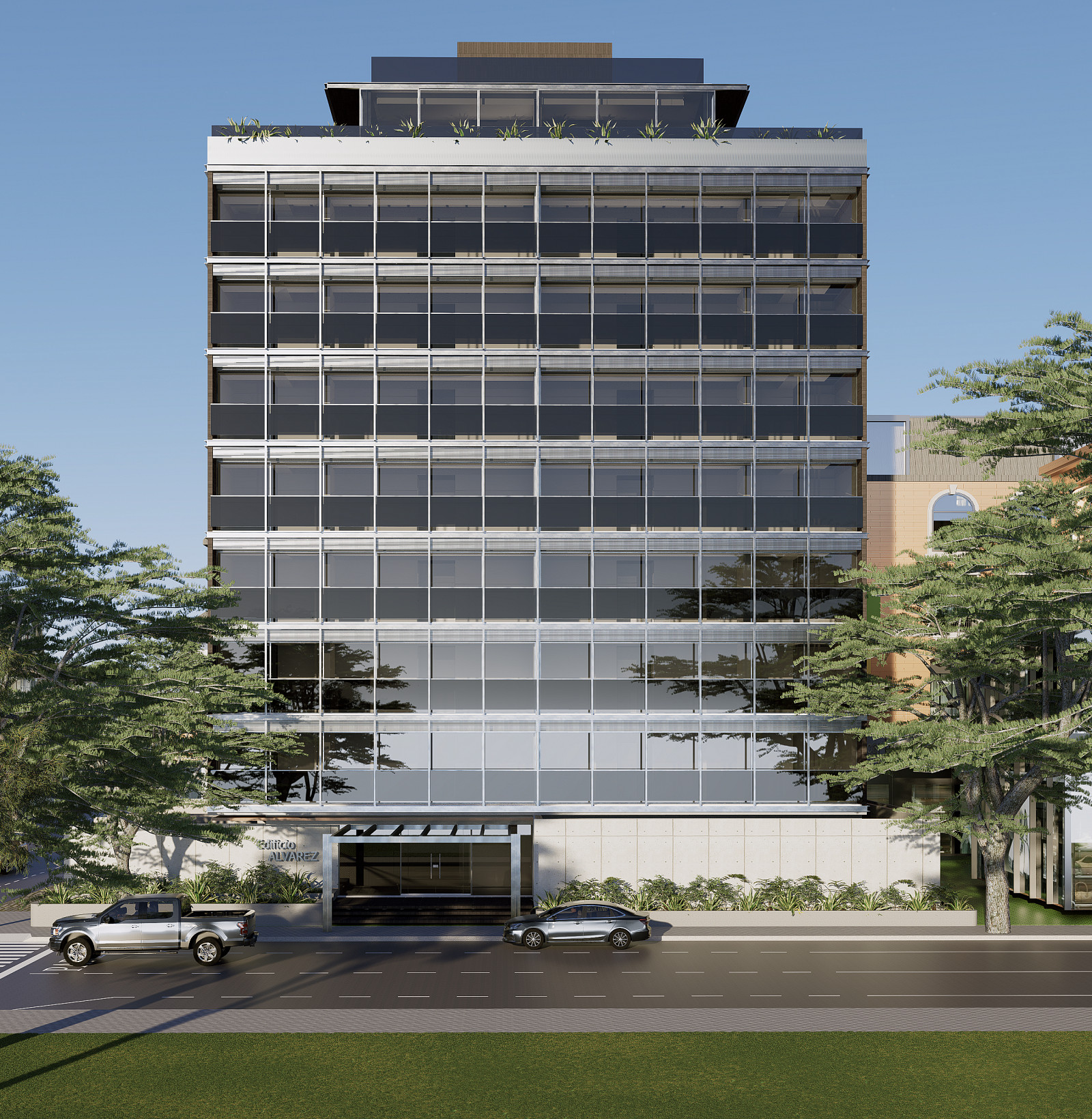
The project addresses a high-density housing program in La Paz, Bolivia. From a formal and compositional standpoint, the design employs modern architectural attributes including equilibrium without strict symmetry, spatial fluidity, and the suspension of the principal volume over a structured void at the ground floor. The facade is constructed from the repetition and variation of a module, creating a sober, orderly image coherent with its constructive logic. The proposal goes beyond simply resolving a housing program, positioning itself as an urban response that integrates structural rationality, adaptability, functional and spatial quality in a consistent architectural operation.
Technické informace
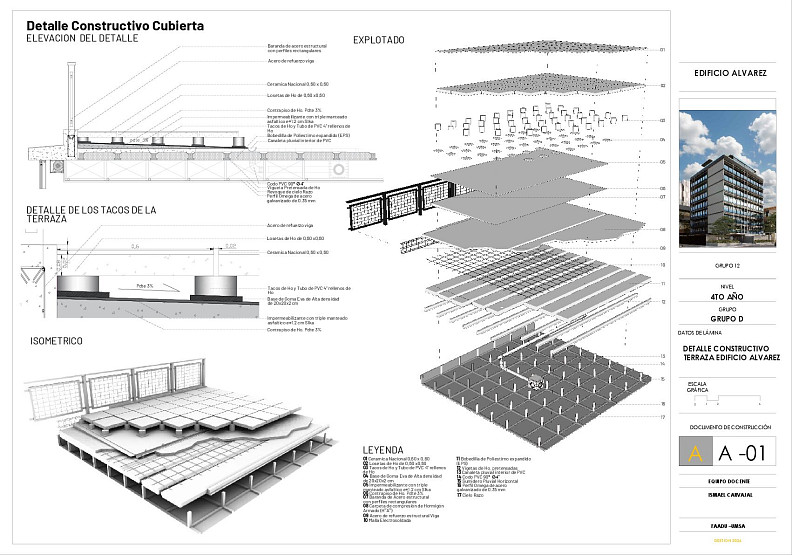
The building features multiple typical floor plans (Planta Tipo 1-2-3 and Planta Tipo 4-5-6), a ground floor plan (Planta Baja), and a co-owners' floor plan (Planta Copropietarios). The facade system incorporates horizontal louvers and glazing modules. Construction details show wall sections with materials including reinforced concrete structure, glass panels, and metallic profiles. The building is a multi-story residential tower with structured ground-level void spaces.
Dokumentace

Copyright © 2026 INSPIRELI | All rights reserved. Use of this website signifies your agreement to the Terms of Use, Privacy Policy, and use of cookies.
