Light and Dignity Lost


Idea projektu
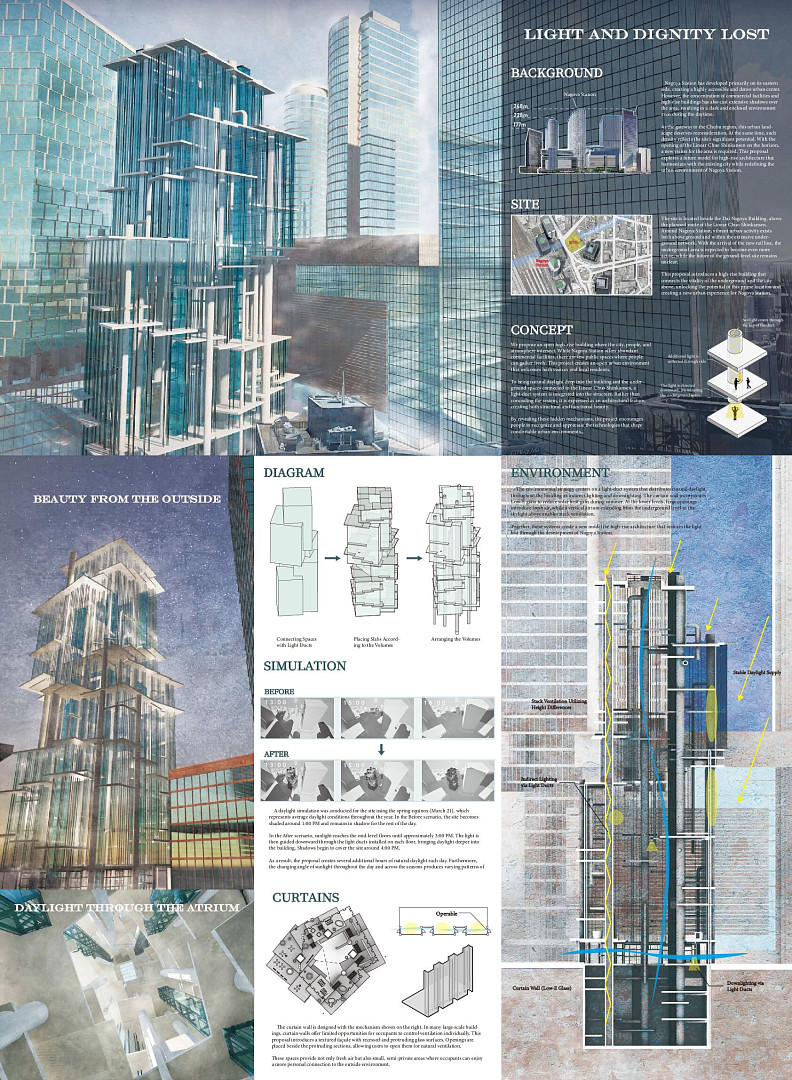
A high-rise building that connects the vitality of the underground and the city above, unlocking the potential of a prime location near Nagoya Station while redefining the urban environment through natural daylight distribution.
Popis projektu
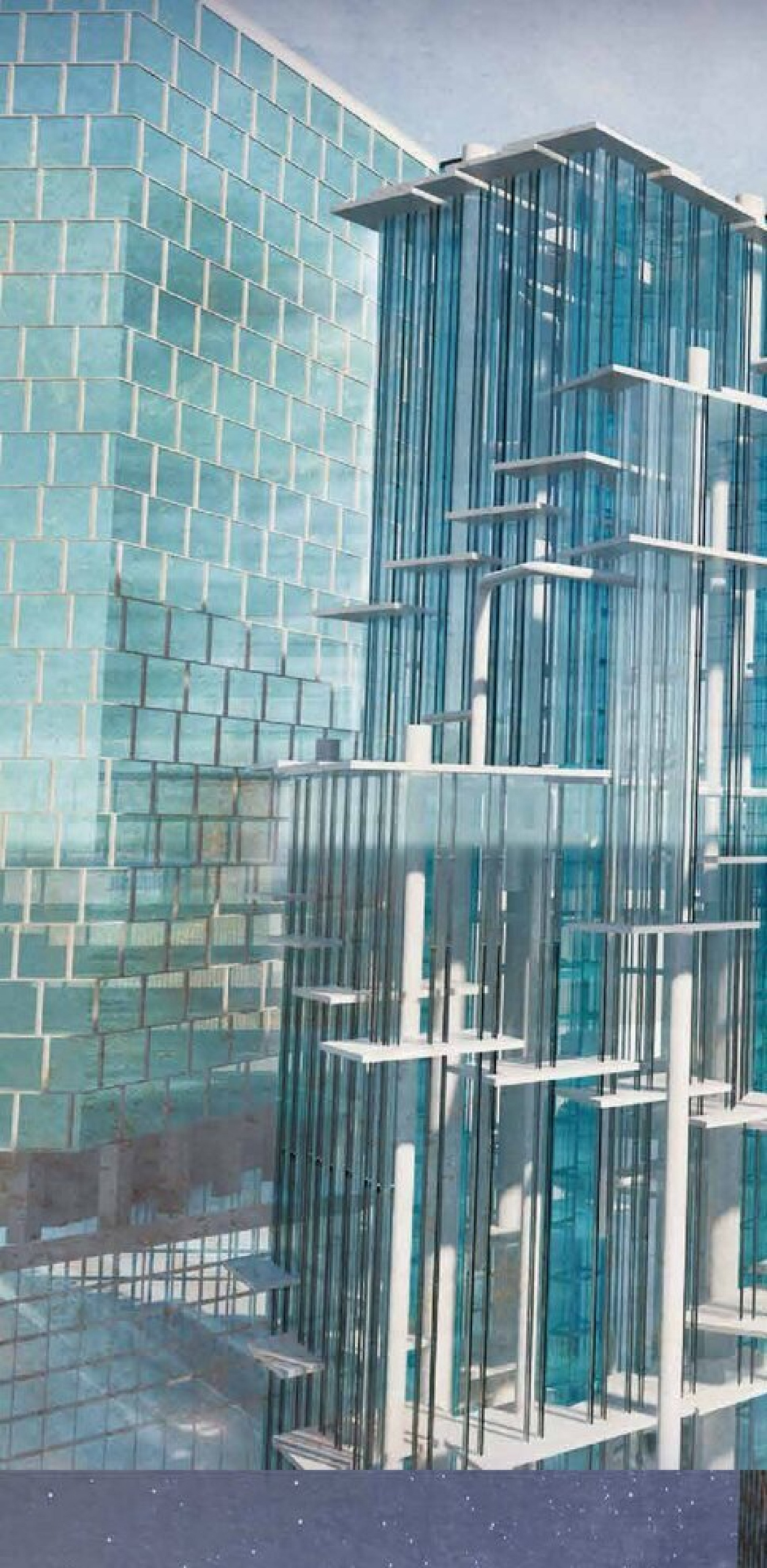
The project proposes an open high-rise building near Nagoya Station where the city, people, and atmosphere intersect. While Nagoya Station offers abundant commercial facilities, there are few public spaces where people can gather freely. The proposal creates a new type of urban connector that welcomes both visitors and local residents. The site is located beside the Dai Nagoya Building, above the planned route of the Linear Chuo Shinkansen. The design brings natural daylight deep into the building and the underground space through a light-duct system integrated into the structure connected to the Linear Chuo Shinkansen. Rather than concealing the system, it is expressed as an architectural feature combining both structural and functional beauty. By revealing these hidden mechanisms, the project encourages people to recognize and appreciate the technologies that shape comfortable urban environments.
Technické informace
The environmental strategy centers on a light-duct system that distributes natural daylight throughout the building via indirect lighting and downlighting. The curtain wall incorporates operable sections to reduce solar heat gain during summer. At the lower levels, large openings introduce fresh air, and a vertical atrium extending from the underground level to the skylight above enables stack ventilation. A daylight simulation was conducted using the spring equinox (March 21) representing average daylight conditions. In the Before scenario, the site becomes shaded around 1:00 PM. In the After scenario, sunlight reaches mid-level floors until approximately 3:00 PM, then is guided downward through light ducts installed on each floor. The curtain wall features recessed and protruding glass surfaces with Low-E glass, and openings placed beside protruding sections allow natural ventilation.
Dokumentace

Copyright © 2026 INSPIRELI | All rights reserved. Use of this website signifies your agreement to the Terms of Use, Privacy Policy, and use of cookies.