Agri City


Idea projektu
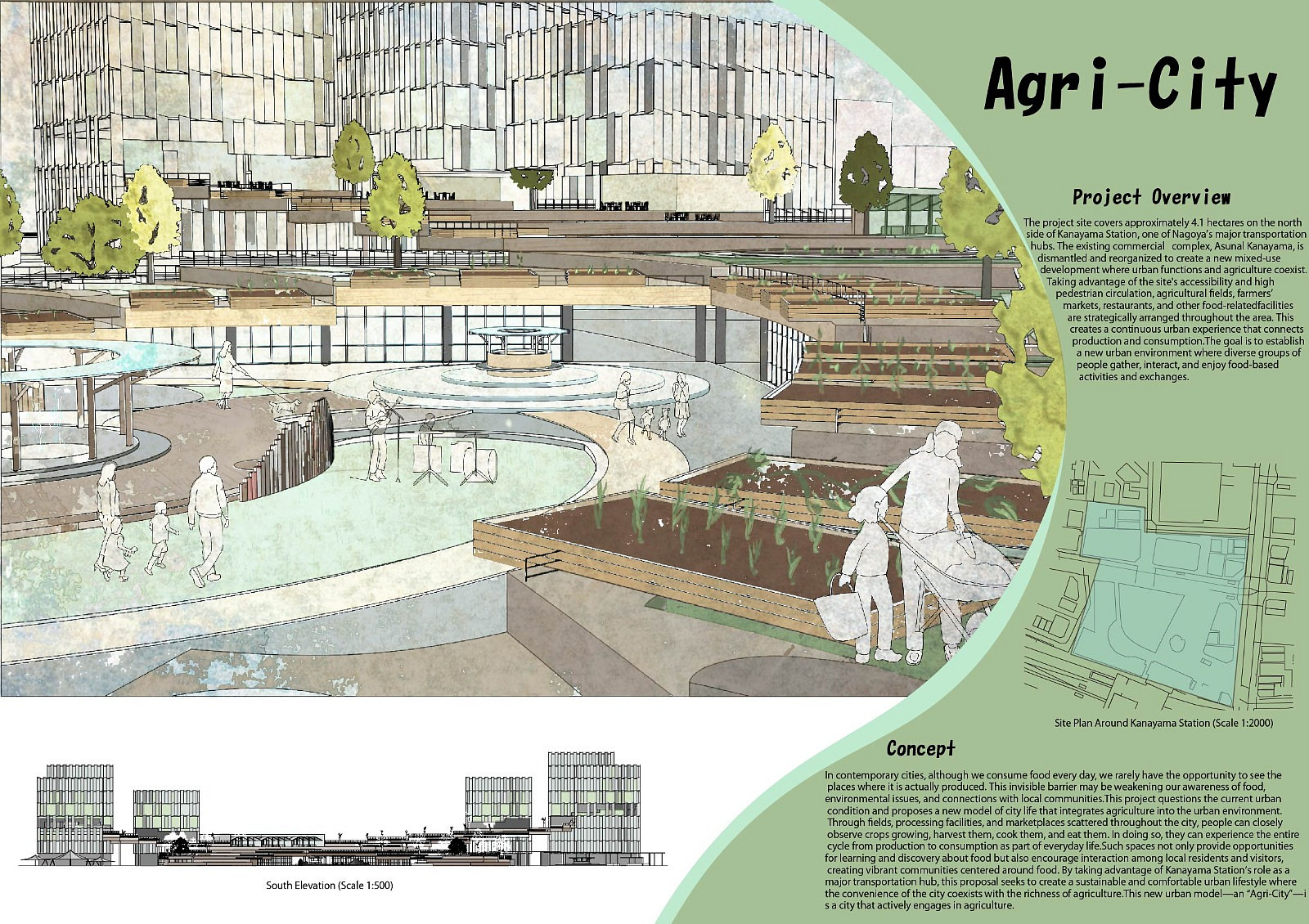
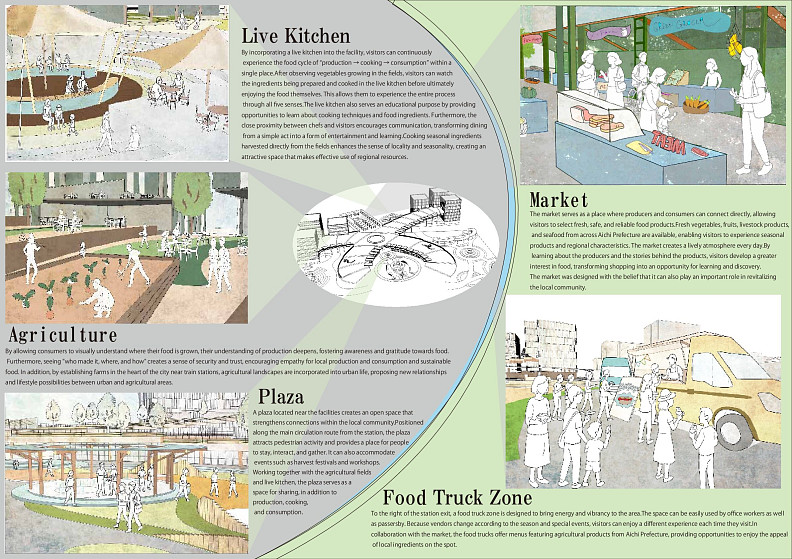
Agri-City is a proposal that reconnects urban residents with food production by integrating agriculture into the heart of the city. While people in modern cities consume food every day, they rarely witness the processes behind its production. This separation has weakened awareness of food systems, environmental issues, and local communities.The project transforms the area around Kanayama Station into an urban environment where agriculture, commerce, and daily life coexist. By introducing farmland, markets, live kitchens, and food-related public spaces, citizens can experience the complete cycle of food production, preparation, and consumption within their everyday routines. The proposal aims to create a sustainable urban lifestyle in which agriculture is not hidden from the city but becomes an essential part of it.
Popis projektu
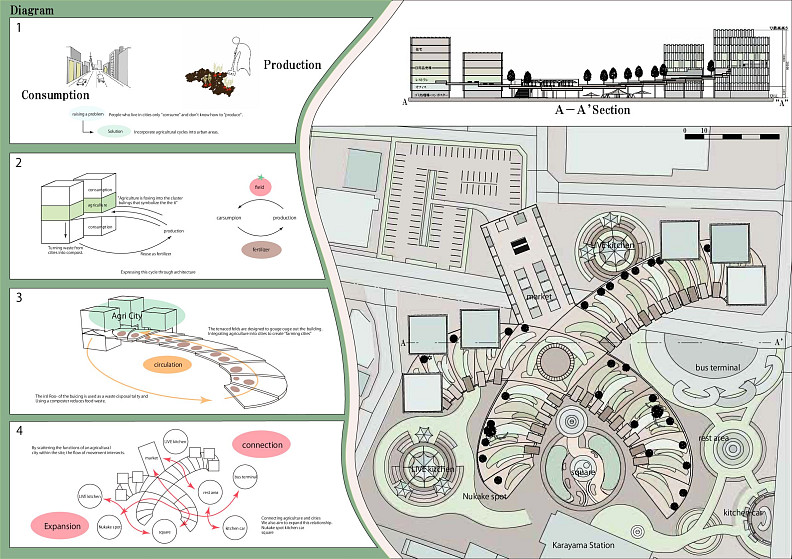
The project is located on a 4.1-hectare site north of Kanayama Station, one of Nagoya’s major transportation hubs. The existing commercial complex is reorganized into a mixed-use district that combines agricultural production with urban functions.Terraced farmland is integrated into the building mass, visually and physically bringing agriculture into the urban landscape. A network of facilities—including agricultural fields, a farmers’ market, live kitchens, food truck zones, public plazas, residential units, offices, and retail spaces—creates opportunities for interaction between producers and consumers.The design is based on a circular system in which organic waste generated in the city is processed into compost and reused for agricultural production. This cycle is expressed architecturally, allowing visitors to understand the relationship between production and consumption. The project promotes food education, community engagement, local economic activity, and environmental sustainability while offering a new model for future urban development.
Technické informace
The project is located on a 4.1-hectare site north of Kanayama Station, one of Nagoya’s major transportation hubs. The proposal redevelops the existing commercial district into a mixed-use urban complex that combines agricultural production, commercial activities, public spaces, and residential functions. The design incorporates terraced farmland within and around the building volumes, creating a strong visual and physical connection between urban life and food production.A circular resource system forms the foundation of the project. Organic waste generated by restaurants, markets, and surrounding urban activities is collected and processed through on-site composting facilities. The resulting fertilizer is then reused within the agricultural areas, establishing a visible cycle of production, consumption, and regeneration. This system reduces food waste while promoting sustainable resource management.The development includes a variety of interconnected programs, such as agricultural fields, a farmers’ market, live kitchens, food truck zones, public plazas, offices, retail spaces, and residential units. These functions are strategically distributed throughout the site to encourage pedestrian movement, social interaction, and engagement with the agricultural process. Open spaces and circulation routes are designed to maximize accessibility from the station and strengthen connections between different user groups.Environmentally, the project increases urban green space, supports local food production, reduces transportation-related emissions, and improves ecological awareness among residents and visitors. By integrating sustainable infrastructure with everyday urban activities, the proposal presents a practical model for a future city where agriculture is embedded within the urban environment rather than separated from it.
Dokumentace

Copyright © 2026 INSPIRELI | All rights reserved. Use of this website signifies your agreement to the Terms of Use, Privacy Policy, and use of cookies.