Jaworzynka. Nature Education Centre


Idea projektu
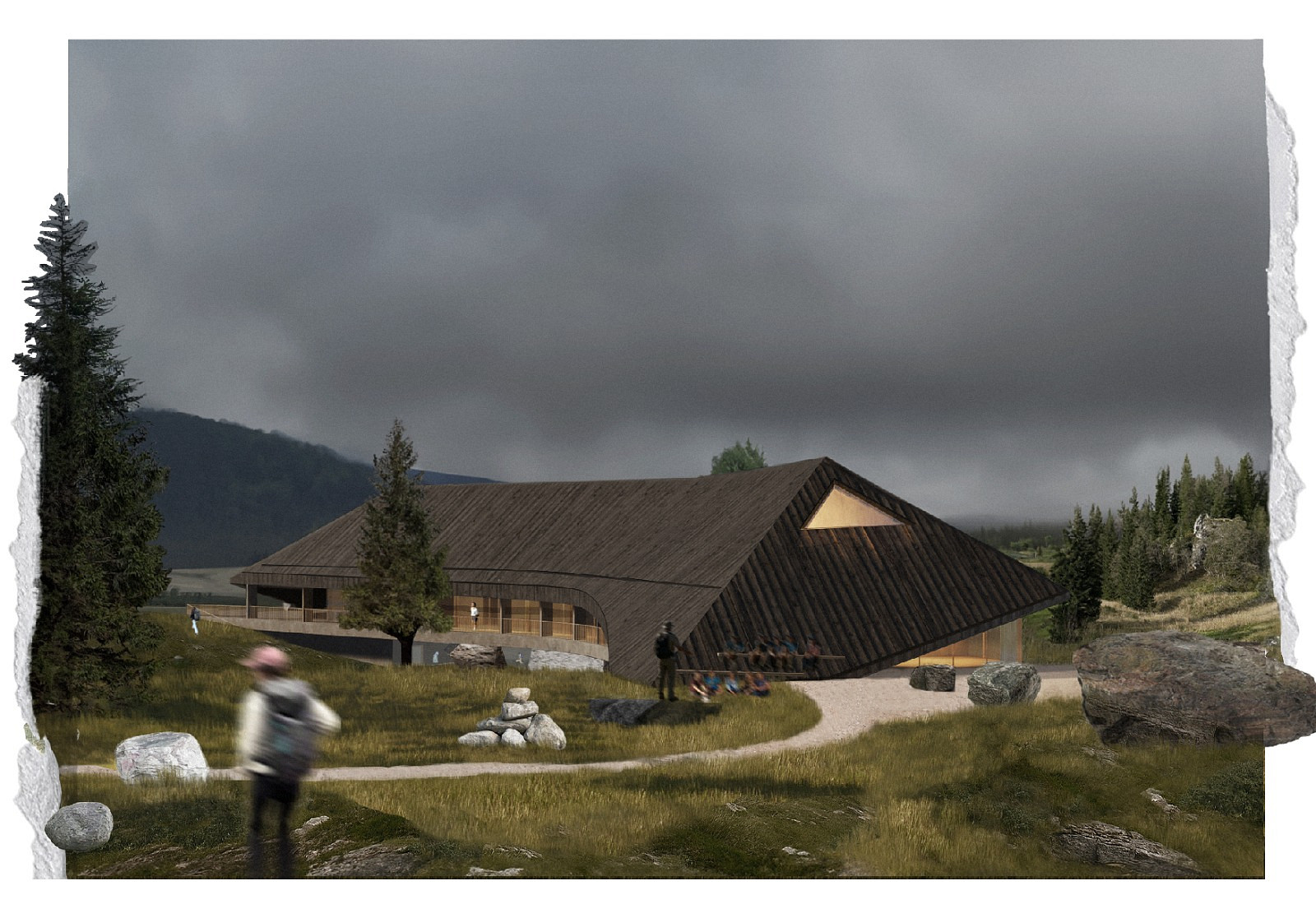
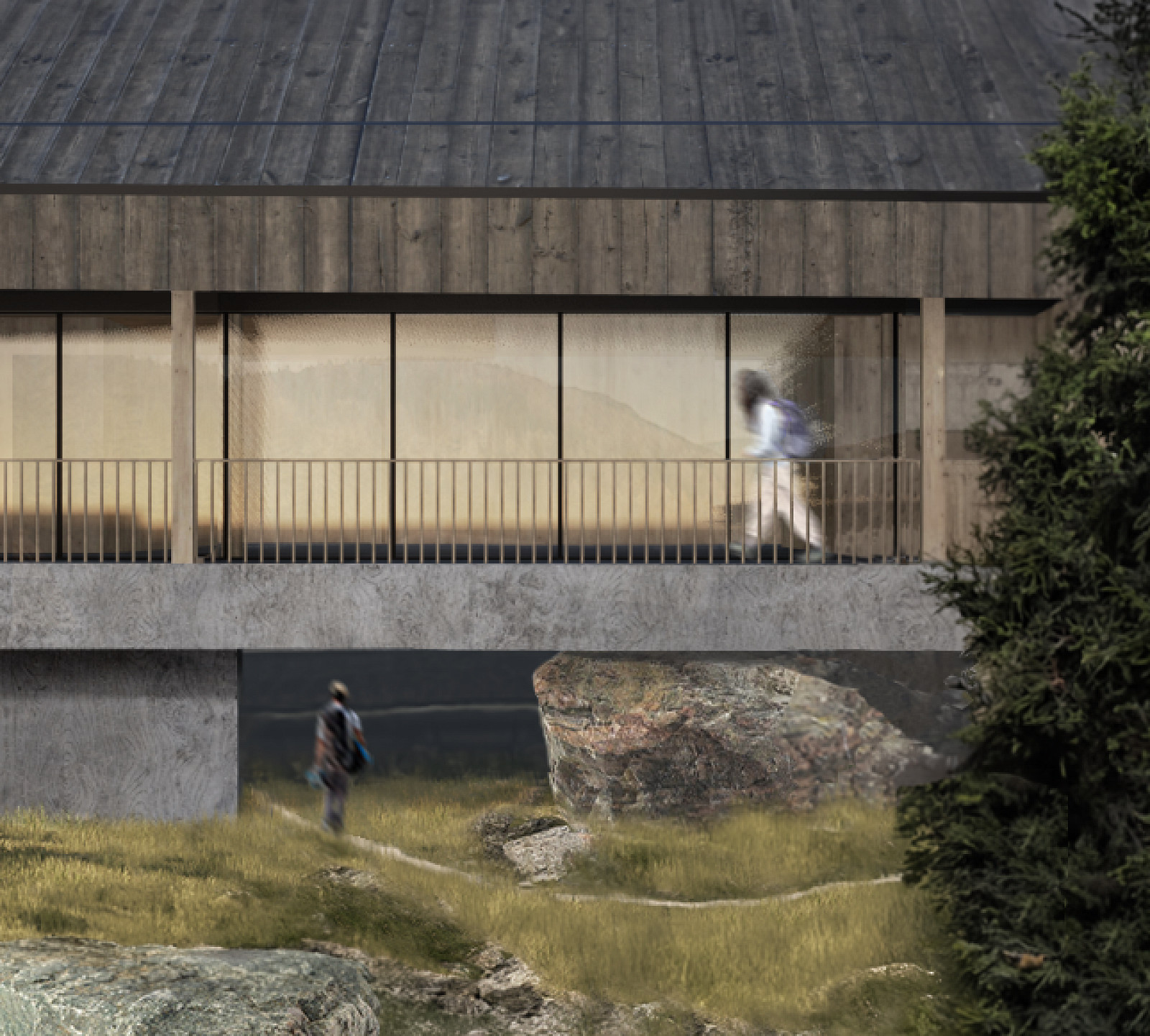
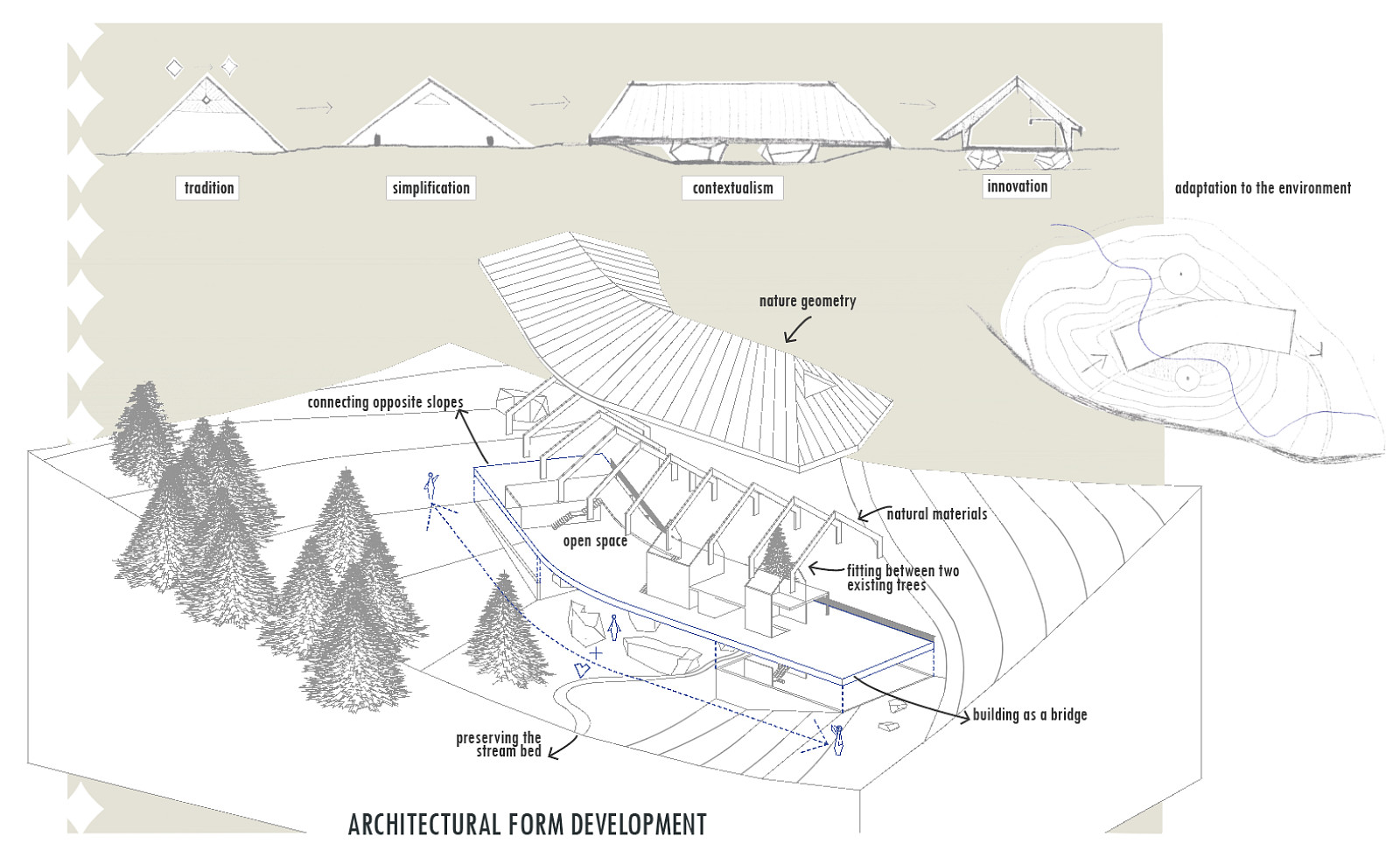
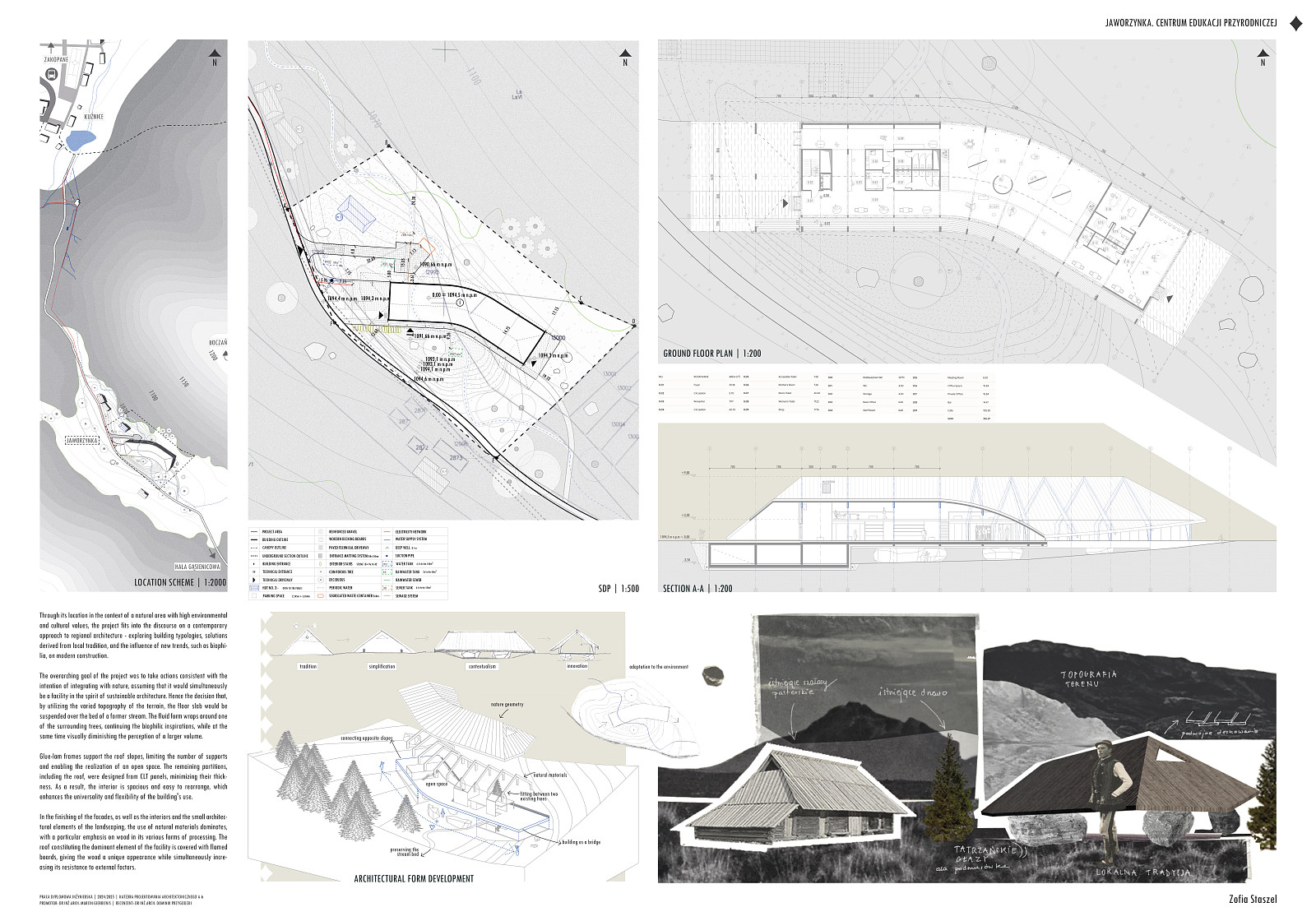
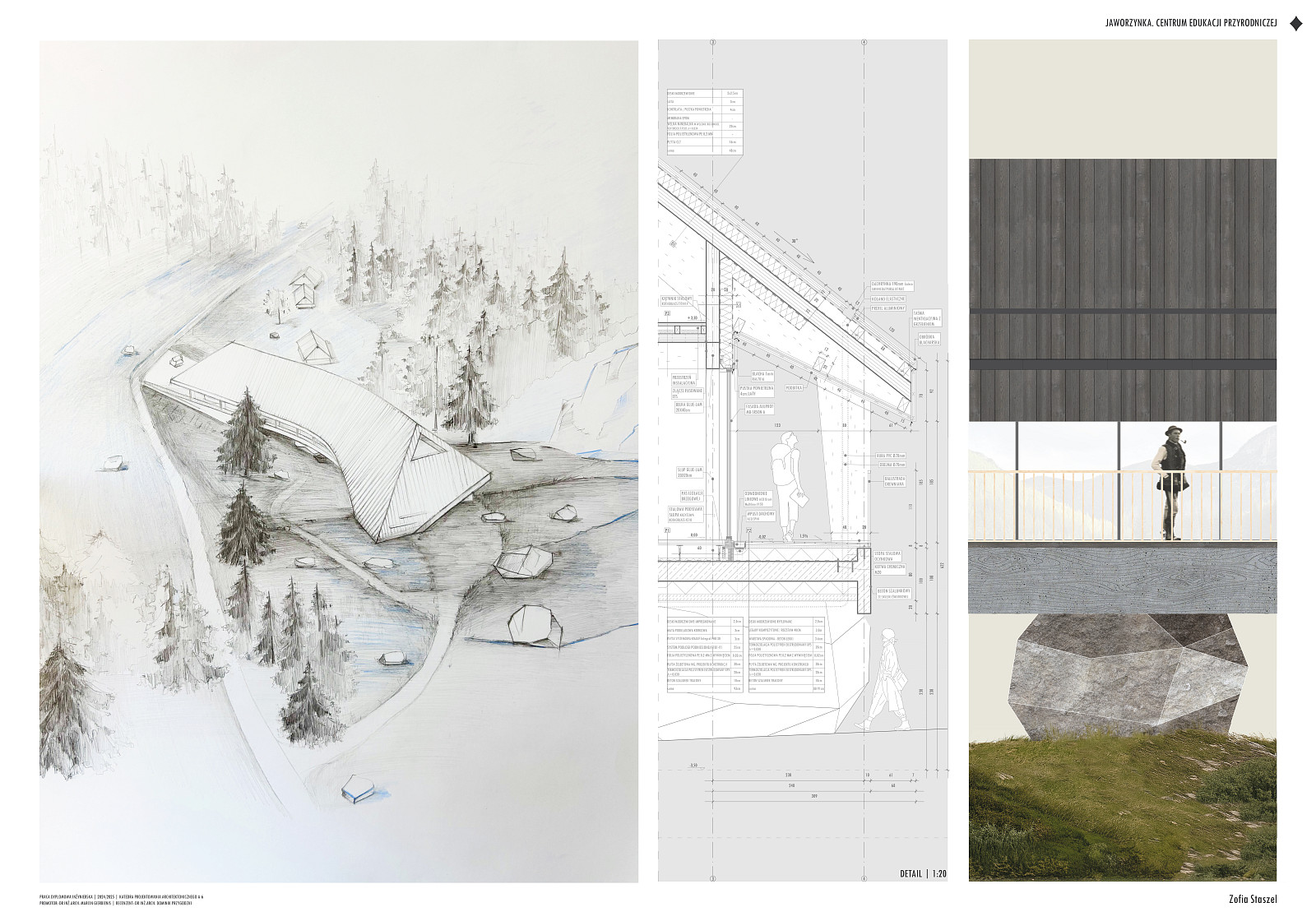
The facility is located in the Jaworzynka Glade within the Tatra National Park in Zakopane, Poland. Positioned along a highly frequented tourist trail leading to Hala Gąsienicowa, the center aims to fill the gap in educational infrastructure while harmonizing with the surrounding mountain landscape.The engineering thesis covers the Jaworzynka Nature Education Center in a high-value natural and cultural area. The project explores contemporary regional architecture, local traditions, and biophilic design trends. Research examined natural environment design and educational facility roles. Studied wooden educational architecture guided design creating exploration and contemplation spaces in nature. The unique mountain location with educational function inspired sustainable design promotion. Growing ecological education demand and facility shortage motivated the Center's creation. Design draws from natural landscape geometry and traditional pastoral architecture, combining nature and humanity. The project features unique environmental integration through a bridge-building suspended over former stream beds, connecting opposite slopes while preserving natural wildlife flow. The concept promotes wood as natural, low-emission material in CLT and glue-lam construction, finishing, and furnishing. Unique stone boulder supports, porches, multi-slope roofs, and traditional hut-inspired shapes reference local construction. Jaworzynka Center exemplifies conscious, ecological mountain construction where architectural form conveys sustainable development and Tatra nature respect.
Popis projektu
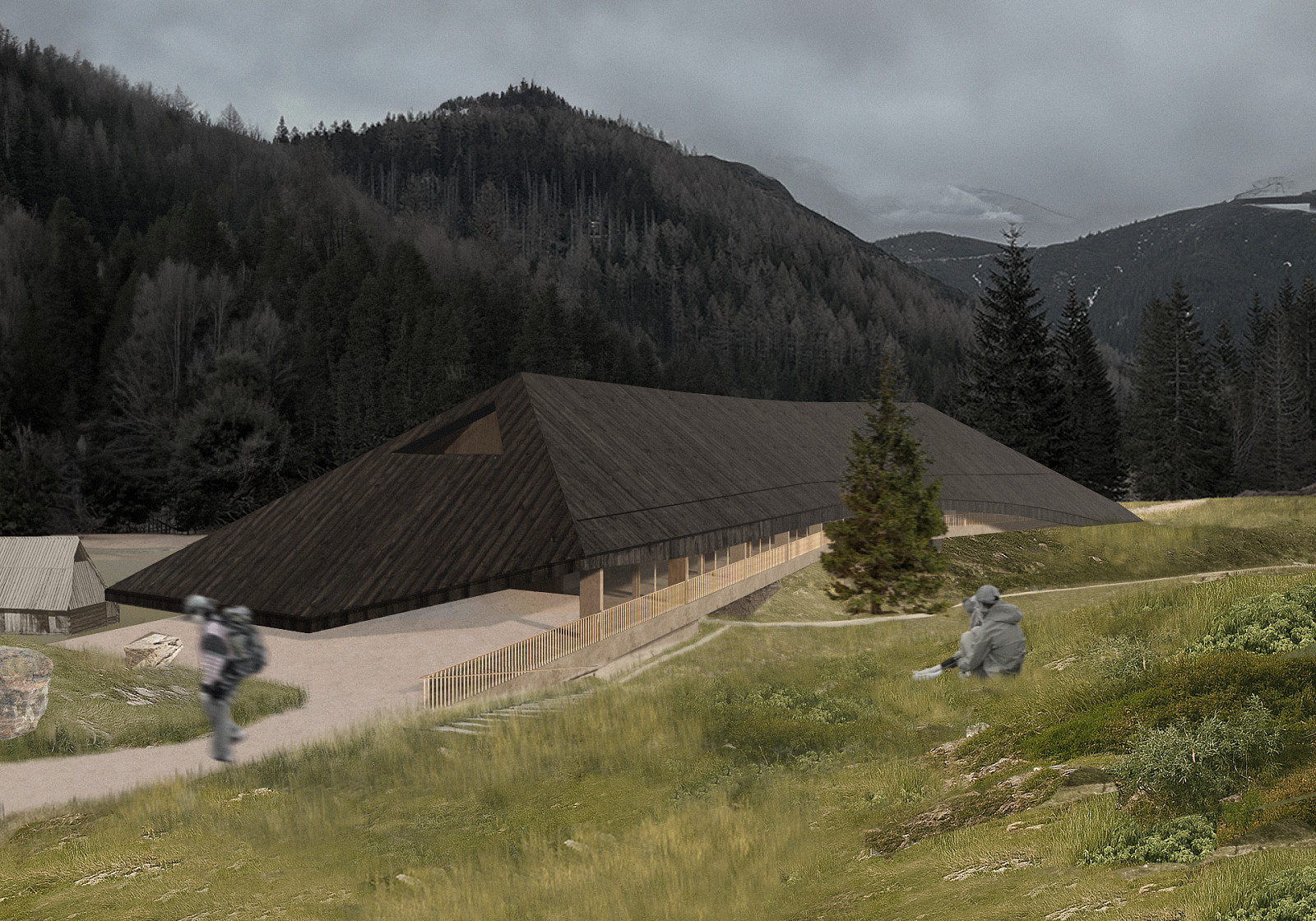
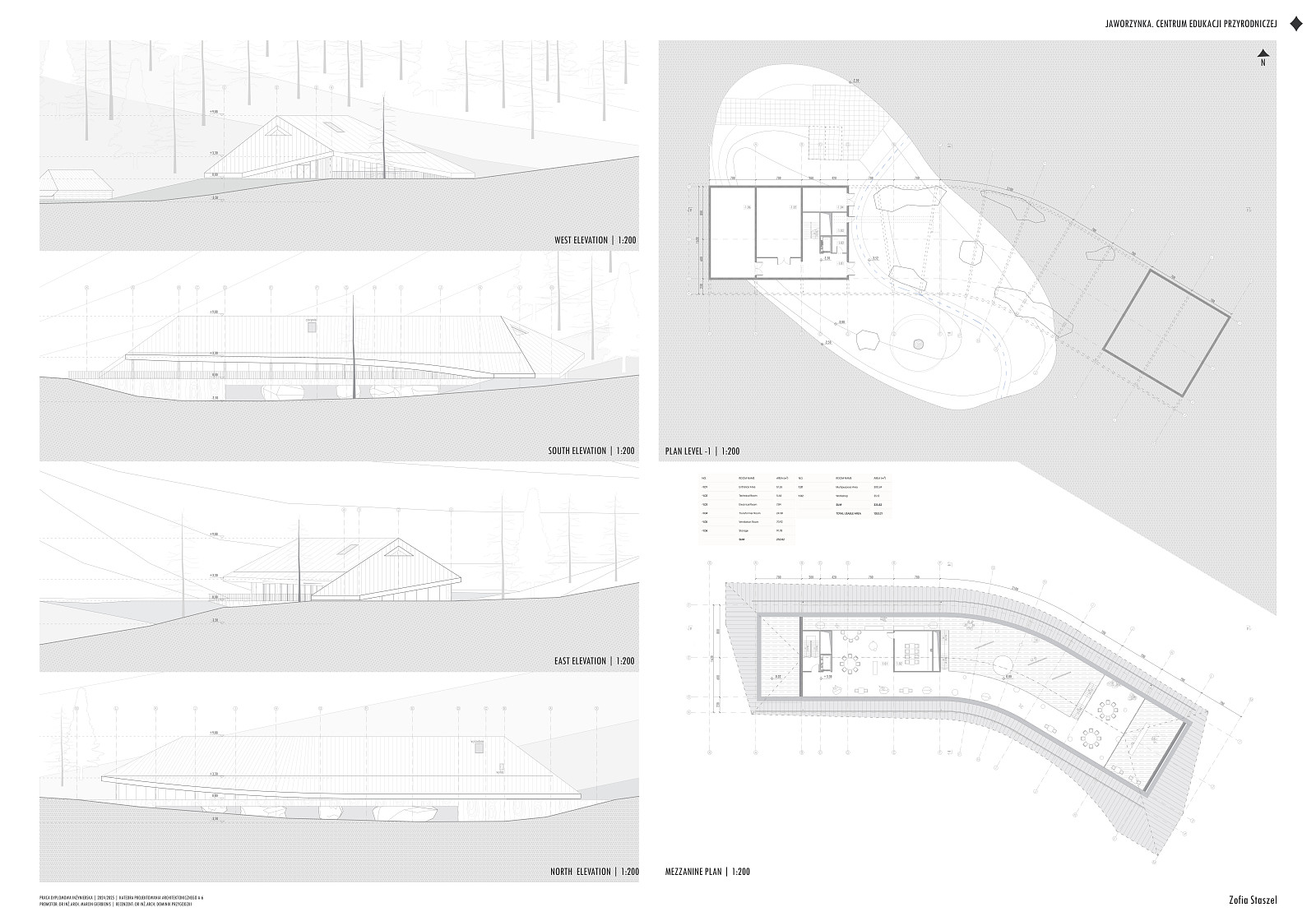
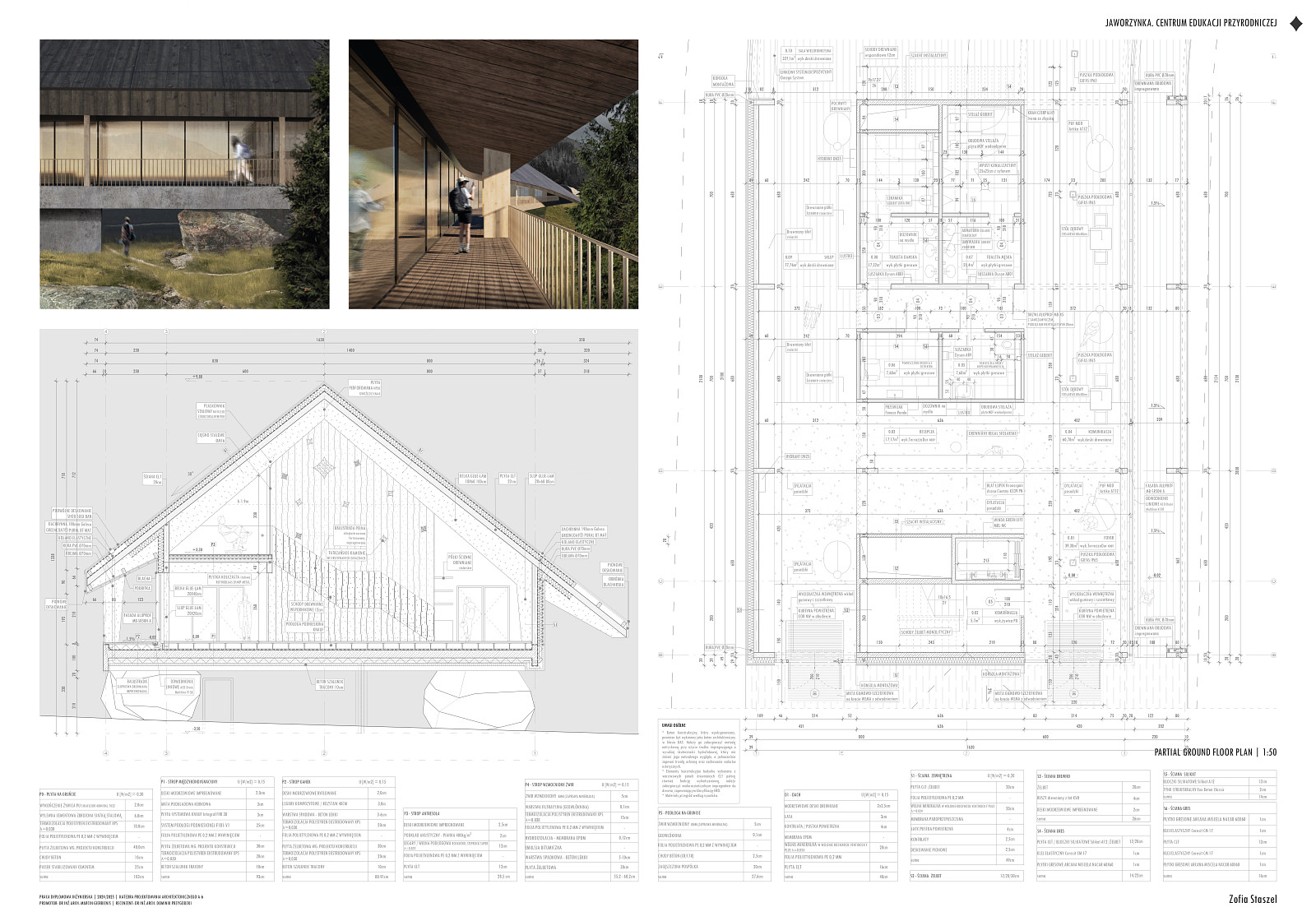
Functionally, the center is designed to be an open, flexible educational space where the architectural form closely dictates the spatial organization. The building's volume takes the shape of an elongated, slightly bent rectangle, which is a contemporary interpretation of the traditional layout of local wooden shepherd's huts. The structural grid is based on a 7x7 meter module. To visually reduce the building's scale and harmonize with the natural geometry of the landscape, the central section of the building features a soft, curving bend, which fluidly connects the two straight, rectangular ends. The main element defining this form is a multi-slope roof with elongated eaves that occasionally descend all the way to the ground level, subtly sheltering the entrance and creating natural outdoor seating areas.
The internal layout follows the logic of the three main modular zones and the natural topography of the site. In accordance with traditional mountain building practices, the main entrance is located on the eastern elevation. This first section houses the foyer, a reception area connected to a shop, and the main staircase. From here, the open main level extends across the suspended slab over the former stream bed, acting as a functional and communicative bridge between the two opposing slopes. The central curved section is dedicated to the main exhibition hall, which intentionally lacks permanent vertical partitions so it can be flexibly adapted to current educational needs using mobile exhibition systems. The final section of the building contains administrative spaces, cafe preparation areas, and an open cafe room. At this end, the functional layout seamlessly merges with the outdoors through a glass facade, allowing visitors to exit directly onto a hiking trail.
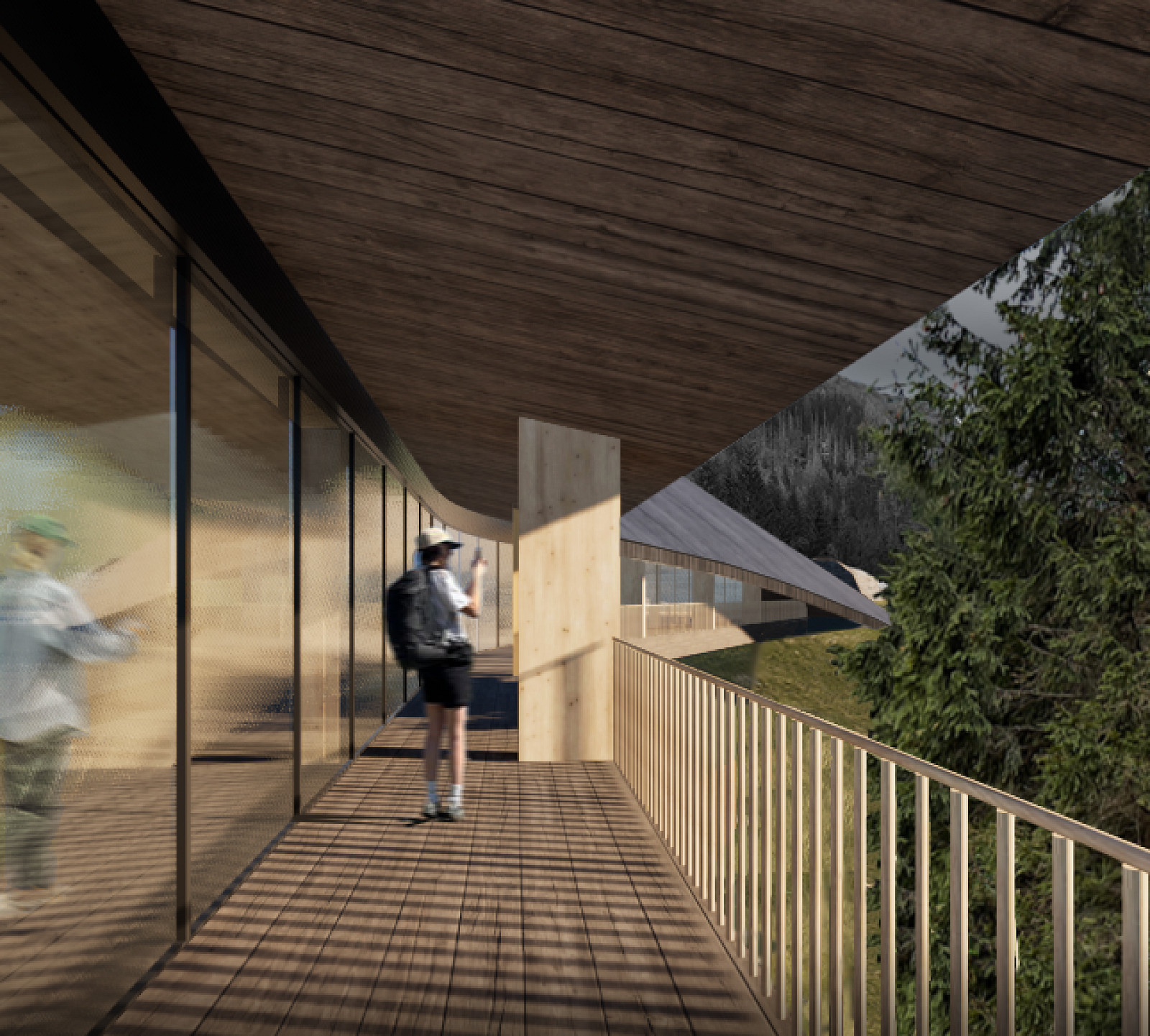
Below the main level, nestled into the stream bed's natural depression, is a technical and sanitary zone that includes restrooms, storage, and a mother-and-child room. The ceiling of these enclosed rooms forms an open mezzanine, bounded only by a balustrade, providing additional integrated space for workshops and exhibitions without closing off the main volume. Furthermore, an exterior covered walkway runs along the southern elevation, formally referencing a traditional regional porch while serving as a practical, alternative communication route across the site.
Technické informace
From a technical and structural standpoint, the building promotes sustainable, low-emission construction, utilizing wood as the primary structural and finishing material. The underground technical section is built on a 40 cm reinforced concrete slab with 30 cm reinforced concrete retaining walls. The main ground floor rests on a 30 cm reinforced concrete slab supported by concrete beams and the aforementioned natural stone boulders. The primary load-bearing framework consists of Glued Laminated Timber frames, utilizing robust columns and beams. The roof structure and internal partitions are constructed from Cross-Laminated Timber panels, which are left exposed internally to showcase the wood's natural texture. The exterior cladding on the roof and facades features flamed larch boards. This technique naturally increases the wood's resistance to weather, insects, and fungi. Inside, the facility utilizes impregnated larch floorboards, polyurethane resin in technical areas, and terrazzo in the entrance zones. The large glazed areas utilize a mullion-transom facade system integrated with wooden structural profiles, fitted with high-performance glass. Custom triangular aluminum skylights are installed in the roof, alongside roof access windows equipped with electric heaters and snow deflectors for extreme mountain conditions.
Ecologically, the facility is designed to meet modern sustainability and safety standards. The building relies on a mechanical supply and exhaust ventilation system with heat recovery. The site incorporates a deep water well, while rainwater is collected from the roof into an underground retention tank for reuse, and greywater from sinks is recycled to flush toilets. For fire safety, a dedicated underground fire protection water tank is integrated into the site, ensuring compliance with strict fire safety regulations for public buildings in remote areas. Furthermore, the large glass facades are equipped with anti-collision stickers to protect local bird populations.
Vytvořeno pomocí:


Copyright © 2026 INSPIRELI | All rights reserved. Use of this website signifies your agreement to the Terms of Use, Privacy Policy, and use of cookies.