EDUCATIONAL AND MEDICAL HOSPTIAL DESIGN PROJECT


Idea projektu
Patients and visitors often arrive at hospitals physically and emotionally exhausted. Instead of a sterile, suffocating environment, they require a space that embraces, comforts, and revitalizes them. This fundamental human need birthed the concept of "The Oasis."
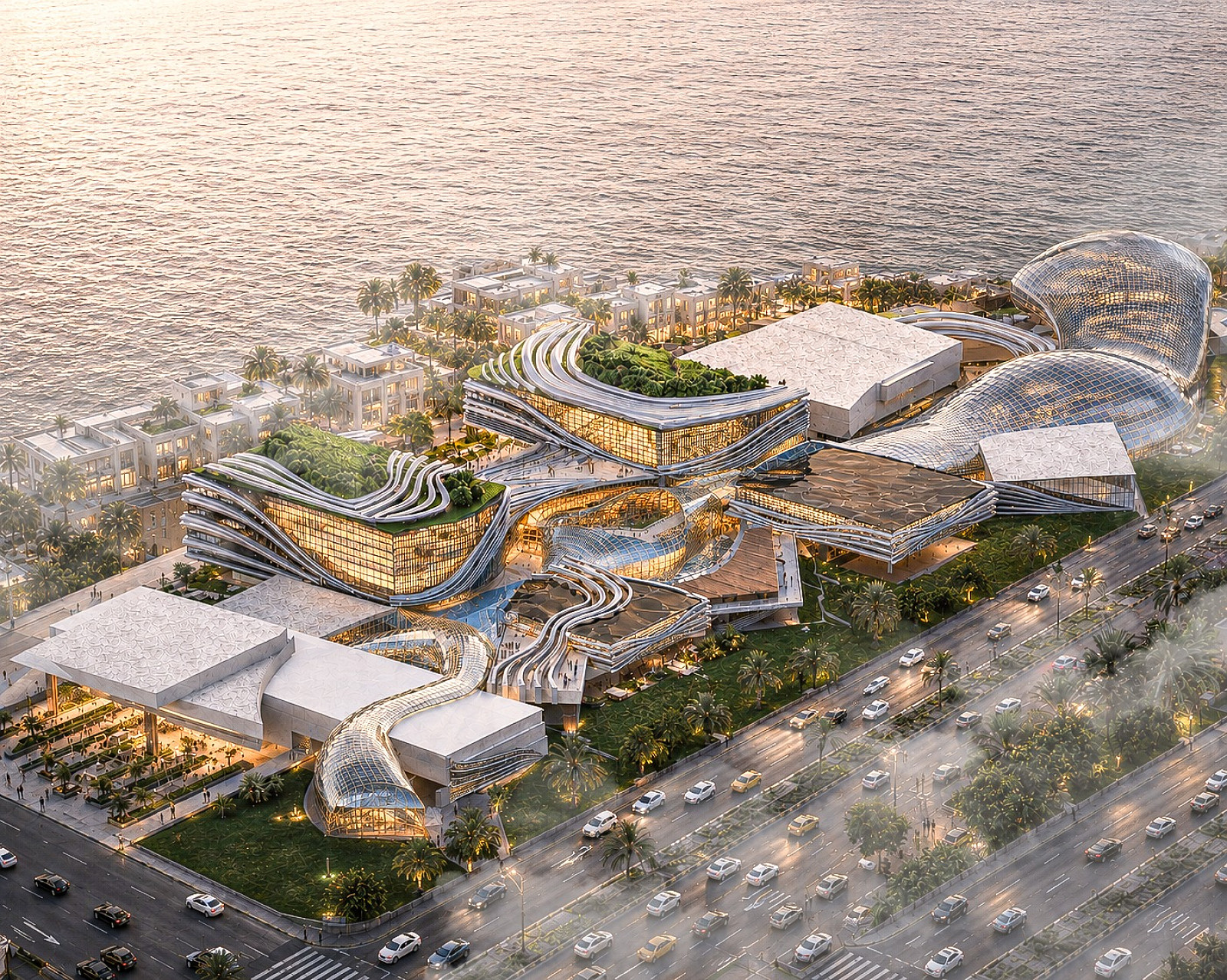
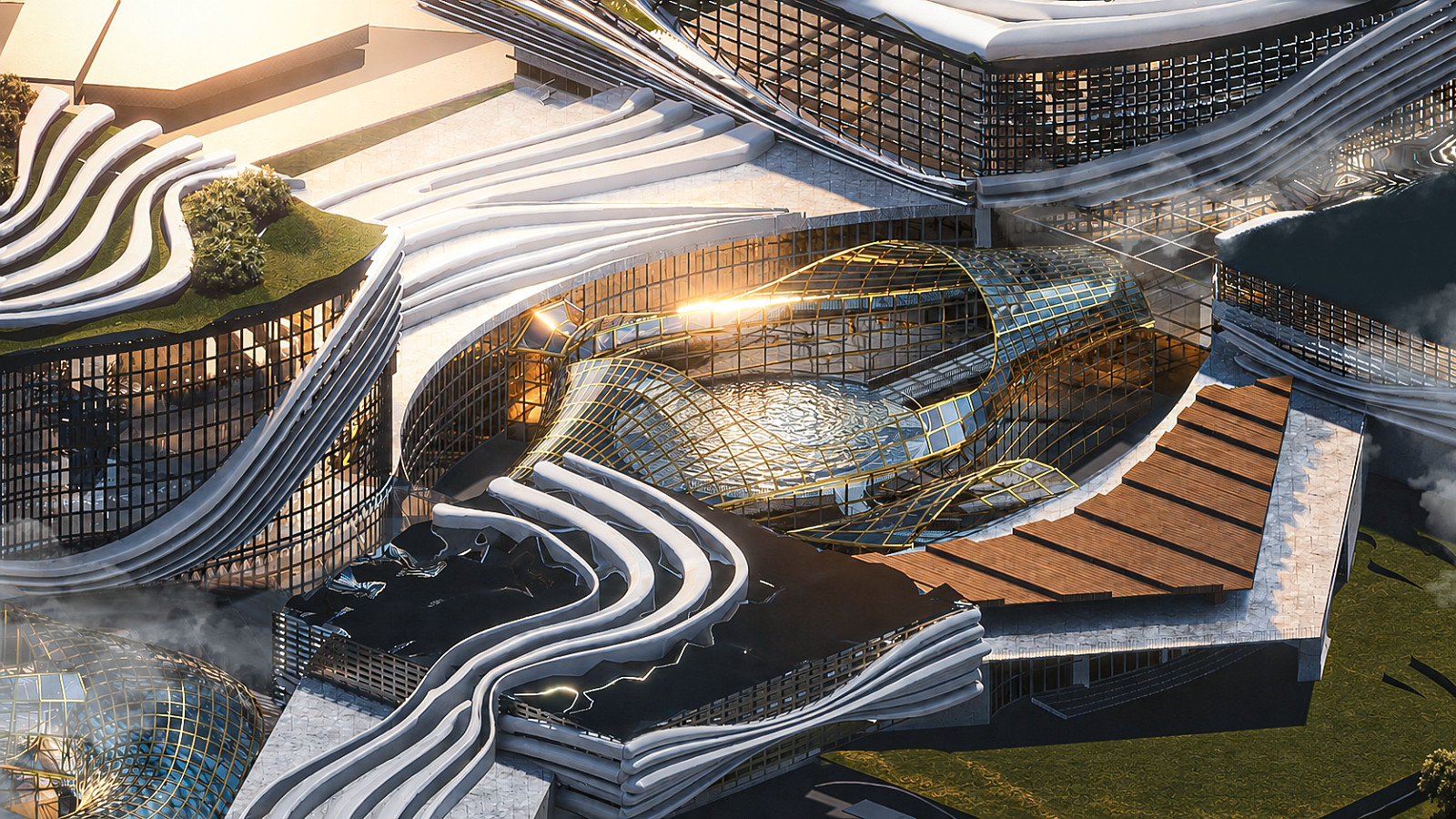
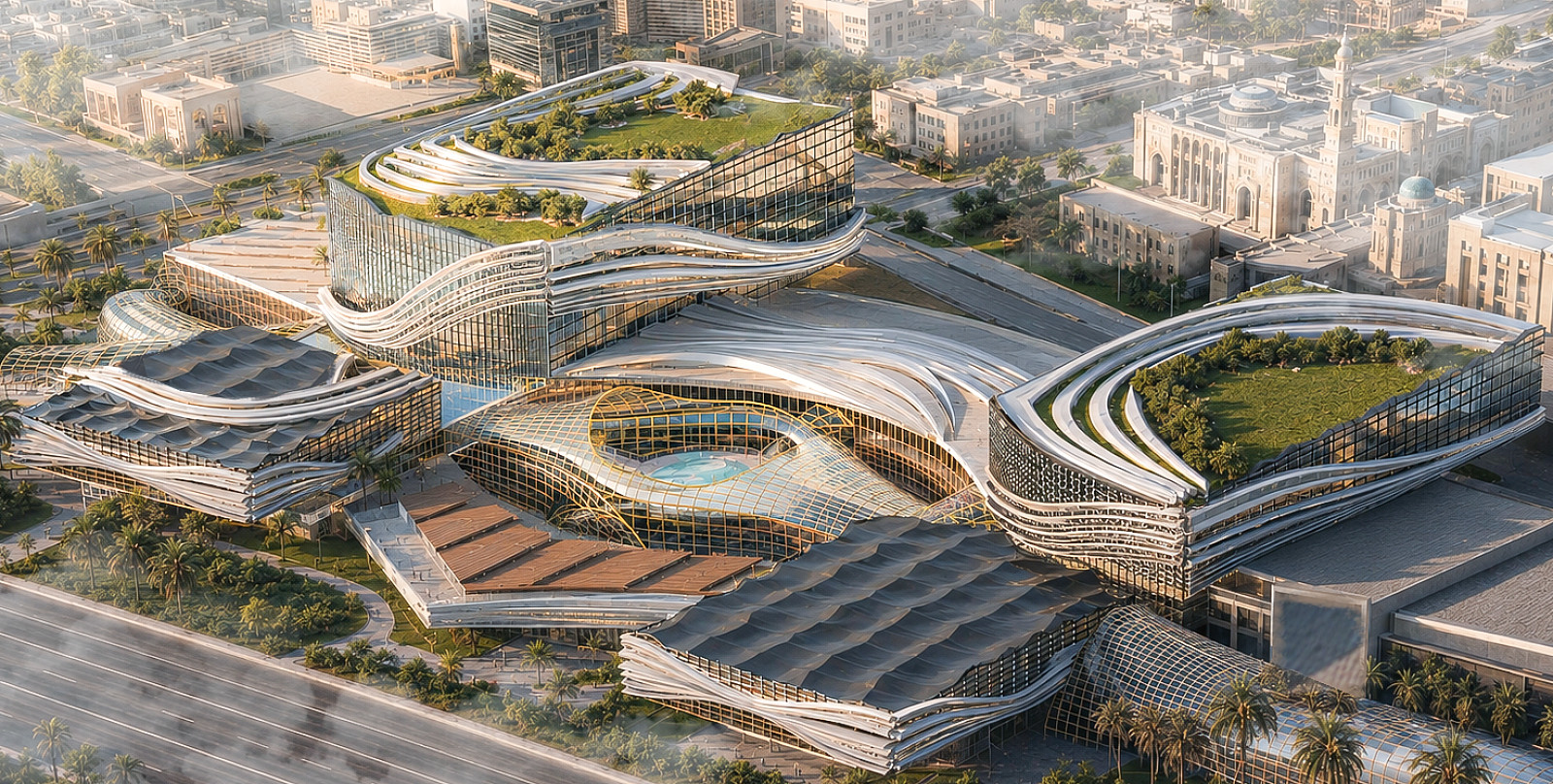
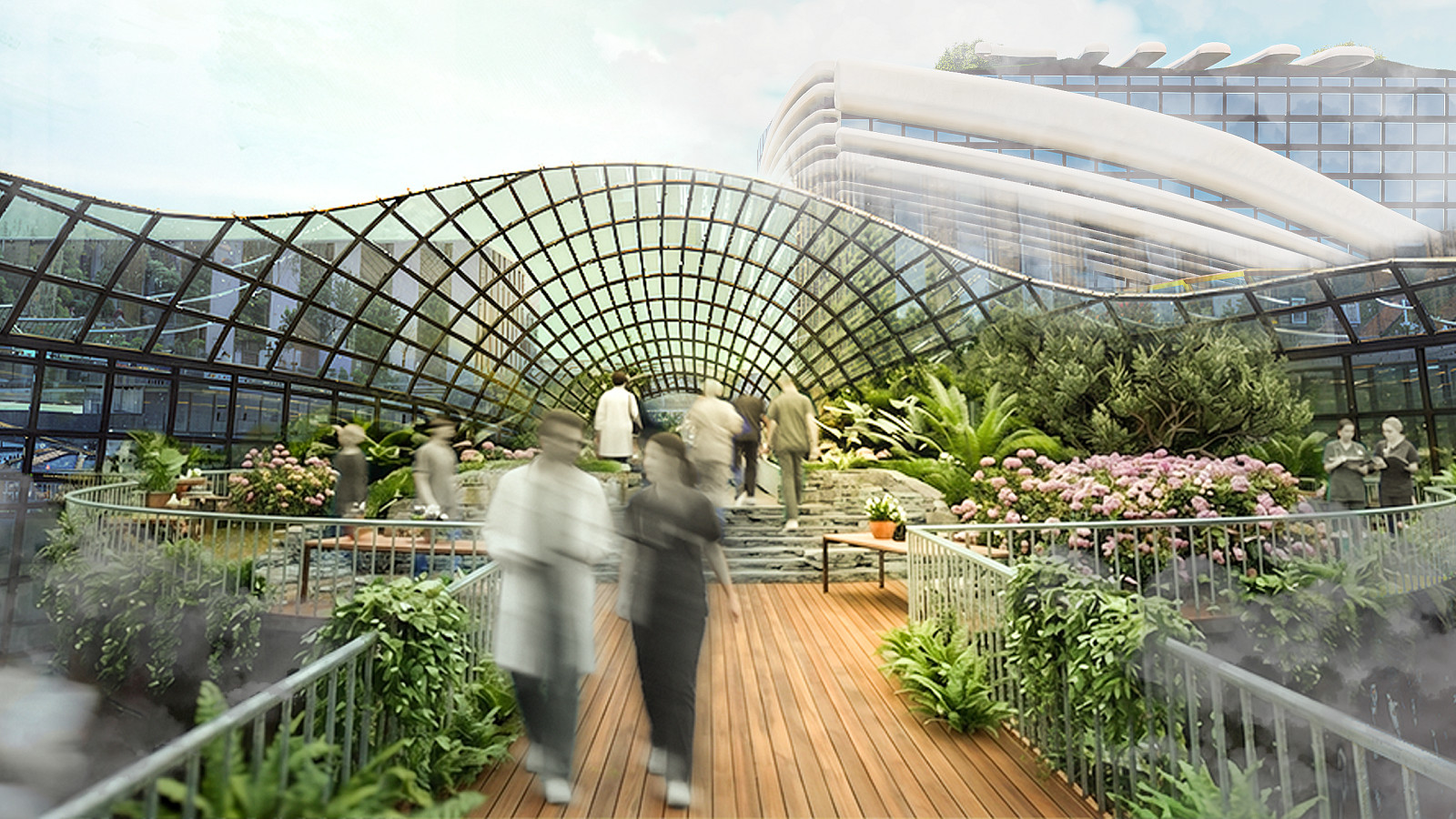
Inspired by the profound contrast of an oasis within a barren desert, the design reimagines the clinical experience. The "desert" symbolizes the harsh realities of illness, while the central "Oasis"—drawing its energy directly from the river—acts as the life-giving heart of the project. A network of connecting bridges serves as vital arteries, distributing this hope and healing energy throughout the entire hospital complex.
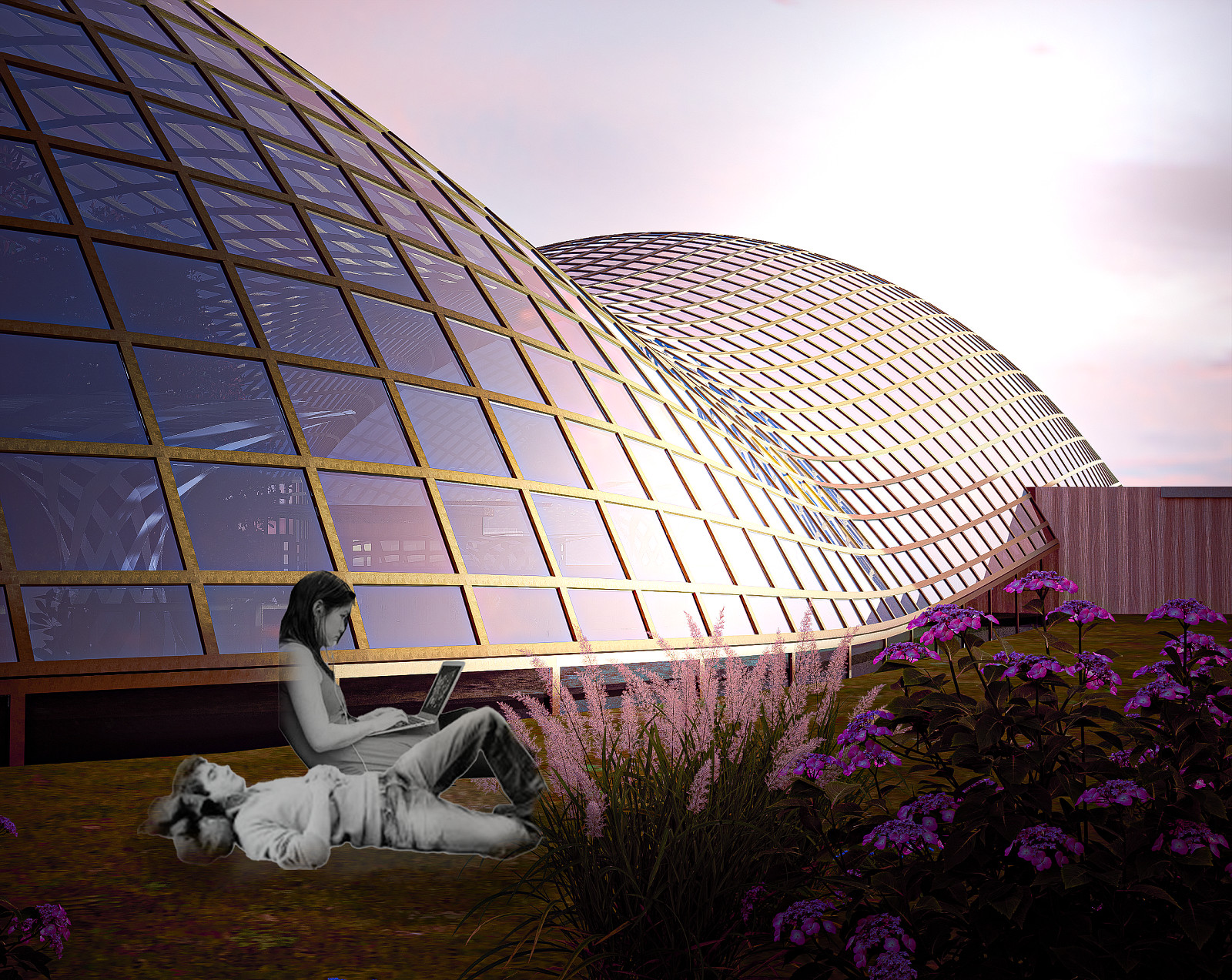
This narrative directly shapes the building's morphology. The outer structures are defined by rigid, harsh geometries, reflecting the tough external realities. However, as one moves inward toward the center, the architecture progressively softens into smooth, organic, and curvilinear forms. This spatial transition physically manifests the journey from exhaustion and hardship toward the vitality and biophilic healing found at the Oasis core.
Popis projektu
1. Biophilic Healing Environment
Development of a patient-centric hospital environment that prioritizes psychological comfort and physical healing through the integration of a central, nature-filled "Oasis."
2. Morphological & Geometric Transition
Implementation of a dual-geometry massing strategy. The exterior utilizes rigid, regular forms to house highly controlled clinical zones, which progressively transition into smooth, organic, and curvilinear forms around the central courtyard to reduce environmental stress.
3. Connectivity and Circulation Arteries
Design of a network of elevated bridges that act as functional arteries. These structures link the central Oasis to various hospital wings, ensuring the continuous flow of natural light, ventilation, and green views throughout the entire complex.
4. Water Resource Integration
Utilization of the nearby river as the primary life-source for the project, pulling water into the central landscape to nourish the Oasis and enhance the sensory healing experience for patients and staff.
Technické informace
1. Structural Systems
* Peripheral Clinical Wings: Orthogonal reinforced concrete framework designed to support the rigid, regular geometry, ensuring vibration control and load-bearing capacity for heavy medical equipment.
* Central Curvilinear Zones: Steel diagrid or space-frame structural systems allowing for flexible, long-span organic forms and smooth geometric transitions without intrusive column grids.
* Elevated Circulation Bridges: Lightweight steel truss structural systems engineered to span between the outer wings and the central courtyard, accommodating pedestrian loads while minimizing visual weight.
2. Façade and Envelope Integration
* Exterior Skin (The "Desert"): High-performance, double-glazed curtain walls paired with rigid, geometric solar shading devices (louvers) to manage thermal heat gain and visually represent the harsh external environment.
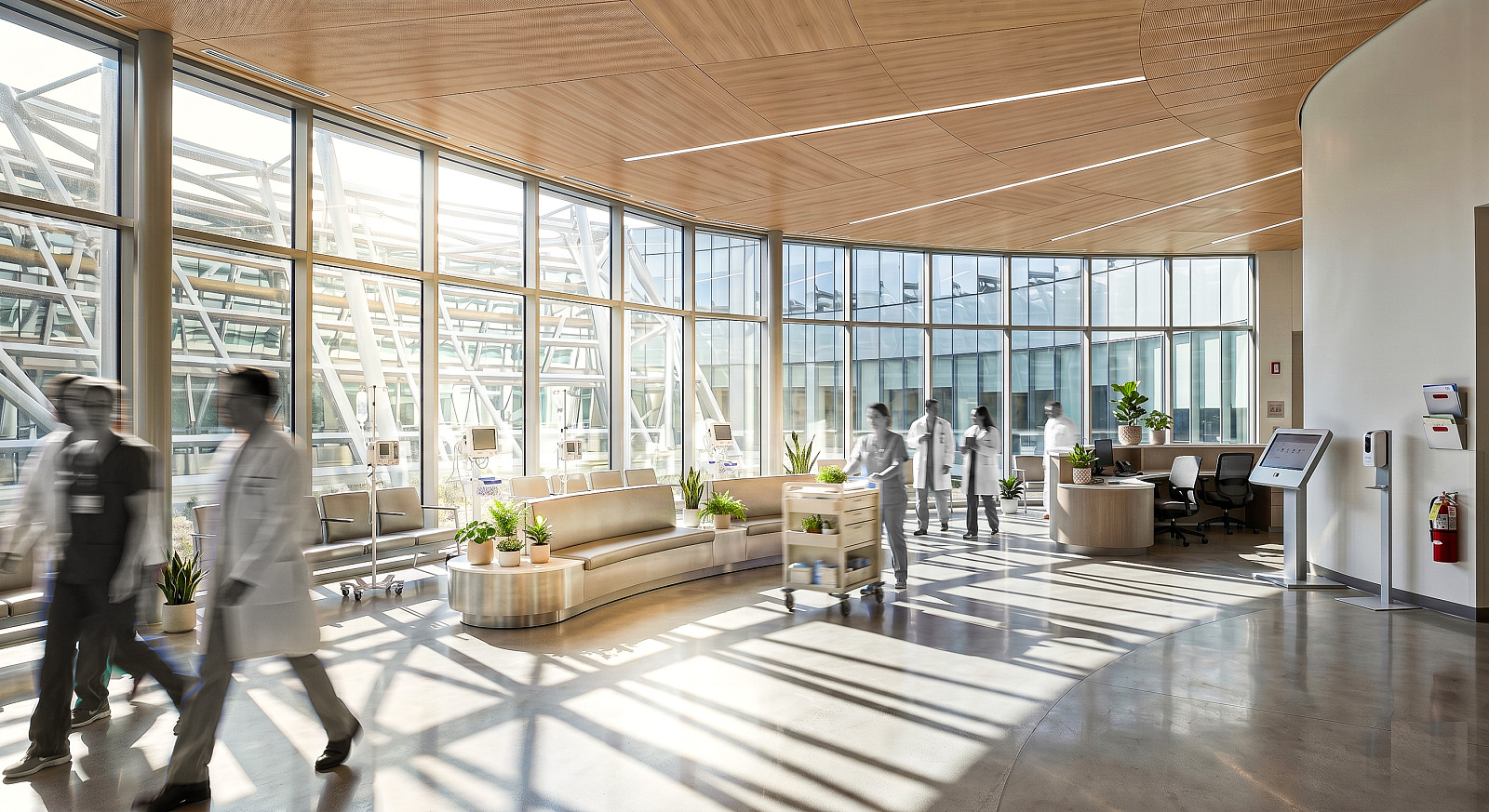
* Interior Skin (The "Oasis"): Fluid, cold-bent glass panels and highly transparent facades maximizing natural daylighting.
* Biophilic Cladding: Implementation of integrated green walls and planters along the interior-facing elevations to physically manifest the transition into the organic core.
3. Hydrological and Environmental Systems
* River Integration System: An automated pumping and multi-stage filtration system that draws water from the adjacent river, routing it through the central landscape for aesthetic and sensory engagement.
* Microclimate and Passive Cooling: Strategic orientation of the central courtyard and water features to utilize evaporative cooling, creating a localized microclimate that reduces overall HVAC energy loads.
* Water Recycling: A greywater collection and treatment system integrated into the hospital’s plumbing to sustain the extensive biophilic landscaping and elevated green bridges.
4. Zoning and MEP (Mechanical, Electrical, Plumbing) Logistics
* Segregated Air Handling: Advanced HEPA-filtered HVAC zoning to ensure specialized clinical areas (e.g., operating theaters, intensive care) maintain strict infection control, while public and recovery zones integrate mixed-mode or natural ventilation where viable.
* Dual-Pathway Circulation: Clear spatial delineation separating sterile, high-efficiency staff movement within the rigid zones from the restorative, patient-focused transit along the curved, nature-facing bridges.

Copyright © 2026 INSPIRELI | All rights reserved. Use of this website signifies your agreement to the Terms of Use, Privacy Policy, and use of cookies.