Module 11: Alserkal Arrival Center


Idea projektu
In The Experience of Architecture, Henry Plummer argues that one of most crucial, if not overlooked aspect of architecture’s is to either “support or diminish the spontaneous powers of human beings to act in space.” Similarly, in Escape from the Revolving Door, Robert Morris draws attention to how ordinary acts such as opening a door or climbing a stair have become invisible and pushed into thoughtlessness by technology. Together, these writers point towards the same neglect where simple bodily actions have become so routine that we no longer pay attention to them.
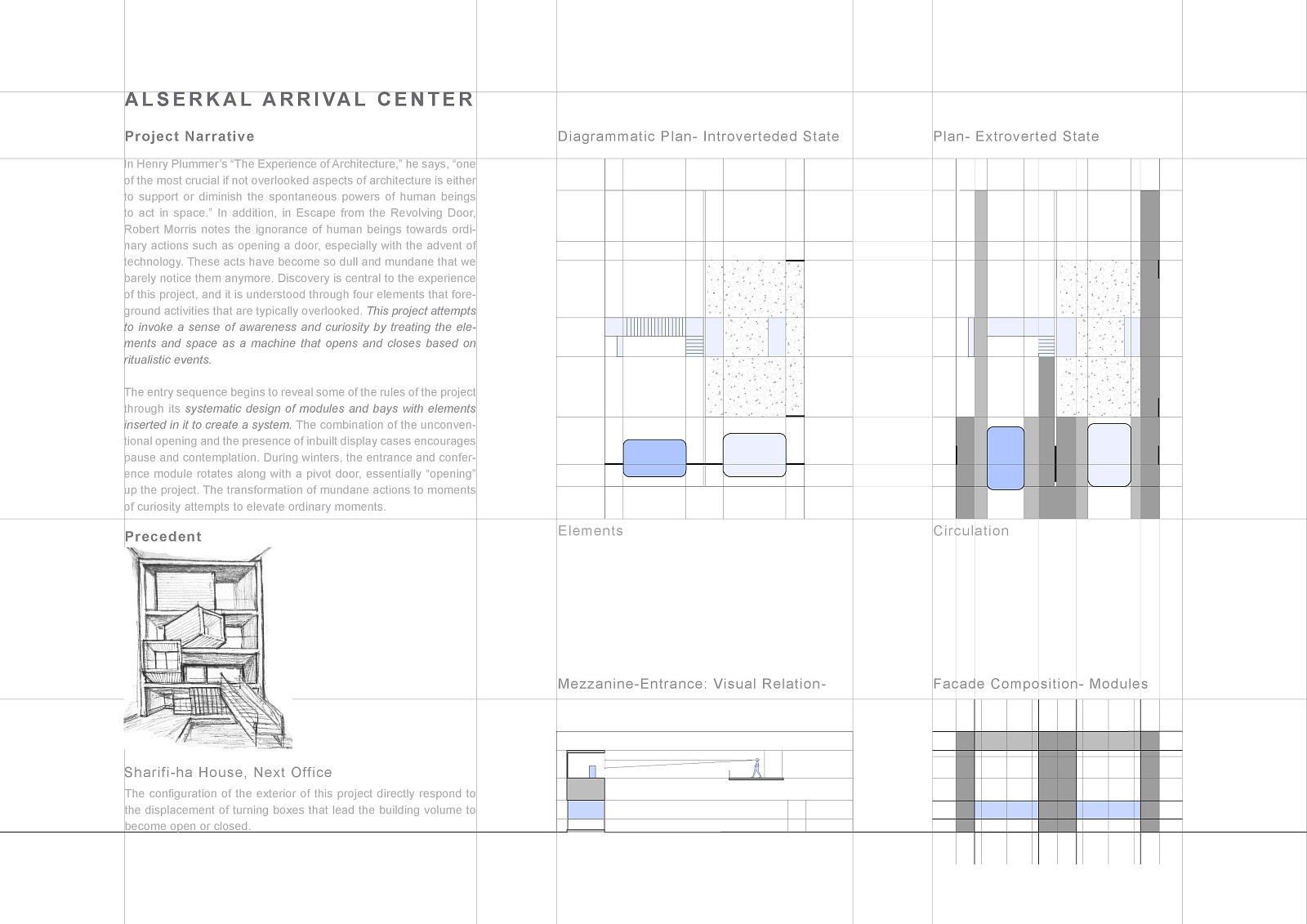
This project responds to that neglect by treating architecture as a machine: a building that opens and closes according to ritualistic events, making inhabitants consciously aware of the act of inhabiting.
Popis projektu
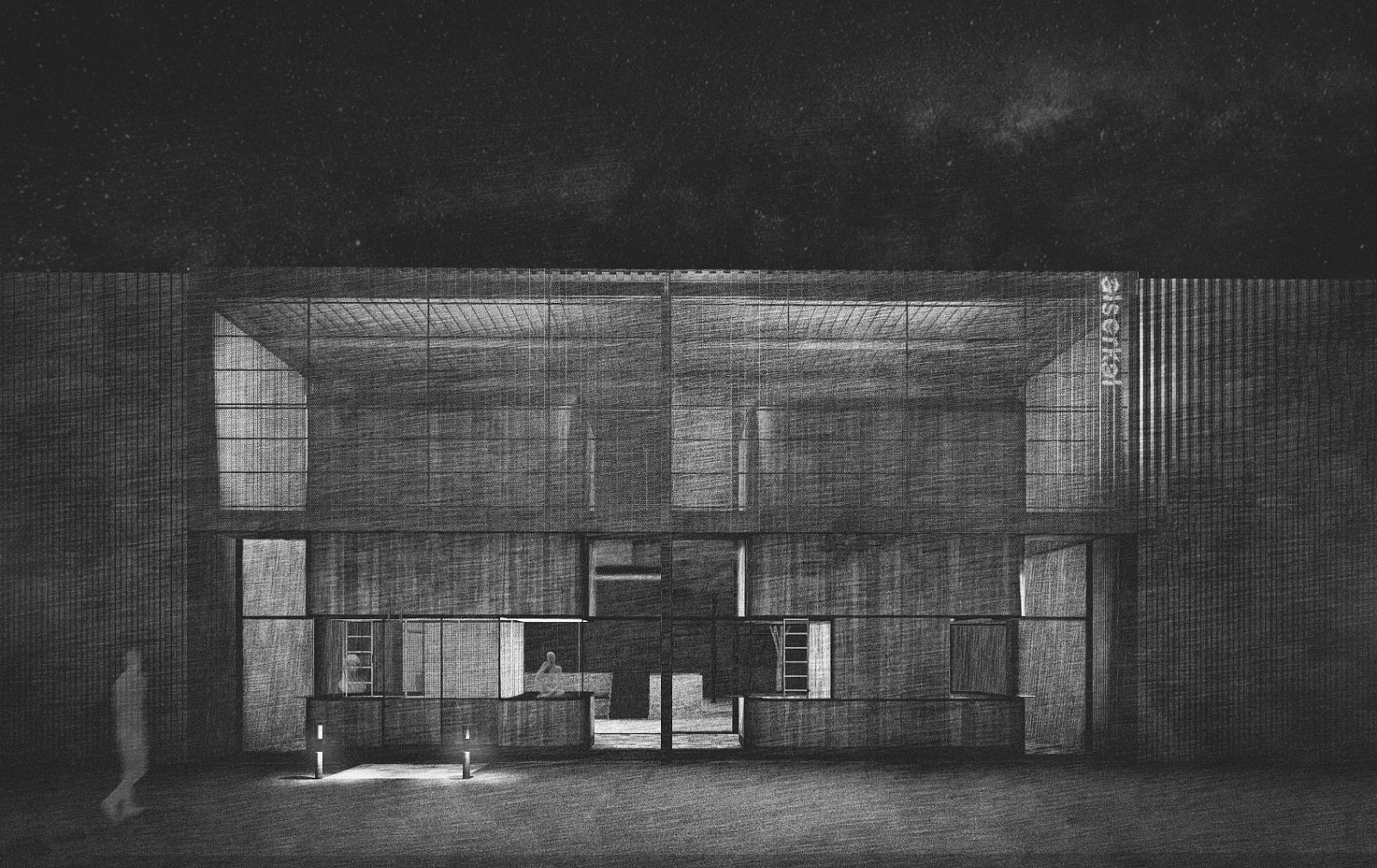
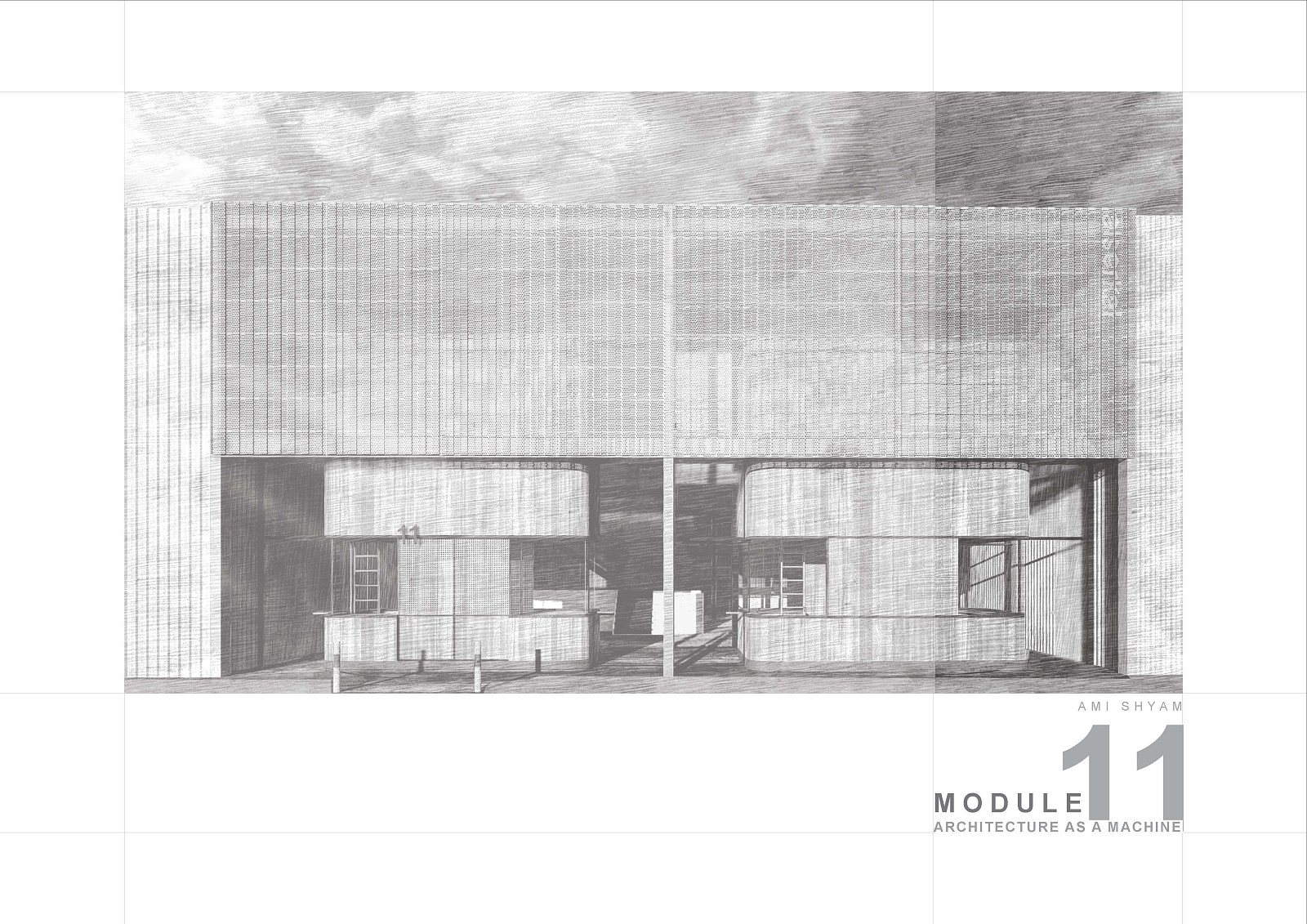
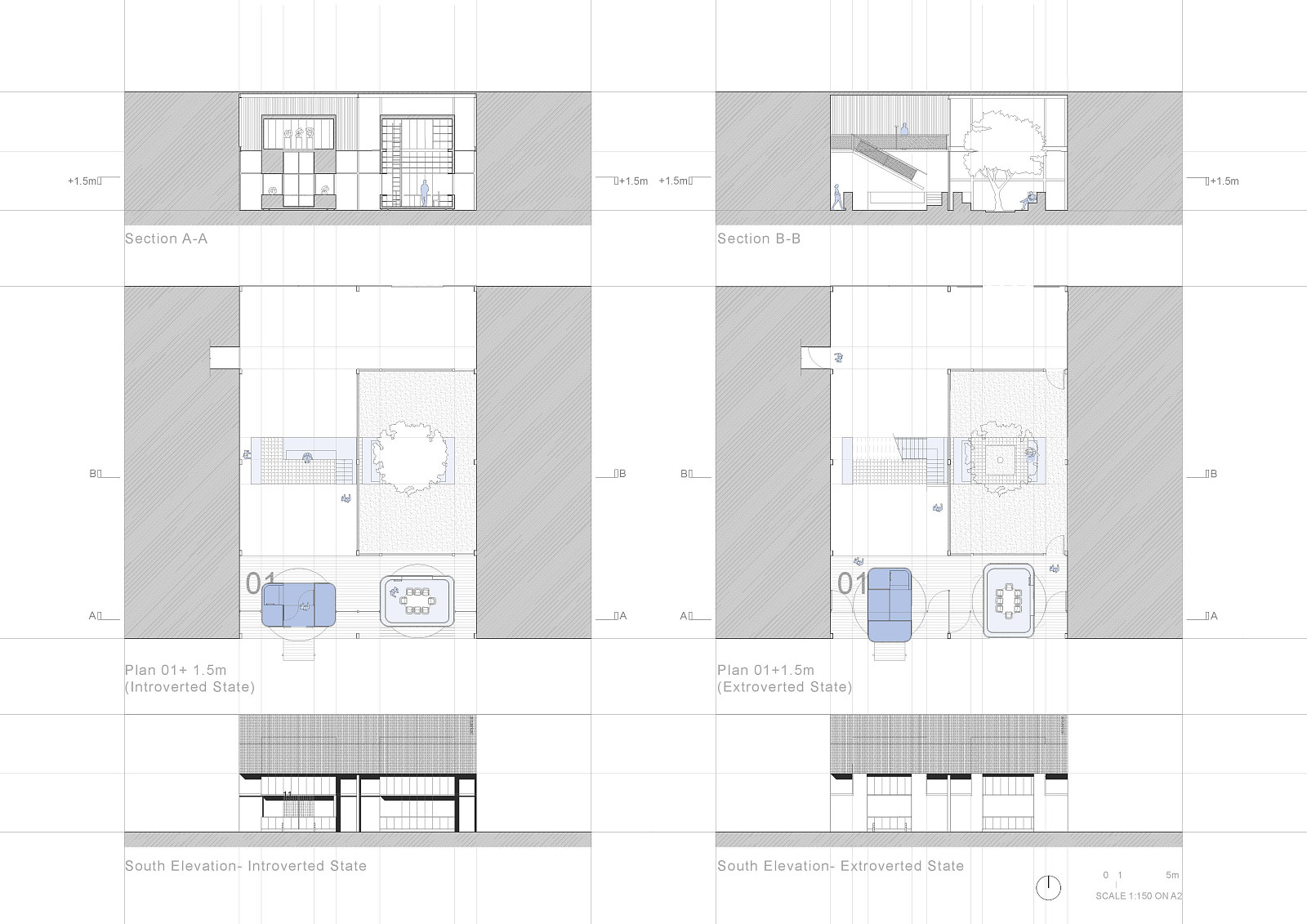
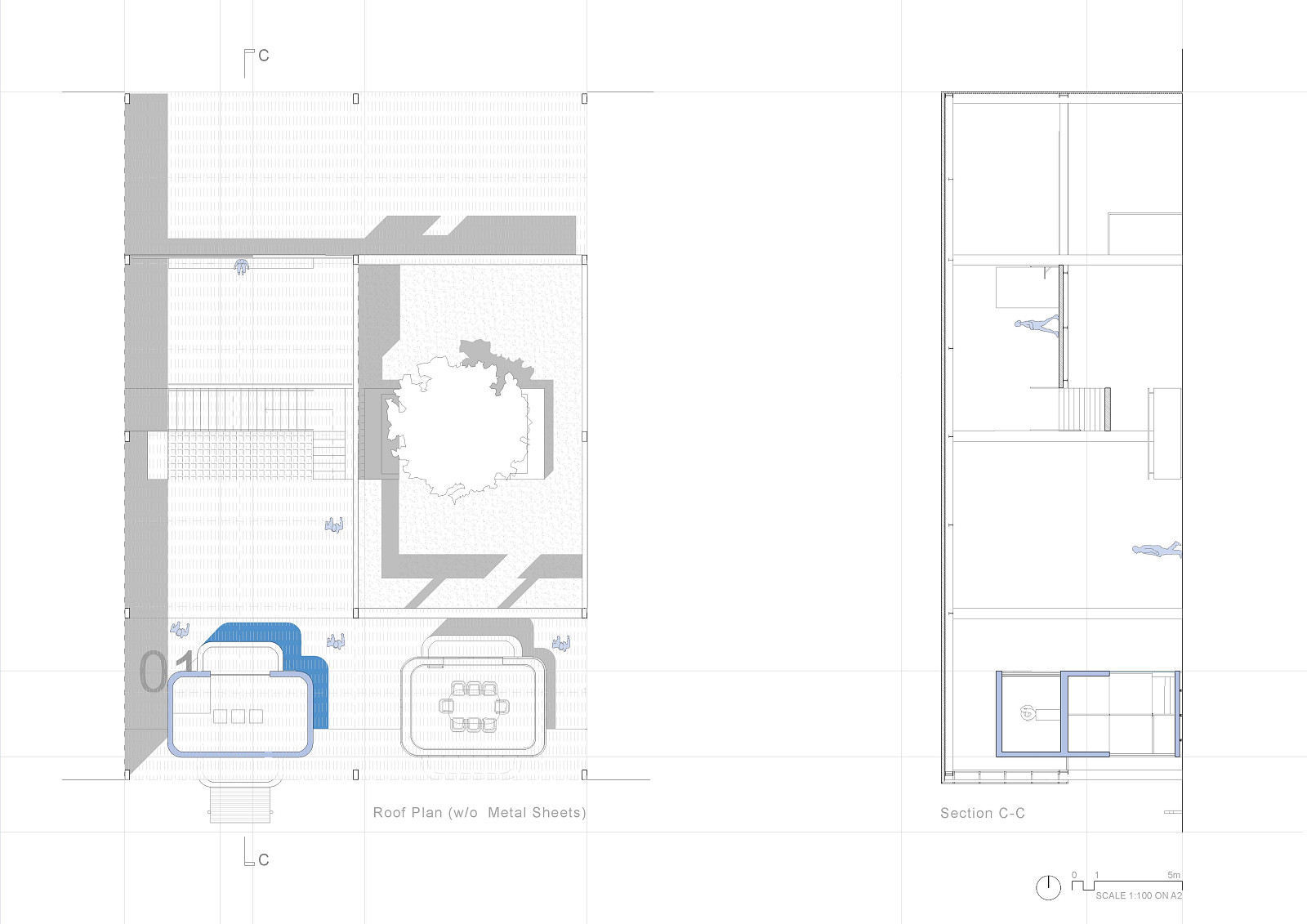
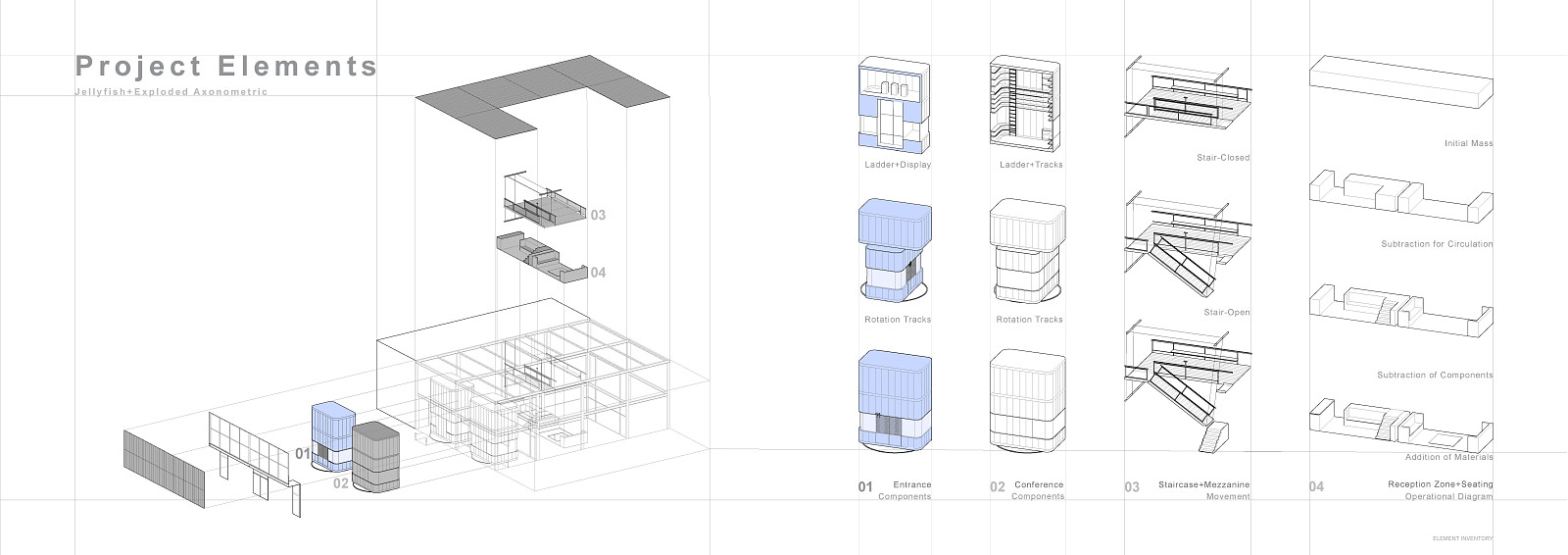
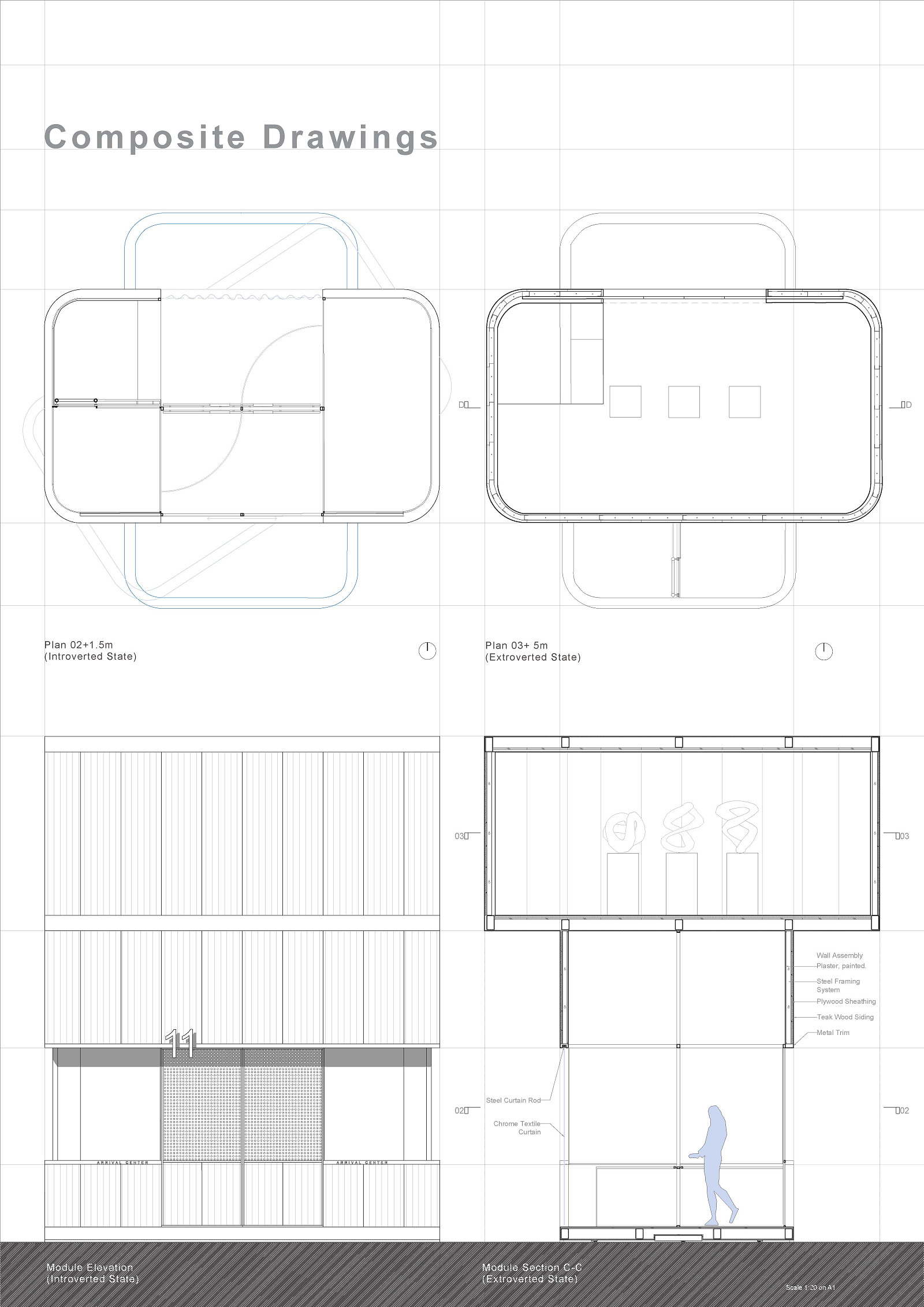
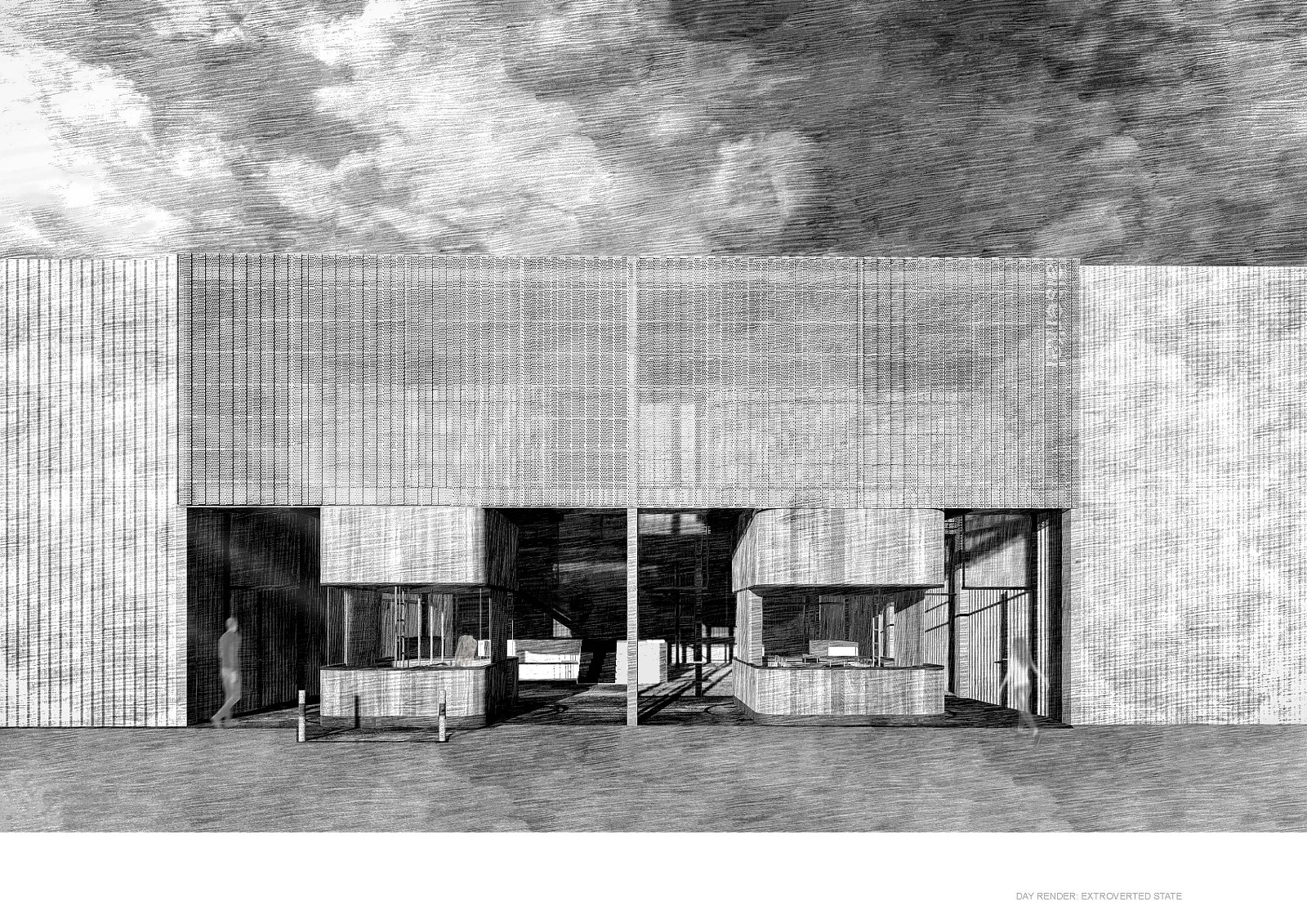
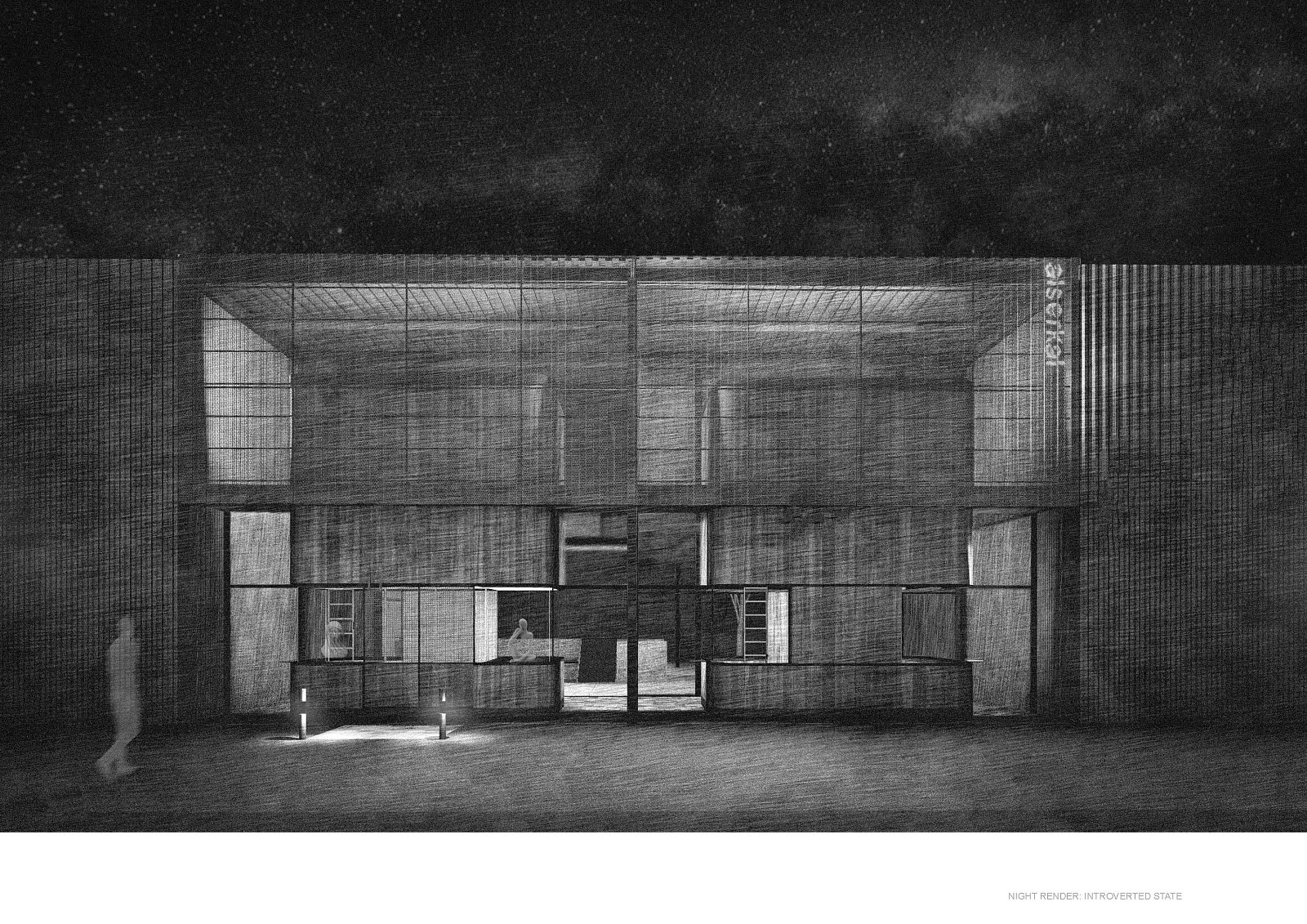
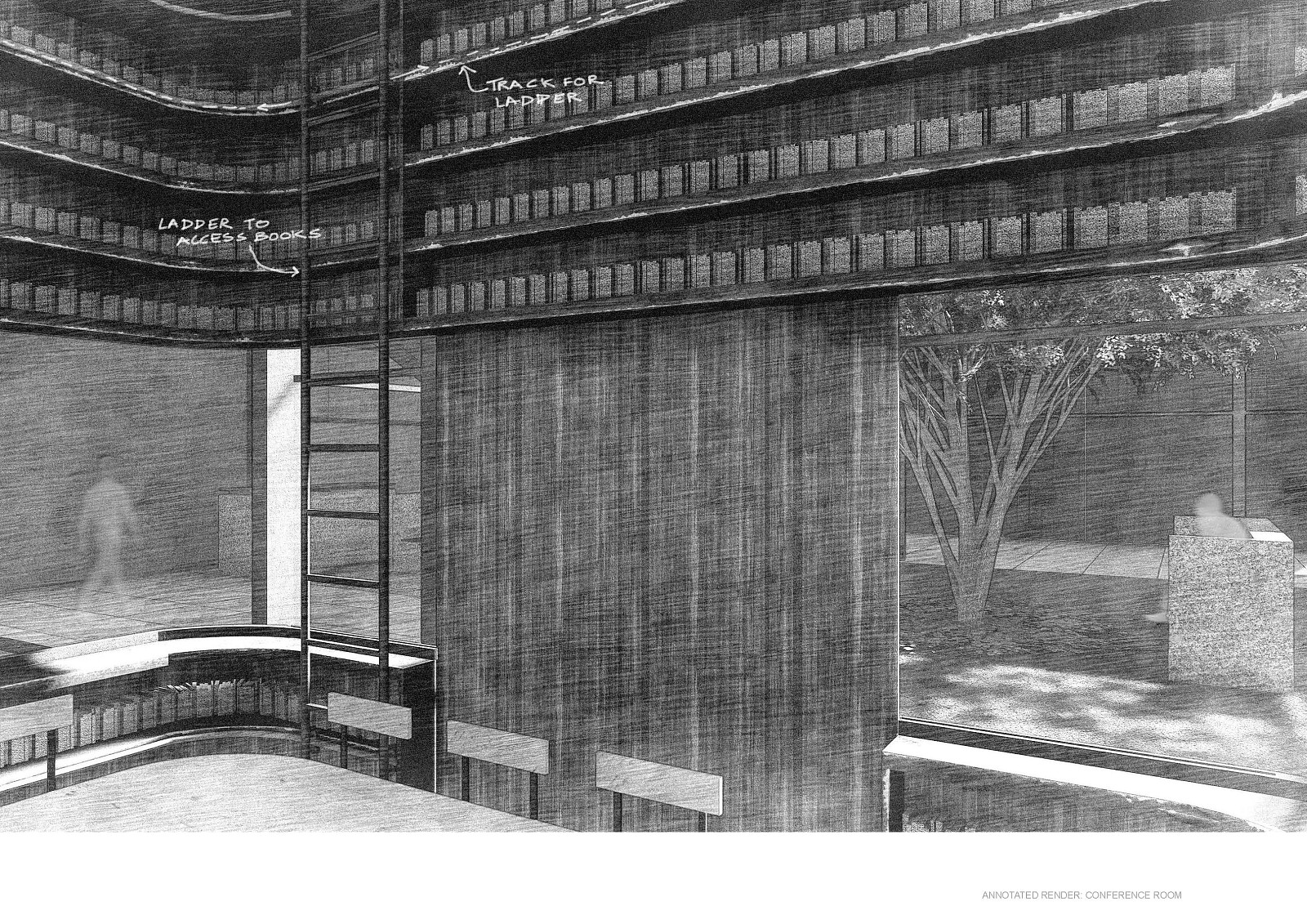
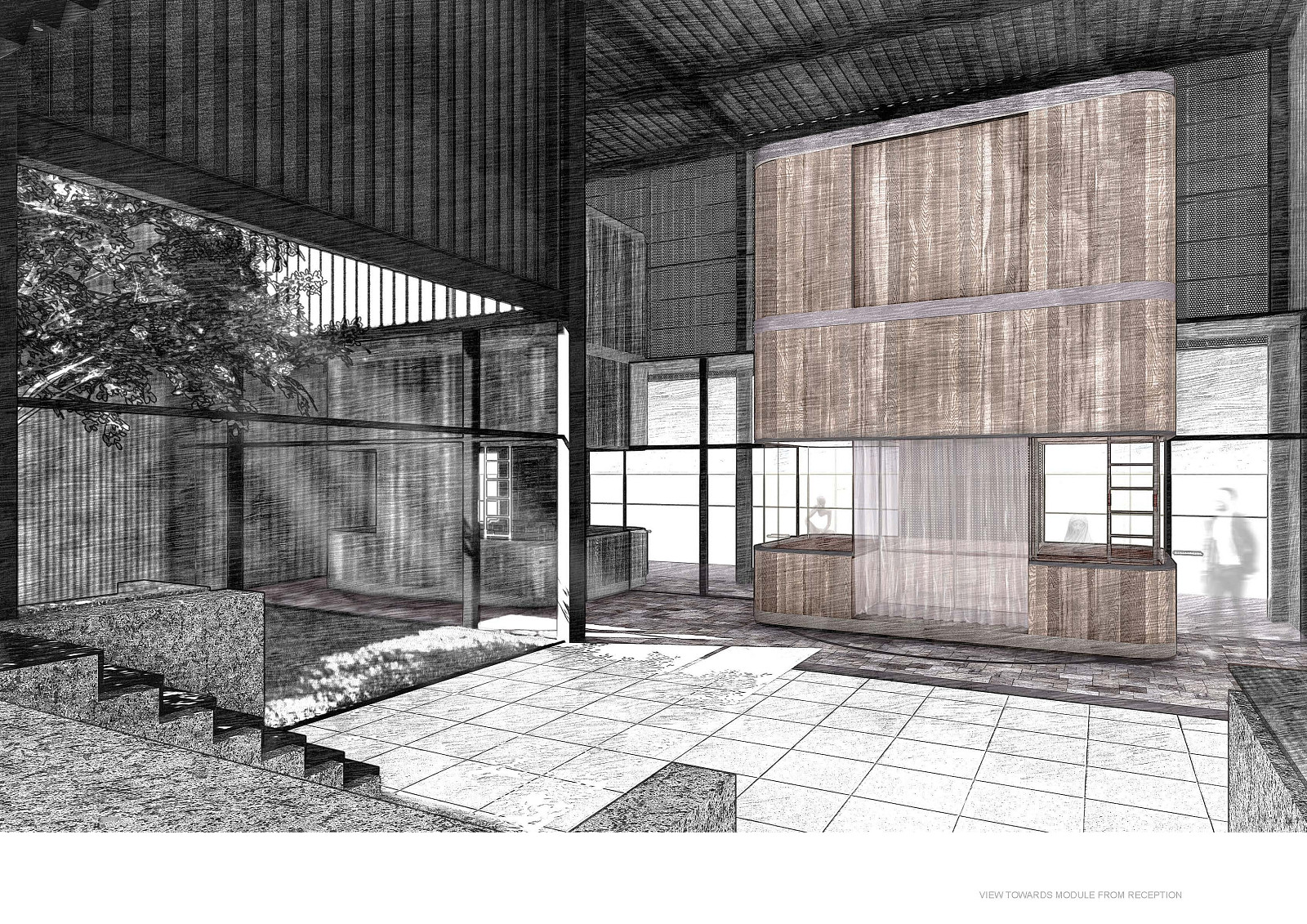
This project is an adaptive reuse of an existing warehouse into a cultural arts building, organized around four key insertions: an entry module, a conference room, a staircase and mezzanine, and a reception zone. Each element is treated as a distinct object inserted into the warehouse shell rather than growing out of it. The building operates in two states: introverted (closed) and extroverted (open) and reads differently by day and night.
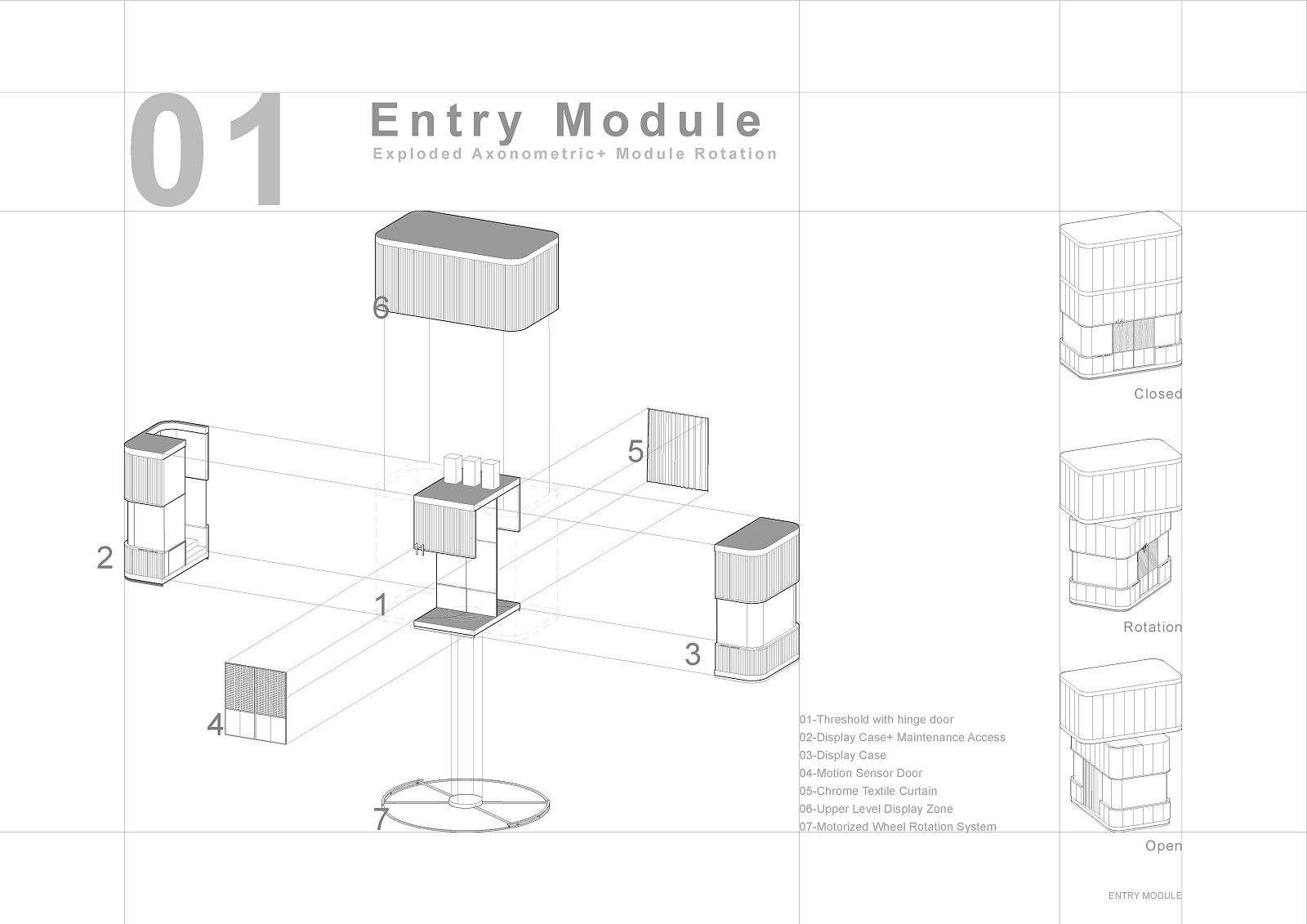
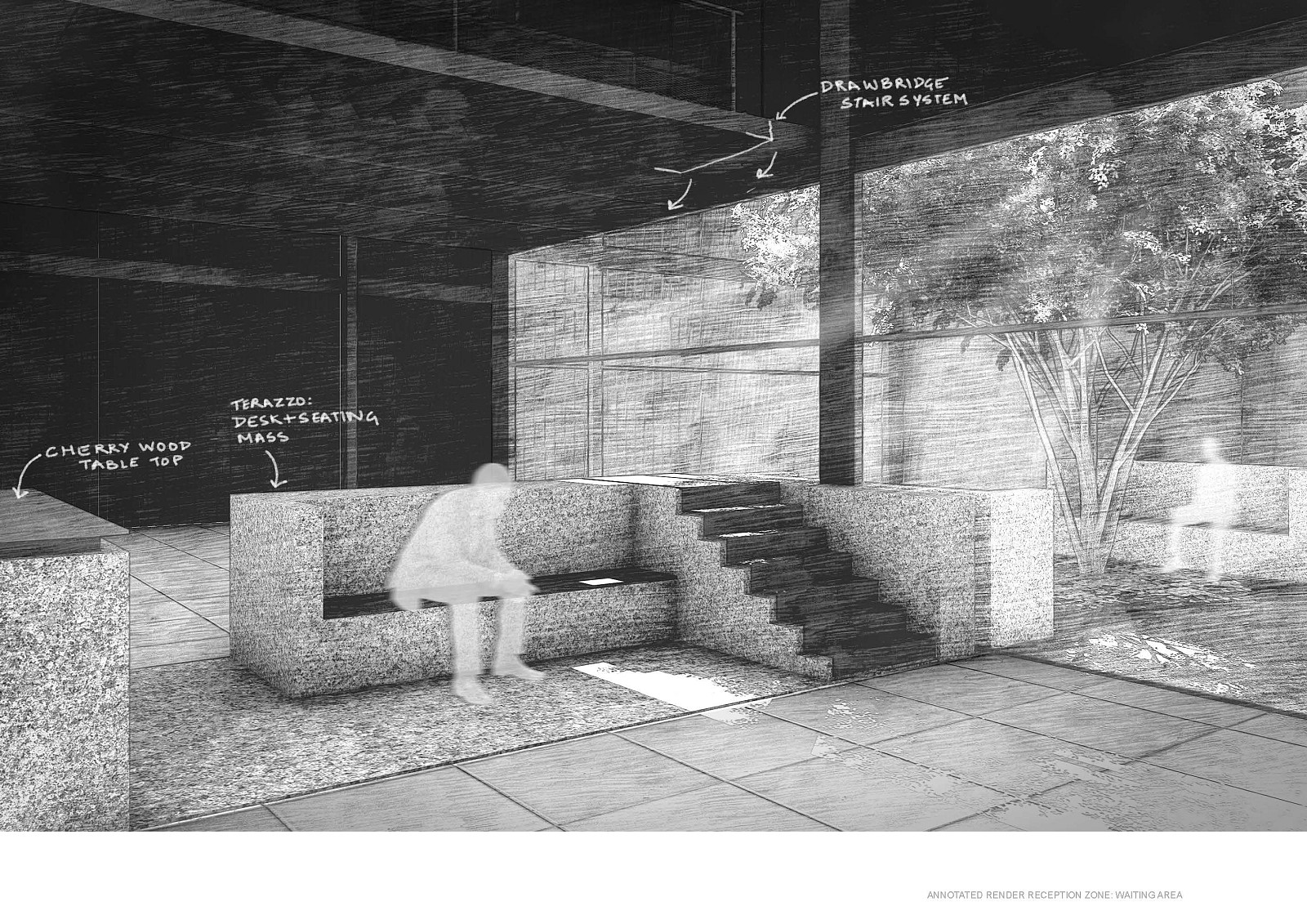
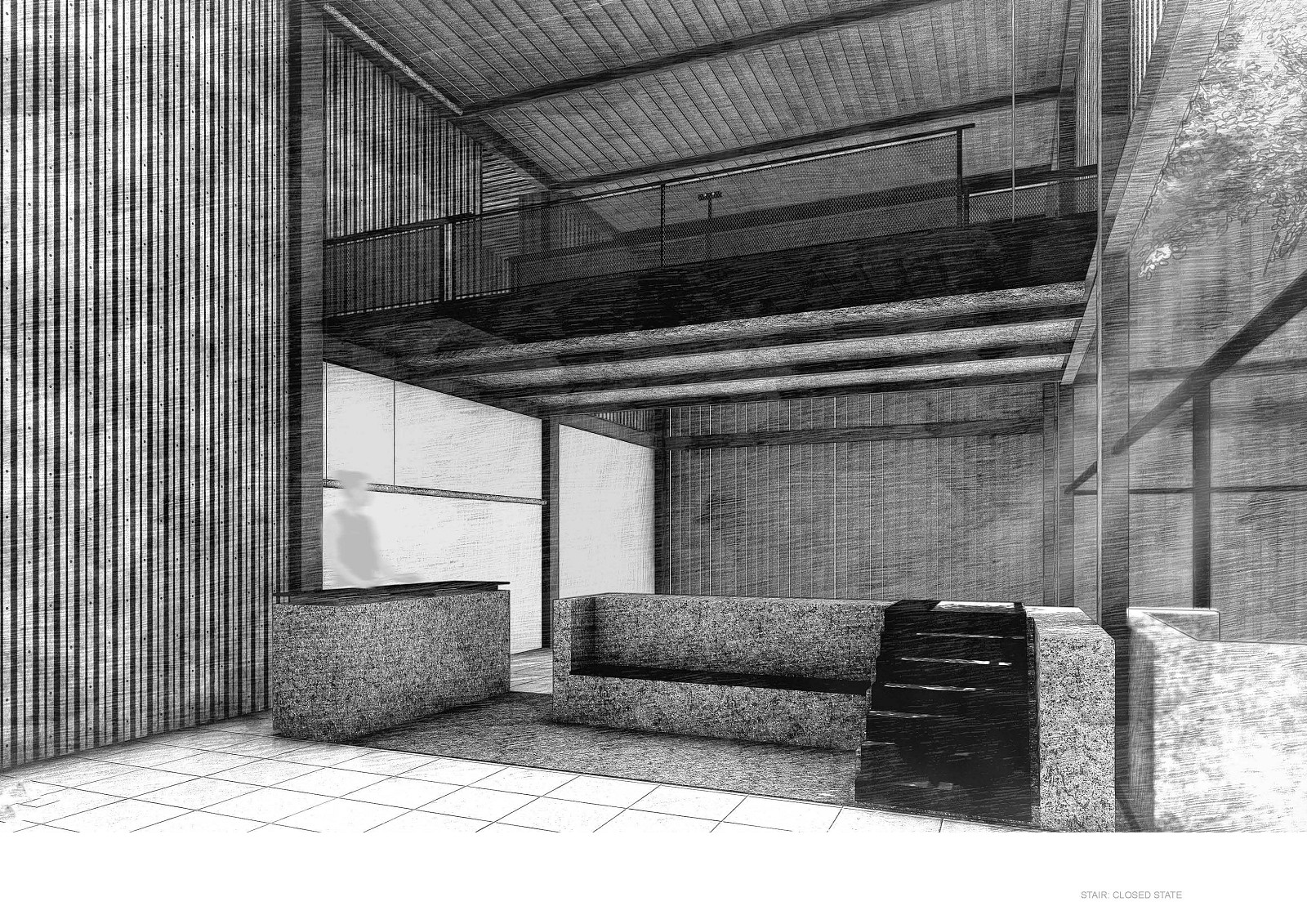
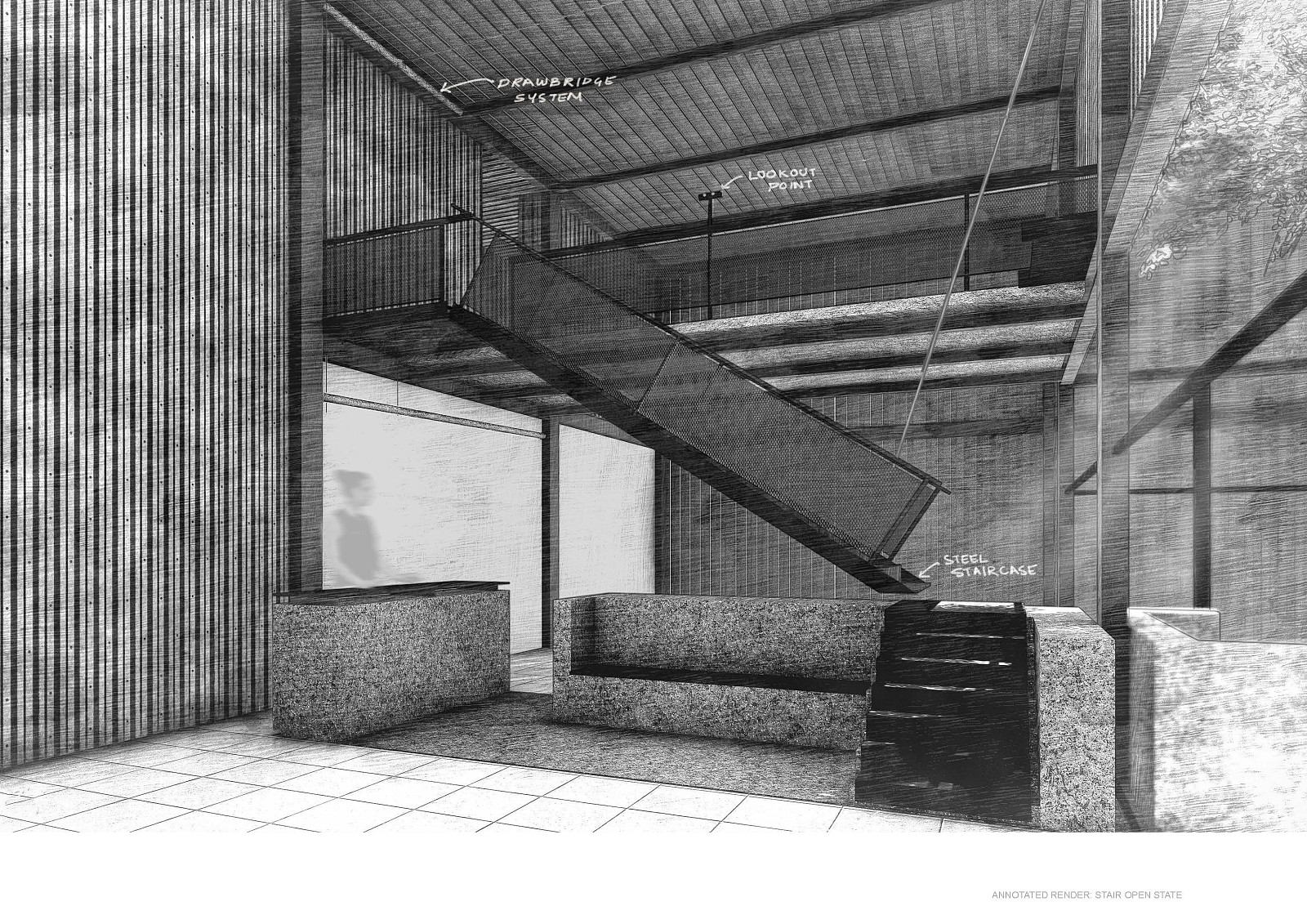
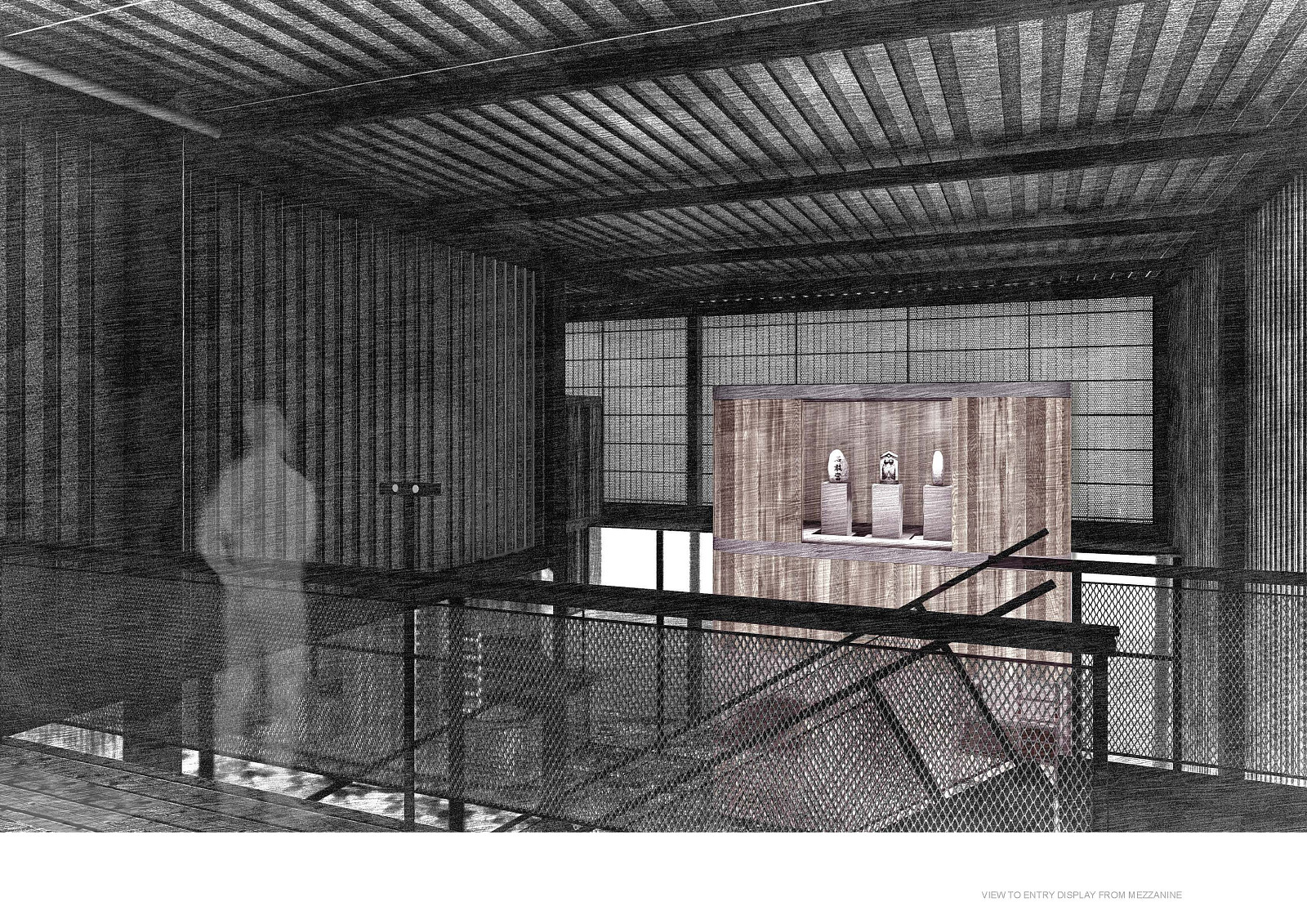
During winter, the entry and conference modules rotate along tracks embedded within the floor to open the building as a ritualistic act. A retractable mezzanine staircase descends only during theatre showings, controlled by the receptionist via a pulley system, making arrival to the upper level deliberate and ritualistic. Shifts in floor material signal movement between zones, while material continuity, terrazzo, metal cladding, and teak wood, binds all insertions into a coherent whole.
Technické informace
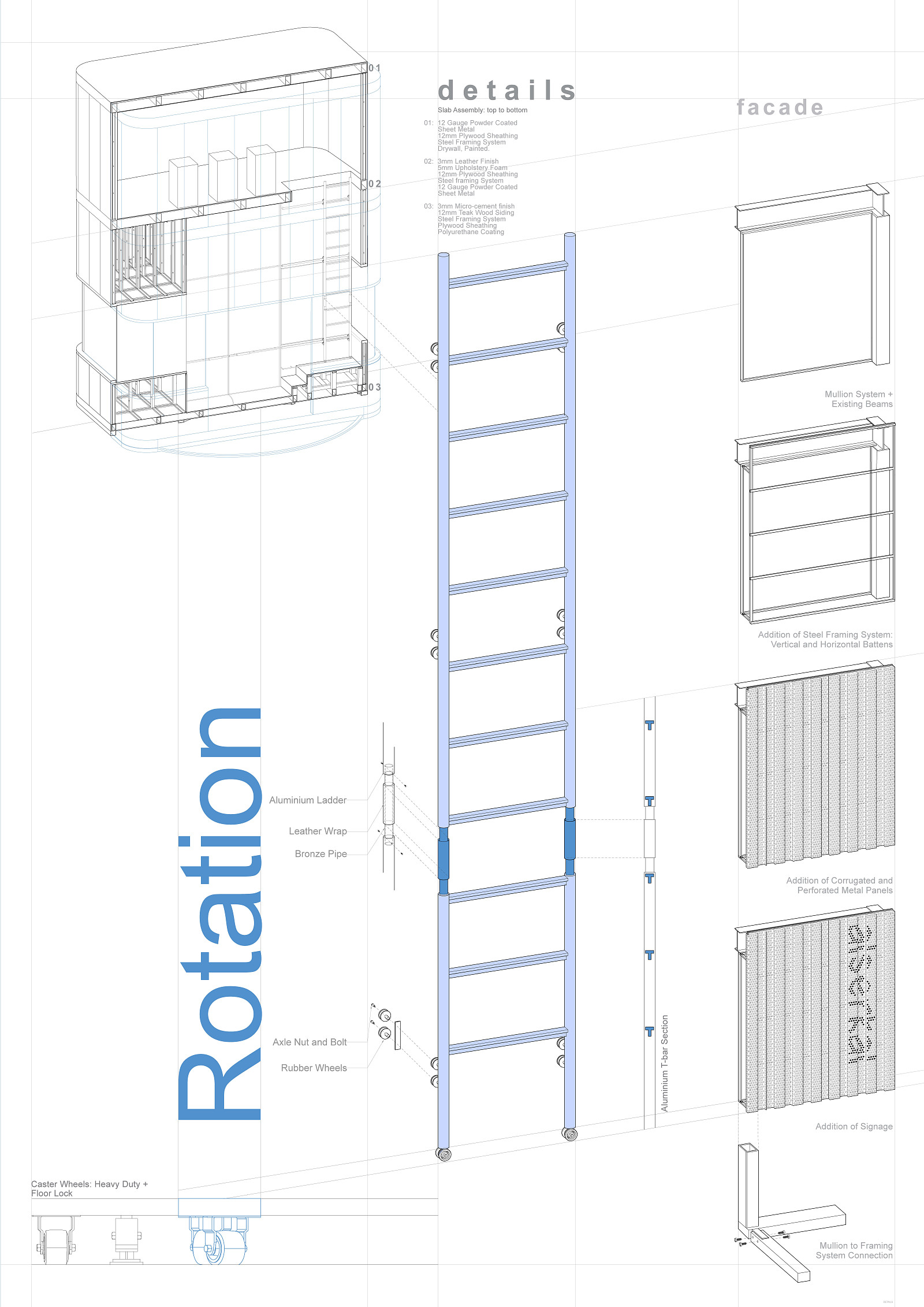
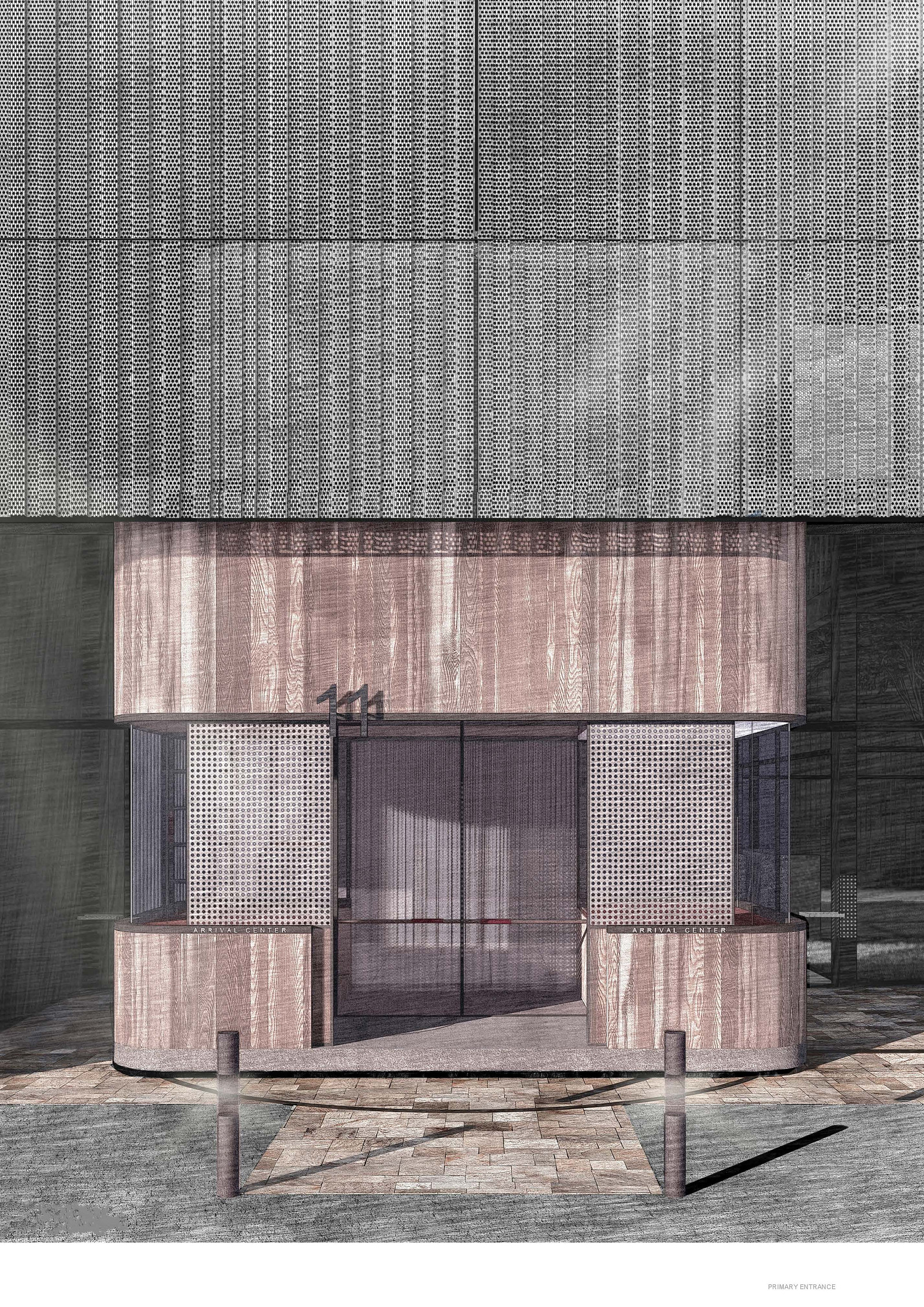
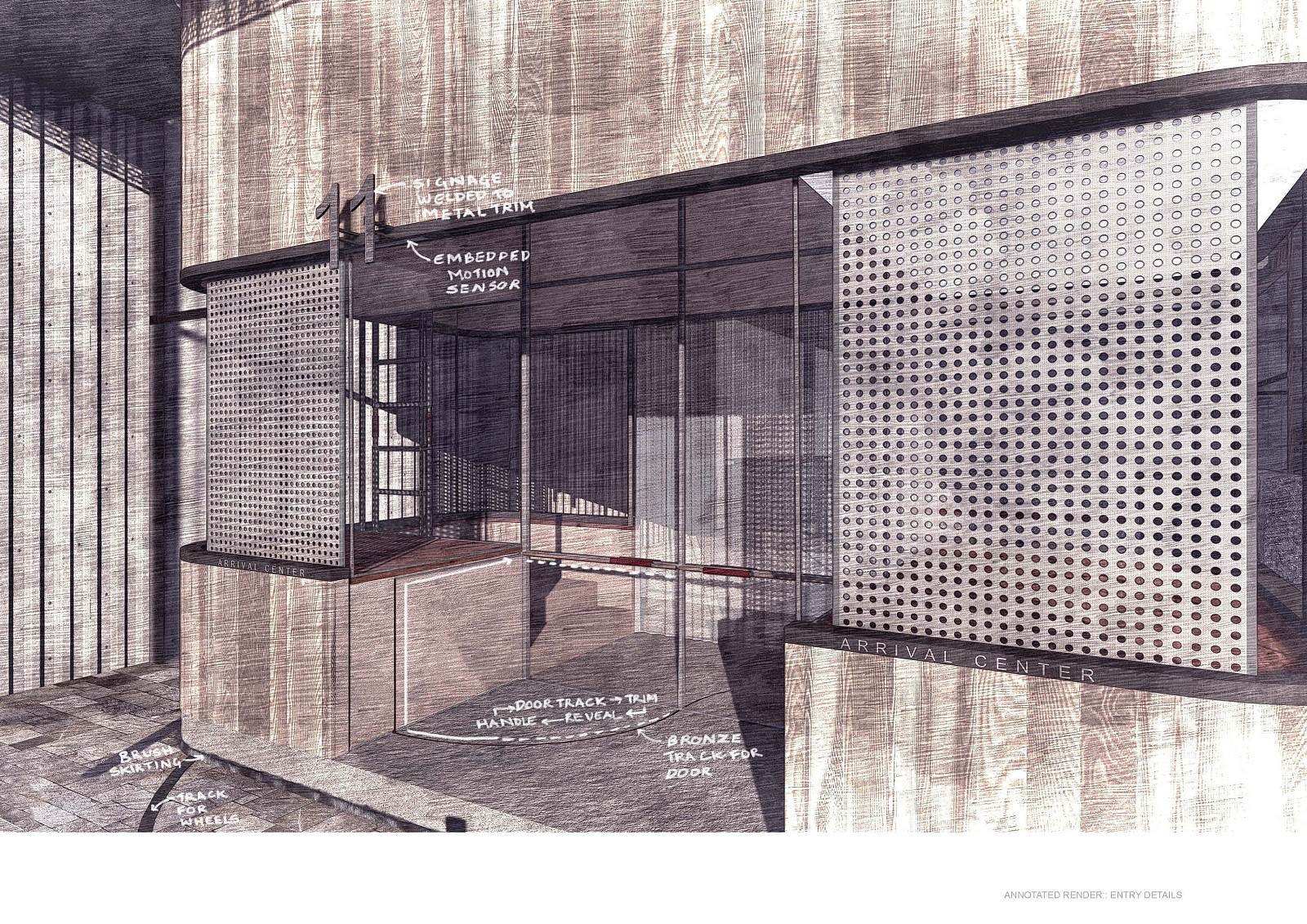
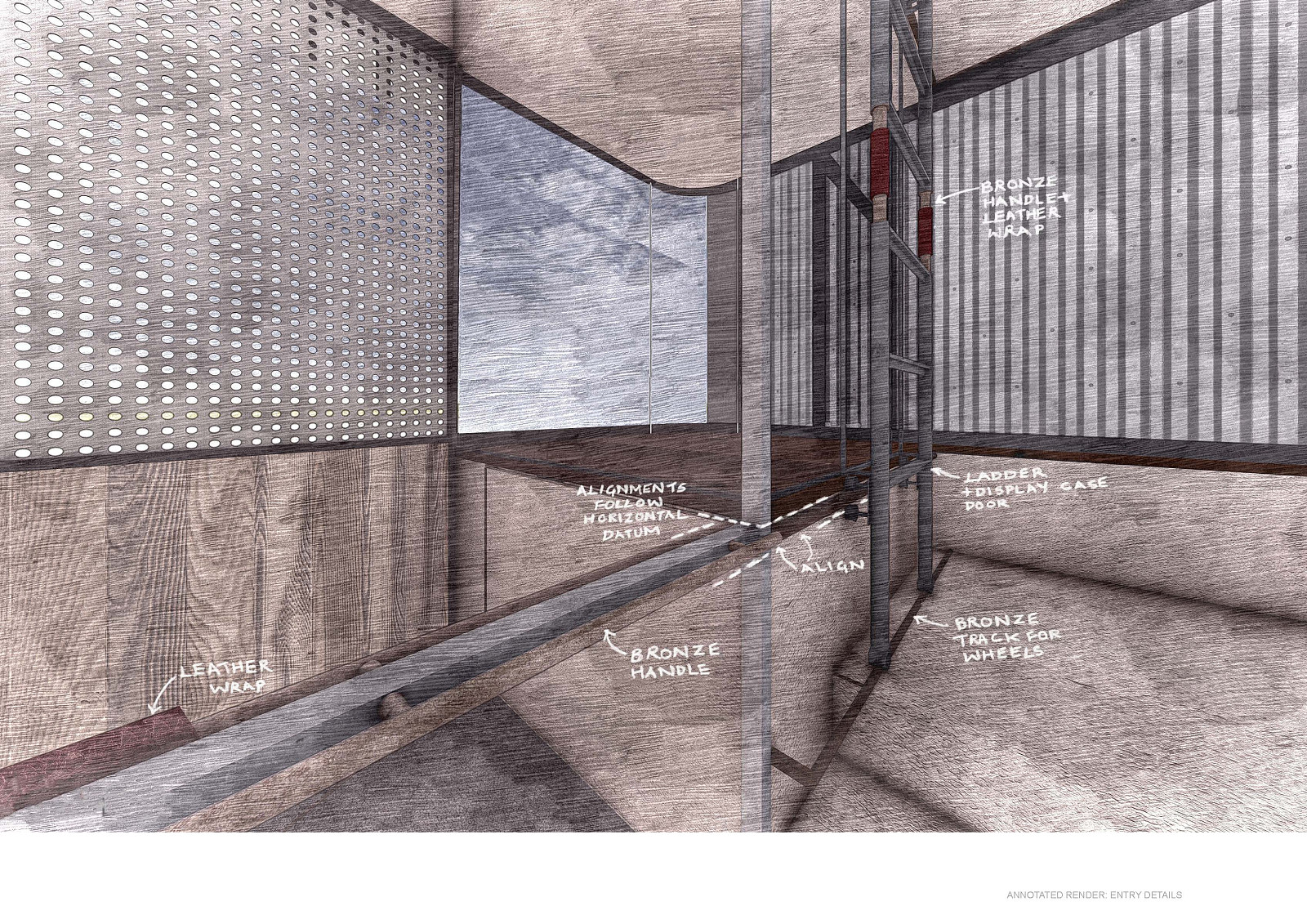
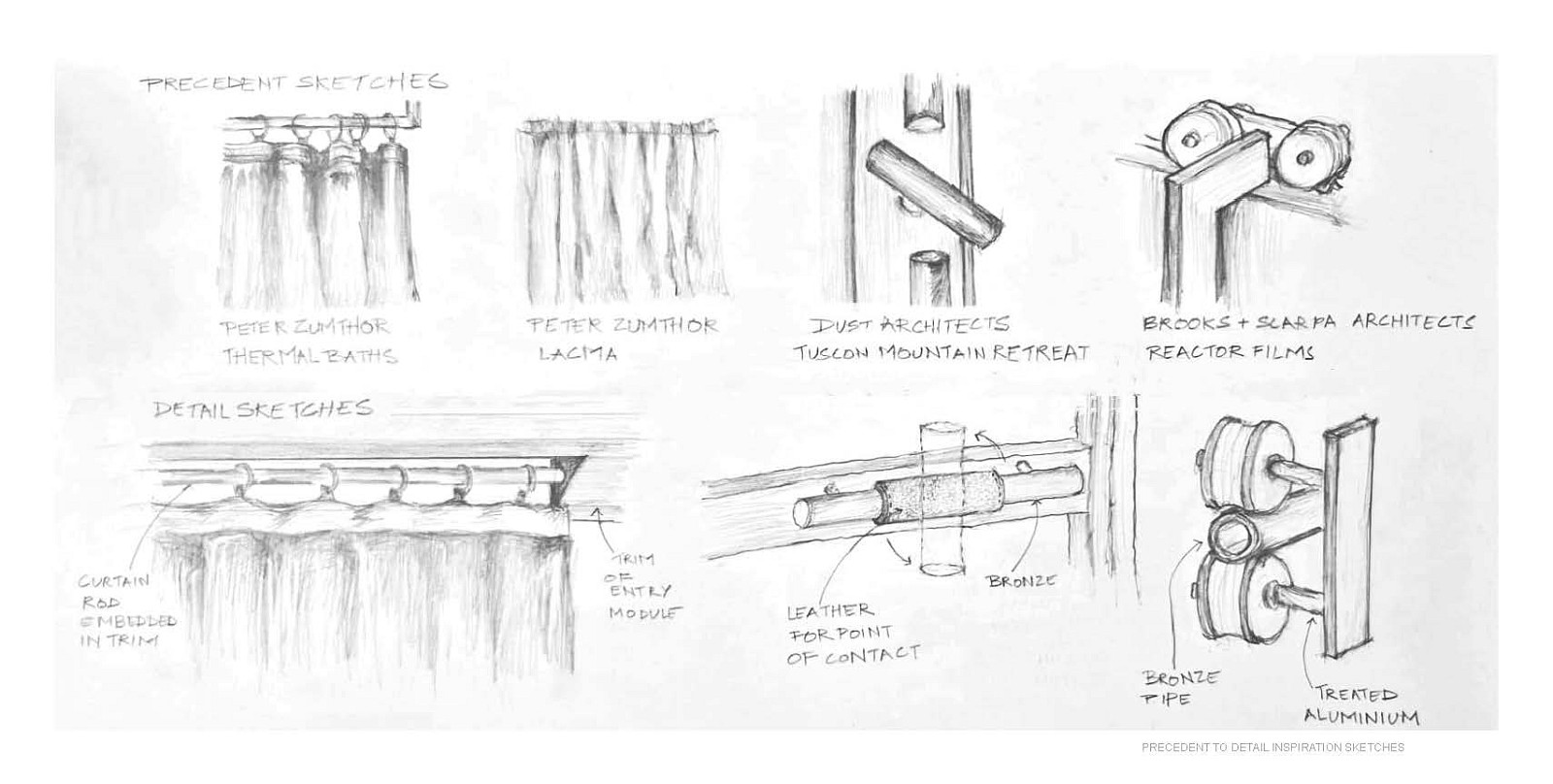
The building's façade is composed of corrugated and perforated metal panels organized on a grid system, with the entry and conference modules breaking out of the grid as inserted objects. All modules align to a horizontal datum sympathetic to the existing warehouse structure, with each module splitting into two halves at this datum. The rotating entry and conference modules are constructed with a steel framing system for structural strength and reduced weight, rotating on motorized wheel systems along embedded floor tracks. The entry is clad in teak wood siding and incorporates a motion-sensor door with perforations echoing the façade, a hinged door on visible bronze tracks, a display case with a ladder on a continuous track system, and bronze and leather detailing to guide user interaction. The retractable mezzanine stair is metal-clad and anchored by a pulley system. The reception is a continuous terrazzo mass with integrated desk, seating, and an incomplete lower staircase.

Copyright © 2026 INSPIRELI | All rights reserved. Use of this website signifies your agreement to the Terms of Use, Privacy Policy, and use of cookies.