COSMOS - STAR BORNING ARCHITECTURE


Idea projektu
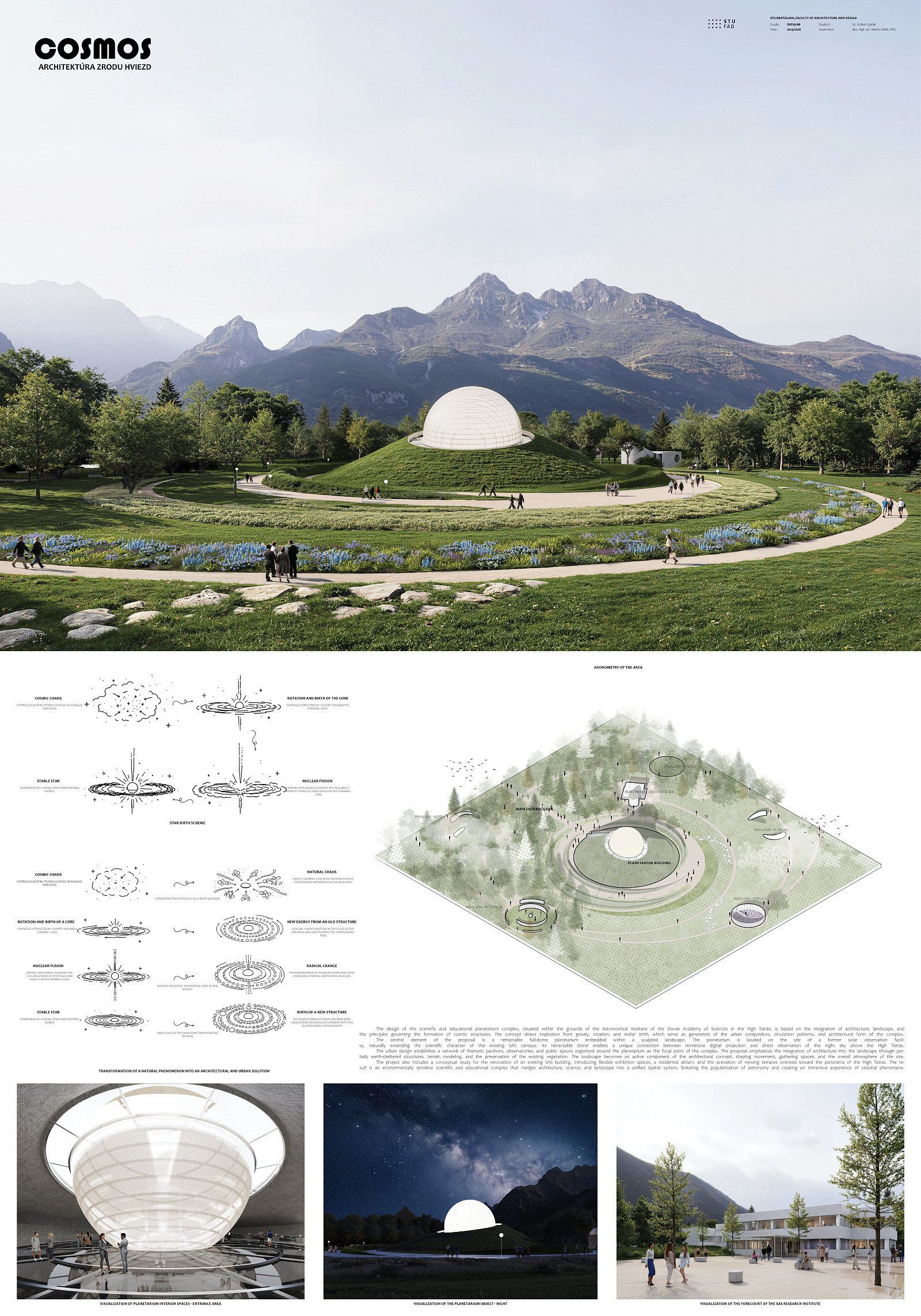
COSMOS: Architecture of Space Exploration is a scientific and educational complex that explores the relationship between architecture, landscape, and the fundamental processes that shape the universe. Located within the grounds of the Astronomical Institute of the Slovak Academy of Sciences in the High Tatras, the project responds to the unique combination of scientific research, natural environment, and astronomical observation that defines the site. The concept is inspired by the formation of cosmic structures, particularly the process of stellar birth. Principles such as gravity, rotation, concentration of matter, and orbital movement are translated into architectural and urban design strategies that organize the entire campus. Rather than creating a collection of isolated buildings, the proposal establishes a coherent spatial system where architecture emerges from the interpretation of natural and cosmic phenomena. The project aims to create an immersive environment that allows visitors to experience astronomy not only through scientific information, but also through space, movement, atmosphere, and direct observation. Architecture becomes a medium for communicating the wonder of the universe, fostering curiosity, education, and a deeper connection between people, science, and nature.
Popis projektu
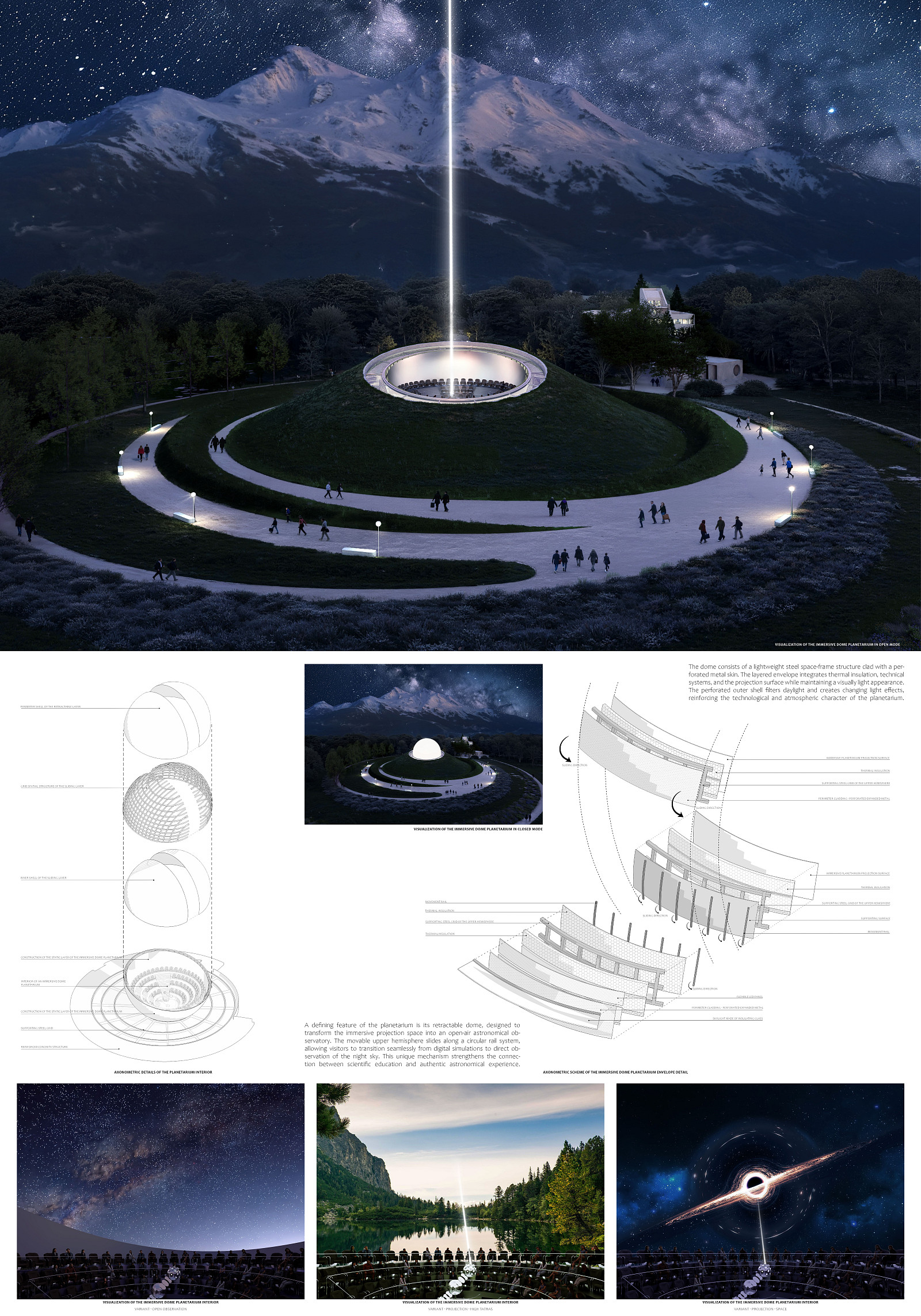
The proposal consists of a new scientific and educational campus centered around a retractable fulldome planetarium integrated into the existing grounds of the Astronomical Institute. The planetarium serves as the symbolic and functional core of the entire complex, acting as a gravitational center around which a network of thematic pavilions, observatories, educational facilities, and public spaces are organized.
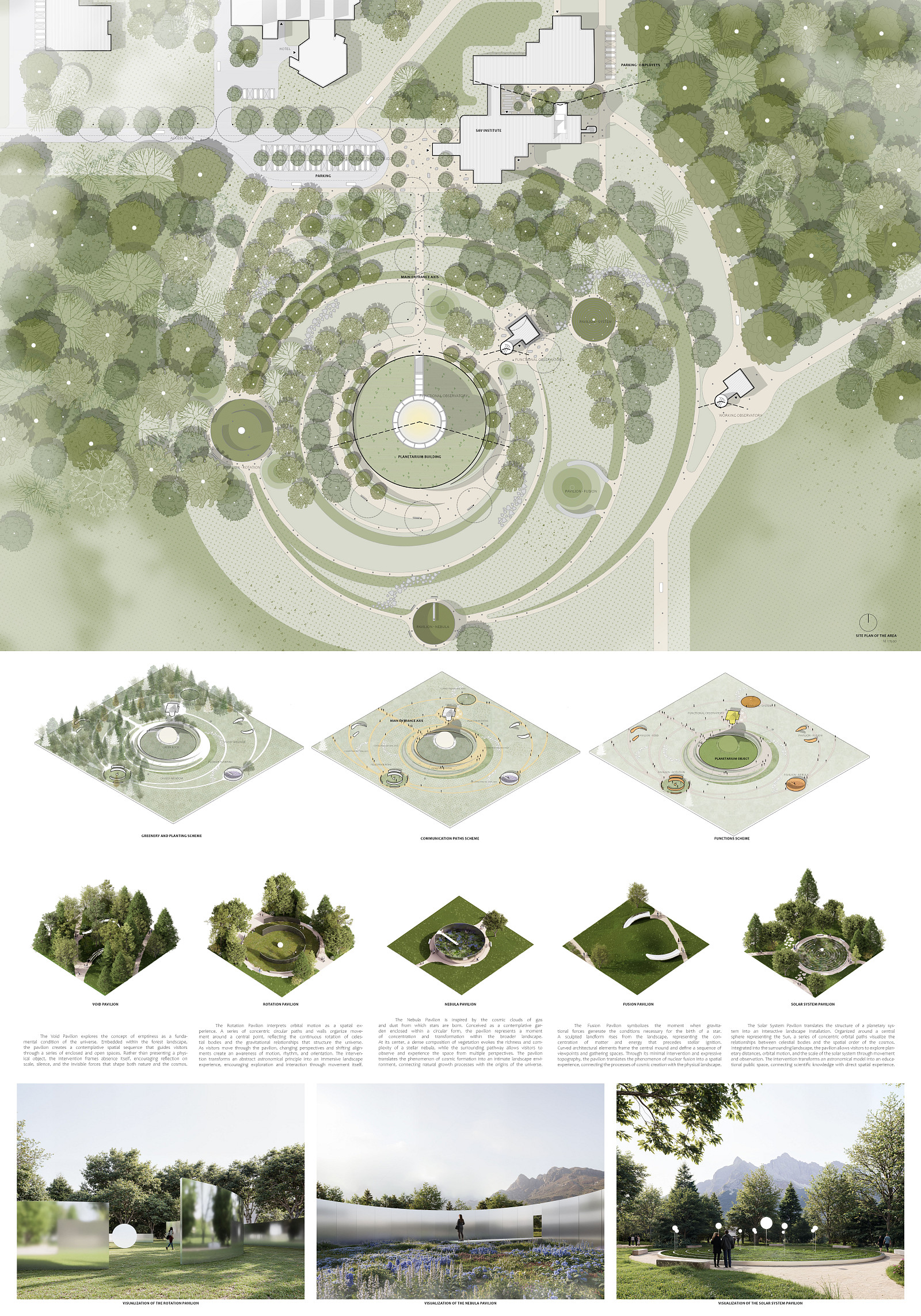
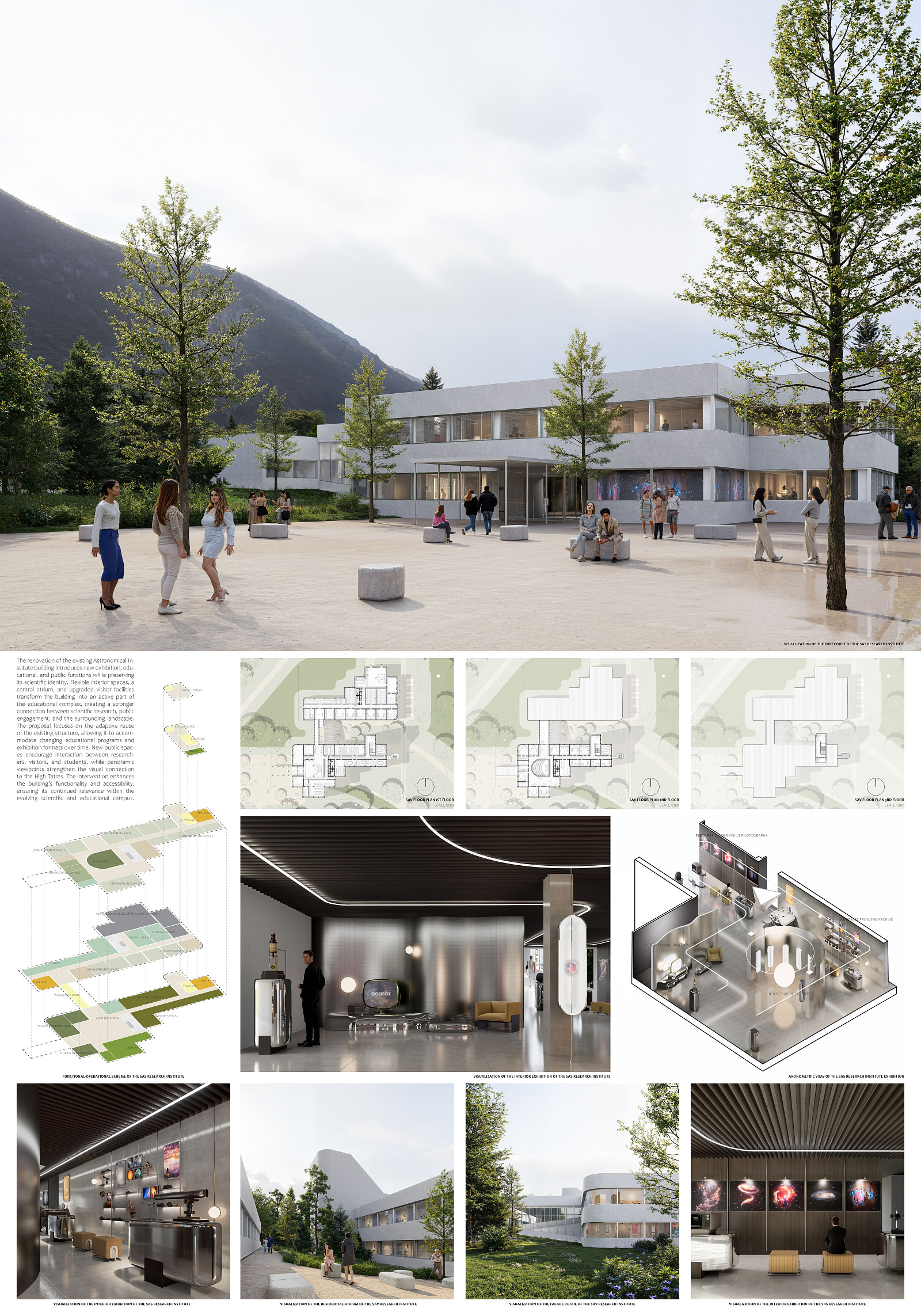
The urban composition is based on a spatial interpretation of stellar formation. Visitors move through a sequence of interconnected paths, landscape interventions, and educational environments that gradually reveal different aspects of astronomy and space exploration. The landscape itself becomes an active component of the project, shaping movement, views, gathering spaces, and the overall atmosphere of the campus. A series of thematic pavilions extends the educational experience into the surrounding forest. Each pavilion interprets a specific astronomical phenomenon, including cosmic emptiness, rotation, nebulae, fusion, and planetary systems. These interventions transform abstract scientific concepts into tangible spatial experiences, encouraging exploration, interaction, and contemplation. The project also includes the adaptive reuse of the existing Astronomical Institute building. New exhibition areas, educational spaces, public facilities, and a central atrium strengthen the relationship between scientific research and public engagement. Flexible interior layouts allow the building to accommodate changing exhibition programs, workshops, lectures, and educational events while preserving its original scientific character.
Together, the planetarium, pavilions, observatories, and renovated institute create a unified scientific and educational environment that combines architecture, landscape, and astronomy into a single experiential system dedicated to the popularization of science and the exploration of the cosmos.
Technické informace
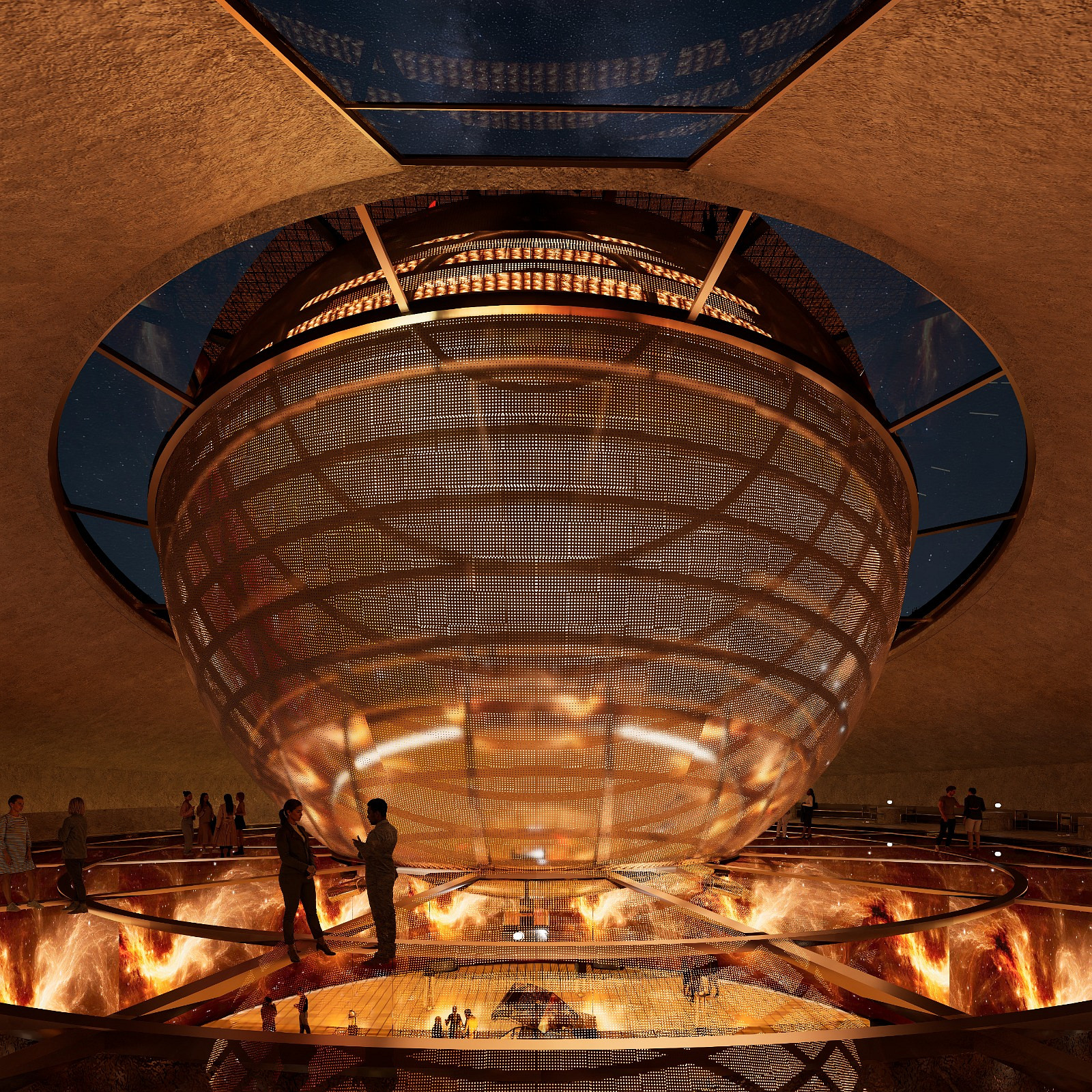
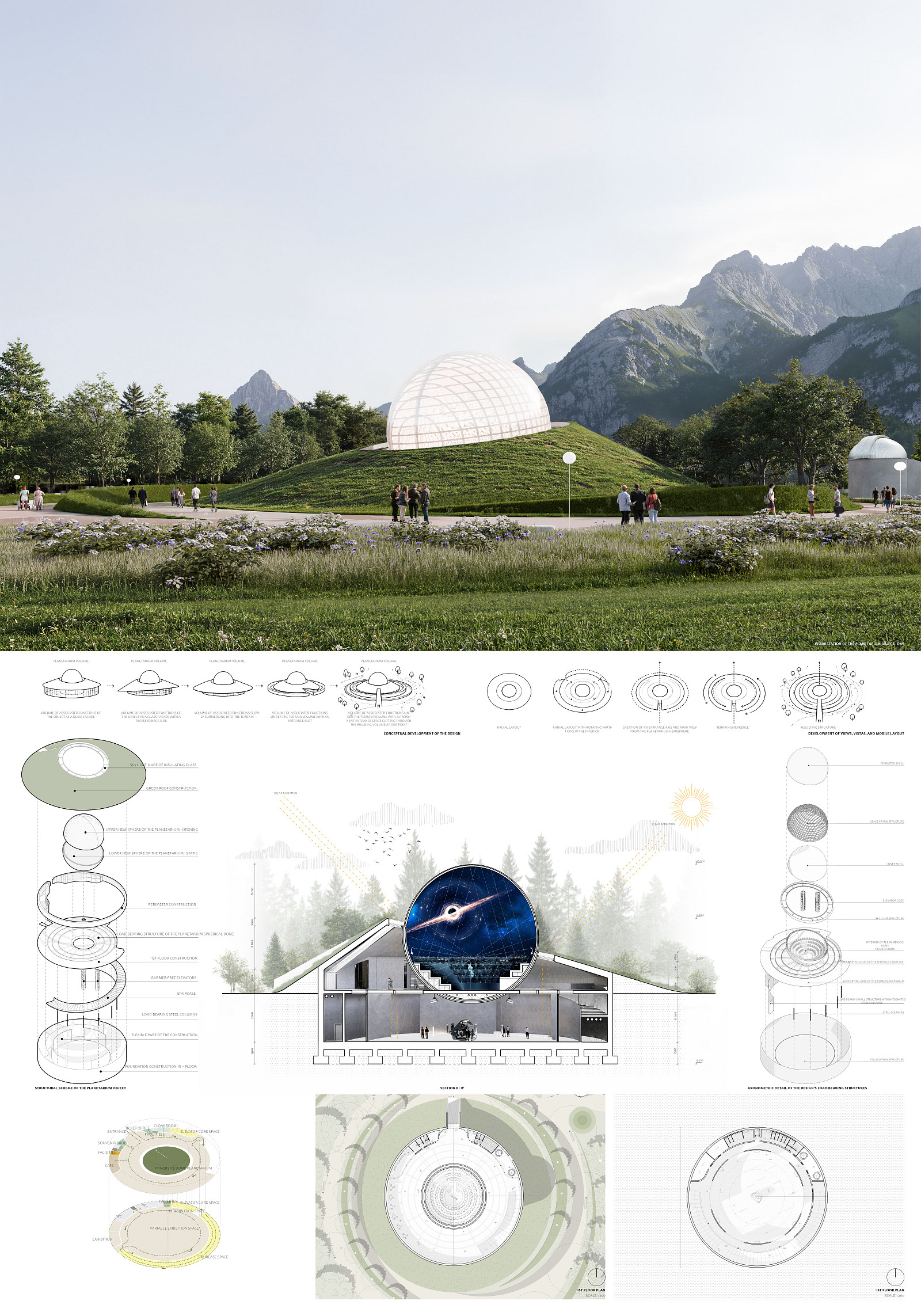
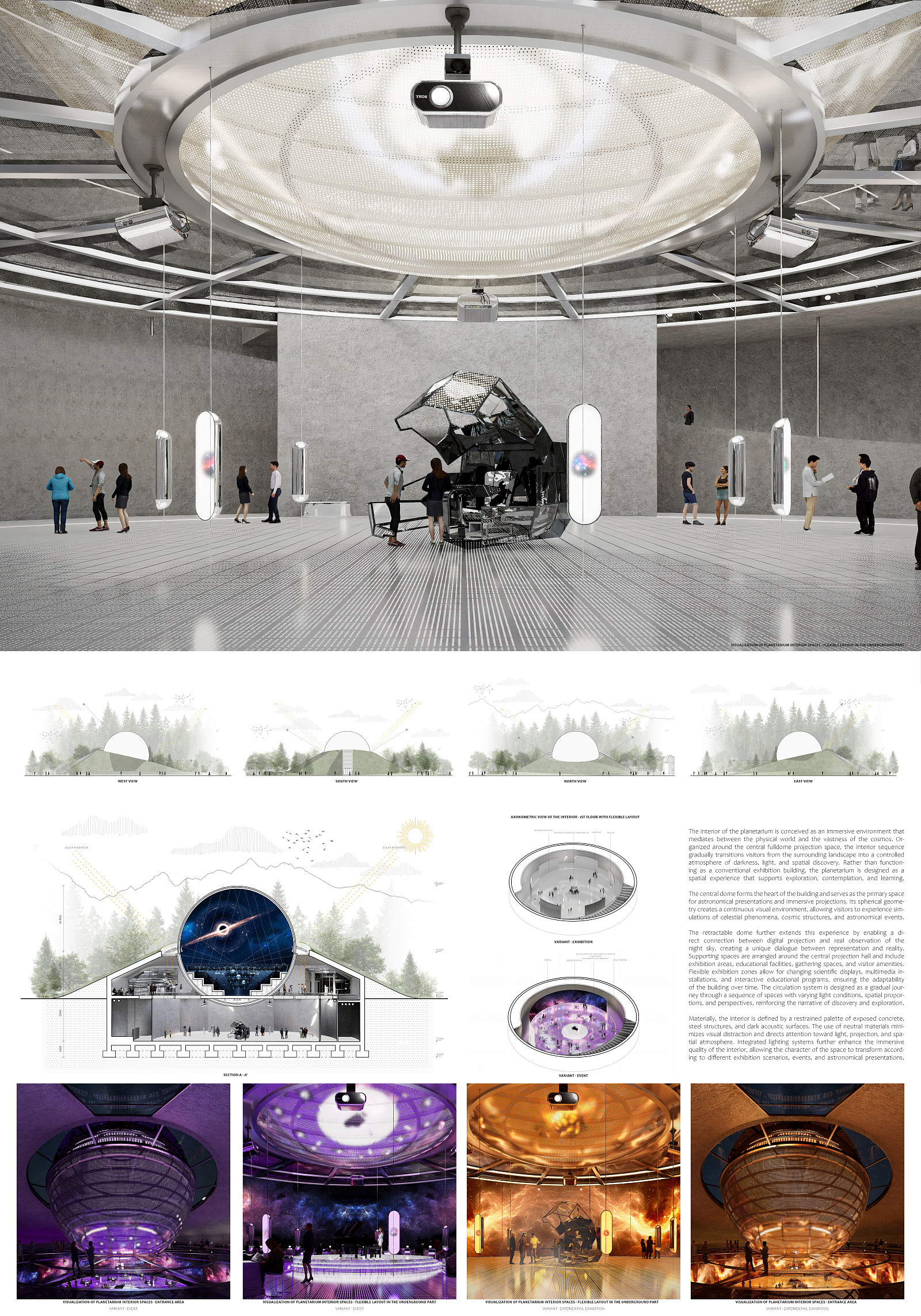
The architectural solution is based on the integration of built structures into the natural landscape while minimizing environmental impact. The planetarium is partially embedded within a sculpted terrain, reducing its visual presence and allowing the architecture to emerge naturally from the surrounding topography. Existing vegetation is largely preserved, and landscape interventions are carefully designed to maintain the ecological character of the site. The central planetarium is constructed using a reinforced concrete substructure combined with a lightweight steel space-frame dome. The spherical structure is enclosed by a perforated metal skin that provides solar protection, visual permeability, and a distinctive architectural identity. The dome incorporates a retractable upper hemisphere that moves along a circular rail system, enabling the transition from immersive digital projection to direct observation of the night sky. This feature establishes a unique connection between simulated astronomical experiences and real celestial phenomena. Interior spaces are organized around the central fulldome projection chamber and include exhibition galleries, educational facilities, multipurpose event spaces, visitor amenities, and technical support areas. Flexible exhibition environments allow the integration of multimedia installations, interactive displays, and changing scientific programs. The interior atmosphere is defined by exposed concrete, steel structural elements, dark acoustic surfaces, and controlled lighting conditions designed to support immersive visual experiences. The renovation of the existing institute building focuses on adaptive reuse, spatial flexibility, and improved public accessibility. New educational functions are integrated within the existing structure while preserving its scientific identity. The project combines contemporary architectural interventions with existing facilities to create a sustainable and adaptable campus capable of supporting both scientific research and public education for future generations.
Dokumentace

Copyright © 2026 INSPIRELI | All rights reserved. Use of this website signifies your agreement to the Terms of Use, Privacy Policy, and use of cookies.
