PARCO CONTINUO CODROIPO


Idea projektu
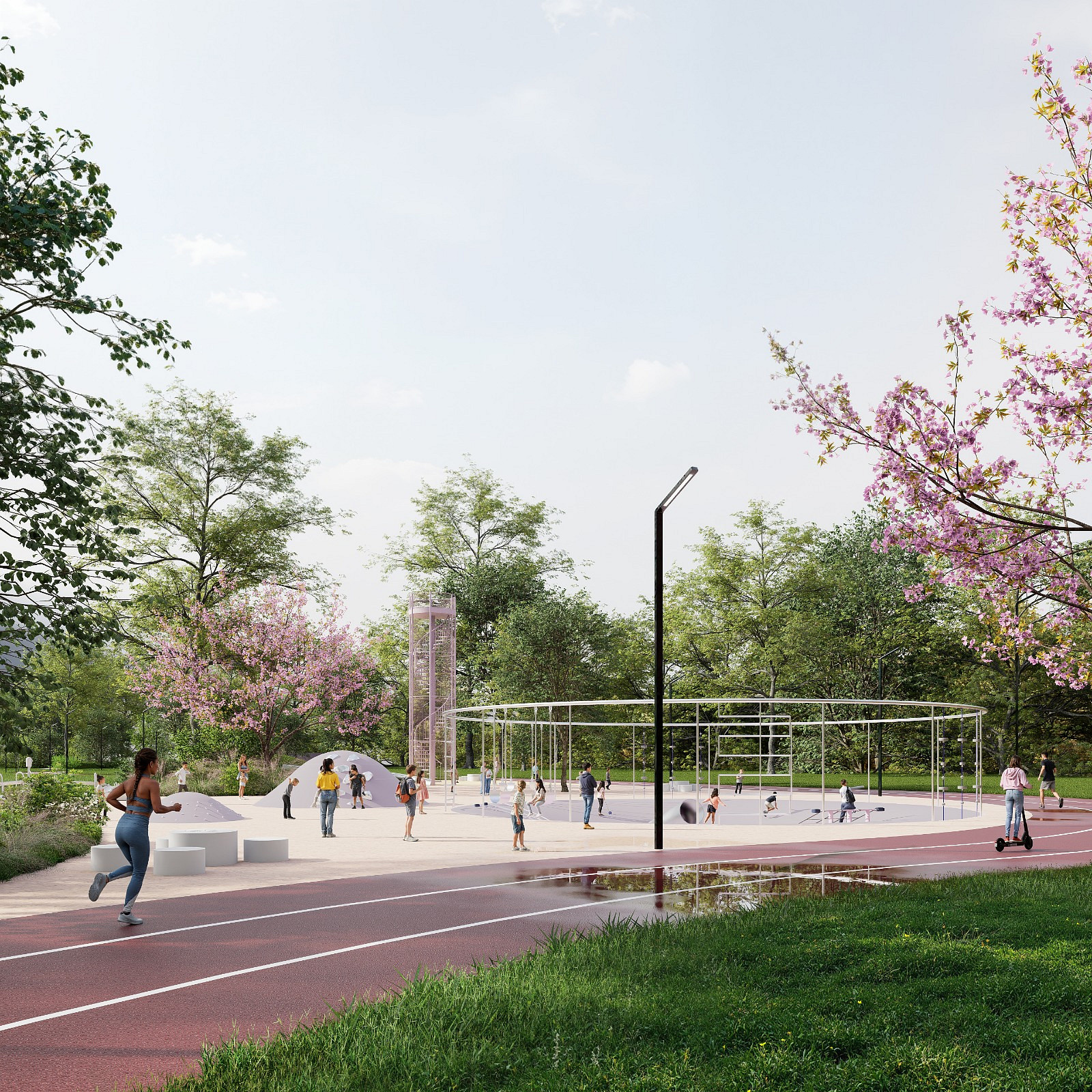
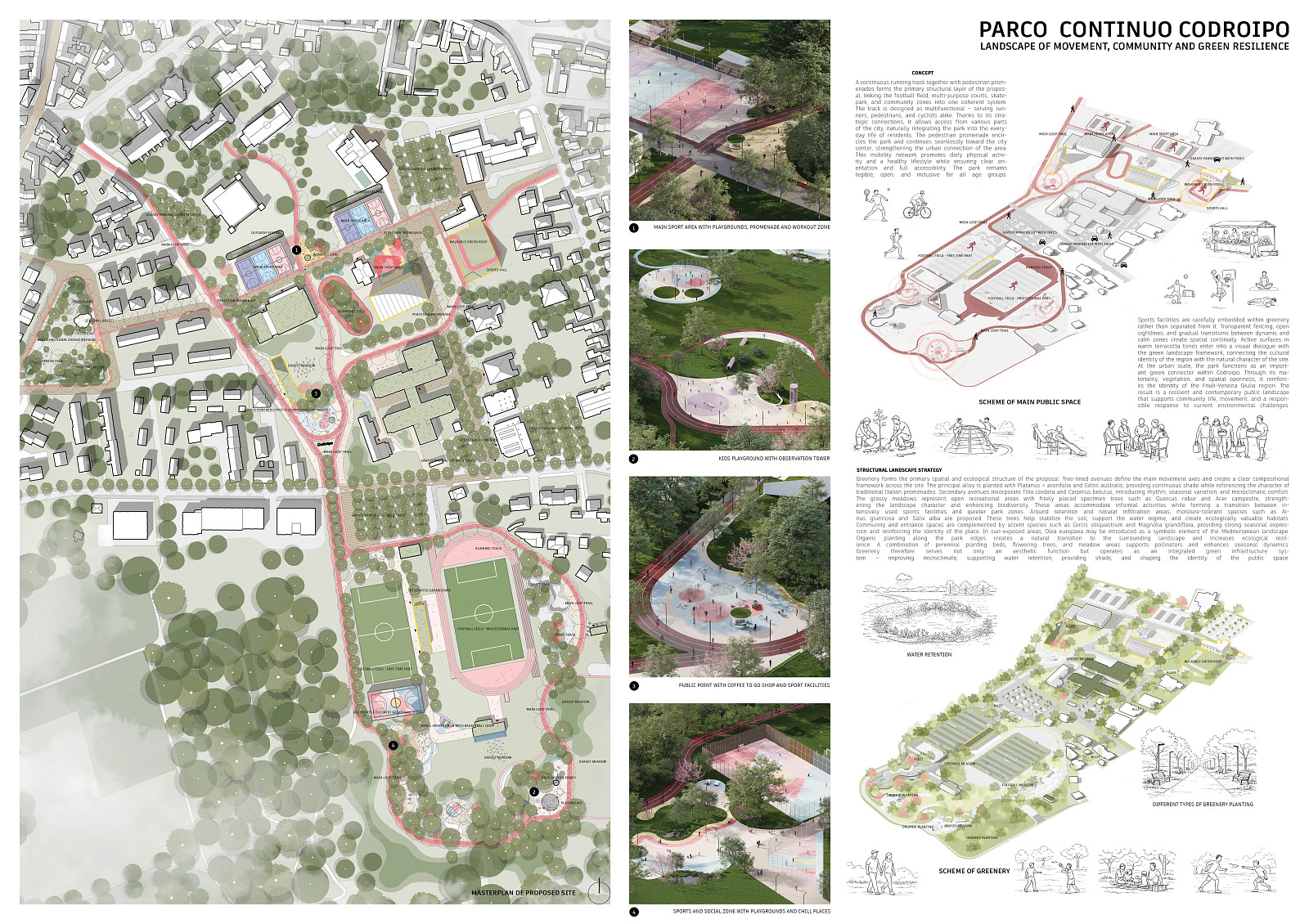
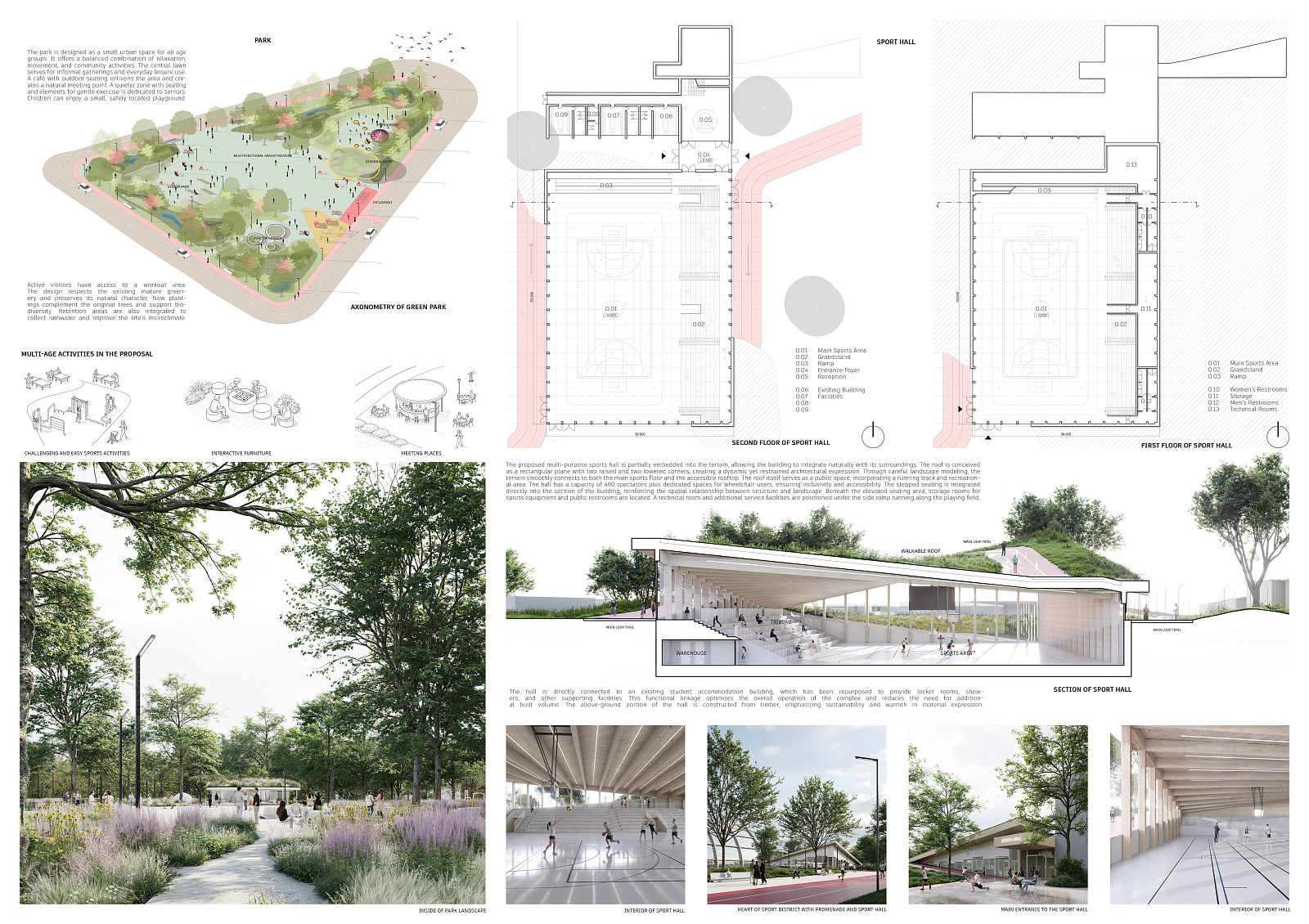
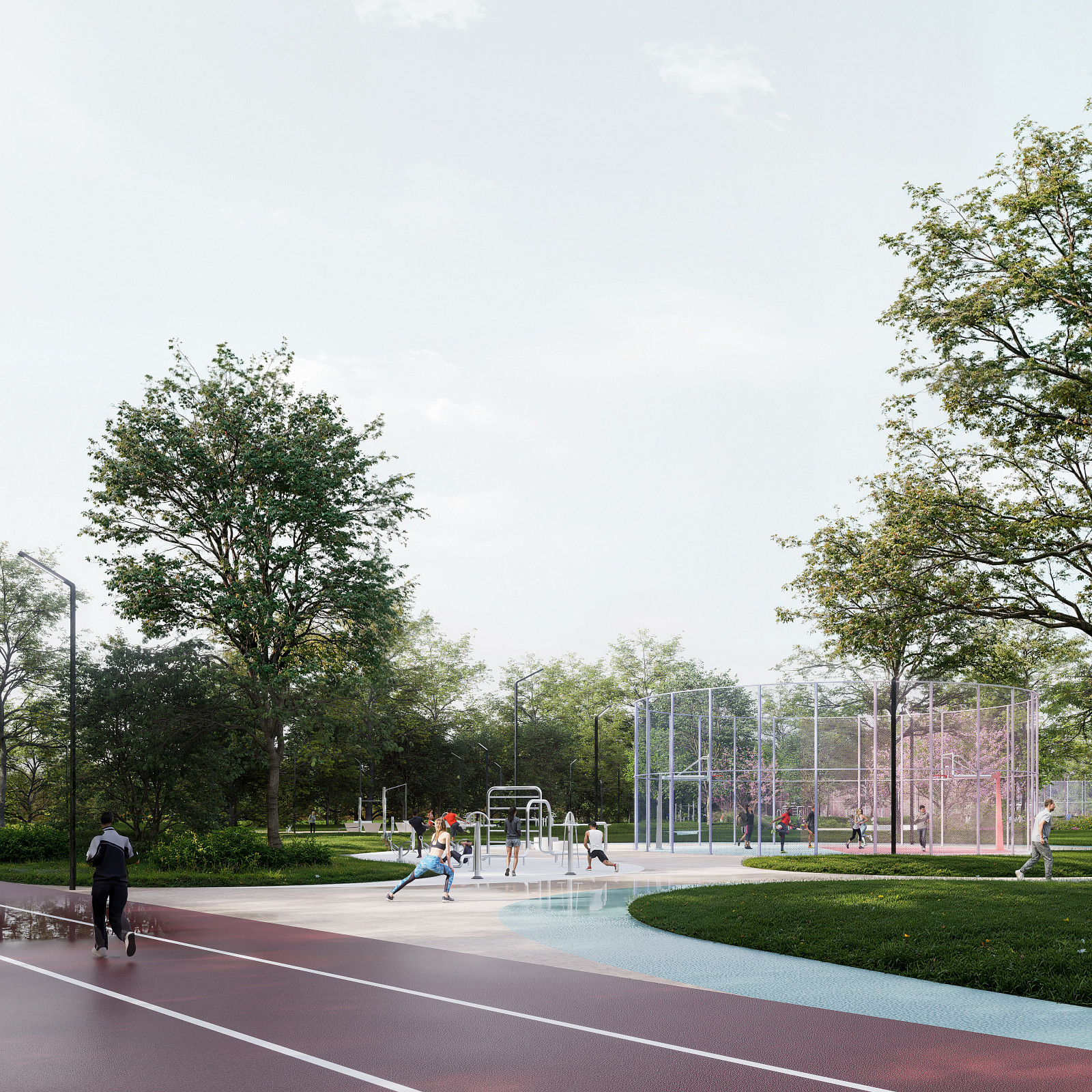
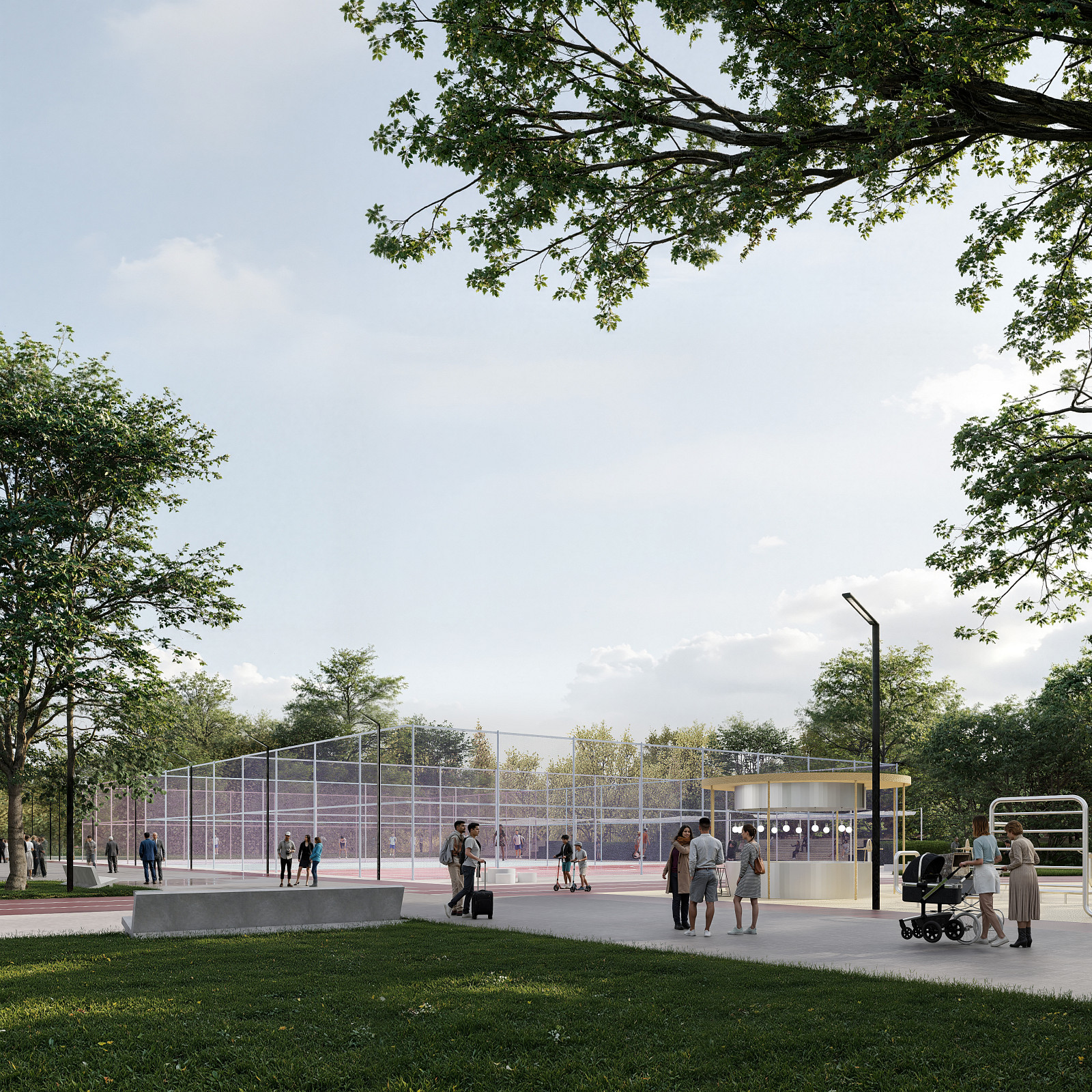
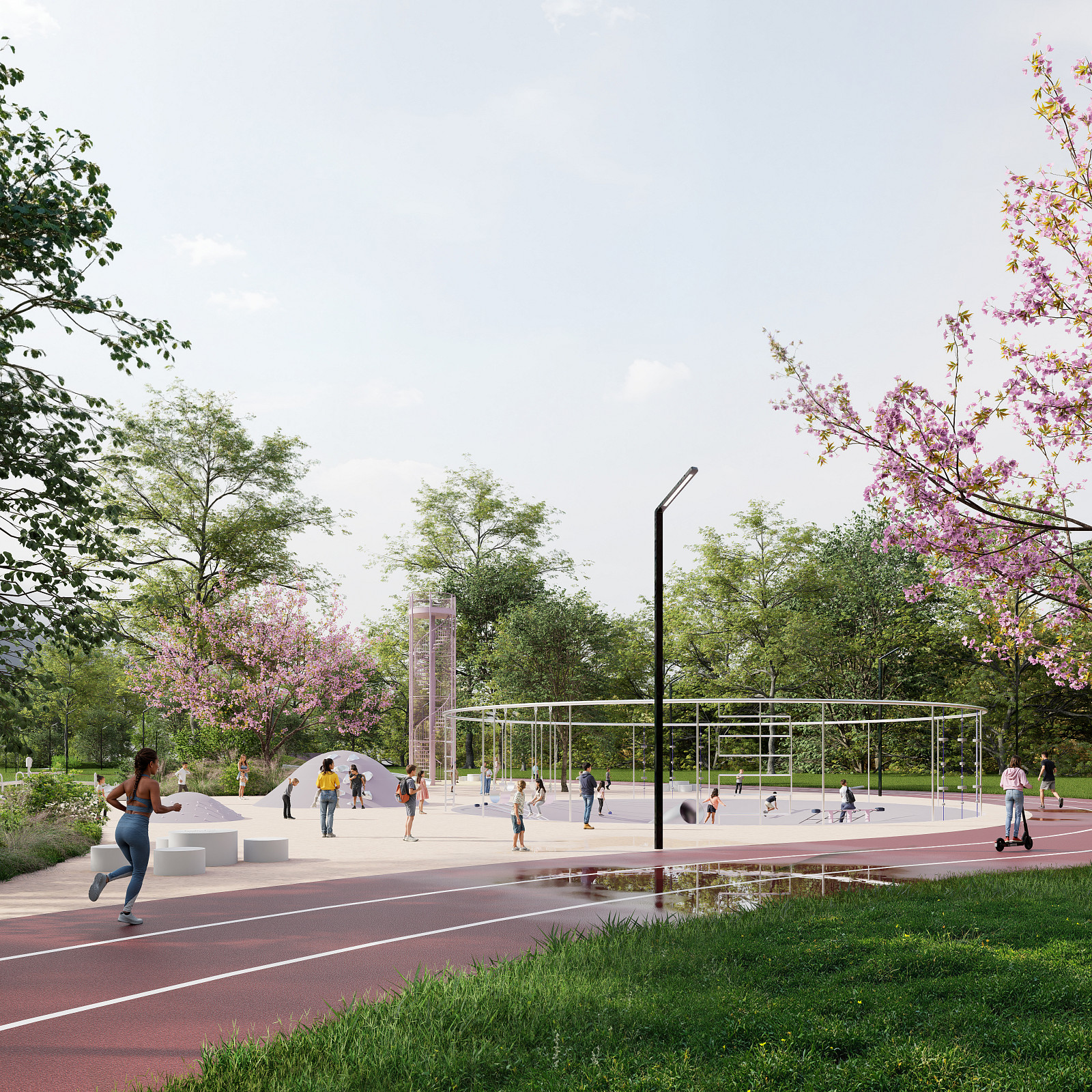
PARCO CONTINUO CODROIPO – Landscape of Movement, Community and Green Resilience reimagines the park as a continuous public landscape that connects people, activities, and nature through movement. Rather than designing a collection of isolated recreational facilities, the proposal establishes a coherent spatial framework where sports, leisure, social interaction, and ecological systems coexist within a unified environment. The concept is based on continuity. A network of running tracks, promenades, cycling routes, and pedestrian paths forms the primary structure of the park, linking sports facilities, public spaces, green areas, and surrounding neighborhoods. Movement becomes the organizing principle of the entire site, encouraging active lifestyles while strengthening the connection between the park and the urban fabric of Codroipo. The proposal responds to contemporary environmental and social challenges by combining recreation with ecological resilience. Green infrastructure, biodiversity enhancement, water-sensitive landscape design, and inclusive public spaces work together to create a sustainable and accessible environment for all generations. The park becomes both a destination and a connector — a place where everyday movement, community life, and nature are seamlessly integrated.
Popis projektu
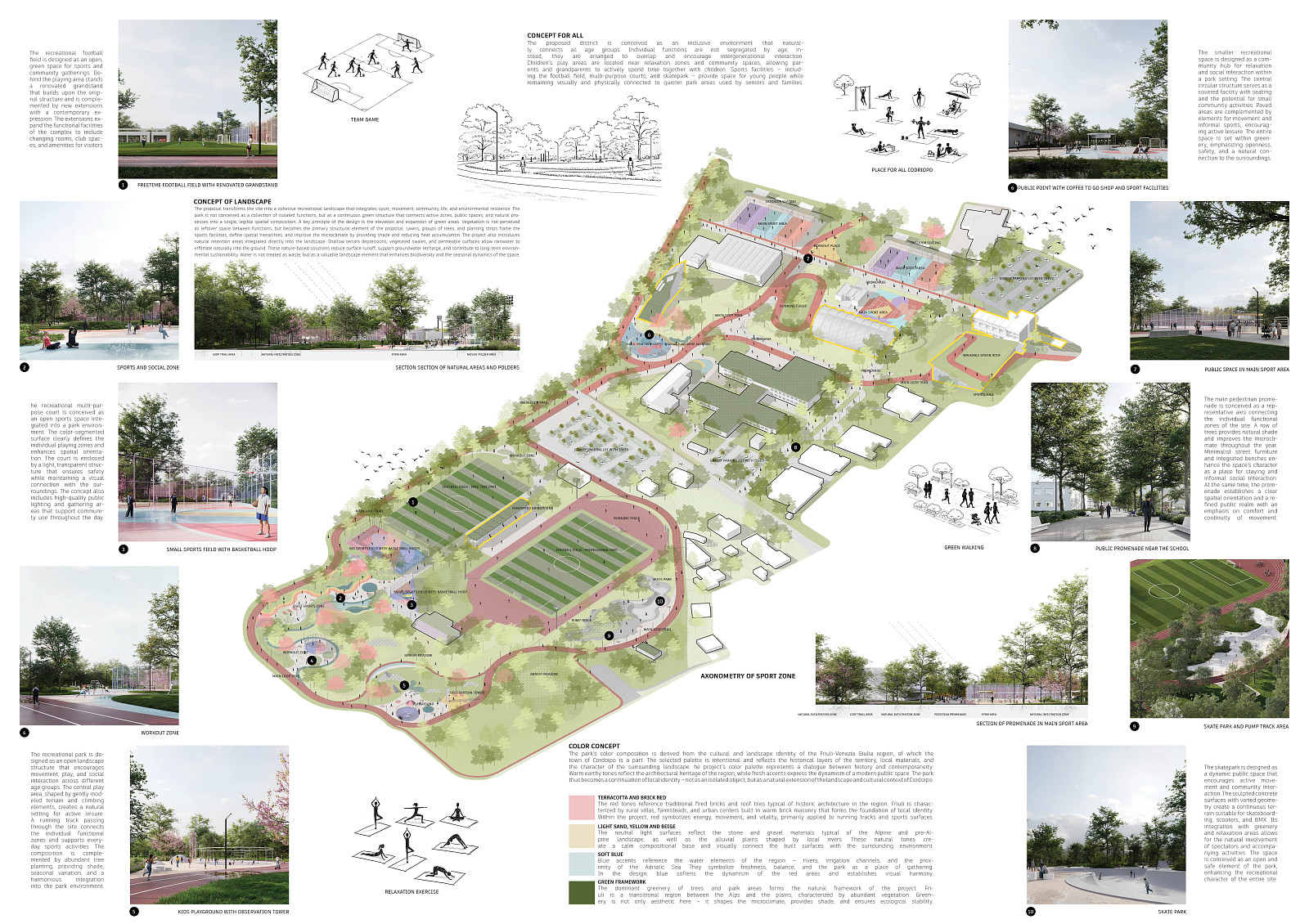
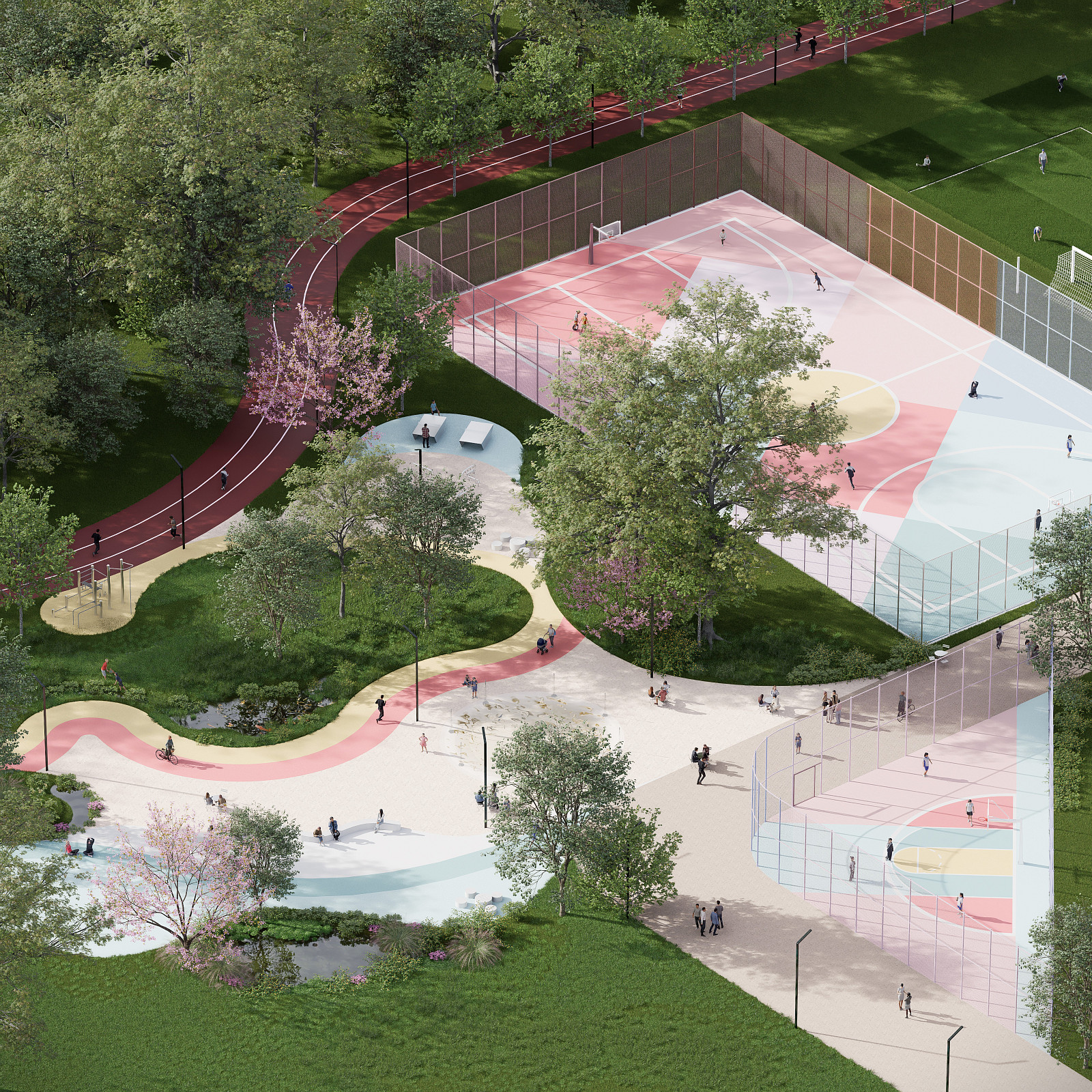
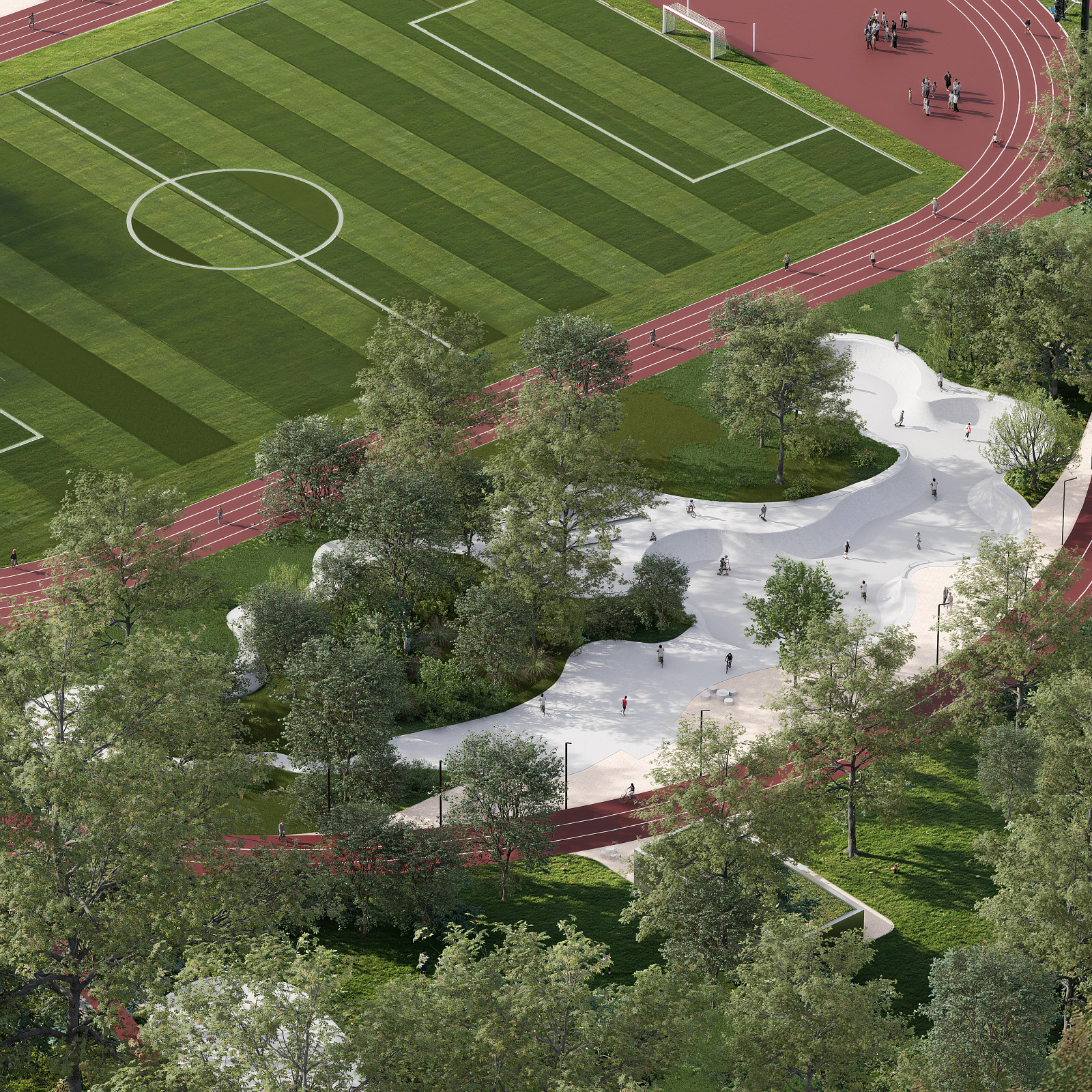
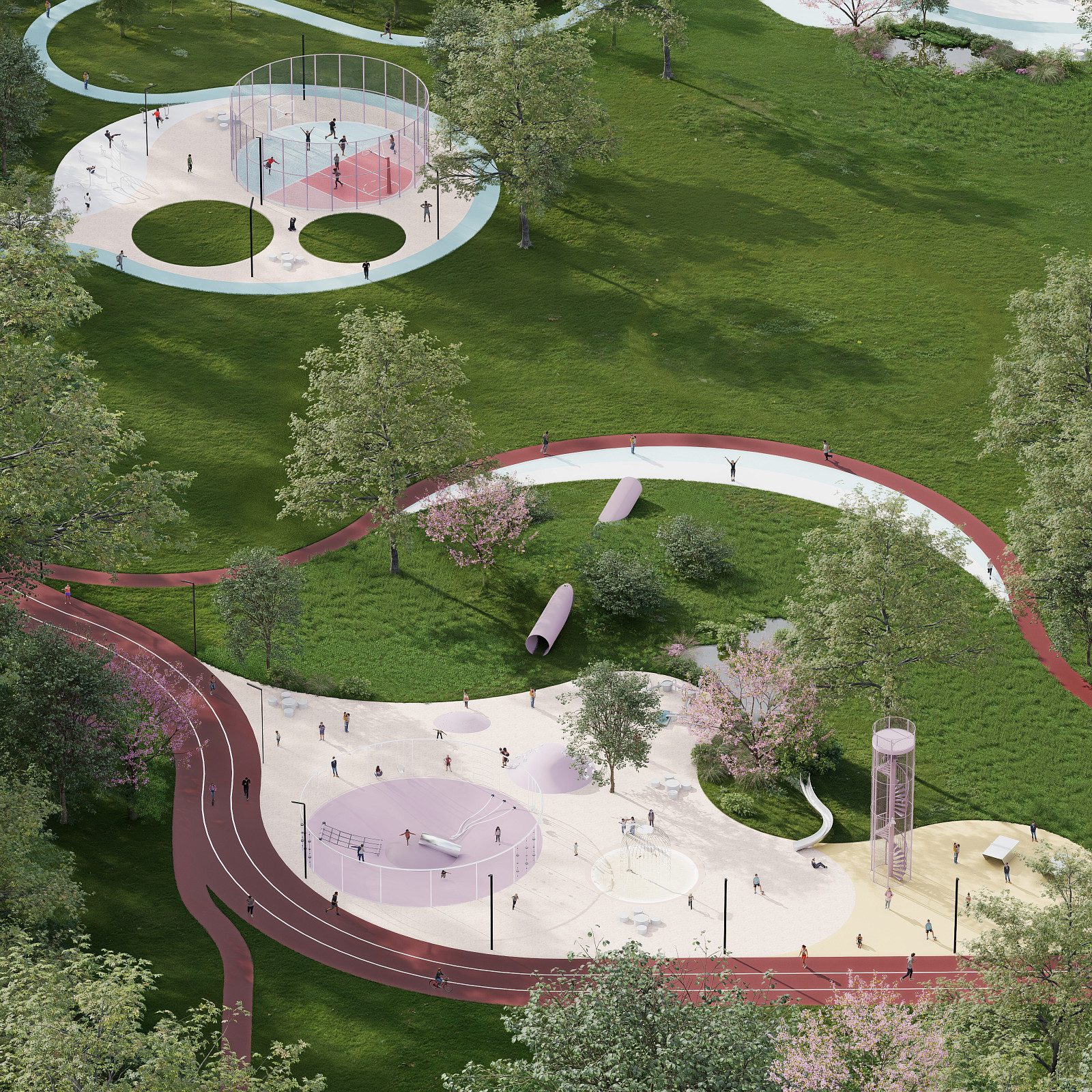
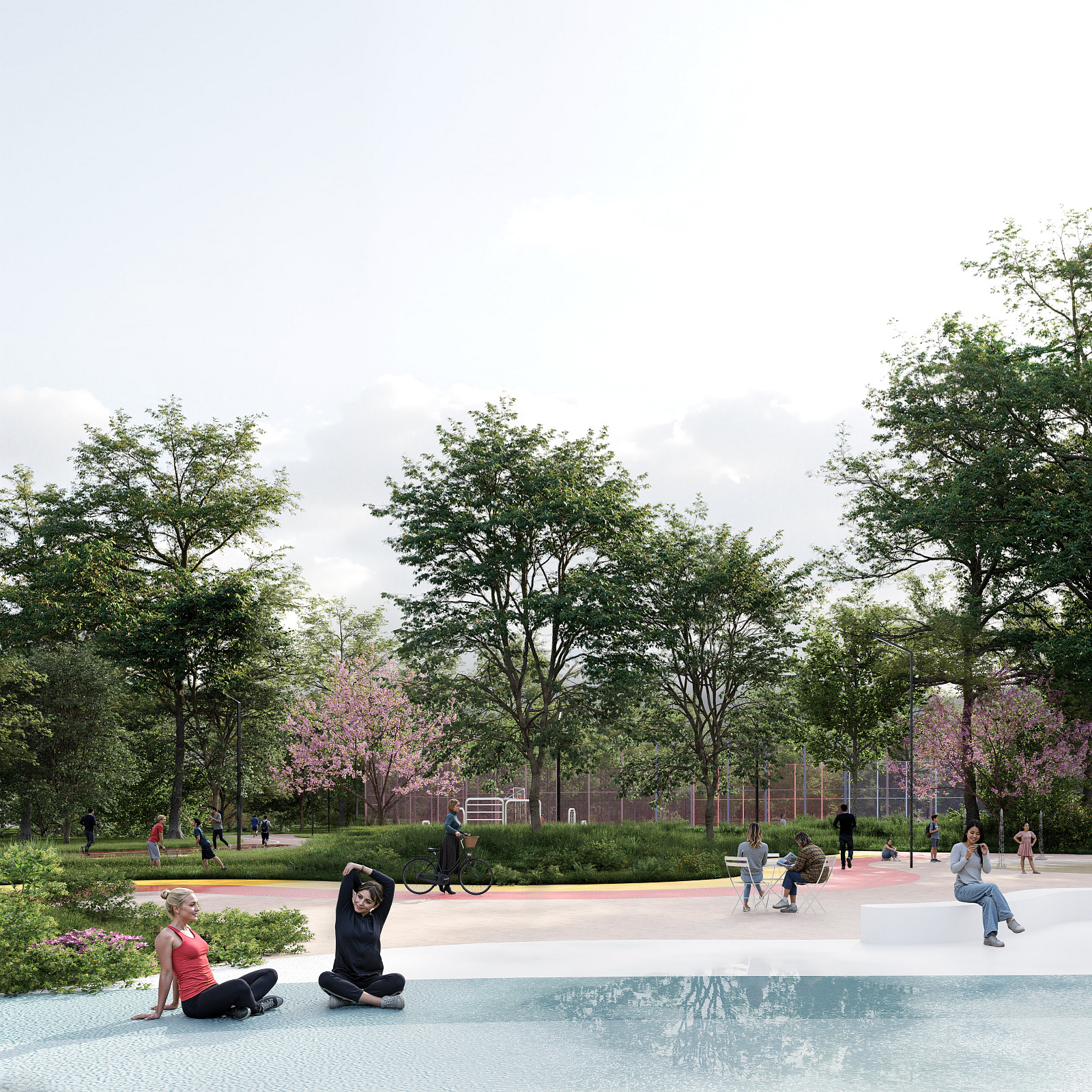
The project transforms an underutilized urban area into a multifunctional recreational landscape structured around a continuous network of movement corridors and public spaces. The masterplan integrates football fields, multi-purpose sports courts, playgrounds, workout areas, a skatepark, community gathering spaces, and a new sports hall into a single interconnected park system. A continuous running track and pedestrian promenade form the backbone of the proposal, guiding movement through the site and connecting individual program elements. The circulation system ensures accessibility from multiple points within the city and establishes strong visual and functional links between active recreational zones and quieter landscape areas. Sports facilities are embedded within greenery rather than separated from it, creating a balanced relationship between built structures and the natural environment. The proposal introduces a hierarchy of public spaces ranging from large open meadows and sports fields to intimate community areas designed for social interaction, relaxation, and informal activities. Special attention is given to children, families, students, and elderly residents, ensuring that the park remains inclusive and welcoming for users of all ages. Landscape interventions play a central role in shaping the identity of the project. Extensive tree planting, flowering meadows, retention areas, and ecological corridors create a resilient green framework that supports biodiversity while improving comfort and environmental performance. Natural water management strategies, including swales, infiltration zones, and retention landscapes, are integrated directly into the design, transforming water into a visible and functional component of the public realm. At the heart of the proposal stands a new multi-purpose sports hall, partially embedded into the terrain and integrated into the landscape. Together with the outdoor sports facilities and public spaces, it forms a contemporary recreational district that strengthens community life and promotes healthy, active lifestyles throughout the year.
Technické informace
The project is based on a landscape-first approach in which green infrastructure serves as the primary organizational and ecological framework. A network of tree-lined promenades defines the main movement corridors, while open lawns, meadows, and recreational landscapes provide flexible spaces for everyday use. Planting strategies combine native and climate-adapted species to improve biodiversity, create shade, reduce urban heat accumulation, and strengthen ecological resilience. Stormwater management is integrated throughout the site using nature-based solutions. Permeable surfaces, vegetated swales, retention basins, and infiltration landscapes allow rainwater to be retained and absorbed naturally, reducing runoff and supporting groundwater recharge. These interventions contribute to long-term environmental sustainability while enhancing the visual and ecological quality of the park. The multi-purpose sports hall is partially embedded within the terrain to minimize its visual impact and establish a strong relationship with the surrounding landscape. The building accommodates a sports arena with a capacity of 490 spectators, including accessible seating for wheelchair users. The roof is designed as an accessible public surface incorporating recreational functions and a running track, extending the park experience onto the building itself. The structural system combines a reinforced concrete substructure integrated into the terrain with an above-ground timber construction that provides warmth, sustainability, and a reduced environmental footprint. Supporting facilities, including storage spaces, technical rooms, changing rooms, and sanitary facilities, are efficiently integrated within the building and connected to an existing student accommodation facility, reducing the need for additional construction. The result is a contemporary recreational complex where architecture, landscape, and environmental performance form a unified and resilient public infrastructure.

Copyright © 2026 INSPIRELI | All rights reserved. Use of this website signifies your agreement to the Terms of Use, Privacy Policy, and use of cookies.