Where Voices Rise


Idea projektu
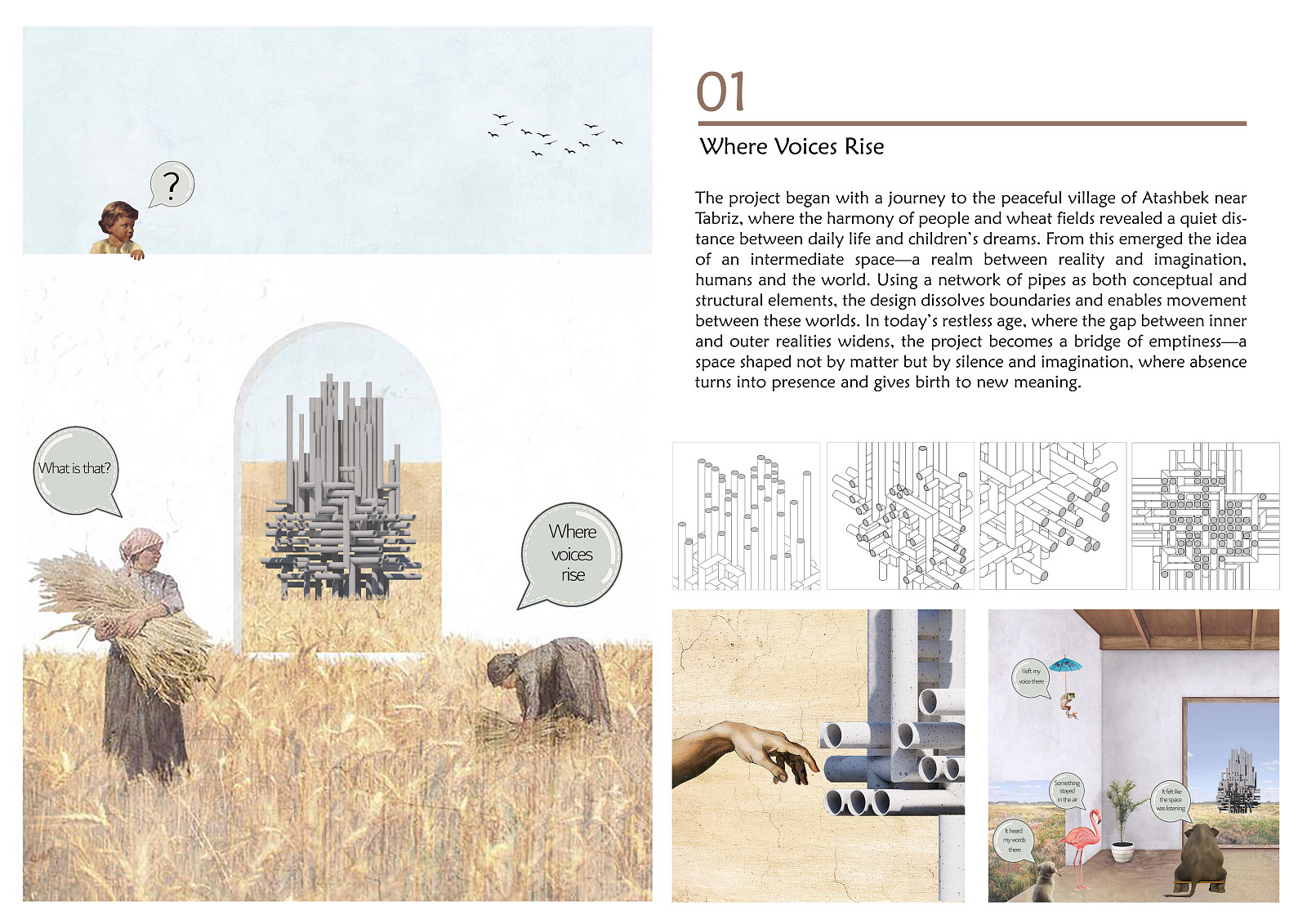
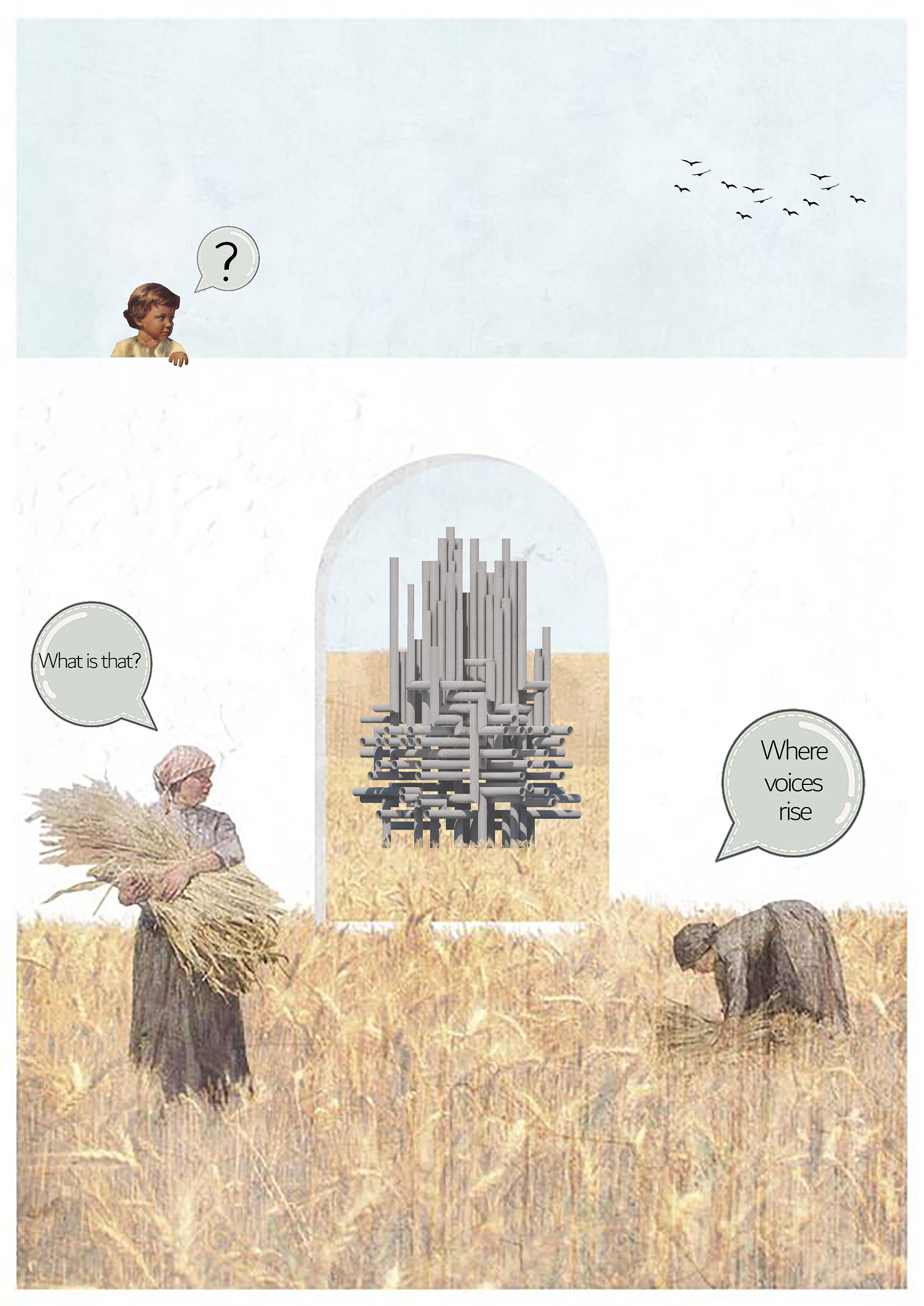
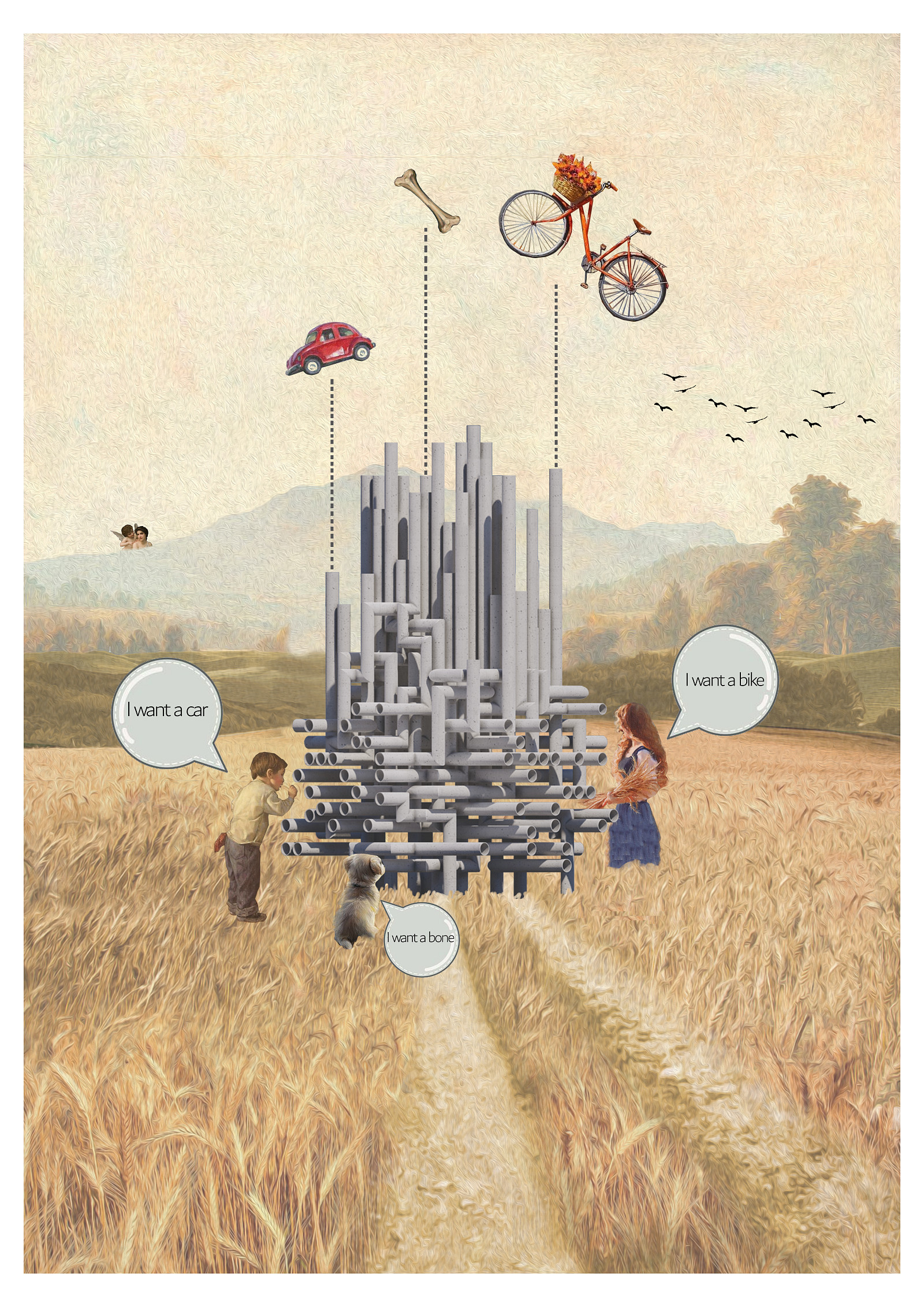
The idea for this project was born from a journey to a quiet village far from the noise of the city — a place where the distance between the simple lives of children and the vast world of their dreams could be felt deeply and poetically in the atmosphere. There, the silence was filled with sound — the sound of wishes that had not yet found words.
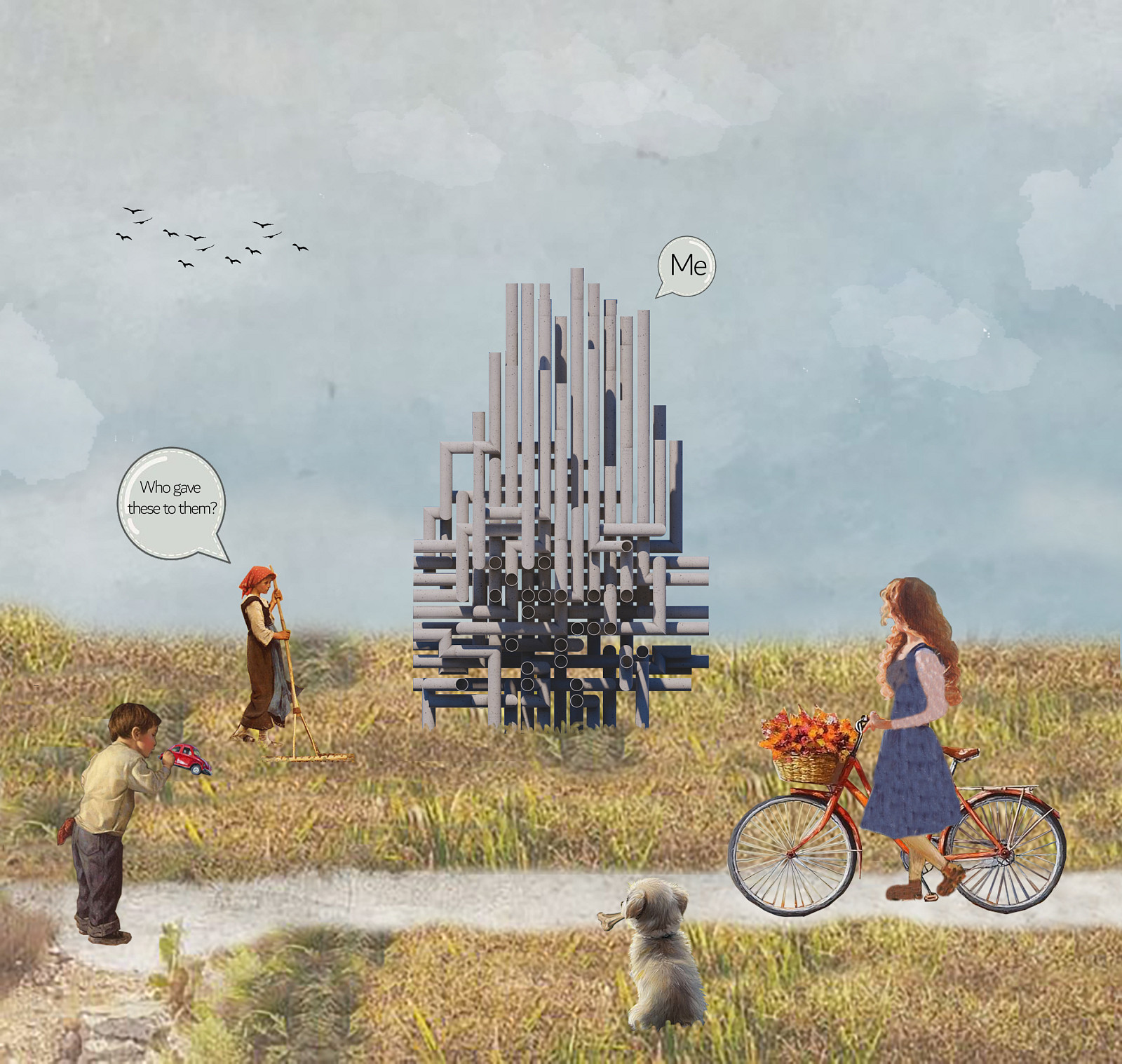
From within this distance, the idea of creating an in-between space emerged; a space that is neither entirely material nor merely imaginary, but exists somewhere between having and longing, reality and dream, the human being and the world.
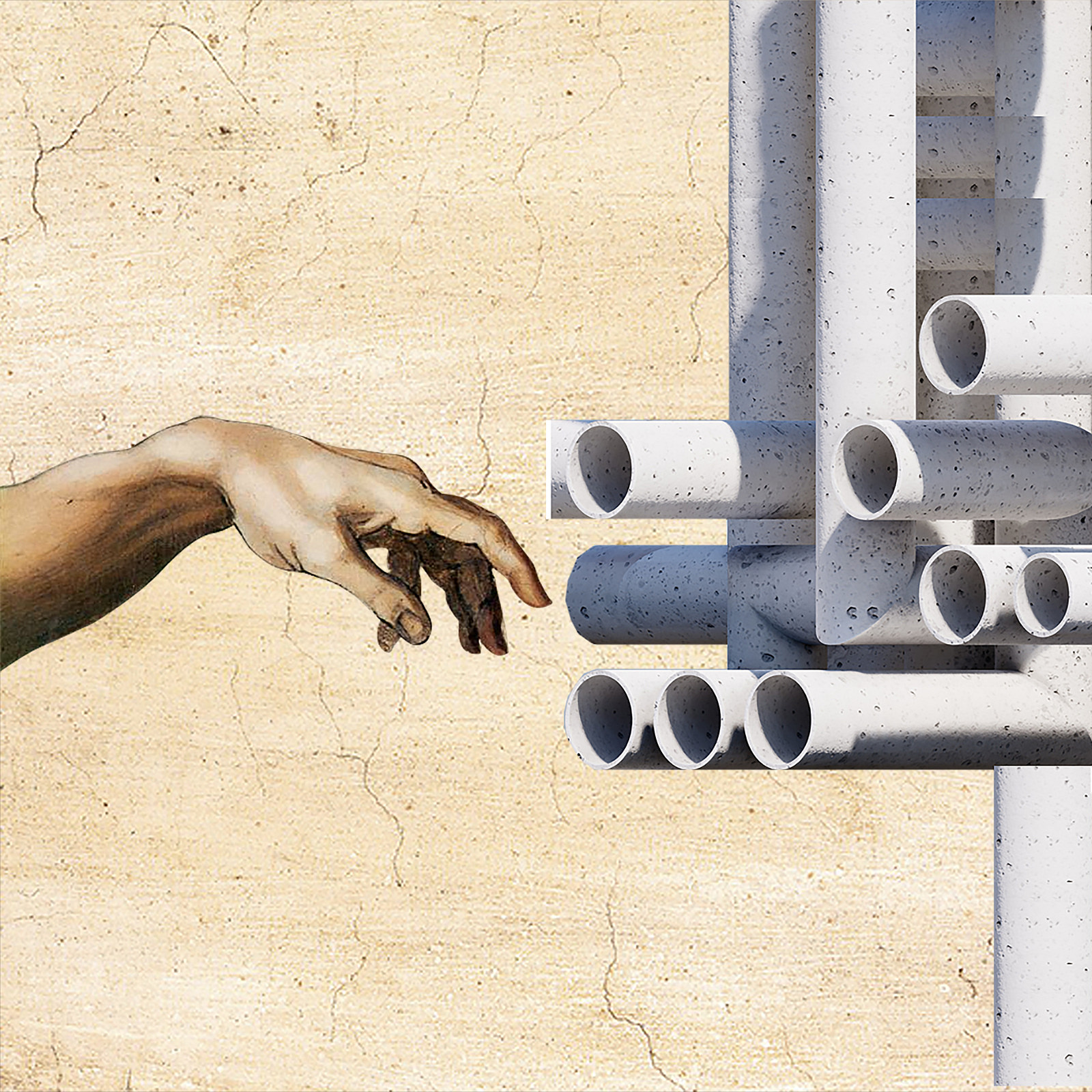
In this space, a series of hinges are combined as conceptual and structural elements to open the boundary between two worlds — just as every hinge creates the possibility of passage, movement, and connection.
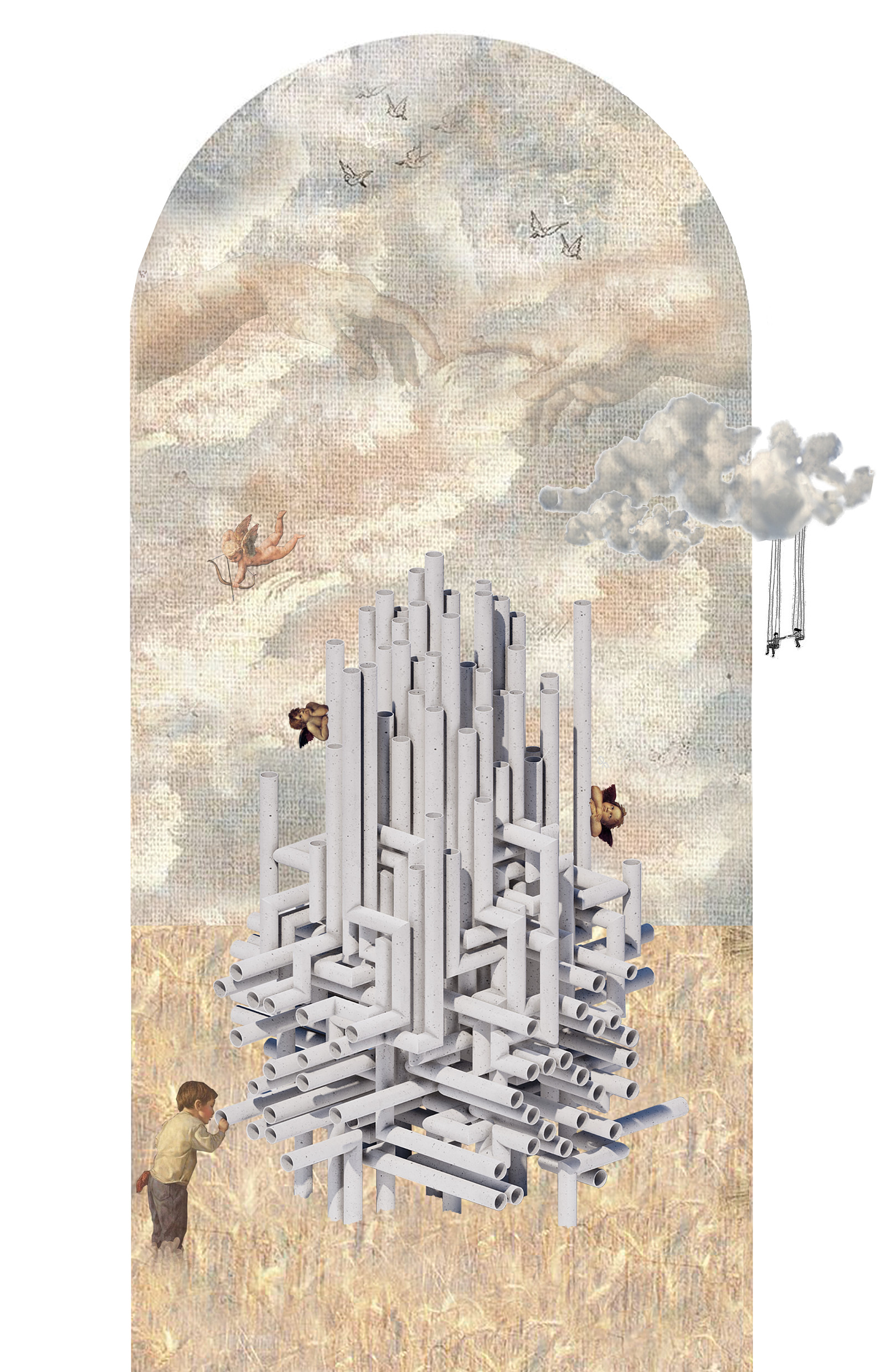
Here, the hinges become a metaphor for the dialogue between the human being and existence; a place where a child can sit in silence, speak their wishes, write them down, or release them to merge with the breeze in nature. This dialogue between “inside and outside” transforms not only into a poetic experience, but into a process of self-discovery and transcendent growth.
Yet beneath this experience lies a deeper issue: a void between wanting and being able, between dream and reality.
Popis projektu
In today’s world — filled with images, speed, and anxiety — this void grows wider each day. People, especially children, become lost among countless desires; suspended between the world that is accessible and the world that wells up within them.
This project responds to that very challenge — an attempt to build a bridge made of emptiness, a bridge filled not with structure and material, but with presence, silence, and imagination.
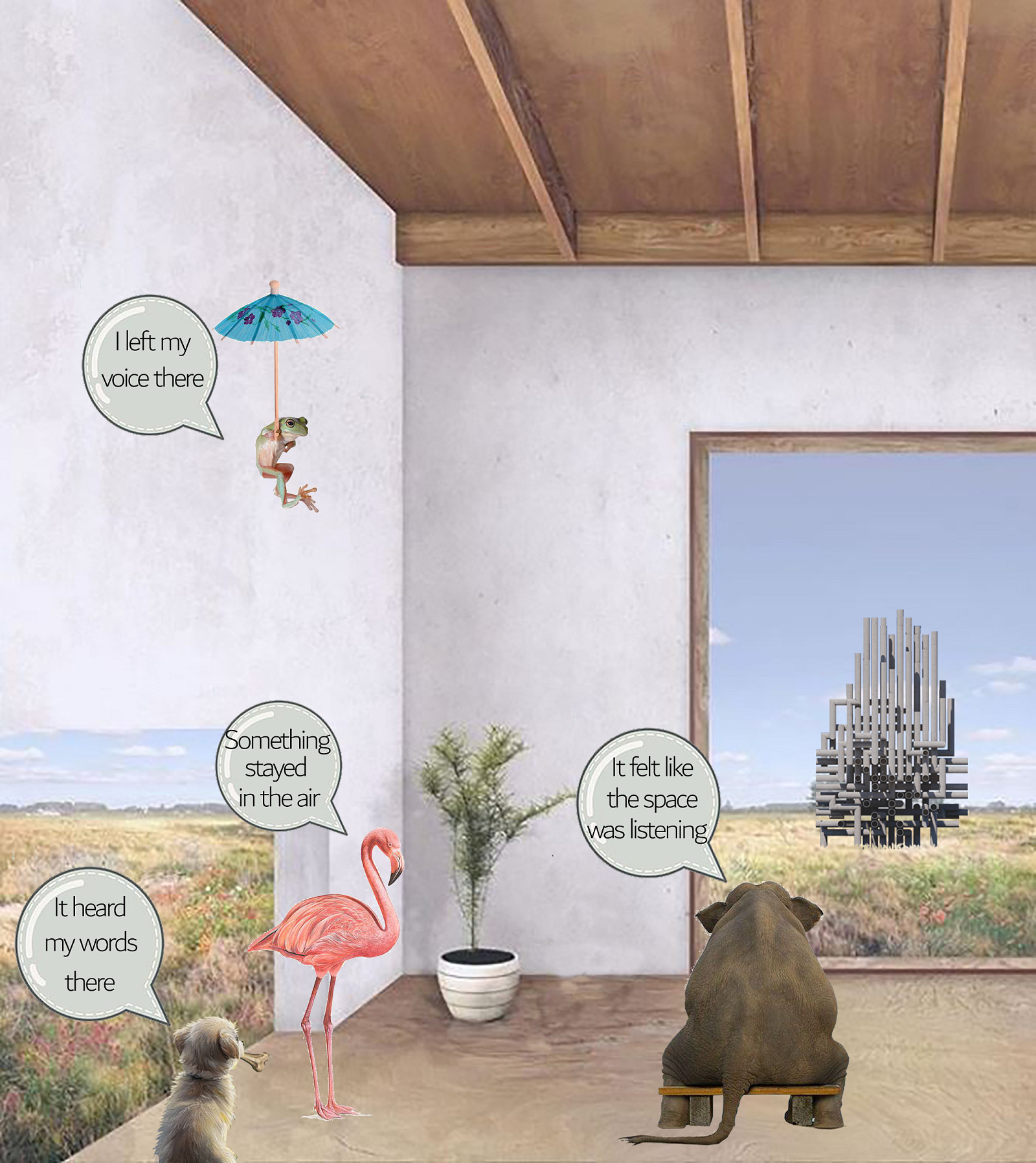
This space does not deny the void; rather, it transforms it into the central element of the experience — like a place where silence itself becomes sound, and absence takes on the meaning of a new kind of presence.
When children sit in this space, move among the hinges, speak to themselves, or entrust their dreams to the wind, they are in fact engaging in dialogue within the void.
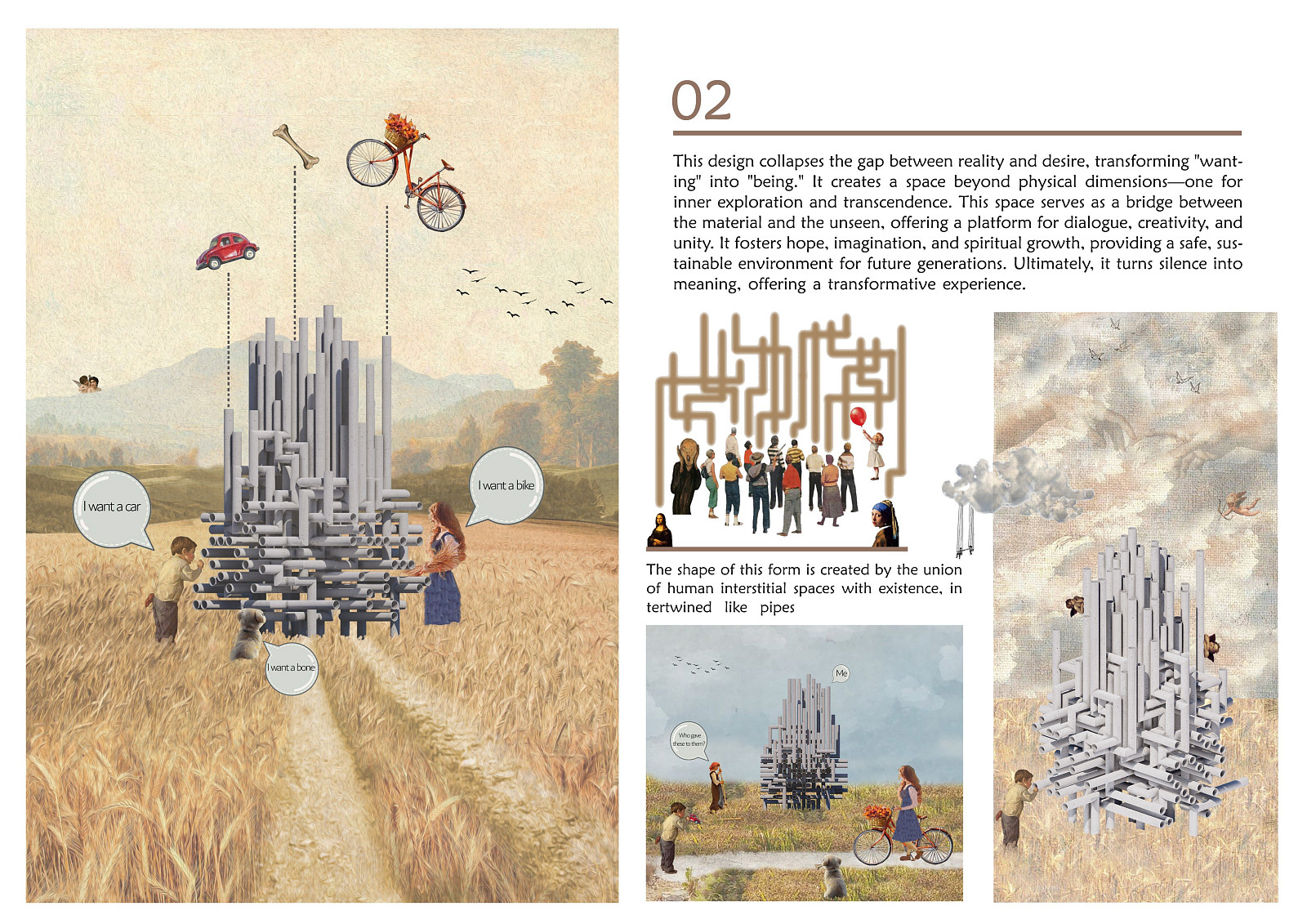
In this dialogue, the distance between reality and aspiration collapses — in that very moment when “not having” connects to “longing,” and “longing” connects to “being.”
Ultimately, this design becomes something beyond numbers and measurements;
a space for the inner self, for exploration, and for transcendence.
Here, space transforms into a bridge between materiality and the unspoken —
a void-like bridge that shapes reality itself; a space that is more than a form or a physical object.
On a social level, this structure provides a platform for dialogue, creativity, and solidarity — a place where children and families gather and learn that hope, imagination, and faith can be part of everyday life.
In the end, this project is not only a human experience, but a path toward spiritual growth and the safe experience of transcendence within a sustainable environment for present and future generations —
an experience that grows from silence, and transforms the void from absence into meaning.
Technické informace
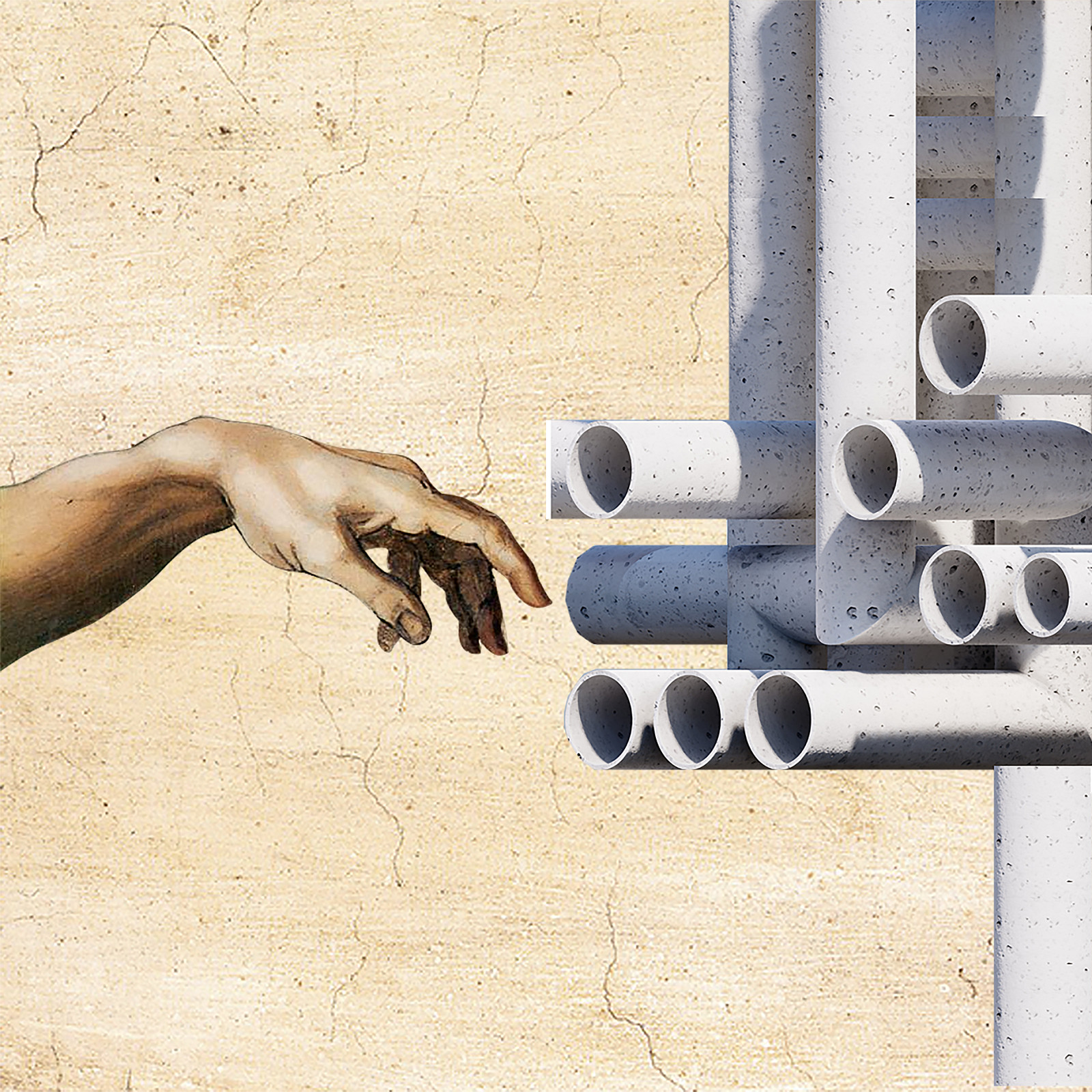
In this fabrication technique, a set of tubes is designed so that each one follows a curved, fluid, and partially random path through three dimensional space. The trajectory of every tube is defined independently, yet it is carefully coordinated with the others so that all of them exist within a shared spatial system. The result is a network of curved paths that gradually approach one another and become spatially interwoven along their routes.
Within this structure, the tubes progressively come closer together and create moments where they appear to “match” or interlock with one another, forming a configuration that resembles a three dimensional woven pattern. However, this interweaving does not imply physical contact or geometric interference. The path of each tube is precisely controlled so that collisions and overlaps are avoided. In other words, although the tubes move through the same spatial field, each maintains a defined geometric clearance that prevents it from intersecting with the others.
From a geometric and conceptual perspective, each tube is a continuous, independent, and unique element that extends along its entire path without interruption. Despite this independence, the tubes collectively generate a coherent and unified structure, where an overall order emerges from what appear to be free or random trajectories. This balance between controlled randomness and spatial coordination gives the final structure a dynamic, organic, and network like character, as if a series of strands had been intelligently woven together in space.
Ultimately, this technique enables the creation of a form that is both complex and organized, in which every tube preserves its own identity and path while simultaneously contributing to an intertwined and integrated whole.

Copyright © 2026 INSPIRELI | All rights reserved. Use of this website signifies your agreement to the Terms of Use, Privacy Policy, and use of cookies.