Sustainable Landscape Design, Delhi India.


Idea projektu
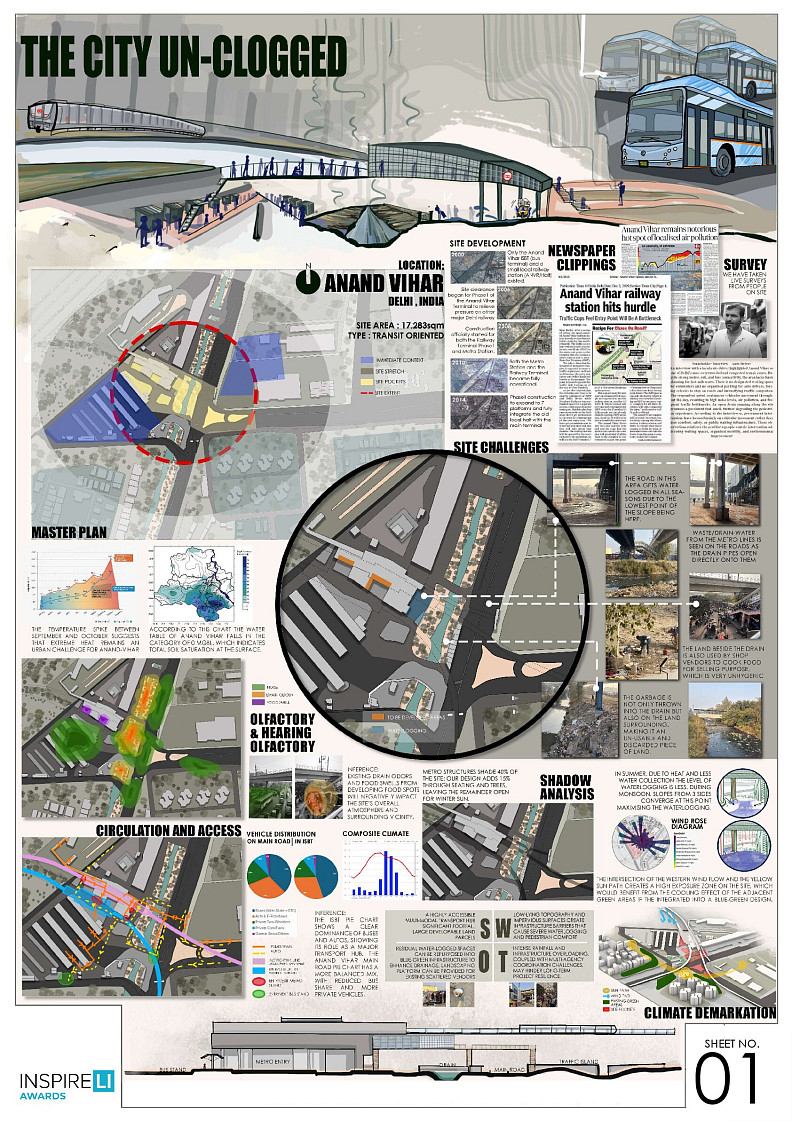
The project focuses on Anand Vihar, one of Delhi’s busiest transportation hubs, serving a metro station, railway station, and interstate bus terminal. Despite accommodating a large number of daily commuters and visitors, the area suffers from a lack of adequate public spaces for rest, waiting, and social interaction. A major issue identified on the site is frequent waterlogging, which disrupts pedestrian movement and creates accessibility challenges, particularly during the monsoon season.
The presence of an open drain further degrades the quality of the environment, posing hygiene and public health concerns for commuters and nearby users. In addition, the area experiences severe congestion along the main road adjacent to the drain, where informal vending activities occupy pedestrian and vehicular spaces. This results in overcrowding, traffic delays, unsafe movement conditions, and a fragmented public realm. Being a major urban junction with constant movement and interaction, the lack of organized public infrastructure and poor environmental conditions significantly affect the overall user experience and functionality of the area.
Popis projektu
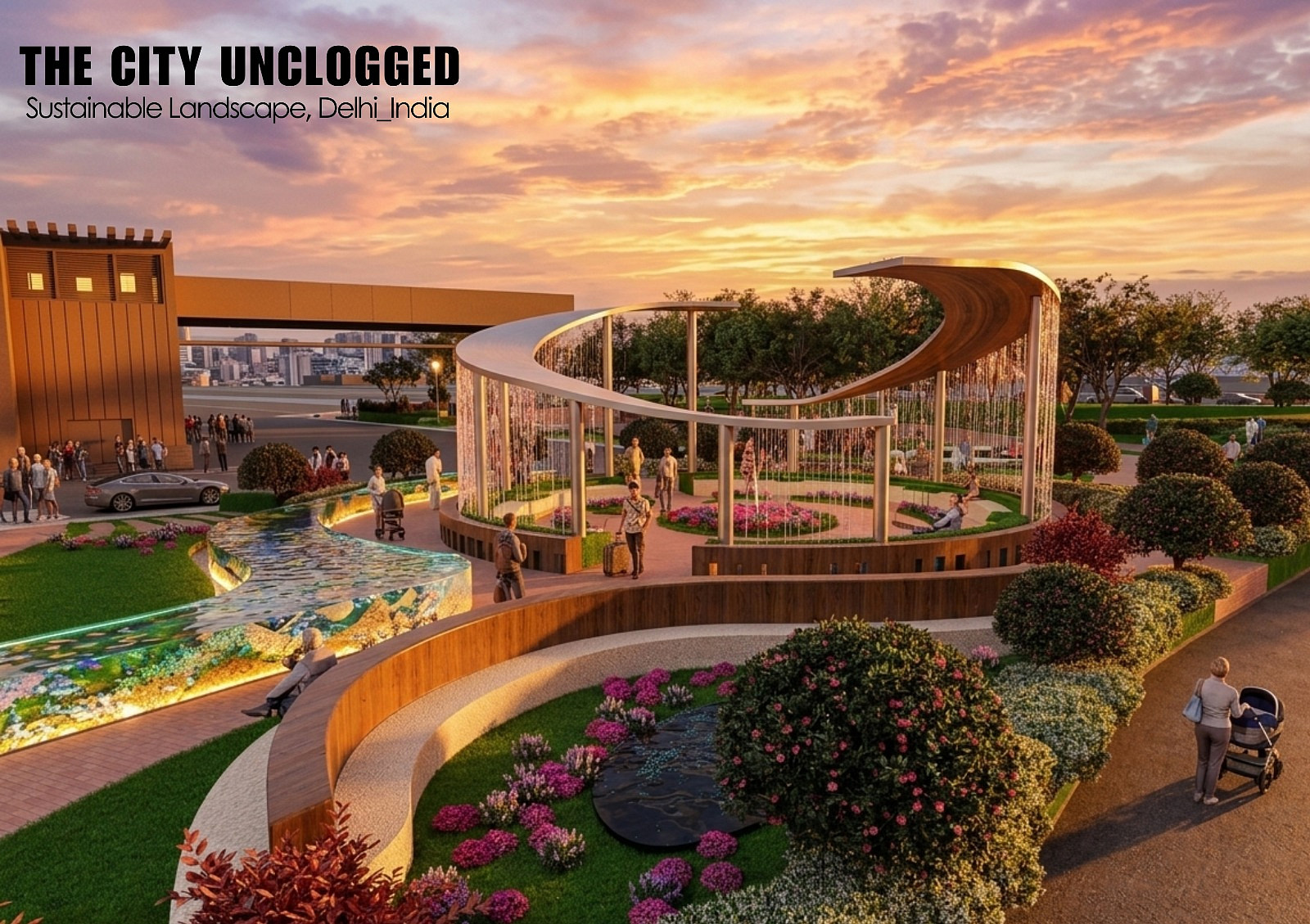
The primary vision of the project is to create a landscape that acts as a space of peace amidst the chaos of the city. Rather than encouraging engagement through programmed activities, the design seeks to connect people with their surroundings through sensory experiences. The aim is to create an environment where users do not need to consciously participate in activities to feel engaged; instead, the landscape itself evokes a sense of calm, comfort, and well-being by stimulating the senses through nature, water, texture, sound, and spatial experiences.
The proposal addresses these challenges through five key intervention zones. The first focuses on rehabilitating the existing drain through ecological water-treatment systems to improve water quality and environmental conditions. The second intervention transforms the waterlogged area on the left side of the drain into a sensory landscape with permeable pathways and nature-based experiences that engage users through sight, sound, touch, smell, and movement. The third intervention reorganizes the overcrowded edge along the main road by providing dedicated spaces for vendors and auto-rickshaws while improving pedestrian circulation and public usability.
The fourth intervention is a community engagement park that incorporates a seasonal water-retention basin and interconnected water channels to manage stormwater and enhance site ecology. The final intervention activates an underutilized space between the bus terminal and metro station, creating a comfortable waiting and interaction zone for commuters.
Beyond solving site-specific problems, the project responds to larger urban issues such as environmental neglect, poor civic behavior, and the deterioration of public spaces. By combining water-sensitive design, ecological restoration, and people-centric landscapes, the proposal aims to improve everyday urban experiences while encouraging a stronger sense of ownership and responsibility toward public spaces.
Technické informace
The existing open drain is rehabilitated through a five-stage natural filtration system and aeration bubblizers to improve water quality, reduce pollution, and enhance ecological performance. Native and climate-responsive plant species are integrated throughout the site to increase biodiversity, minimize maintenance requirements, and improve microclimatic conditions.
The sensory landscape incorporates textured paving, water features, aromatic vegetation, shaded pathways, and interactive landscape elements that engage users through sight, sound, touch, and smell. Public spaces are designed using durable, low-maintenance materials, including permeable pavers, natural stone, reinforced grass surfaces, and locally sourced landscape materials.
Traffic and pedestrian movement are improved through dedicated vendor zones, organized auto-rickshaw stands, accessible pathways, seating areas, and flexible community spaces. The landscape framework is designed as an adaptable system capable of responding to seasonal variations, heavy rainfall events, and changing user requirements while promoting environmental sustainability and urban resilience.
Dokumentace
Vytvořeno pomocí:


Copyright © 2026 INSPIRELI | All rights reserved. Use of this website signifies your agreement to the Terms of Use, Privacy Policy, and use of cookies.