


Different entries-same outcome


Idea projektu
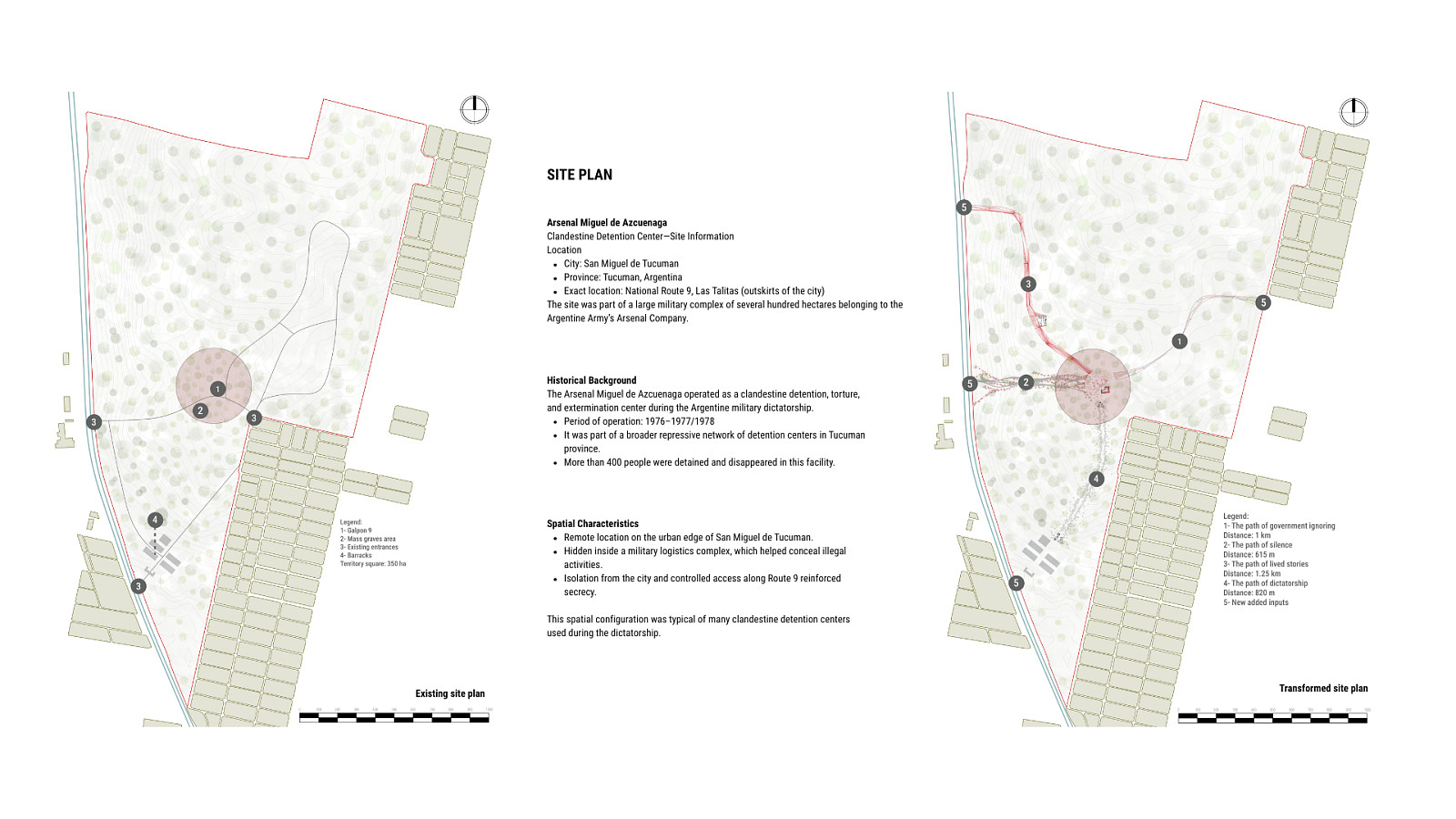
This project involves a conceptual design that emphasizes both qualitative and symbolic aspects. The theme is to transform a park that once served as a detention and torture center into a center for active memory. This memory calls for the preservation and transmission of past events while simultaneously preventing their recurrence. The concept is to keep history alive through information and awareness-raising among visitors. Memories are not the only means of information, as present actions that prevent repetition of past situations are also key to information. This 350-hectare site in San Miguel de Tucumán is an abandoned base of the Argentine company "Miguel de Azcuenaga," which operated as a detention and torture center from 1976 to 1978. Situated in the northern part of the region, with a population of over a million, the site is vacant due to trials for crimes committed there. The pending conclusion of the trial necessitates a new function for the site.
The purpose of this project was to analyze ways in which architecture can transform sites of historical trauma and physical devastation into physical and interactive areas in which people can experience historical memory. This project reconsiders the idea of memory in architecture by reviving history and reinserting it into the everyday experience of a site through actual experience of movement through space and perception.
The project explores the idea that memory can be lived through physical spaces using concepts of collective memory and embodied experience. The project is interested in how movement itself informs a larger historical narrative that unfolds before the user.
The project identifies a lacuna between the preserved historical heritage and the dynamic urban environment of today. Instead of keeping the memory of the former Clandestine Detention Center (CDC) relegated to a mere historical relic, the project pursues the goal of reactivating the connection between the people, memory, and the site. The final outcome is a comprehensive system of experience in which people interact directly with the urban environment transformed by the project into a vibrant community space merged into a single urban site—the former Arsenal.
The ultimate goal is to activate memory it through spatial and narrative sequences. Thus, users’ physical as well as emotional engagement will lead them to encounter history on a tangible and embodied level.
Popis projektu
Design Concept
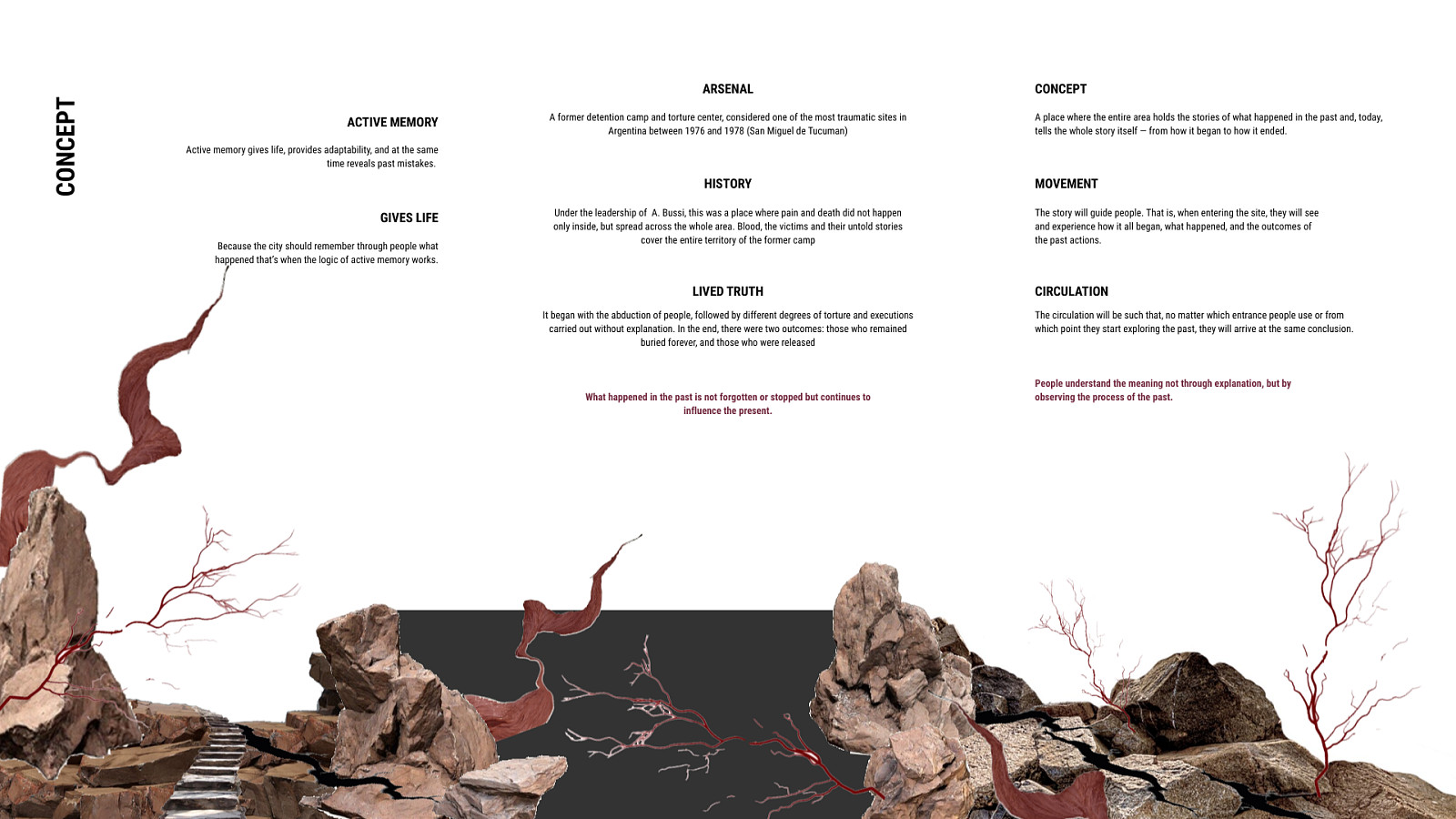
Active memory gives life to space, provides adaptability, and at the same time reveals past mistakes through continuous engagement with history. A former detention camp and torture center in San Miguel de Tucumán, Argentina (1976–1978), one of the most traumatic sites of state violence, becomes the foundation for this idea. Because a city should remember through its people what happened, the logic of active memory transforms this place into a lived testimony rather than a static historical reference. Under the leadership of A. Bussi, this site functioned as part of a system where pain and death extended beyond its physical boundaries, leaving traces of victims, silence, and untold stories across the entire territory.
What happened here is not forgotten or contained in the past; instead, it continues to influence the present condition of the site. The process began with the abduction of people, followed by stages of torture and executions carried out without explanation, resulting in two irreversible outcomes: those who disappeared forever and those who were released but permanently marked by the experience. In this context, the entire area becomes an “arsenal of memory,” where the site itself tells the story of what happened, from beginning to end. The concept of movement and circulation is designed to guide visitors through this narrative experience: upon entering the site, they gradually encounter how events began, unfolded, and concluded. Regardless of the entry point, the spatial logic leads all visitors toward the same understanding. In this way, meaning is not explained directly but constructed through experience, where people understand the past not through description, but through the spatial sequence of memory itself.
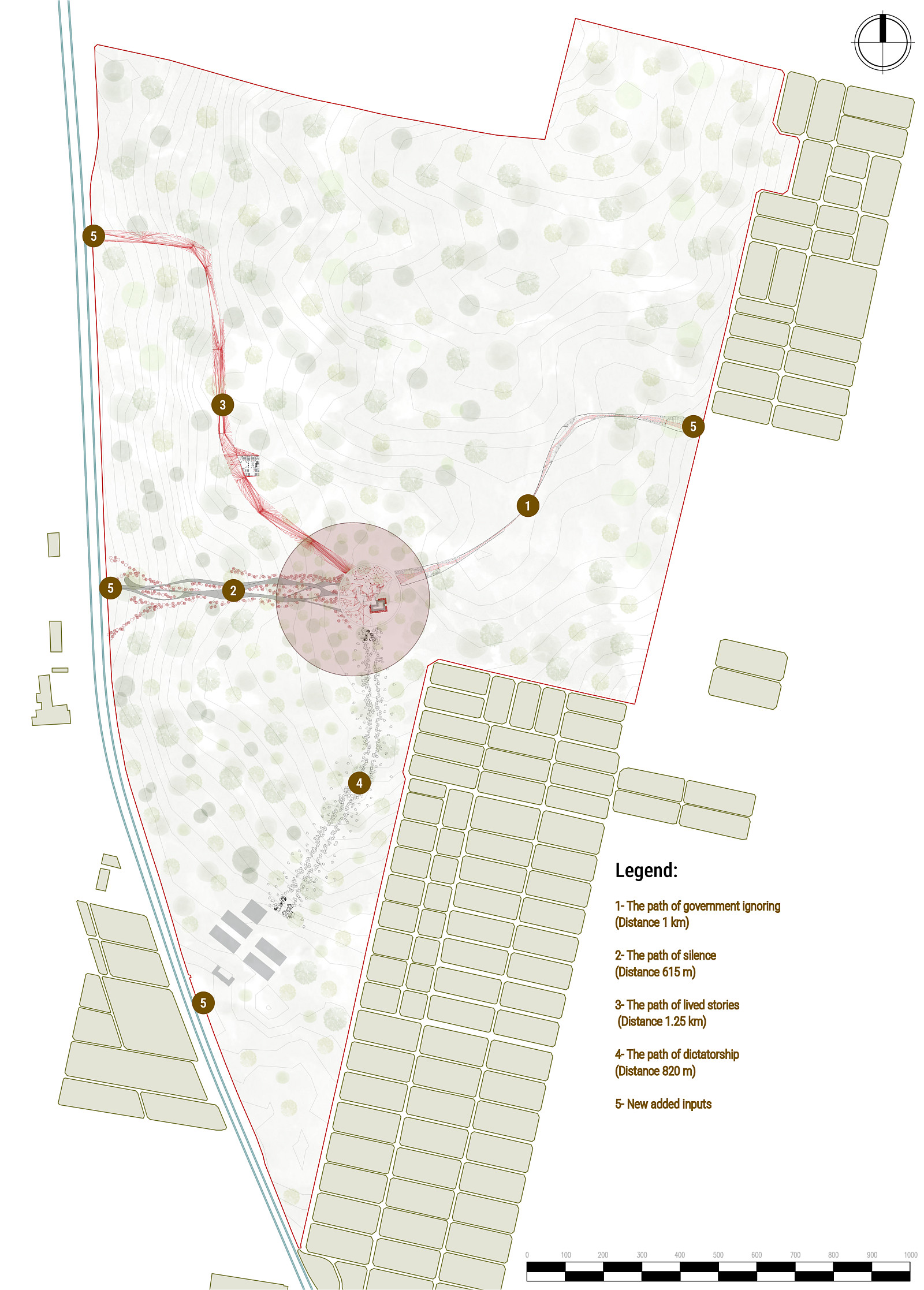
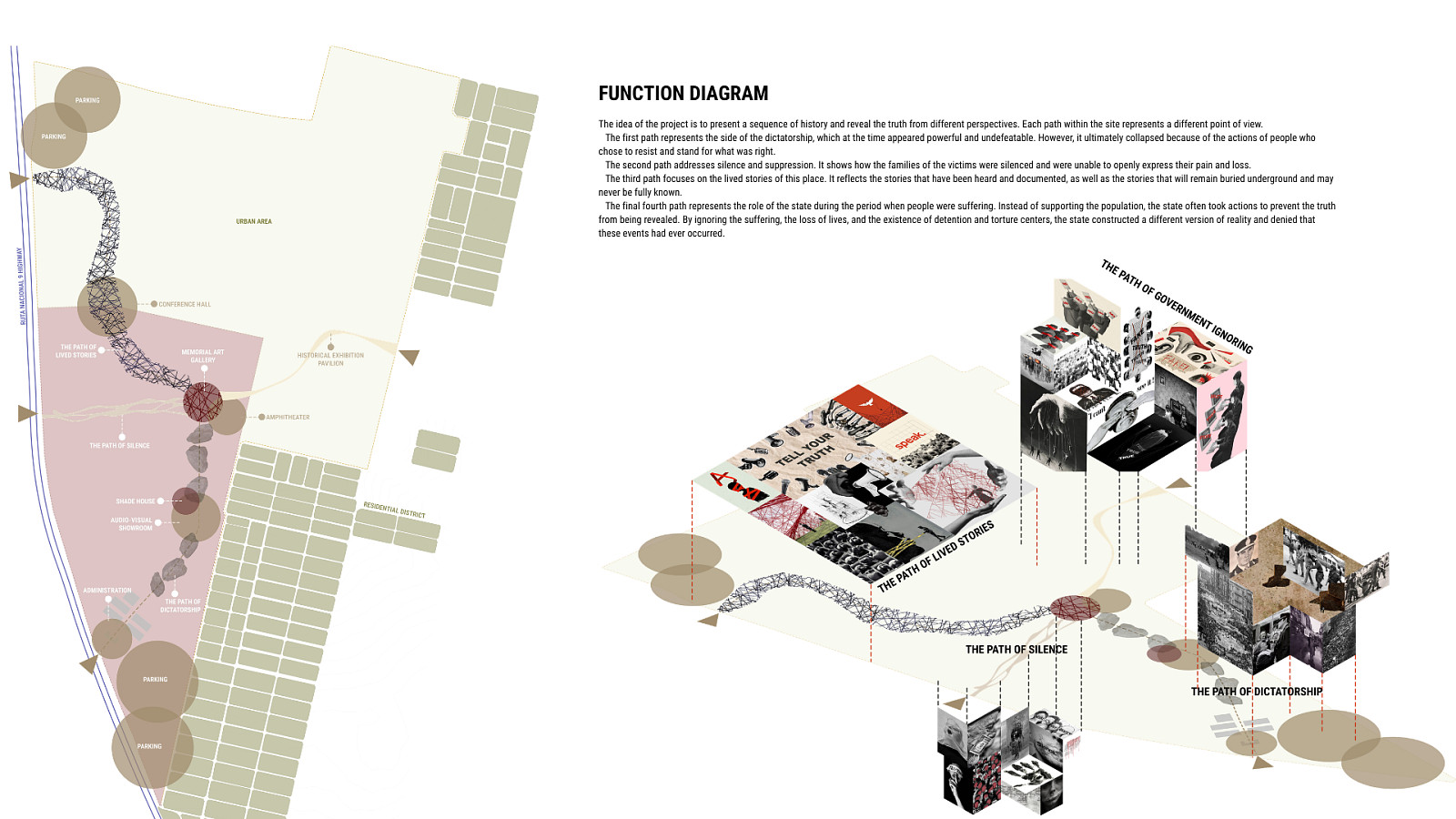
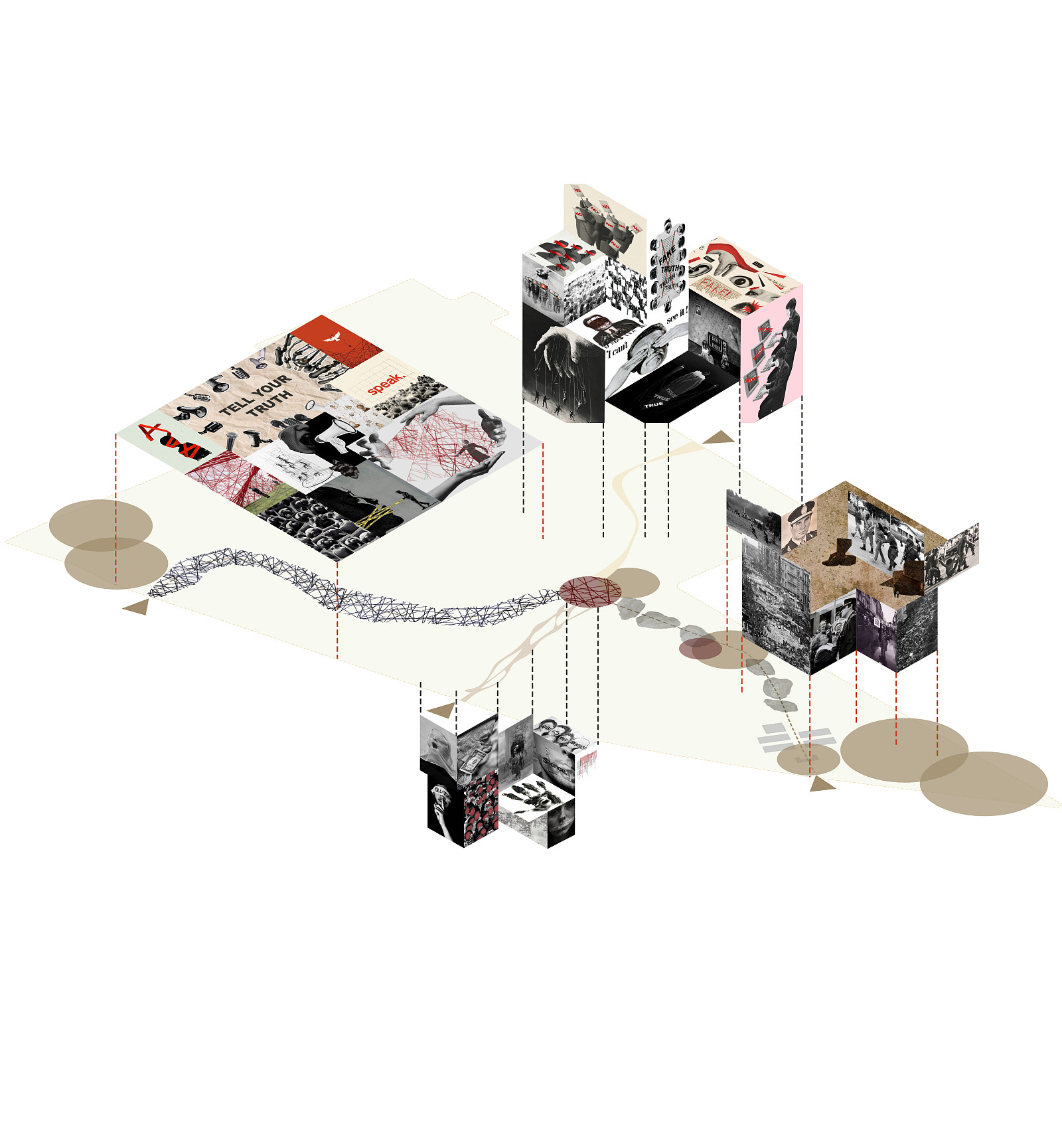
The idea of the project is to present a sequence of history and reveal the truth from different perspectives. Each path within the site represents a different point of view.
The first path represents the side of the dictatorship, which at the time appeared powerful and undefeatable. However, it ultimately collapsed because of the actions of people who chose to resist and stand for what was right.
The second path addresses silence and suppression. It shows how the families of the victims were silenced and were unable to openly express their pain and loss.
The third path focuses on the lived stories of this place. It reflects the stories that have been heard and documented, as well as the stories that will remain buried underground and may never be fully known.
The final fourth path represents the role of the state during the period when people were suffering. Instead of supporting the population, the state often took actions to prevent the truth from being revealed. By ignoring the suffering, the loss of lives, and the existence of detention and torture centers, the state constructed a different version of reality and denied that these events had ever occurred.
Program and function
Showing the history of the past through the land itself. That is, the land itself tells the story, reveals it, and guides people. This land holds history within itself, has witnessed and is also the keeper of untold stories. One of the cases of torture at the Arsenal involved a process in which a person's body was buried underground, leaving only the head exposed. The soil was watered for 48 hours so that the person would die gradually and painfully. Also, the mass graves that have been found, and those that may not have been found, reveal the stories of people who remained underground forever. One can conclude that the land itself is connected not only physically but also morally. The concept of the land itself telling, revealing, and guiding originated here. The story the land reveals will be passed on through people. As was written about how the past continues to exist in collective memory through groups of people who interpret and pass it on from generation to generation, a space is also created here where people tell and share them.
The functions within the territory itself will be determined by the perspectives they are guided by. That is, the concept includes multiple perspectives, multiple truths and visions. Creating a space in which the visitor decides which direction to follow and which perspective to pursue provides a greater chance of reaching an objective conclusion. And regardless of which perspective a person follows, they arrive at one result, one truth that will not change: these are the people, their lives, and their stories, who were able to escape or remained forever underground. Thus, a program is created that guides people toward a single point, a single, unchanging truth.
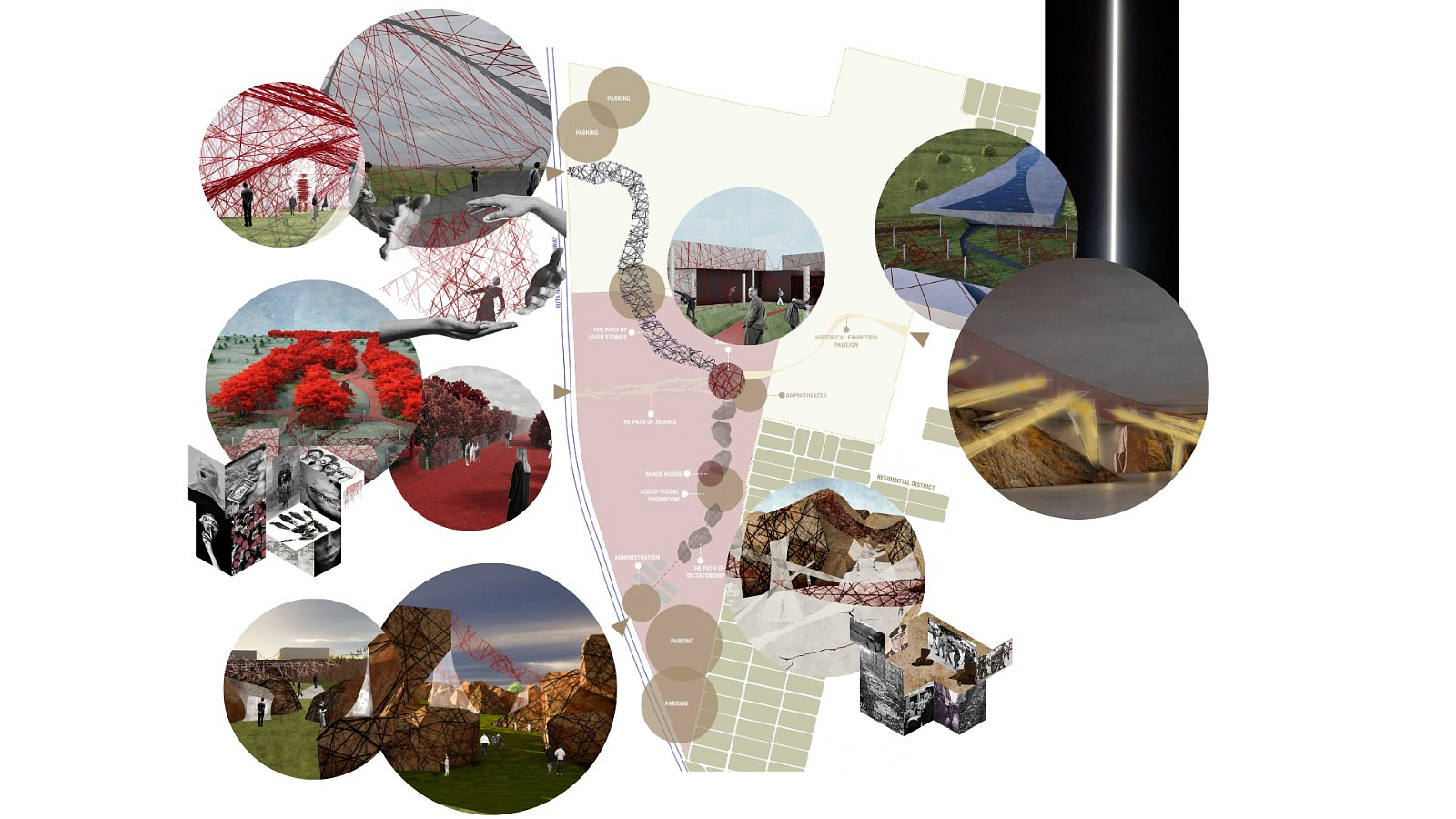
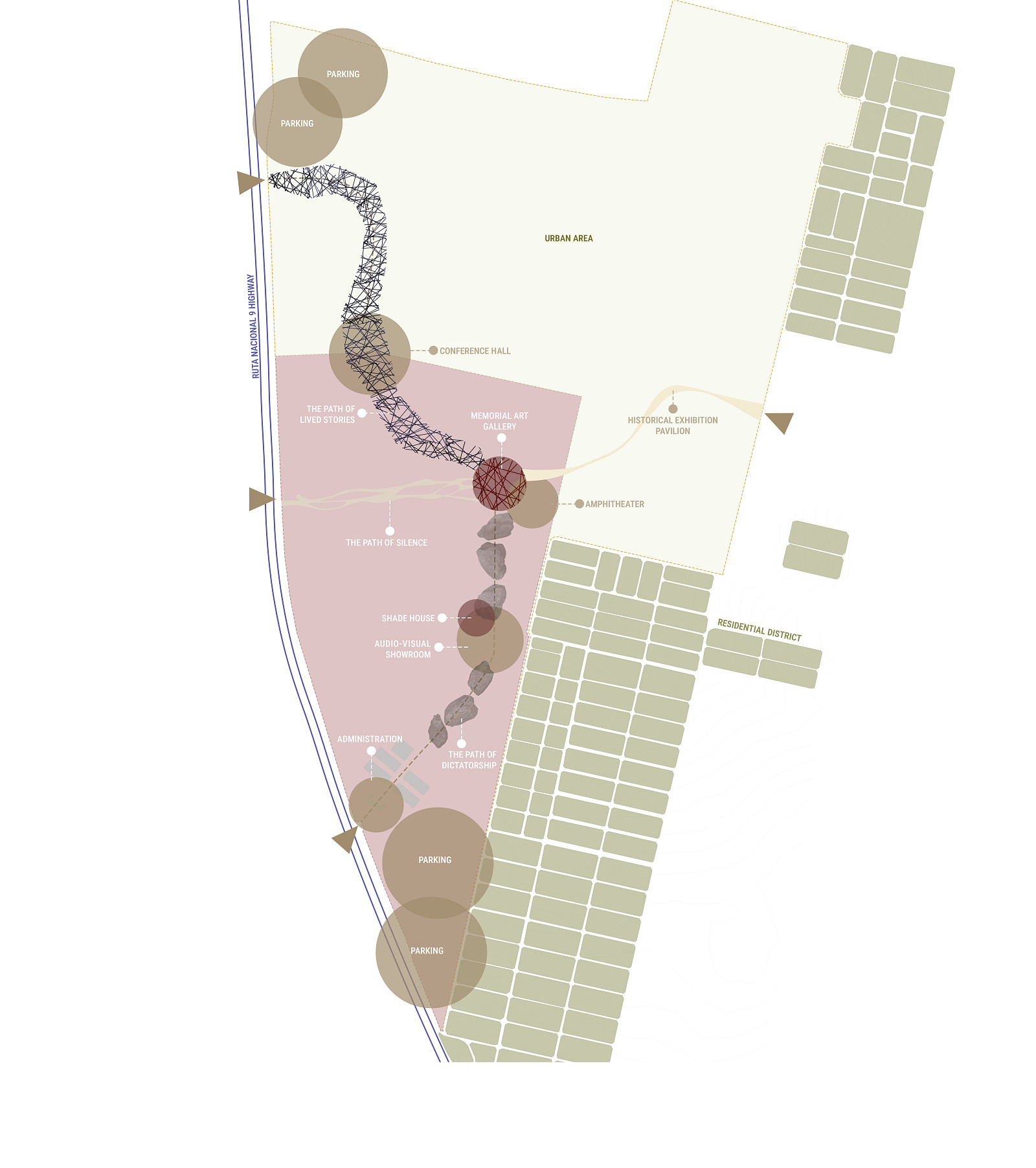
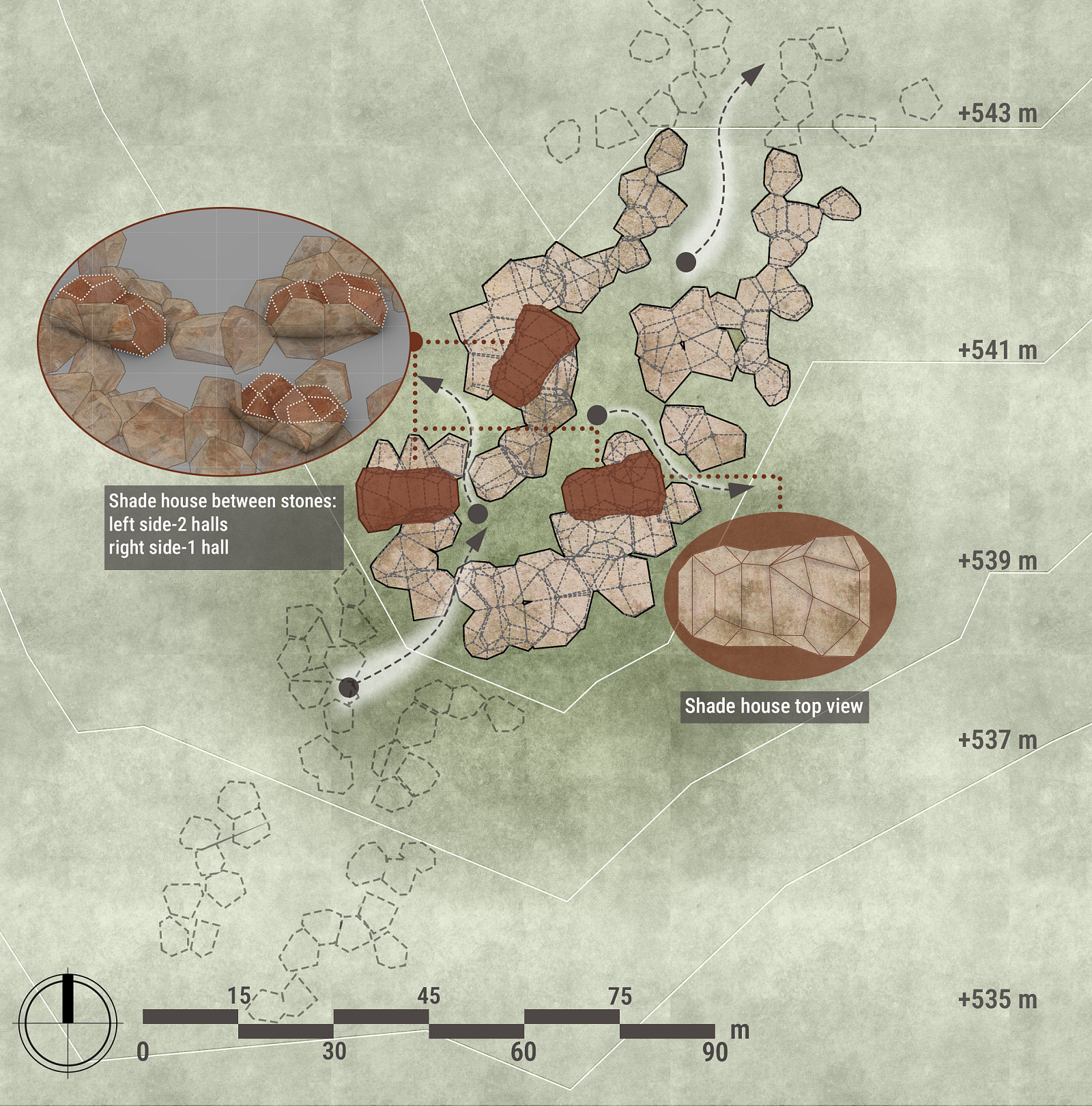
The functions within the area are situated along routes that converge at a singular point. The trajectory of dictatorship originates from the lower echelons of the territory. This narrative illustrates the perceived invincibility of the dictatorship, which ultimately succumbed due to the actions of the populace, resulting in their salvation. This path illustrates the sacrifices made by individuals to effect the downfall of this dictatorship. Memory encompasses not only that which was perceived audibly and visually, but also events that transpired yet remained unarticulated and unexpressed. Located centrally within the territory, to the left, is the Path of Silence. It presents the viewpoint of families who have experienced the loss of a family member or have a missing person. Despite the families' inability to express their anguish, the blood continued to flow unabated. Consequently, this path was flanked by crimson trees, symbolizing the profound anguish the families were unable to articulate. The uppermost path, being the most extensive, narrates the experiences of the inhabitants here. The suffering, anguish, and demise experienced on this planet. This path links the narratives of individuals who liberated themselves from their confines with those tales that will eternally remain buried. It also links the narratives of the vocal and the muted, guiding some towards liberation. The final aspect pertains to the state's indifference towards the prevailing circumstances, specifically the existence of torture and detention facilities. The paths themselves encompass areas designated for diverse functions. At the center of the "path of dictatorship," there exists an audio-visual showroom honoring the victims, who perished during the dictatorship in Argentina. Additionally, three rooms designated for a shade house are situated among the stones, integrating harmoniously into the environment. The "path of lived narratives" also includes conference rooms. These are situated at the center of the pathway, and upon departure, visitors are presented with two options: to retrace their steps or to delve into the historical significance of this site and its former detainees.
Spatial organization
The spatial organization is based on movement that continuously guides people along four routes. Each route offers its own perspective and spatial experience. Each route is guided by the story it tells from the perspective of the route.
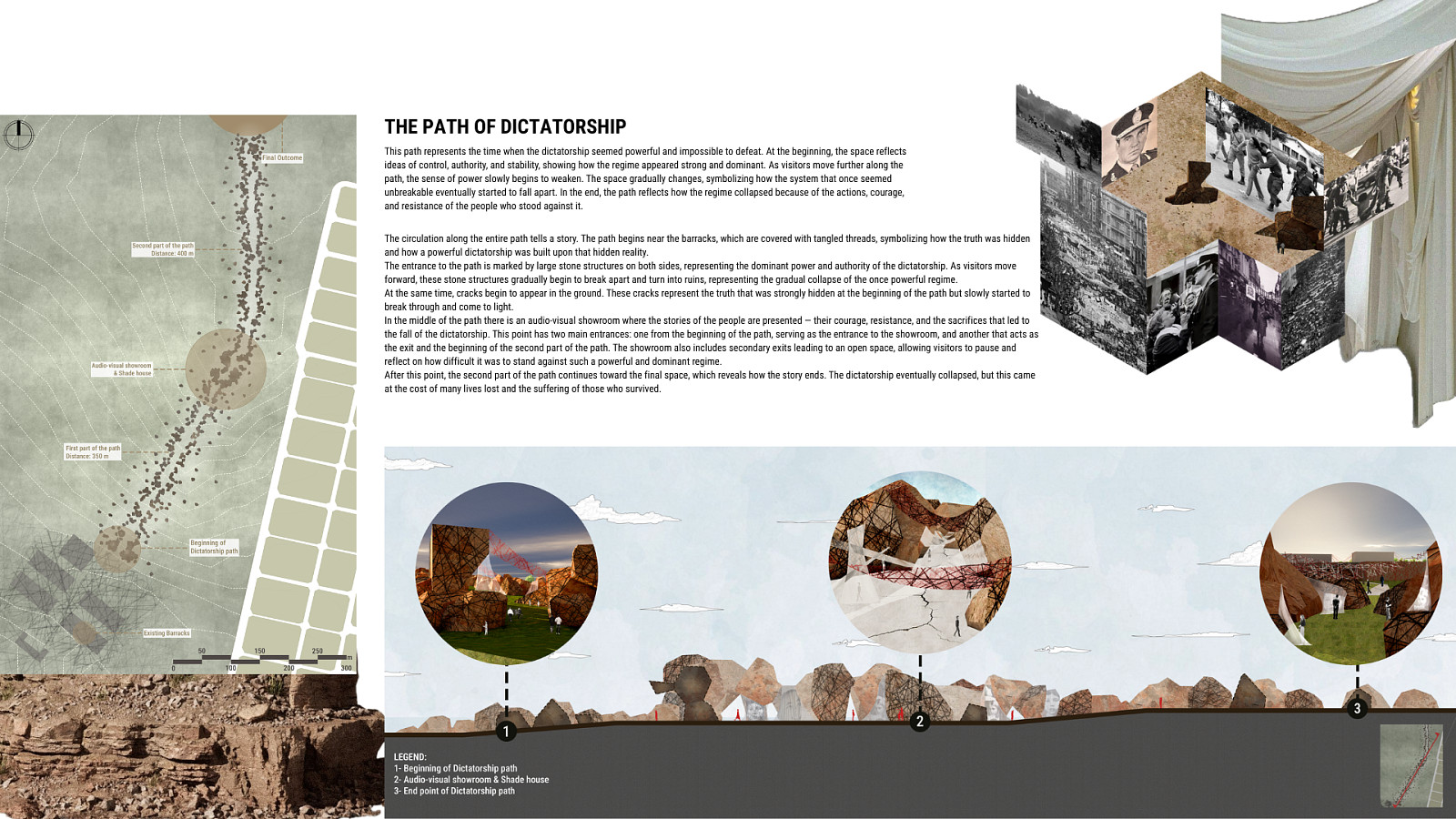
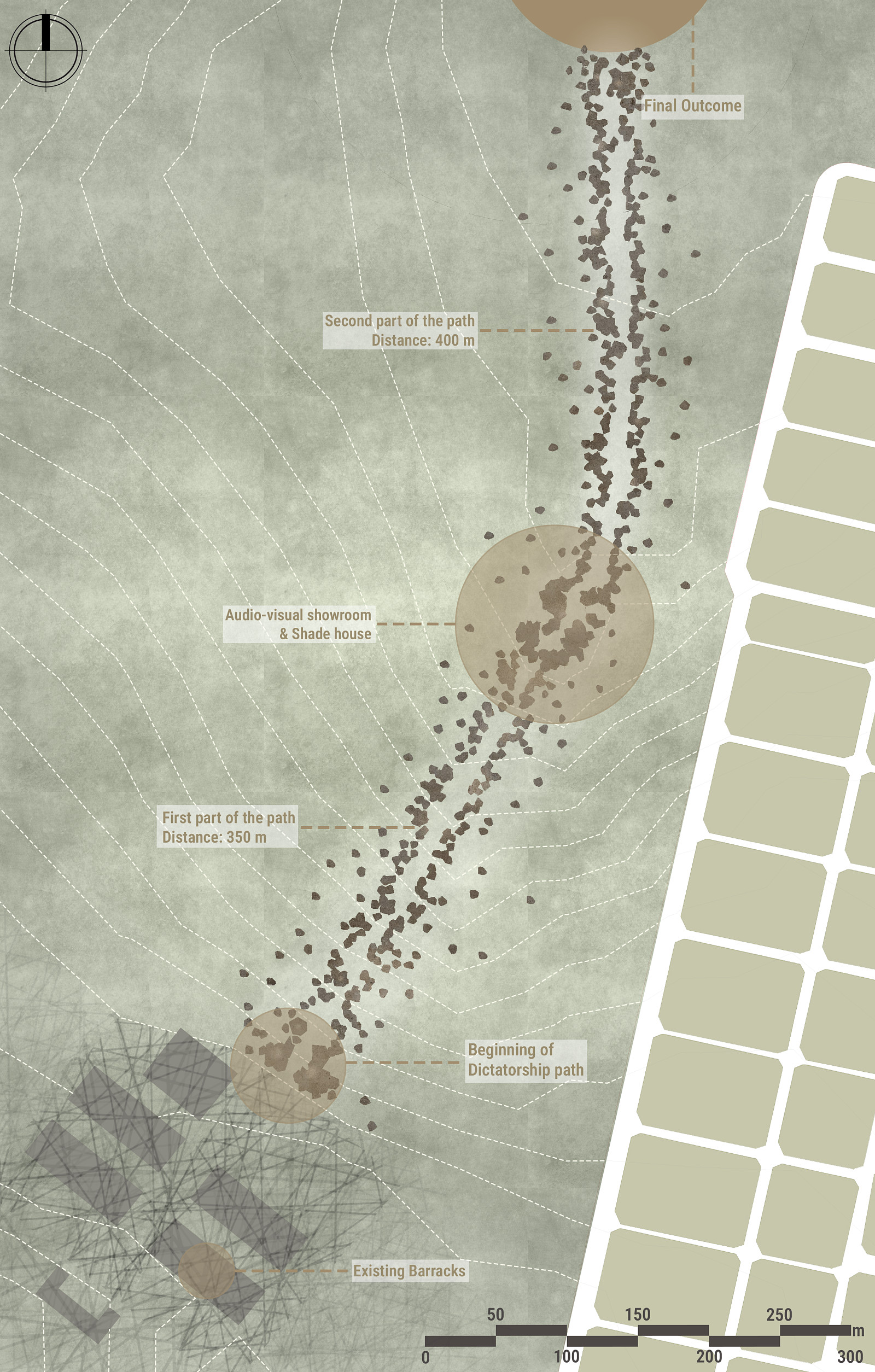
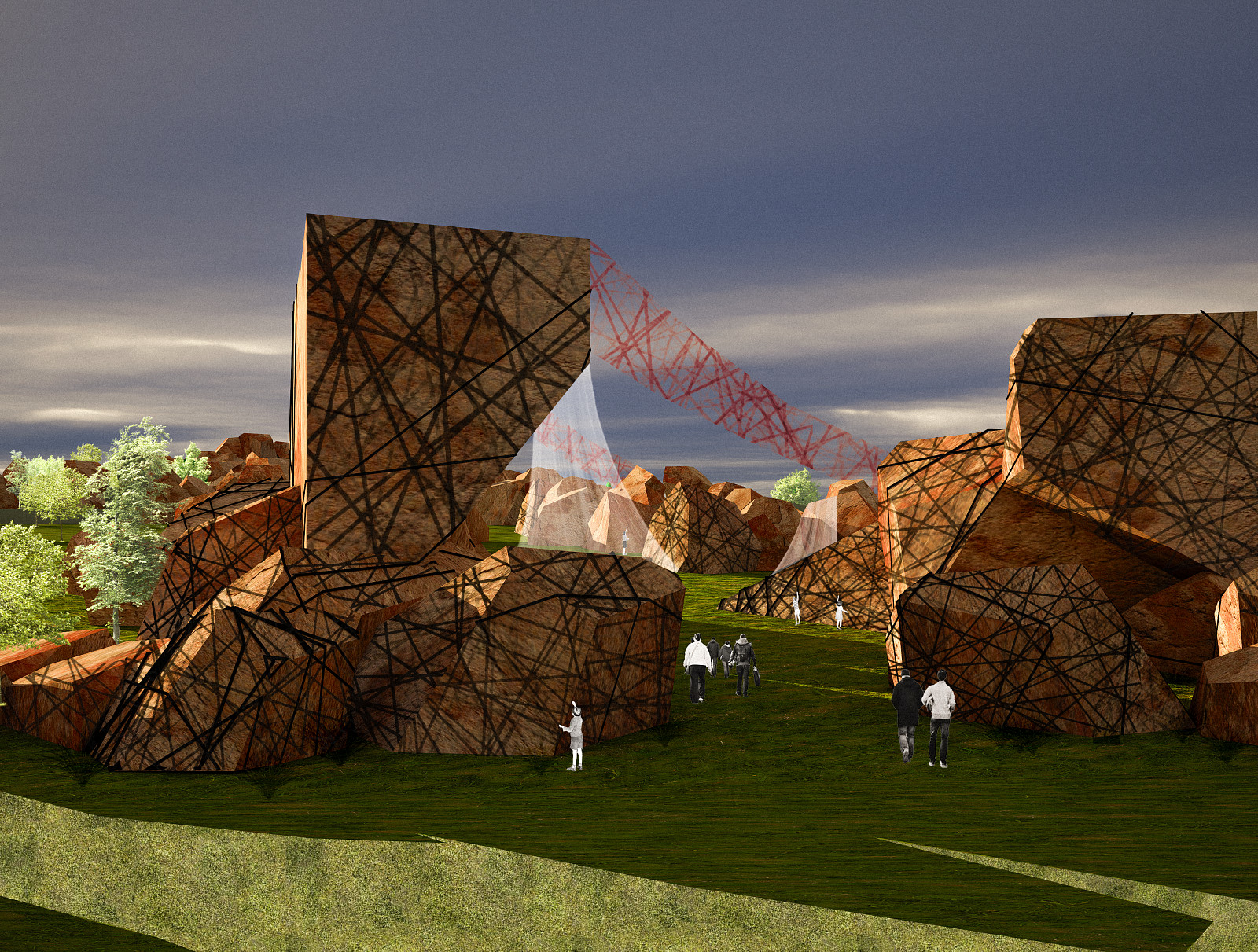
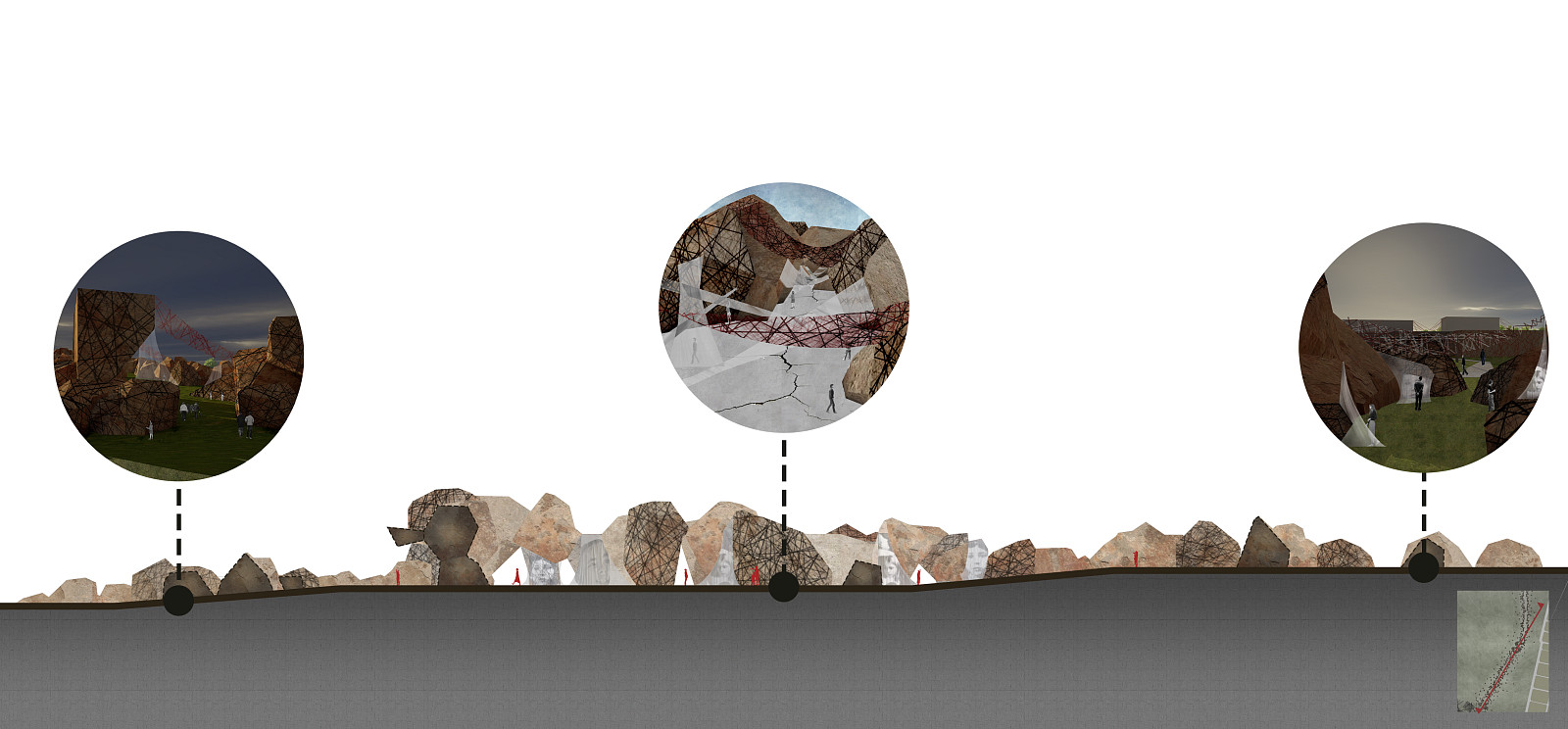
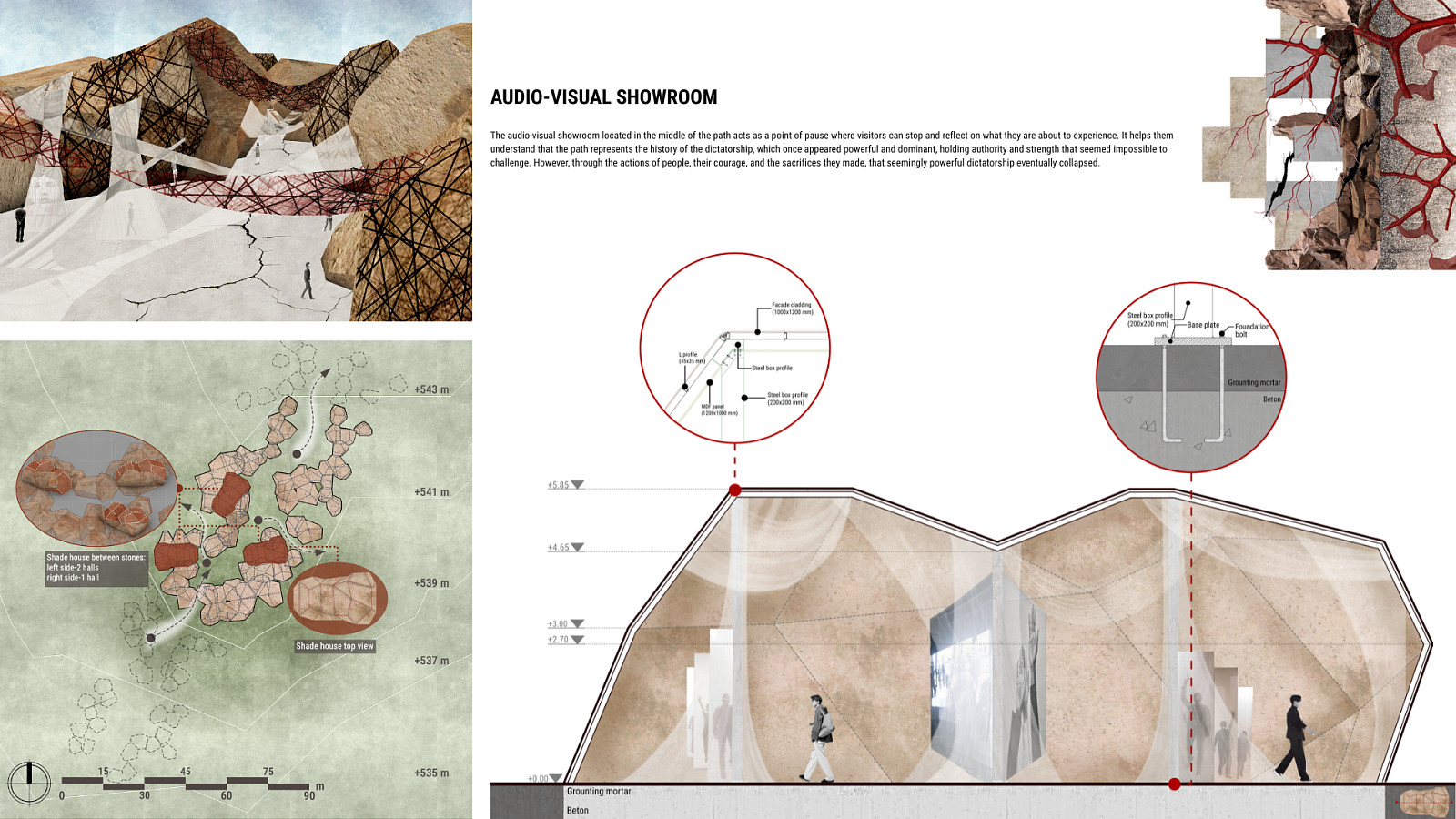
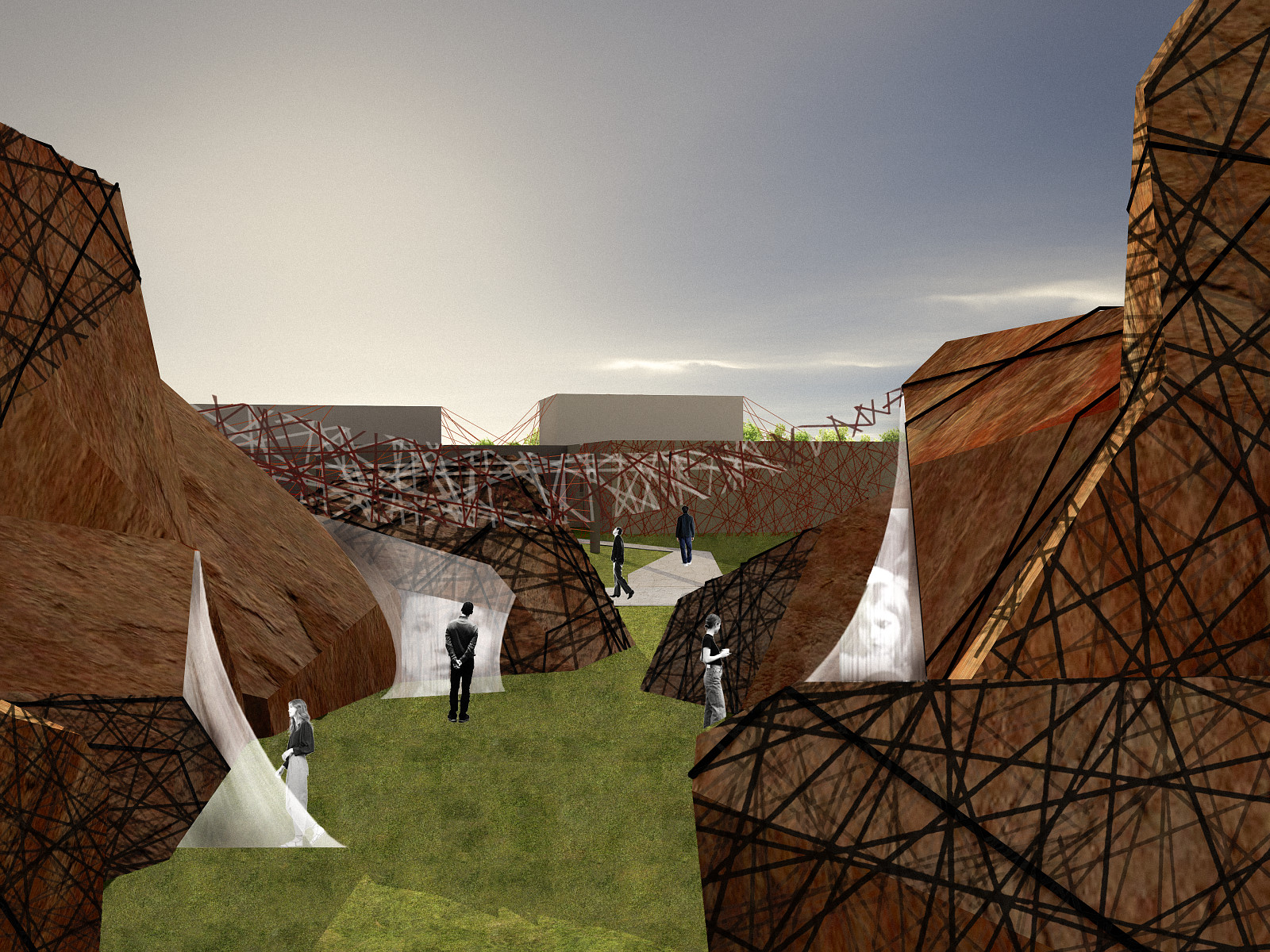
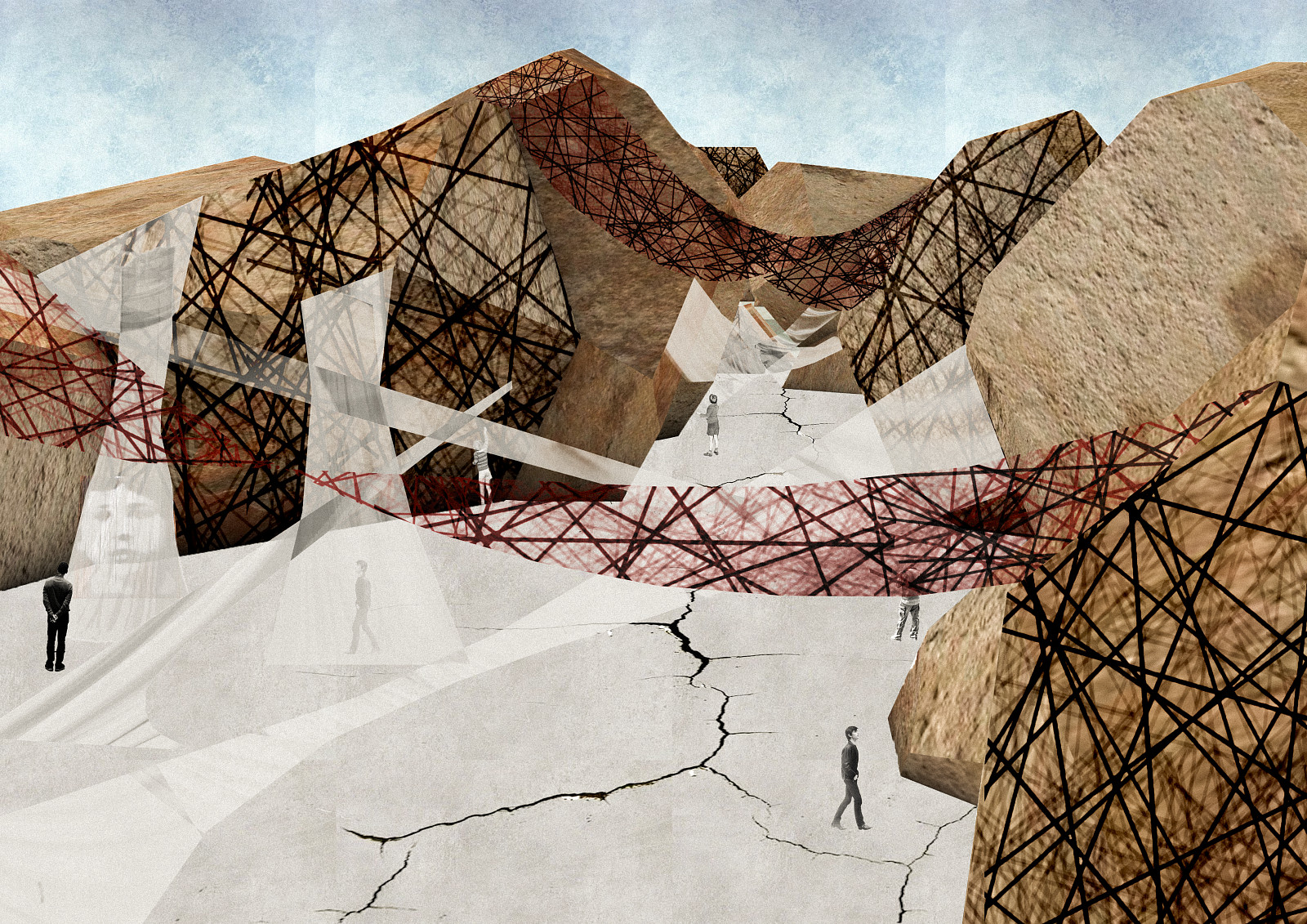
The first path is known as "The Path of Dictatorship." It portrays the despotism that followed Argentina's 1976 military takeover. This dictatorship, which appeared to be an unbreakable system, ruled over the populace. However, during Argentina's "Dirty War," a military dictatorship, opposition parties started to emerge. The "Mothers of the Plaza de Mayo" campaign was one of the key players, calling for information, the truth, and the whereabouts of the "disappeared”. The authoritarian regime's authority was weakened, and the state became unstable as a result of public pressure and international criticism. As a result, the path leads to the ultimate result via the dictatorship's ruins. There are three sections to the route: The first section starts at the lower half of the region, close to the barracks. Large stone arrangements that symbolize the dictatorship's unwavering authority open the tour. As people continue along the path, destruction and ruins begin. At the halfway point, an open-air audio-visual showroom opens. It features exhibitions and screenings about the people who sacrificed their lives to bring down the dictatorial regime. The open-air showroom is surrounded by the ruins, which create a form of three shade houses. Within these, there are halls of darkness, filled with rays of hope—those whose lives were sacrificed. The second part of the journey then leads to the final outcome: one unchanging truth.
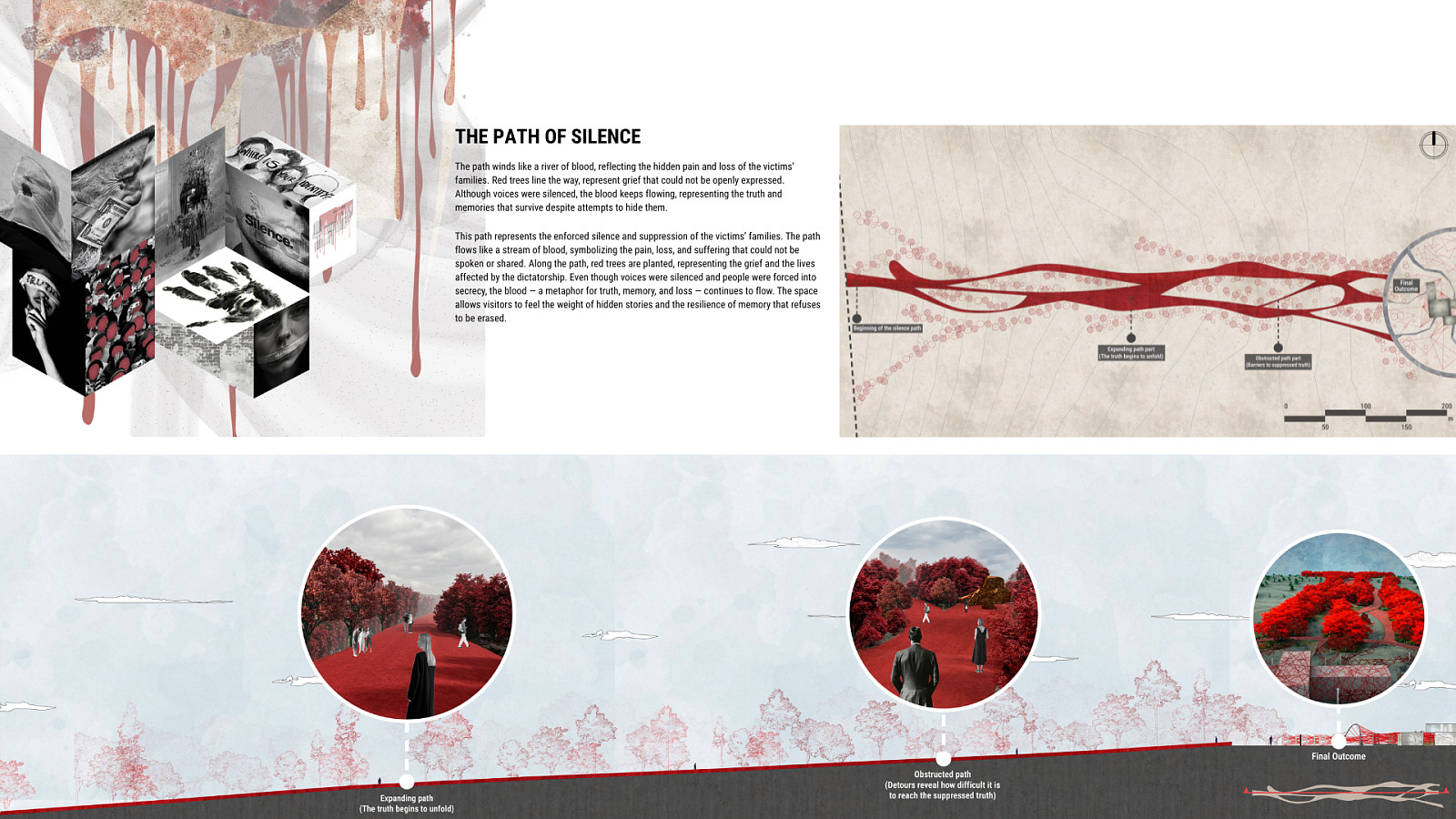
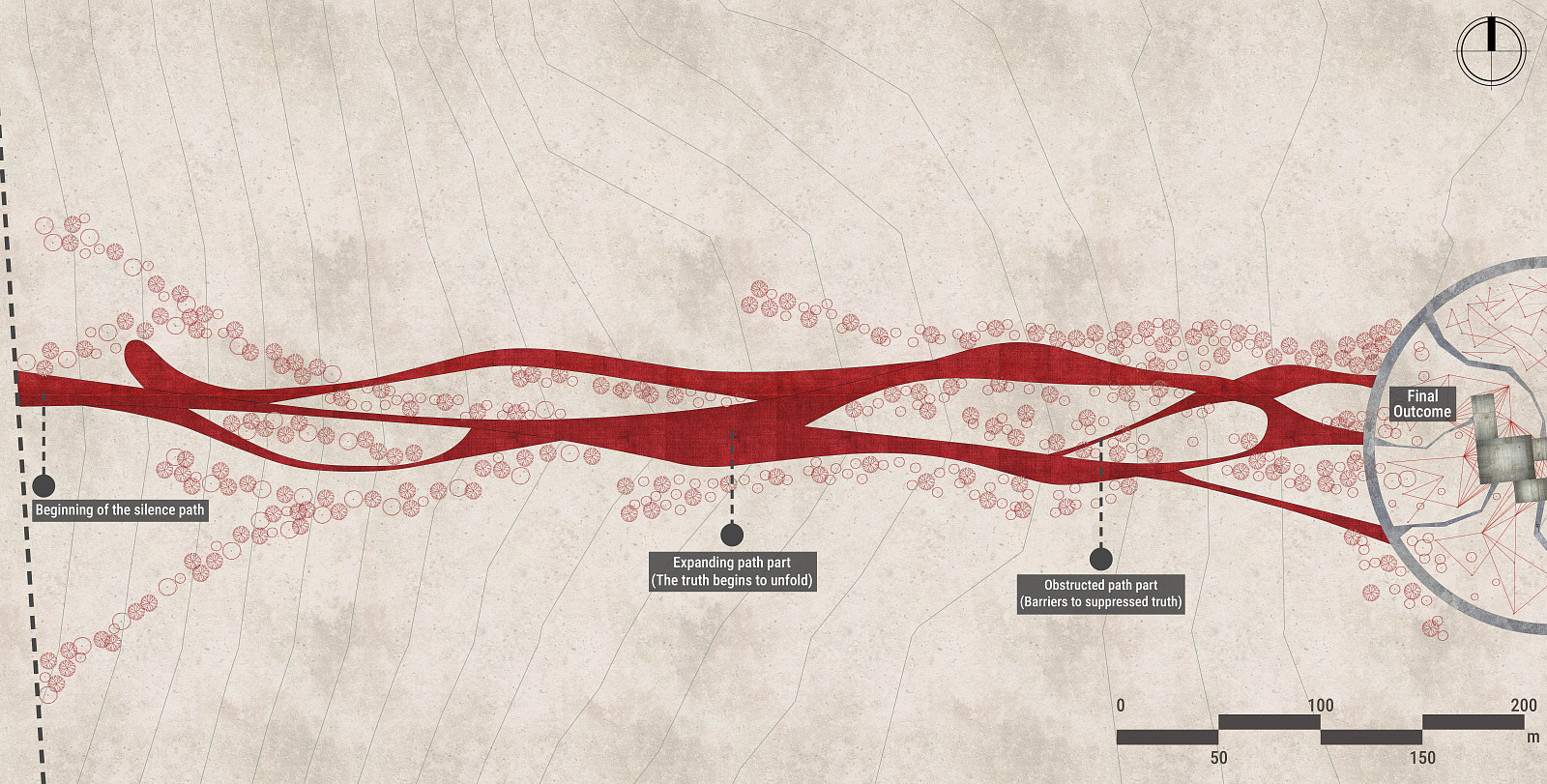
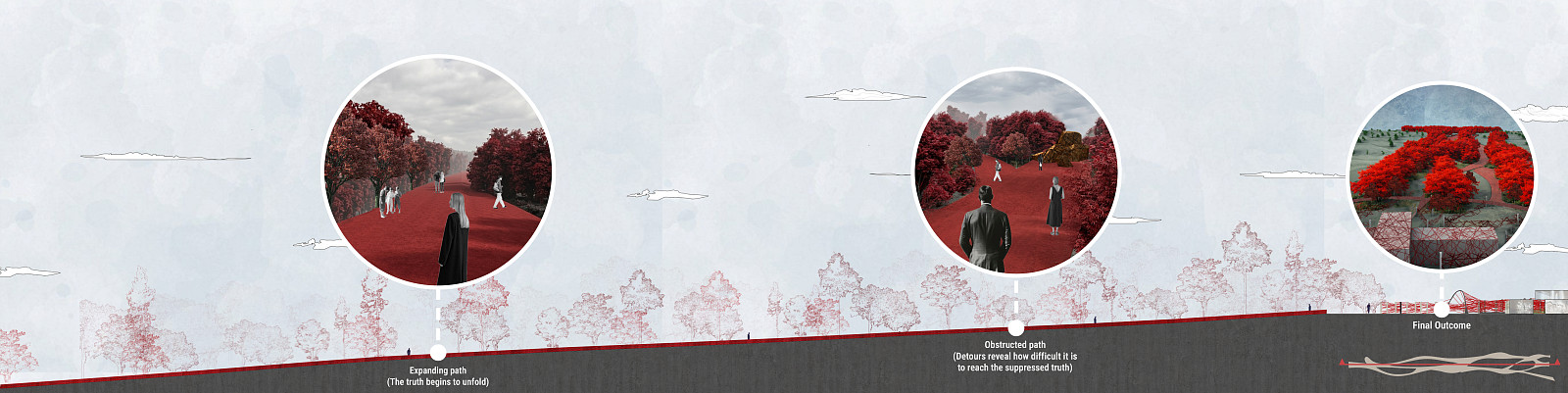
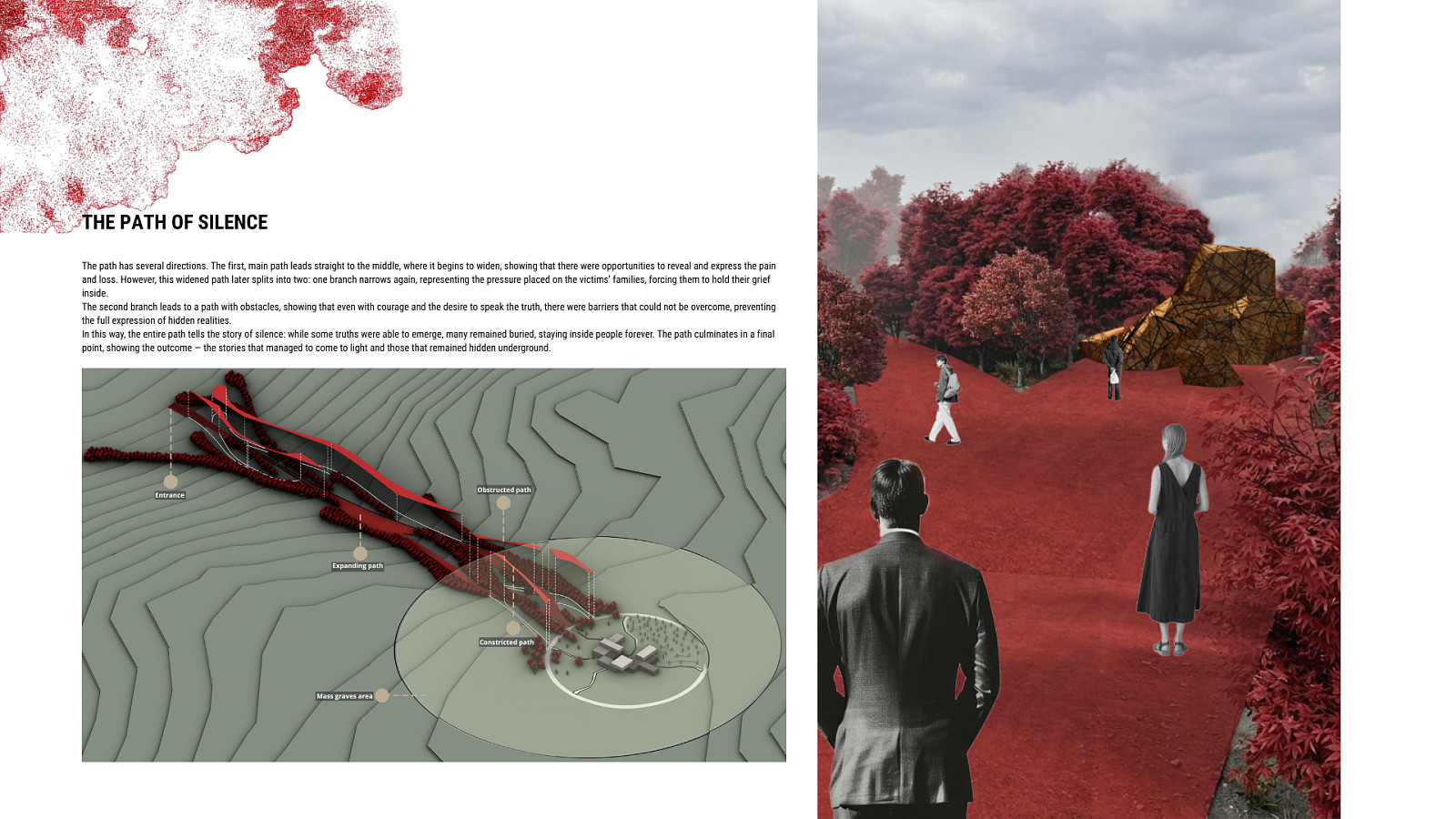
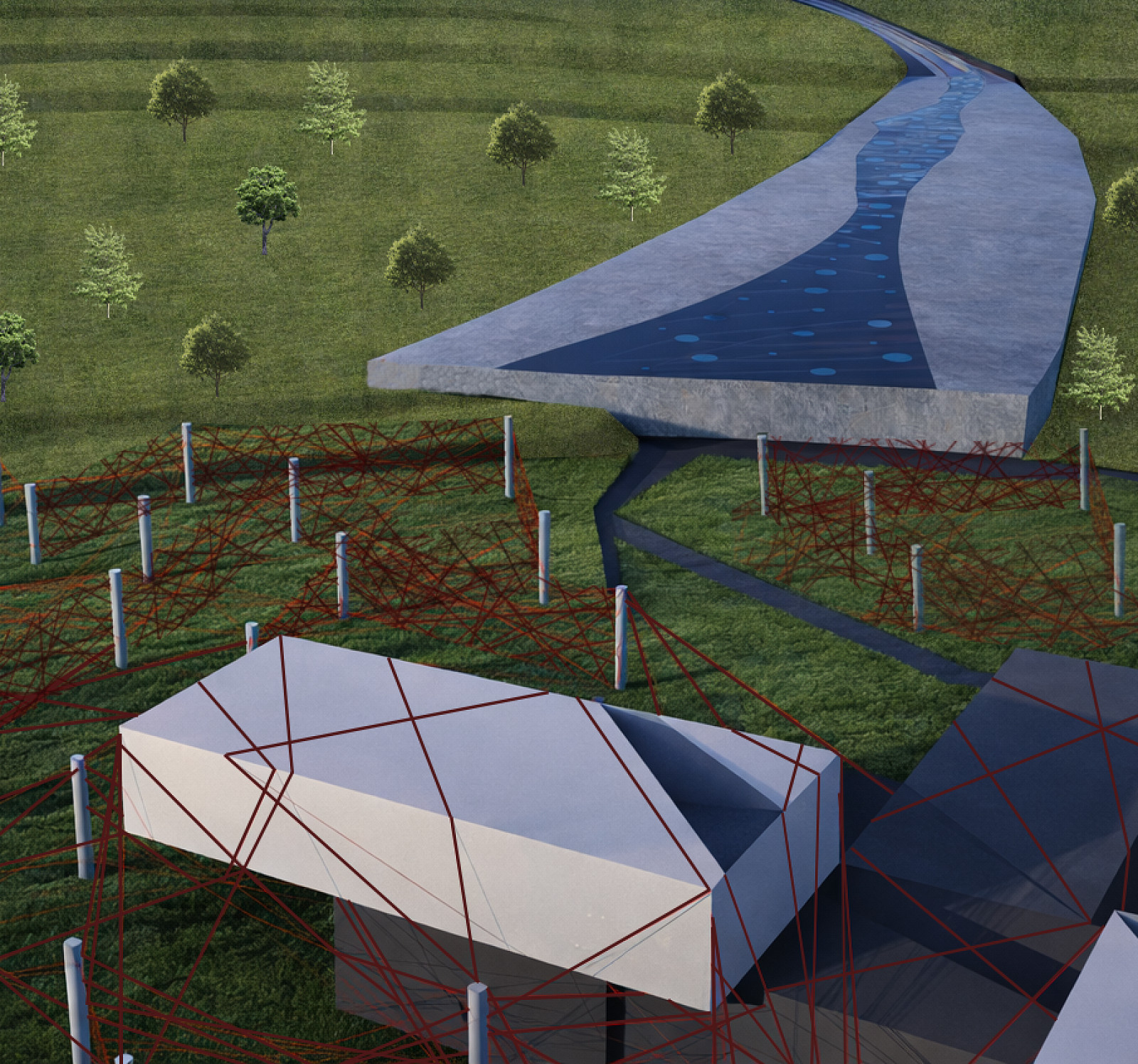
The second route is The Path of Silence. This route tells of the losses suffered by the people. Families who lost members of their family. It tells of the pain and loss these families endured, and what they were unable to voice or show to the public. During the dictatorship's rule, 30,000 people went missing, that is, forcibly "disappeared”. The families of the missing were unable to learn what had happened to them for years, and attempts to speak publicly were suppressed and considered a threat to the regime. The dissemination of any information against the regime or public expression was controlled by the dictatorship's military junta. In other words, the relatives and families of the victims were forcibly isolated, as even the slightest action, such as filing a missing person report, was not permitted, and they faced pressure and threats for any expression of concern about the loss of a family member. This path leads along a trail shaped like flowing blood, indicating that although the junta prevented families from speaking out about their losses, the blood continued to flow, with disappearances and executions continuing. This path leads in several directions, each of which is surrounded by a space of red trees. Red trees (Japanese maples) surround the path, creating various open and narrow passages. The trees represent the pain that was long suppressed. As the path splits into several passages, spaces are created that demonstrate how difficult it was to express the family's pain. One passage is wide and open, with no blocked sections, indicating that the pain, after enduring so much hardship, was finally able to be revealed. The revealed truth, hidden in darkness for years, is surrounded by redness (Japanese maples), indicating a time when it was impossible to speak out. The second passage leads into a narrower path, where the trees constrict this path, demonstrating feelings that had long been suppressed and that they are ready to break through. The third passage is a blocked passage where a person cannot continue. This indicates that during the dictatorship, the loss could not be expressed and remained forever within the victim's family. This passage cannot reach the final point, so one must turn around and take another open passage. The final point of all passages is the same unchanging truth located in the center of the territory, which is the connecting point of all points of view.
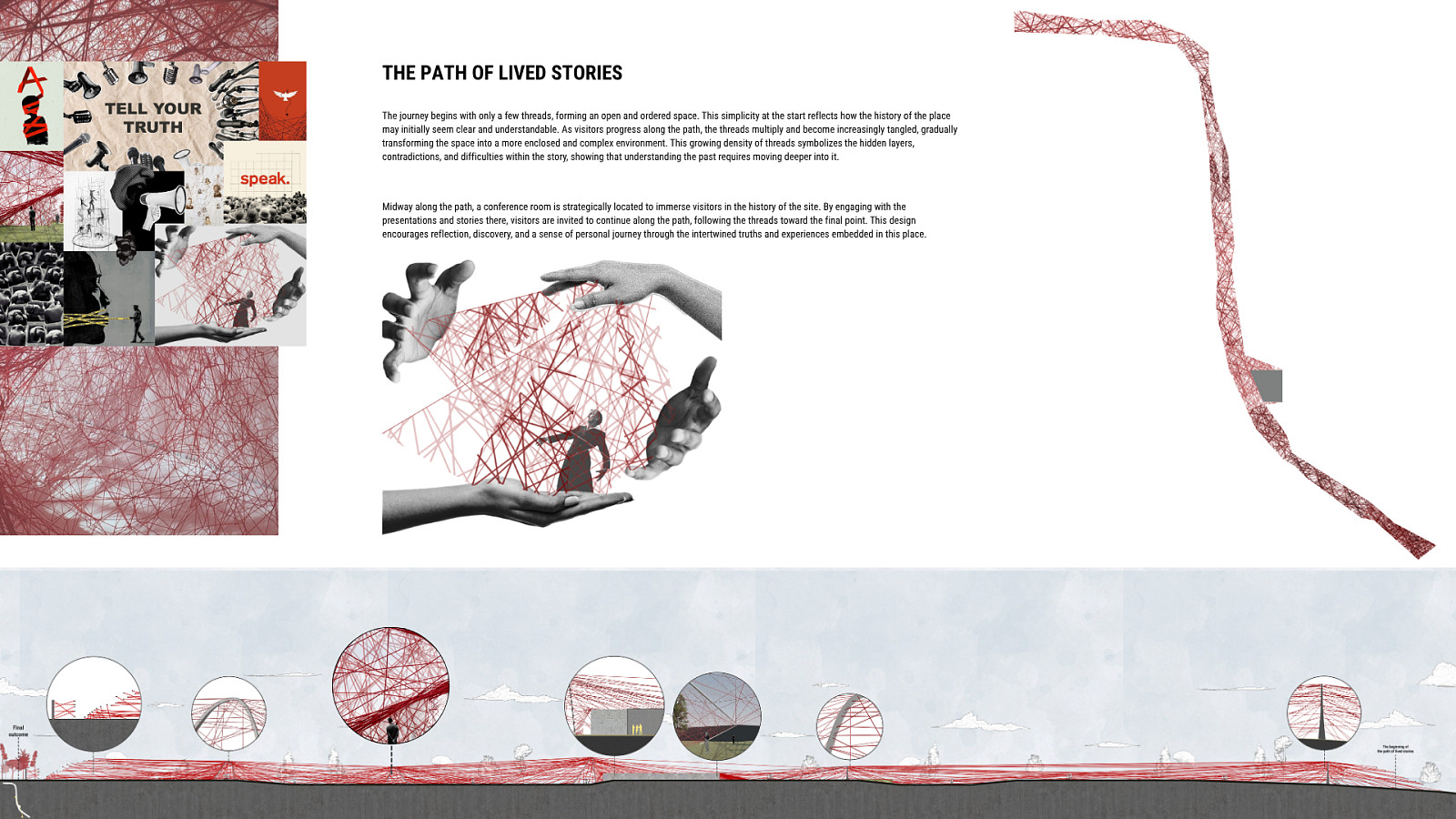
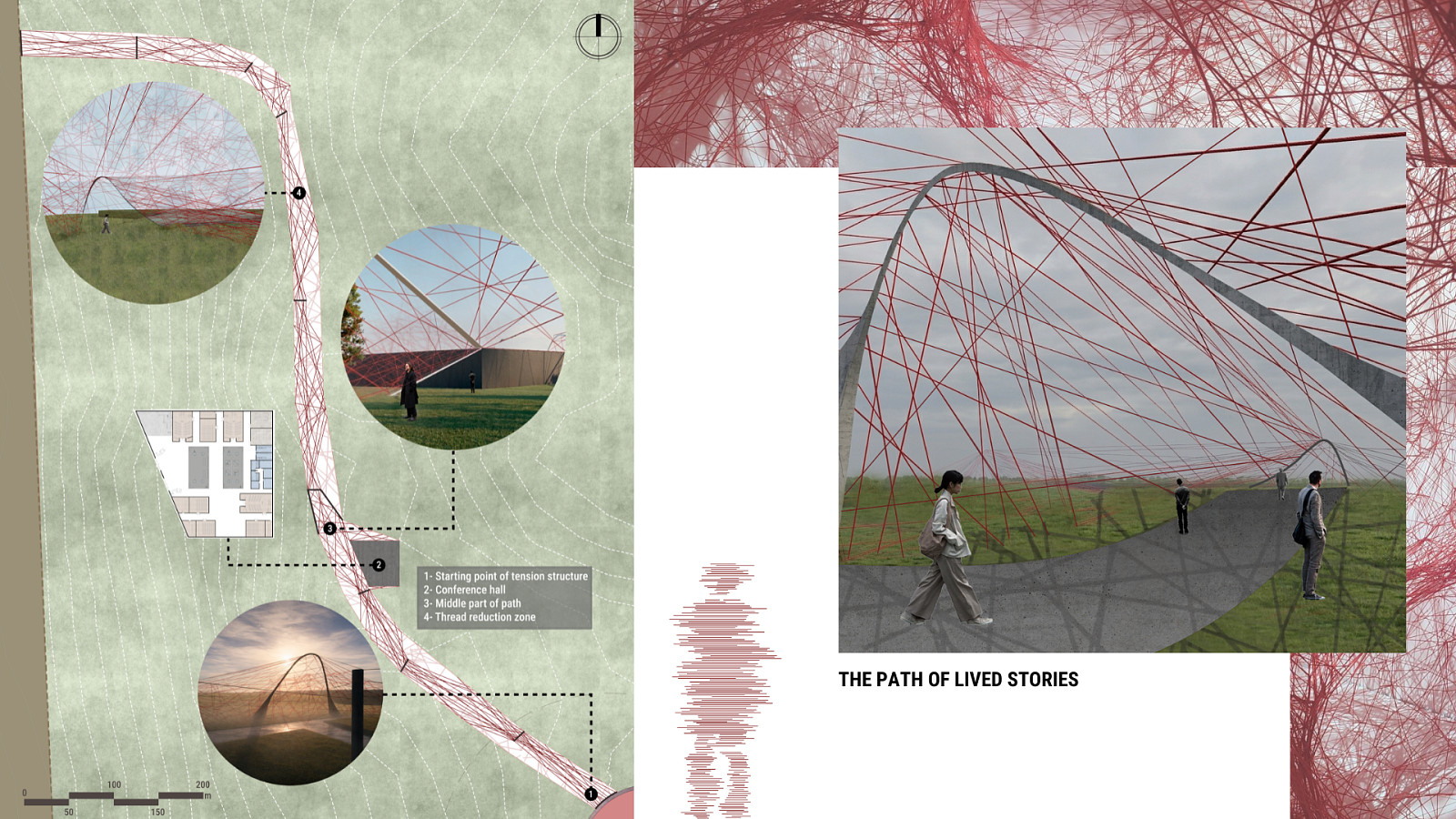
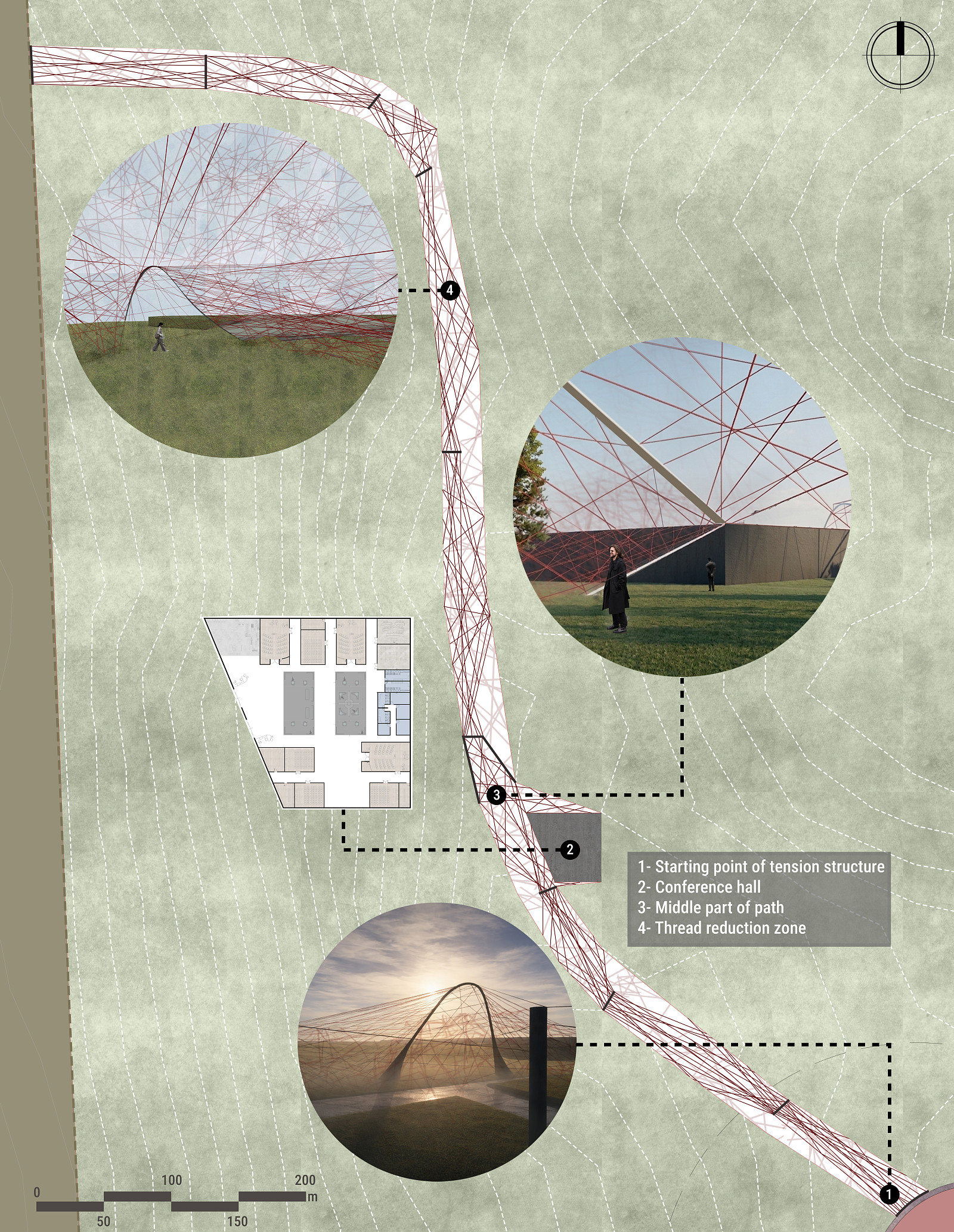
The third of the routes, "The Path of Lived Stories," tells the stories of the victims, their difficulties, their experiences in the detention center, and how it ended. In this detention center, people were held without trial, completely isolated from the outside world in small 95-centimeter cages. The conditions were cruel and inhumane, where the victims lived in constant fear and uncertainty about whether they would live or be executed. Many of the victims were subsequently executed and secretly buried in mass graves. Not only their bodies were buried, but also their stories and experiences. A double murder took place here: first, they physically killed and stored them, and the next step was to erase the name of the murdered person from the lips of their family and the public, as media control prevented their families from speaking out. Along this path, people are guided by threads that lead in sharp turns, revealing the very uncertainty the victims felt about what would happen tomorrow. The threads create the passage that leads from the final point to the exit—that is, the escape of survivors and rescued people to freedom. But the threads don't stop at the passage; they continue to the final point, connecting the experiences of those in the detention center, the rescued people, their stories, and those who will remain underground forever. In the middle of this path is a conference hall, where the exit route gives those leaving the conference two choices: either finish their business and return, or finish what they came for, learn the history of this place, and delve deeper into the victims' experiences. The threads will be constructed as a tension structure, with arches serving as load-bearing and connecting points, through which the threads will run to the next arch. The threads' directions also change: in the area approaching the final point, they will be scattered and numerous. Further from the final point, the threads flow more directly toward the arch itself, and in smaller numbers. This process reveals that history seemed incomplete without knowledge of the stories that unfolded inside the detention center and the existence of stories that remained underground forever. And as one moves through this passage and approaches the final point, one uncovers the process of what the victims experienced and learns the story of how it began and how it ended.
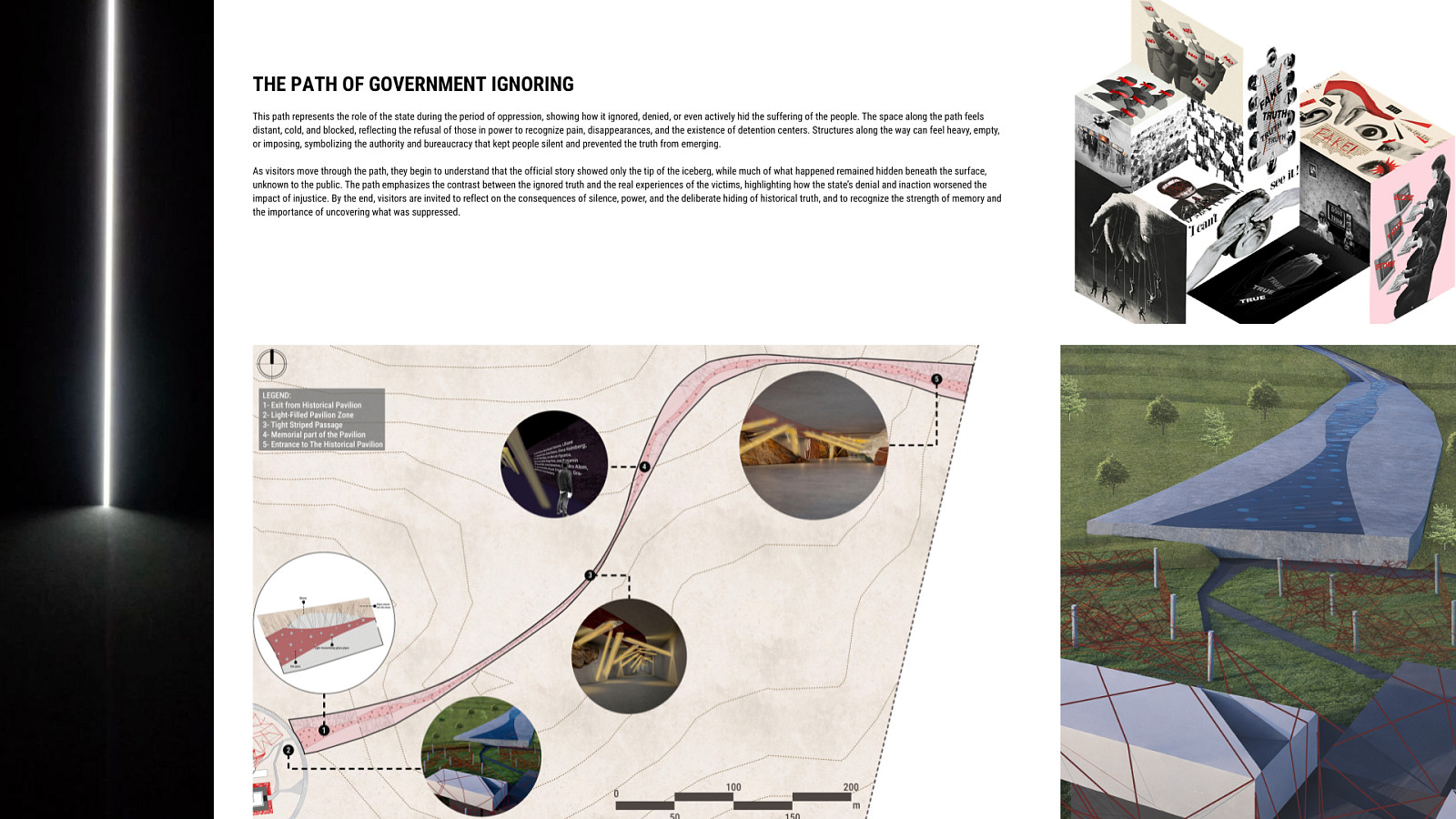
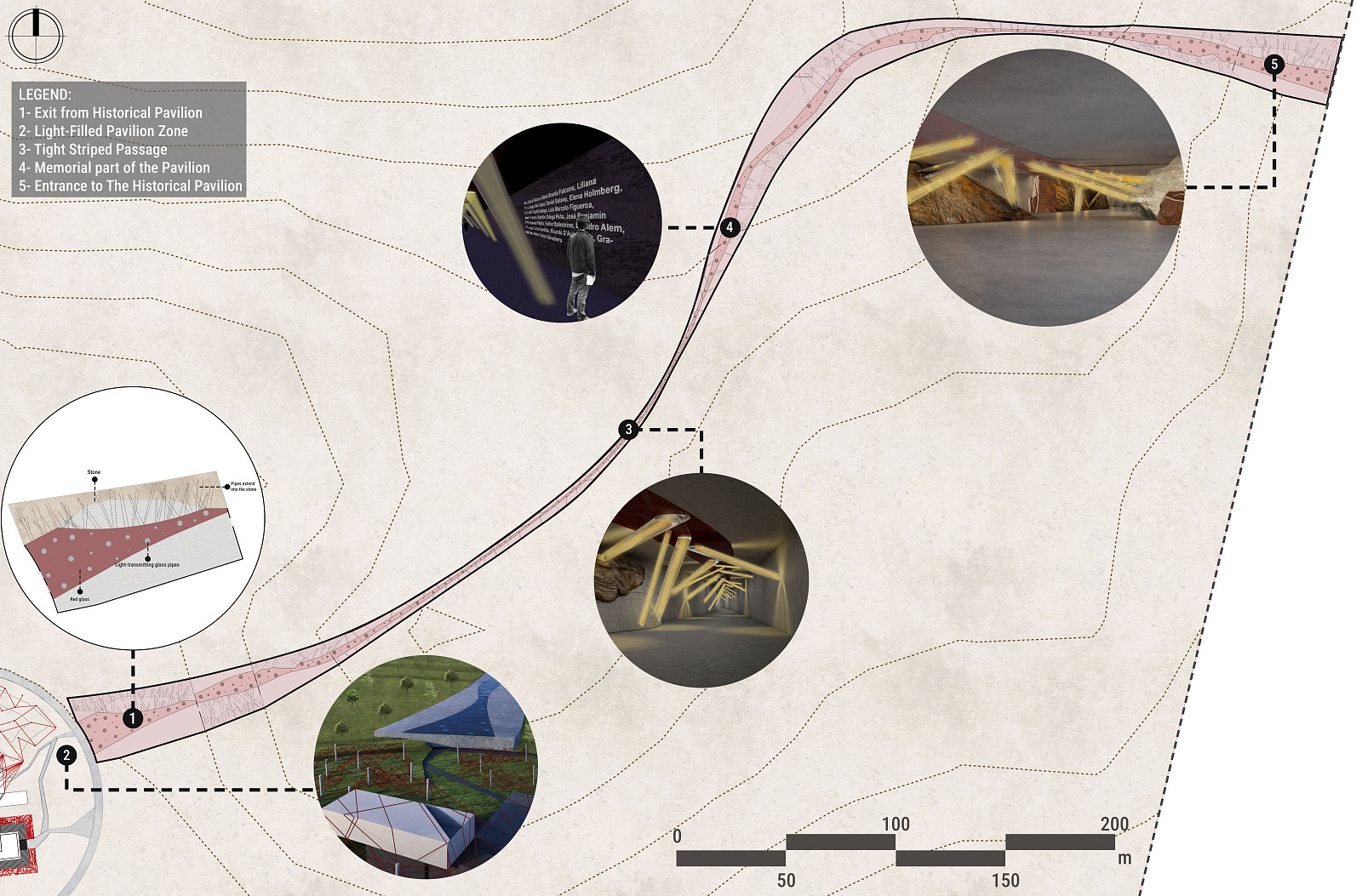
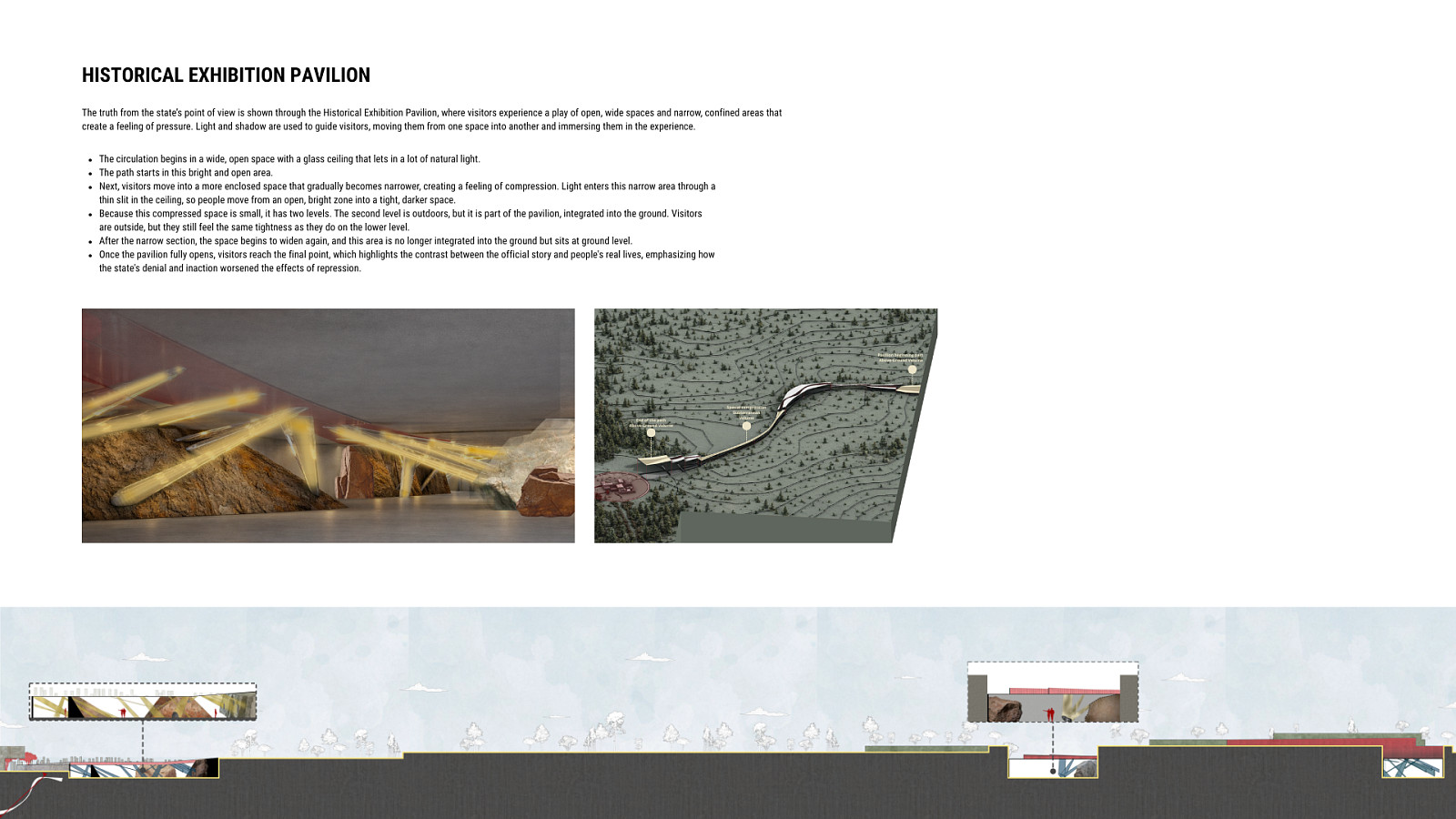
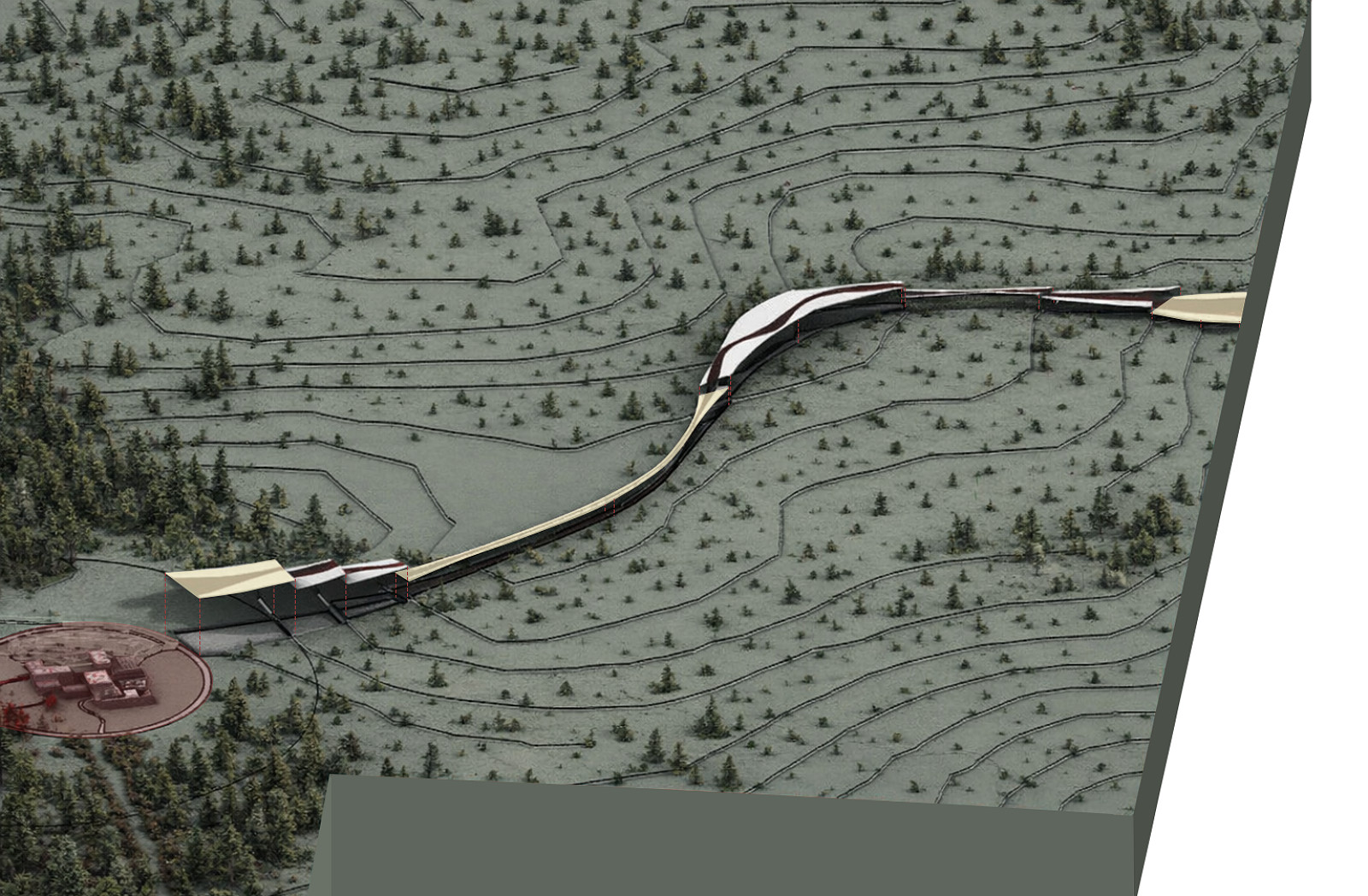
The last of the routes is The Path of Government Ignoring. This route demonstrates the disregard for the existence of detention and torture centers in Argentina. People were denied any information because the government itself refused to acknowledge the existence and occurrence of kidnappings. This policy was used because the state did not want to take responsibility for all of this. The placement of a historical pavilion along this route, which tells about these ignored times, is the main idea of what visitors should learn.
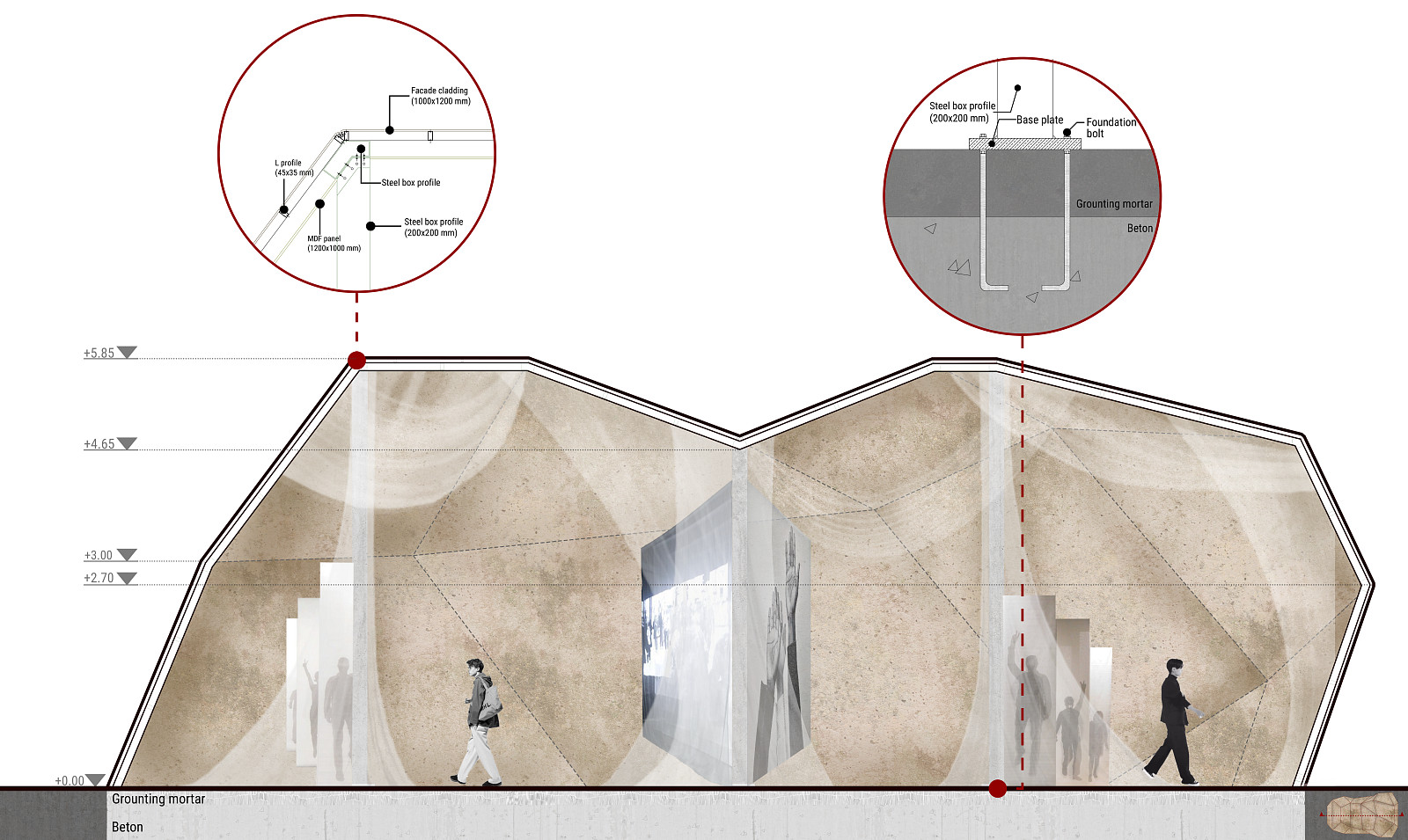
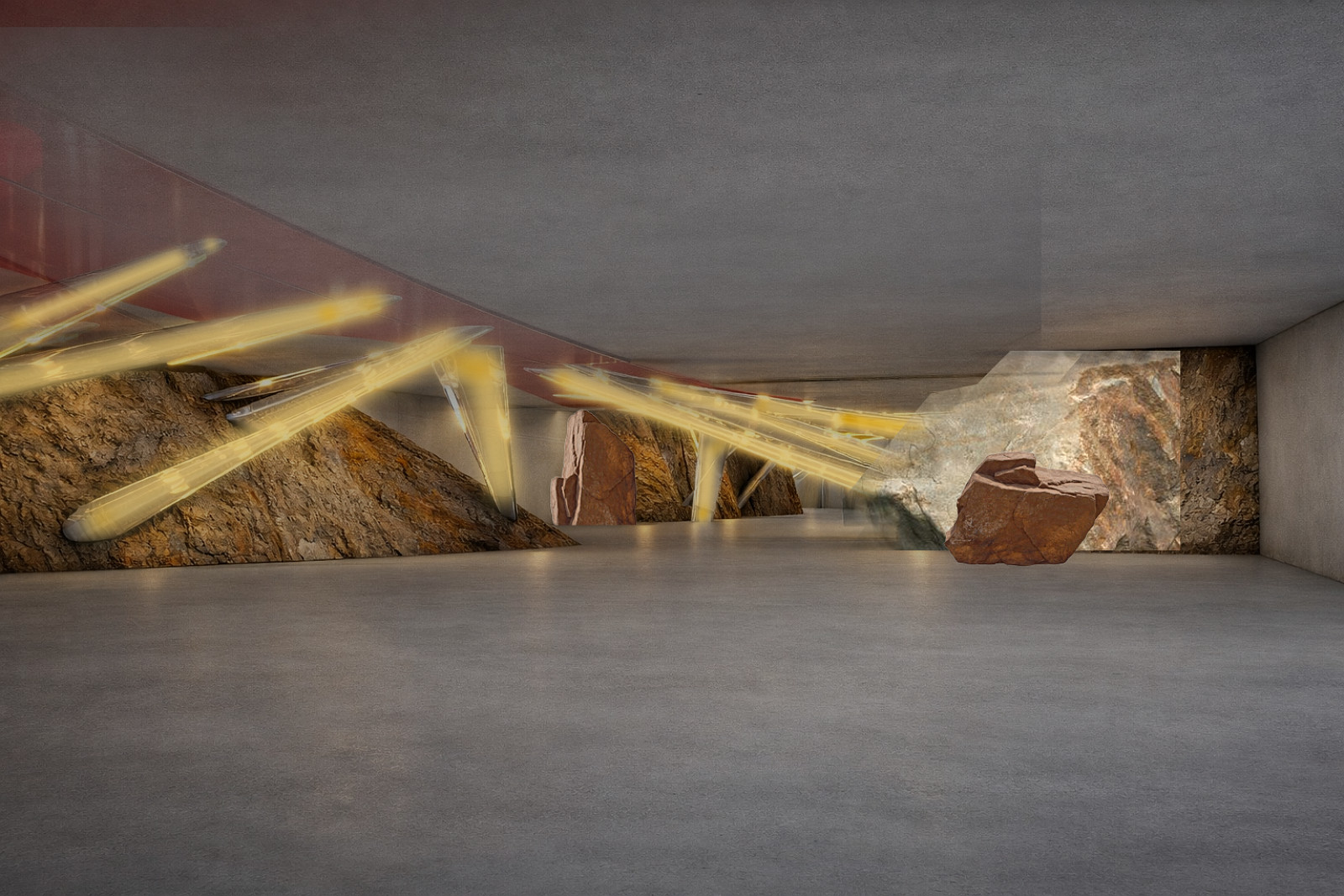
With this system, the state controlled the population while simultaneously erasing traces of the crimes committed, excluding its own involvement. The project's route consists of a closed historical pavilion that continues to the end of the route. This pavilion demonstrates that people don't know all the crimes committed by the state, but only the tip of the iceberg. Therefore, part of the pavilion is underground, and only some parts are at ground level. In the underground parts, only the tip of the part is visible. Within the pavilion itself, a play with space occurs: a transition from compressed spaces to open and expansive ones, and also a play with light and darkness. Since many parts are located underground, the interior is also darker, and light enters these spaces through elongated glass forms that extend from the ceiling to the stones on the sides of the pavilion. Thus, the truth ignored by the state will one day be revealed, and the rays of light are a sign of hope, inspiring faith that the whole truth will be revealed in the future.
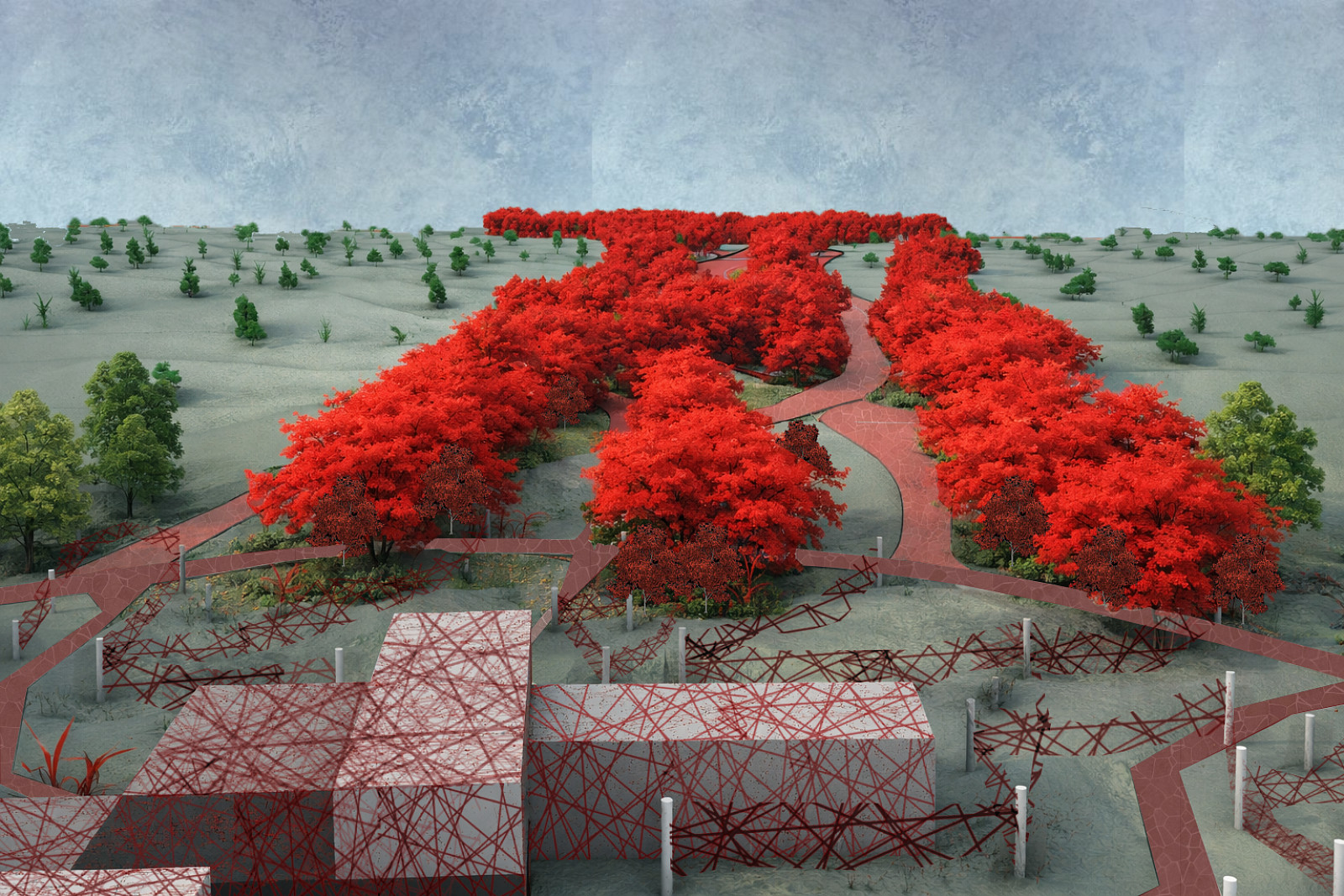
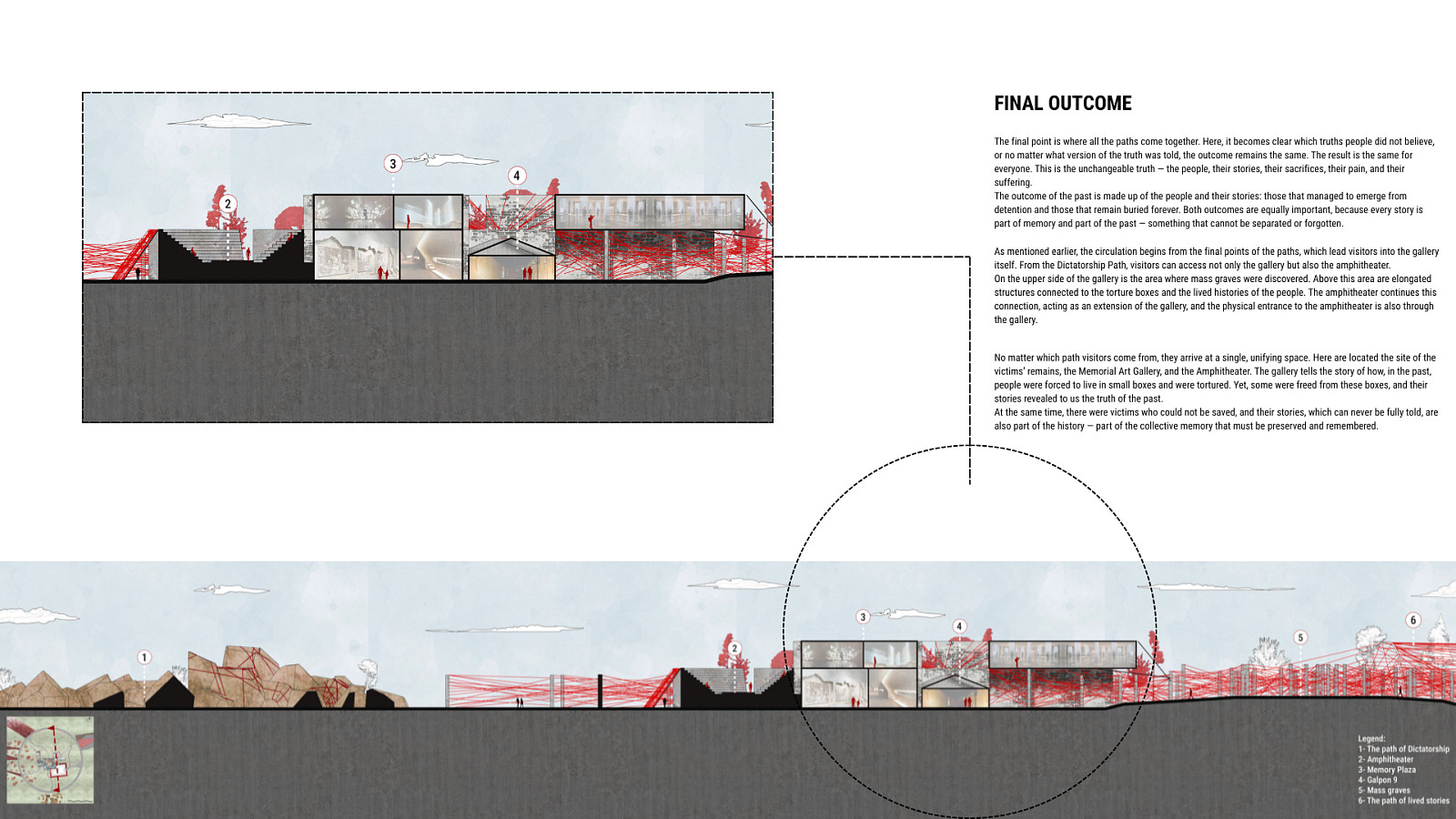
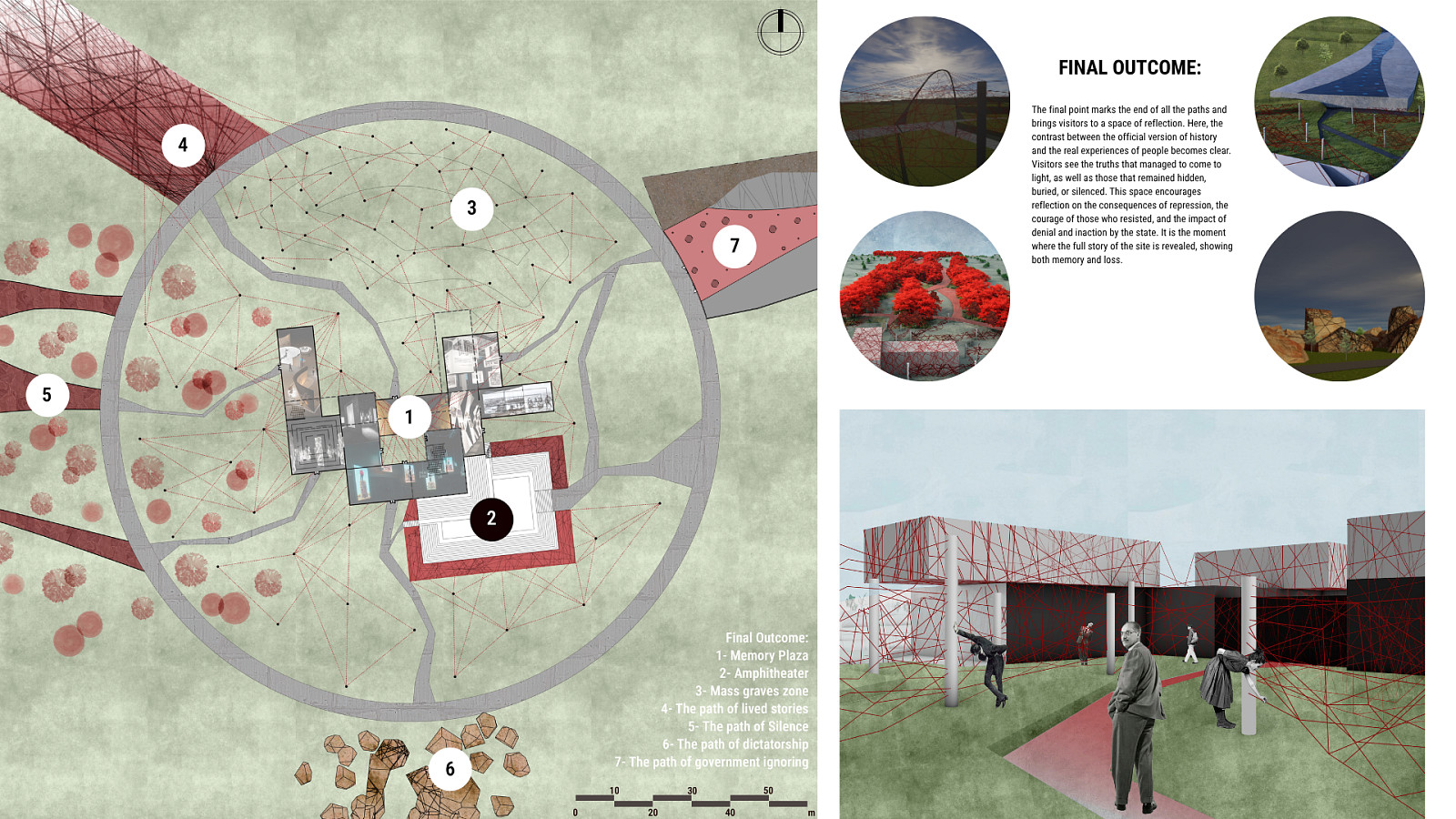
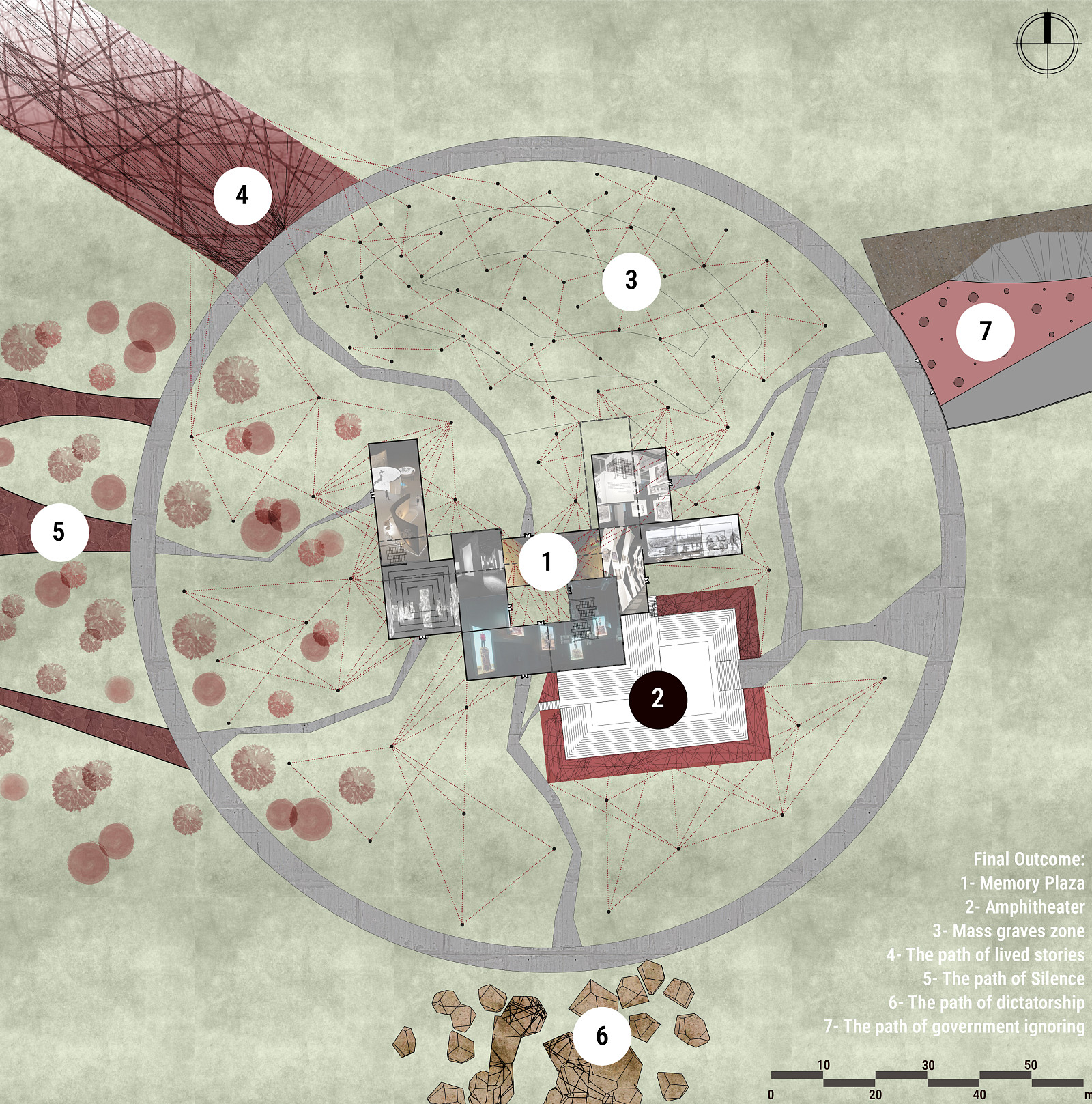
The project's final point represents a space where all the routes converge, uniting different semantic scenarios and perspectives into a single whole. All the routes leading to this final point differ in form, movement, and length, and converge toward a single, unchanging conclusion.
While moving along four different routes, visitors review and analysis fragments of history, different perspectives on the same past, and it is at this final point that all these fragments form a holistic understanding. One truth is shared by the victims, the victims' families, the dictatorship, and the government. These are the losses of lives, the stories told that managed to escape their confines, and not the stories and lives that remained forever buried. For the route about the dictatorship, this closure represents what people paid and sacrificed to achieve the dictatorship's destruction. For the victims' families, this is an expression of their pain and loss, which the government tried to suppress. For the victims, this is an expression of the connection between the stories that managed to emerge and those that remained forever. For the government, this is an indicator of how much effort it takes to ignore what happened in the past—it exists, will not change, and will one day come to light. That is, attempts to hide, distort, or suppress do not change the truth; it remains constant and inevitable.
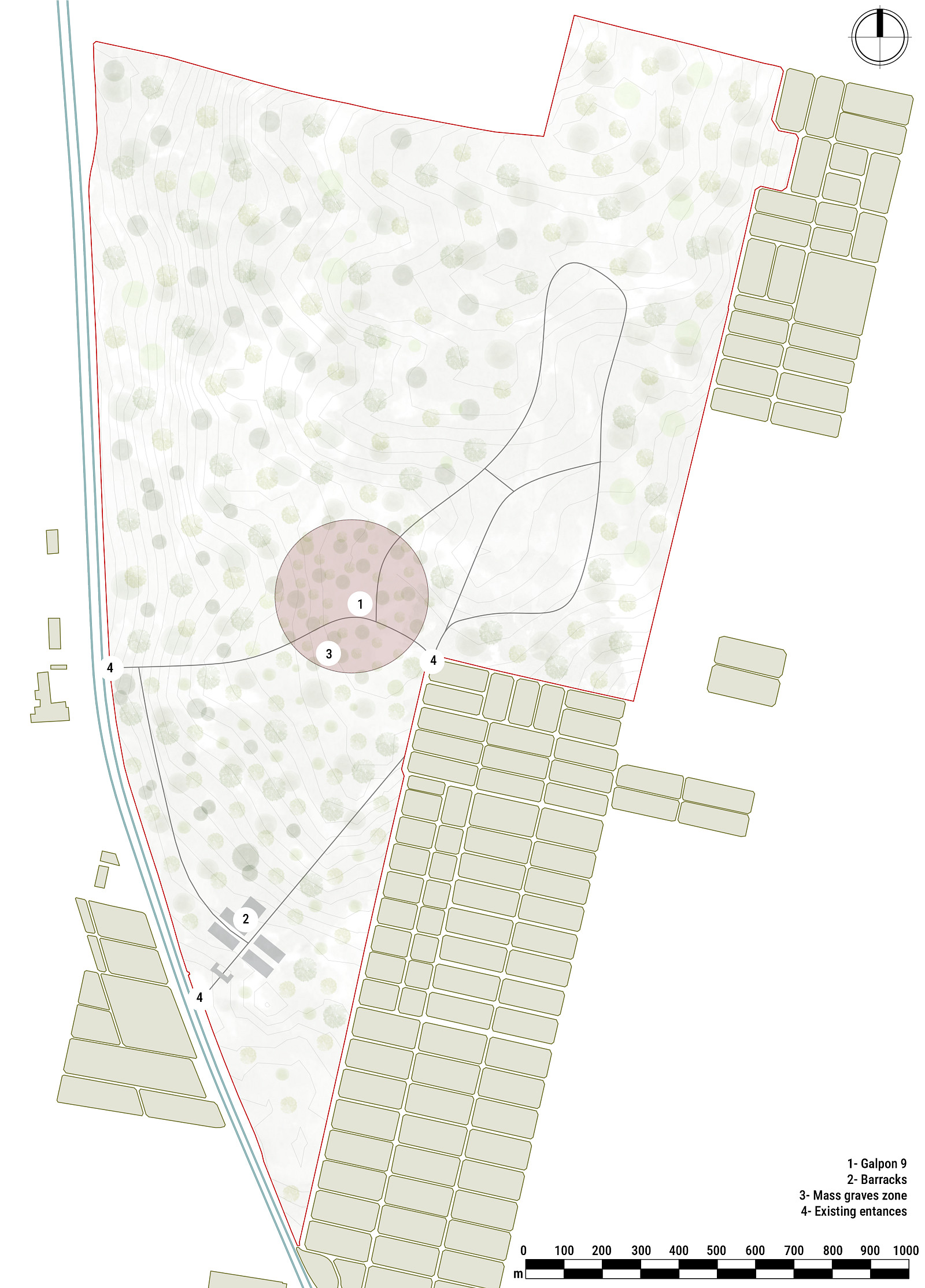
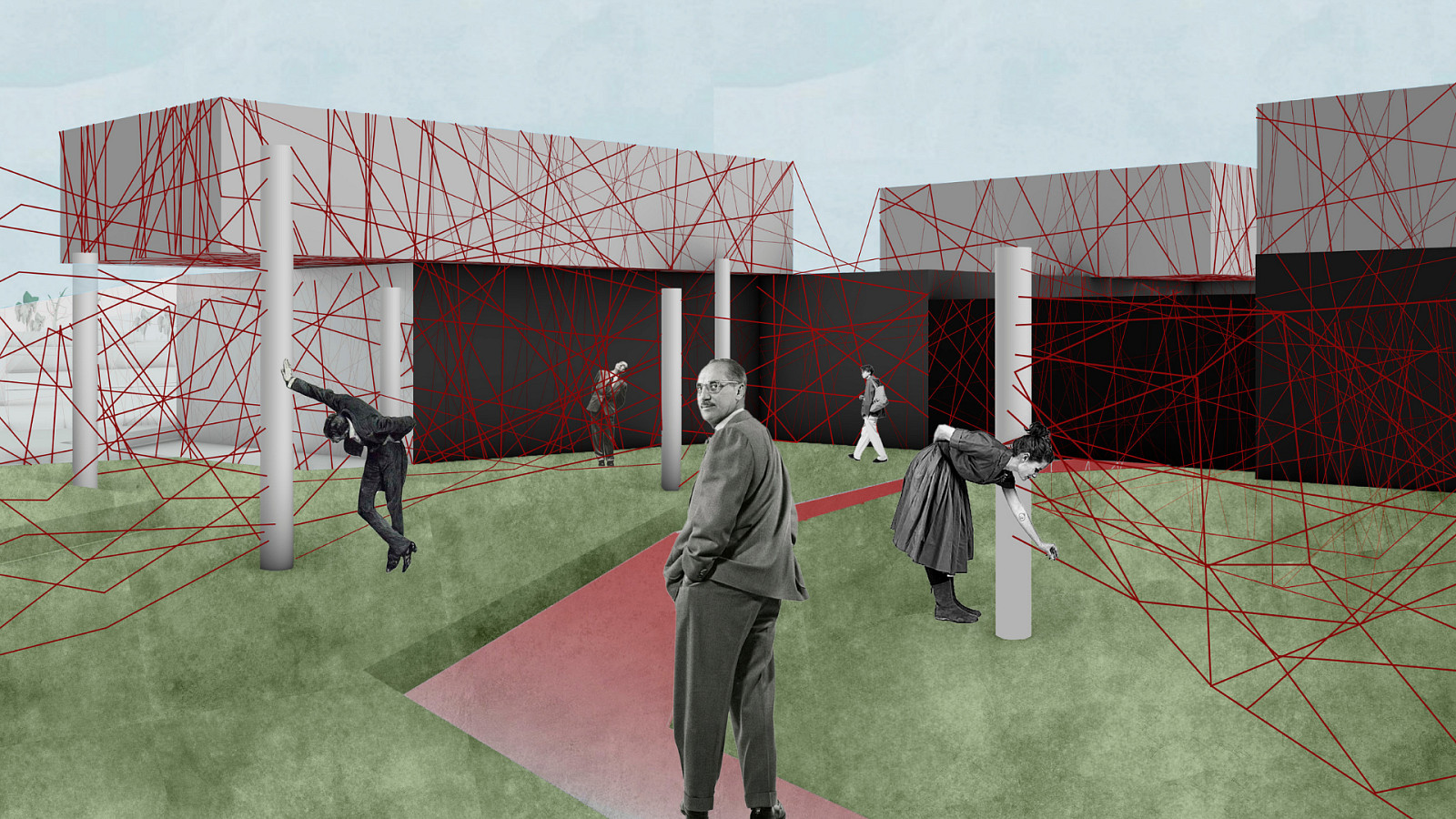
A memorial plaza is located on this territory, where the final outcome is located. It is positioned so that the original Galpon 9 building, untouched, serves as the center of this plaza. The building itself is connected by threads and mass graves, leading to the exit along the path of lived stories. These threads represent those stories that managed to escape the boxes (95-centimeter height boxes in which victims were held during the dictatorship) and the mass graves of people and their stories, which will remain forever underground. And then they continue to the exit, giving freedom to those stories that made it out.
The final outcome is both the culmination of all routes and also a place of reflection. Here, the process of movement ends and transitions to a state of rest, which enhances both understanding and summing up. This space presents the visitor with the accumulated experience of the route and is perceived as a unified picture.
The final point is the unification of the project, demonstrating that opposing perspectives can lead to a single understanding based on truth.
Technické informace
The building's structural design is based on monolithic reinforced concrete as the primary construction material. Most of the standard volumes and geometrically simple building elements are formed using traditional monolithic concrete technology and standard formwork, ensuring structural reliability, cost-effectiveness, and ease of construction.
To implement complex architectural forms, curved surfaces, and non-standard volumes, custom-designed formwork, manufactured specifically for the design parameters of each element, is used. This approach allows for the creation of unique spatial solutions similar to those used in the construction of modern buildings with complex forms and other representatives of parametric architecture.

Copyright © 2026 INSPIRELI | All rights reserved. Use of this website signifies your agreement to the Terms of Use, Privacy Policy, and use of cookies.