ANOMA Urban Blue Zone

Idea projektu
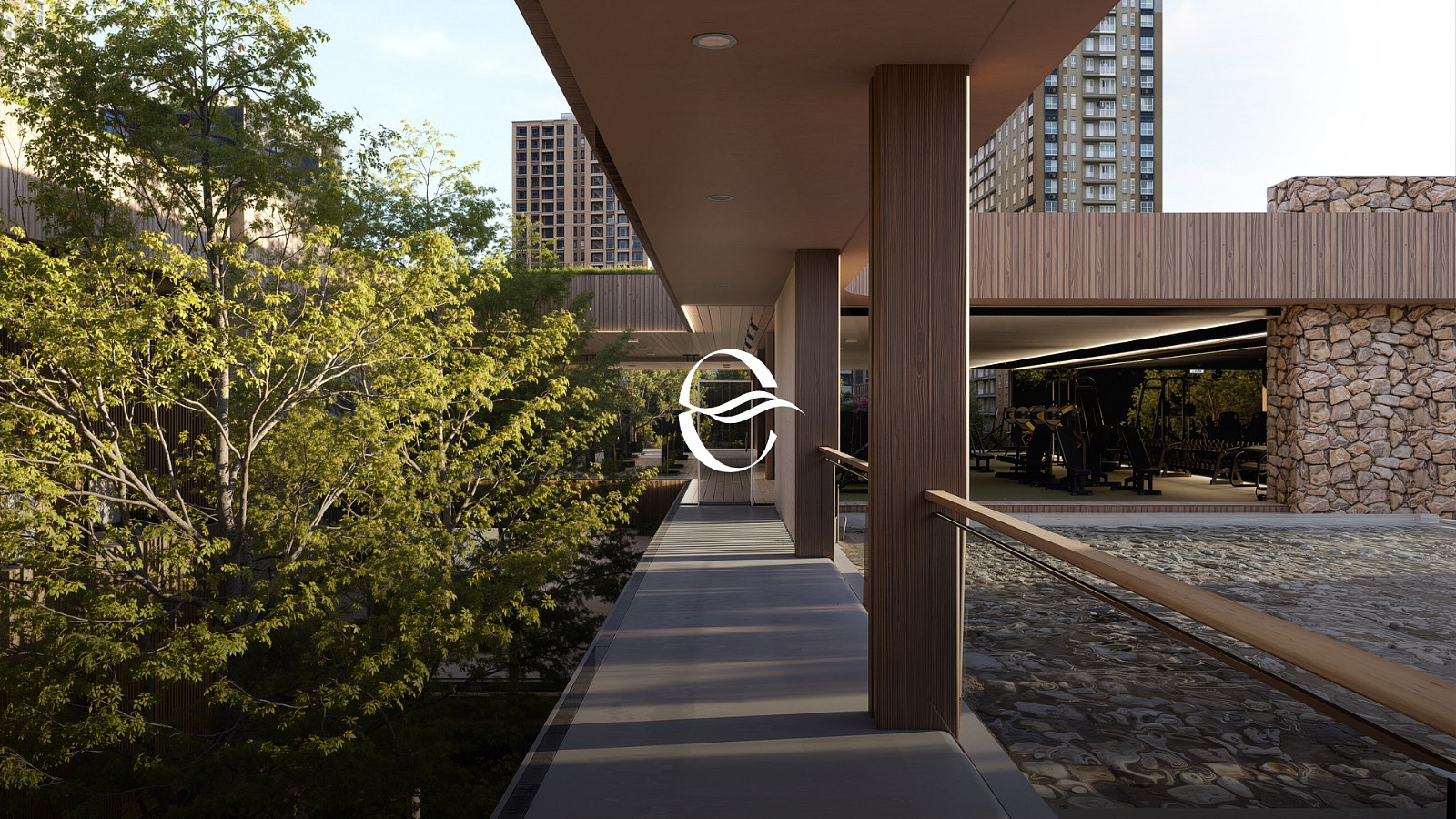
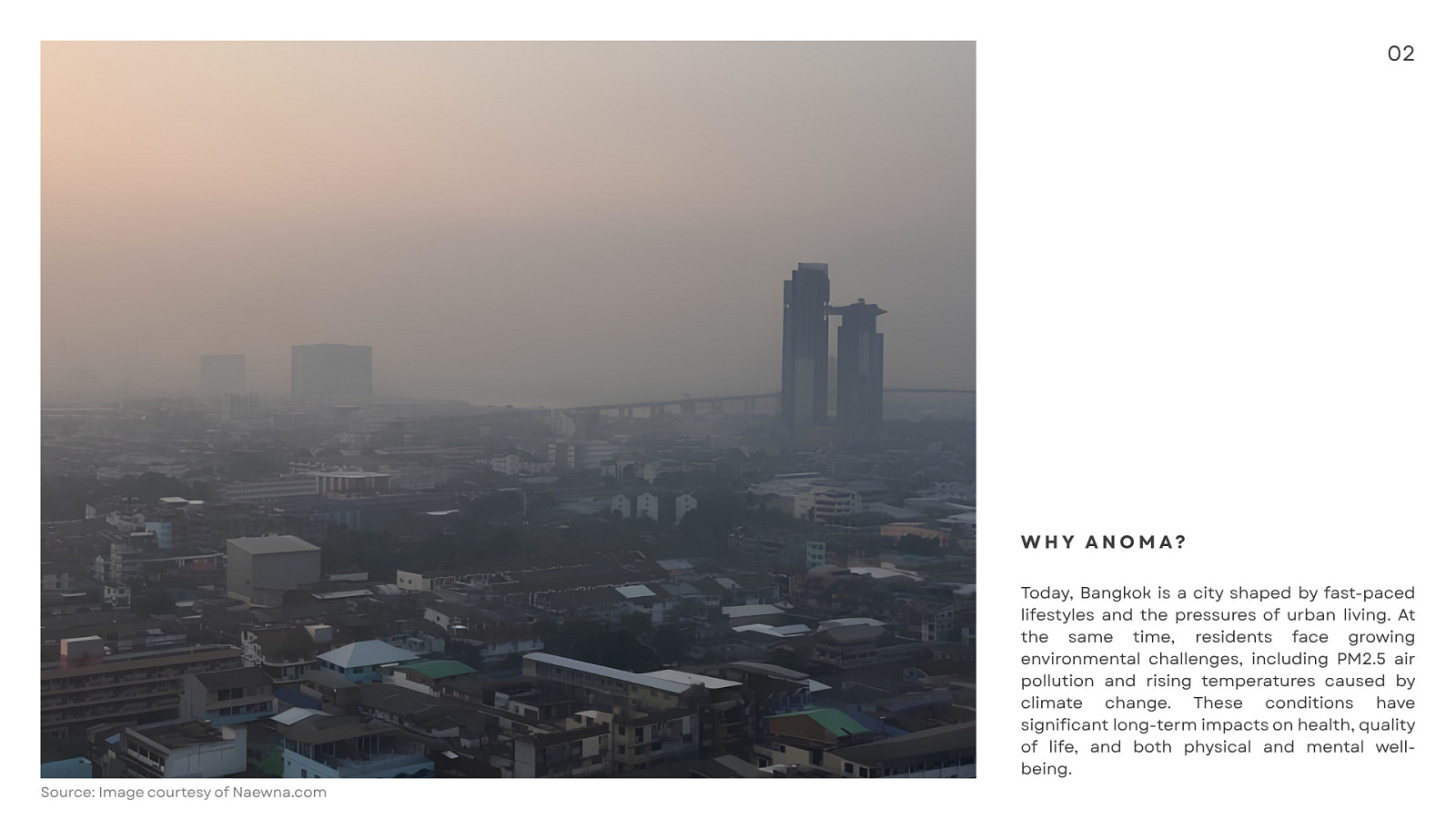
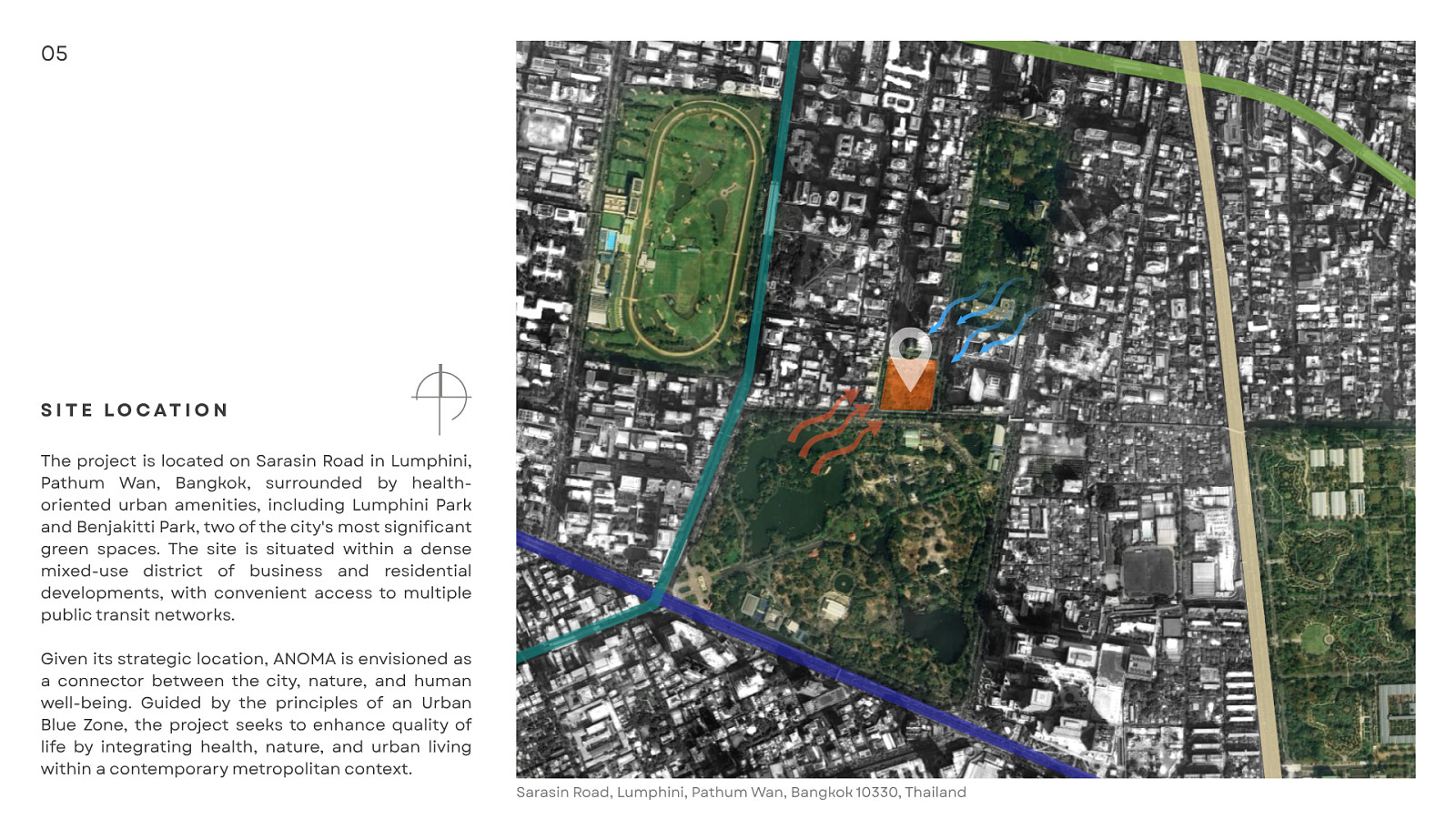
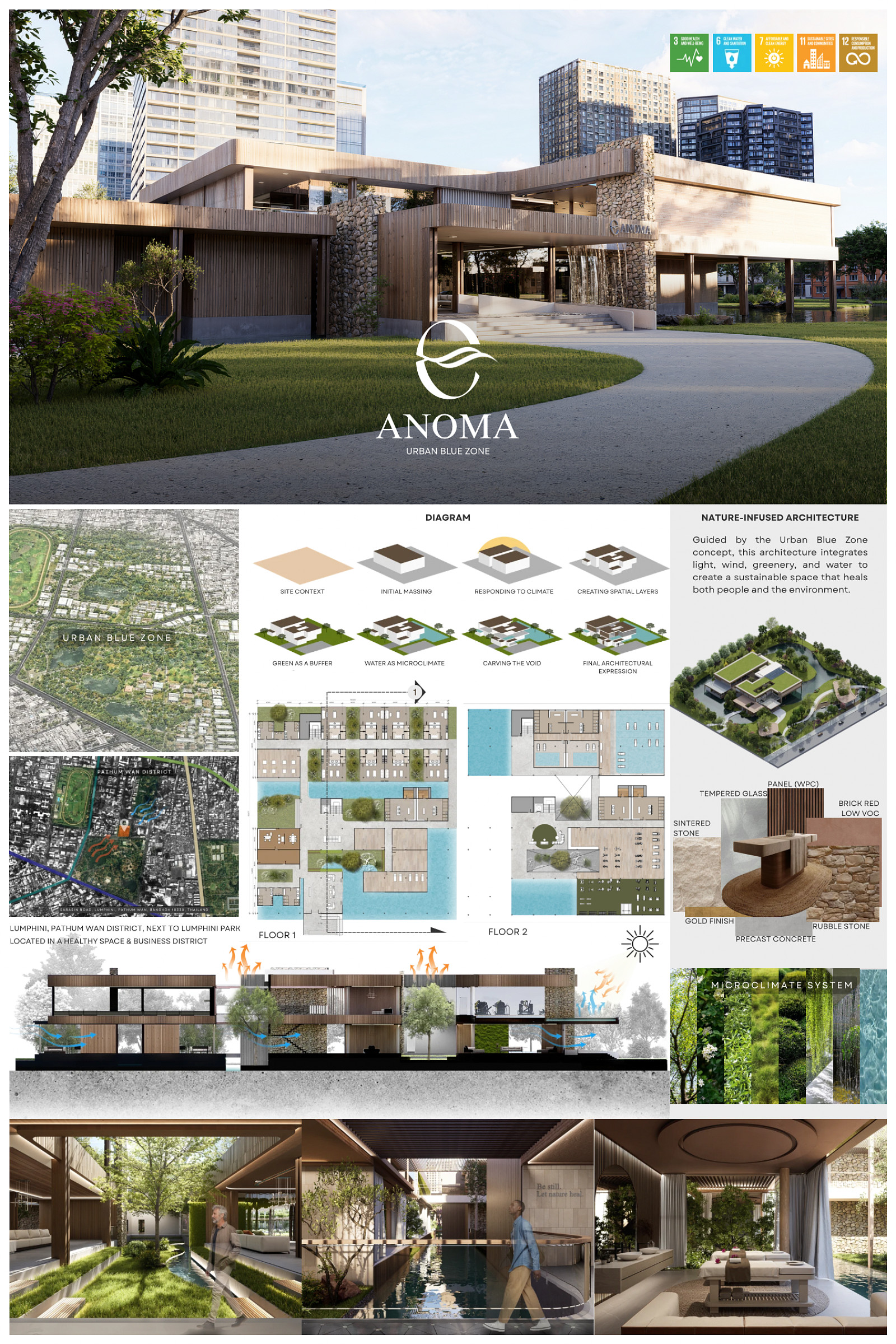
ANOMA is a prototype wellness destination located on Sarasin Road in the heart of Bangkok, surrounded by urban parks, green spaces, residential developments, business districts, and major public transportation networks. Positioned within one of the city’s most active urban environments, the site presents a unique opportunity to redefine the relationship between urban living, nature, and human well-being.
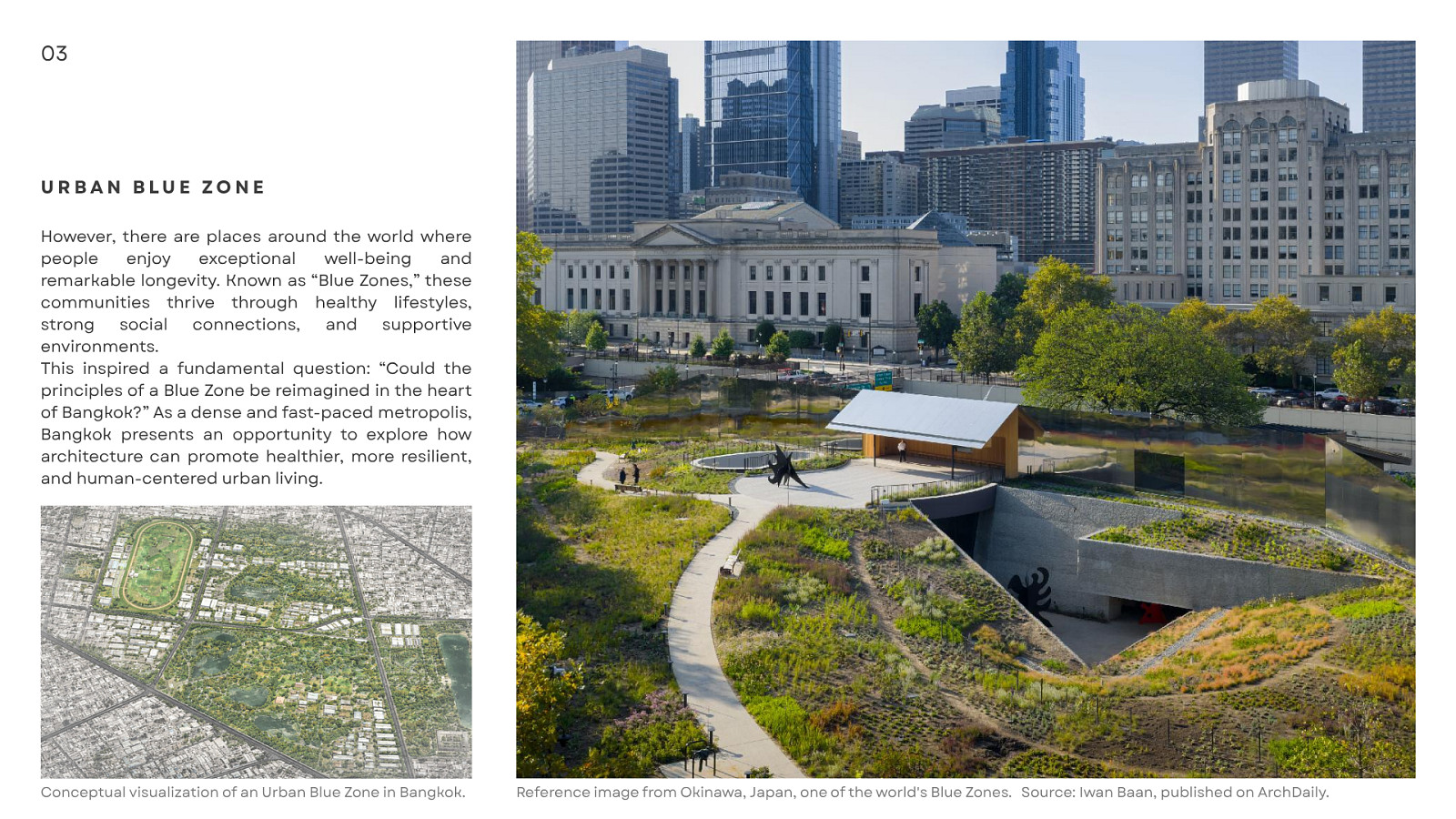
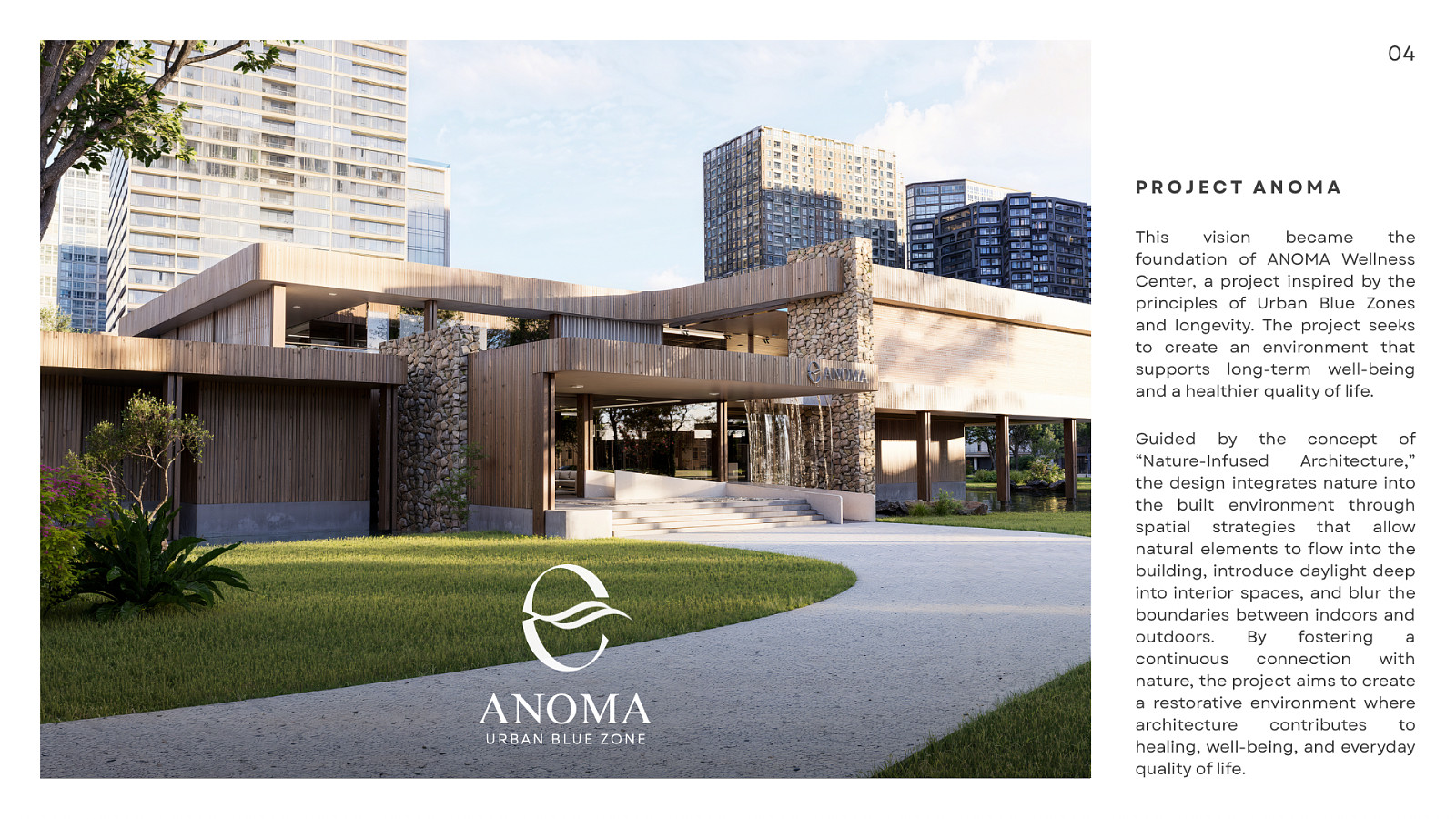
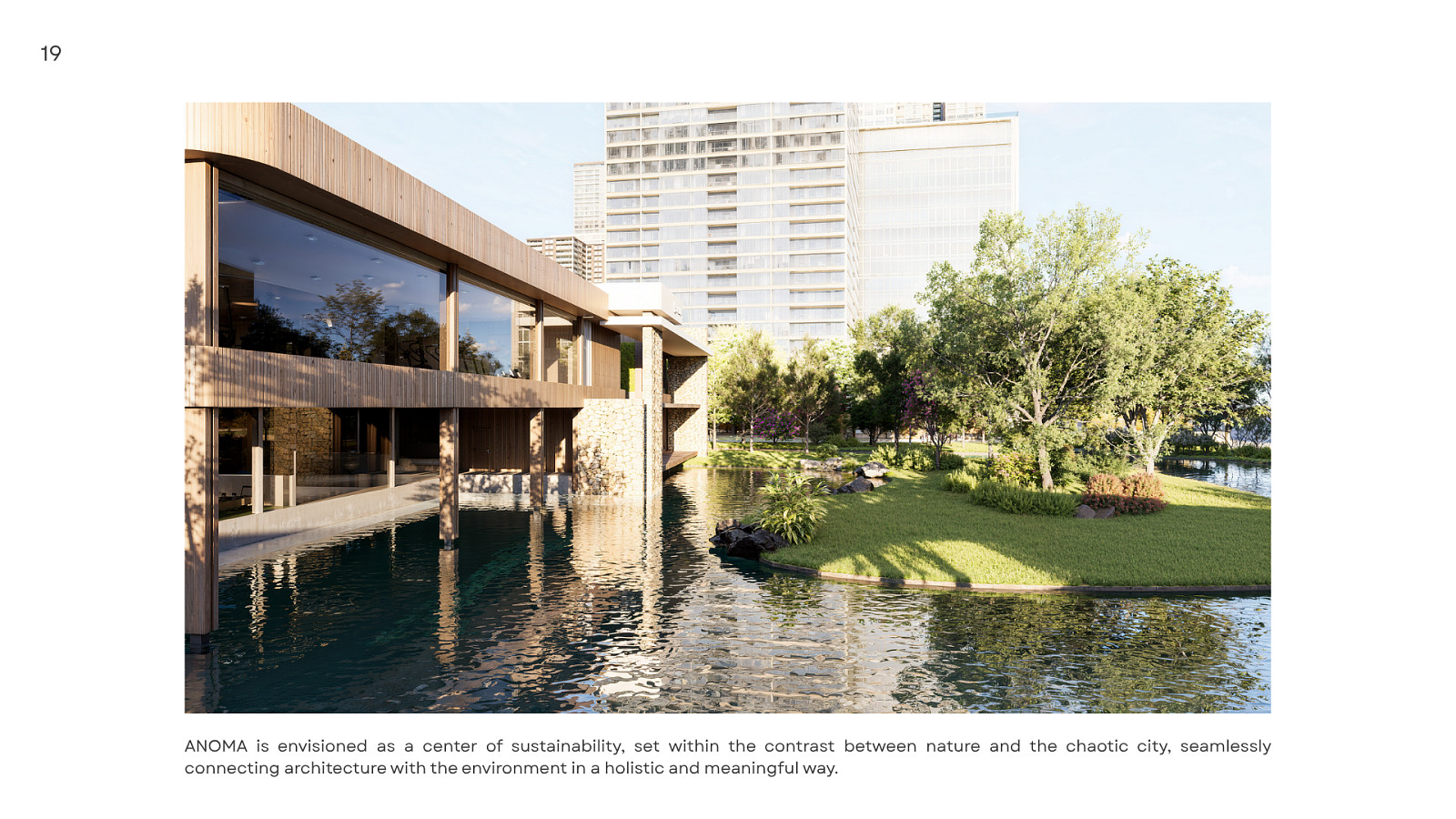
The project envisions a new model of urban wellness through the concept of an “Urban Blue Zone”—a place where architecture, landscape, water, and community are seamlessly integrated to promote physical, mental, and environmental well-being. Rather than functioning solely as a wellness facility, ANOMA is conceived as a restorative ecosystem that reconnects people with nature amidst the intensity of contemporary city life.
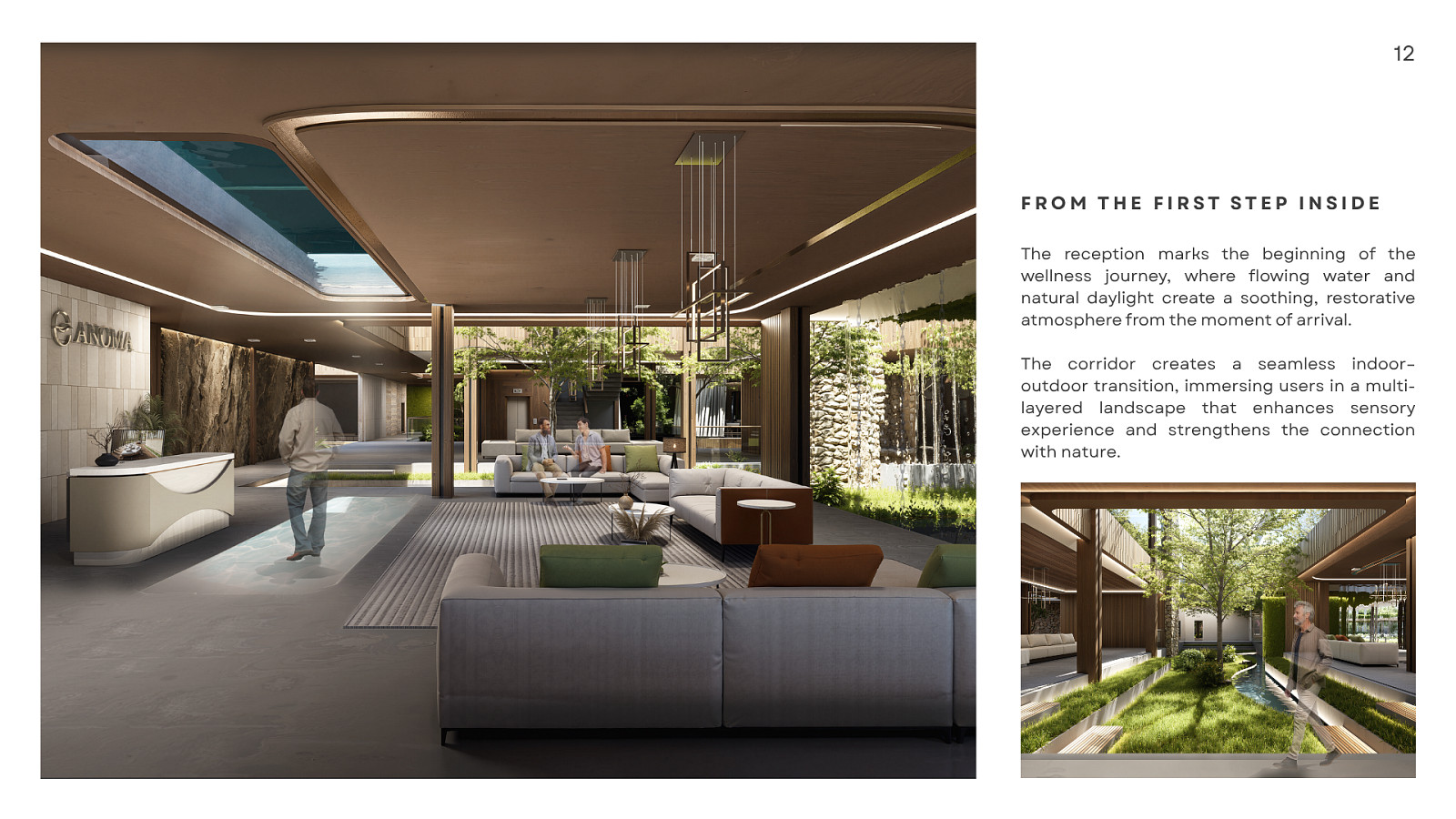
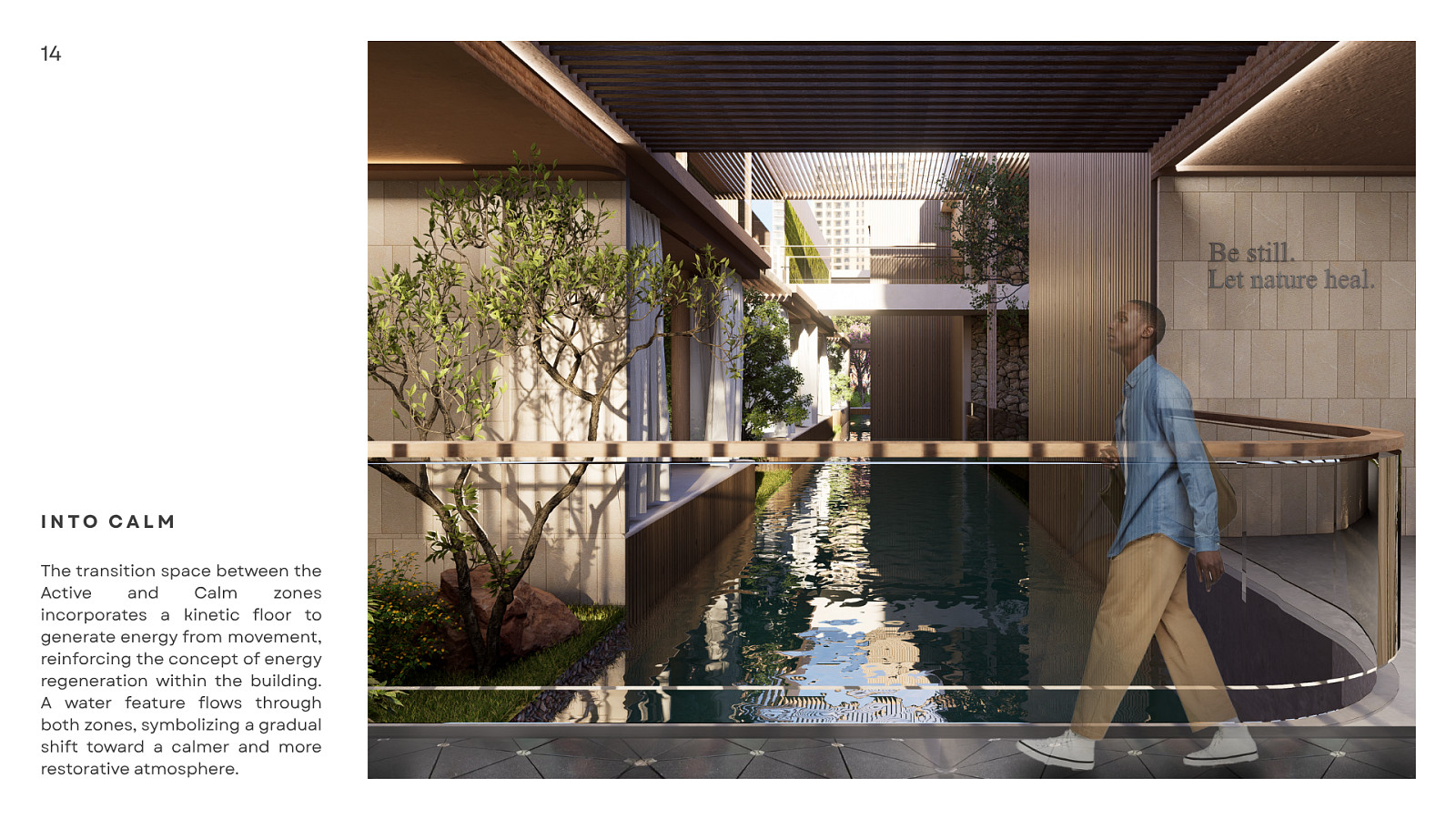
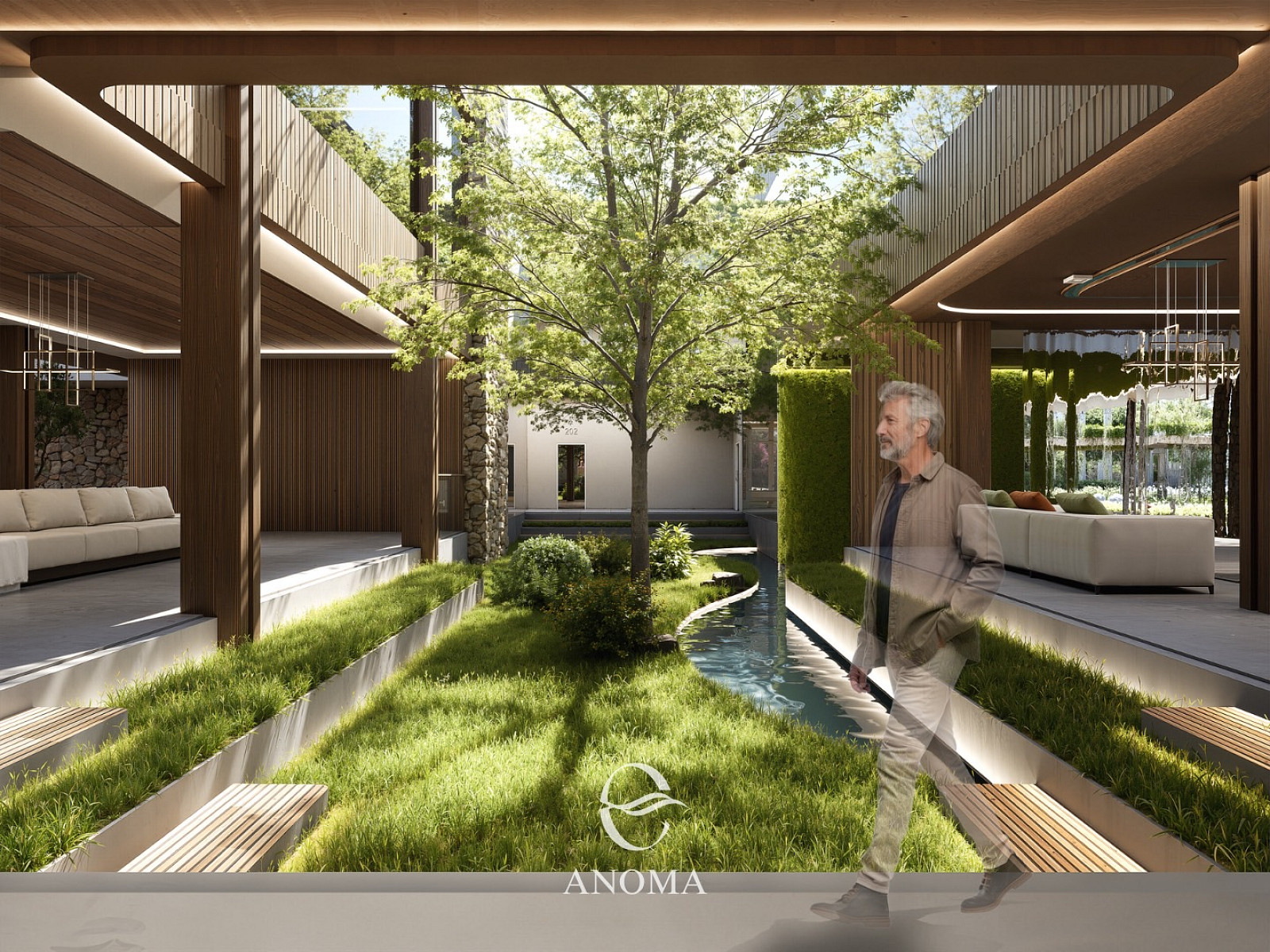
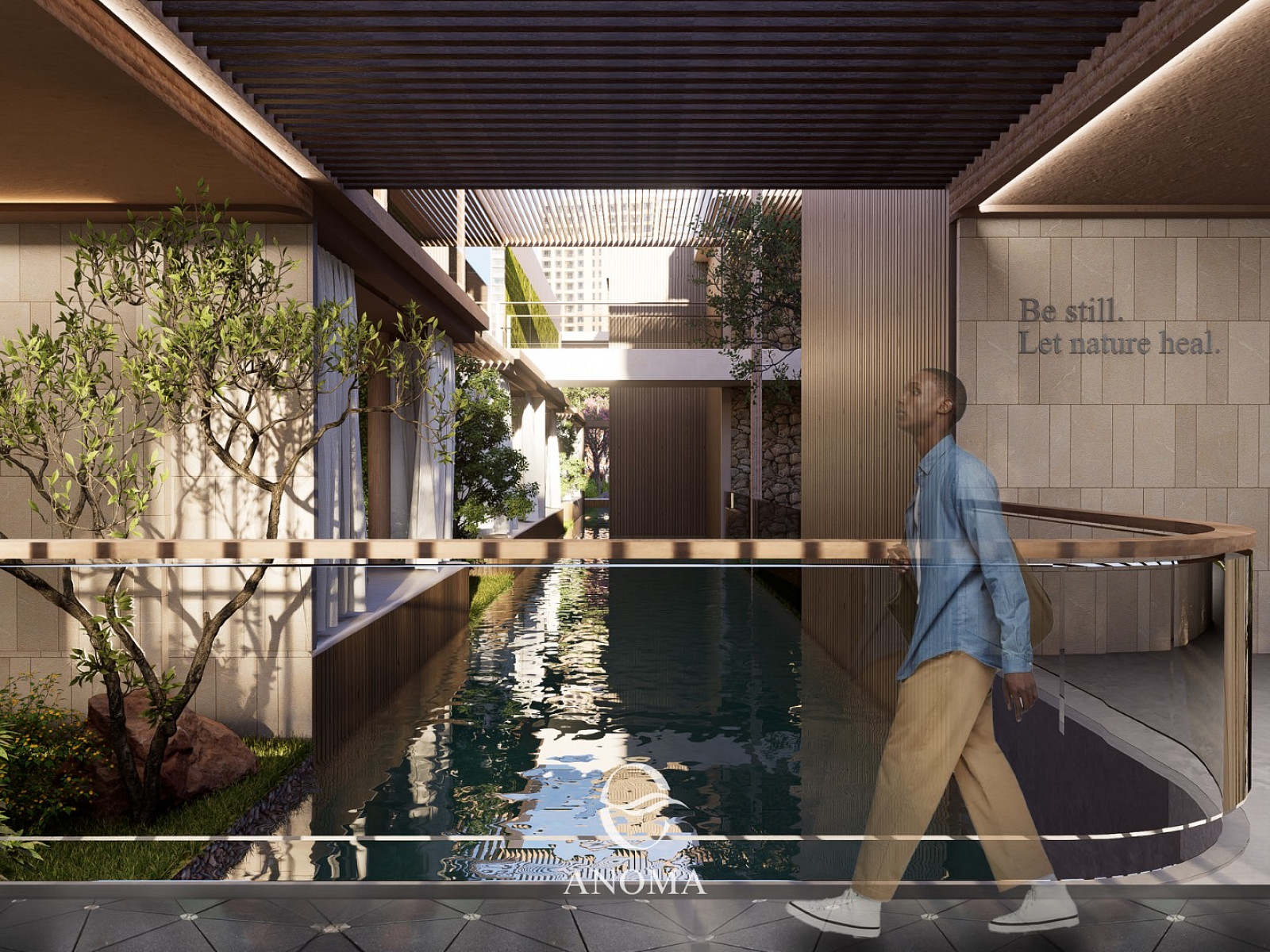
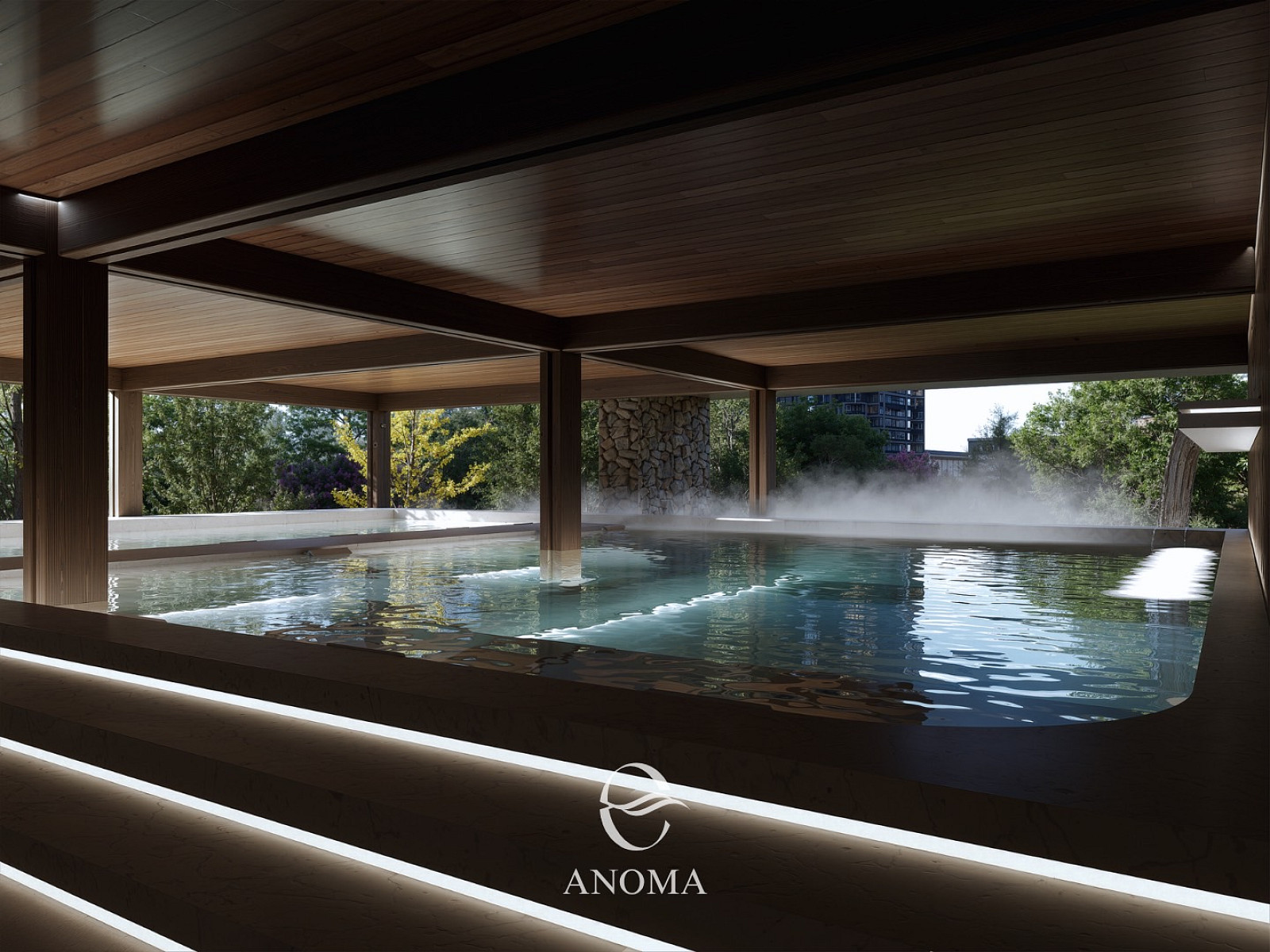
Water serves as the project’s primary design medium and experiential catalyst. Flowing through the architectural and landscape systems, it shapes a sequence of sensory experiences that gradually transition visitors from the fast-paced rhythm of the city into a state of calm, reflection, and recovery. This experience is reinforced through multi-layered landscapes, semi-outdoor transitional spaces, and carefully designed microclimatic strategies that enhance thermal comfort, biodiversity, and environmental performance.
Beyond individual wellness, ANOMA explores how architecture can contribute to the long-term health of both people and the city itself. Inspired by the principles of longevity and sustainable living, the project seeks to establish a future-oriented prototype where urban development and ecological restoration coexist in balance.
Ultimately, ANOMA proposes a new vision for wellness architecture—one that extends beyond healing the individual to nurturing a healthier relationship between people, nature, and the urban environment.
Popis projektu
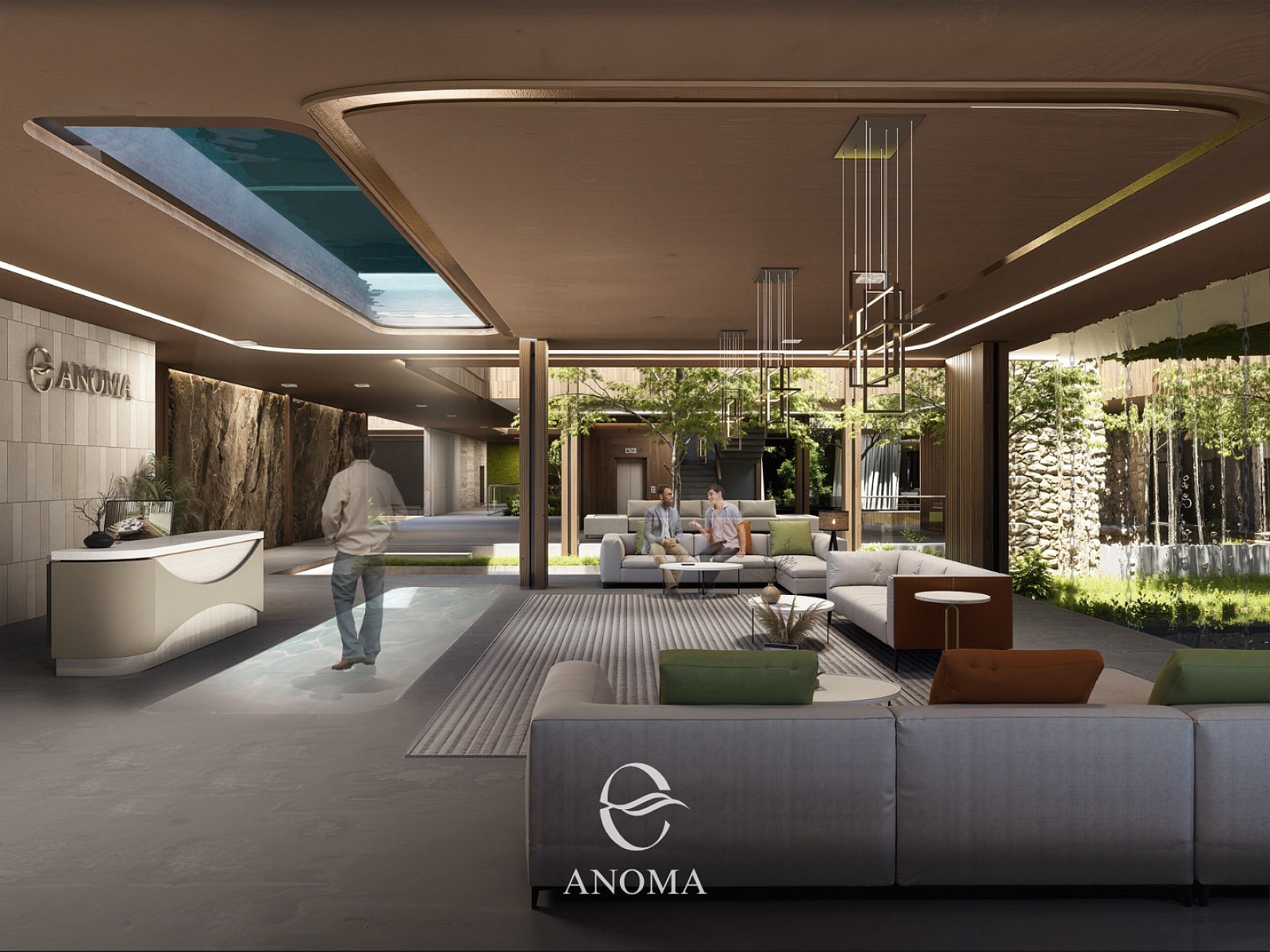
ANOMA – Urban Blue Zone is a holistic wellness center designed to promote physical, mental, and emotional well-being through the integration of architecture, nature, and spatial experience. The project creates a restorative journey that gradually transitions users from active environments to spaces of tranquility, reflection, and healing.
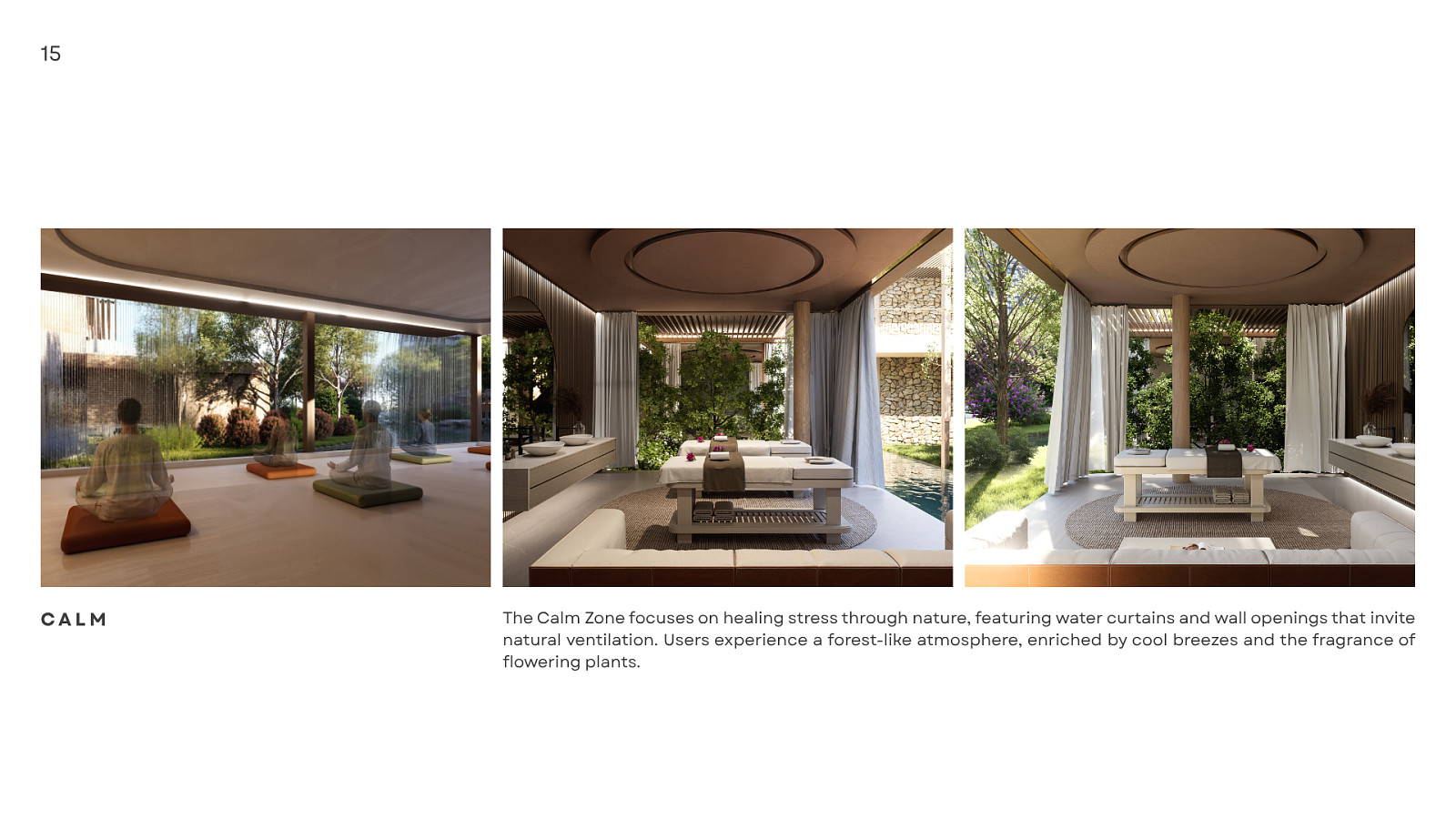
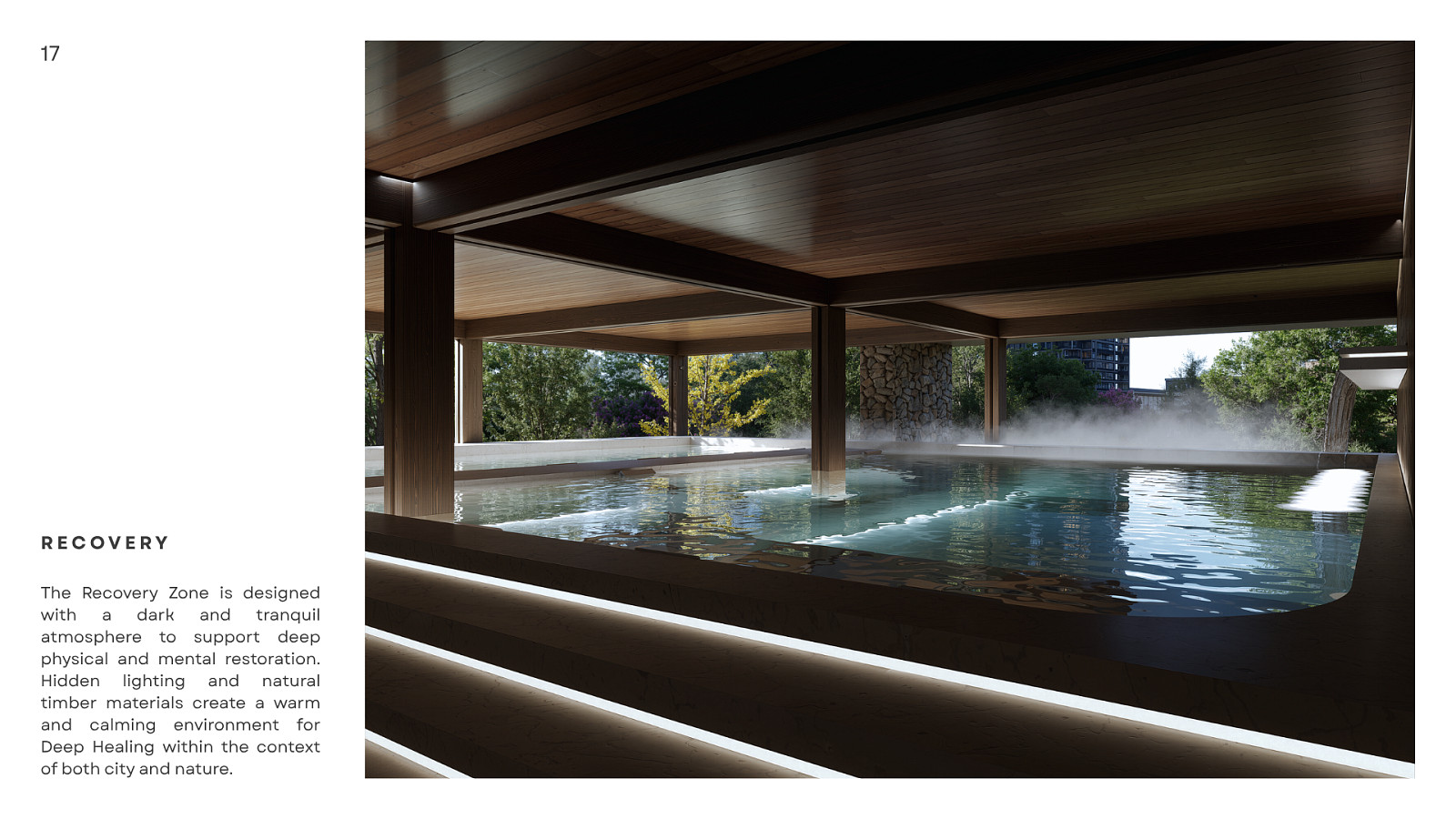
Water serves as the project’s primary design element, guiding movement and shaping sensory experiences throughout the site. Together with natural daylight, warm material palettes, and multi-layered landscapes, these elements reduce stress, strengthen the connection between people and nature, and support overall well-being. The sound of flowing water, integrated greenery, and carefully crafted environmental conditions become essential components of the healing experience.
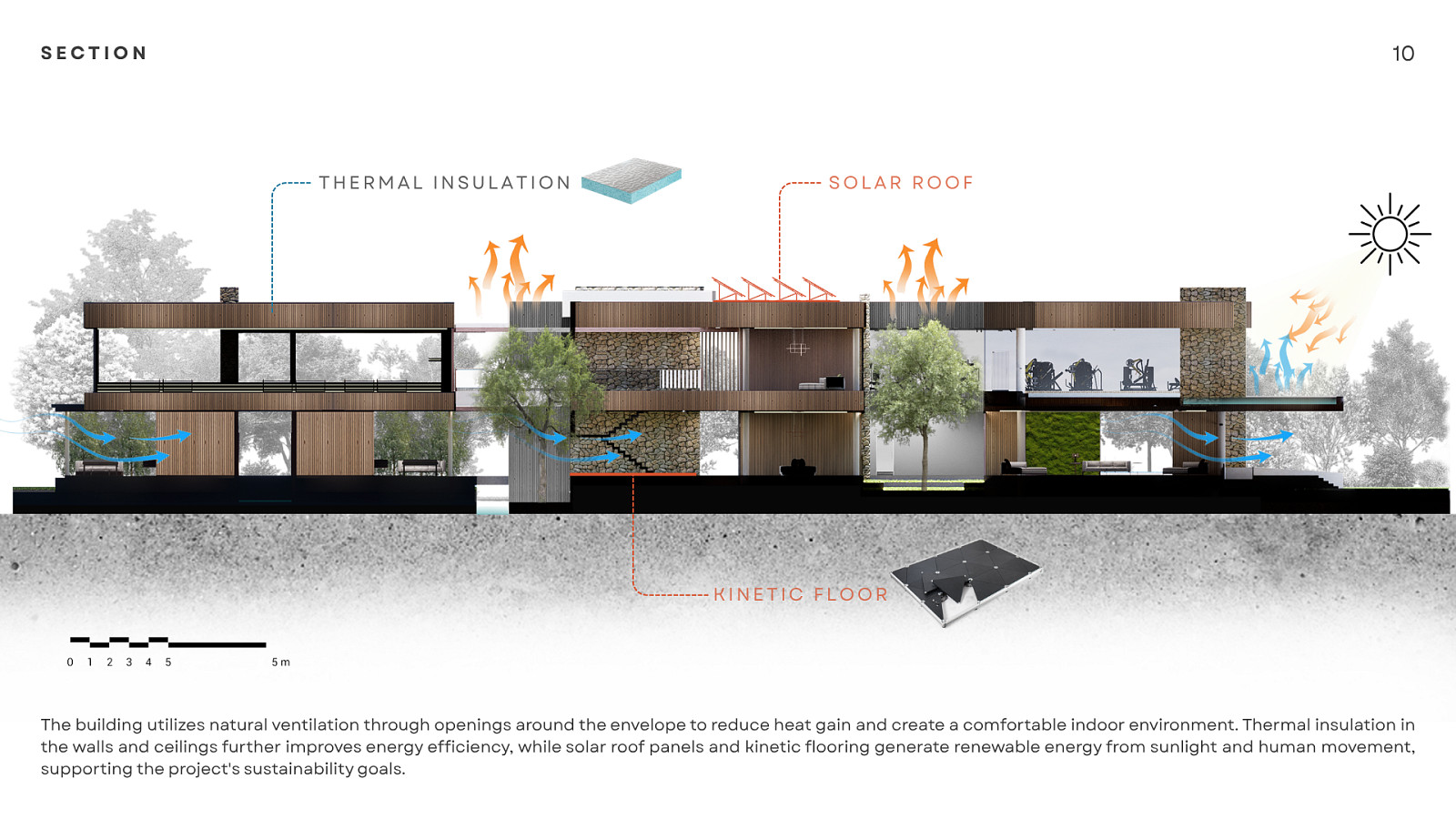
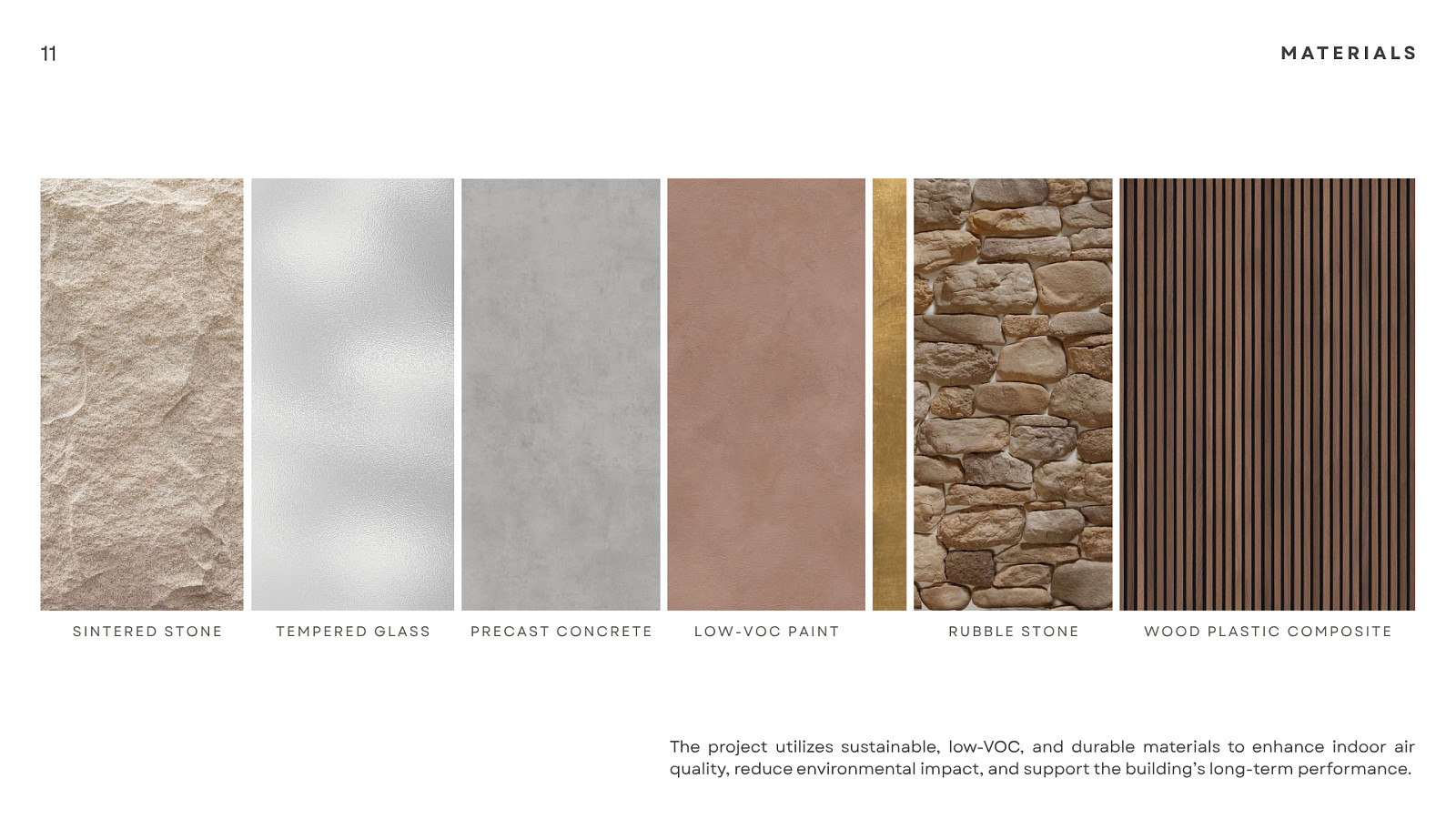
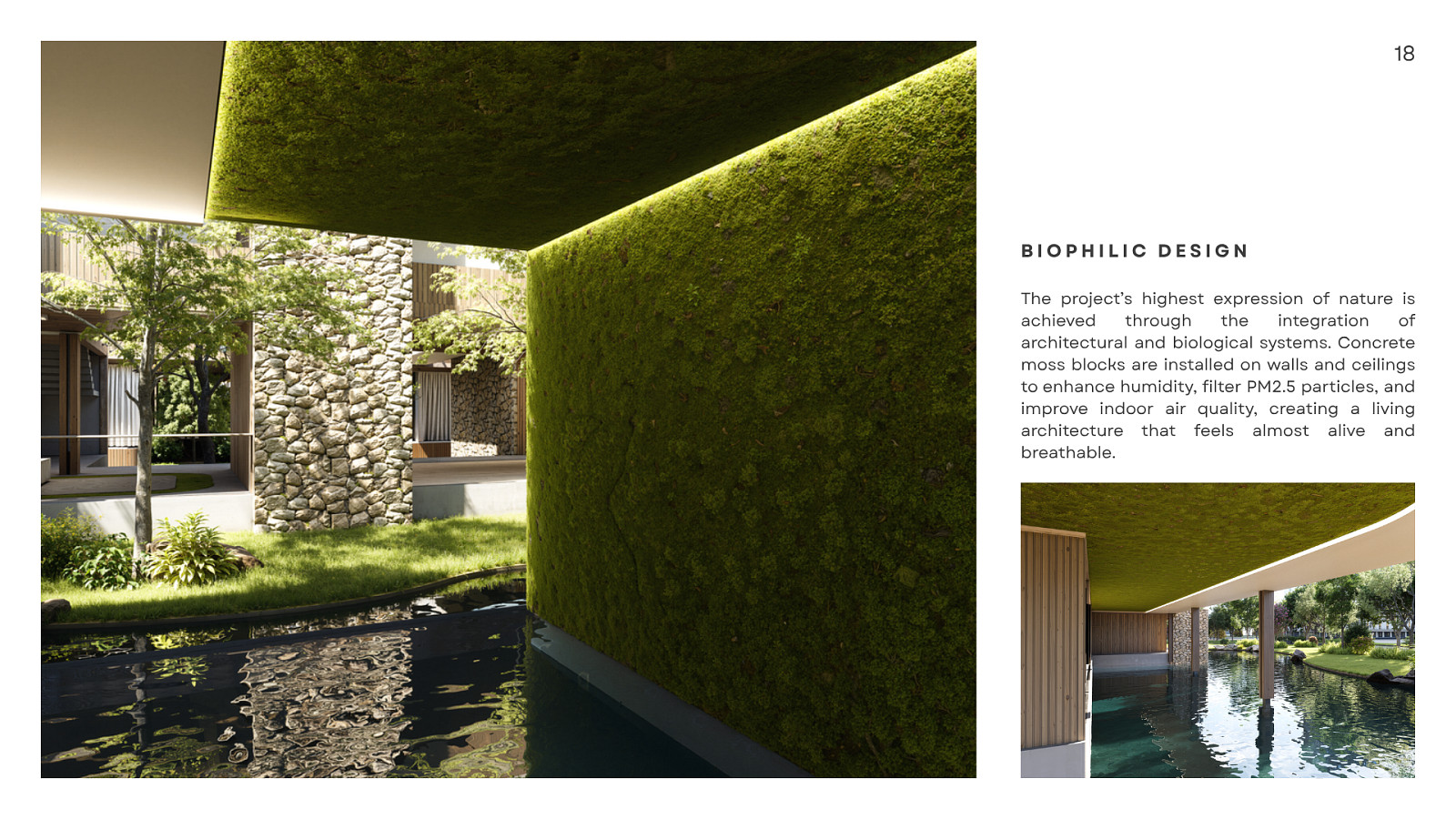
Sustainability is embedded throughout the project through the selection of durable, low-impact materials and environmentally conscious design strategies. Inspired by the principles of Biophilic Design and Green Infrastructure, ANOMA incorporates vertical greenery and moss-integrated architectural surfaces to improve microclimatic conditions, reduce heat accumulation, and enhance environmental comfort.
The project further integrates renewable energy and environmental innovations, including on-site solar energy generation and kinetic flooring that converts human movement into energy for pathway lighting. These systems encourage a more conscious interaction between users, energy consumption, and the built environment.
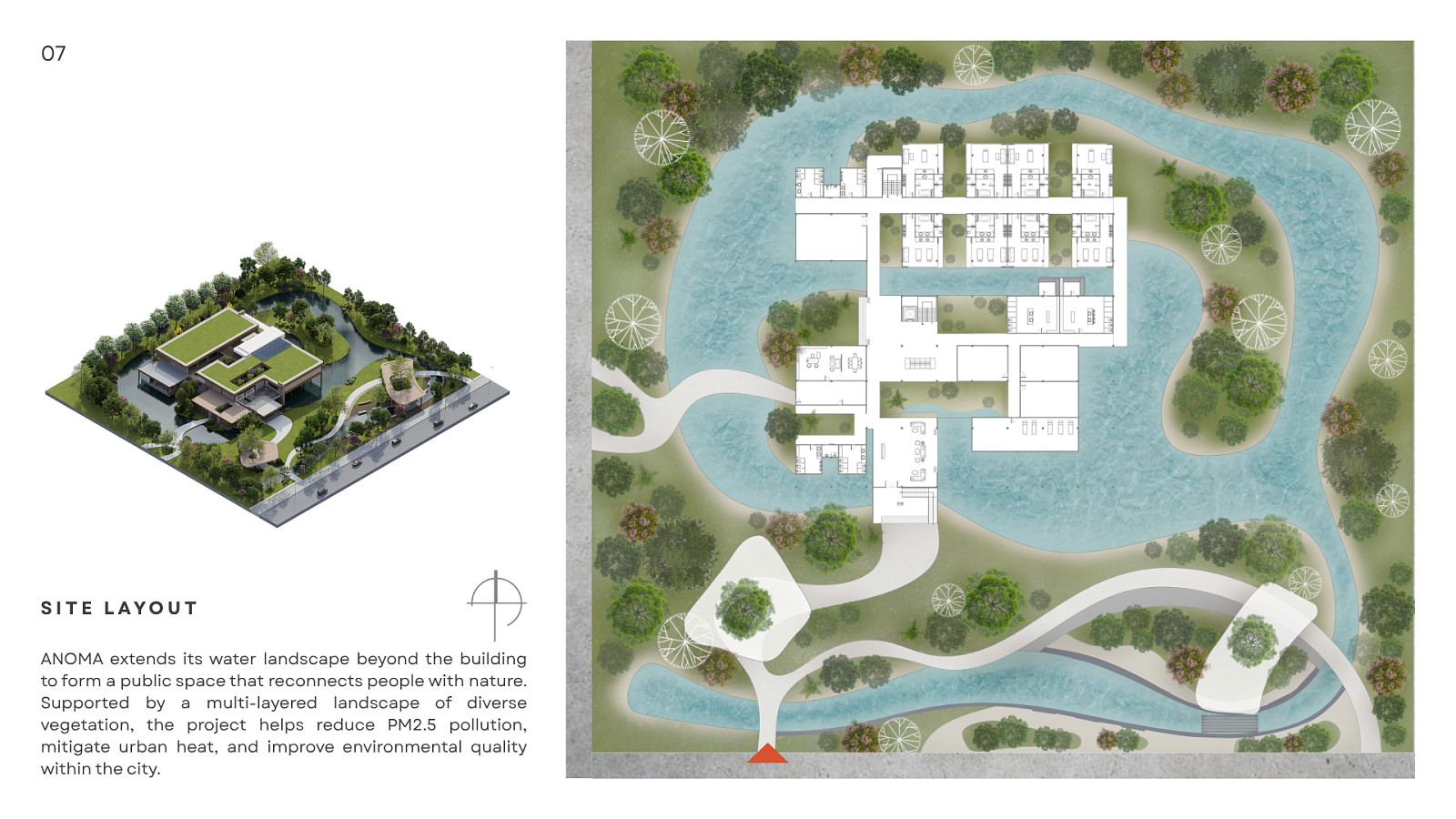
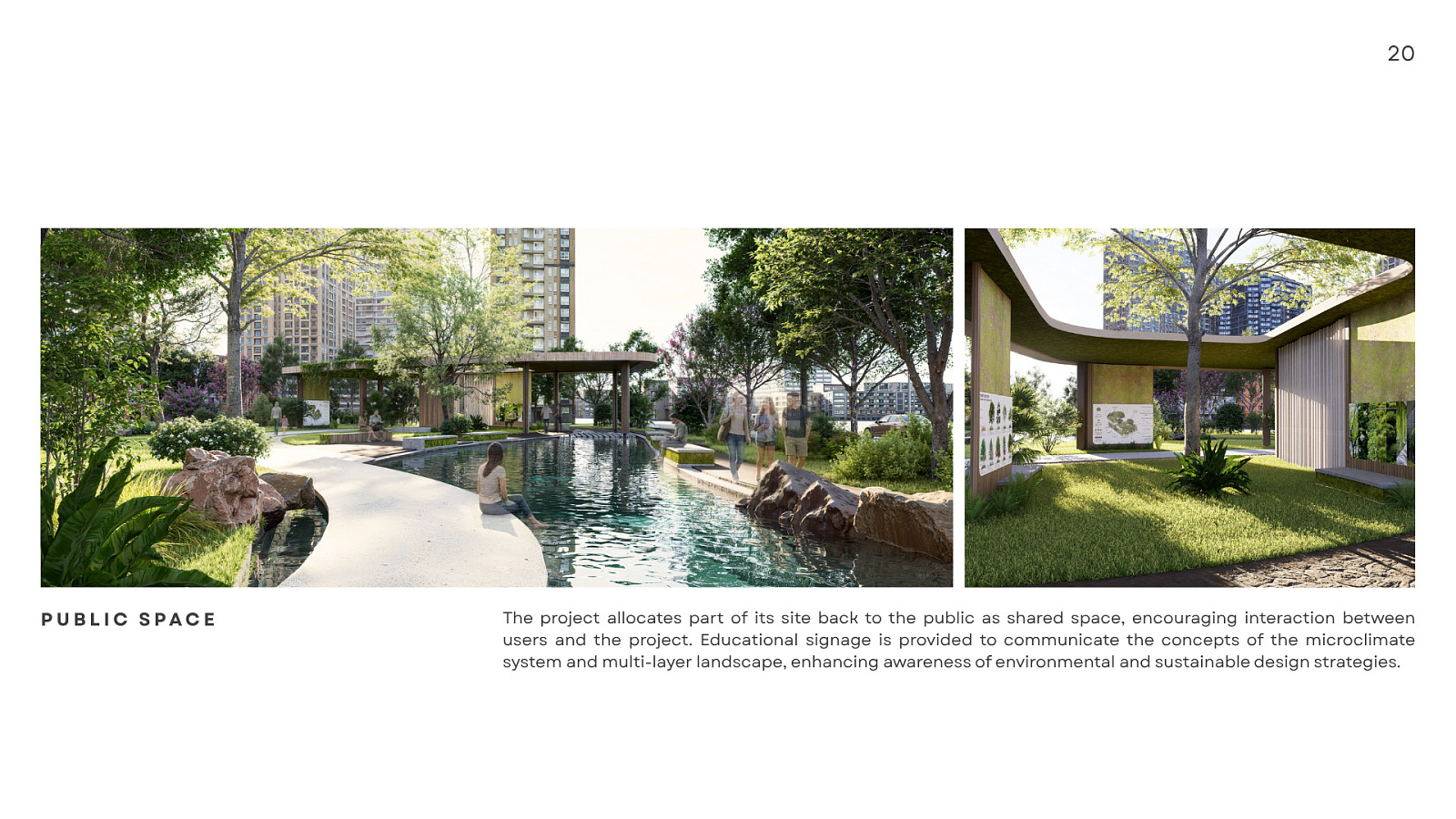
Beyond its wellness functions, ANOMA also serves as a public urban retreat. Accessible green spaces and educational landscape installations promote environmental awareness, biodiversity, and community engagement, extending the project’s benefits beyond its primary users.
Through the integration of wellness, ecology, and public engagement, ANOMA demonstrates how architecture can actively contribute to healthier cities and more sustainable lifestyles, offering a model for future urban development where people, nature, and the built environment exist in harmony.
Technické informace
Project Name
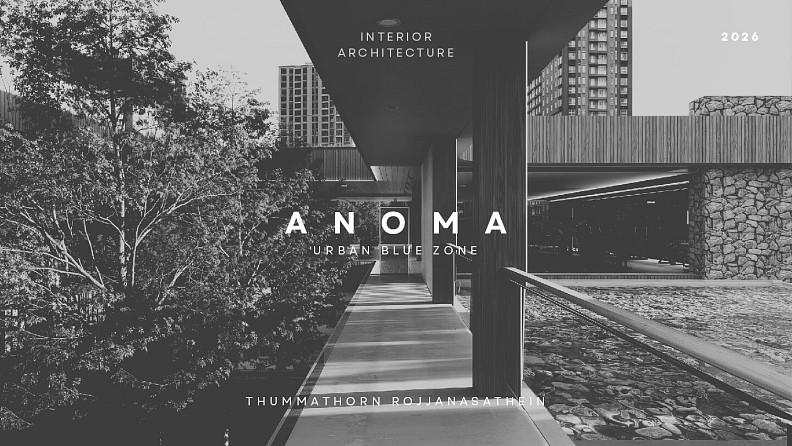
ANOMA – Urban Blue Zone
Project Type
Wellness Center / Interior Architecture
Location
Sarasin Road, Lumphini, Pathum Wan, Bangkok, Thailand
Site Area
16,677.48 sq.m.
Design Strategies
* Urban Blue Zone concept as the primary design framework.
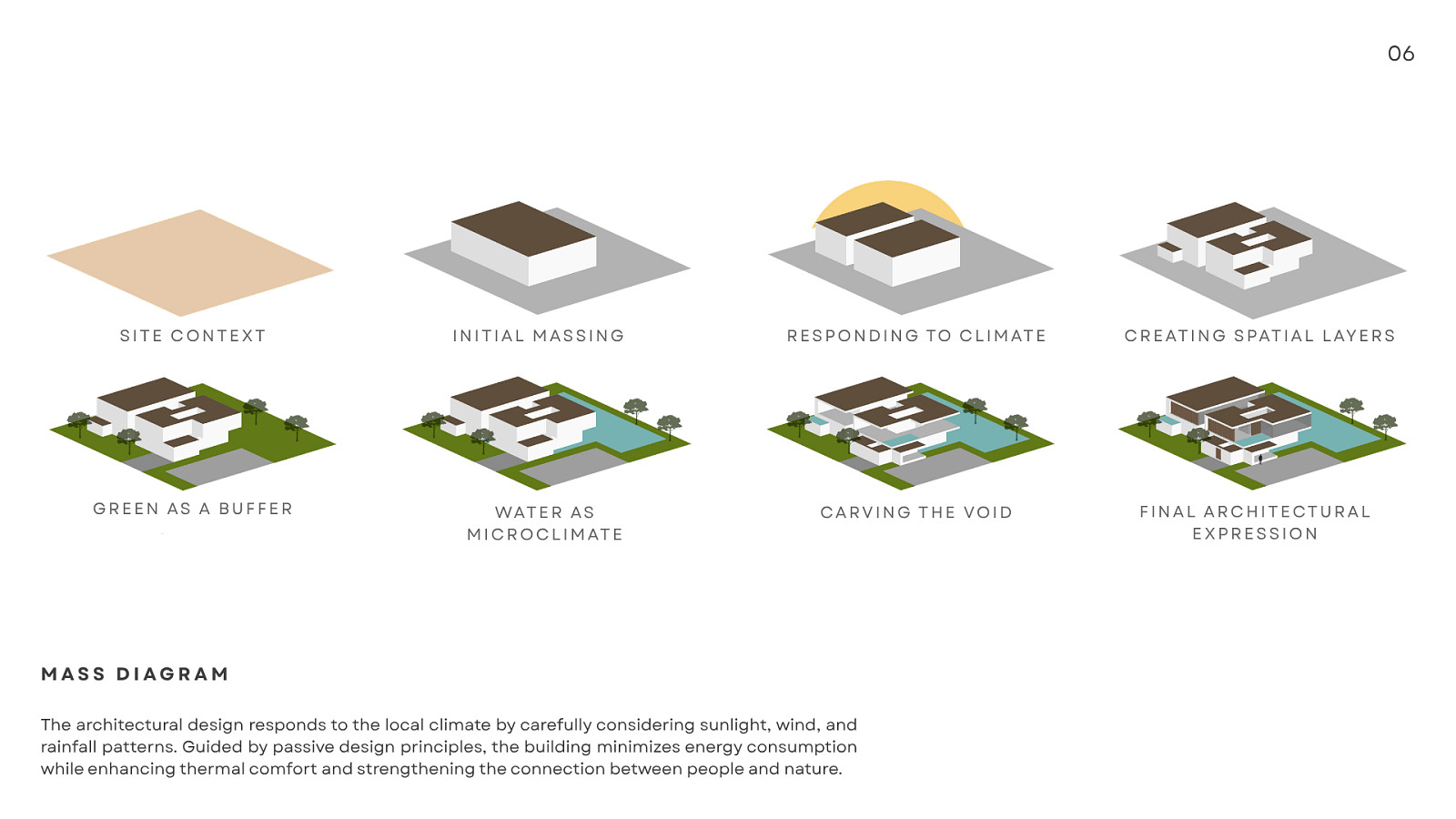
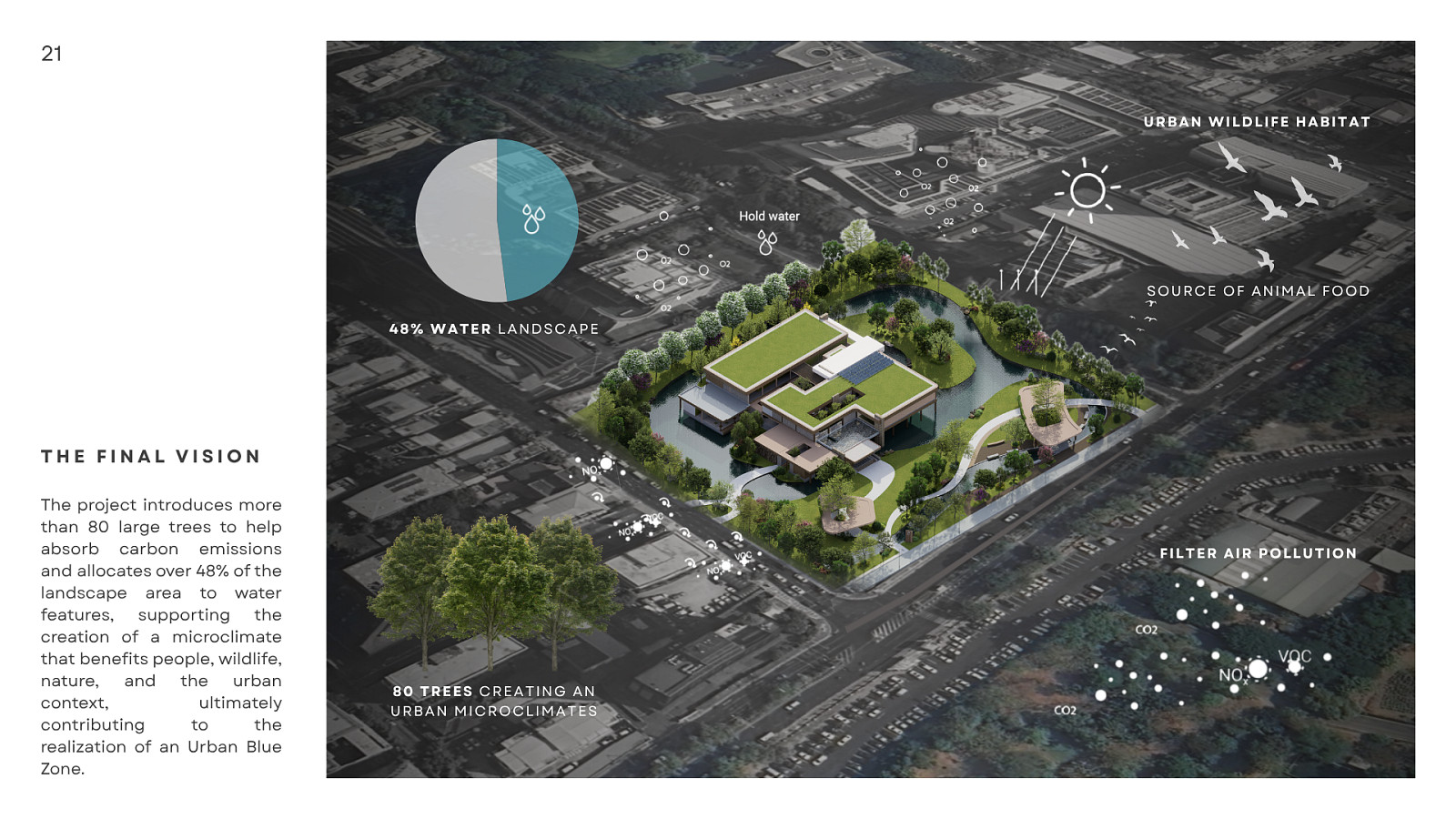
* Multi-layer Landscape system to improve environmental quality, reduce heat accumulation, and create a localized microclimate.
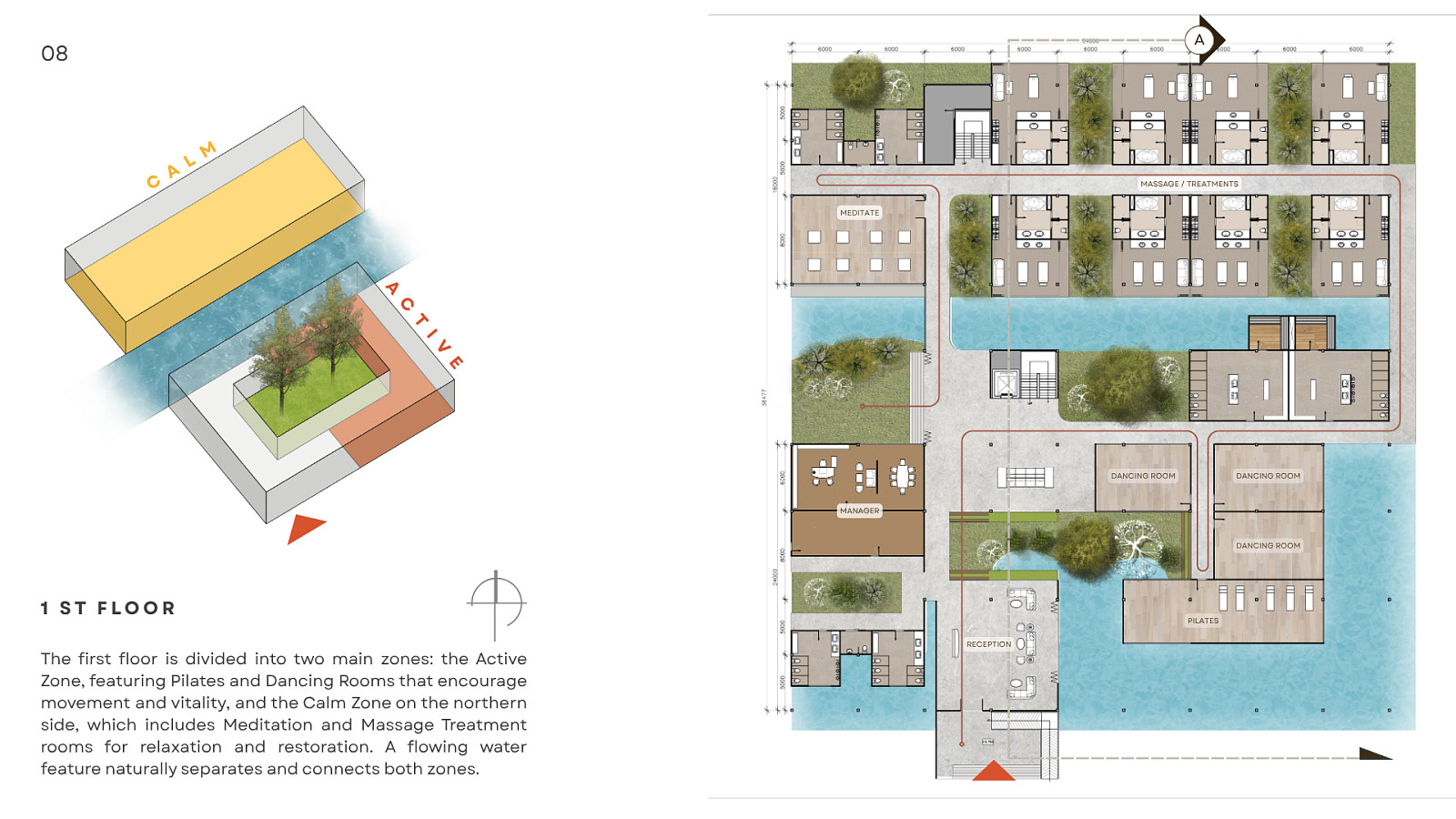
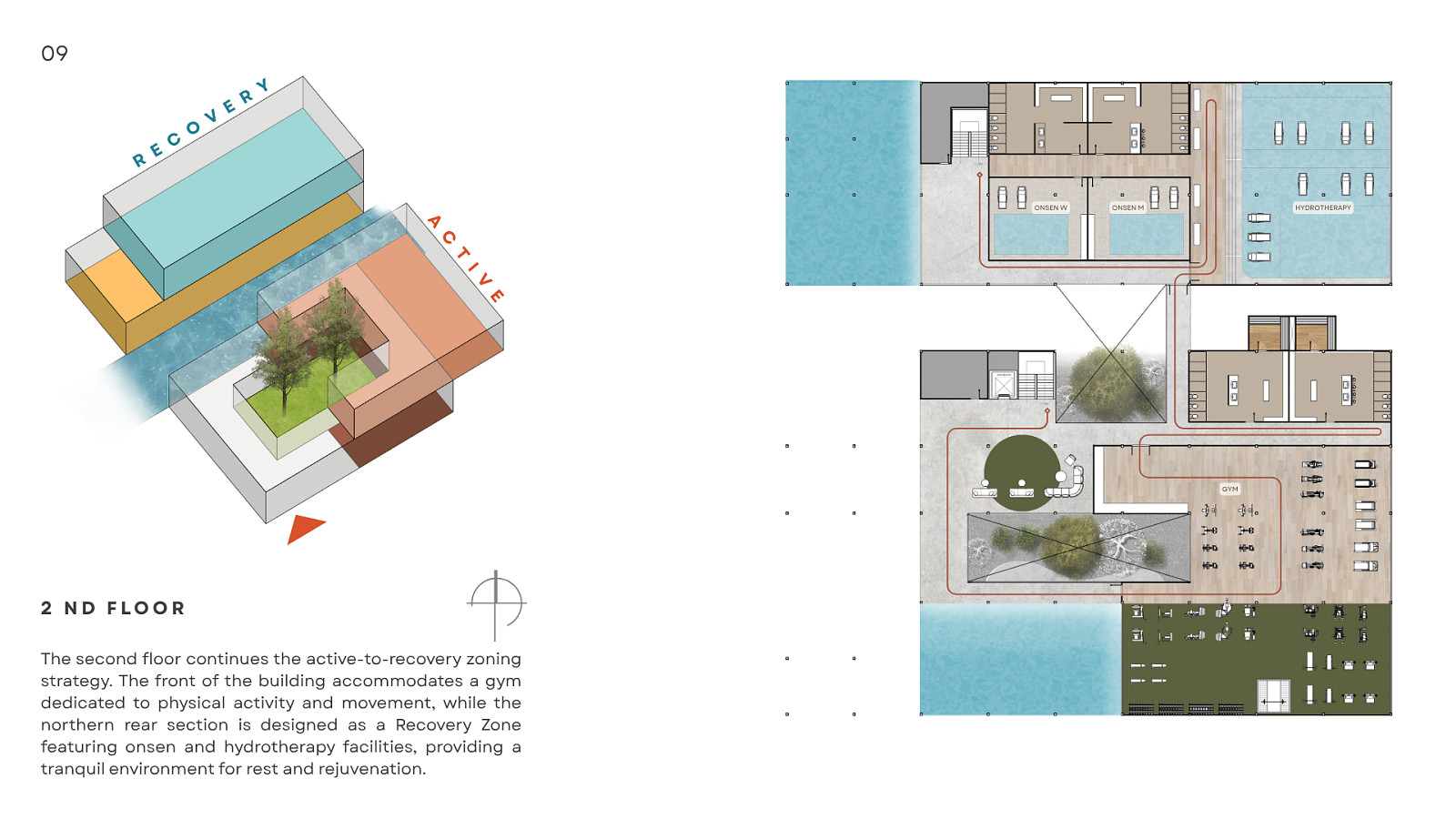
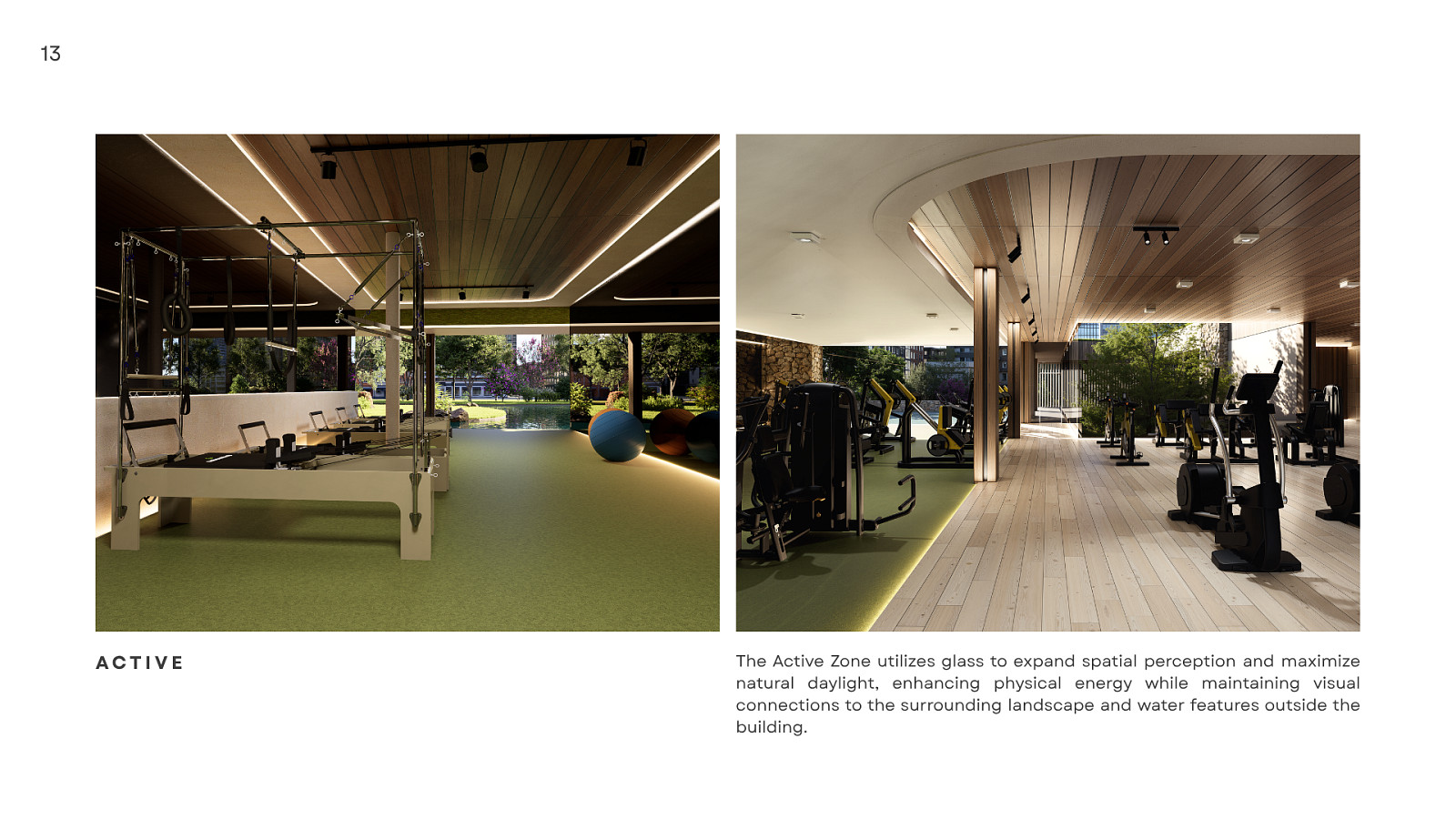
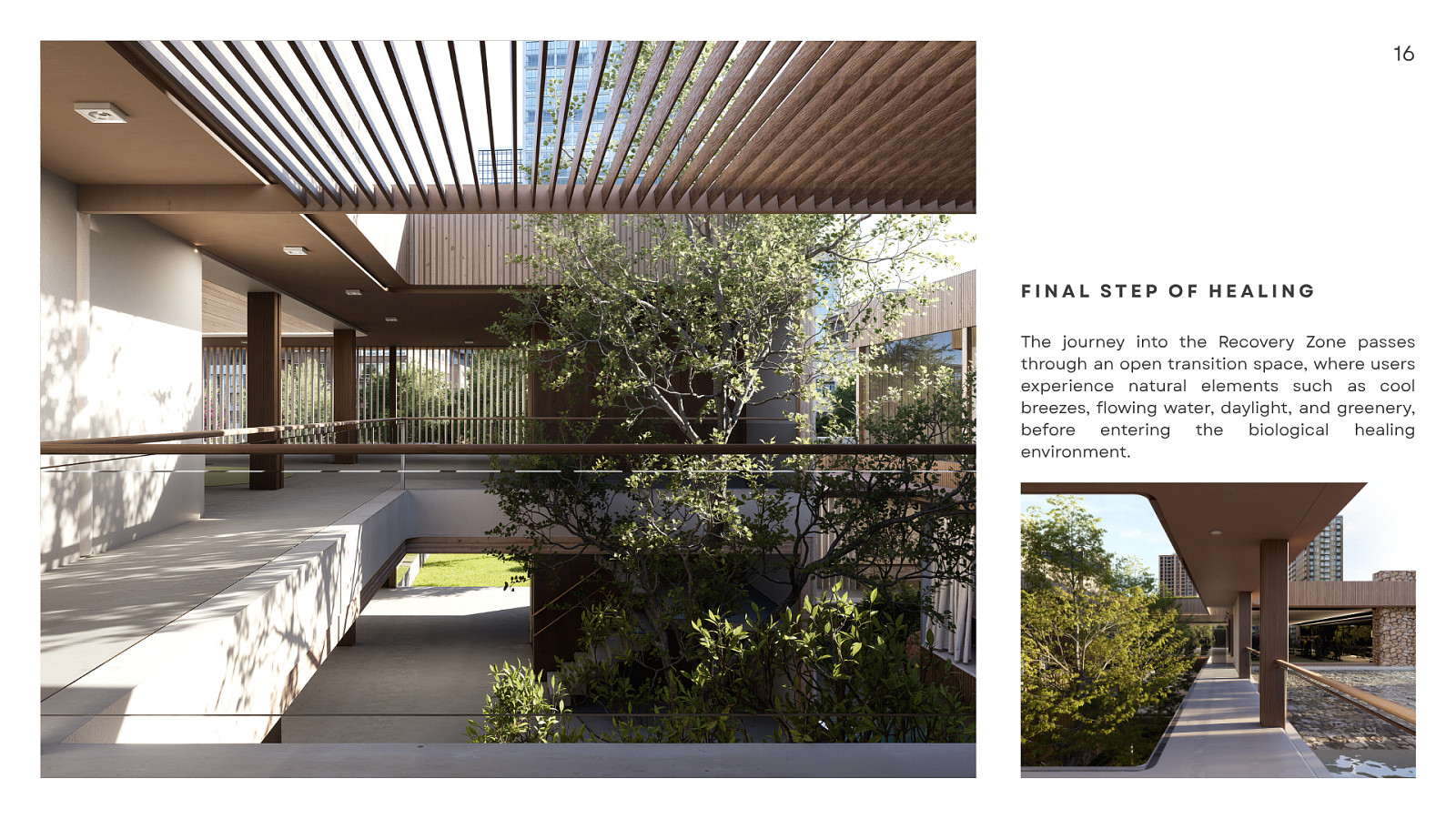
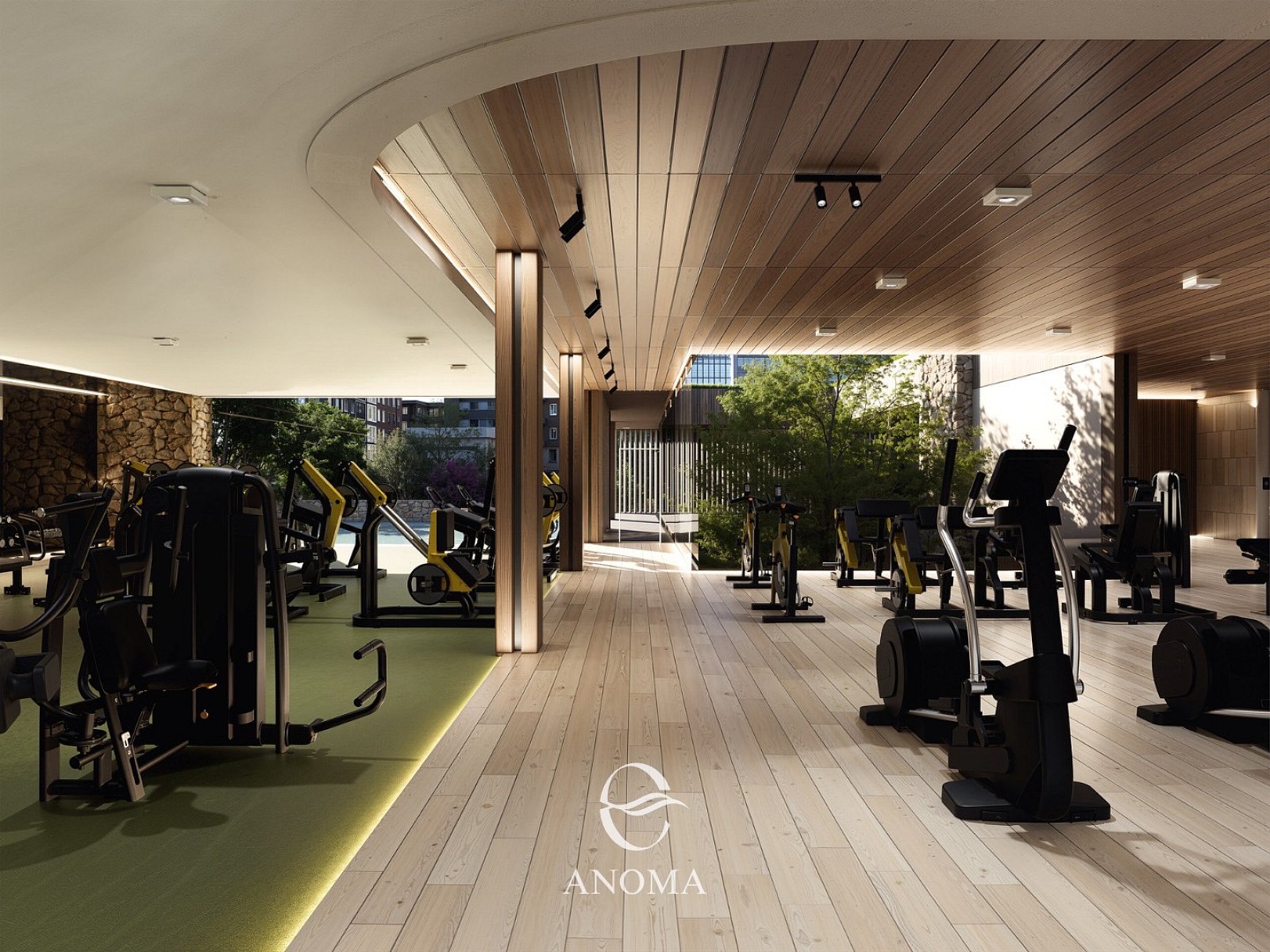
* Spatial sequencing based on the concept of Active → Calm → Recovery, transitioning from movement- and activity-oriented spaces to restorative and contemplative environments.
* Integration of natural daylight and natural ventilation as part of a passive design strategy.
* Strategic wall and ceiling openings to enhance airflow and facilitate heat dissipation from interior spaces.
Main Programs
* Reception Hall
* Dancing Room
* Gym
* Pilates Room
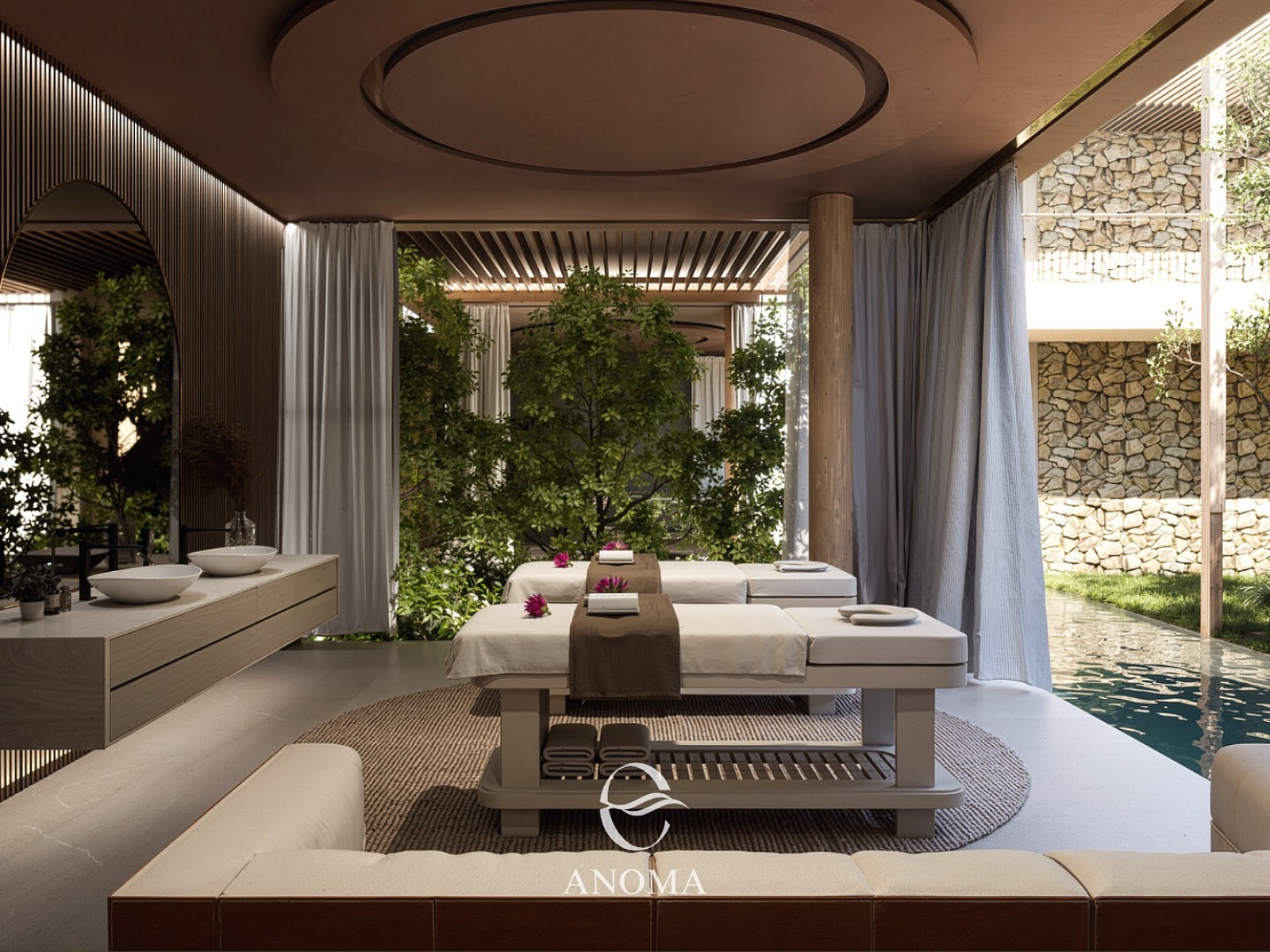
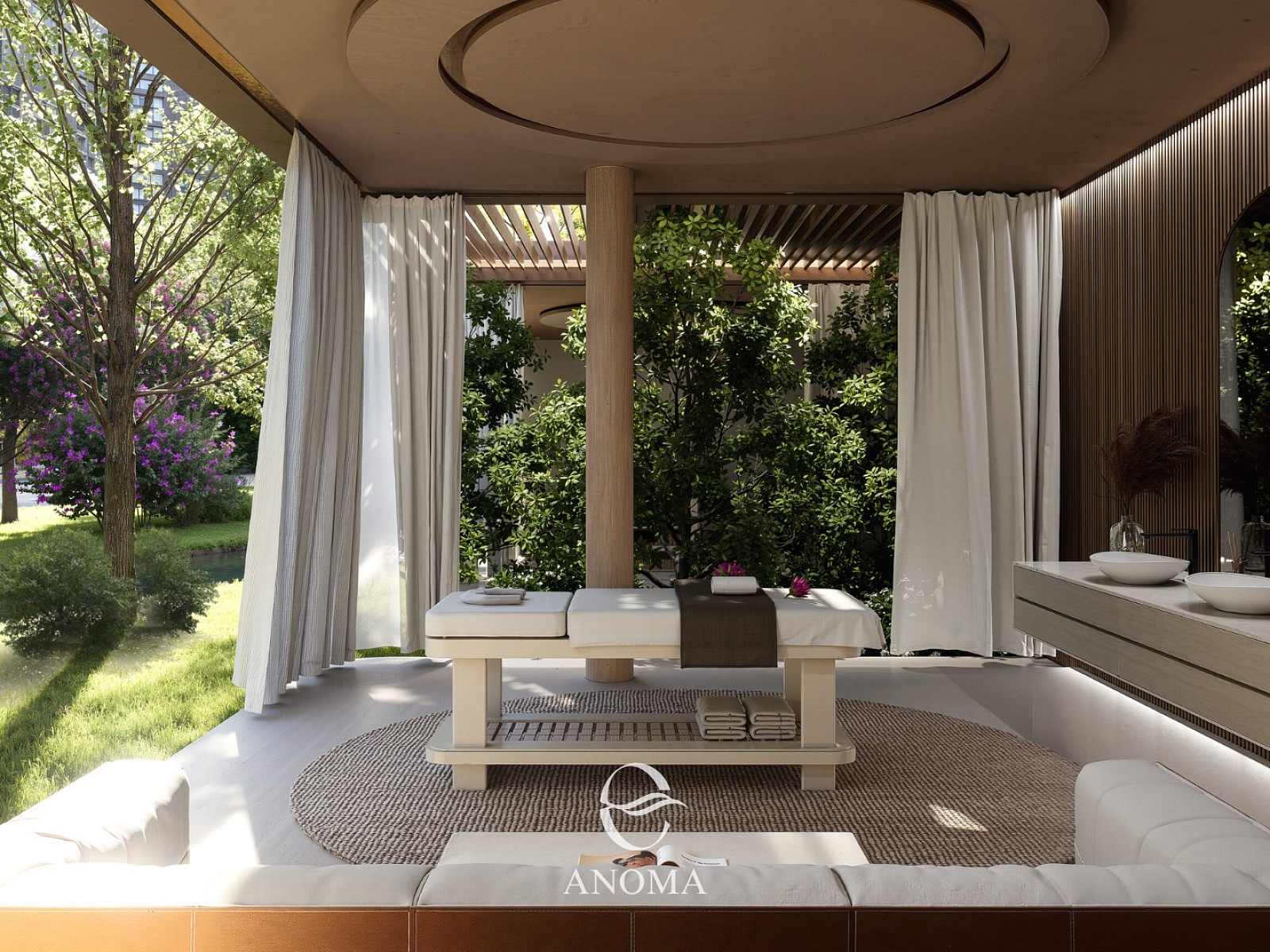
* Massage Rooms
* Treatment Rooms
* Hydrotherapy Room
* Sauna Room
* Meditation Room
* Relaxation Area
* Public Green Space
Materials
* Sintered Stone
* Tempered Glass
* Precast Concrete
* Rubble Stone
* Wood-Plastic Composite (WPC)
* Low-VOC Paint
Sustainability & Accessibility
* Universal Design principles to support users of all ages and abilities.
* Efficient use of natural resources through passive environmental design strategies.
* Integration of public green spaces and community-oriented outdoor areas.
* Renewable energy generation through Solar Cell systems and Kinetic Floor technology.
* Enhancement of user well-being while contributing to urban ecological restoration.
Dokumentace

Copyright © 2026 INSPIRELI | All rights reserved. Use of this website signifies your agreement to the Terms of Use, Privacy Policy, and use of cookies.