[Fire & Resilience]


Idea projektu
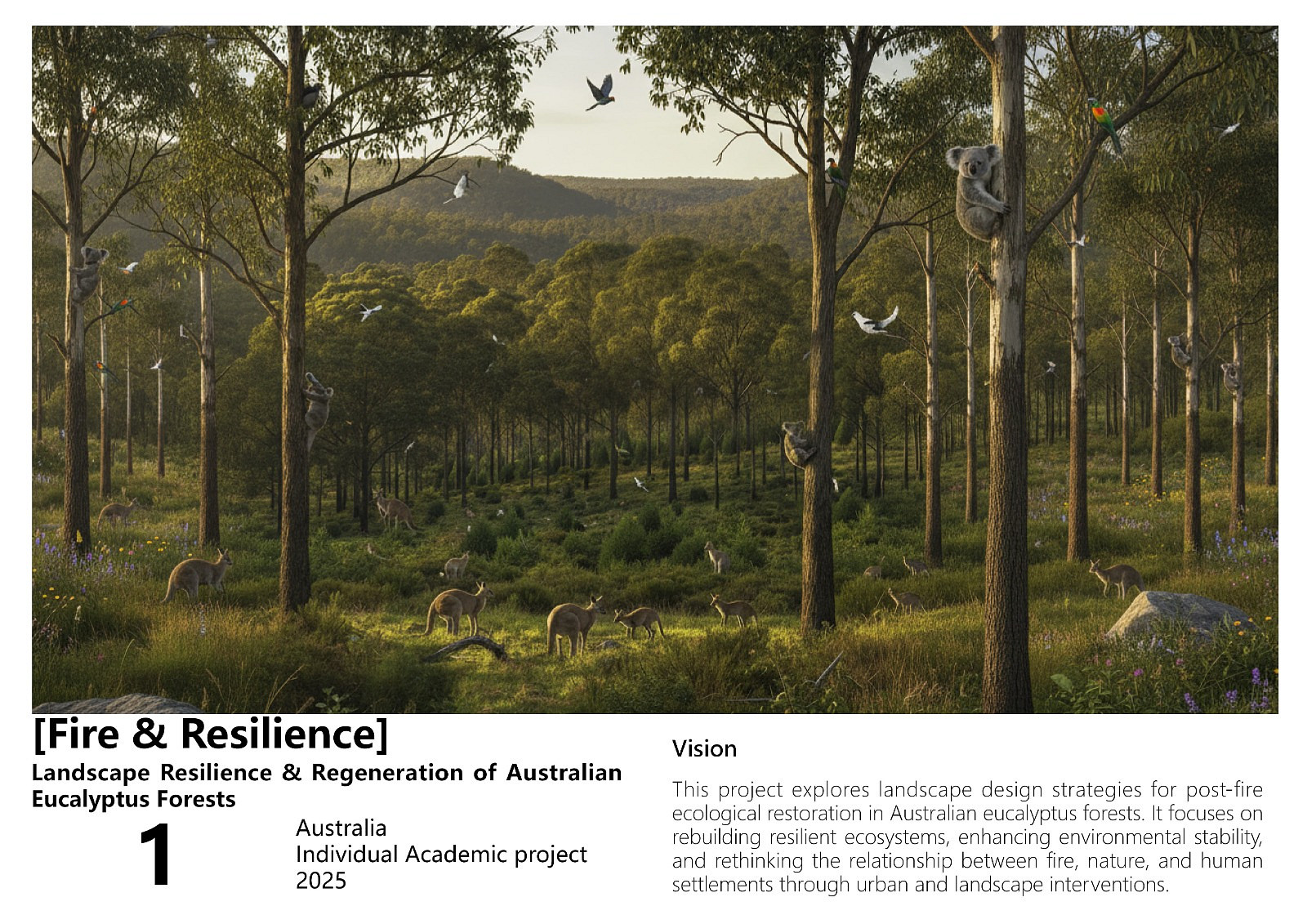
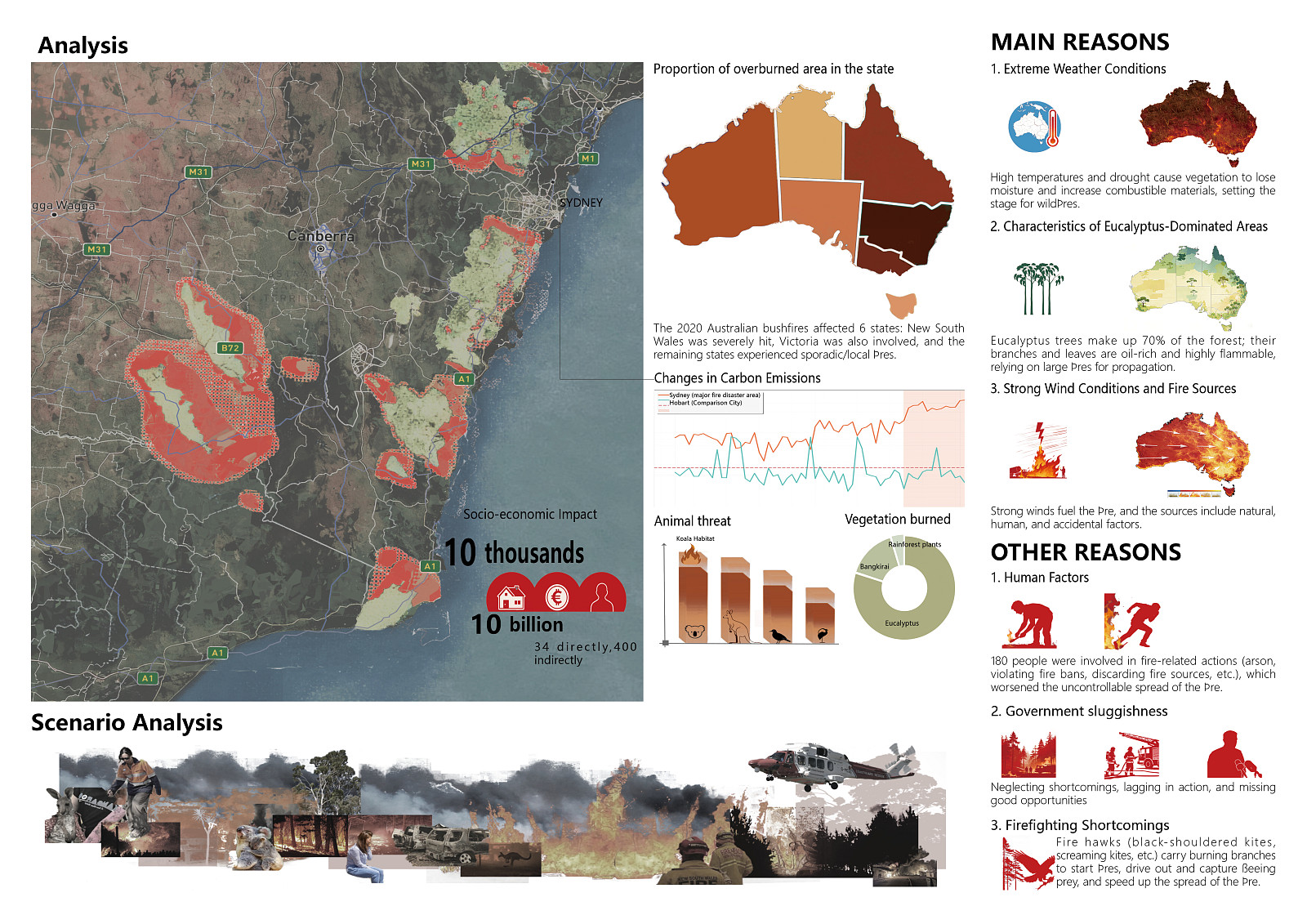
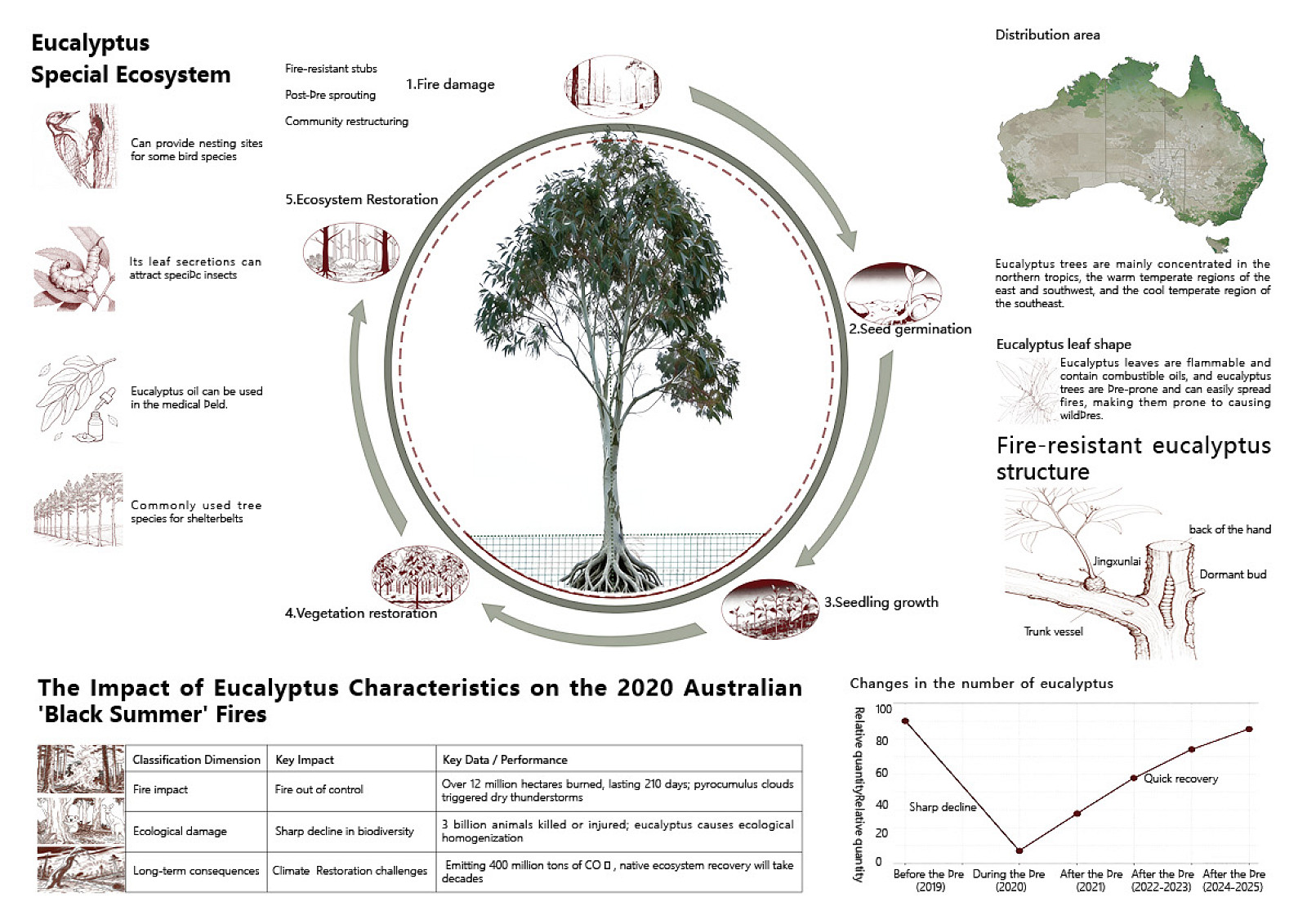
The 2019–2020 Australian “Black Summer” bushfires burned over 12 million hectares, killed billions of animals, and exposed the extreme fire vulnerability of eucalyptus-dominated forests. Covering 70% of Australia's forest area, eucalyptus trees are highly flammable due to their oil-rich foliage, shedding bark, and accumulated litter—yet they rely on fire for regeneration.
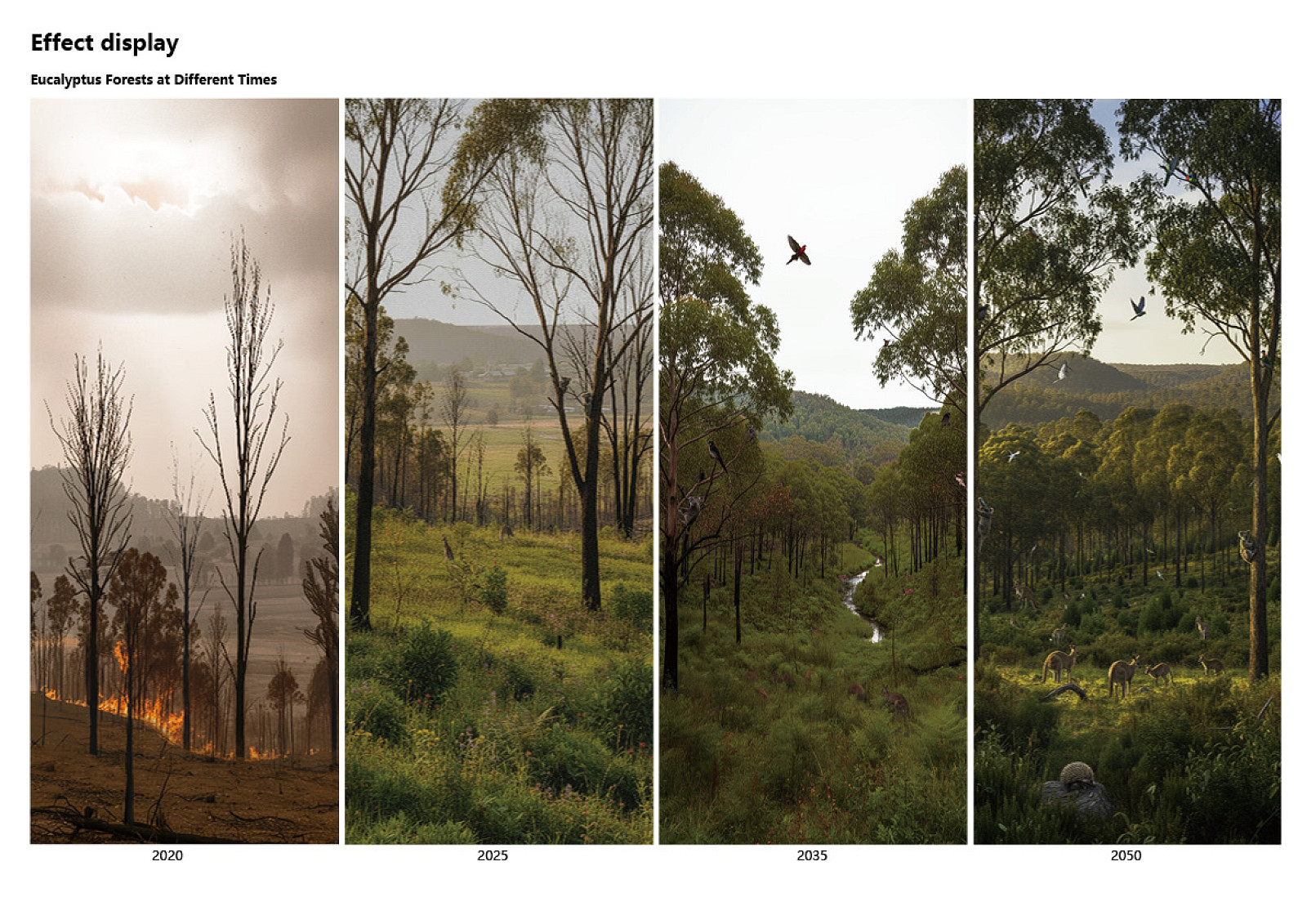
This project proposes landscape design strategies for post-fire ecological restoration in Australian eucalyptus forests. Moving beyond conventional fire suppression, it develops fire-adapted landscapes that coexist with natural fire regimes while protecting communities and biodiversity.
Key objectives:
Reduce fuel load through selective thinning of dense eucalyptus stands
Establish biological firebreaks using fire-resistant native vegetation
Create a mosaic of fire-resilient landscapes (wetlands, farmlands, mixed forests)
Restore biodiversity by reintroducing understorey species and habitat corridors
Protect peri-urban interfaces through strategic landscape planning
The project integrates ecological analysis with spatial design to transform fire-prone territories into resilient ecosystems—offering a replicable model for regions facing increasing wildfire risks under climate change
Popis projektu
The project proposes a multi-scalar landscape design framework for post-fire ecological restoration in Australian eucalyptus forests, addressing both immediate recovery needs and long-term resilience building.
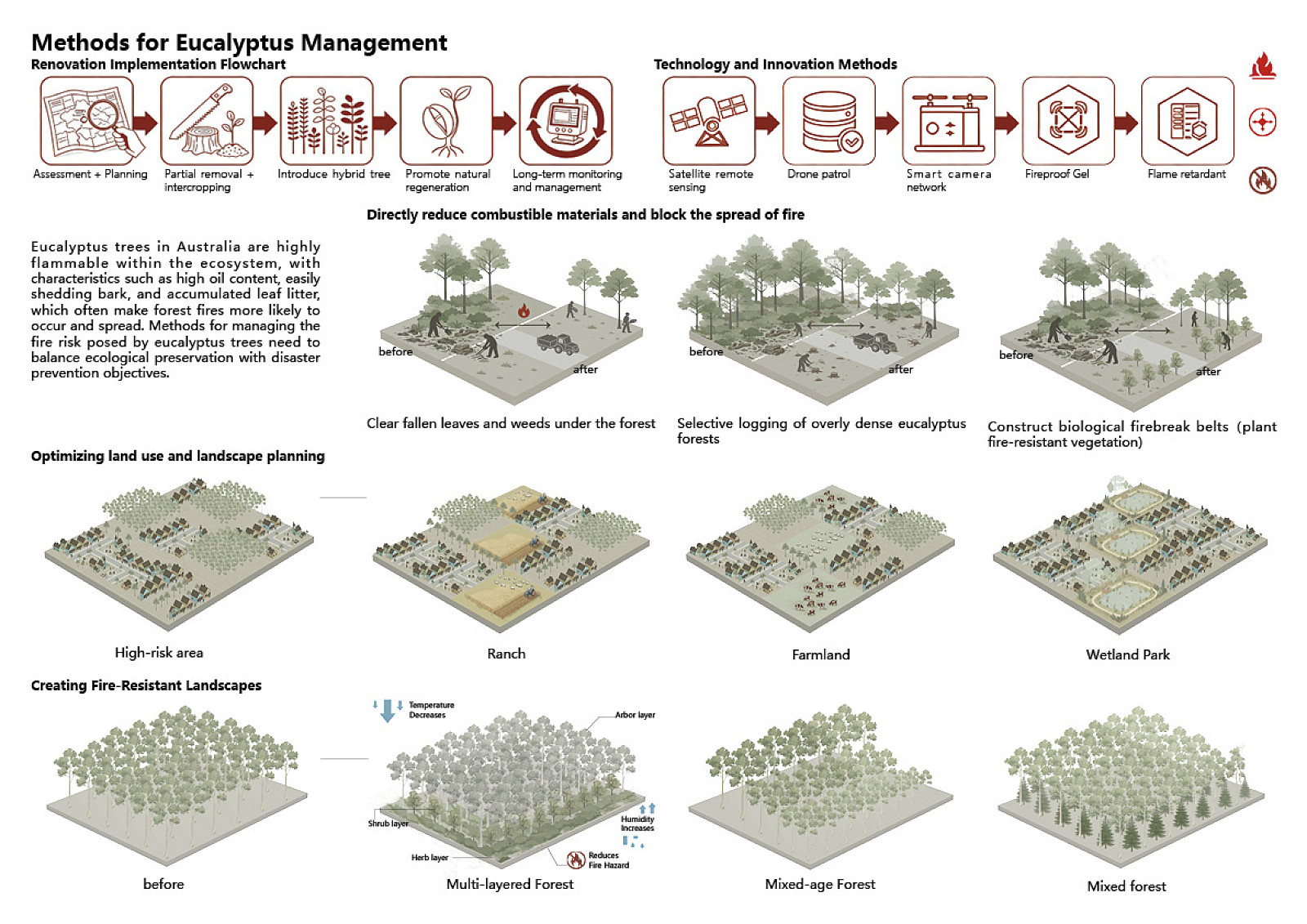
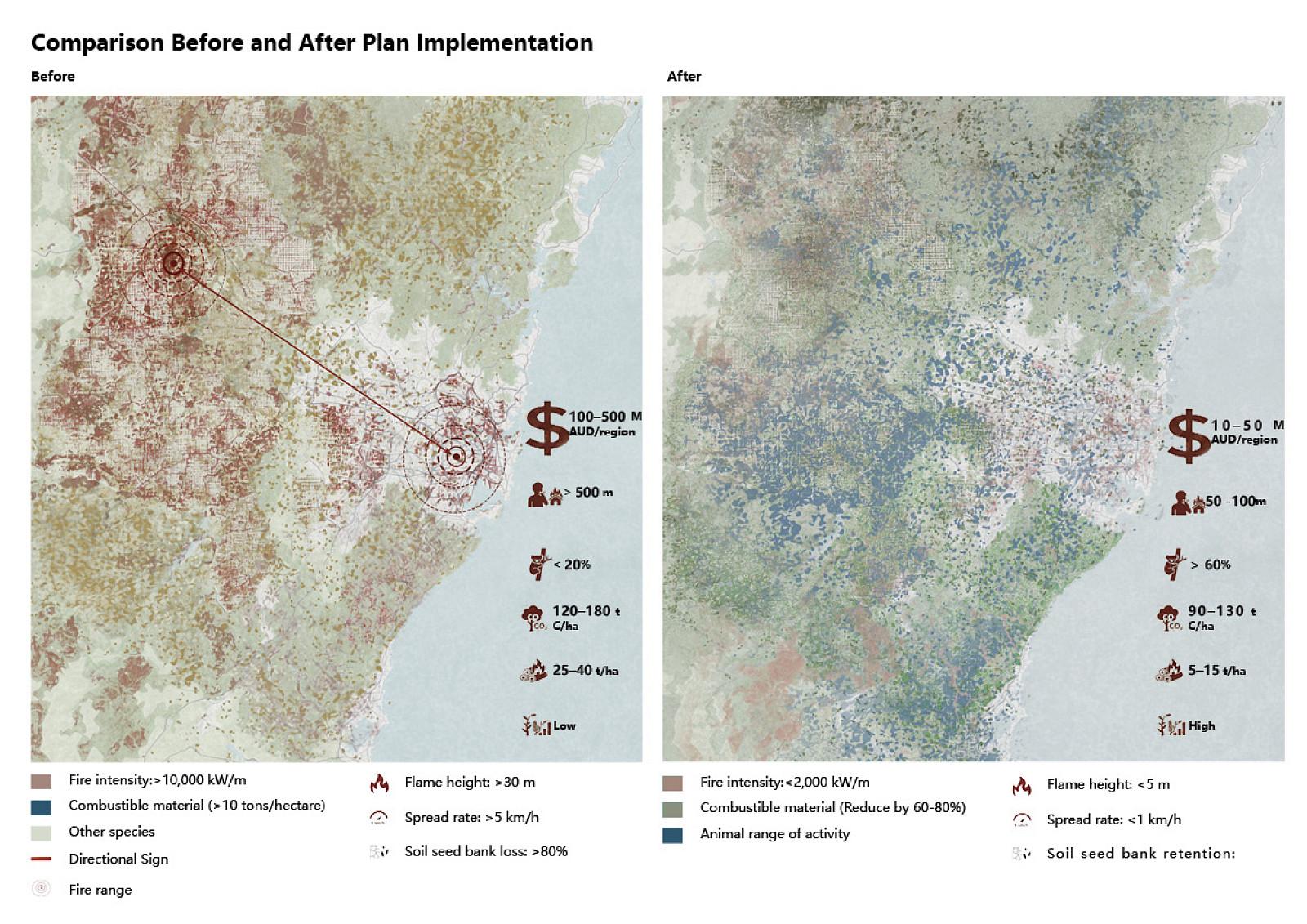
At the regional scale, the solution begins with spatial analysis of fire risk factors—extreme weather patterns, eucalyptus distribution, and human settlement interfaces. This informs the strategic reorganization of land use across fire-prone territories, creating a mosaic of fire-resilient landscape types including wetlands, farmlands, ranchlands, and multi-layered forests that function as natural fire buffers.
At the site scale, the design implements targeted interventions:
Fuel load management: Selective logging of overly dense eucalyptus stands to reduce combustible materials while preserving ecological function
Biological firebreak construction: Planting fire-resistant vegetation along strategic corridors to slow fire spread and provide wildlife refuge
Vegetation structure diversification: Transforming homogeneous eucalyptus forests into mixed-age, multi-species woodlands with enhanced ecological resilience
Habitat restoration: Reintroducing understorey species and creating connectivity corridors for wildlife movement and biodiversity recovery
At the human-ecological interface, the project integrates protective measures for settlements through the strategic placement of fire-resilient landscapes—ranchlands, farmlands, and wetland parks—between wilderness areas and human communities, creating defensible spaces while maintaining ecological continuity.
The solution is grounded in ecological principles: working with natural fire regimes rather than against them, enhancing biodiversity through structural complexity, and designing landscapes that can adapt to changing climate conditions. By integrating these interventions into a coherent spatial framework, the project provides a replicable model for fire-prone regions seeking to balance ecological preservation with disaster risk reduction.
Technické informace
The project applies a multi‑disciplinary technical framework integrating landscape ecology, fire behaviour modelling, and spatial design to develop resilient post‑fire landscapes in Australian eucalyptus forests. Key technical specifications include:
1. Spatial Analysis & Modelling
GIS‑based risk mapping: Overlay of climatic data (temperature, drought indices), vegetation indices (eucalyptus density, fuel load), and topography to identify fire hazard hotspots.
Fire behaviour simulation: Use of Phoenix RapidFire or similar models to predict fire spread under various wind scenarios, informing the placement of firebreaks and buffer zones.
Biodiversity assessment: Remote sensing and field data to map habitat corridors and prioritize areas for understorey restoration.
2. Fuel Load Reduction
Selective thinning: Removal of 30–50% of eucalyptus stems in over‑dense stands (density >1,500 trees/ha) to reduce available fuel while retaining veteran trees for habitat.
Slash treatment: Mulching or controlled pile burning of thinned material to prevent additional fuel accumulation.
3. Biological Firebreak Design
Vegetation selection: Fire‑resistant native species with high moisture content (e.g., rainforest transition species, Pomaderris spp., Kunzea spp.) planted in belts 50–200 m wide depending on slope and fire risk.
Spatial configuration: Firebreaks aligned perpendicular to prevailing wind directions, connected to water bodies and fuel‑managed zones.
4. Landscape Mosaic Planning
Land use allocation: Zoning based on fire risk and ecological value:
High‑risk/wilderness zones: Fuel management and ecological restoration.
Buffer zones (ranch, farmland): Low‑flammability crops or grazing land.
Wetland parks: Constructed wetlands with 1–2 m deep pools, emergent vegetation, and surrounding moist soil zones to act as humidity sinks.
Patch size and connectivity: Habitat patches sized >10 ha to support core fauna populations, linked by corridors 100–500 m wide.
5. Vegetation Structure Enhancement
Multi‑layer forest creation: Planting of understorey shrubs, groundcovers, and mid‑canopy trees to increase structural complexity and moisture retention.
Species mix: Introduction of non‑eucalyptus native species (e.g., Acacia spp., Allocasuarina spp.) at 20–40% composition to diversify fuel characteristics.
6. Hydrological Interventions
Wetland construction: Excavation to create shallow basins, lined with clay if necessary, planted with sedges and rushes to maintain year‑round moisture.
Swales and detention basins: Earthworks to capture runoff, increase soil moisture, and create microclimates that reduce fire intensity.
7. Monitoring & Adaptive Management
Post‑intervention assessment: Permanent transects to monitor fuel load, species diversity, and regeneration every 2–3 years.
Fire scenario updating: Re‑run fire models every 5 years to adjust management strategies in response to climate trends.
All technical interventions are designed to be low‑impact, using locally sourced materials and native species, and are adaptable to different topographical and climatic contexts across fire‑prone eucalyptus regions.

Copyright © 2026 INSPIRELI | All rights reserved. Use of this website signifies your agreement to the Terms of Use, Privacy Policy, and use of cookies.