“Space of Tradition: Preserving Cultural Legacy of Nakshi Craft through an Exposition Center in Jamalpur.”


Idea projektu
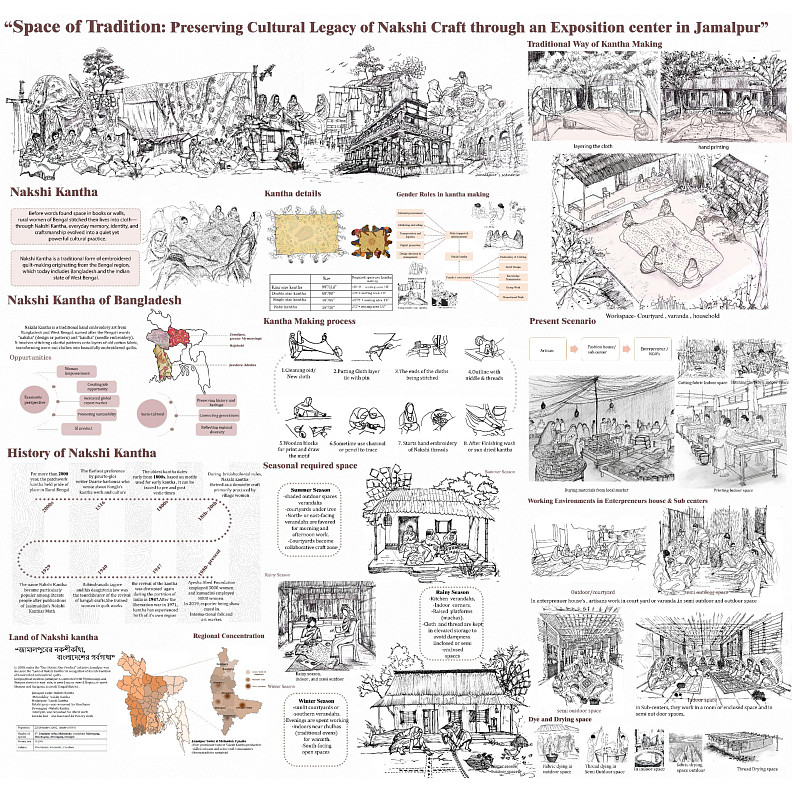
Space of Tradition: Preserving Cultural Legacy of Nakshi Craft through an Exposition Center in Jamalpur explores architecture as a medium for preserving and revitalizing intangible cultural heritage. Nakshi Kantha, a traditional embroidered textile of rural Bangladesh, represents generations of stories, memories, and social identity embedded within everyday life. However, the continuity of this craft tradition is increasingly threatened by modernization, economic shifts, and the gradual decline of traditional craft practices.
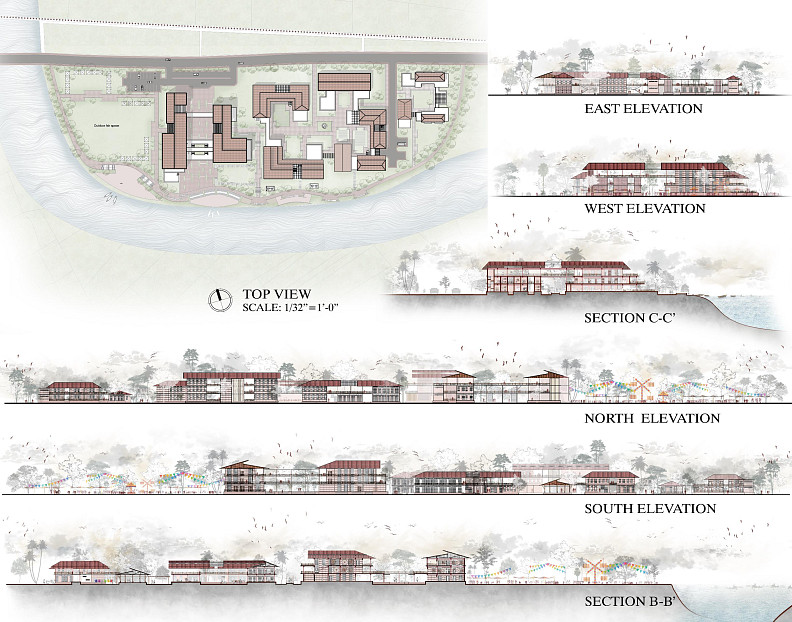
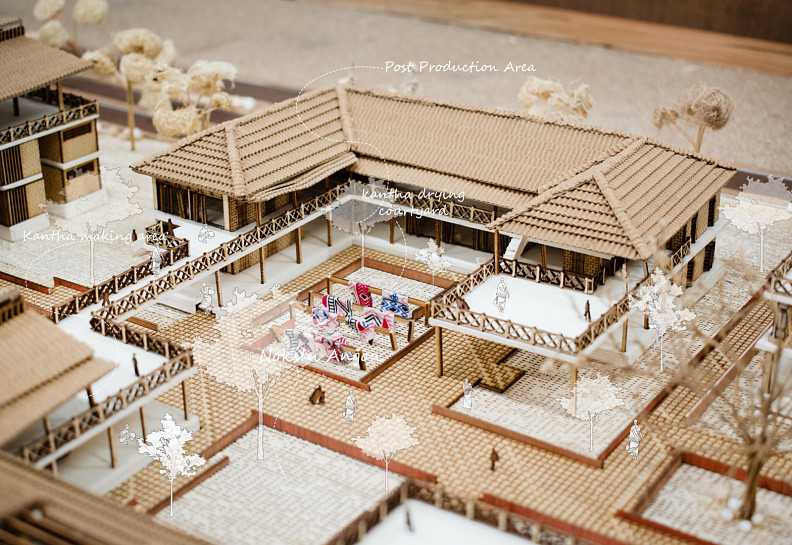
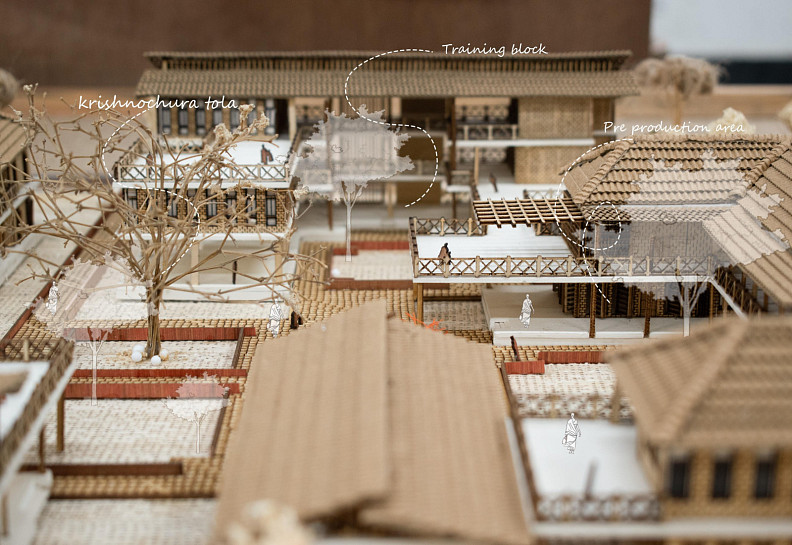
The project proposes an exposition center in Jamalpur, a region historically associated with Nakshi craft production. The design aims to create a cultural platform where craft, community, and space interact. Beyond exhibition, the project integrates spaces for craft production, learning, workshops, and public engagement, enabling artisans and visitors to experience the cultural narrative embedded within the craft.
By connecting architecture with landscape and local cultural practices, the project envisions a living environment where tradition is not only preserved but continuously practiced and shared. The primary objective is to strengthen cultural identity, empower local artisans, and ensure the continuity of Nakshi craft through meaningful spatial experiences.
Popis projektu
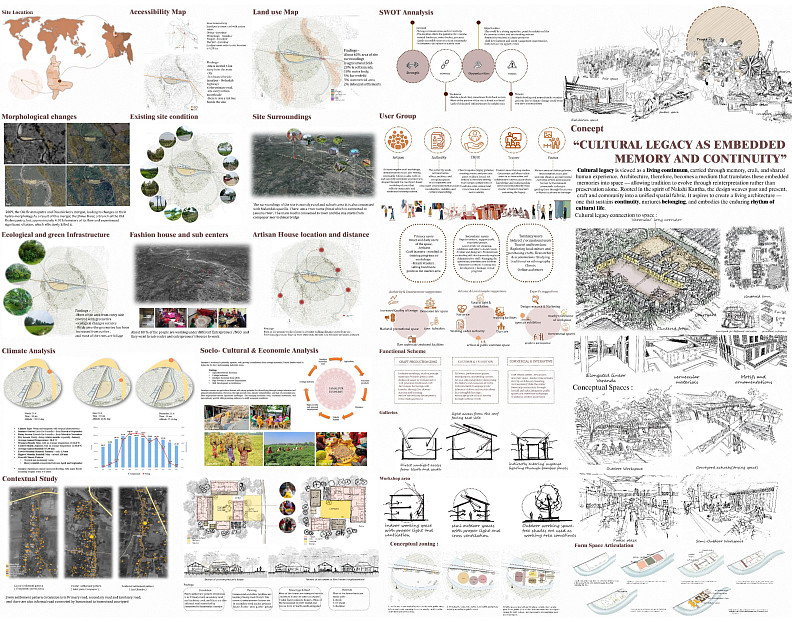
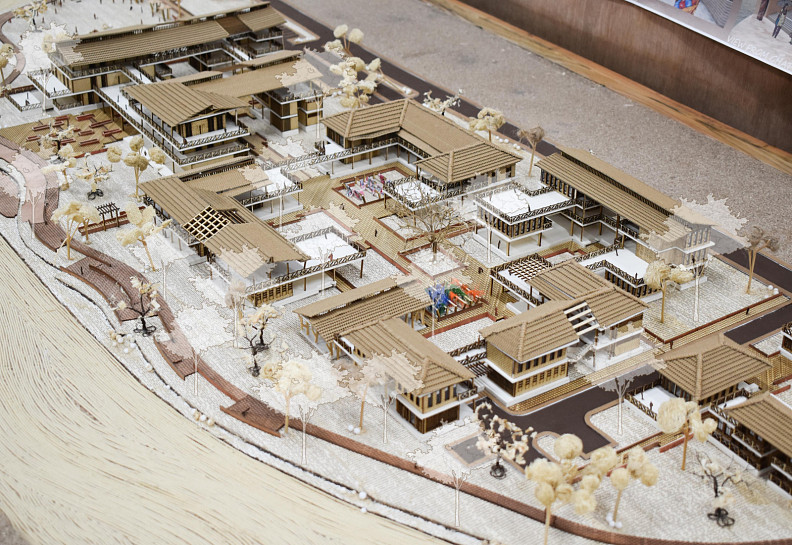
The project proposes a cultural exposition center in Jamalpur dedicated to the preservation and promotion of Nakshi Kantha craft. Situated within a landscape influenced by the nearby Jhinai River, the design responds to the regional context and rural cultural practices. The architectural intervention seeks to establish a spatial framework that connects craft production, cultural learning, and public engagement.
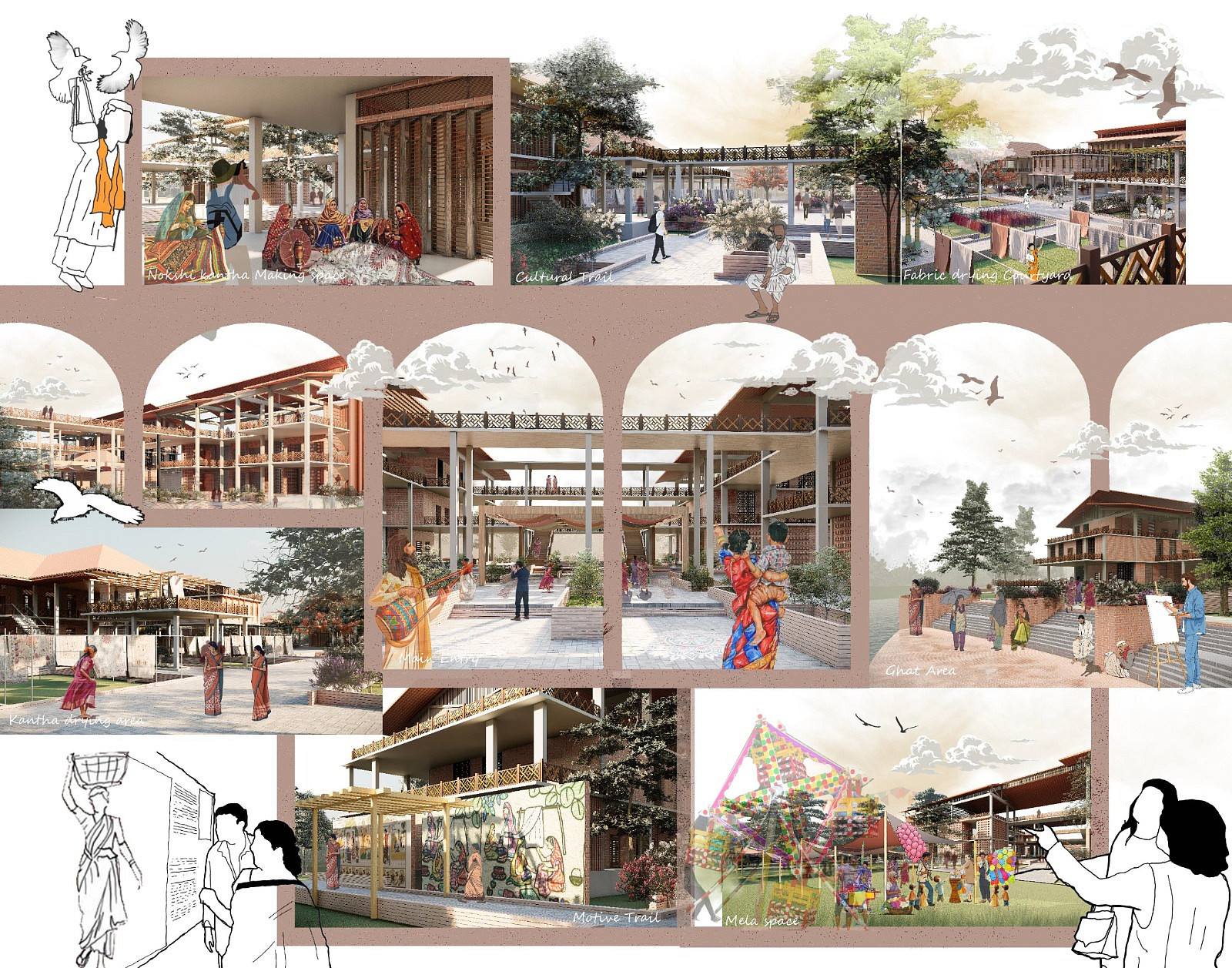
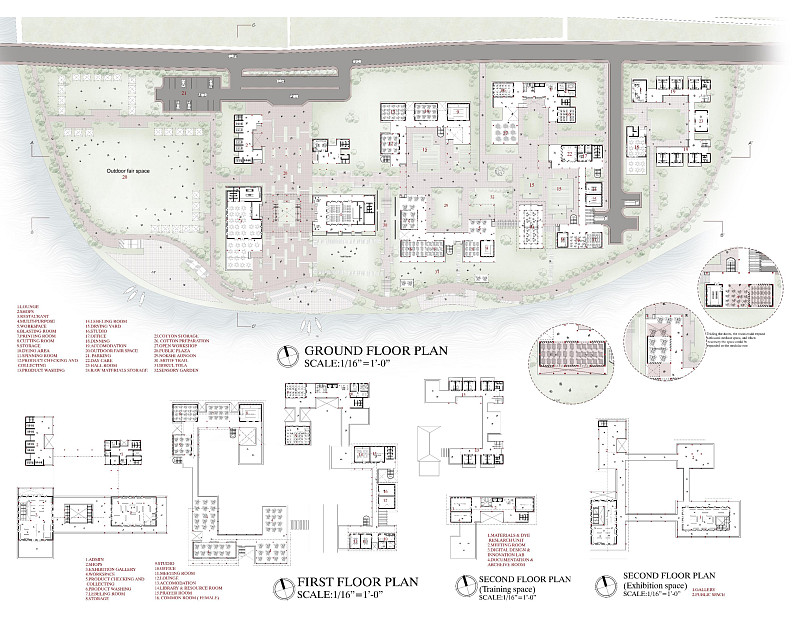
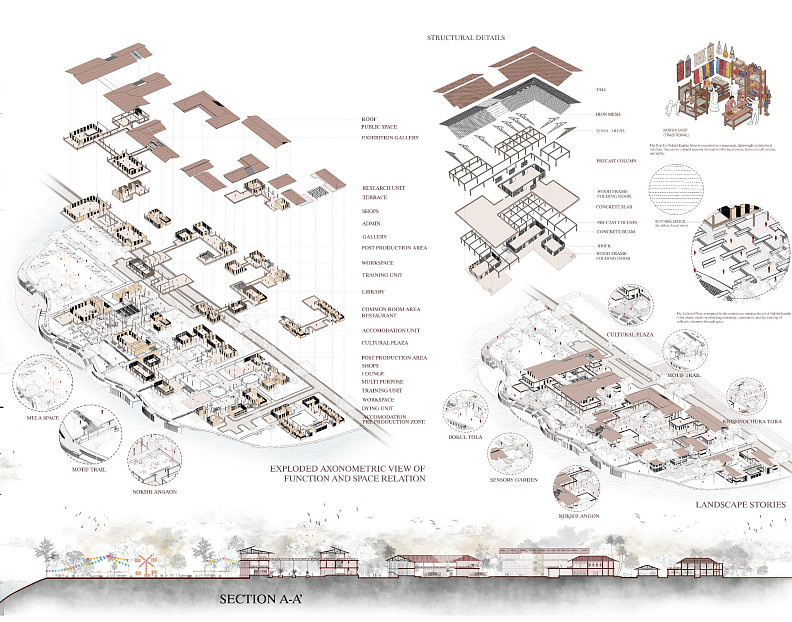
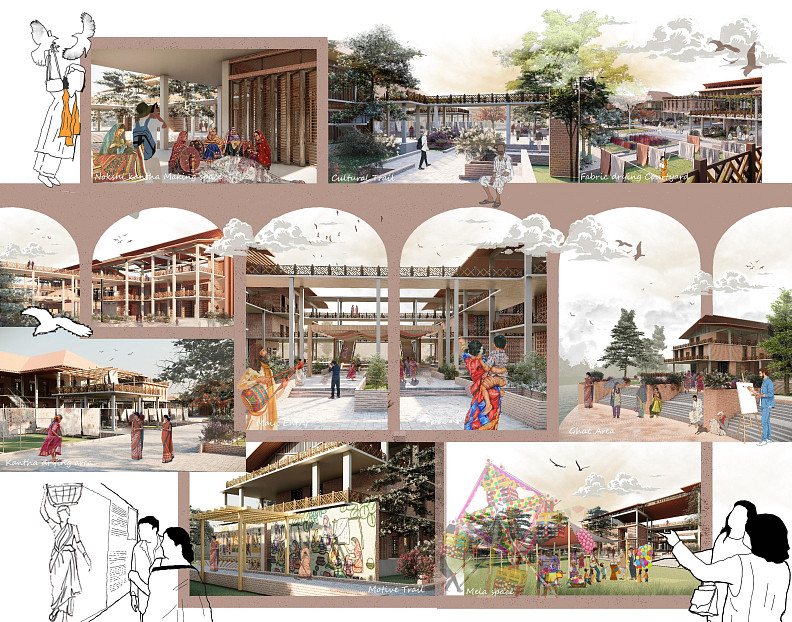
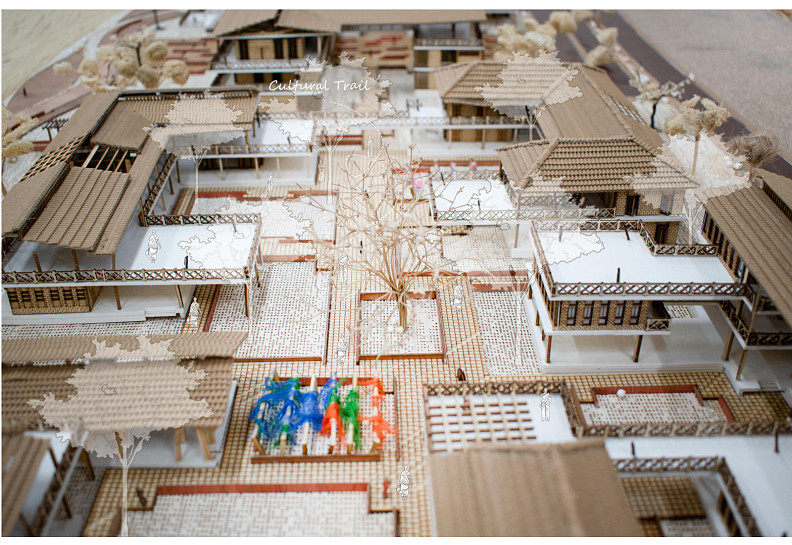
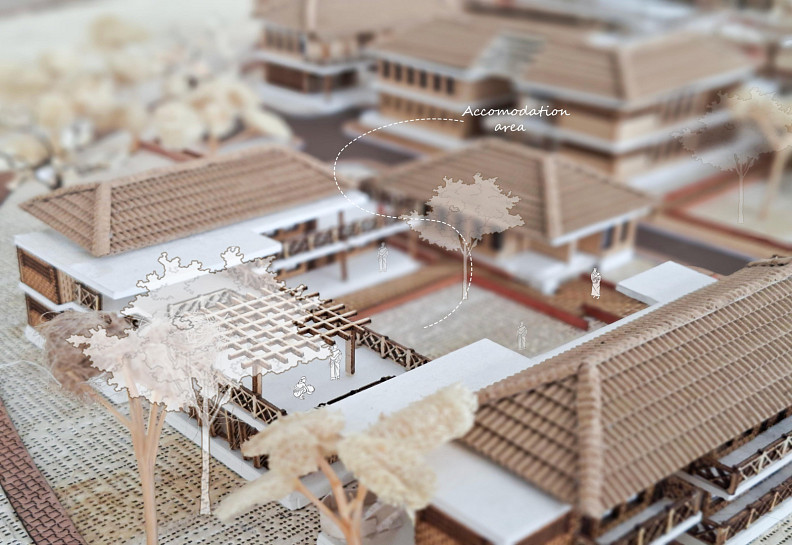
The program includes exhibition galleries, artisan workshops, training spaces, community gathering areas, and open public landscapes. These components are organized through a sequence of courtyards, circulation spines, and interactive spaces that allow visitors to experience the craft process—from its cultural origins to contemporary interpretations. The spatial arrangement encourages both observation and participation, creating opportunities for artisans and visitors to interact.
The project also integrates landscape elements and public pathways that extend the experience beyond the built structure, creating a cultural journey that gradually unfolds toward the riverfront. Through this integration of architecture, craft production, and public space, the proposal aims to support artisan livelihoods while establishing a cultural destination that celebrates the living tradition of Nakshi Kantha.
Technické informace
The project adopts a reinforced concrete (RCC) frame structural system to ensure structural stability, flexibility of interior spaces, and long-term durability. The column–beam structural grid allows larger span exhibition spaces while accommodating smaller modular units for craft workshops and ancillary functions. Load-bearing brick masonry is used as infill within the structural frame.
The architectural expression incorporates vernacular building principles commonly found in rural Bengal. Pitched roof forms are introduced to respond to the region’s heavy monsoon rainfall and to reflect traditional rural house typologies. Clay roof tiles (tali) are used as the primary roofing material, supported by timber or lightweight steel roof trusses above the reinforced concrete structural framework.
Locally available brick and terracotta elements are used for wall construction and façade articulation, providing thermal mass and contextual material identity. Shaded verandas, deep roof overhangs, and semi-open transitional spaces are incorporated to improve passive climatic performance by reducing heat gain and allowing natural ventilation.
The construction approach combines traditional material use with contemporary structural techniques, ensuring structural efficiency, climatic responsiveness, and contextual relevance within the rural landscape of Jamalpur.
Dokumentace
Show PDF 1Show PDF 2Show PDF 3Show PDF 4Show PDF 5Show PDF 6Show PDF 7Show PDF 8Show PDF 9Show PDF 10Show PDF 11

Copyright © 2026 INSPIRELI | All rights reserved. Use of this website signifies your agreement to the Terms of Use, Privacy Policy, and use of cookies.
