MEMORY OF A KILN


Idea projektu
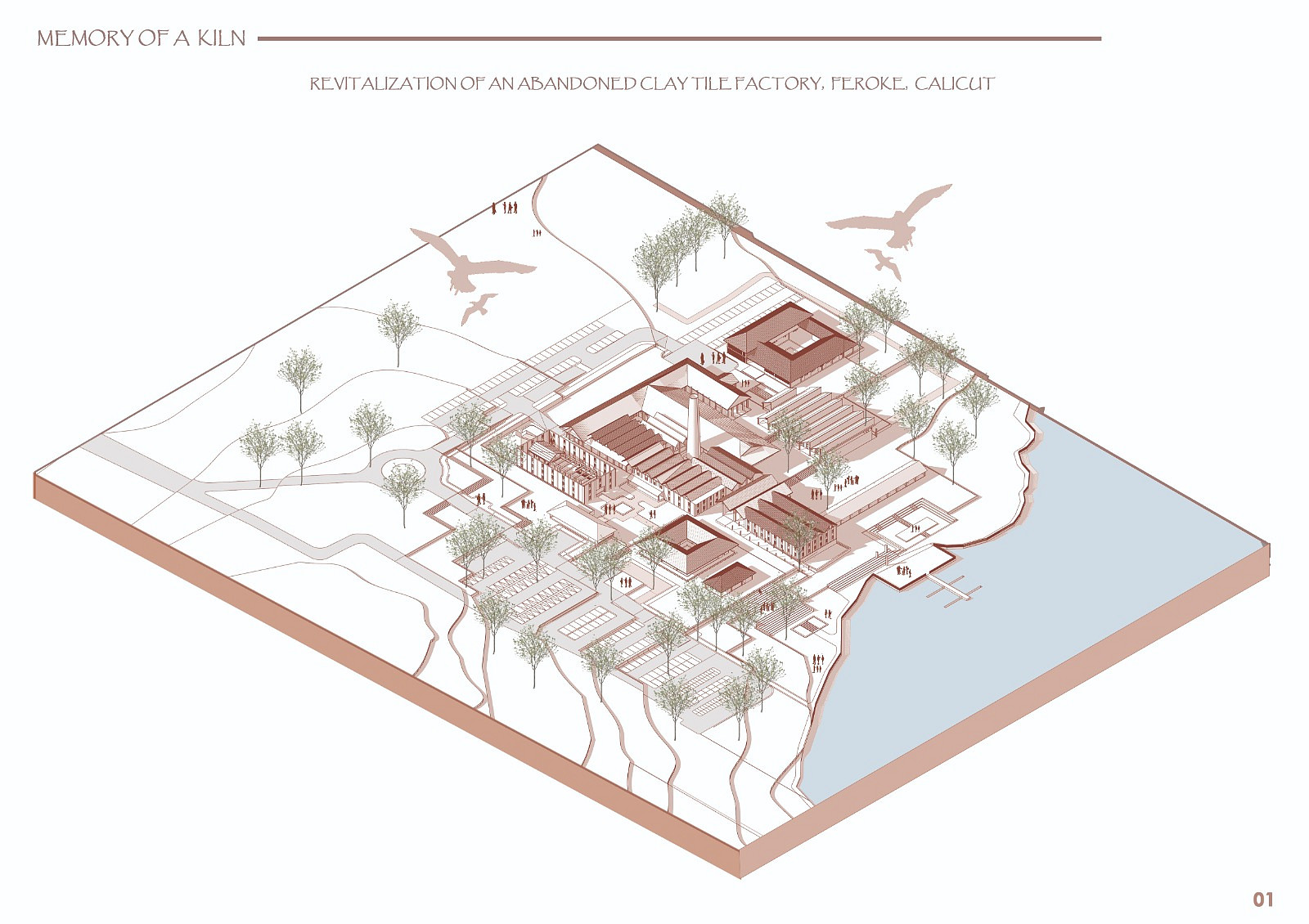
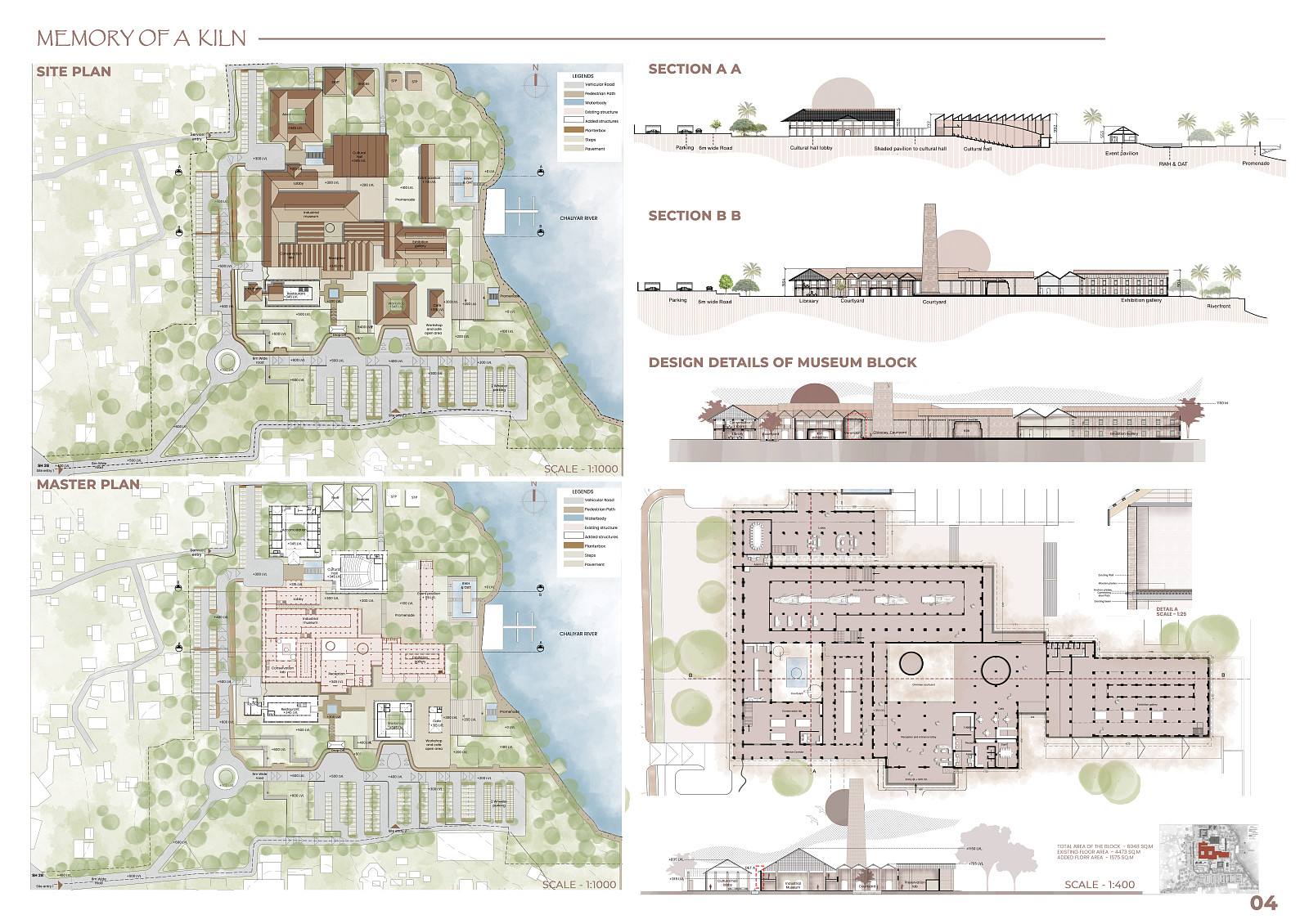
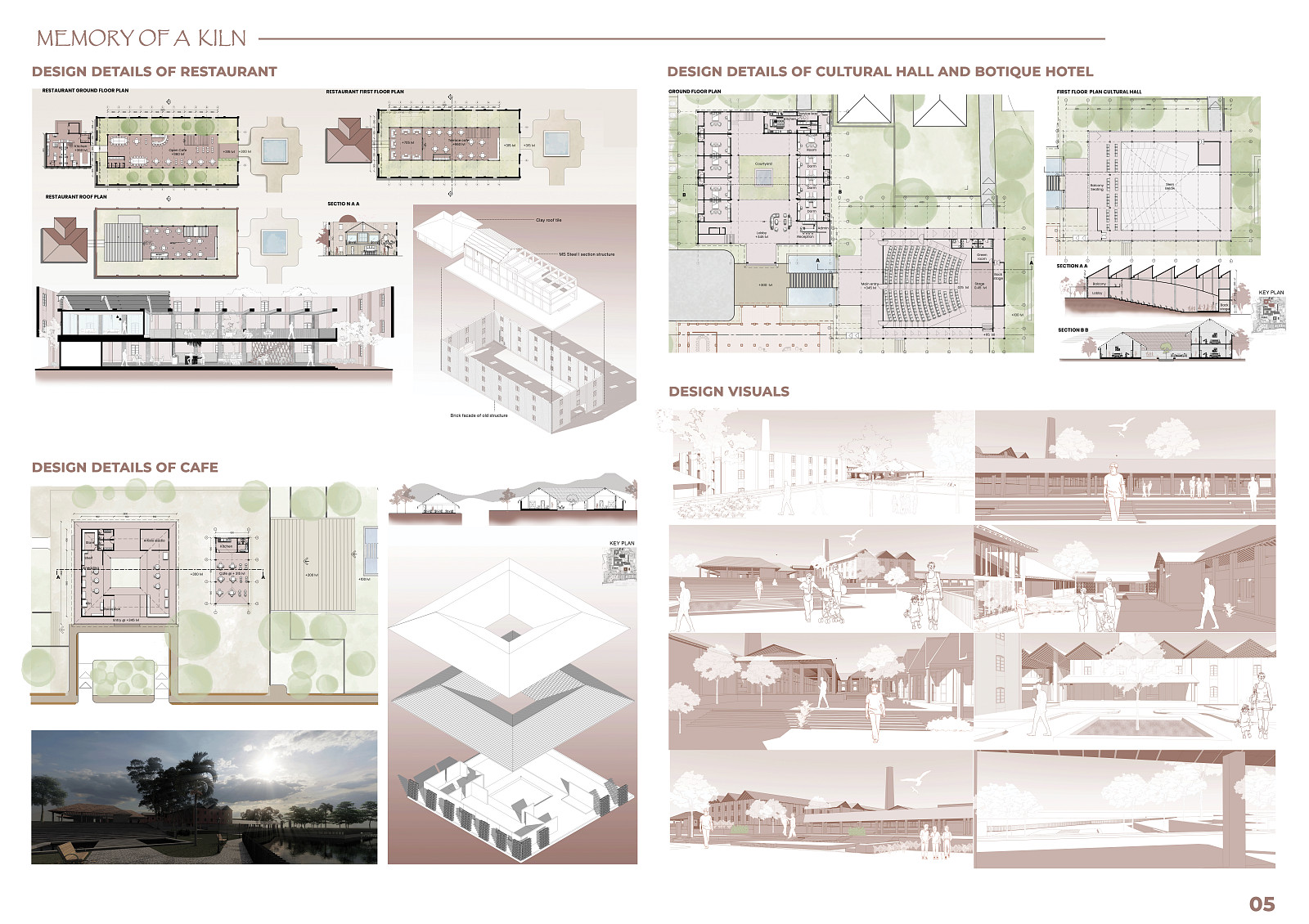
MEMORY OF A KILN – REVITALIZATION OF AN ABANDONED CLAY TILE FACTORY AS A HERITAGE HUB
Cities evolve through layers of history, and their identity often lies embedded within their industrial fabric. As Jane Jacobs observed, “Cities need old buildings so badly it is probably impossible for vigorous streets and districts to grow without them.’’
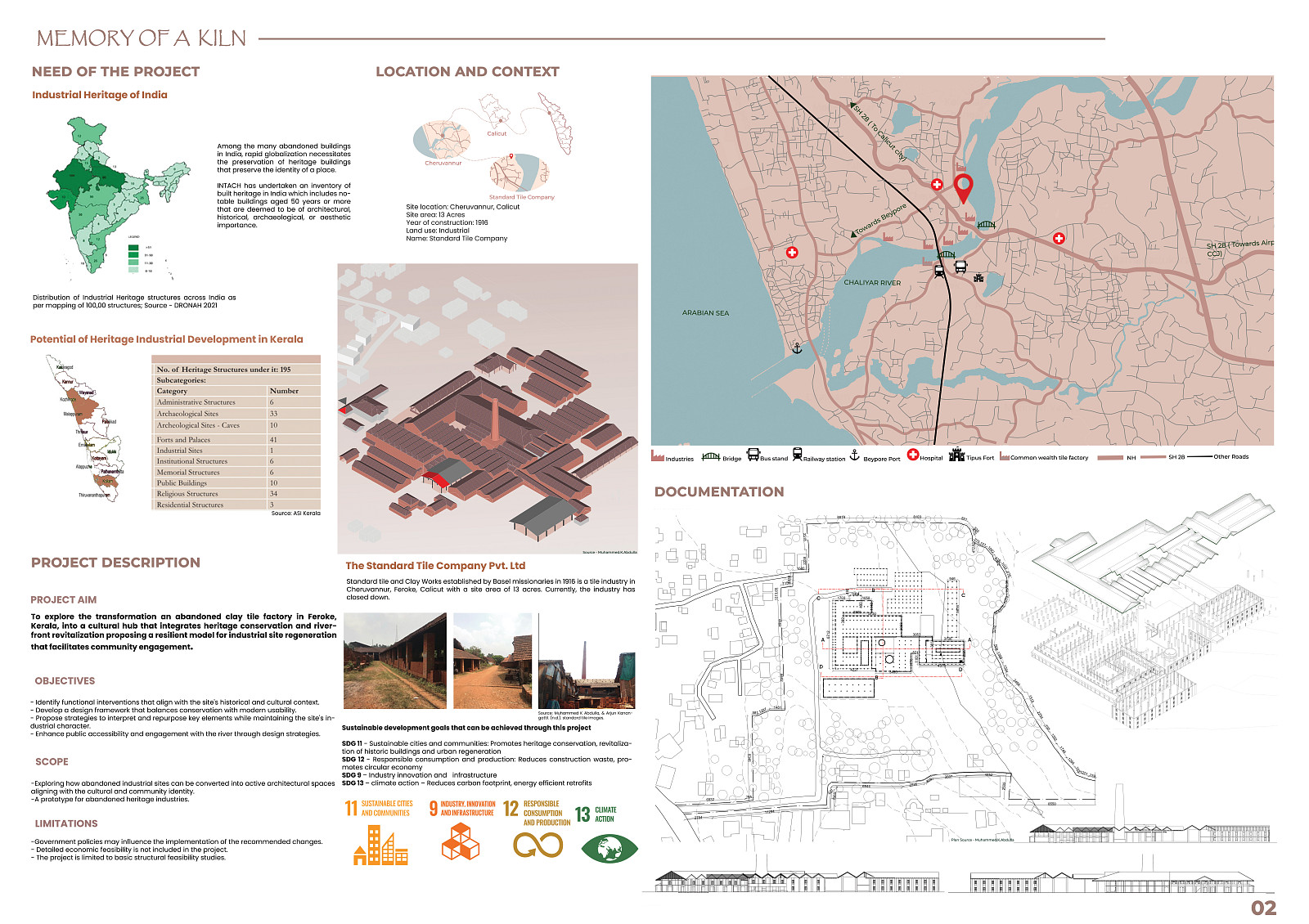
The thesis focuses on the adaptive reuse of the Standard Clay Tiles Factory in Cheruvannur, Calicut, located along the Chaliyar River. Established under the Basel Evangelical Mission (BEM) in the 19th century, the factory was one of several tile industries that shaped Calicut’s industrial identity. With time, changing environmental regulations, limited access to raw materials, and outdated production methods led to their decline. The abandoned structures today represent both the fading legacy of Kerala’s industrial heritage and a potential opportunity for cultural renewal.
Aim
To transform the abandoned Standard Clay Tile Factory in Feroke, Kerala, into a cultural hub that integrates heritage conservation and riverfront revitalization, proposing a resilient model for industrial site regeneration and community engagement.
Objectives
• Identify functional interventions that align with the site’s historical and cultural context.
• Develop a design framework that balances conservation with modern usability.
• Repurpose key structural elements while maintaining the site’s industrial character.
• Enhance public accessibility and engagement with the river through thoughtful design strategies.
Justification
Kerala’s rapid urbanization has resulted in the neglect of its industrial heritage, leading to the loss of community identity and historical continuity. Revitalizing such sites aligns with UN Sustainable Development Goals 11 and 12, promoting sustainable cities, responsible resource use, and cultural tourism. Adaptive reuse reduces construction waste, preserves embodied energy, and creates vibrant spaces rooted in collective memory.
Site Context
The site lies in Feroke, historically known as the cradle of clay tile industry in Kerala, with about eight similar factories along the Chaliyar River. The site’s proximity to key transport routes and tourist destinations like Beypore Beach, and Kadalundi Sanctuary enhances its potential as a heritage destination. The riverfront provides a natural setting for climatic responsiveness and public engagement.
Popis projektu
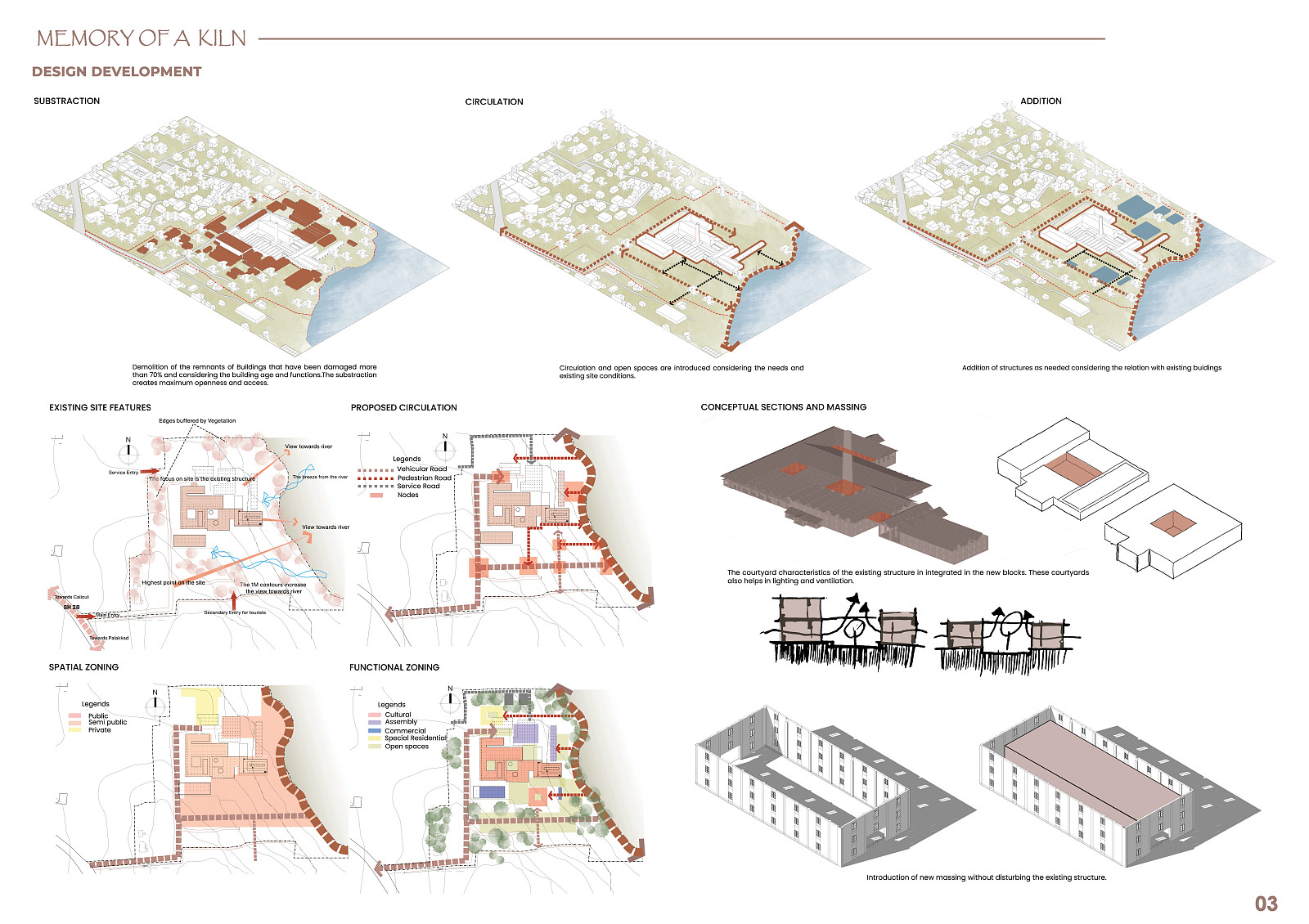
The design approach is guided by the concept of “Continuity and Contrast”, inspired by the martial art principle of Aikido—where opposing energies harmonize. The proposal retains the industrial essence of the factory while integrating new, contemporary interventions. Existing structures will be adaptively reused for museum, exhibition, and cultural functions, while new additions such as cafés, riverfront promenades, and boutique stays create an exclusive visitor experience.
Minimal intervention, material reuse, and contextual design principles will ensure the preservation of heritage integrity while accommodating modern needs. The project envisions a riverfront cultural hub that reconnects people to their industrial past, establishes ecological resilience along the Chaliyar, and serves as a replicable model for similar sites in Kerala.
Technické informace
Expected Outcomes
• A design proposal that reimagines the abandoned clay tile factory as a heritage and cultural hub.
• A framework for adaptive reuse of industrial heritage structures that integrates sustainability, conservation, and community engagement.

Copyright © 2026 INSPIRELI | All rights reserved. Use of this website signifies your agreement to the Terms of Use, Privacy Policy, and use of cookies.