Dehleez: A reinterpretation of Death on the ghats of Varanasi


Idea projektu
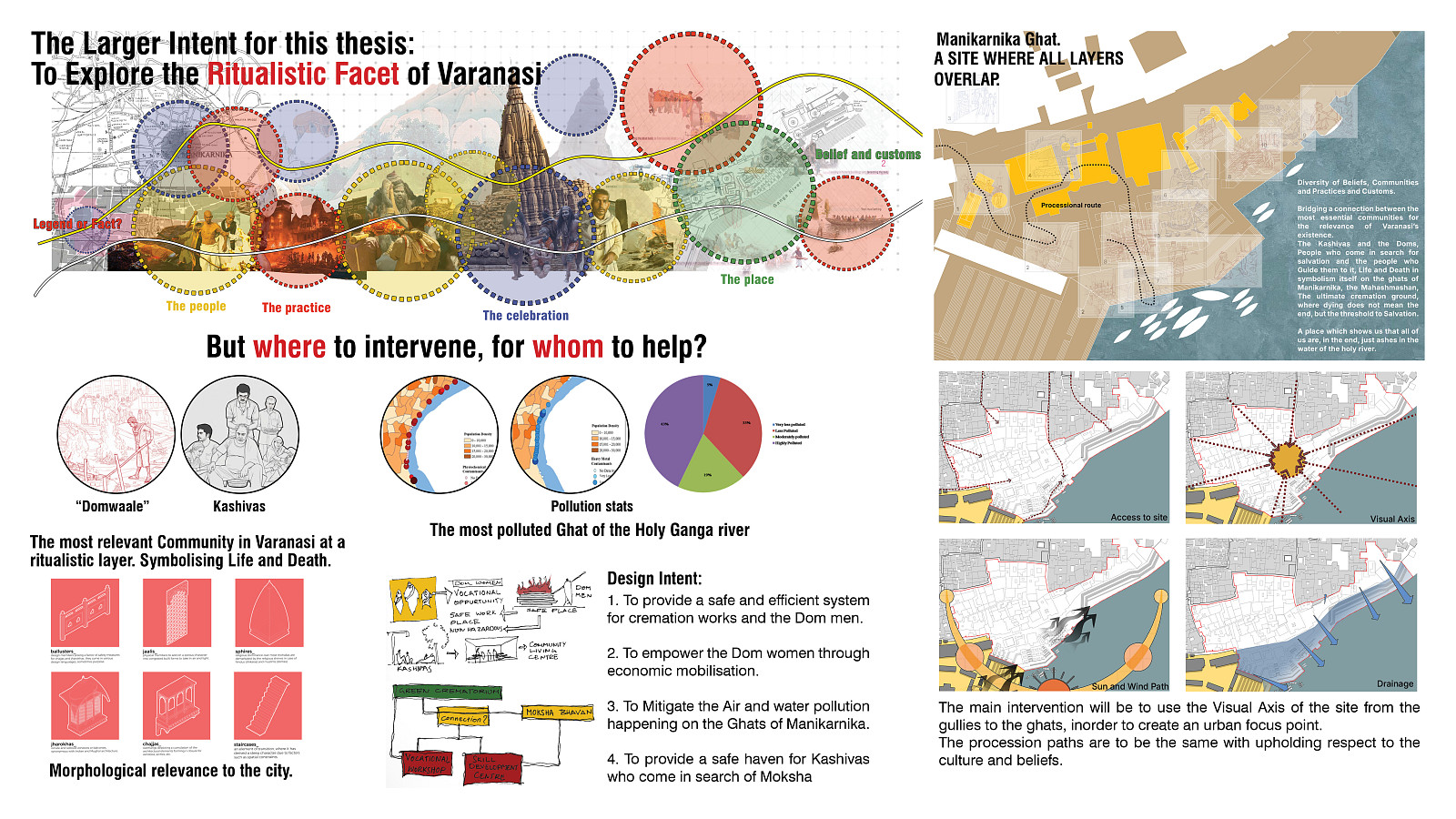
an architectural exploration of the intersection between ritual, community, and ecology within a sacred yet socially unequal landscape. The project addresses the paradox of the Dom community, who perform essential cremation rituals yet remain marginalized and exposed to hazardous conditions. It proposes a phase-wise transformation that improves working environments, introduces sustainable cremation systems, and creates livelihood opportunities through craft-based production. By integrating social awareness, ecological strategies, and spatial redesign, the project aims to foster dignity, self-reliance, and inclusivity, positioning architecture as a catalyst for addressing deeply rooted cultural and societal inequalities.
Popis projektu
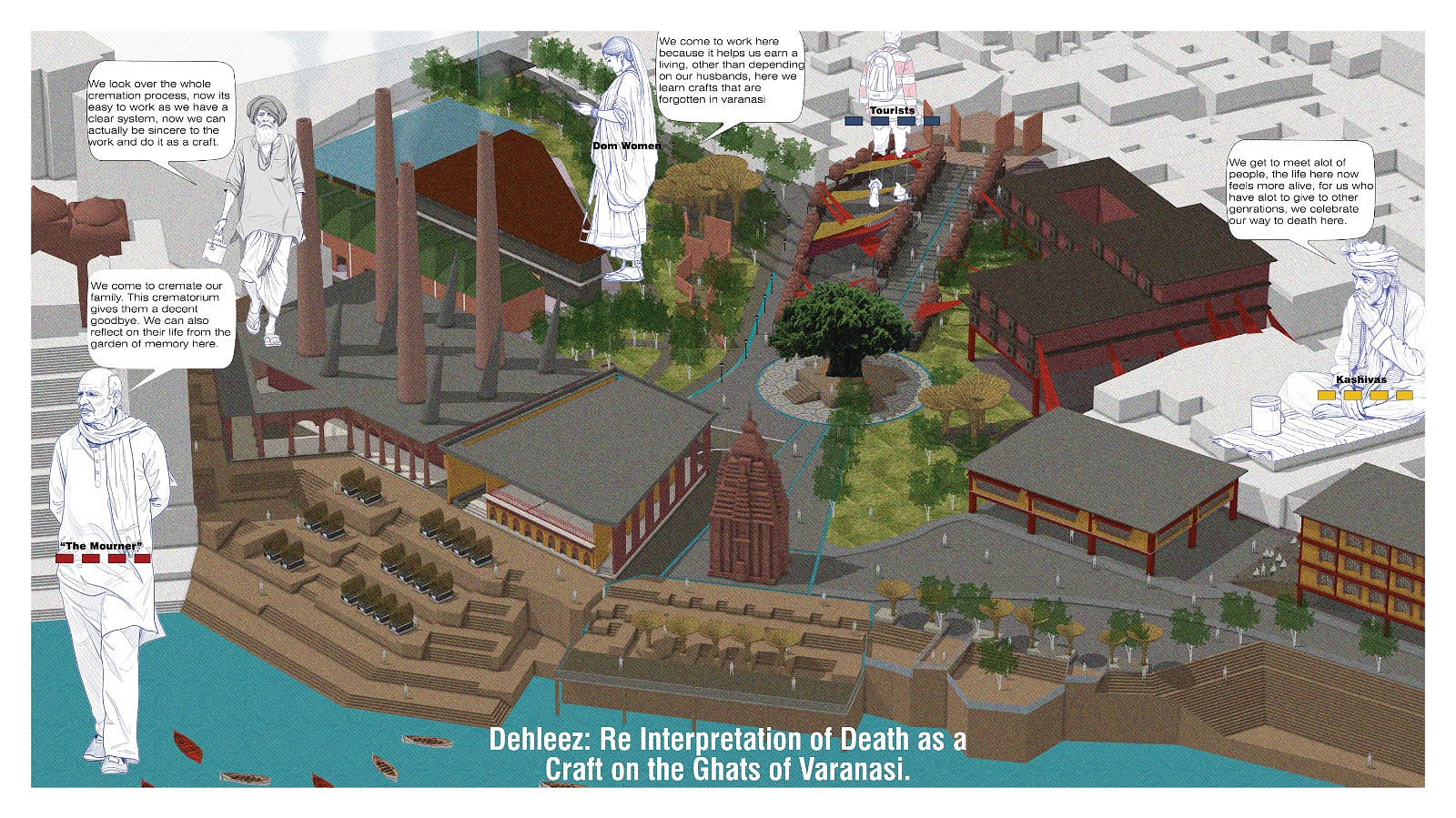
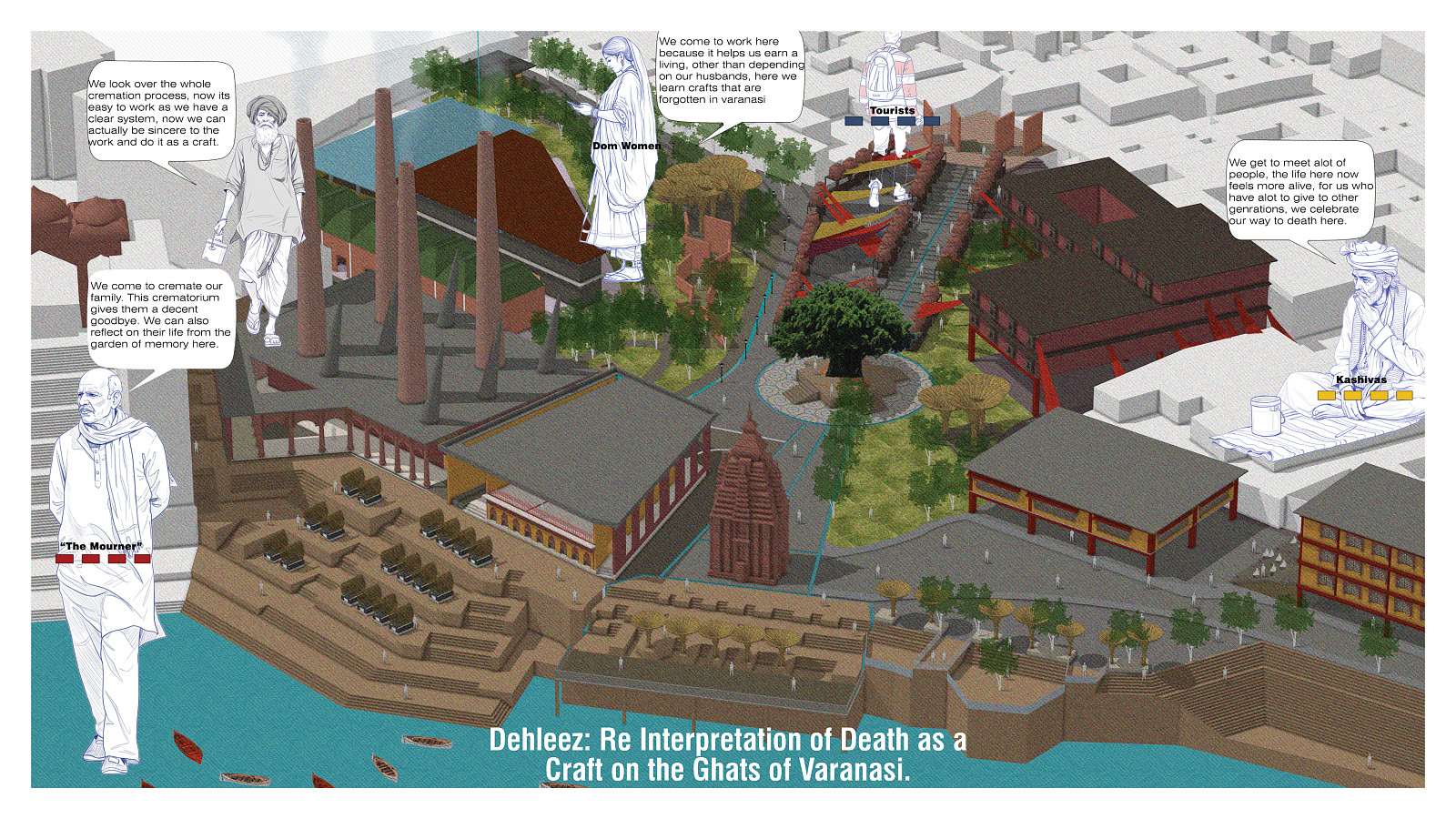
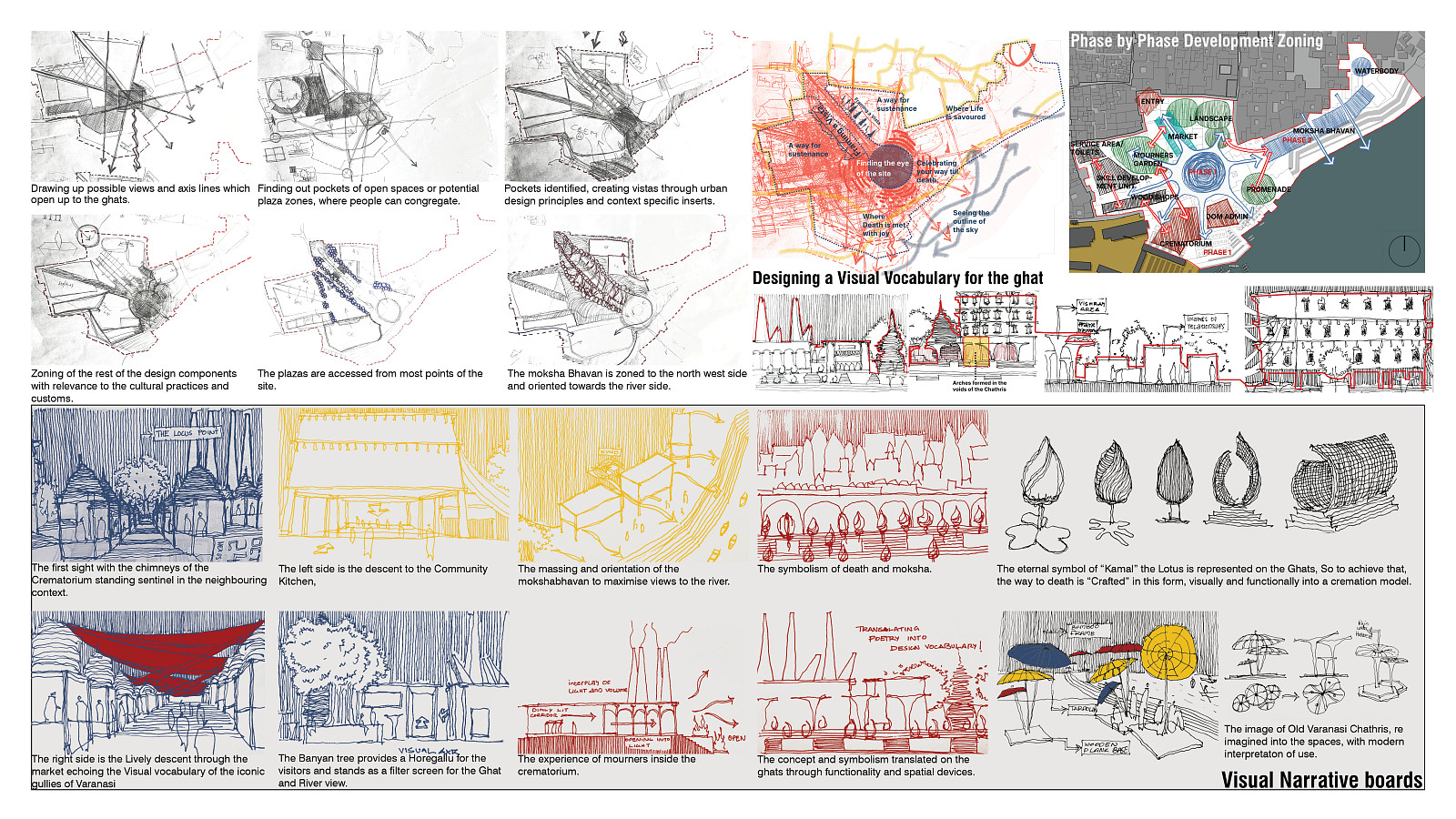
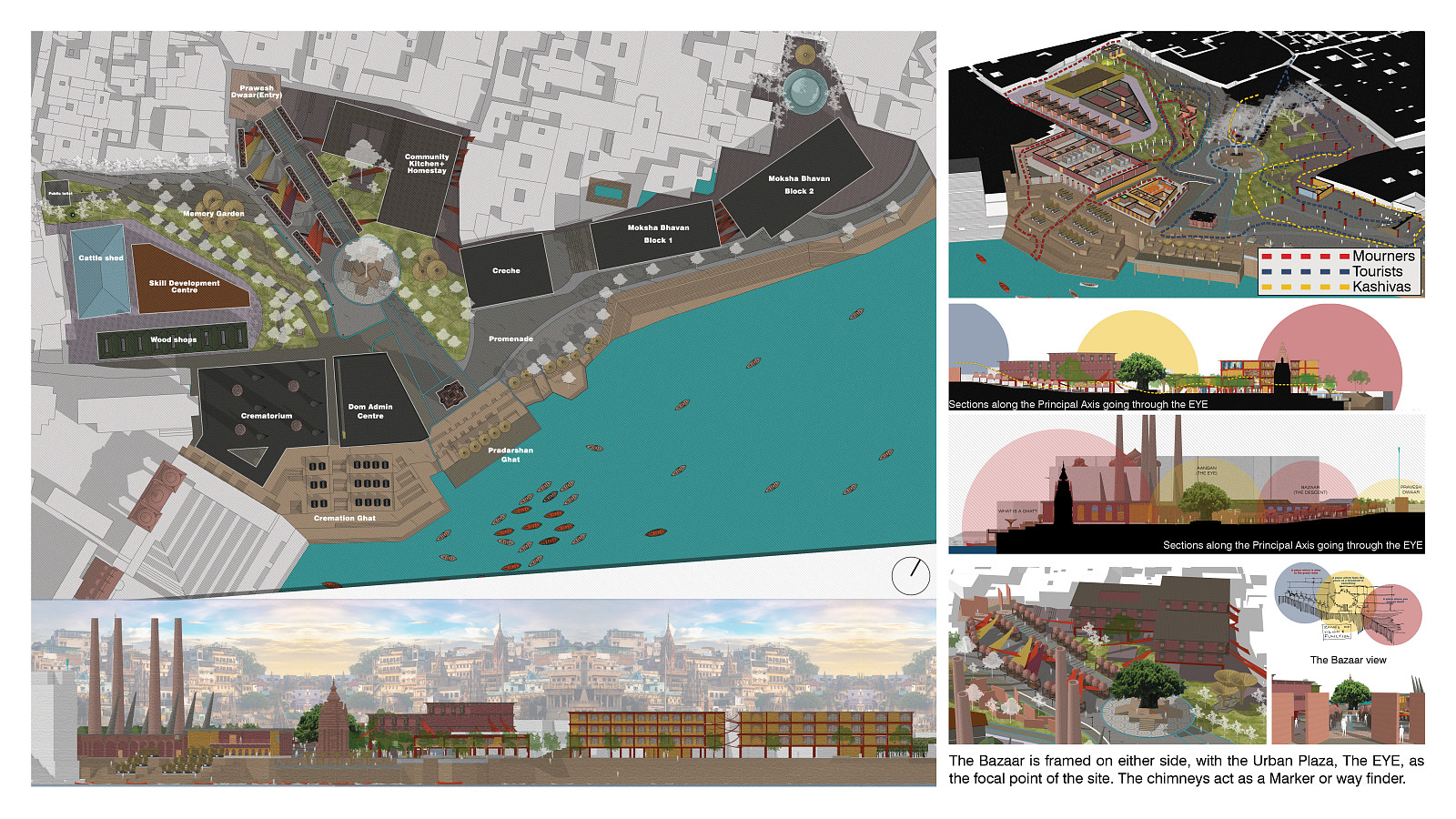
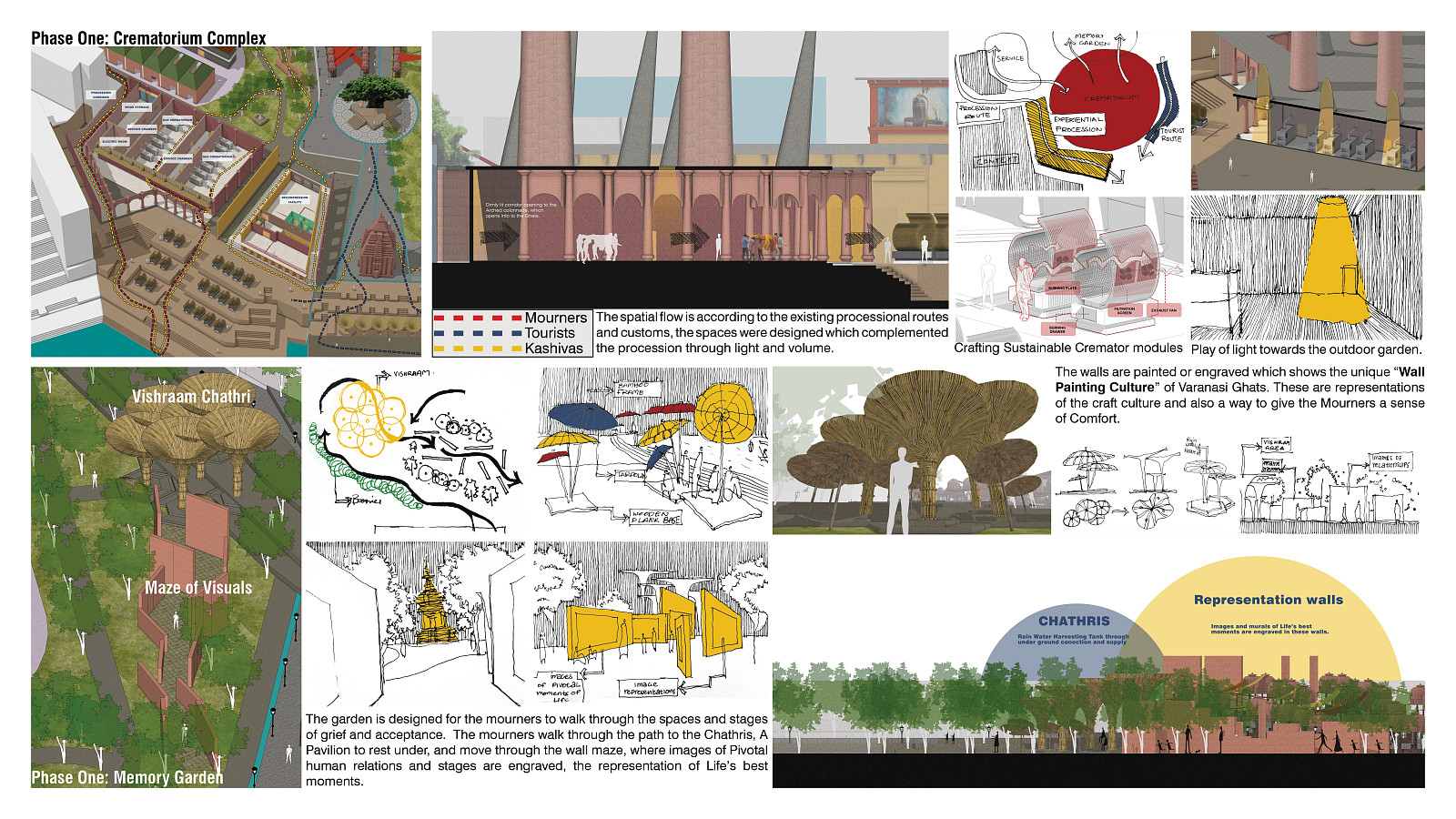
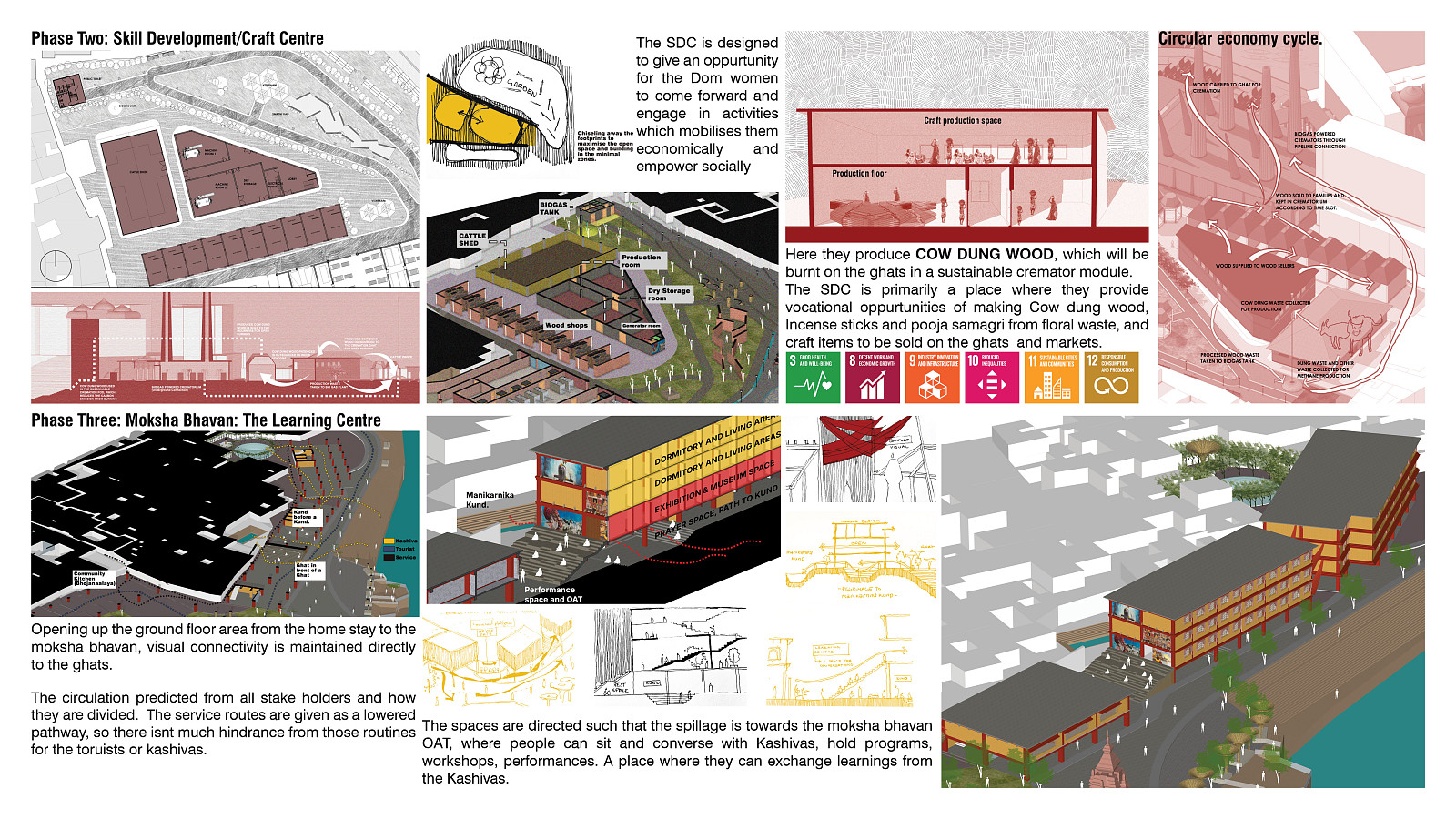
Varanasi is a city where ritual becomes landscape, where life and death coexist in an unbroken continuum. This thesis emerged from an intent to explore the ritualistic identity of Varanasi, while confronting a fundamental irony embedded within its belief system: How does a city that worships liberation render the very community that enables this liberation— the Doms— as unholy, untouchable, and socially excluded? This question became the core of the inquiry, examining how design can reinterpret a sacred yet unjust landscape. Through an analytical lens of community, ecology, and morphology, the project identifies Manikarnika Ghat as the site where these layers collide most intensely. Here, the Doms—custodians of the eternal flame—work in conditions marked by pollution, unsafe infrastructure, and economic fragility, despite performing one of the most spiritually significant tasks in Hindu tradition. The ghat, while sacred for millions, has become hazardous for those who sustain its sanctity. The project reimagines Manikarnika as a dignified, sustainable, and socially corrective cremation environment. The redesigned Crematorium Complex restores structured agency to Dom men and transitions the ghat toward green cremation practices. Biogas generated from cattle waste and local organic matter powers the cremation units, while cow dung is processed into briquetted eco-wood. This eco-wood—produced in the Skill Development Centre—is transported to on-site wood shops, purchased by families, and taken to the ghat for environmentally responsible cremation. The Skill Development Centre provides economic stability for Dom women through incense-stick production and eco-fuel pressing. A Crèche supports working mothers by placing childcare in the hands of the elderly Kashivas, forming a compassionate intergenerational ecosystem of teaching, nurturing, and cultural exchange. The Moksha Bhavan, introduced in Phase 1, becomes more than a hospice. It operates as a house of dialogue, where Kashivas, locals, and Dom families learn from one another, reinforcing the idea that liberation is not only a belief but also a shared human condition. A Community Kitchen, open to the needy, workers, residents, and visitors, anchors the project in inclusivity and everyday care. Together, these interventions transform Manikarnika Ghat into a ritual landscape of justice, empathy, and renewal—a place where design challenges historical prejudice and repositions the Dom community at the heart of Varanasi’s spiritual continuum
Technické informace
The project is conceived as a comprehensive riverfront intervention integrating a crematorium complex with social, cultural, and economic infrastructure. Located along the dense and historically significant edge of Manikarnika Ghat, the design responds to a site characterized by intense ritual activity, high pedestrian movement, fluctuating river levels, and fragile environmental conditions.
The development comprises multiple programmatic components including a crematorium complex, wood storage and distribution units, a skill development centre, Moksha Bhavan, community kitchen, crèche, garden of remembrance, and an urban plaza that acts as the central public spine. The spatial planning ensures clear segregation of movement between ritual participants, workers, and visitors, while maintaining continuity with the existing ghat morphology.
Structurally, the project employs a reinforced cement concrete (RCC) frame system for primary built forms, combined with load-bearing brick masonry for secondary structures. River edge stabilization and stepped ghat formations are executed using locally sourced stone, such as Chunar sandstone, ensuring durability and contextual relevance. Lightweight elements such as bamboo, timber, and steel frameworks are incorporated for shading devices and transitional spaces.
The material palette prioritizes locally available and low-impact materials, including stone, brick, lime plaster, and recycled debris integrated into gabion wall systems. Perforated brick and stone screens are used to enhance natural ventilation and light quality, reducing reliance on mechanical systems.
Sustainability is central to the technical framework of the project. Biogas generation systems, using cattle waste and organic refuse from surrounding areas, are integrated to power cremation units. Cow dung briquettes are produced as an alternative fuel source, reducing dependence on conventional firewood. Floral waste from ritual practices is repurposed within the skill development centre for incense production. Additional strategies include greywater recycling, passive ventilation, shaded circulation, and efficient waste management systems.
The project is designed as a phased intervention. Initial stages focus on stabilizing the cremation infrastructure and public realm, followed by the introduction of livelihood-based production systems, and finally the development of cultural and residential components such as the Moksha Bhavan.
Overall, the technical approach integrates structural stability, environmental responsiveness, and socio-economic functionality, ensuring that the project operates as a resilient and contextually grounded architectural system.

Copyright © 2026 INSPIRELI | All rights reserved. Use of this website signifies your agreement to the Terms of Use, Privacy Policy, and use of cookies.