A case in atoning compulsive indulgence


Idea projektu
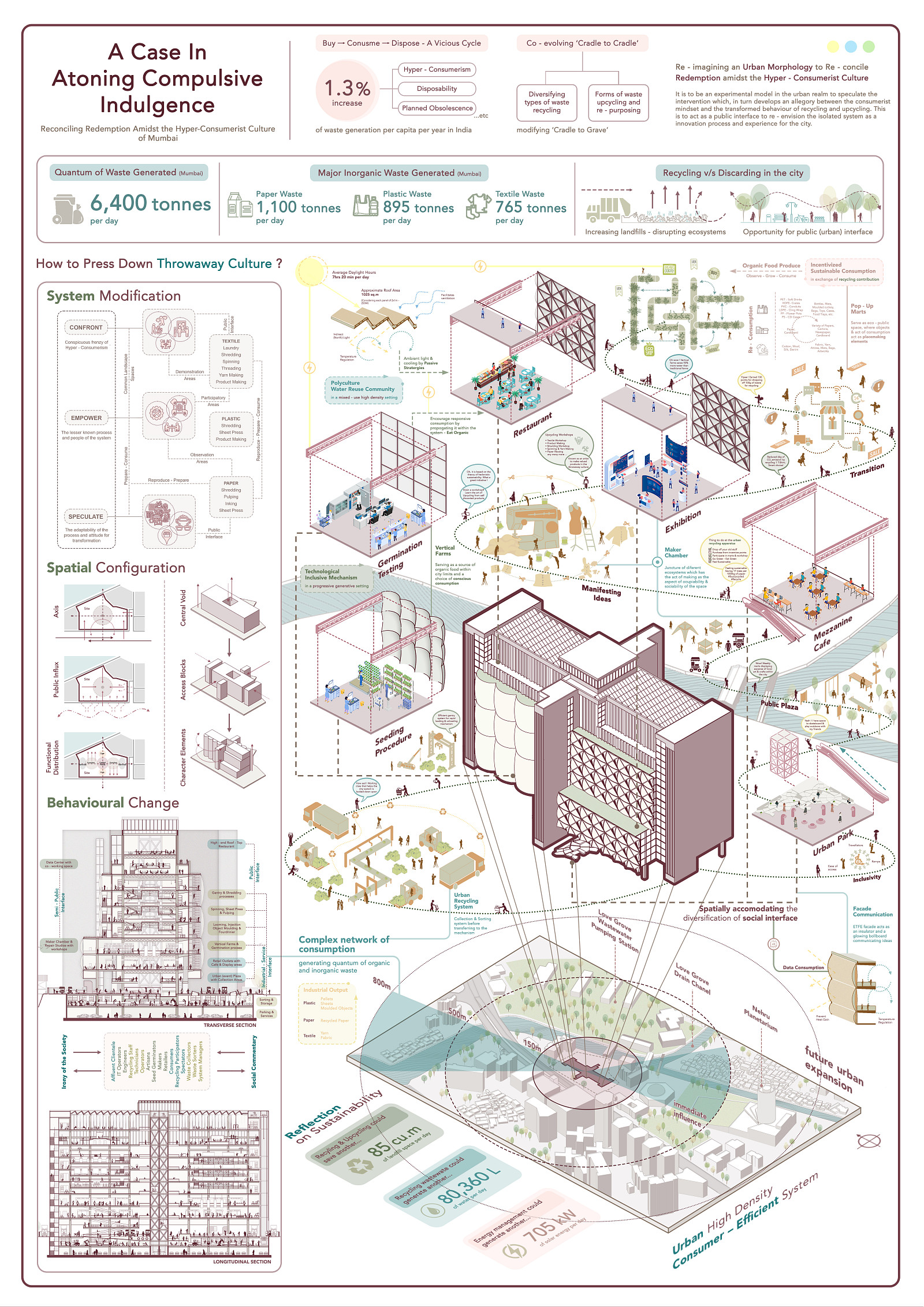
The typology serves as a metaphor for hyper-consumerism, depicting an all-encompassing culture of consumption that traps individuals and societies in an endless quest for material satisfaction. The project delves into the profound impact of this compulsive behavior through a satirical narrative that contrasts the chaotic maze of overconsumption with the transformative potential of recycling and upcycling. Set in a city enthralled by the constant pursuit of acquisition, a symbolic figure emerges, guiding consumers through the psychology of consumerism. This interactive and thought-provoking experience forces individuals to confront the wastefulness of their choices by immersing them in a world of exaggerated excess, ultimately fostering awareness of consumerism’s consequences. However, despite this reflection, the cycle inevitably continues. The process intricately weaves together the complexities of the program and its context, crafting a unique narrative for each individual as they navigate the experience. This journey is not merely about the reconsumption of products but also about the reconsumption of oneself—an introspective transformation initiated through interactions with objects, people, and the built environment. The idea is to create a performative urban model that integrates consumerism, recycling, and interaction through a structured experiential journey. Various circulation patterns and audience interactions shape the experience, while design strategies such as levels, enclosures, and transitions enhance engagement. The overall concept reimagines waste and consumption, creating a dynamic space for reflection, participation, and urban renewal.
Popis projektu
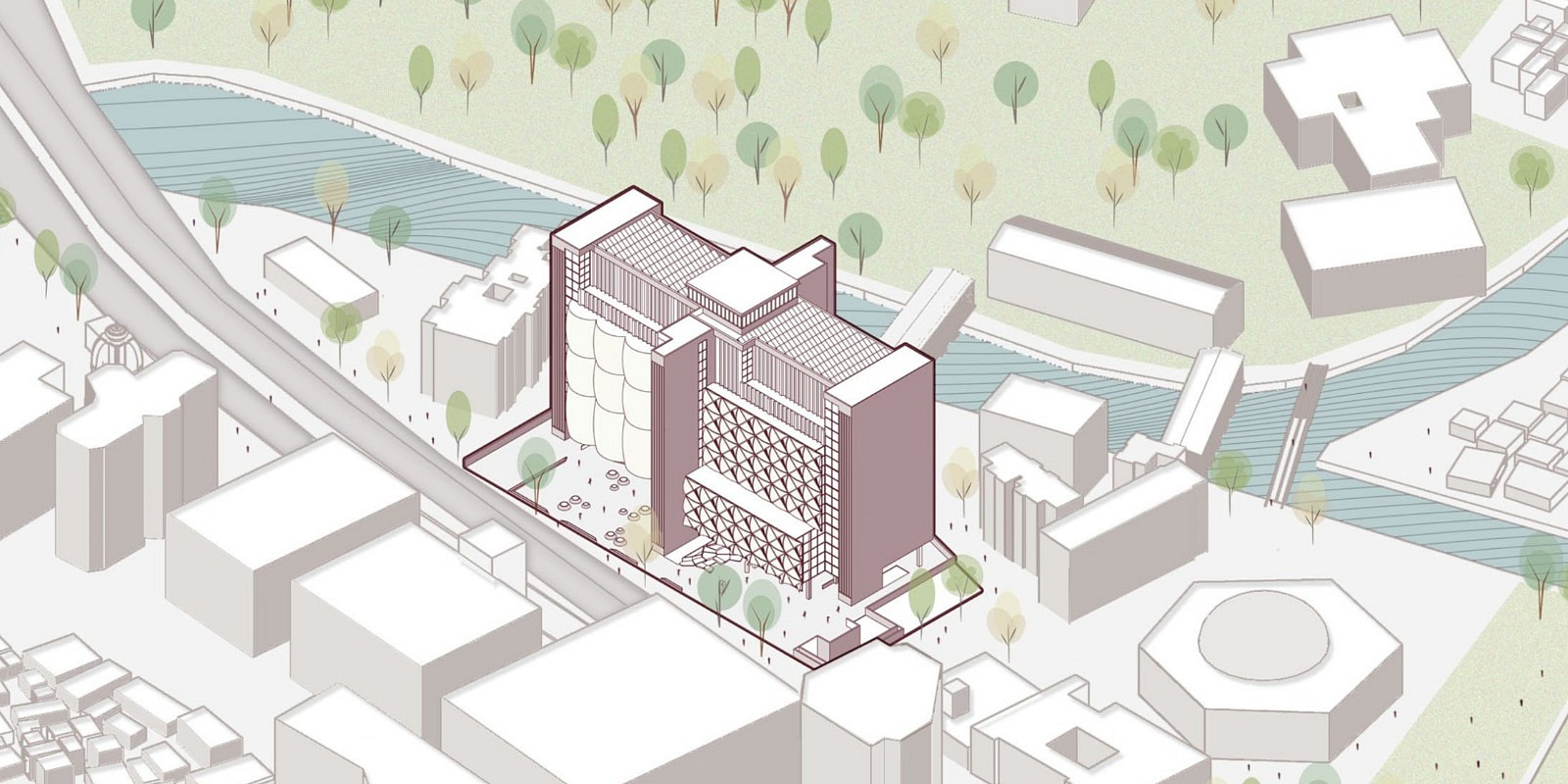
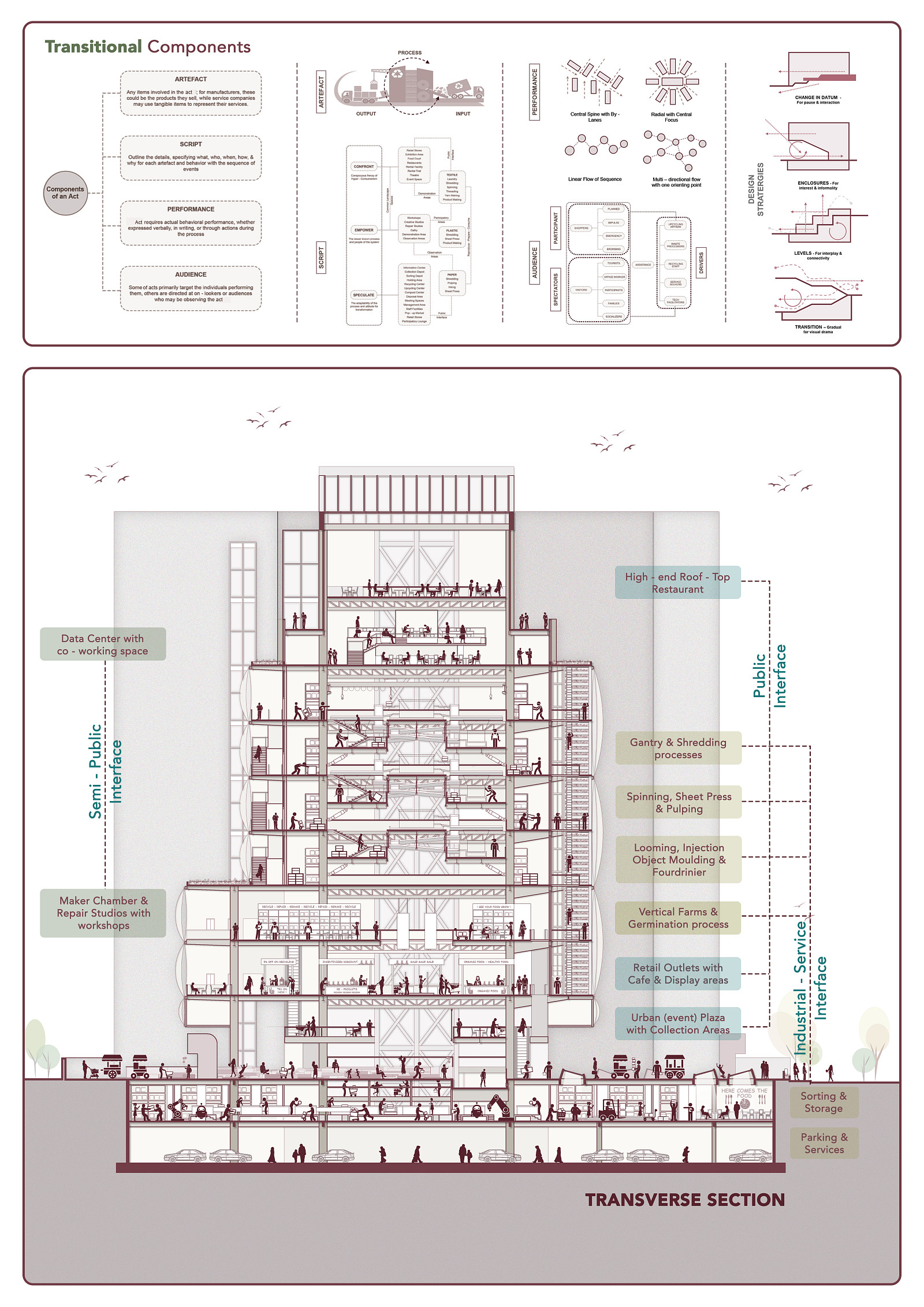
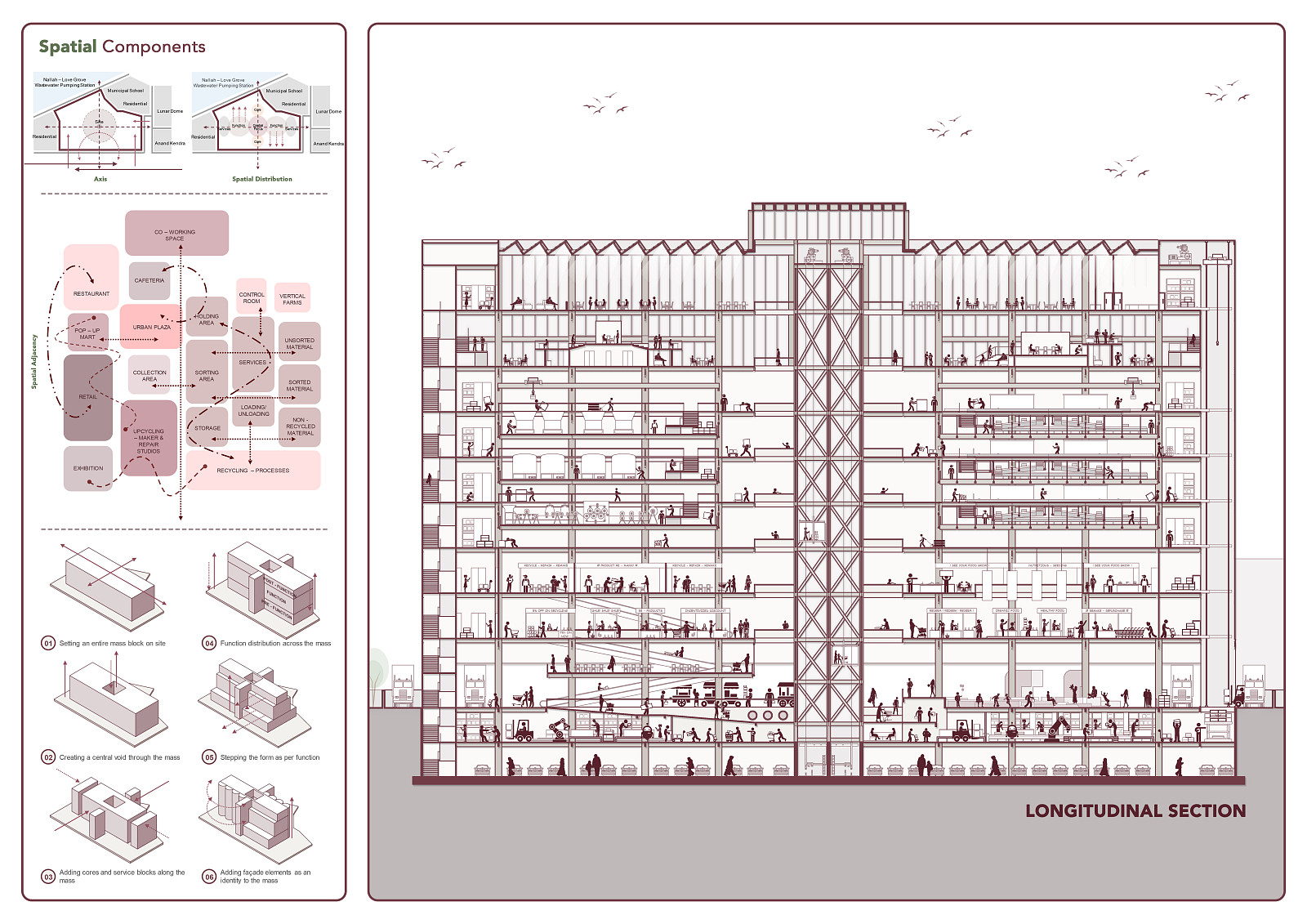
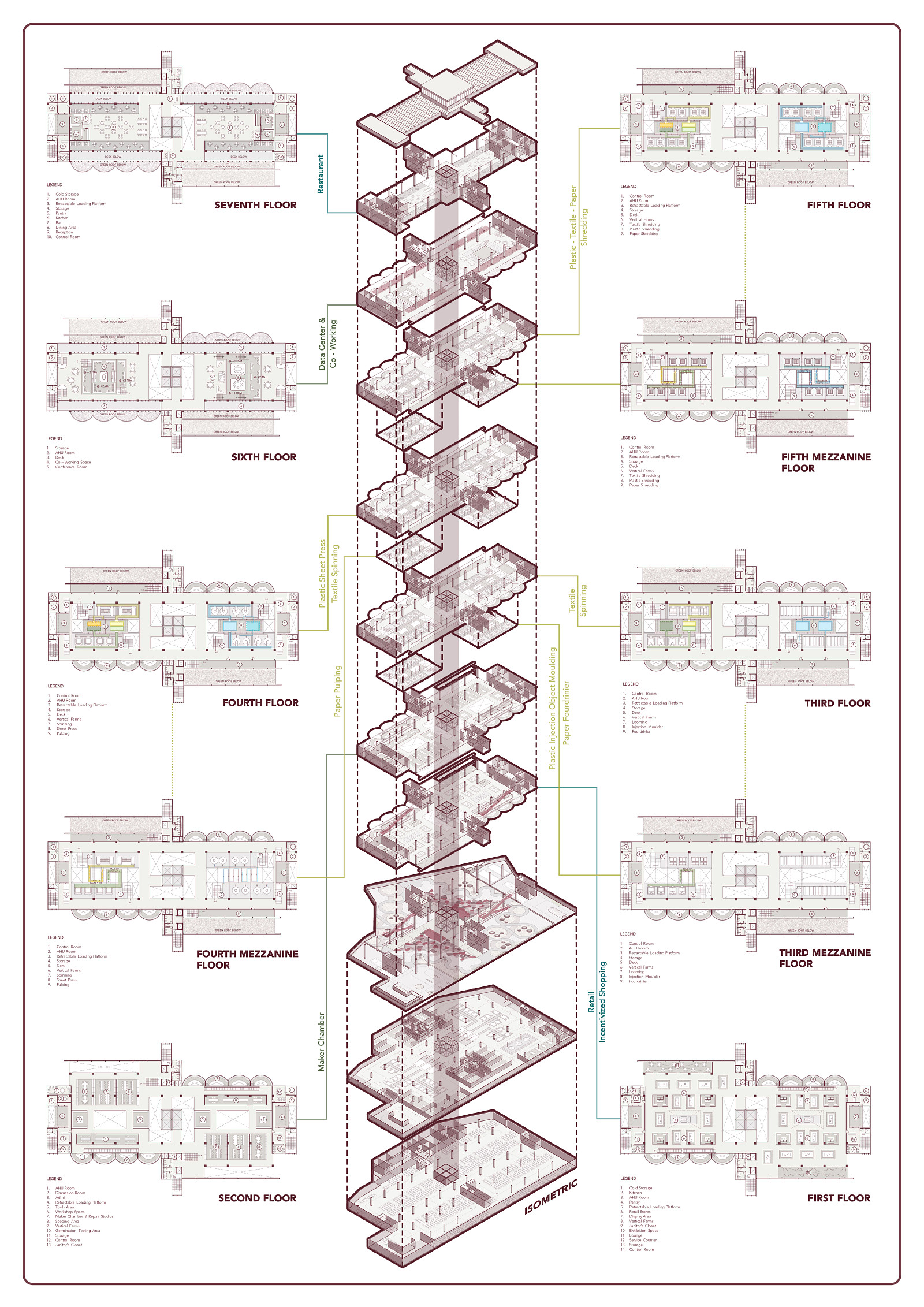
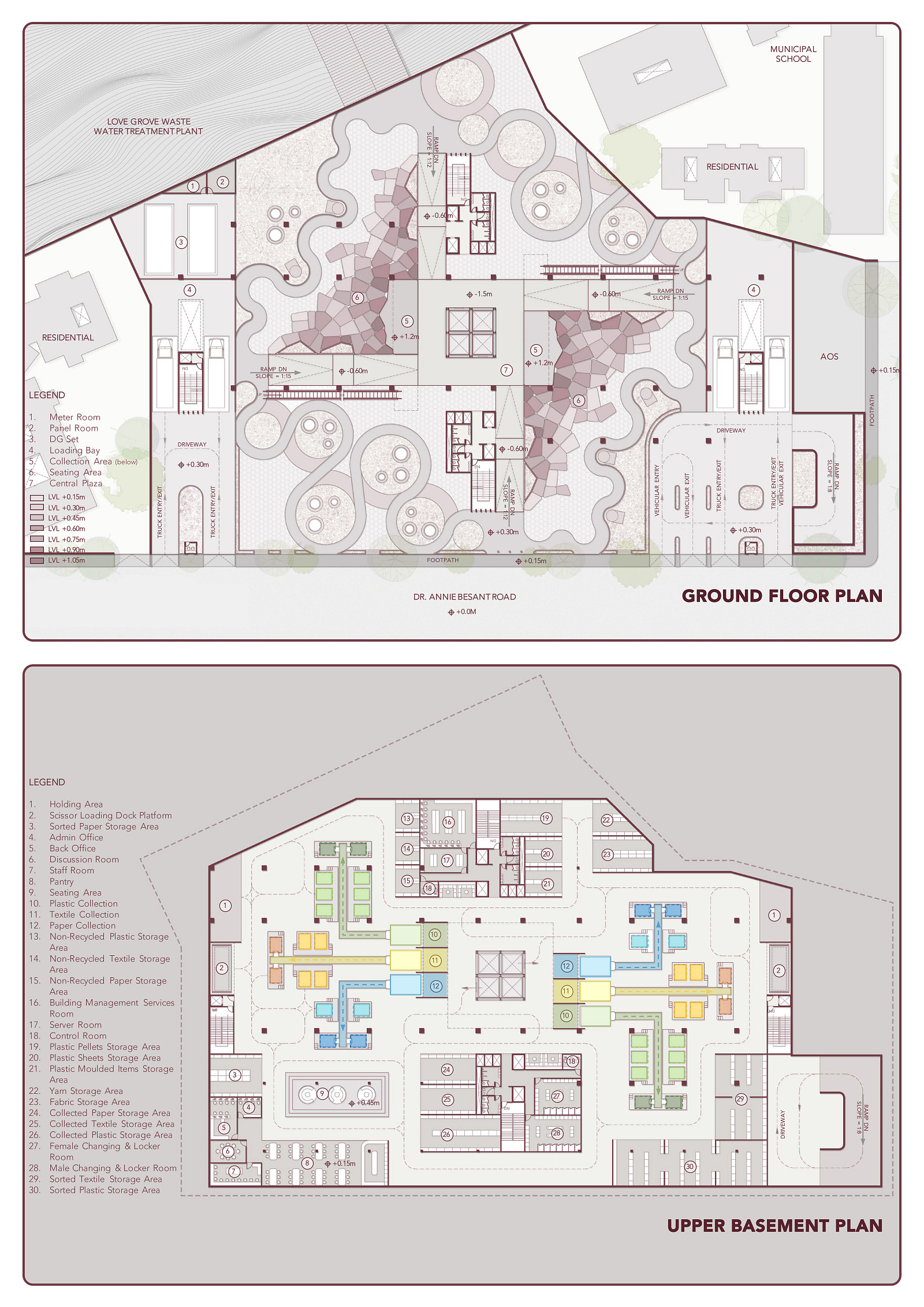
The process included mapping site context, movement axes, and spatial distribution, organizing functions like retail, upcycling, co-working, and recycling around a central urban plaza. The architectural form evolves through six design steps, shaping a structured yet dynamic space that balances commerce, waste management, and interaction, ultimately creating a sustainable and adaptive urban model. Designed as a commercial hub that embodies consumerism, the intervention takes a conscious approach by incorporating recycling, upcycling, and maker spaces that foster creativity and interaction. On a broader scale, it also addresses the consumption of data, with a centralized data center acting as the structural core, reflecting the modern digital economy’s influence on consumer behavior. At its core, the design fosters fluid movement, activating the urban realm through layered interactions that vary based on the user’s chosen circulatory path. It integrates re-purposed retail spaces featuring artisan crafts, local goods, and repaired products, participatory maker chambers, and the theatrical spectacle of recycling systems—all orchestrated by a centralized data center. Adding another layer of complexity, the project explores the consumption of food through an elite rooftop restaurant supplied by vertical farms along the façade. This highlights society’s paradoxical desire for both luxury and sustainability, reinforcing the irony of modern consumer culture. The design emerges as an experimental model within the urban realm, serving as a speculative intervention that constructs an allegory between the consumerist mindset and the evolving behaviors of recycling and upcycling. It functions as a public interface, reimagining an otherwise isolated system as an innovative process—both a spectacle and an experience for the city.
Technické informace
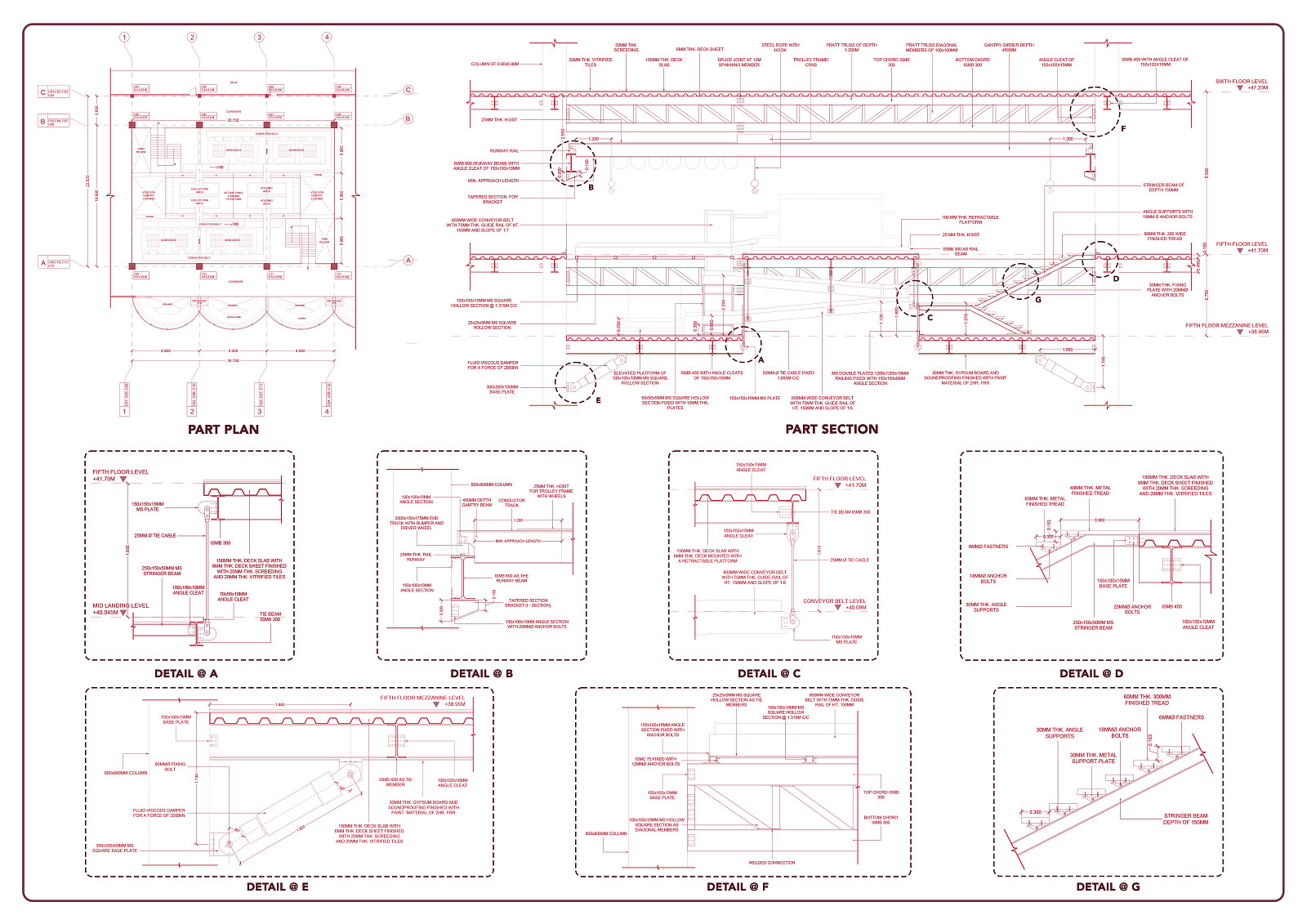
The inefficiency of the current structure presents a chance for its adaptive reuse, transforming it into a space with a revived purpose that enhances the urban fabric and improves the city’s quality of life. This evolution leads to the development of a new urban morphology, where sustainability and functionality coexist. The sectional organization further deepens this critique, with recycling processes beginning in the basement—symbolizing societal hierarchies—while other activities unfold above ground, reflecting ingrained social divisions. These interwoven layers collectively contribute to the development of a new urban morphology, one that aspires to catalyze change while remaining grounded in the realities of contemporary consumption. The existing structure has been modified to serve the additional systems of recycling with interception like girders, suspensions, dampers and structural strengthening to make the structure a sight to admiration itself.

Copyright © 2026 INSPIRELI | All rights reserved. Use of this website signifies your agreement to the Terms of Use, Privacy Policy, and use of cookies.