The Plot House - A Senior Living Community


Idea projektu
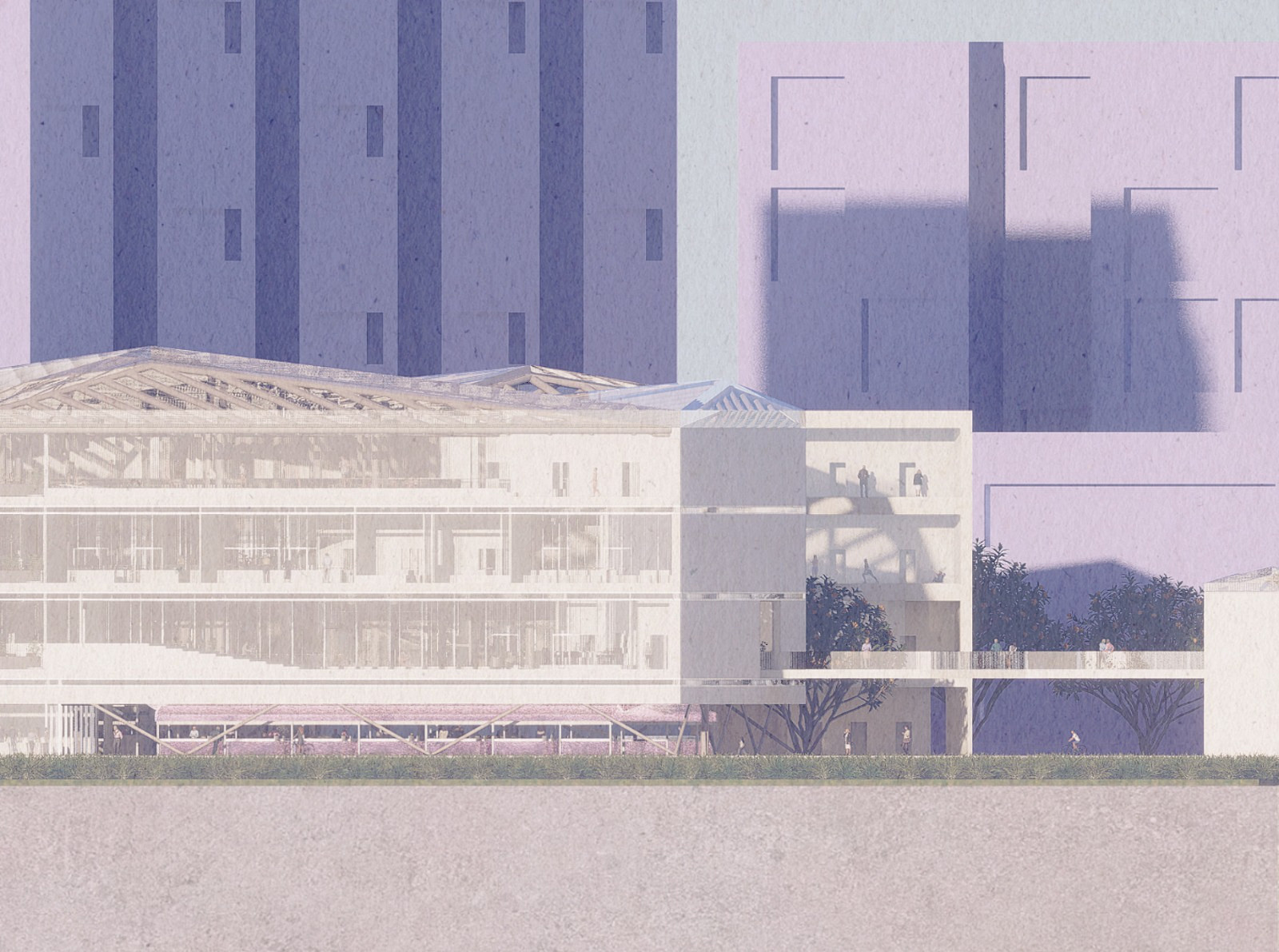
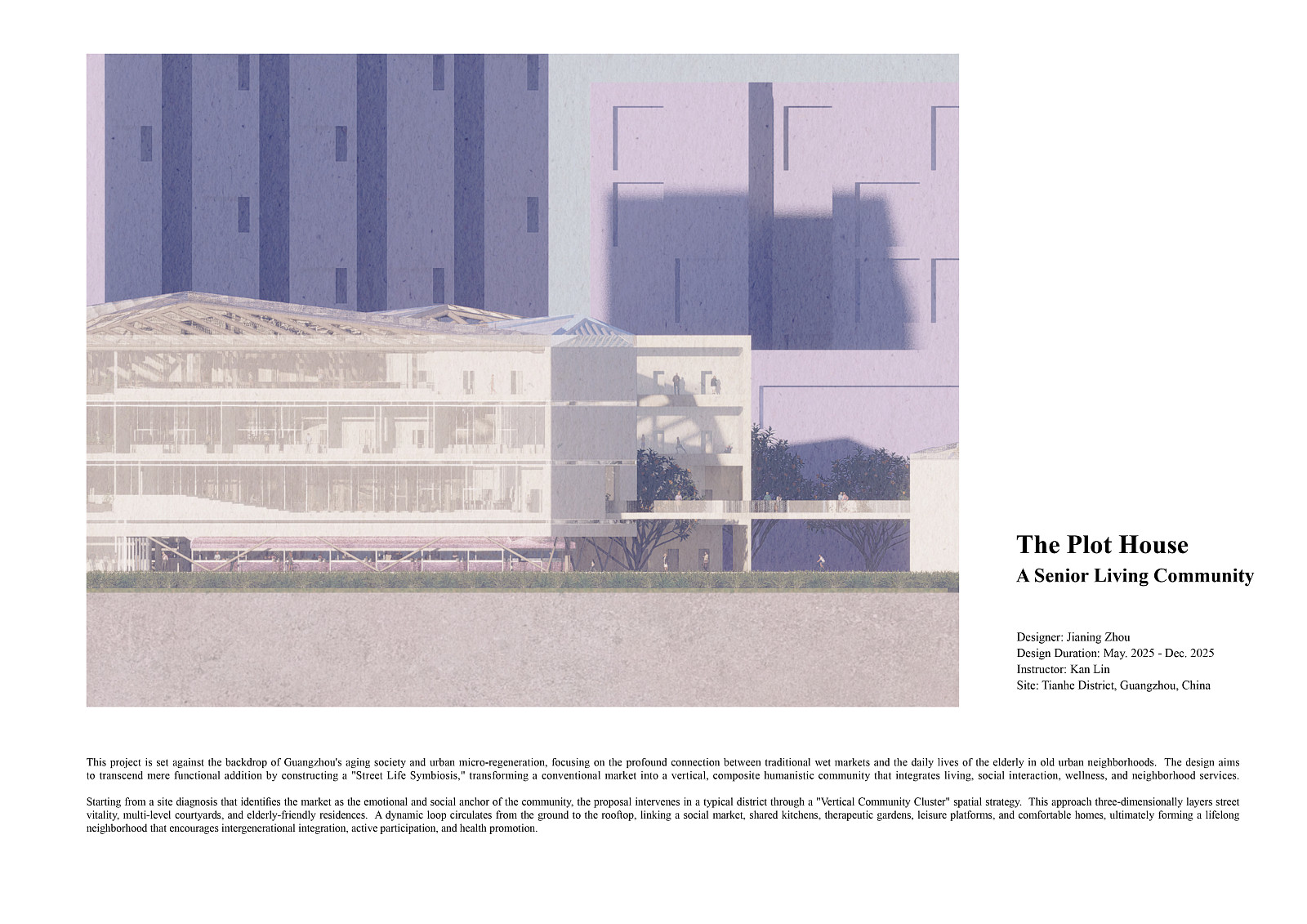
This project is set against the backdrop of Guangzhou's aging society and urban micro-regeneration, focusing on the profound connection between traditional wet markets and the daily lives of the elderly in old urban neighborhoods. The design aims to transcend mere functional addition by constructing a "Street Life Symbiosis," transforming a conventional market into a vertical, composite humanistic community that integrates living, social interaction, wellness, and neighborhood services.
Popis projektu
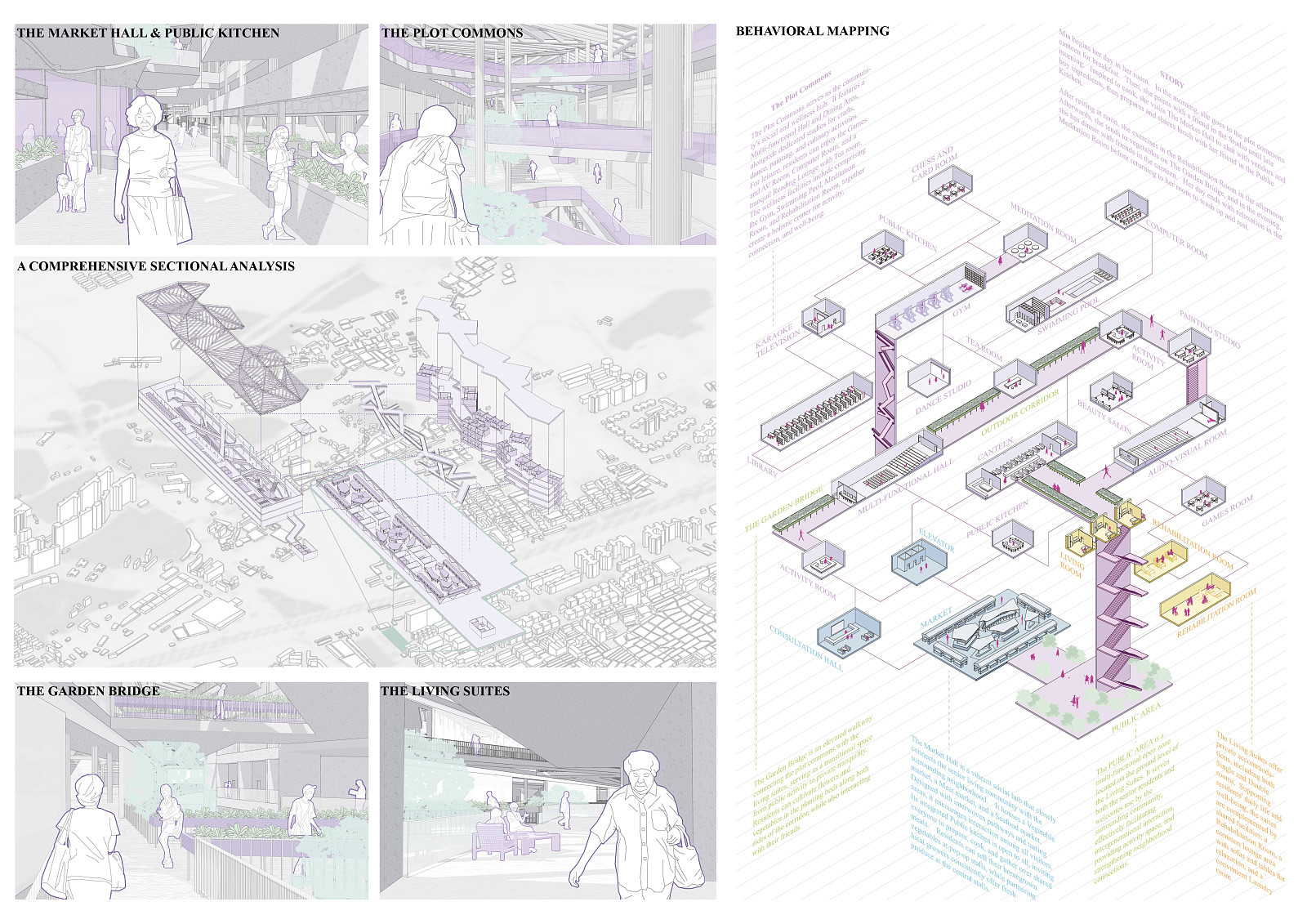
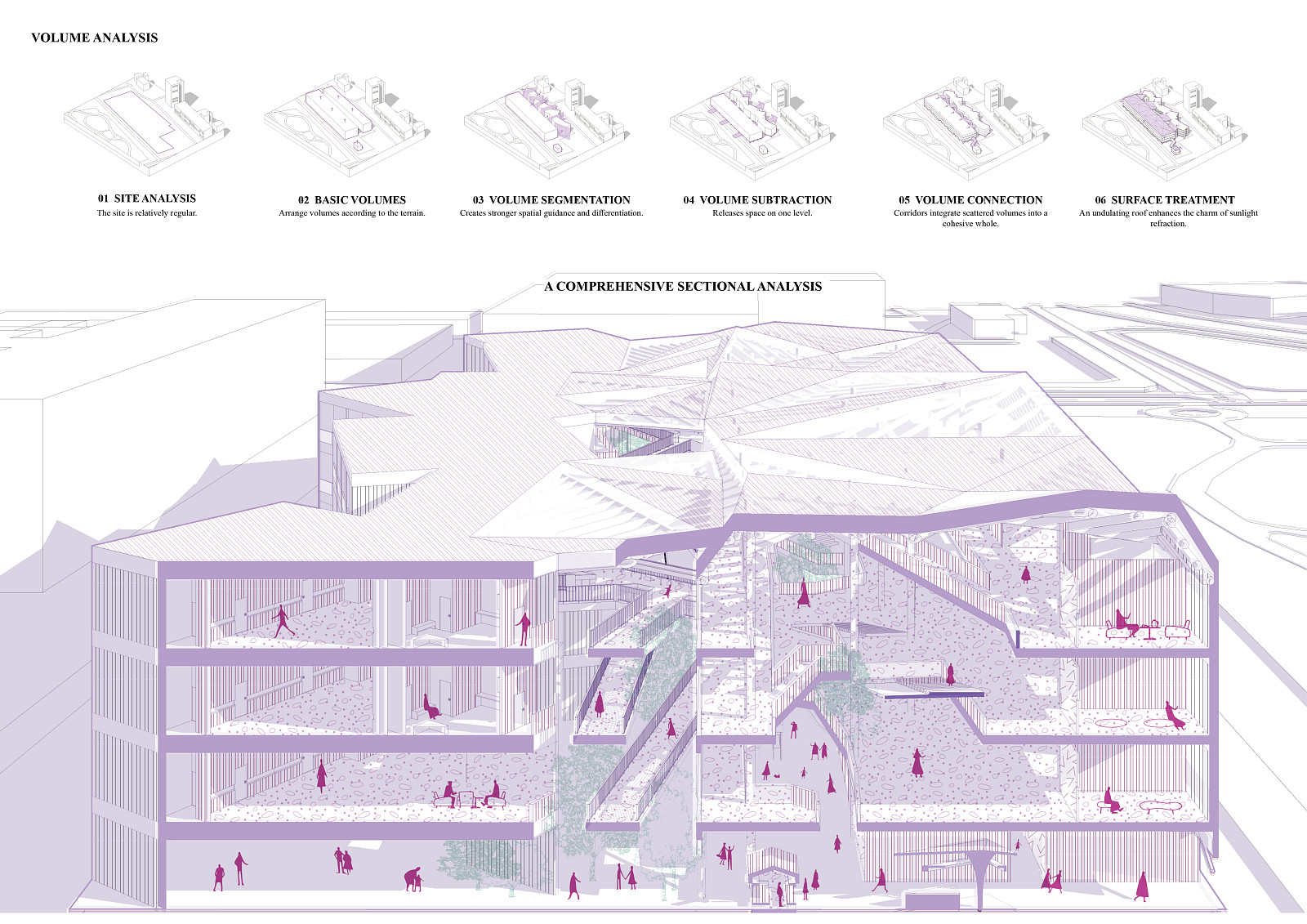
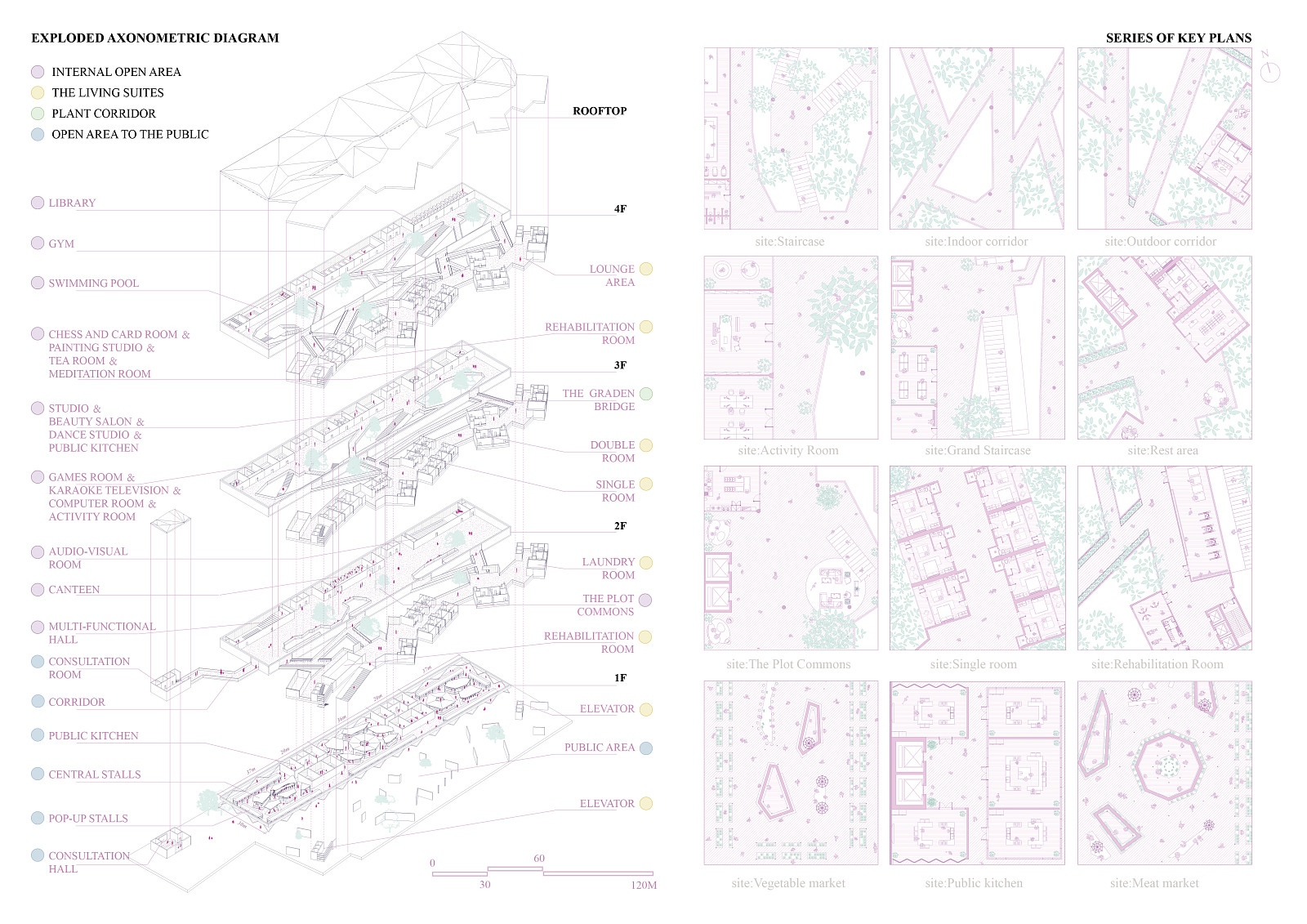
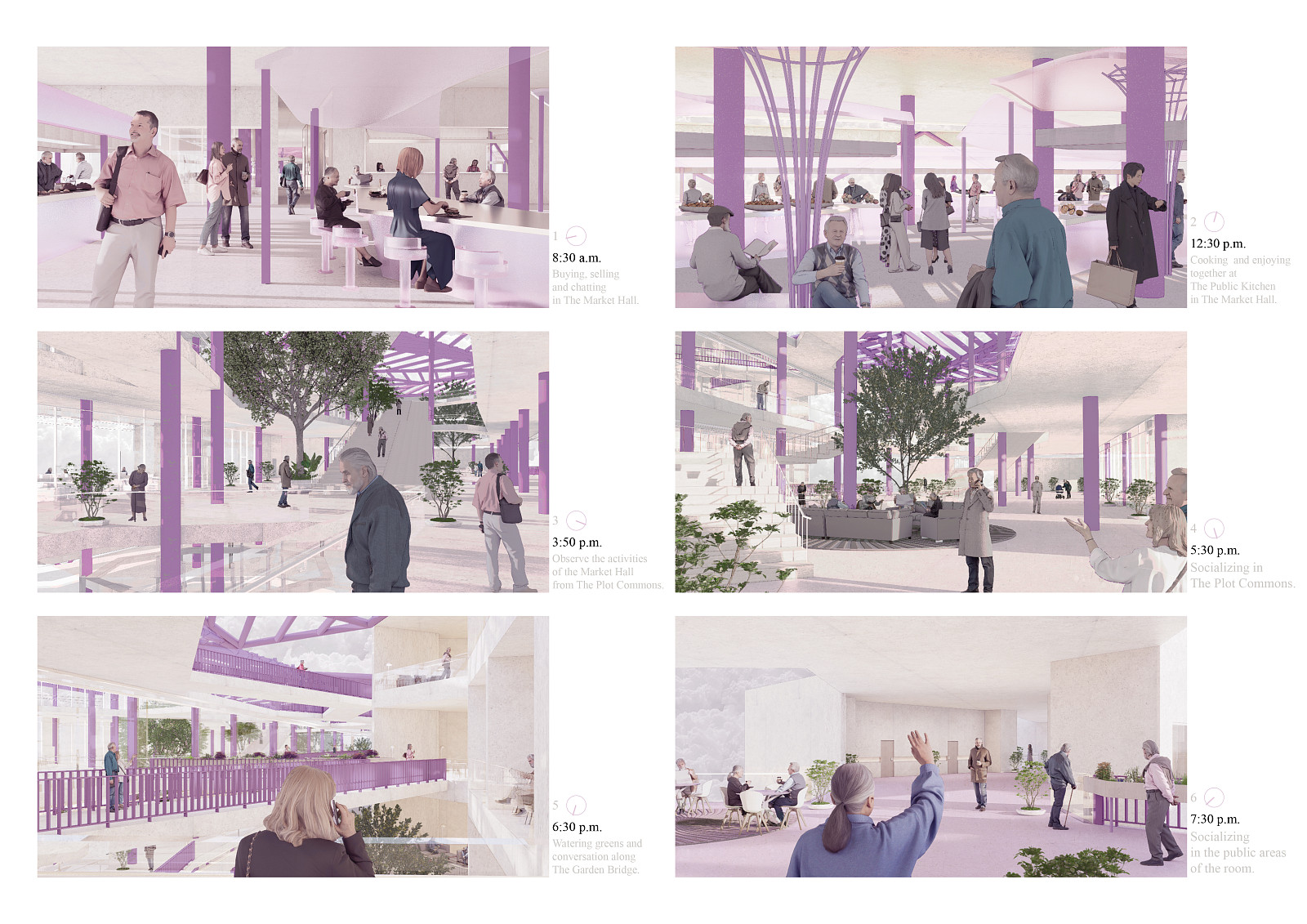
Starting from a site diagnosis that identifies the market as the emotional and social anchor of the community, the proposal intervenes in a typical district through a "Vertical Community Cluster" spatial strategy. This approach three-dimensionally layers street vitality, multi-level courtyards, and elderly-friendly residences. A dynamic loop circulates from the ground to the rooftop, linking a social market, shared kitchens, therapeutic gardens, leisure platforms, and comfortable homes, ultimately forming a lifelong neighborhood that encourages intergenerational integration, active participation, and health promotion.
Technické informace
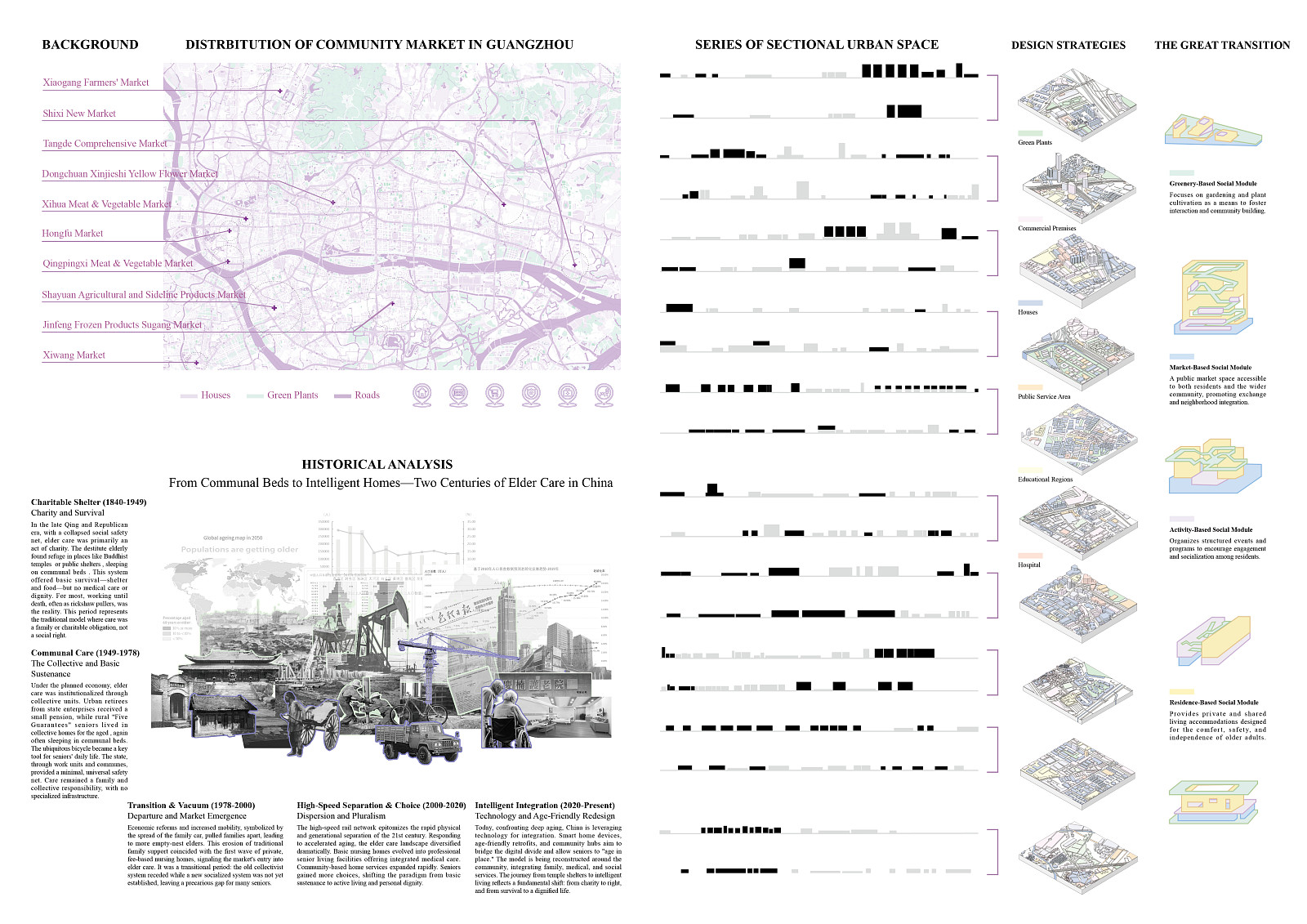
Site Diagnosis: Identifies the market as the community's emotional and social anchor.
Spatial Strategy: "Vertical Community Cluster" – three-dimensionally layering street vitality, multi-level courtyards, and elderly-friendly residences.
Functional Circulation: A dynamic loop from ground to rooftop connecting social market, shared kitchens, therapeutic gardens, leisure platforms, and residential units.
Core Objectives: Intergenerational integration, active participation, health promotion, and lifelong neighborhood formation.

Copyright © 2026 INSPIRELI | All rights reserved. Use of this website signifies your agreement to the Terms of Use, Privacy Policy, and use of cookies.