Arachne web-inspired bridge for earthquake-prone regions using sustainable materials


Idea projektu
The Arachne Bio-Bridge is a biomimetic suspension bridge model inspired by the structural efficiency of spider webs, designed to explore sustainable, lightweight alternatives to conventional bridge systems. Traditional suspension bridges rely on heavy steel cables and rigid anchorage systems, often leading to high material consumption, elevated costs, and localized stress concentrations. This project reimagines the structural system through a radial–spiral cable network that distributes loads more uniformly, improving efficiency and resilience.
The structure utilizes natural fibers such as jute and hemp, selected for their high tensile strength, flexibility, and energy absorption characteristics. These fibers are arranged hierarchically, where primary load-bearing paths use stronger bundled fibers, while secondary networks enhance stability and damping. This configuration enables better load-sharing and reduces peak stresses, especially near anchorage zones.
A key advantage of the design is its improved seismic behavior. The distributed web-like geometry, combined with the inherent flexibility of jute and hemp fibers, allows the structure to dissipate dynamic energy effectively. This reduces the risk of sudden failure during vibrations or earthquake loading, offering a more adaptive and resilient system compared to rigid conventional designs.
Experimental testing and analytical modeling indicate significant reductions in weight and cost while maintaining adequate load-bearing capacity. The biomimetic approach minimizes stress concentration and enhances structural performance.
Overall, this project demonstrates how principles derived from nature can inform innovative, sustainable, and resilient engineering solutions for future infrastructure development. By integrating material efficiency with geometric intelligence, the Arachne Bio-Bridge presents a scalable concept that encourages further research into eco-friendly construction systems and advanced biomimetic structural applications in modern engineering practice with potential real-world implementation in hanging bridge design and sustainable infrastructure systems.
Popis projektu
The design of the Arachne Bio-Bridge is fundamentally inspired by the structural efficiency and resilience of spider webs, particularly their ability to maintain integrity even when individual anchor points fail. In natural spider webs, loads are distributed through a radial and spiral network, allowing forces to be redistributed across multiple pathways. This redundancy ensures that localized damage does not lead to total structural collapse, a principle highly relevant for engineering applications, especially in seismic conditions.
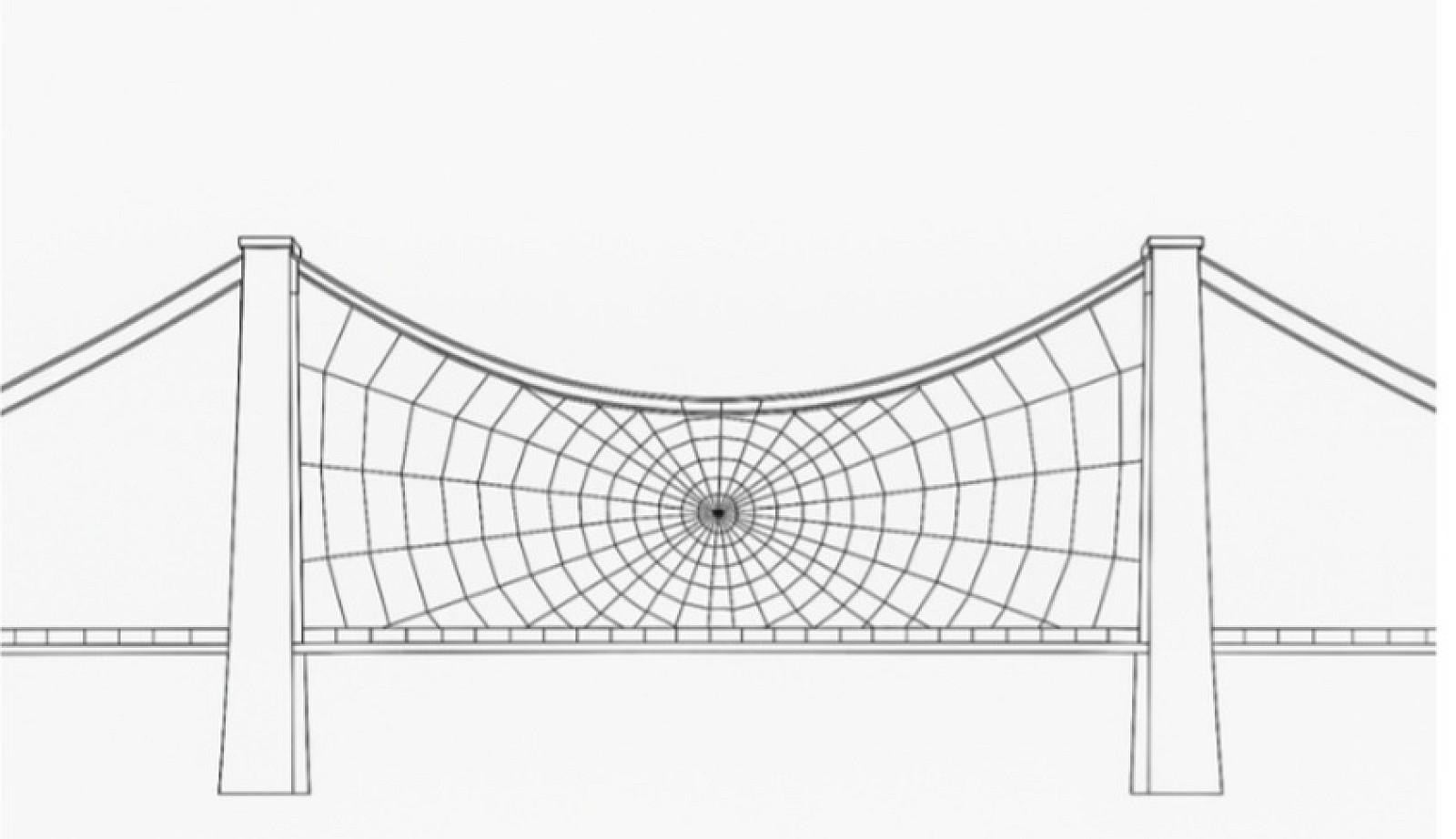
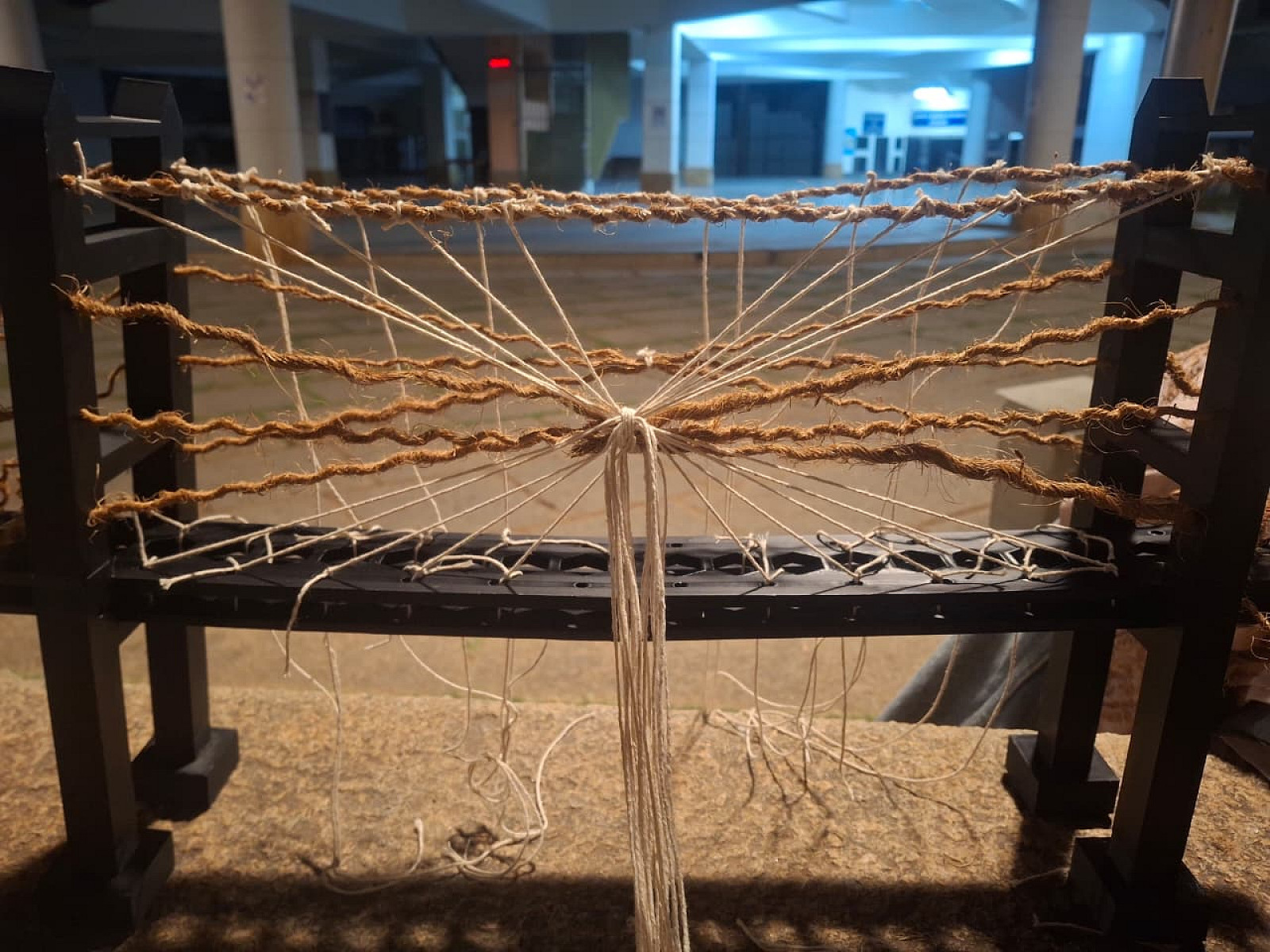
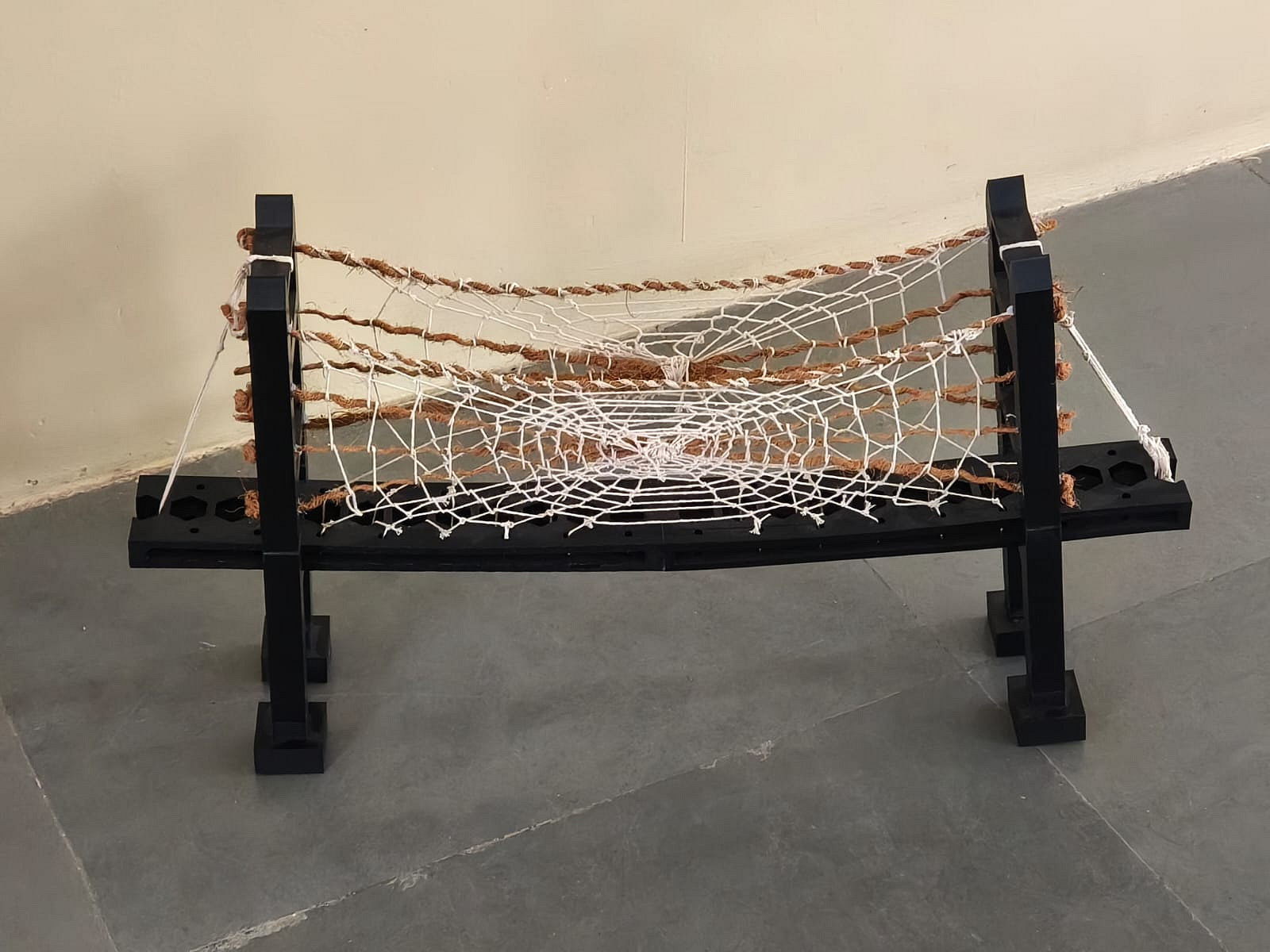
Translating this concept into bridge design, the structure adopts a cobweb-like geometry where radial cables act as primary load-bearing members and spiral connections function as secondary stabilizing elements. This geometric arrangement enables efficient load transfer, minimizes stress concentration, and enhances overall structural robustness. During dynamic loading, such as earthquakes, the flexible network allows for controlled deformation and energy dissipation, reducing the likelihood of sudden failure.
A key aspect of the design is the use of natural fibers, including jute, hemp, and bamboo, as primary tensile elements. These materials were chosen for their high strength-to-weight ratio, flexibility, and sustainability. Unlike conventional steel cables, natural fibers exhibit gradual failure behavior and improved damping characteristics, which further contribute to the structure’s resilience under varying loads.
By integrating biomimetic geometry with eco-friendly materials, the Arachne Bio-Bridge presents a sustainable and efficient alternative to traditional suspension systems, demonstrating how nature-inspired design can inform innovative engineering solutions.
Technické informace
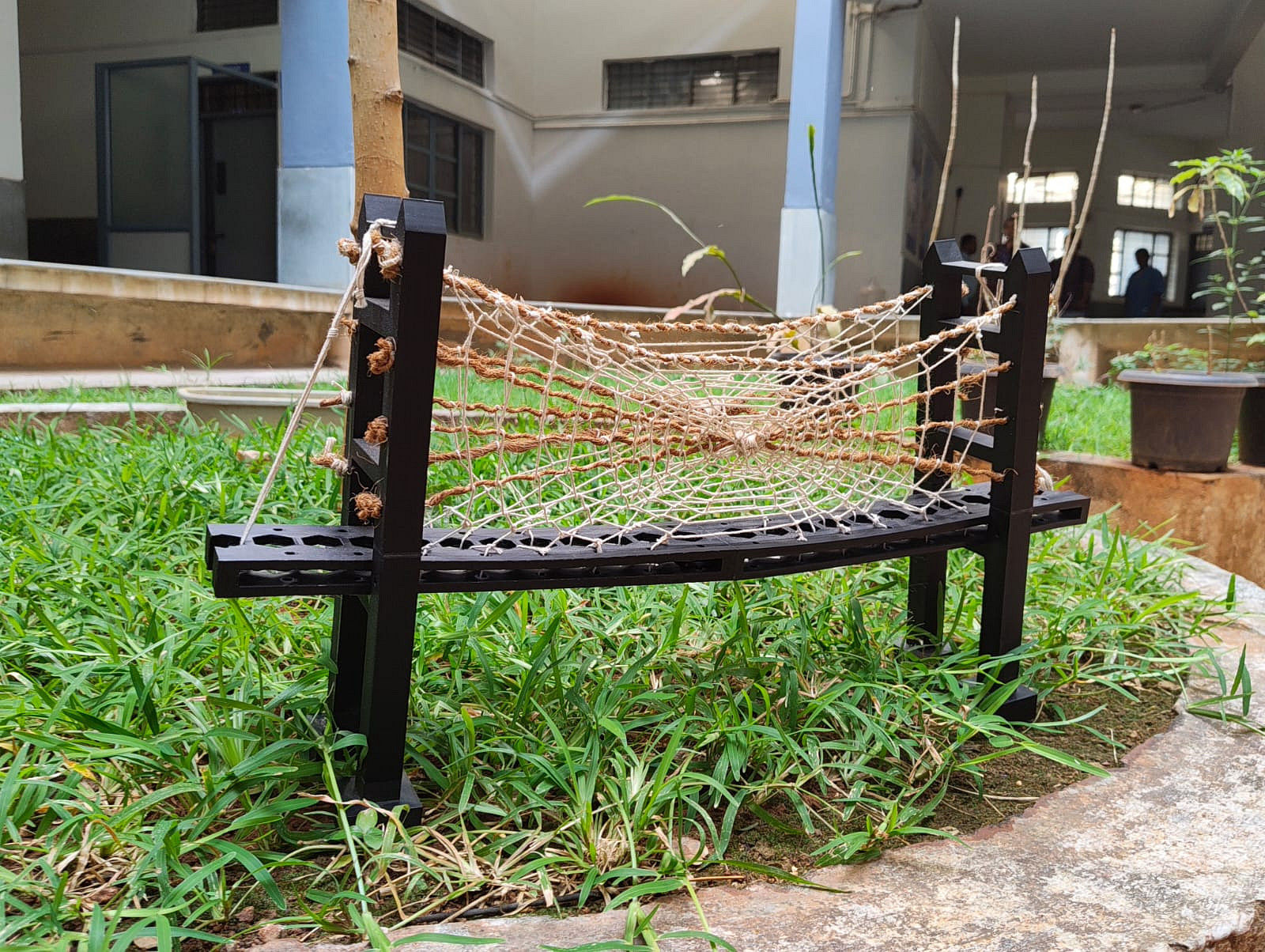
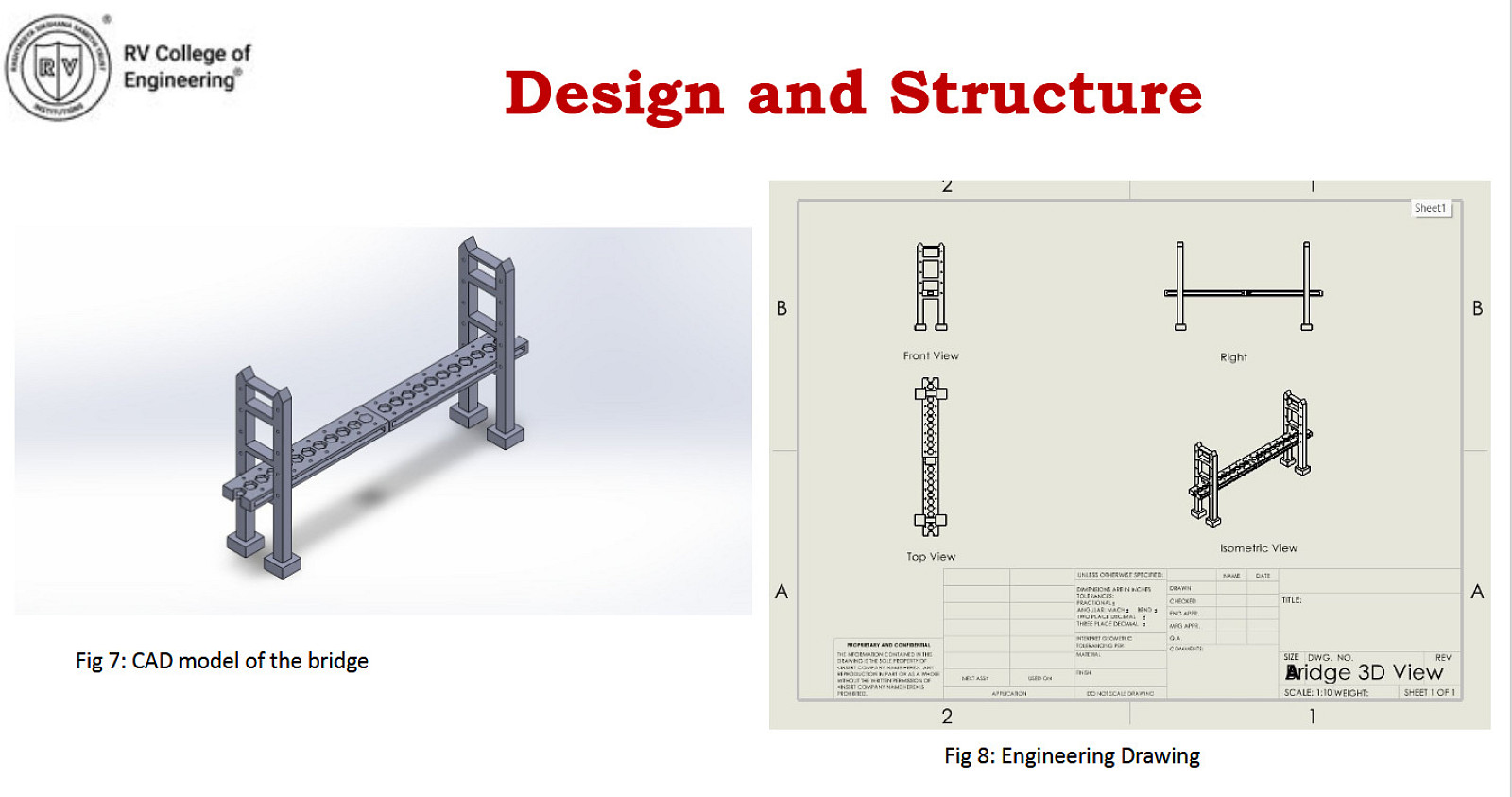
The Arachne Bio-Bridge is designed as a scaled biomimetic suspension system with a deck length of 60 cm and a span of 45 cm between two H-shaped towers fabricated using 3D printing. The structural configuration follows a radial–spiral cable network inspired by spider web geometry, where primary load-bearing members consist of jute fiber cables, while secondary and tertiary connections are formed using bamboo and hemp fibers. The tower height is proportioned at approximately 30 cm (≈0.4 times the span) to optimize cable inclination and reduce tensile forces, while a sag ratio of around L/10 (~5 cm) is maintained to balance tension and deflection. The deck is positioned at a clearance of 10 cm from the base, ensuring stability and realistic geometric scaling.
Load transfer is governed by the suspension principle, where tension in the cables follows the relation T = (wL²)/(8f), enabling estimation of maximum load capacity. Experimental testing was conducted through incremental mid-span loading, demonstrating a load-bearing capacity of approximately 10–12 kg, with a factor of safety near 1.5. The cobweb-inspired geometry ensures multi-path load distribution, significantly reducing stress concentration at anchorage points compared to conventional linear cable systems.
Material behavior plays a critical role, as jute and hemp fibers provide high tensile strength and flexibility, while bamboo contributes stiffness and structural support. The composite action of these natural fibers enhances energy absorption and damping, particularly under dynamic loading conditions. The system exhibits gradual deformation rather than brittle failure, improving resilience. Analytical modeling and experimental observations confirm that the design achieves substantial reductions in weight and cost while maintaining structural performance, validating the effectiveness of combining biomimetic geometry with sustainable material systems in lightweight bridge design.

Copyright © 2026 INSPIRELI | All rights reserved. Use of this website signifies your agreement to the Terms of Use, Privacy Policy, and use of cookies.