The Temple of Impermanence


Idea projektu
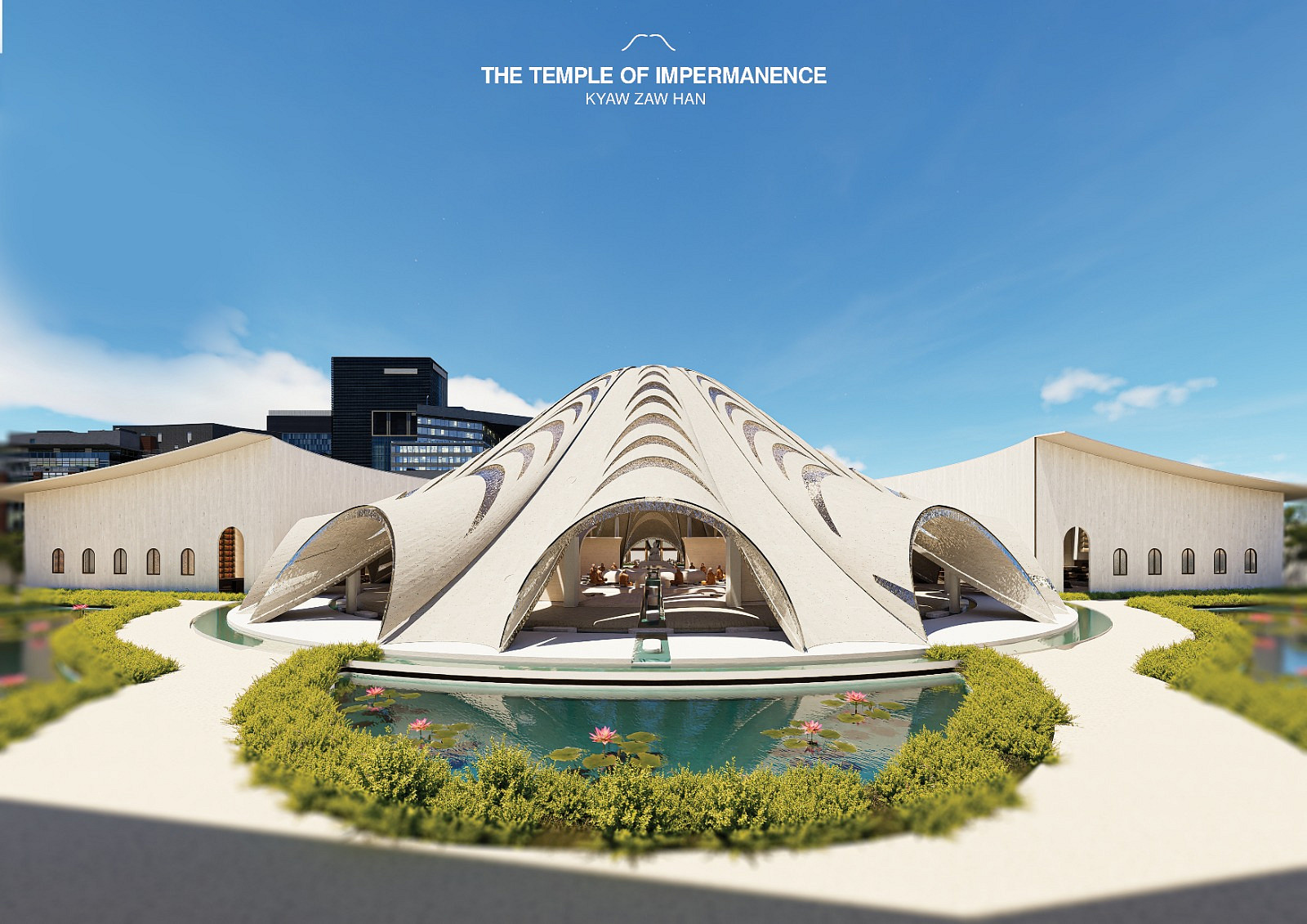
Bangkok is one of Southeast Asia's most densely active cities, yet it offers almost no spaces for stillness. The Temple of Impermanence proposes a contemporary Buddhist temple complex in the heart of the city , a contemplative environment designed around the Buddhist teaching of impermanence, where architecture, light, water, and spatial sequence work together to slow visitors down and reconnect them with themselves. The project asks a fundamental question: how can spiritual space remain meaningful and accessible to a modern urban society?
Buddhist temples have historically served as important places for meditation, learning, and community gathering in Thai society. However, in today’s fast paced urban environment many young people feel increasingly disconnected from traditional religious spaces. The formal atmosphere and traditional settings of temples may feel distant from the daily experiences of younger generations living in modern cities. At the same time, issues such as stress, uncertainty, and the pressure of urban life have increased the need for spaces that support reflection and mental well being. This context highlights the opportunity to reconsider how spiritual spaces can remain meaningful and accessible for contemporary urban society.
Popis projektu
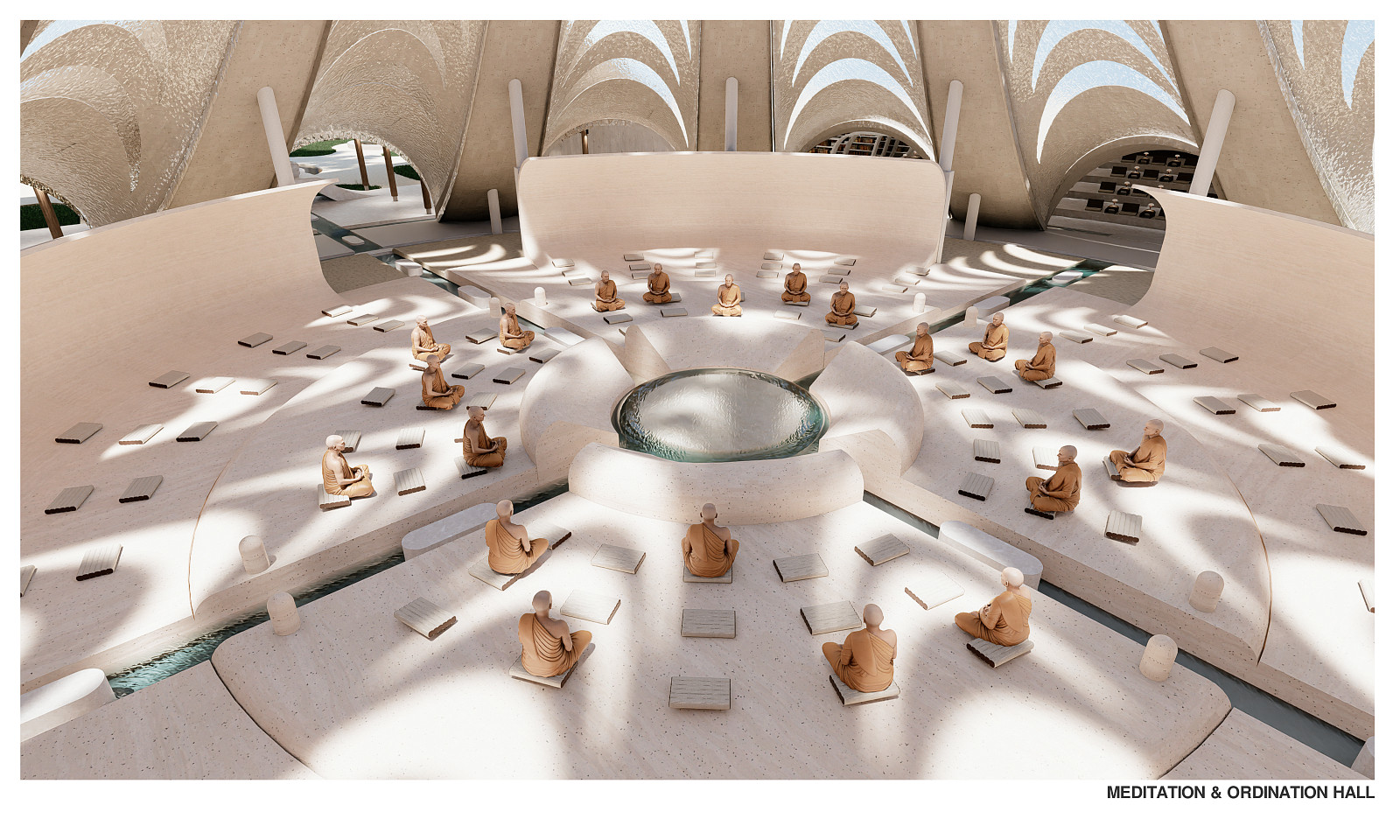
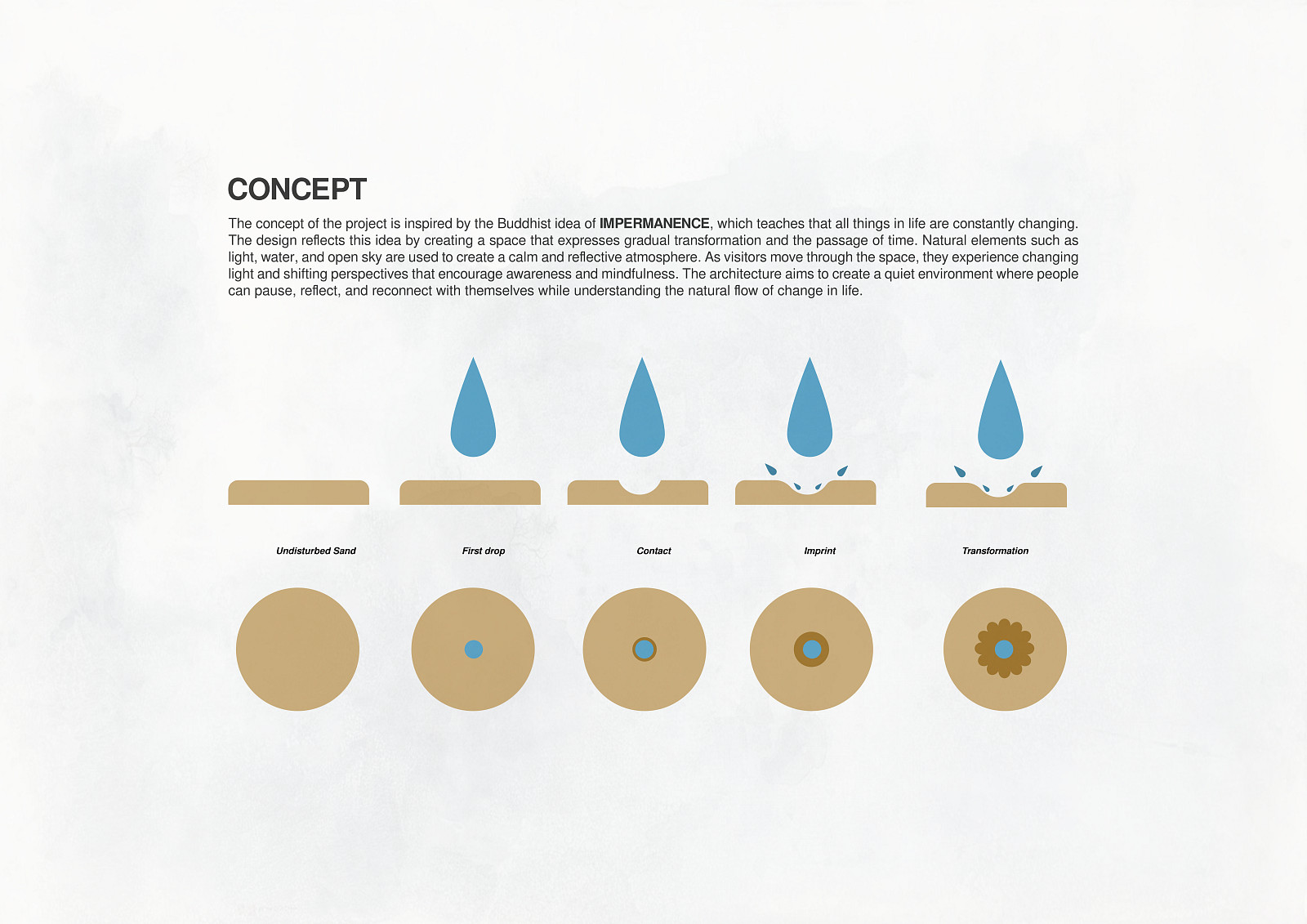
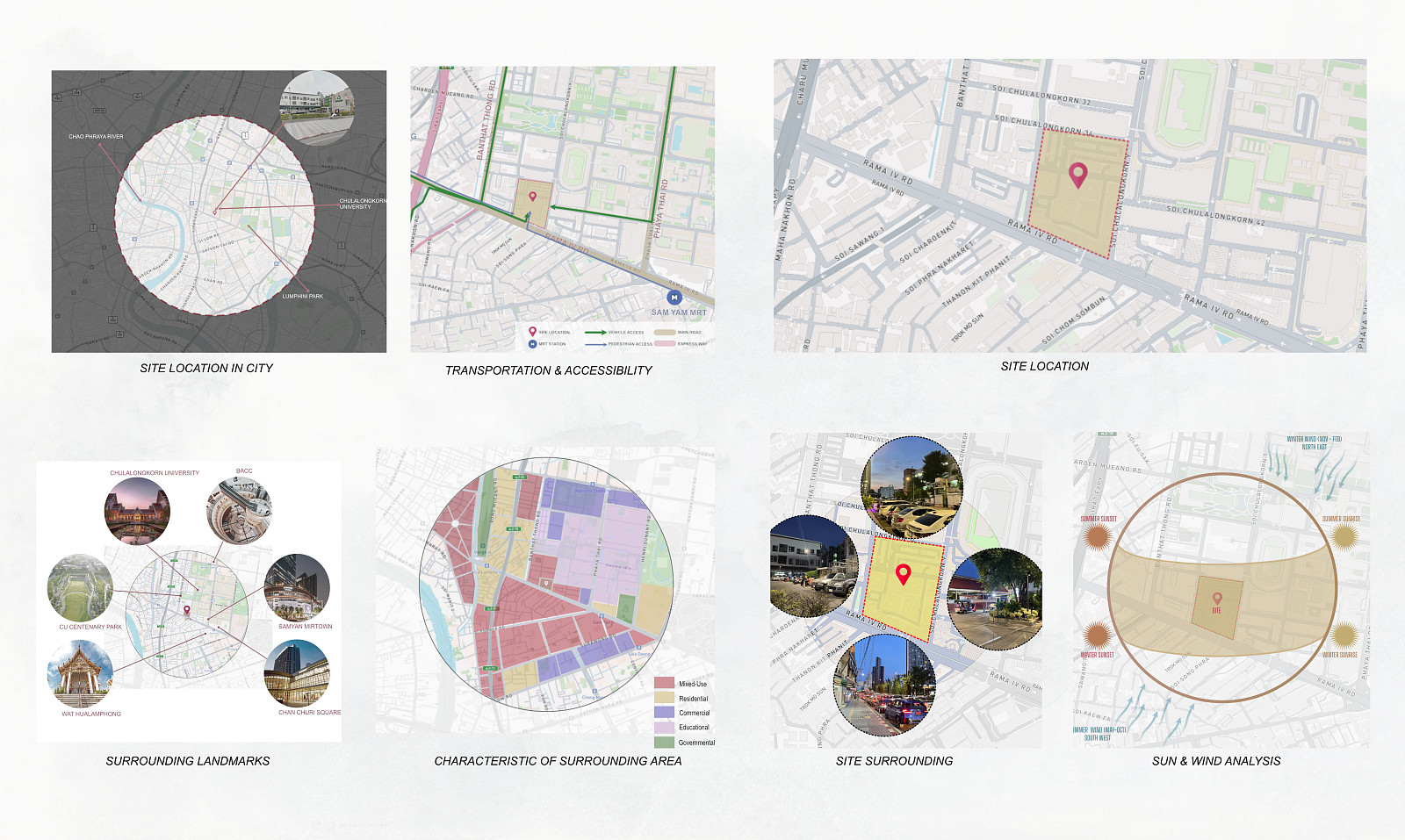
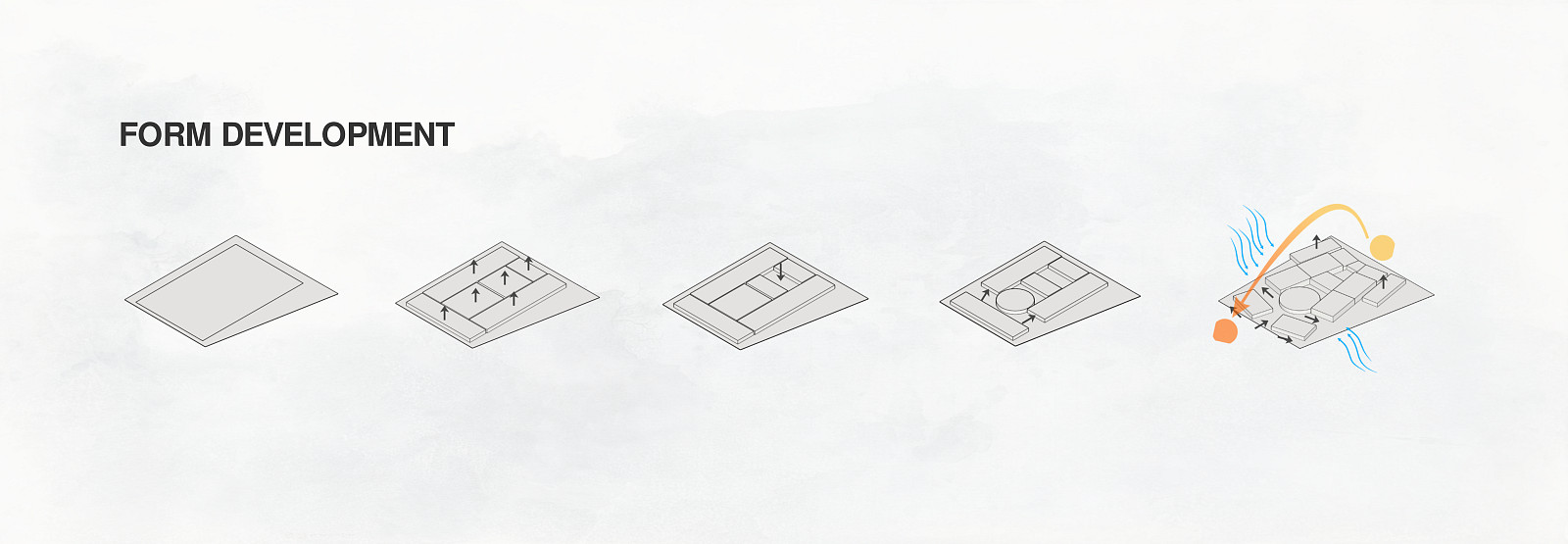
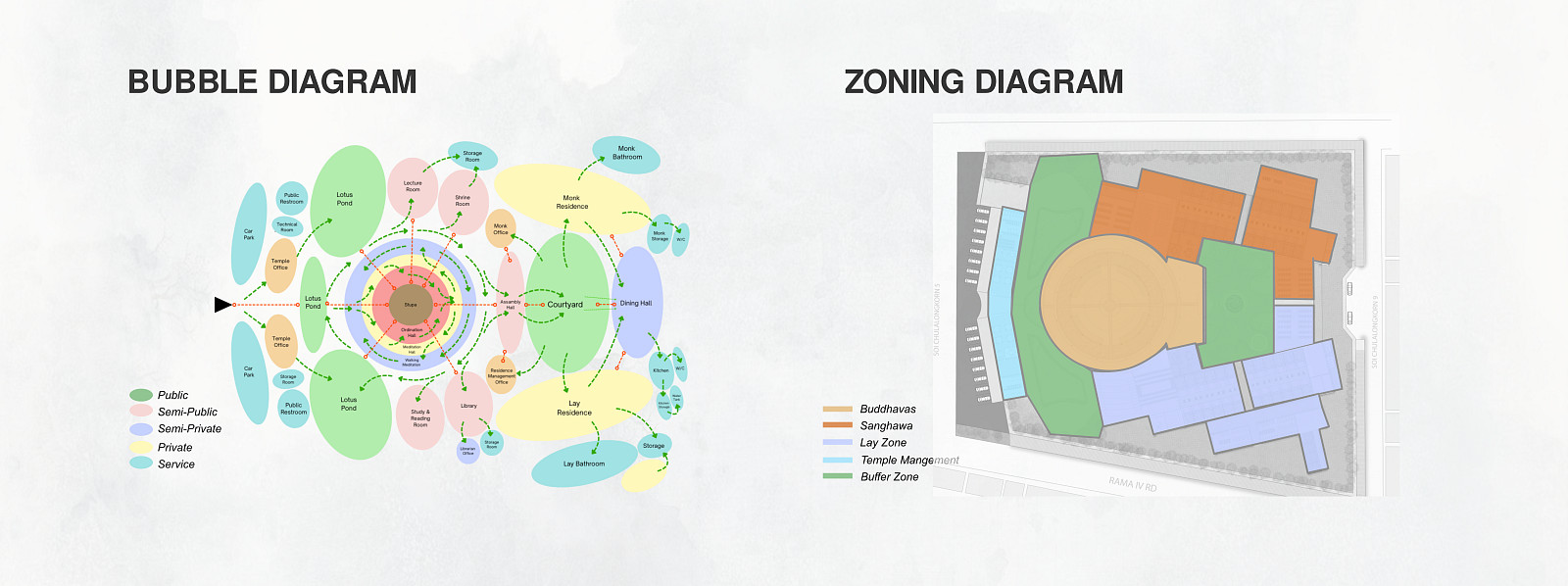
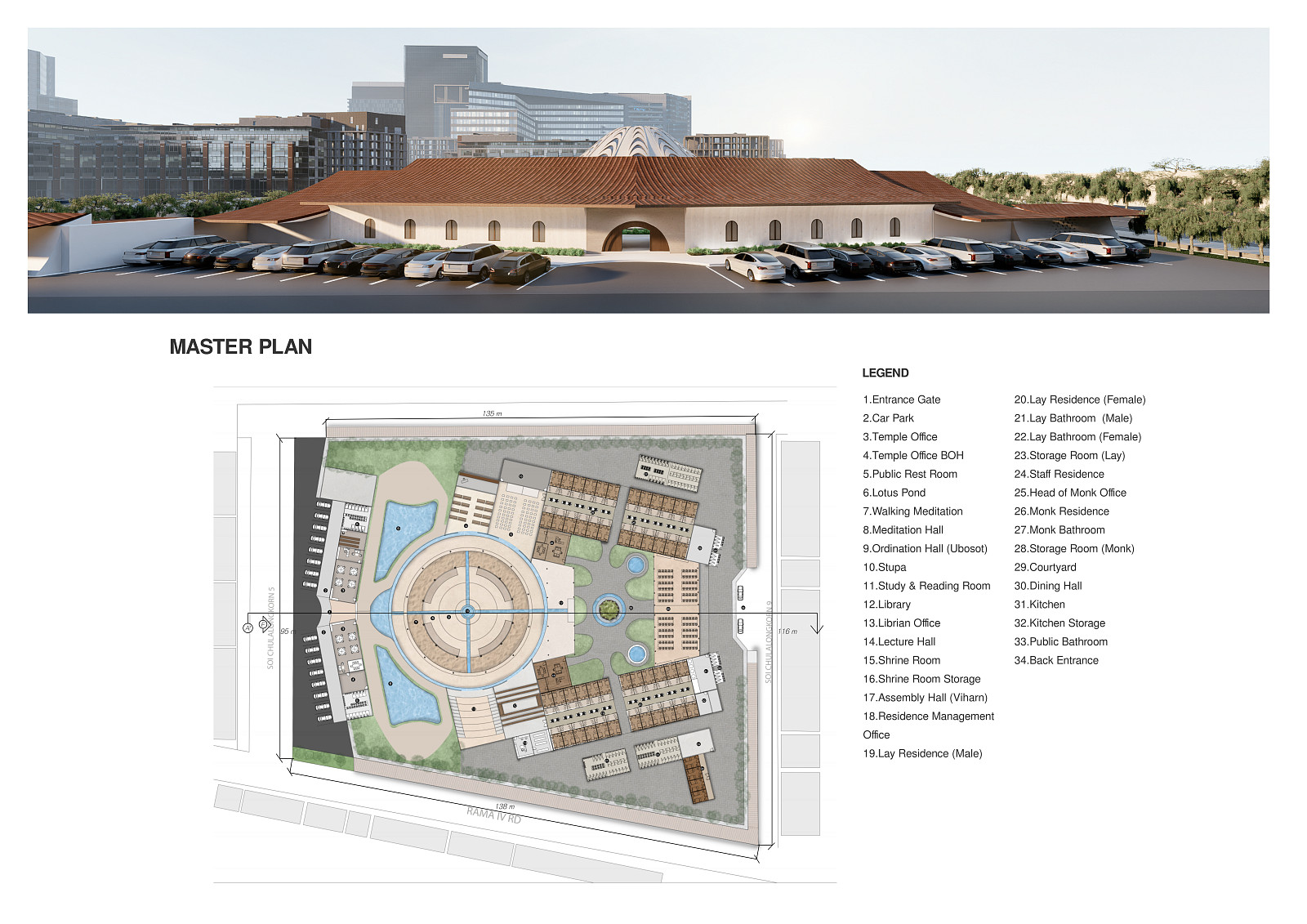
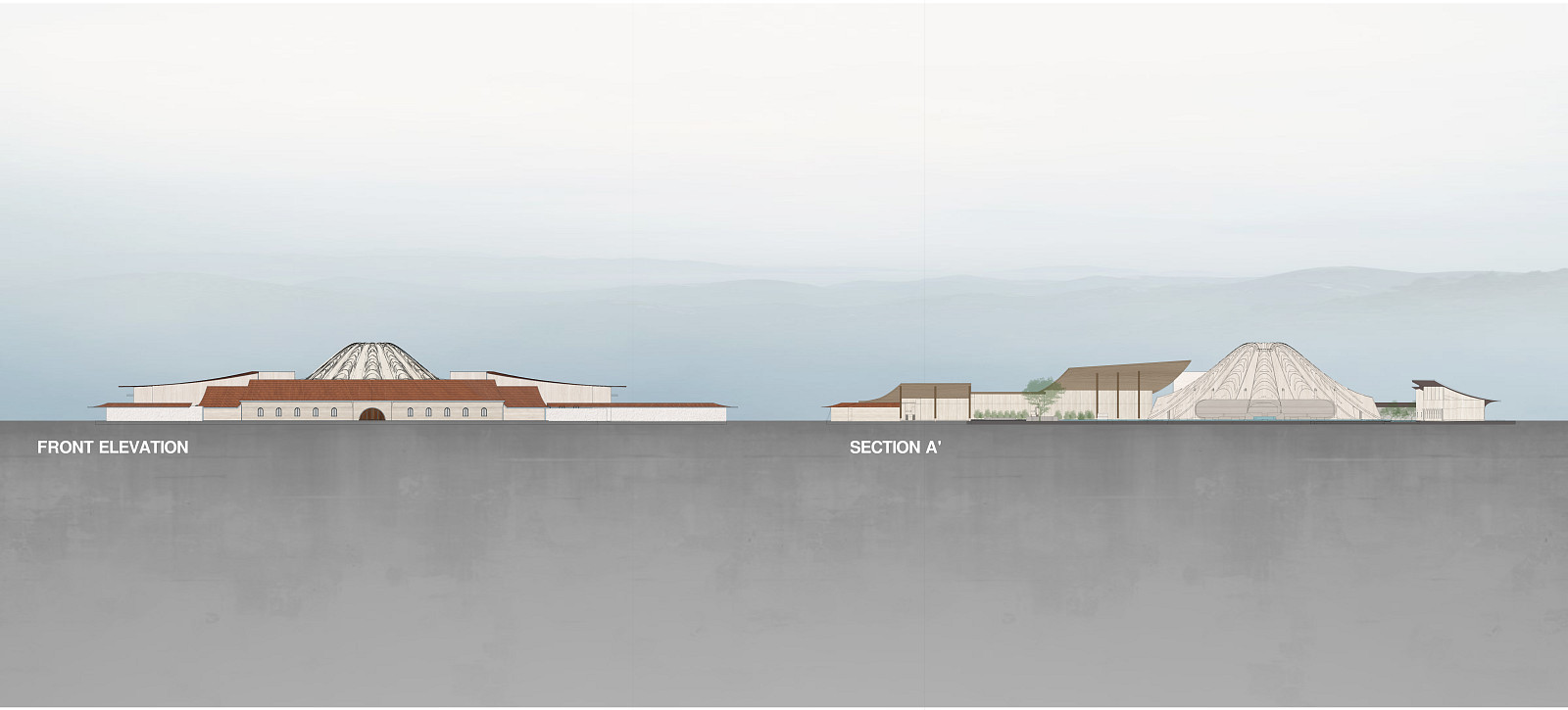
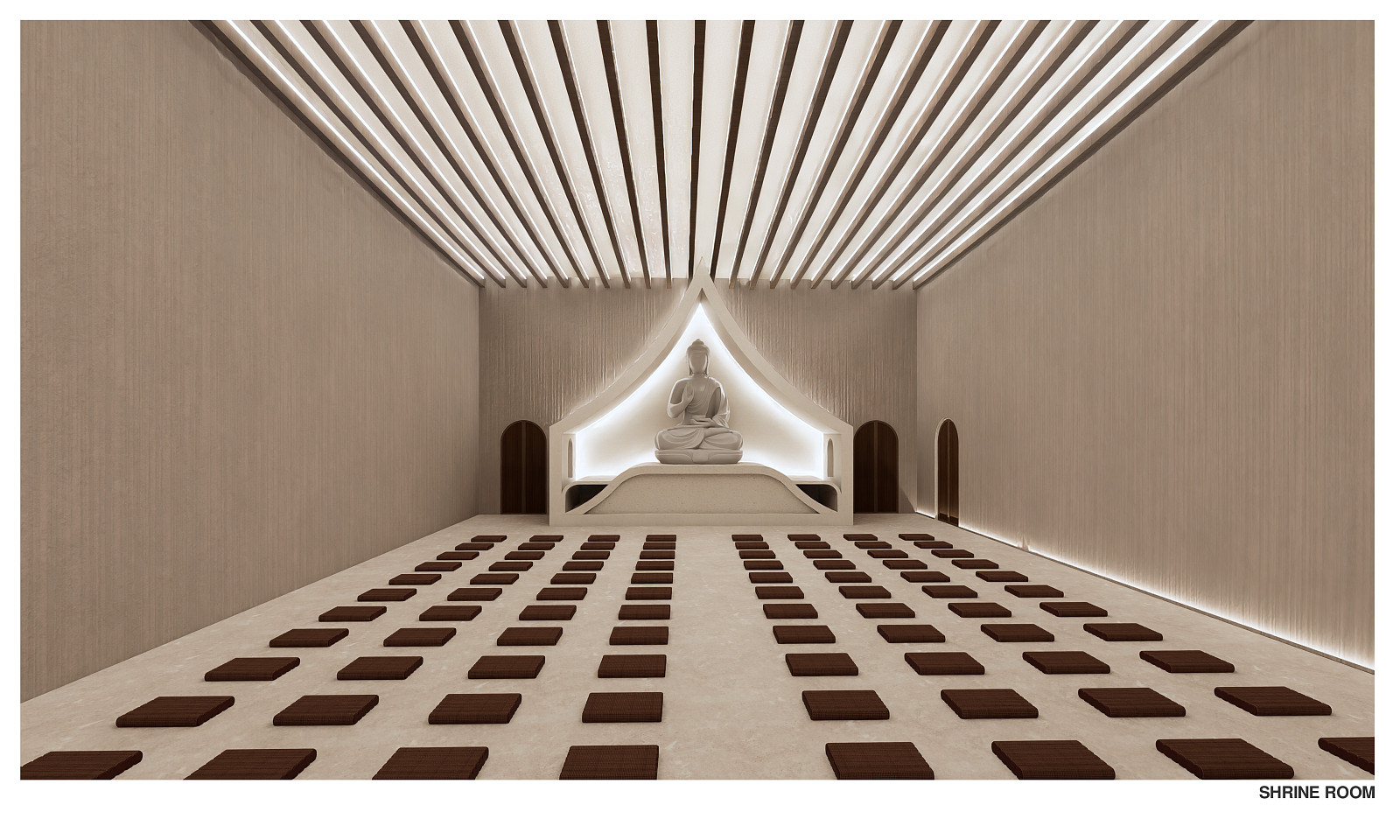
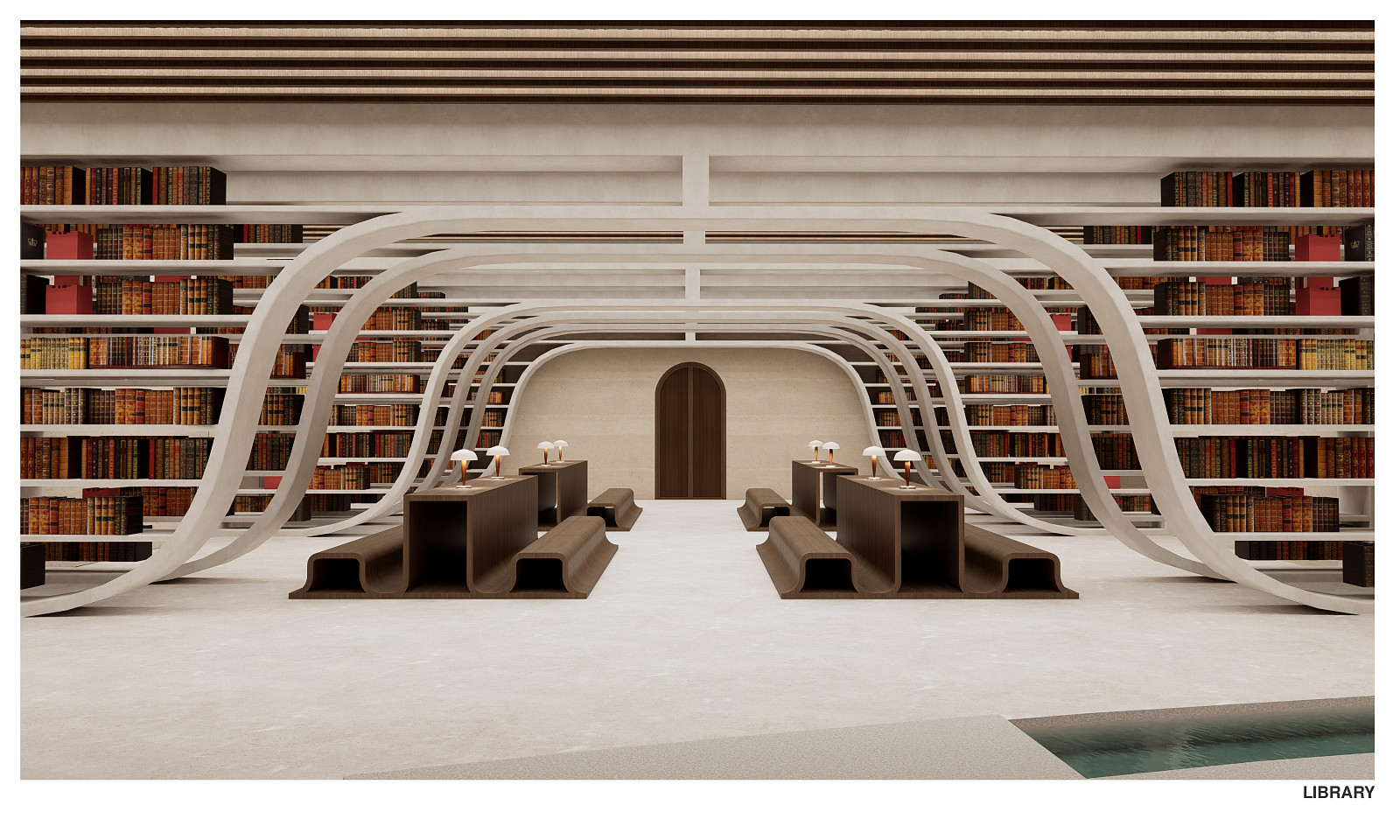
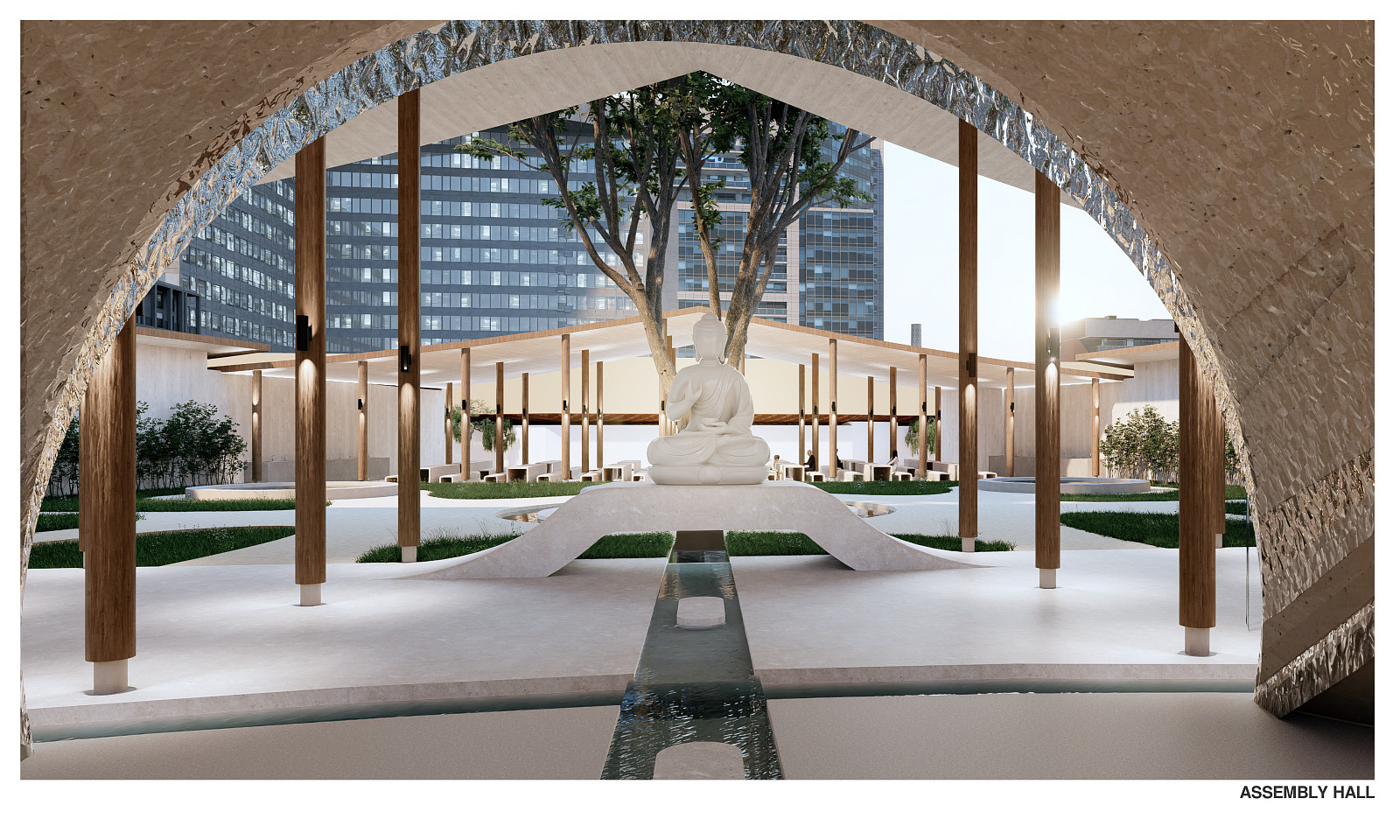
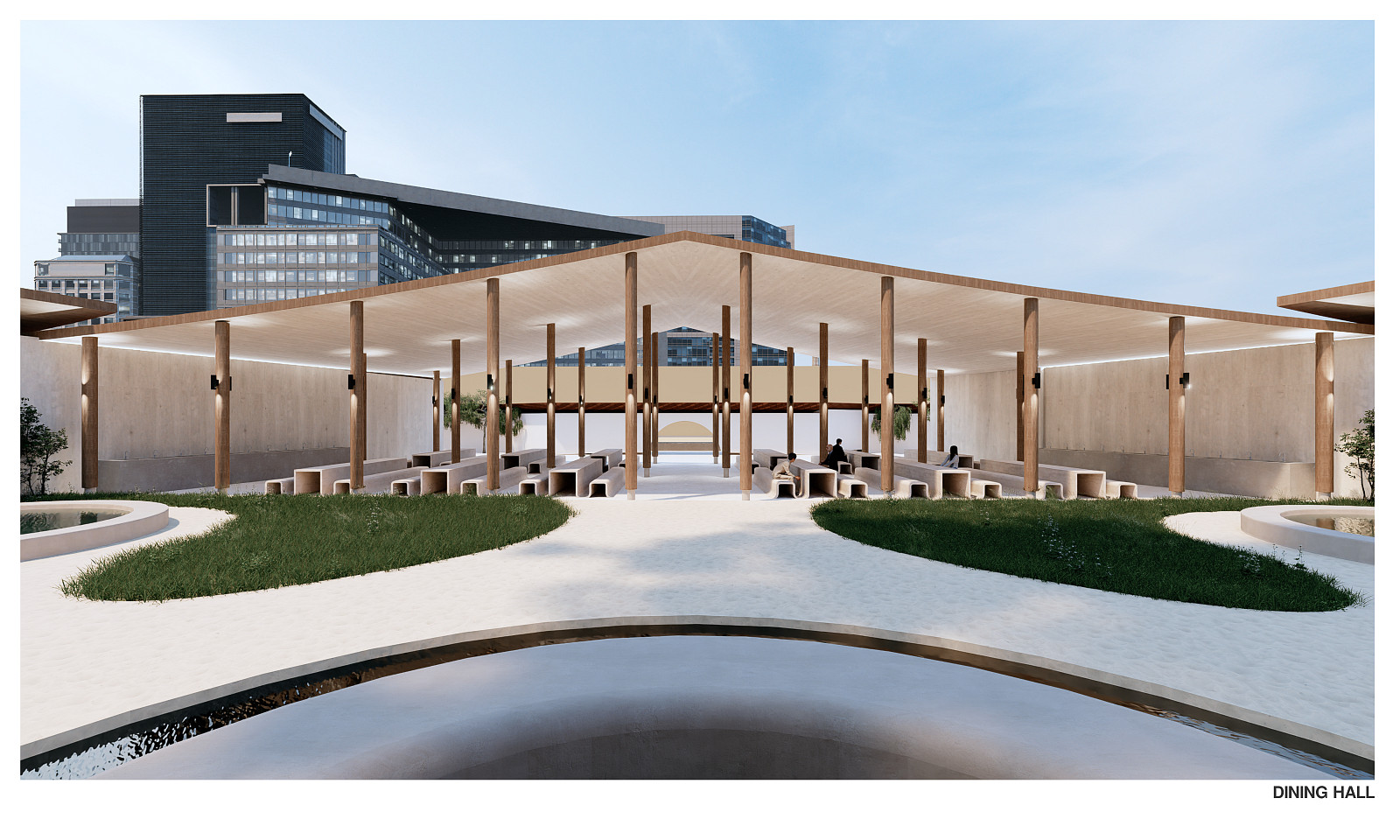
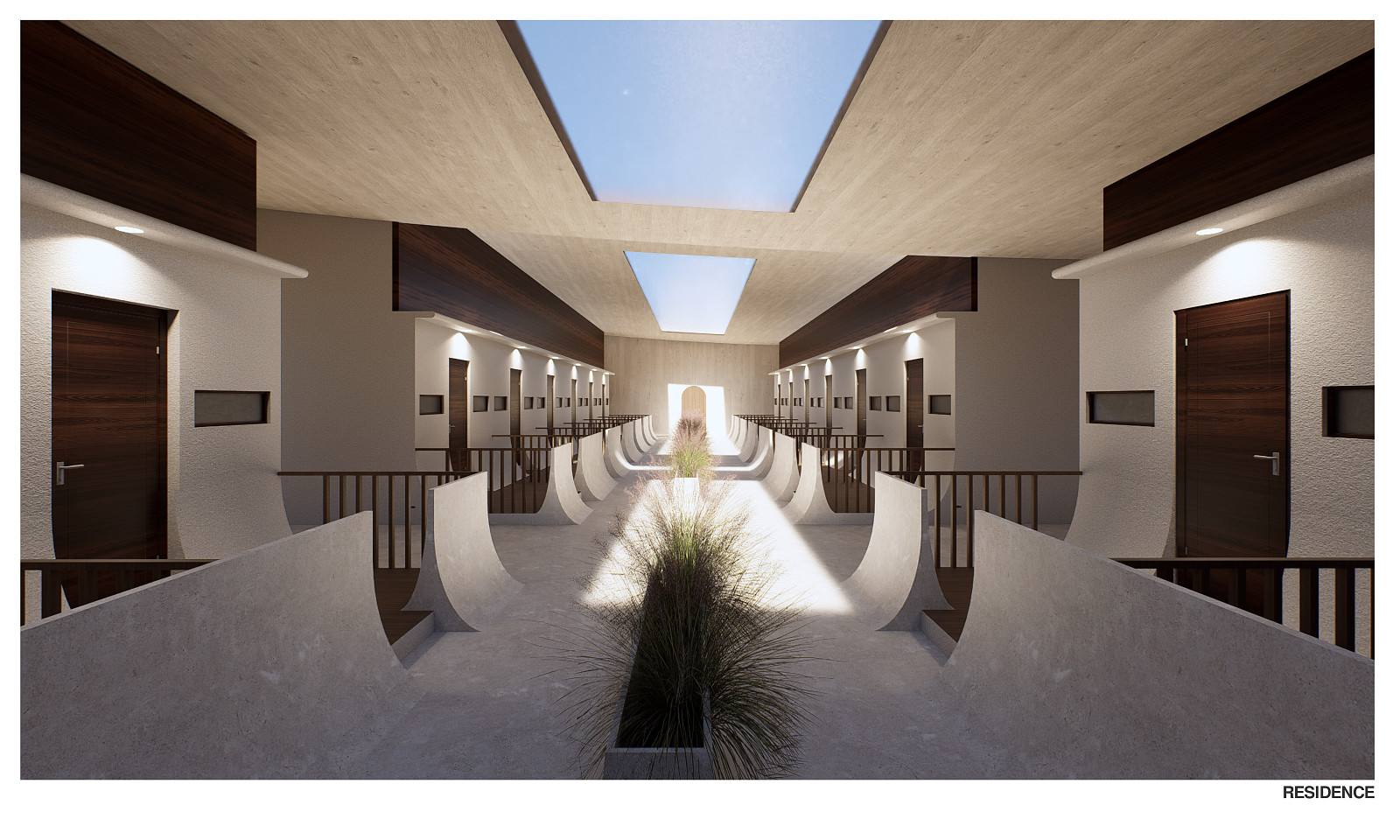
Modern Bangkok presents a contradiction. The city is home to thousands of Buddhist temples, yet young urban residents increasingly feel disconnected from traditional spiritual spaces. The formality of conventional temples — oriented around ceremony, donation, and cultural events — has created distance from the everyday needs of contemporary city dwellers who face stress, uncertainty, and the constant pressure of urban life. This project identifies that gap and proposes a new typology of urban temple: one centered on personal spiritual journey, silence, reflection, and meditation rather than ritual performance.The concept is rooted in the Buddhist principle of Anicca — impermanence, which teaches that all things are constantly changing and that suffering arises from resistance to this truth. Rather than representing impermanence symbolically through decoration or iconography, the design translates it directly into spatial and architectural experience. The form development draws from the physical phenomenon of a water drop falling on undisturbed sand: an initial stillness, a point of contact, an imprint, and a gradual transformation of the surface. This sequence — Undisturbed, First Drop, Contact, Imprint, Transformation, becomes the generative logic of the building's form, spatial progression, and the visitor's emotional journey through the complex.The site sits along Rama IV Road in central Bangkok, surrounded by universities, commercial districts, and major transit infrastructure. Despite constant activity, the immediate area lacks any space for quiet contemplation. Site analysis examined sun and wind patterns, pedestrian circulation routes, and the acoustic relationship between noise and calm to establish how a contemplative interior world could be carved out within a dense urban block. The master plan organizes 34 programmed spaces across a 135 x 116 metre site, zoned into four layers — public, semi-public, semi-private, and private, allowing the complex to serve both the general urban public and a resident monastic community simultaneously.The central Meditation and Ordination Hall is the spatial and conceptual heart of the project. Sheltered beneath a sweeping parametric dome structure inspired by the lotus ,itself a Buddhist symbol of transformation — the hall opens radially around a central water element, with natural light filtering through the layered canopy above to create shifting patterns across the meditation floor throughout the day. Surrounding spaces, the Library, Shrine Room, Study and Reading Room, Assembly Hall, Dining Hall, and Monk and Lay Residences, each carry the same material honesty and atmospheric calm, using warm stone, timber, arched openings, and controlled light to sustain the contemplative quality across every programme.The project argues that contemporary spiritual architecture does not need to abandon tradition to remain relevant. It needs to rediscover what tradition was always about — creating conditions for stillness, awareness, and the quiet understanding that everything changes.
Technické informace
Project Type: Temple Complex — Architecture and Interior Design
Location: Rama IV Road, Bangkok, Thailand
Site Area: 15,630 square metres (135m x 116m)
Total Programmed Spaces: 34 spaces across public, semi-public, semi-private, and private zones
Key Programmes: Entrance Gate, Lotus Pond, Walking Meditation Path, Meditation Hall, Ordination Hall (Ubosot), Stupa, Library, Study and Reading Room, Lecture Hall, Shrine Room, Assembly Hall (Viharn), Monk Residence, Lay Residence, Dining Hall, Kitchen, Temple Office
Building Heights: Perimeter buildings 4–6.5m, Central dome structure approximately 14–18m above ground level
The project is designed as a reinforced concrete structure, providing durability, stability, and flexibility in forming the spatial composition. The primary structural system consists of cast-in-place concrete walls and slabs, allowing for continuous surfaces and curved forms that support the overall architectural concept.
The external envelope is defined by a combination of solid and permeable layers. A textured concrete boundary wall acts as a buffer from the urban environment, reducing noise and creating a sense of enclosure. The residential facade incorporates a perforated wall system that allows natural ventilation and filtered daylight while maintaining privacy.
The material palette is minimal and grounded, focusing on natural and long-lasting materials. Travertine stone cladding is used on key feature walls to create a calm and refined atmosphere, while exposed fair-face concrete expresses structural honesty and raw texture. Secondary walls are finished with cement plaster and lime wash to soften light and provide subtle variation. Rammed earth is introduced in selected areas to enhance tactility and reinforce the connection to natural processes.
Floor finishes vary according to function. Travertine and polished concrete are used in main circulation areas for durability and continuity. Compacted sand flooring is applied in meditation spaces to create a direct physical connection to the ground. Timber flooring is used in residential zones to introduce warmth, while non-slip cement screed is applied in service areas for practicality and safety.
The roof is constructed as a reinforced concrete slab finished with roof tiles, providing weather protection and thermal performance suitable for the local climate. Waterproofing membranes and proper drainage systems are integrated to ensure long-term durability.
Openings are carefully designed to balance enclosure and openness. Timber doors provide warmth and human scale, while glass and perforated openings allow light, air, and visual connection to shape the spatial experience.
Overall, the construction system emphasizes simplicity, durability, and material authenticity, supporting the architectural intention of creating a calm, introspective environment within a dense urban context.

Copyright © 2026 INSPIRELI | All rights reserved. Use of this website signifies your agreement to the Terms of Use, Privacy Policy, and use of cookies.