
Arsenal De Tucuman


Idea projektu
This project is not conceived as a park placed within the city, but as a city grown from memory.
The former Arsenal site, marked by absence, violence, and silence, is reinterpreted as a living structure where memory is not isolated, but embedded into everyday urban life. Instead of separating commemoration from habitation, the proposal dissolves their boundaries—transforming memory into an active, spatial, and social generator.
The guiding idea is simple yet radical:
memory becomes infrastructure.
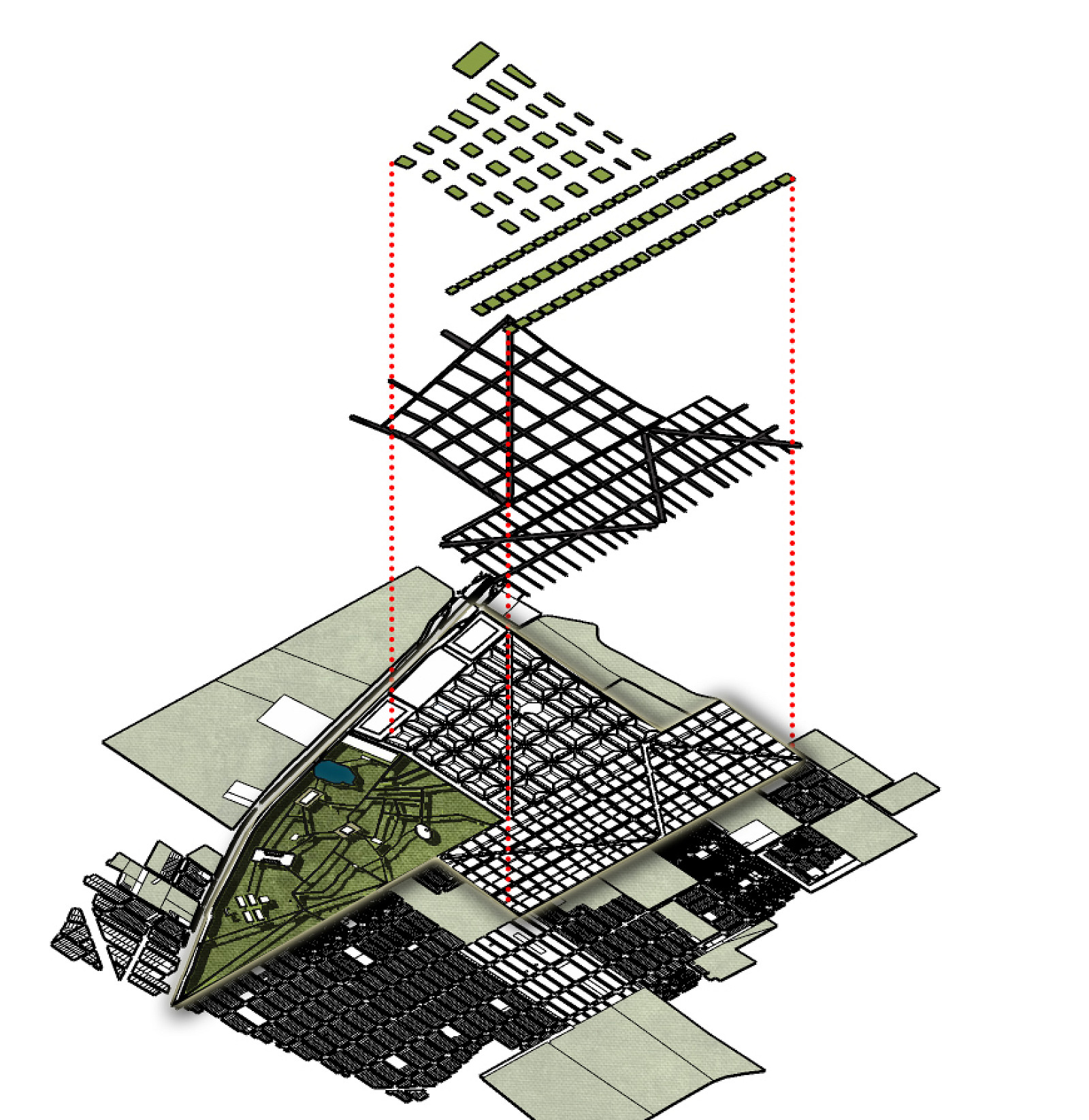
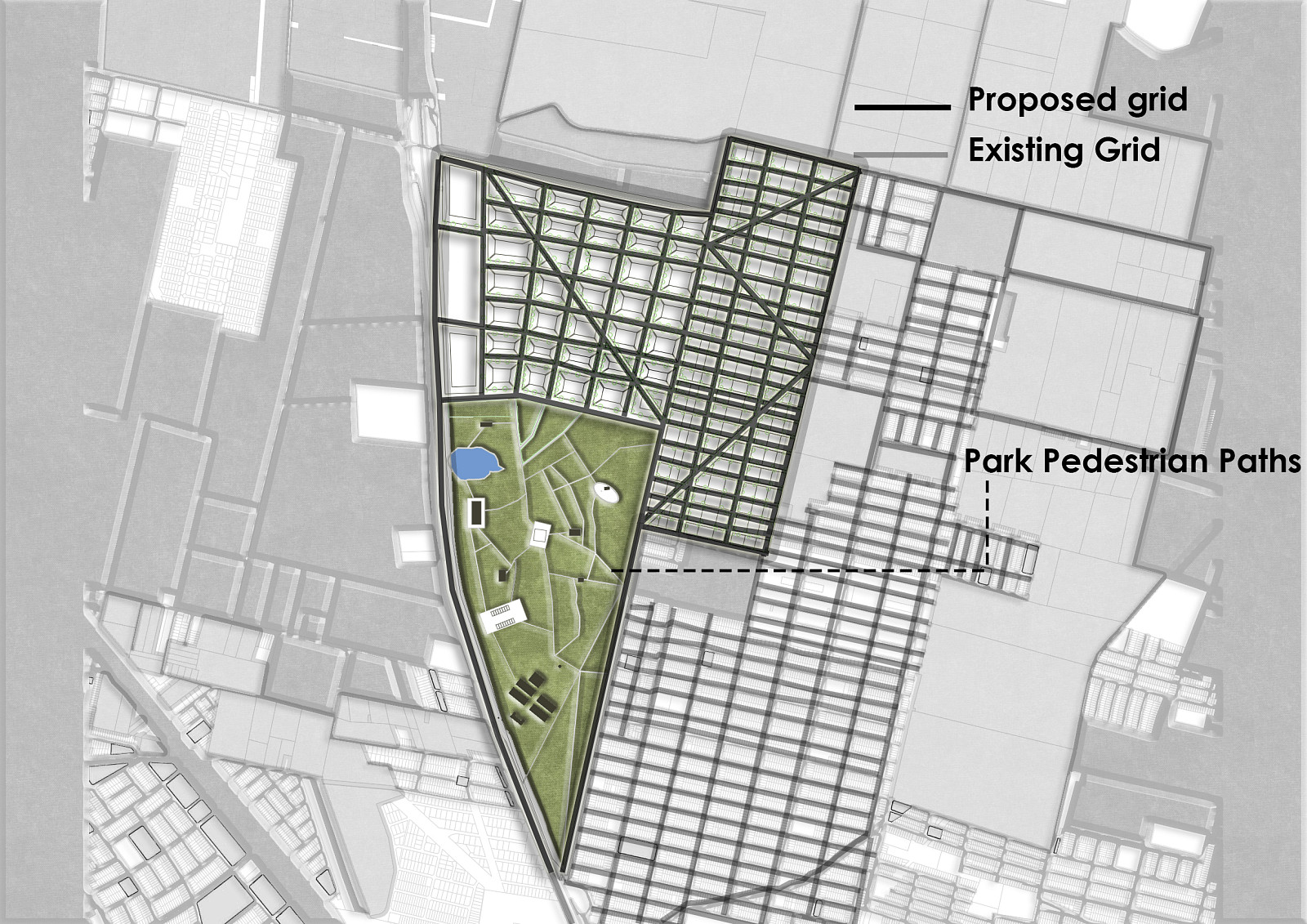
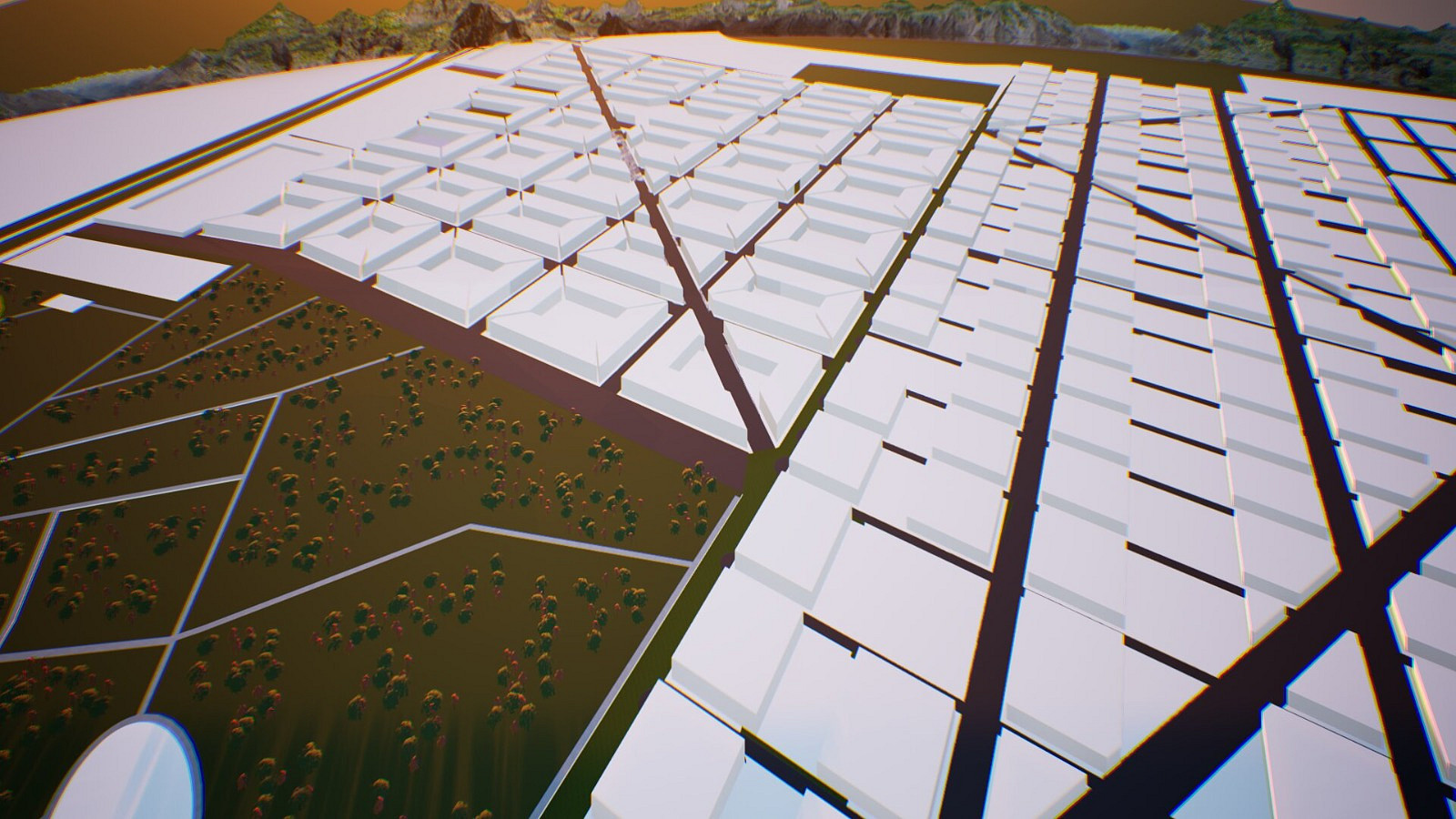
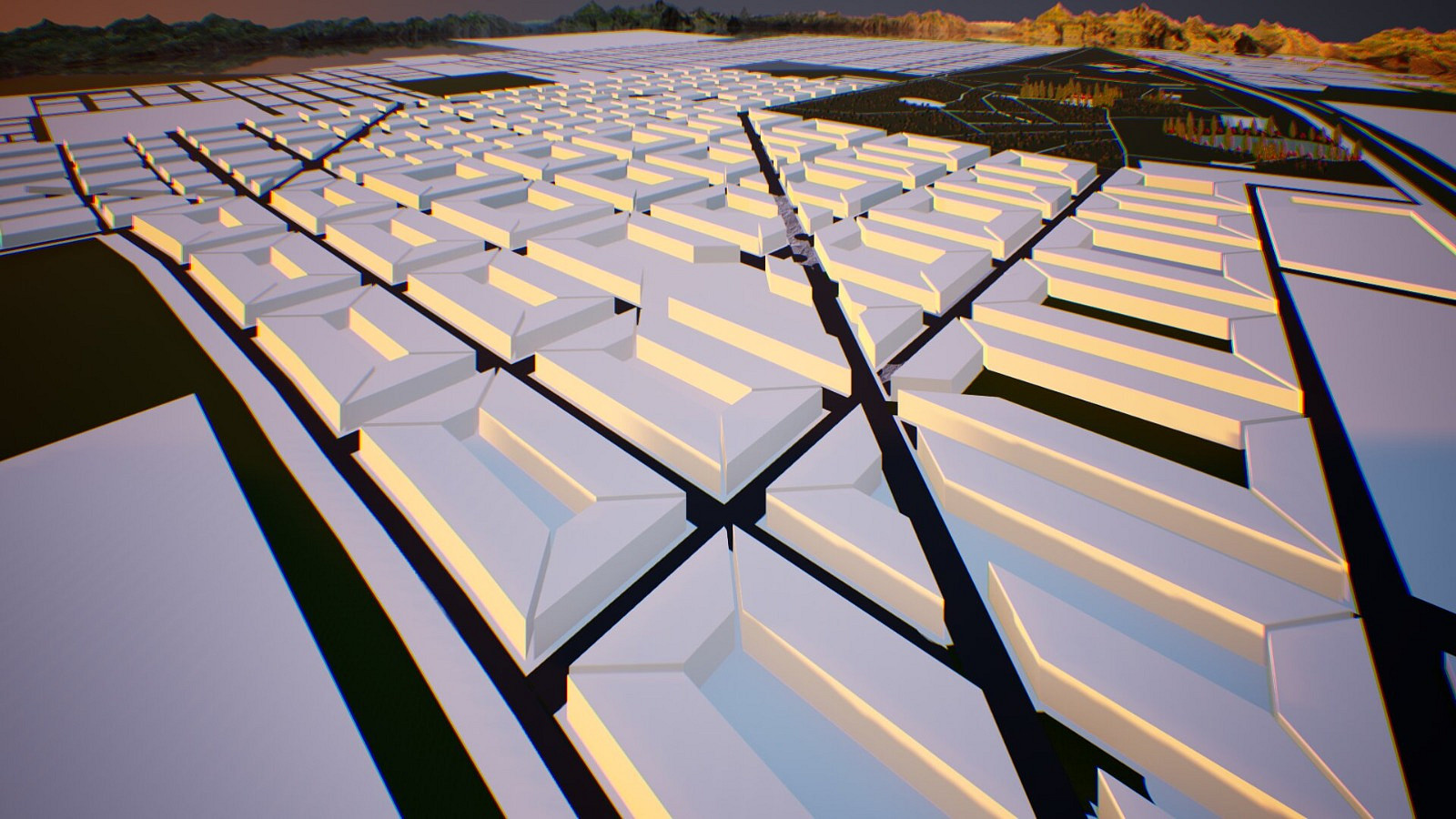
A new urban grid is introduced as a rational and connective system, yet deliberately interrupted by a 45-degree shift—an intentional “fracture” in the order. This gesture is not only functional, but symbolic: it represents the disruption of history, a scar that reorganizes movement, perception, and orientation across the site. The city grows around this deviation, acknowledging the past rather than erasing it.
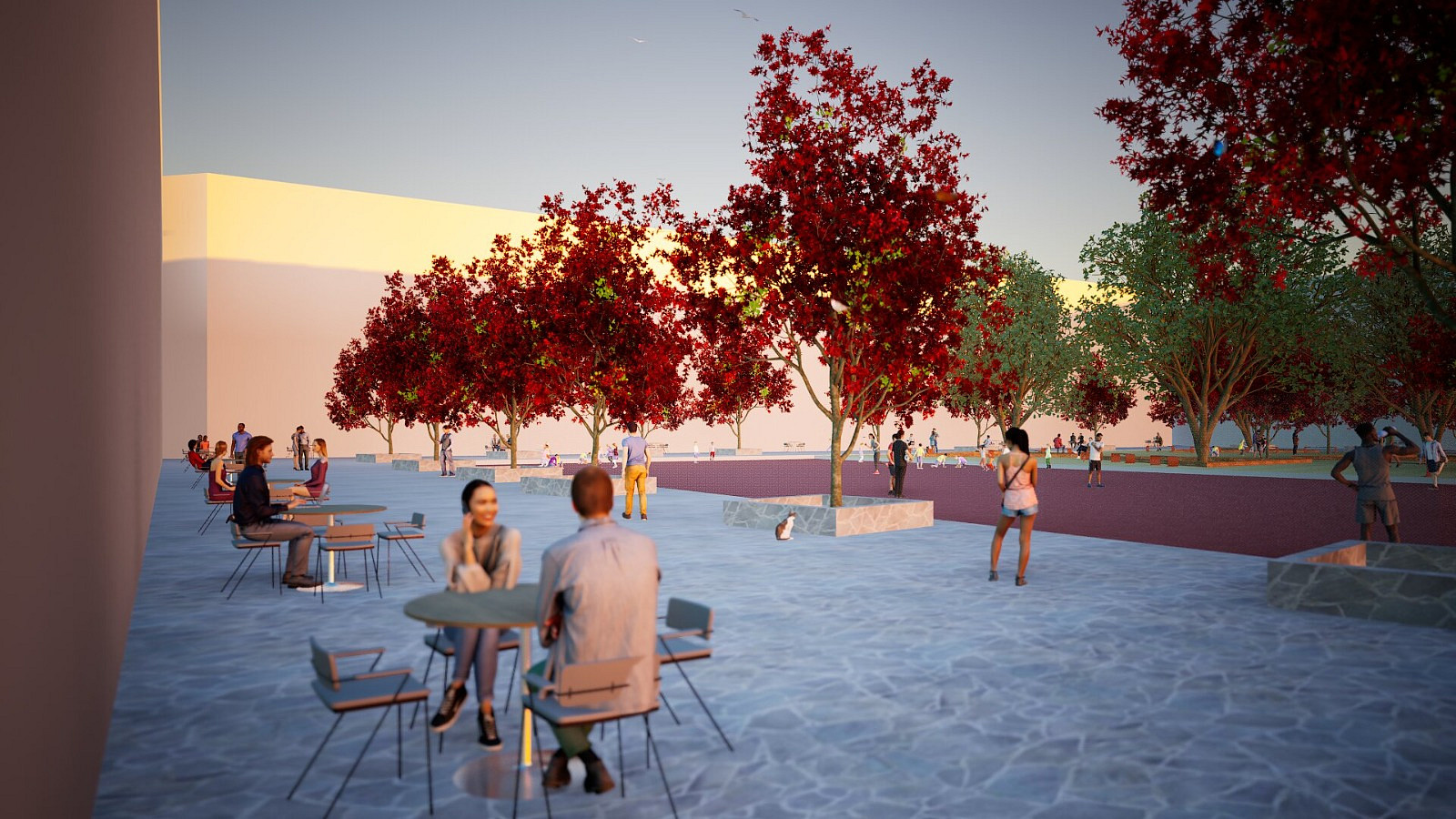
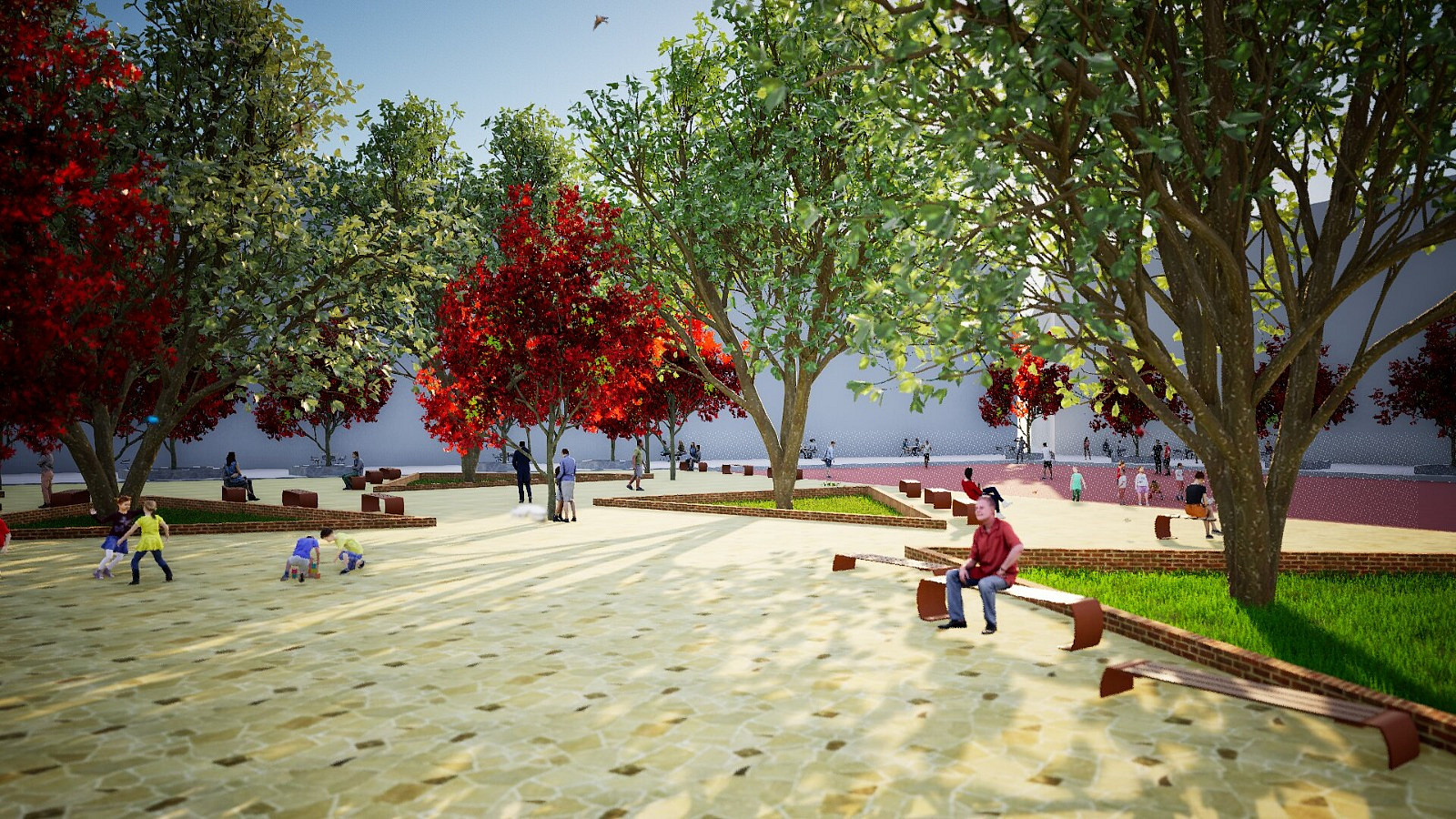
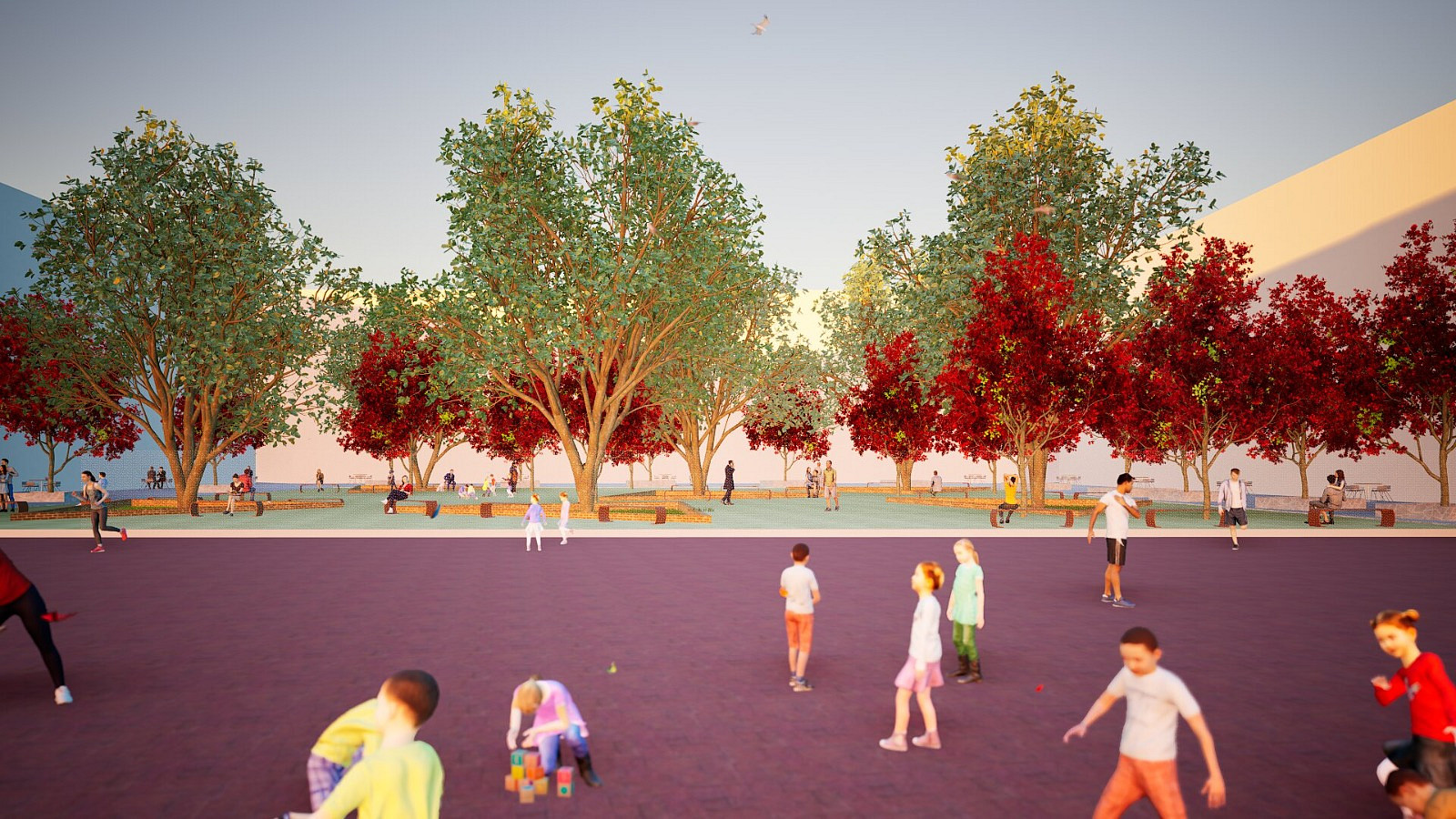
Within this framework, the project develops a system of introverted urban blocks, each containing an internal atrium. These atriums act as micro-worlds of community life—spaces of gathering, play, rest, and interaction. Collectively, they form a porous network of open spaces that extend into the larger landscape, blurring the line between private and public, individual and collective.
At the center, the Memory Park is not a void, but a field of presence.
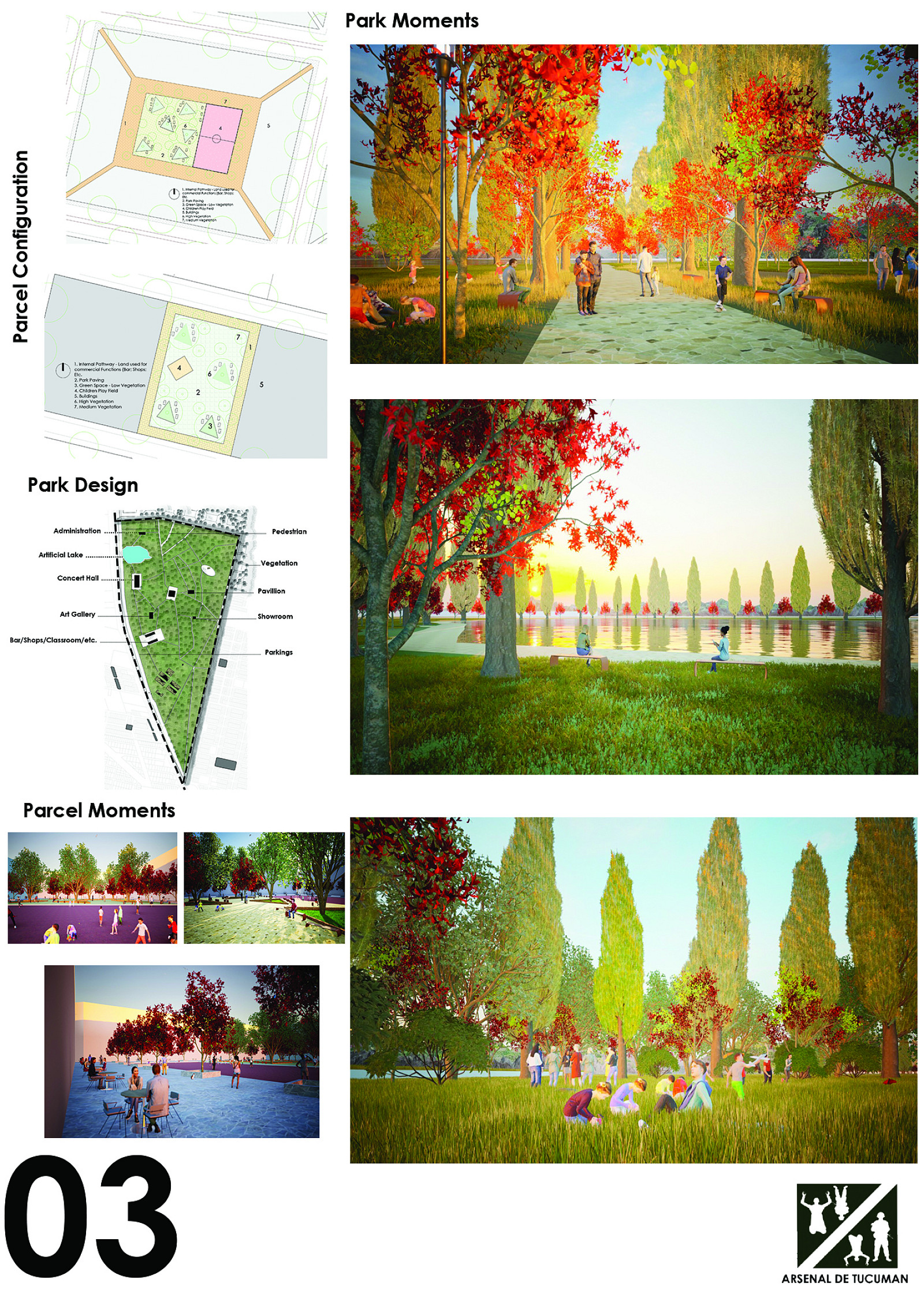
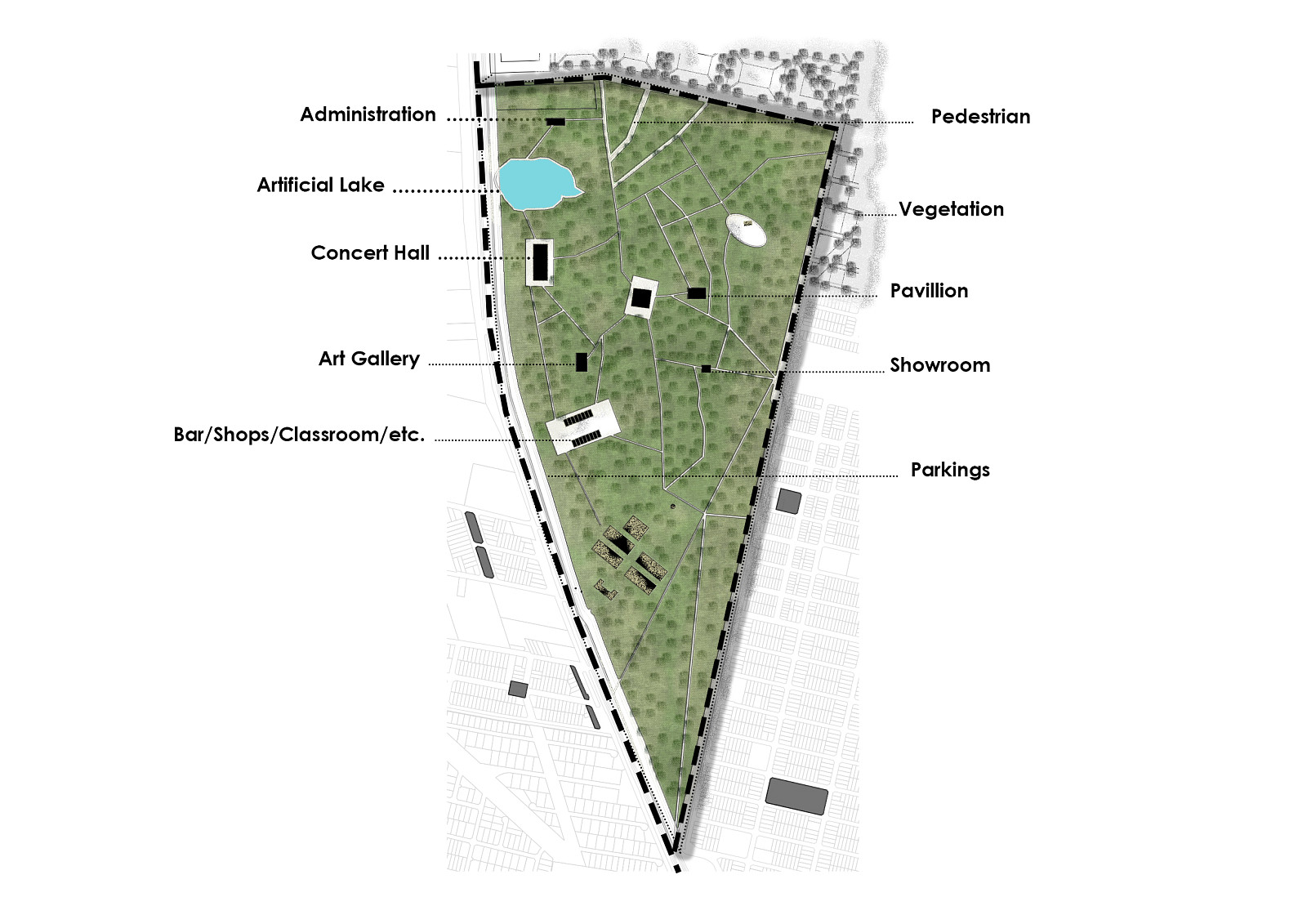
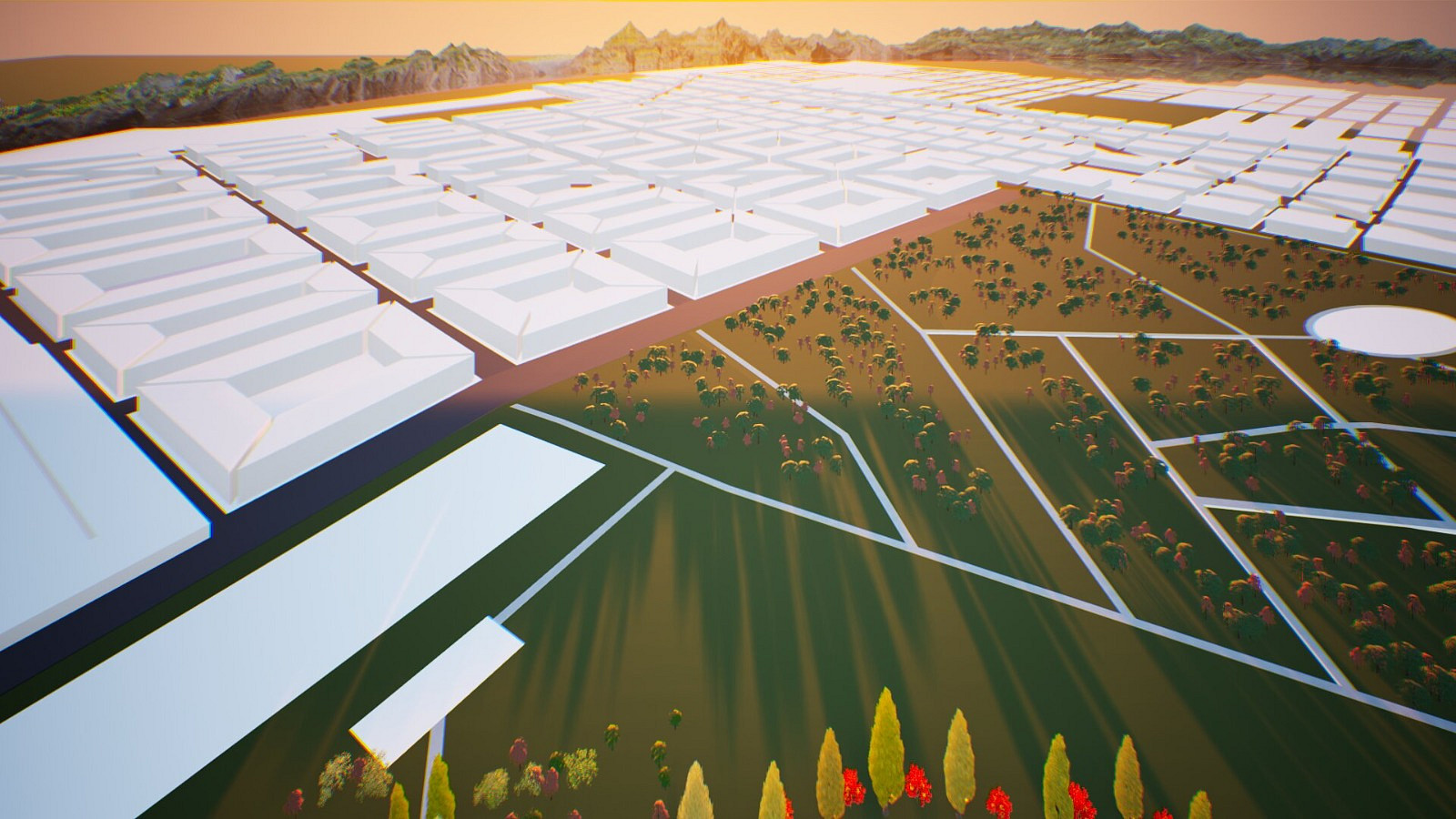
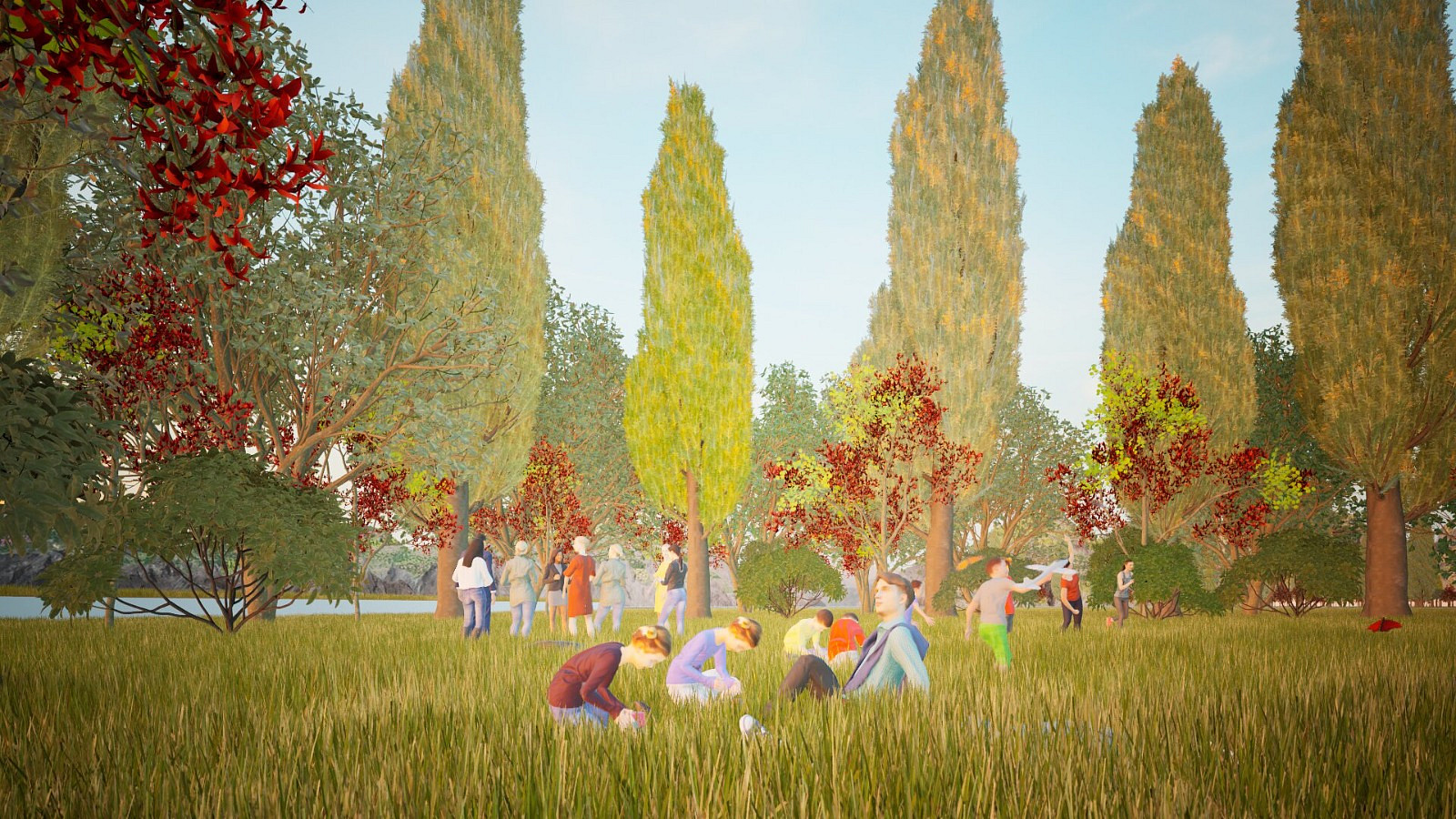
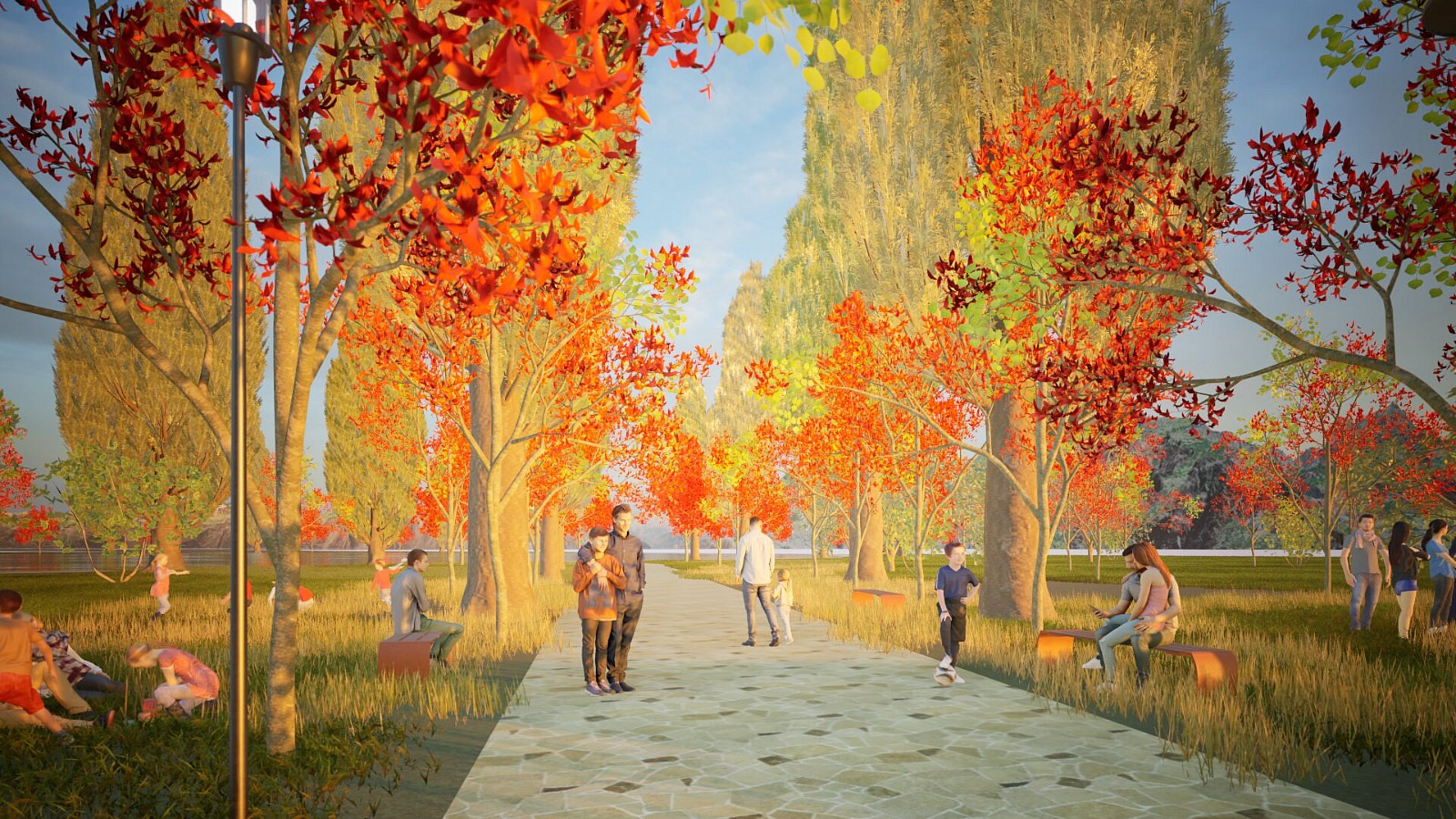
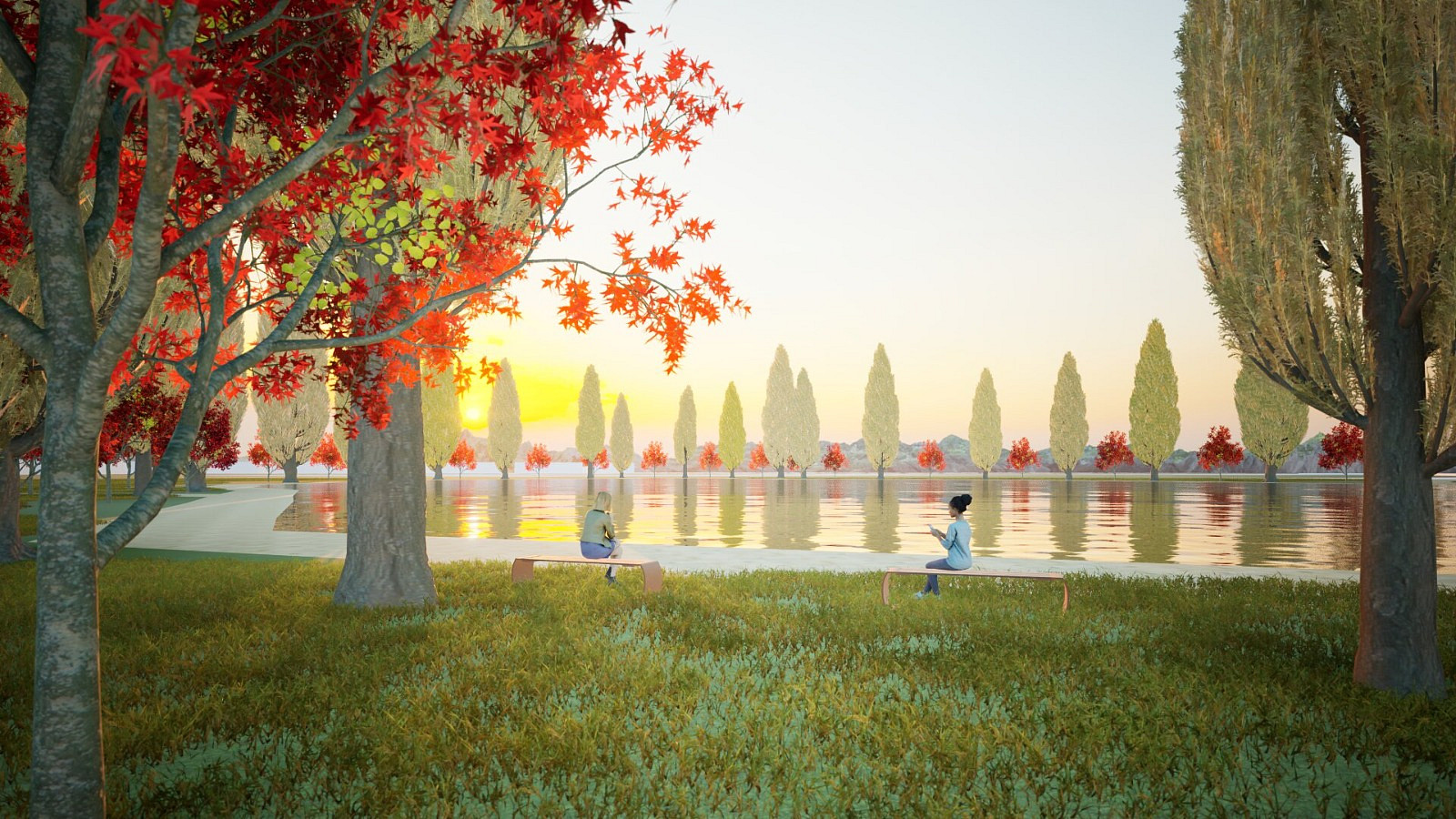
Here, architecture withdraws, allowing landscape and symbolism to take over. Water, vegetation, and pathways construct a slow, introspective journey. The repetition of vertical elements—Italian cypresses—transforms the ground into a living archive, where each tree stands as a silent witness. Memory is no longer monumentalized in a single object, but distributed across space, time, and movement.
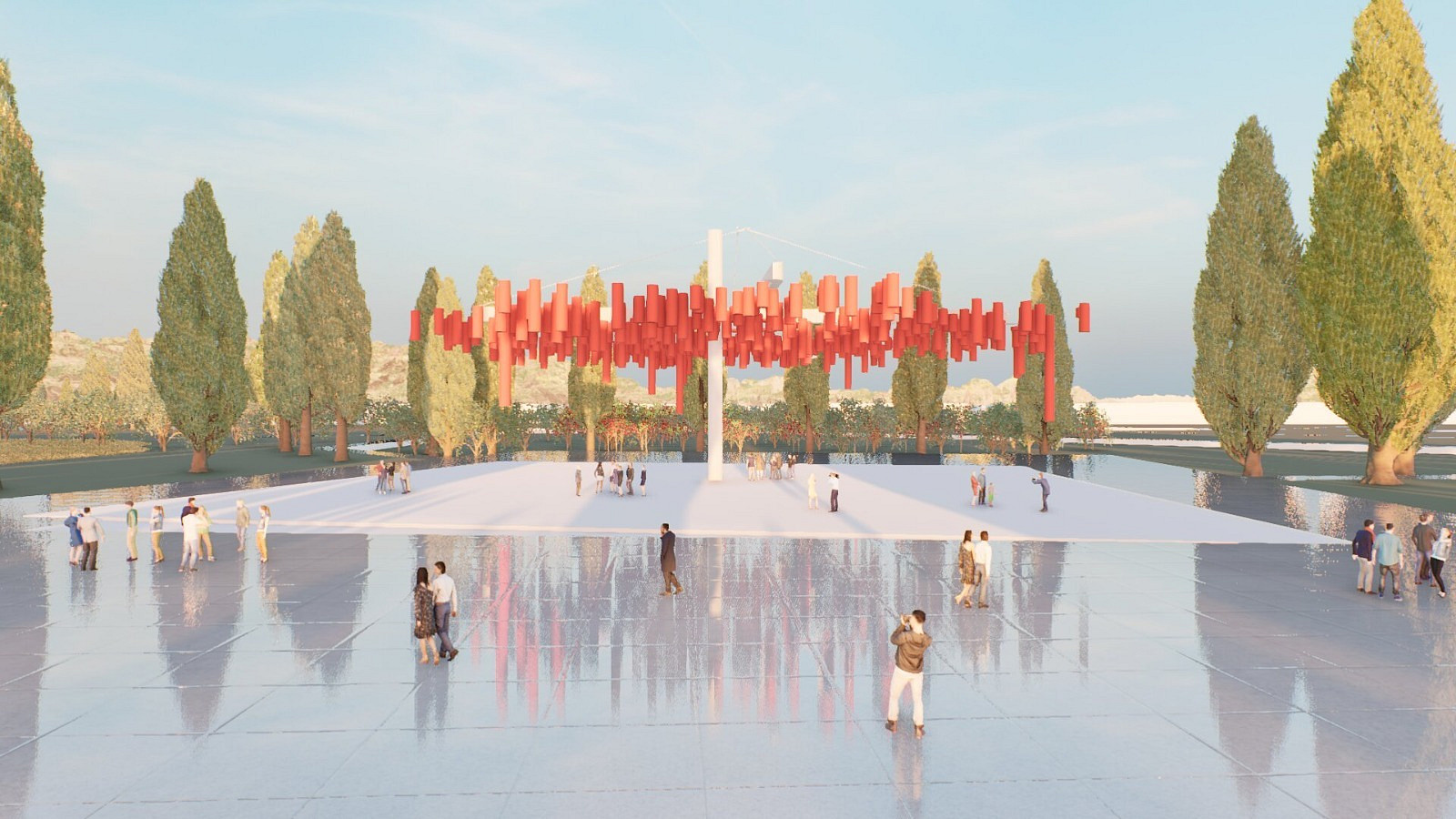
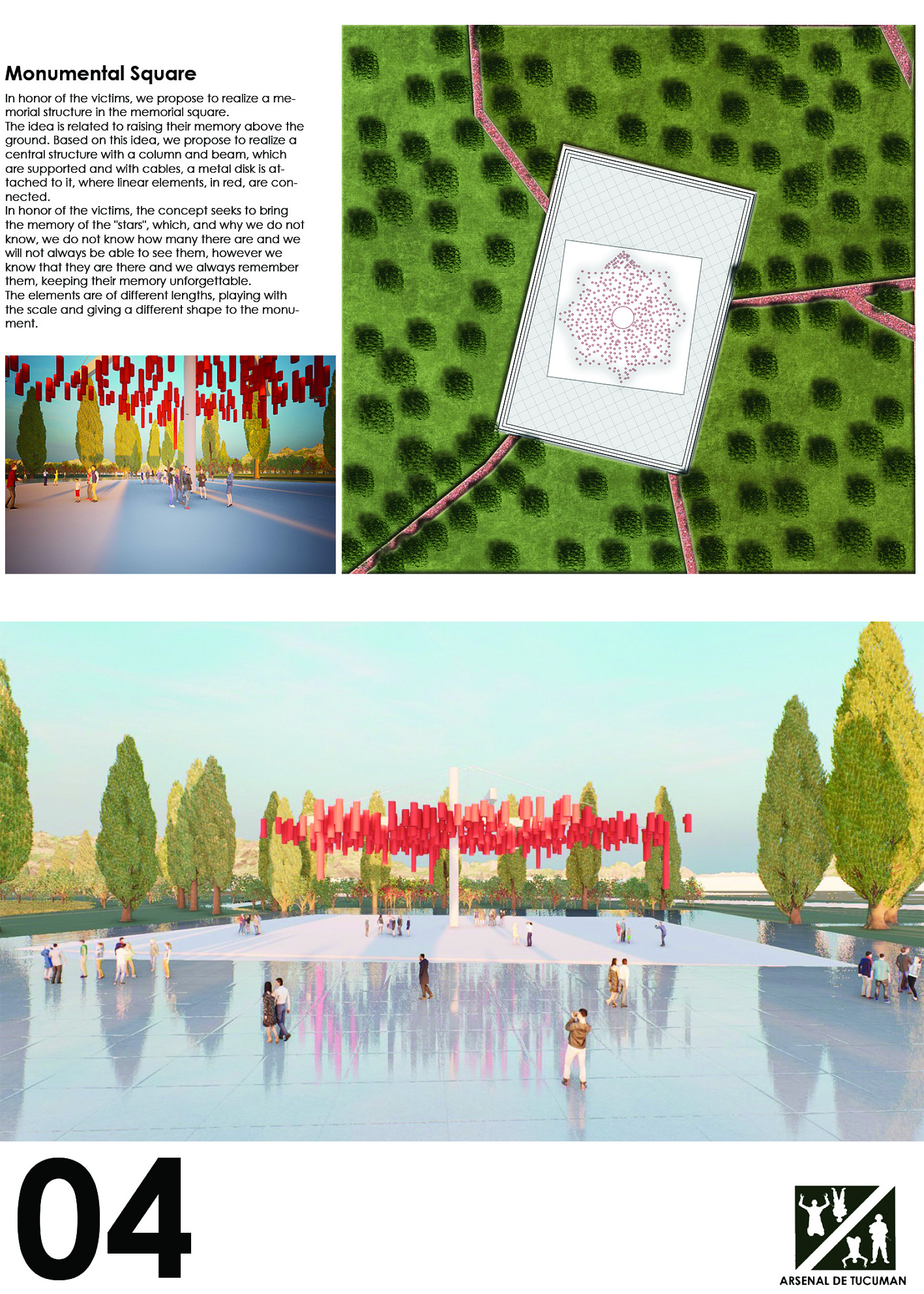
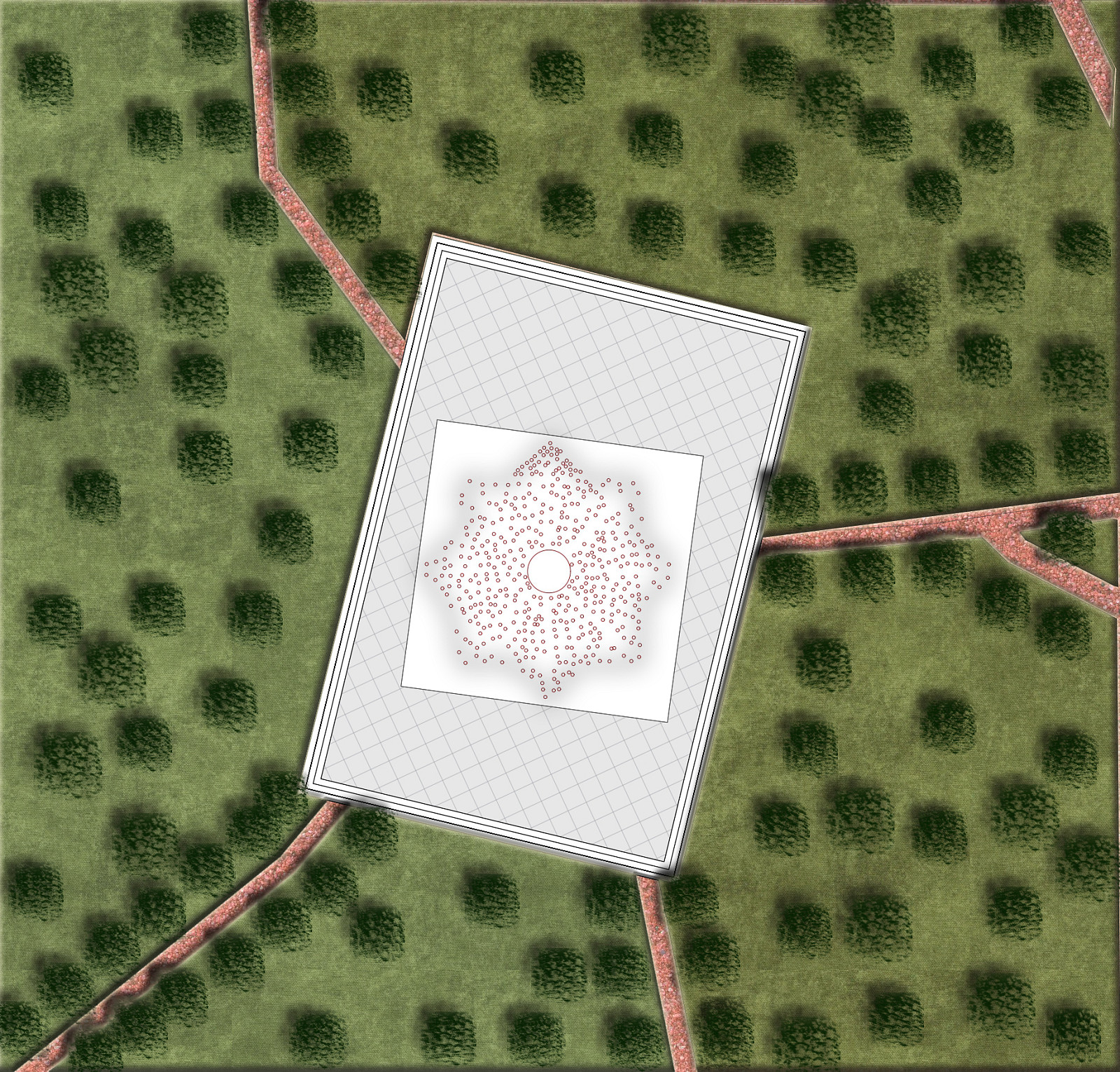
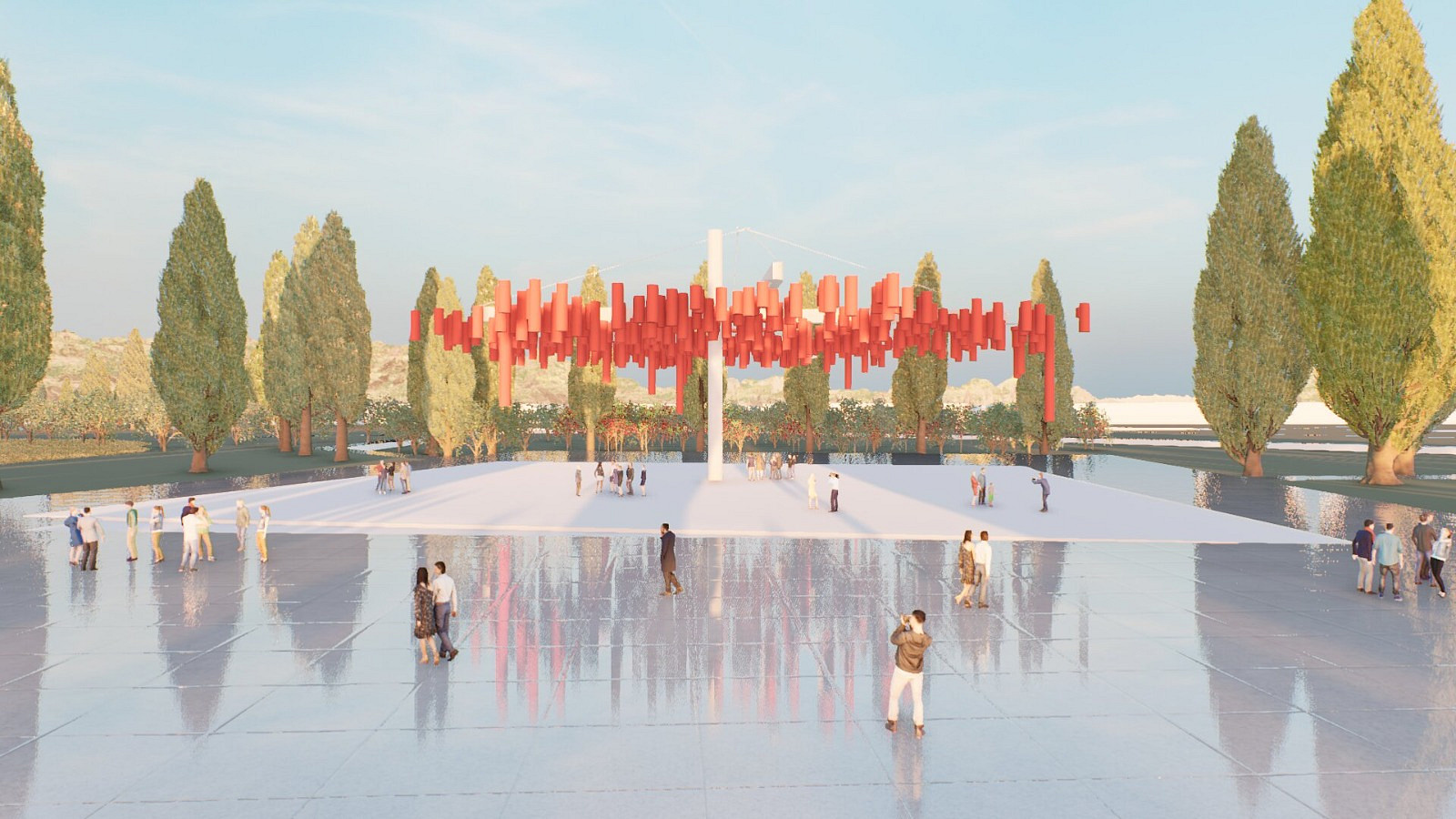
The memorial structure emerges as a gesture toward the sky, a suspended constellation of elements that evokes the invisible presence of those who are no longer there. It does not impose a fixed meaning, but invites interpretation—fragile, dynamic, and open. Like memory itself, it shifts with light, perspective, and time.
Programmatically, the project ensures that life continues: housing, commerce, public spaces, and social infrastructure activate the area continuously. Yet this vitality is always in dialogue with the past. Everyday routines unfold in proximity to remembrance, transforming the site into a place of awareness rather than oblivion.
The project ultimately proposes a new model for memorialization:
not as a static monument, but as an urban condition.
A place where people live, meet, and grow—while constantly, quietly, remembering.
Popis projektu
Our proposal reimagines the former Arsenal site as a layered urban and memorial landscape, where everyday life and collective memory coexist in a balanced and meaningful way. The project responds to the dual challenge outlined in the brief: to reintegrate a fragmented urban territory while preserving and activating the memory of the tragic events that occurred on site.
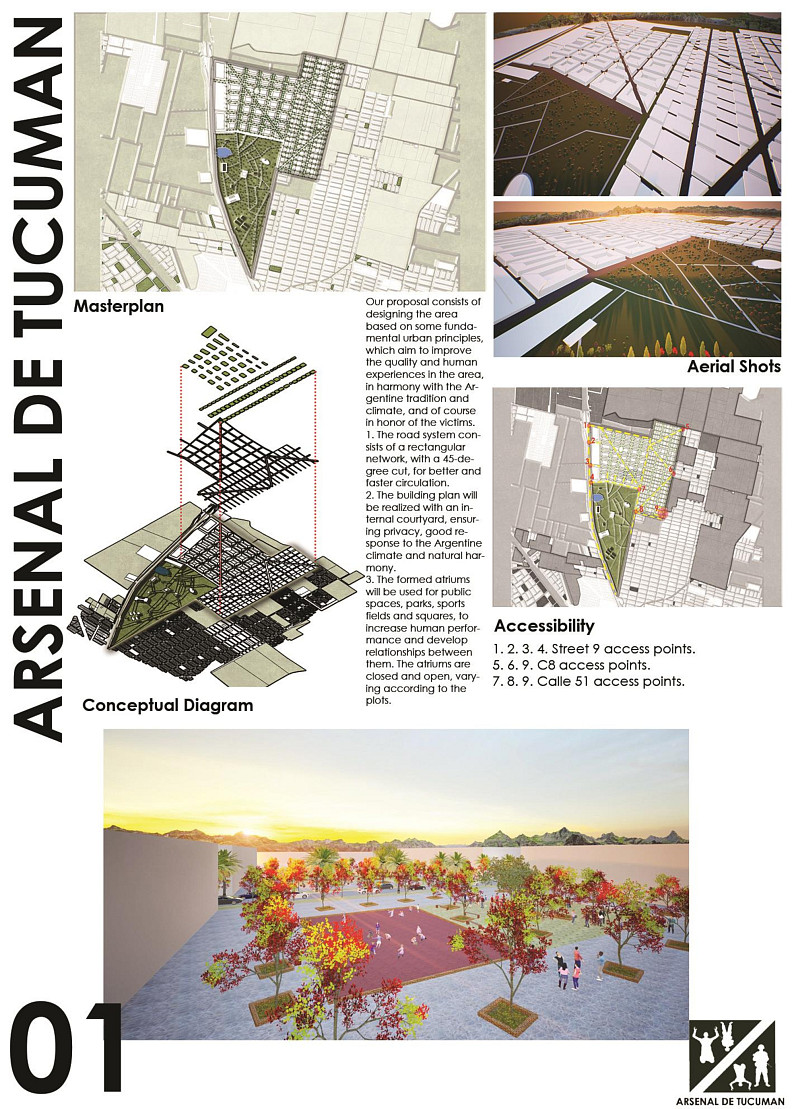
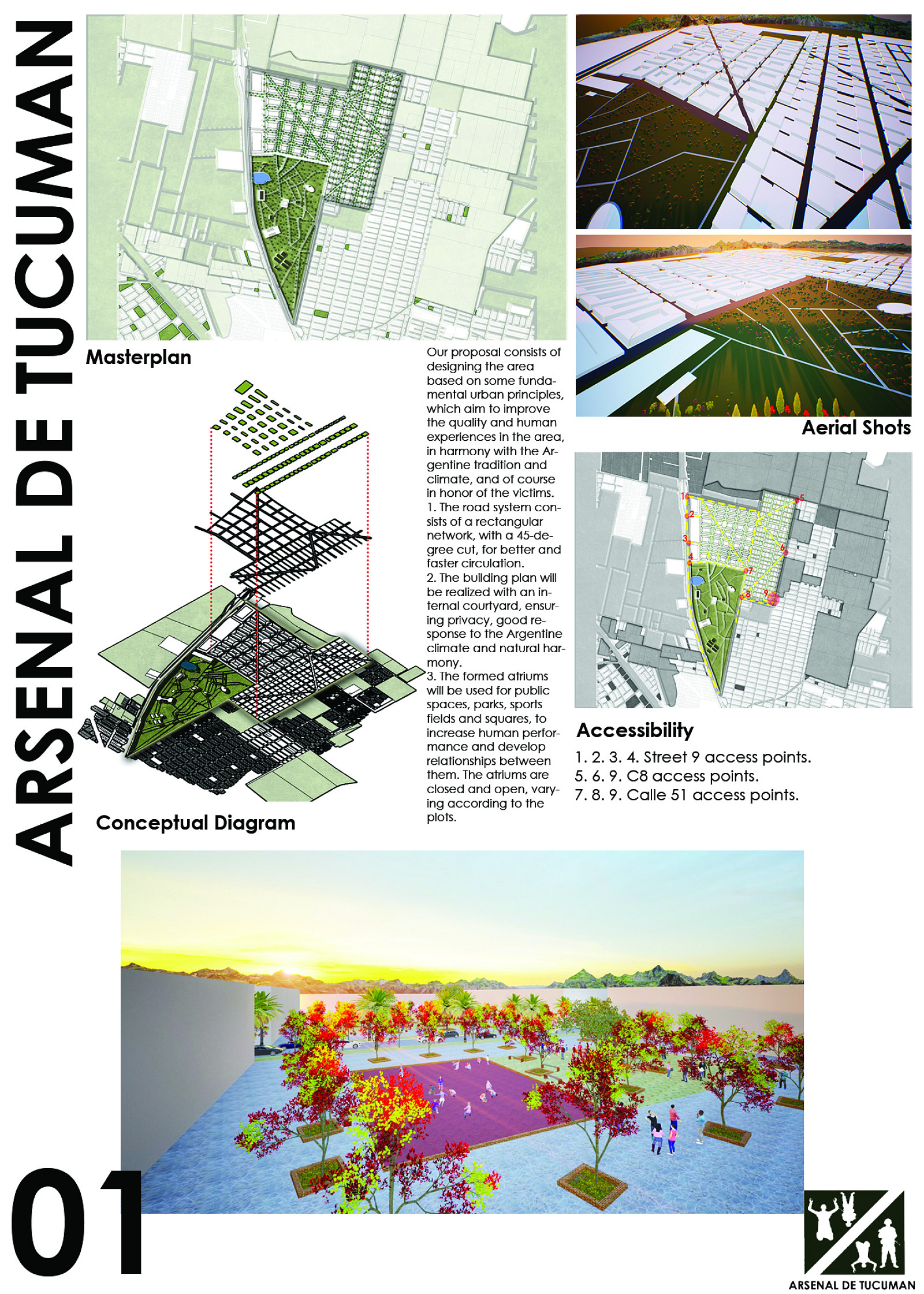
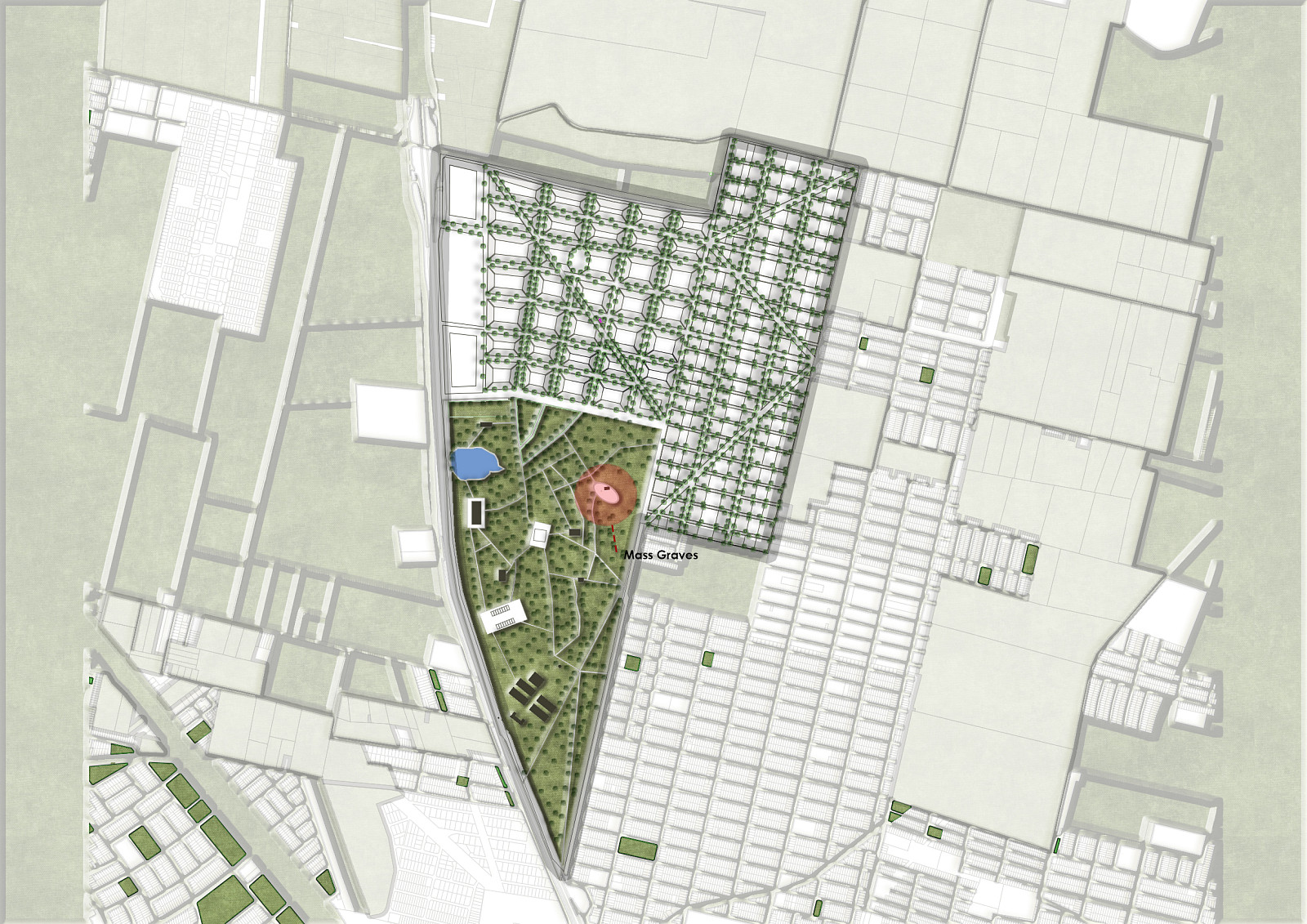
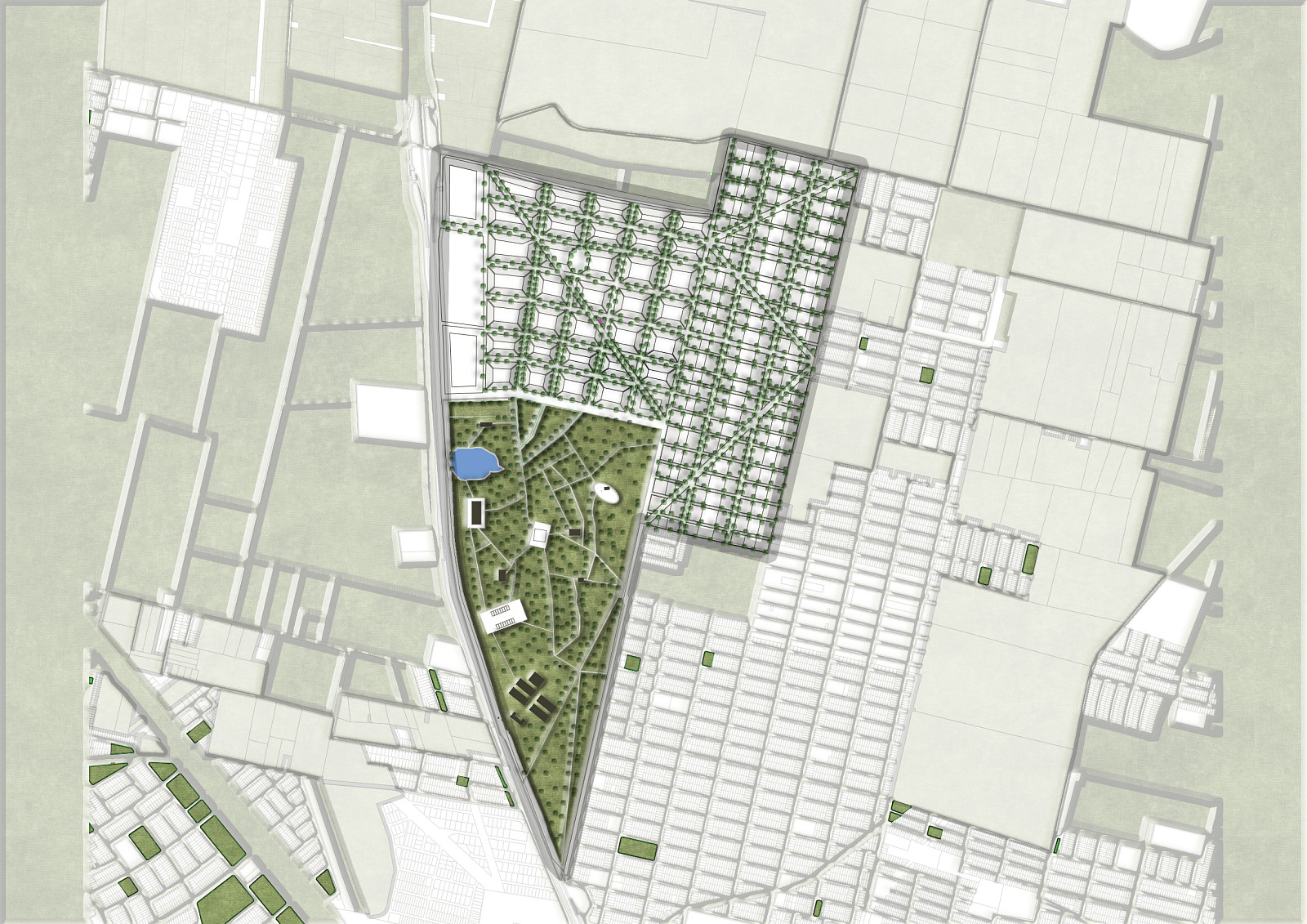
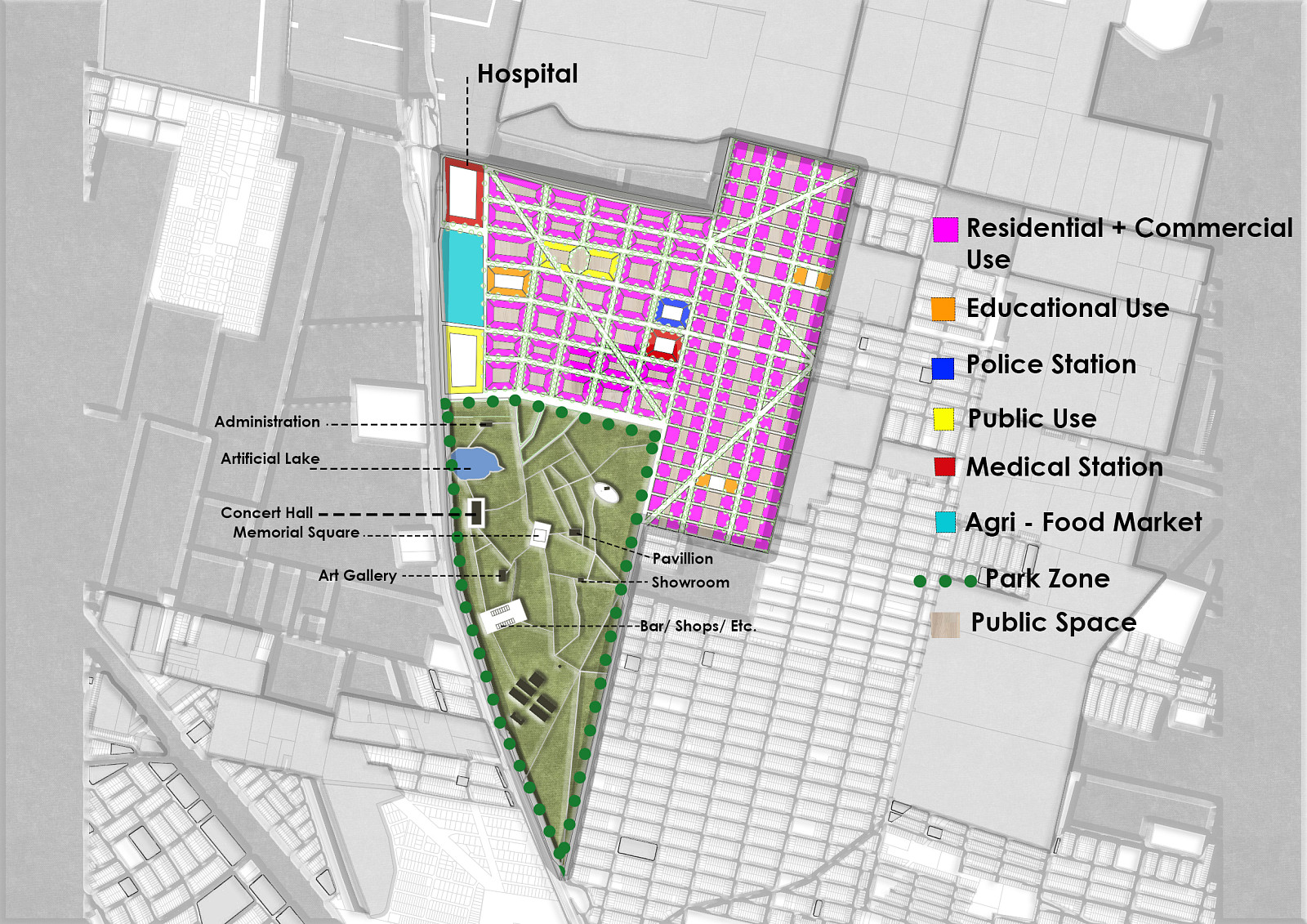
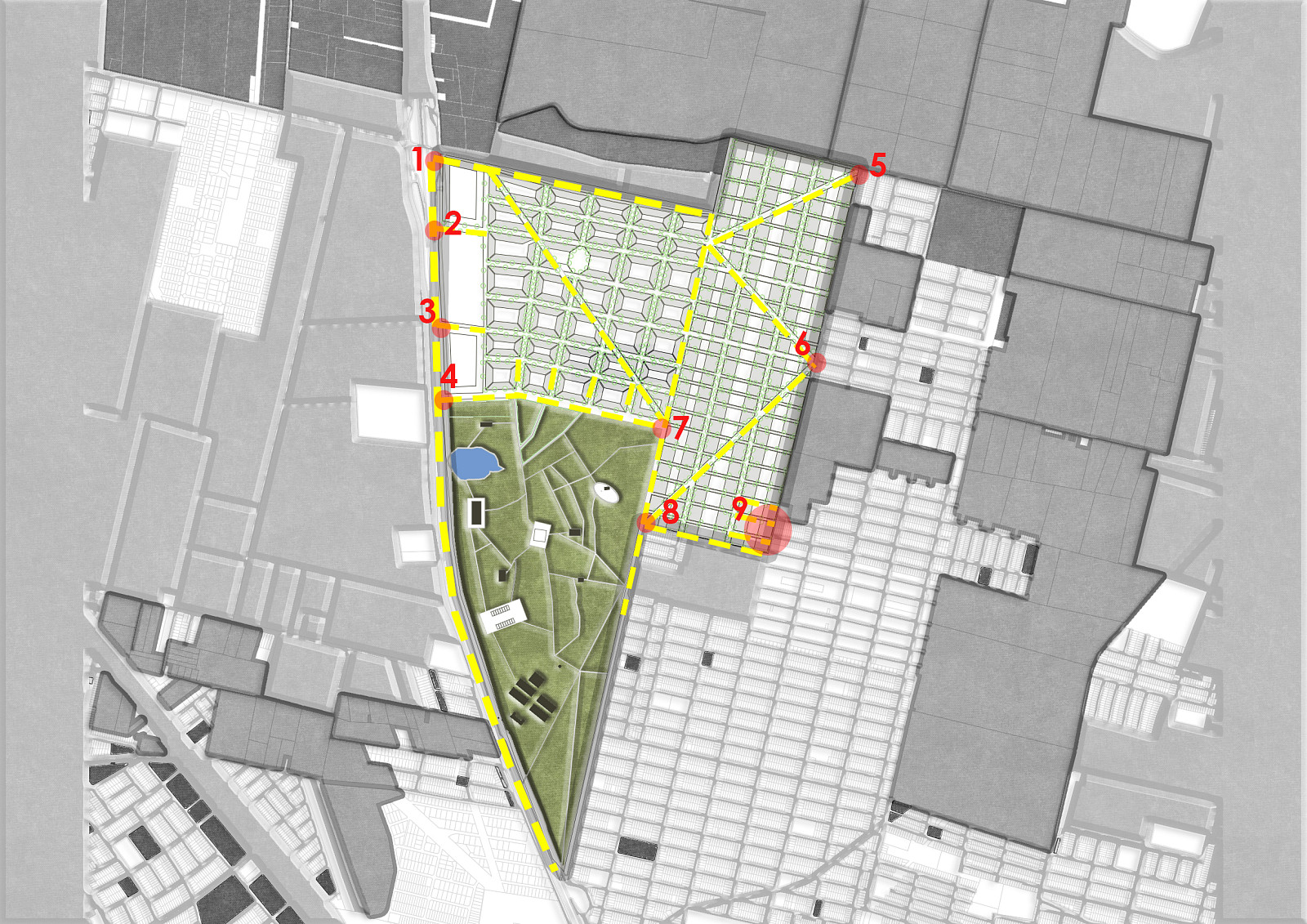
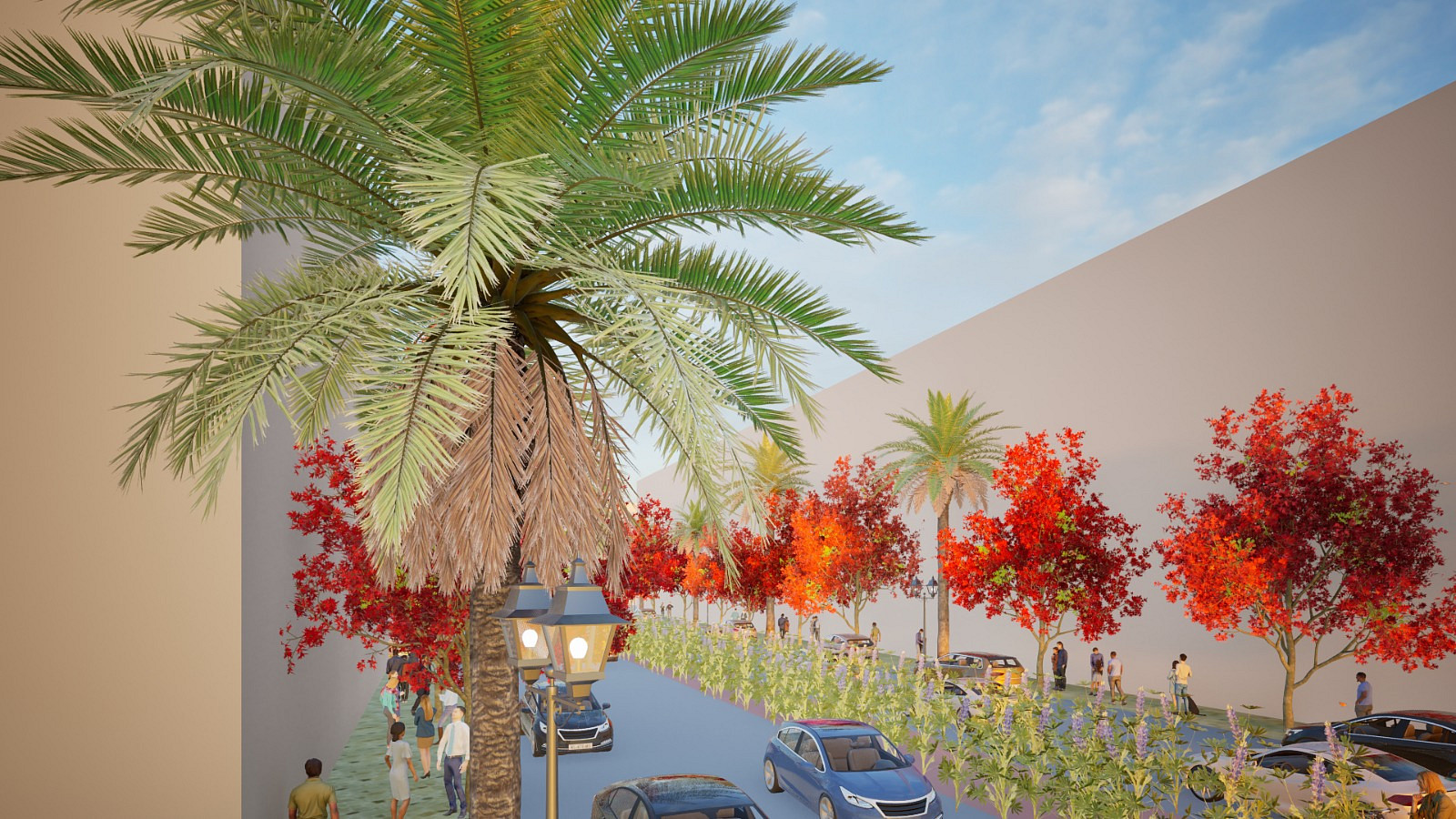
At the urban scale, the intervention introduces a clear and efficient structural framework based on a rectangular grid system, strategically interrupted by a 45-degree axis. This gesture improves connectivity, accelerates movement, and reconnects the isolated site with the surrounding urban fabric. The new street hierarchy and multiple access points ensure permeability, accessibility, and integration into the metropolitan system.
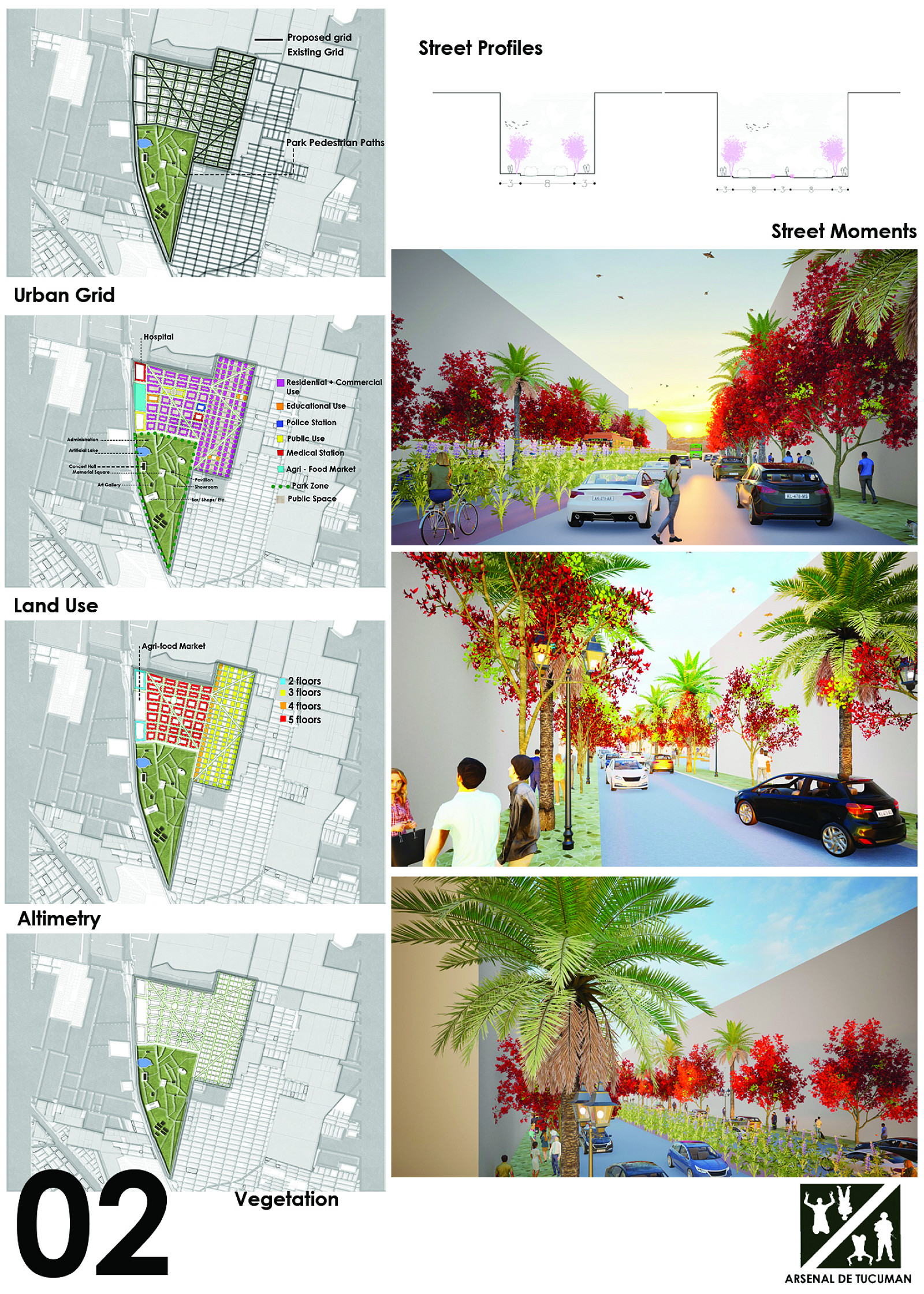
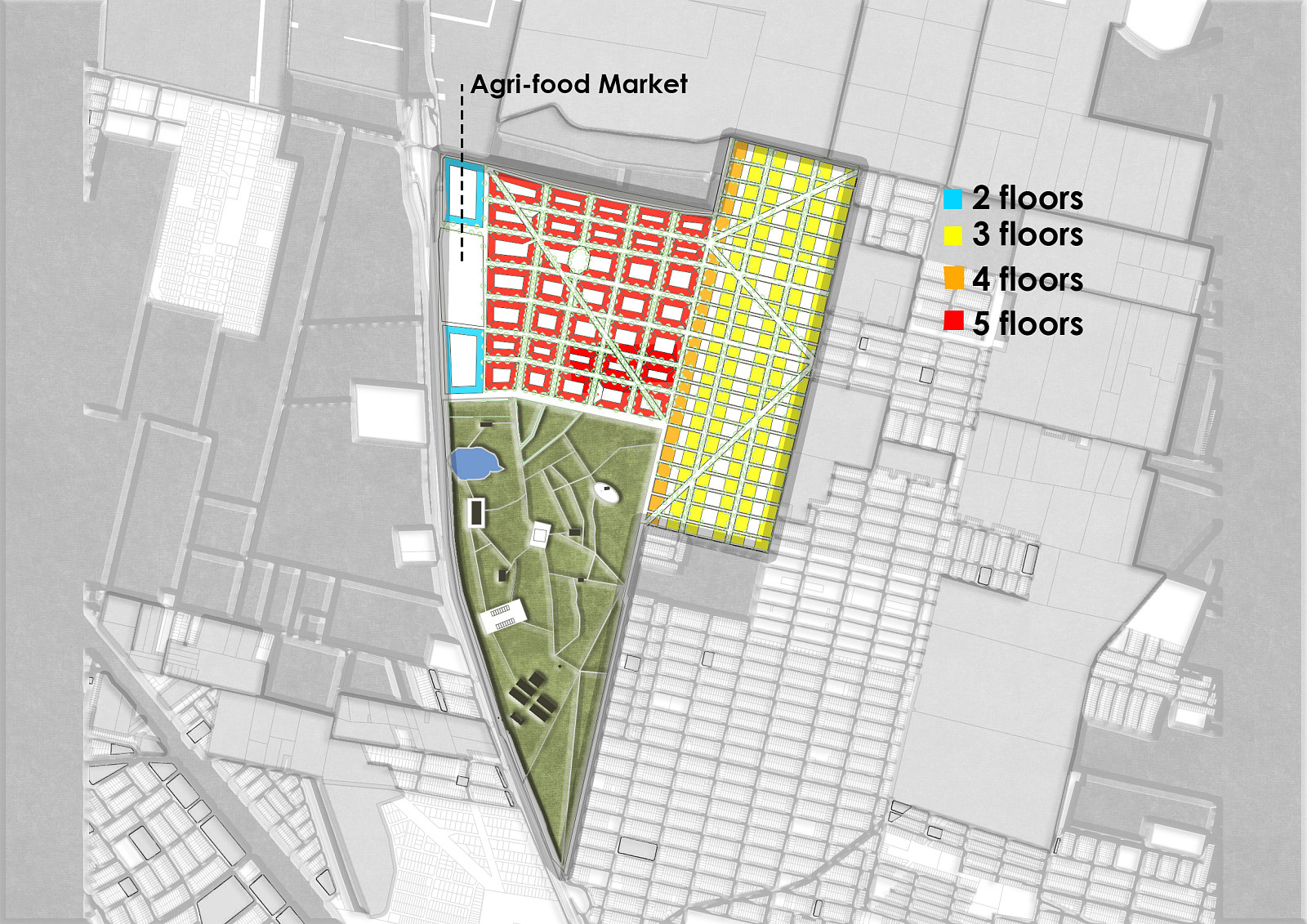
The land-use strategy promotes a vibrant mixed-use environment. Ground floors are activated with commercial and public-oriented functions, while upper levels accommodate residential units. This vertical layering supports urban vitality and ensures continuous use throughout the day. The residential fabric is organized into perimeter blocks with internal courtyards, a typology that responds to the local climate while providing privacy, natural ventilation, and a sense of community.
At the heart of the proposal lies a system of atrial open spaces, varying in scale and character. These spaces function as parks, sports areas, and social nodes, fostering interaction and collective life. The alternation between open and semi-enclosed atriums creates a diverse spatial experience, enhancing both environmental quality and social cohesion.
The Arsenal Memory Park emerges as the symbolic and emotional core of the project. Conceived as a space of reflection, it integrates landscape, water, and vegetation to create an atmosphere of calm and contemplation. Carefully designed pathways guide visitors through a sequence of experiences that evoke memory, silence, and awareness. The use of Italian cypress trees as living markers transforms the landscape into a commemorative field, where each element symbolizes an individual life, reinforcing the idea of collective remembrance.
The memorial structure serves as the focal point of this narrative. Elevated above the ground, it represents the transcendence of memory beyond physical space. A central structural frame supports a suspended disk, from which red linear elements descend in varying lengths. This composition evokes the image of unseen stars—present yet intangible—symbolizing the victims whose presence endures in memory. The dynamic variation in scale and density gives the monument a constantly changing perception, reinforcing its emotional impact.
Environmental considerations are embedded throughout the project. Vegetation strategies, sun–shadow analysis, and spatial orientation respond to the Argentine climate, ensuring comfort and sustainability. The integration of green systems also contributes to the ecological performance of the site, aligning with the park’s role as a natural and urban oasis.
Ultimately, the project transforms a place of pain into a space of life, learning, and reflection. By combining urban regeneration with symbolic depth, the proposal embodies the concept of active memory—not only preserving the past, but integrating it into the present as a catalyst for awareness, dialogue, and collective responsibility.
Technické informace
The proposal is structured as an integrated multi-scalar system, addressing the site at urban, landscape, and architectural levels. It establishes a coherent framework that balances functional efficiency, environmental performance, and symbolic expression.
At the urban scale, the masterplan is organized through a hierarchical grid system. A primary orthogonal network ensures clarity, legibility, and efficient land subdivision, while a 45-degree diagonal axis introduces an alternative layer of connectivity, improving circulation flow and reducing travel distances across the 350-hectare site. This dual system enhances permeability and reconnects the previously isolated area with the surrounding metropolitan fabric.
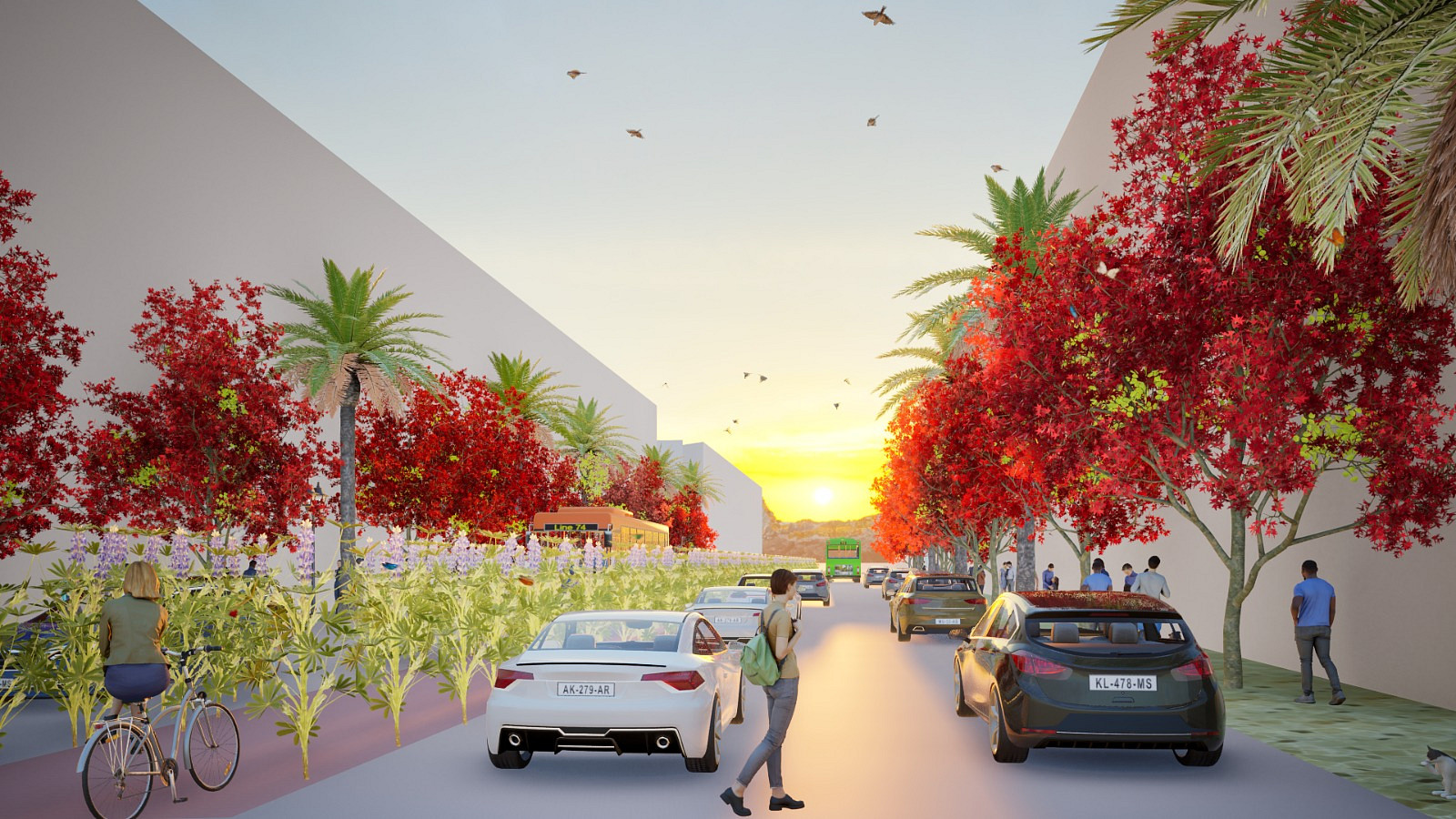
The mobility strategy prioritizes accessibility and multimodal movement. A distributed network of access points along key edges ensures even traffic distribution, while secondary streets and pedestrian corridors penetrate the urban blocks, linking public spaces and internal courtyards. Street profiles are differentiated (Type A / Type B) to respond to varying traffic intensities, integrating vehicular, pedestrian, and green infrastructure within a unified section.
The land-use configuration follows a mixed-use model, with active ground floors dedicated to commercial and service functions, and upper levels allocated to residential units. This vertical zoning promotes urban vitality, safety, and continuous occupation. The residential typology is based on perimeter blocks with internal atriums, optimizing natural lighting, cross-ventilation, and microclimatic comfort while ensuring privacy and spatial identity.
At the landscape scale, the project introduces a network of distributed atrial open spaces, varying between enclosed, semi-open, and fully public configurations. These spaces accommodate parks, recreational fields, and social platforms, forming an interconnected green system that enhances environmental performance and social interaction. Vegetation is selected according to local climatic conditions, contributing to shading, heat mitigation, and seasonal variation.
The Arsenal Memory Park is positioned as the central ecological and symbolic core. It operates as both a commemorative landscape and an environmental infrastructure, capable of functioning as a retention basin for stormwater management while maintaining its spatial and experiential qualities. The design integrates water elements, shaded pathways, and structured vegetation to create a controlled microclimate and a contemplative atmosphere.
The memorial system is composed of both landscape and architectural elements. A field of vertical markers (Italian cypress trees) establishes a repetitive spatial rhythm, reinforcing the commemorative narrative. The central memorial structure consists of a lightweight steel framework with tensioned cable systems, supporting a suspended disk from which linear elements of varying lengths are anchored. This system is designed for structural efficiency, material minimalism, and visual lightness, ensuring durability while maintaining symbolic clarity.
Environmental performance is addressed through passive design strategies, including optimal solar orientation, shading analysis, and the use of vegetation to regulate microclimate. The atrium-based block typology enhances natural ventilation and reduces energy demand, while the integration of green areas contributes to biodiversity and urban resilience.
Overall, the project delivers a technically coherent and adaptable urban model, where infrastructure, landscape, and architecture operate as a unified system. It ensures functional feasibility while supporting the broader conceptual ambition of transforming the site into a living framework of active memory, social interaction, and sustainable urban growth.
Dokumentace

Copyright © 2026 INSPIRELI | All rights reserved. Use of this website signifies your agreement to the Terms of Use, Privacy Policy, and use of cookies.
