Terra Incognita - Paderborn, Germany

Idea projektu
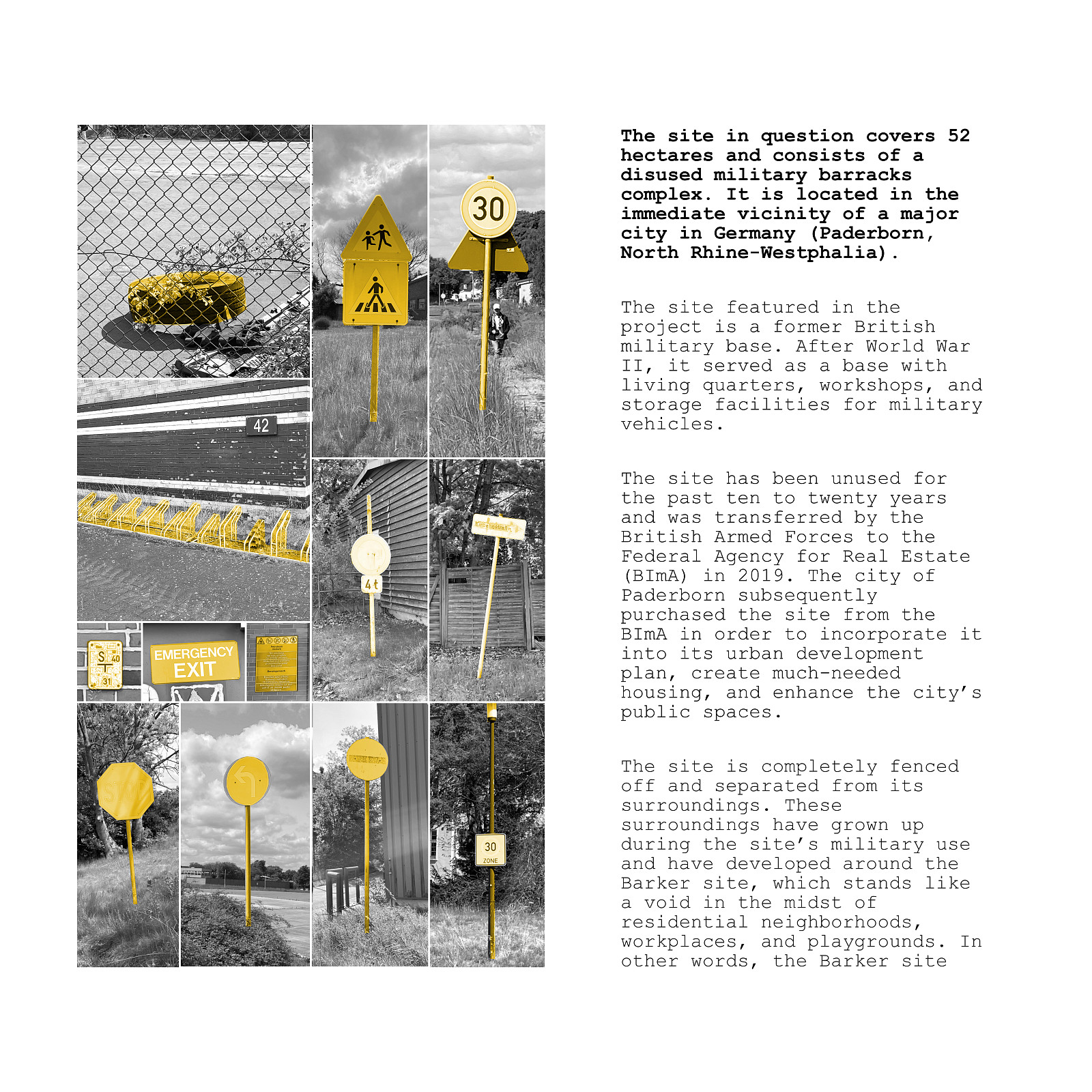
The project I’d like to present is from my fourth semester and focuses on the temporary use of a military site in the German city of Paderborn. The goal of the module and of my design is to develop a strategy for repurposing the site that paves the way for long-term urban development. The city administration plans to develop and build on the site in an intensive, sustainable, and future-oriented manner.
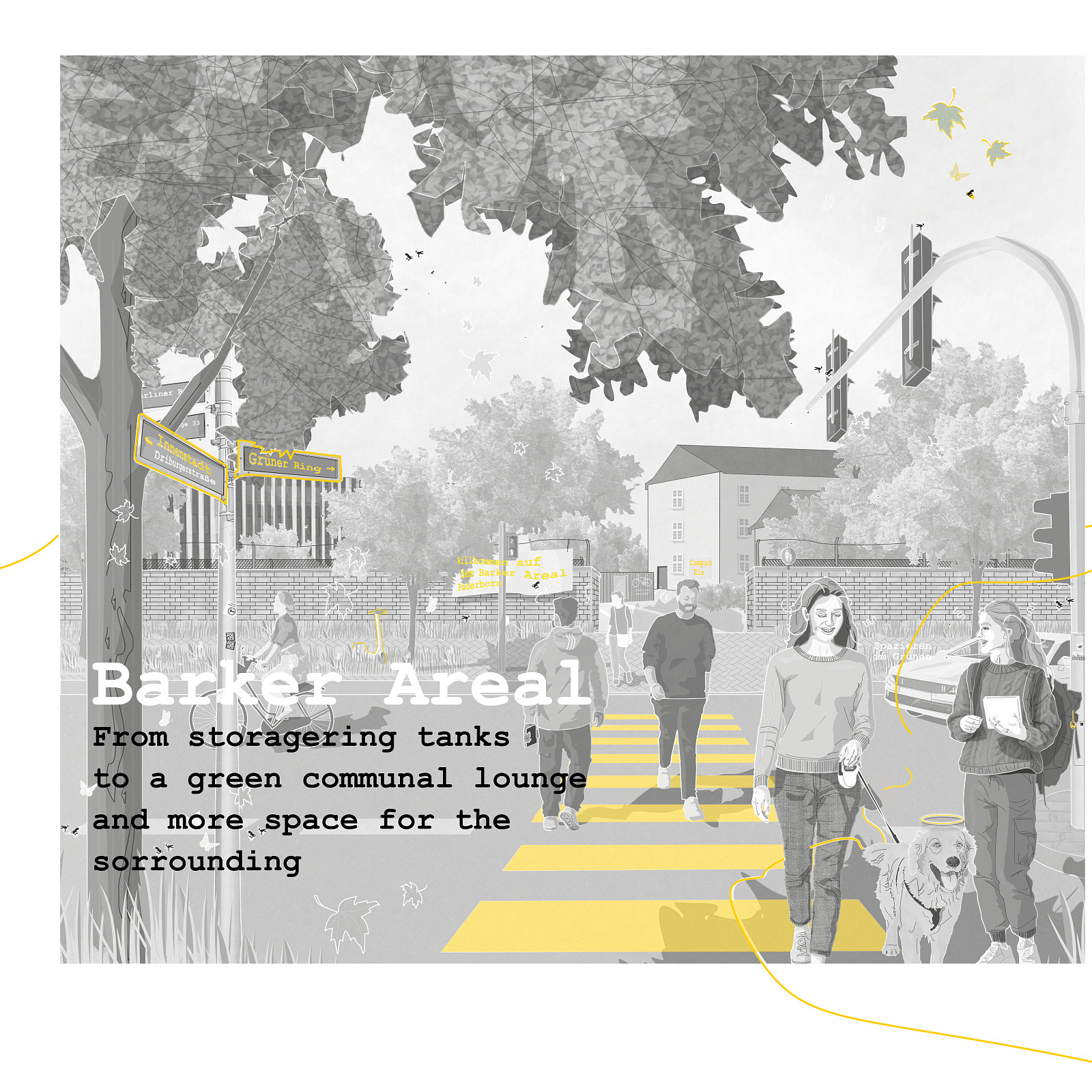
The path to such a development is a long one, but the site’s enormous potential can and should be addressed now—especially with regard to public use and the design of open spaces. The goal is to transform the storage area for military vehicles into spaces where people, animals, and plants can thrive.
Popis projektu
At the start of the project, I asked myself two questions.
Who is currently using the space in question?
And:
Who should be using the space?
My first question is therefore quite easy to answer. At the moment, no one is using the area except for a few insects, since the previous military use has ceased.
At first glance, it seems easy to answer who should use the space in the future, but upon closer examination, the answer becomes somewhat more complicated. The simple answer is that opening up the space should benefit everyone—every resident of Paderborn, every local, and every visitor.
However, it is also intended to benefit the environment and the development of green spaces and open areas in Paderborn, promote the sustainable management of building stock, and improve the quality of life for current and future residents:
For children growing up healthy and active, for workers seeking peace and relaxation, and for retirees who enjoy staying active and socializing.
The project demonstrates that all this requires nothing more than the people themselves, right there on the ground.
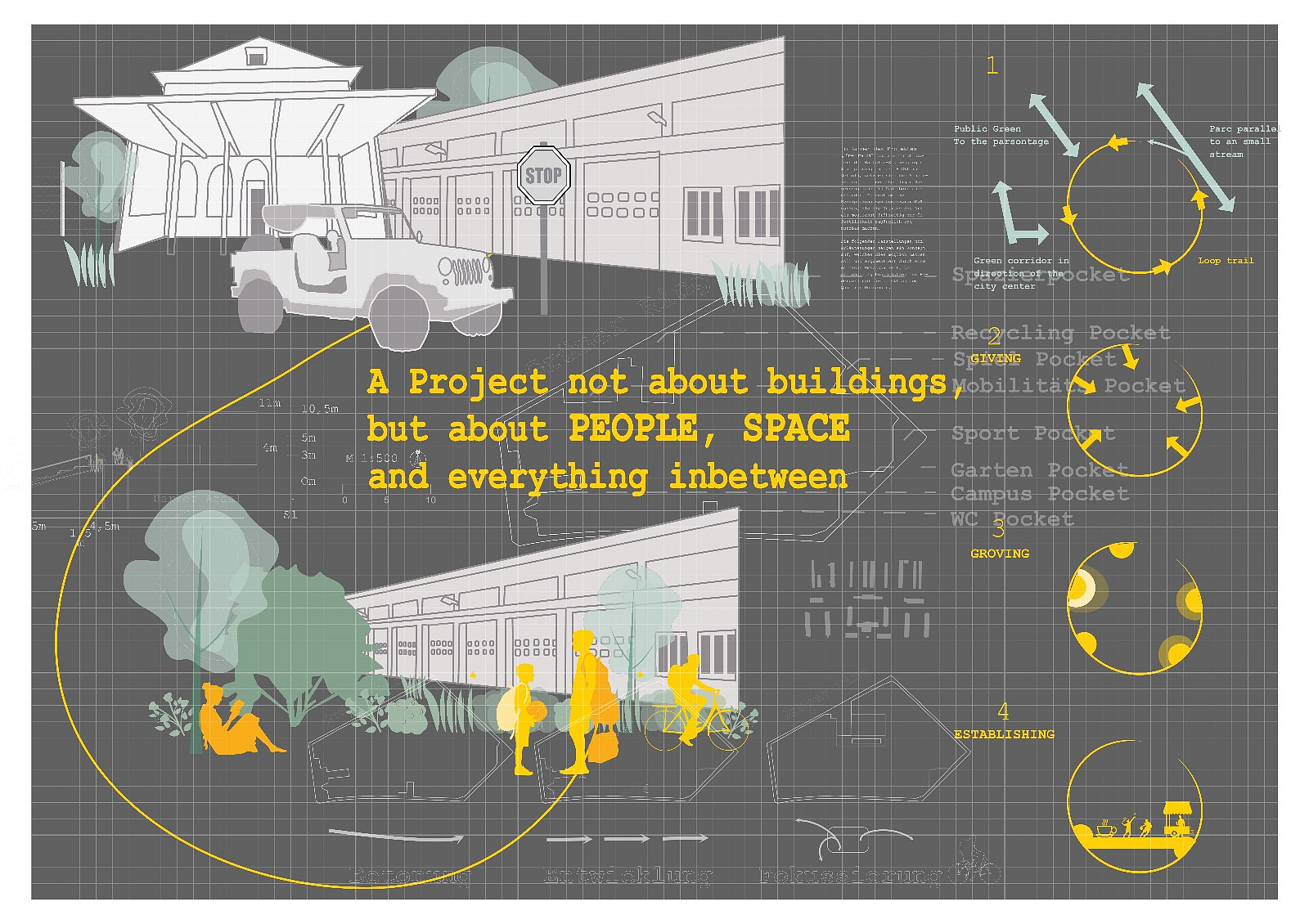
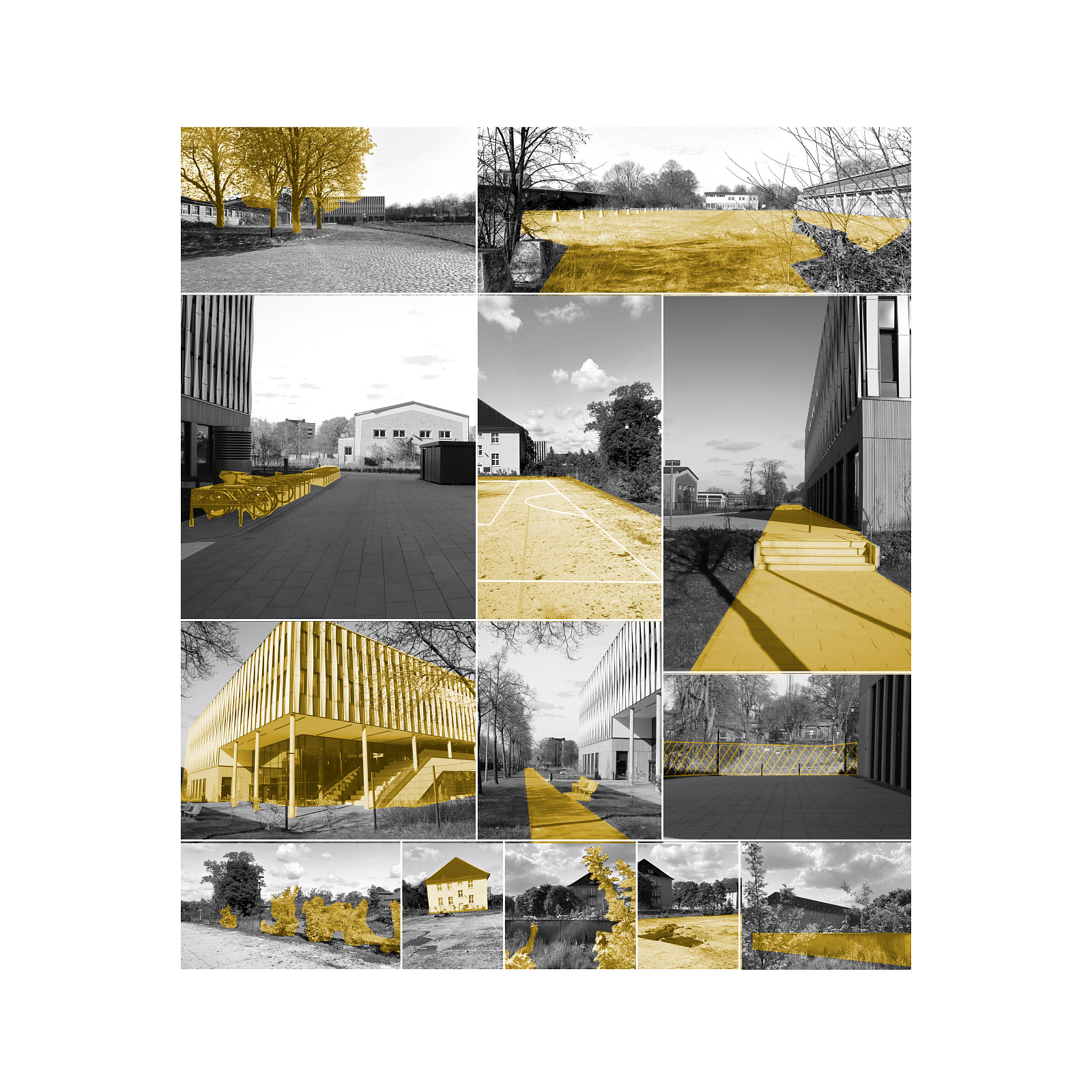
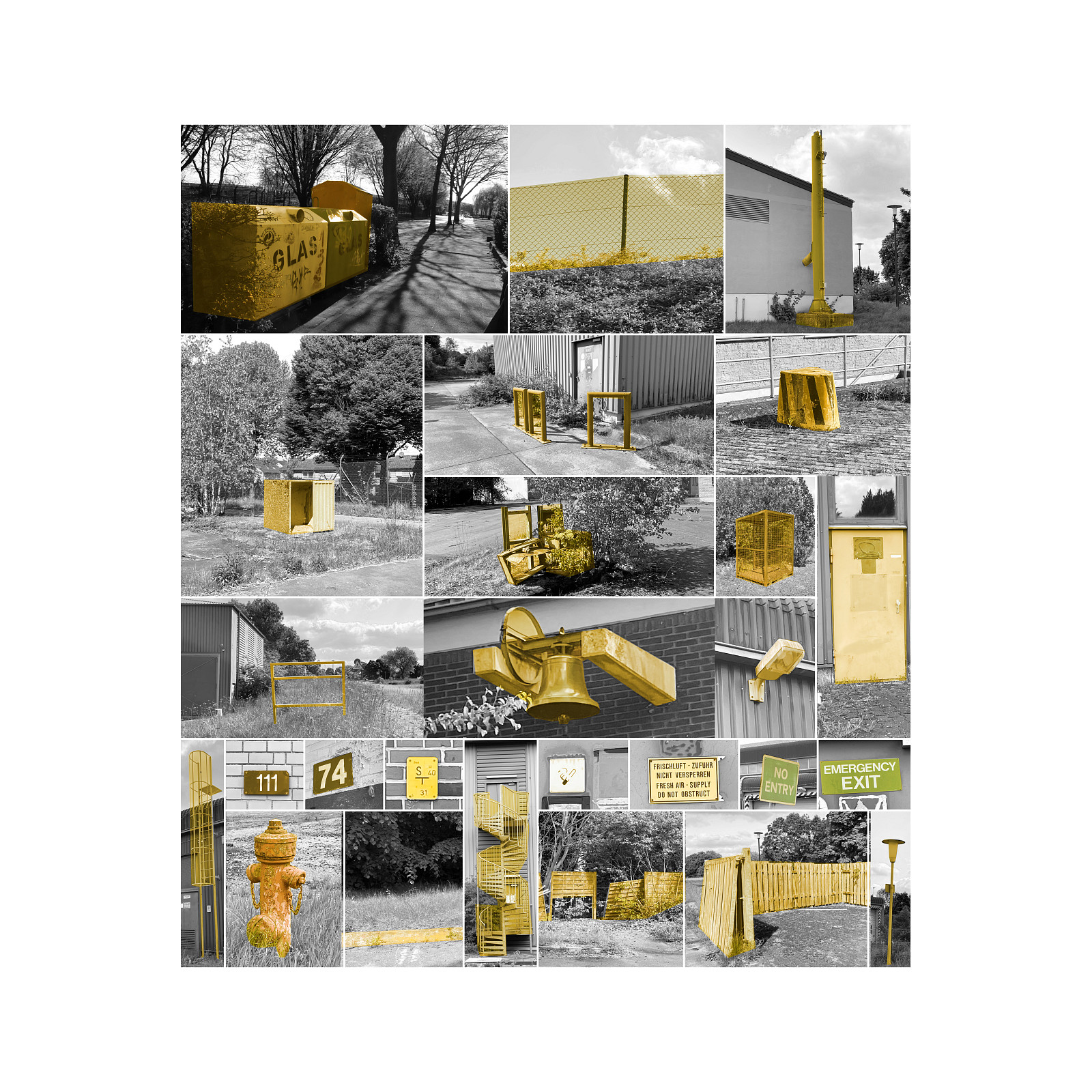
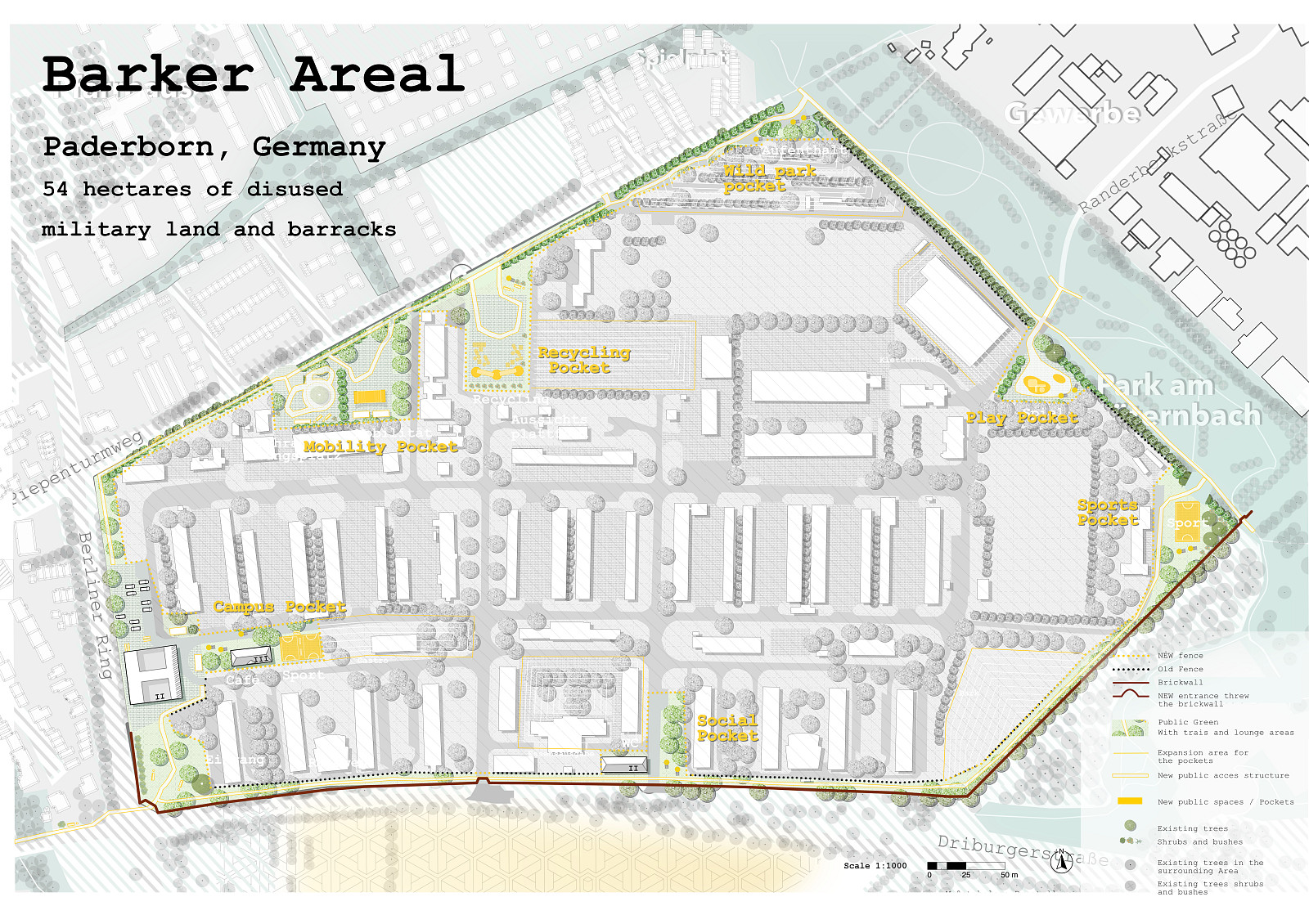
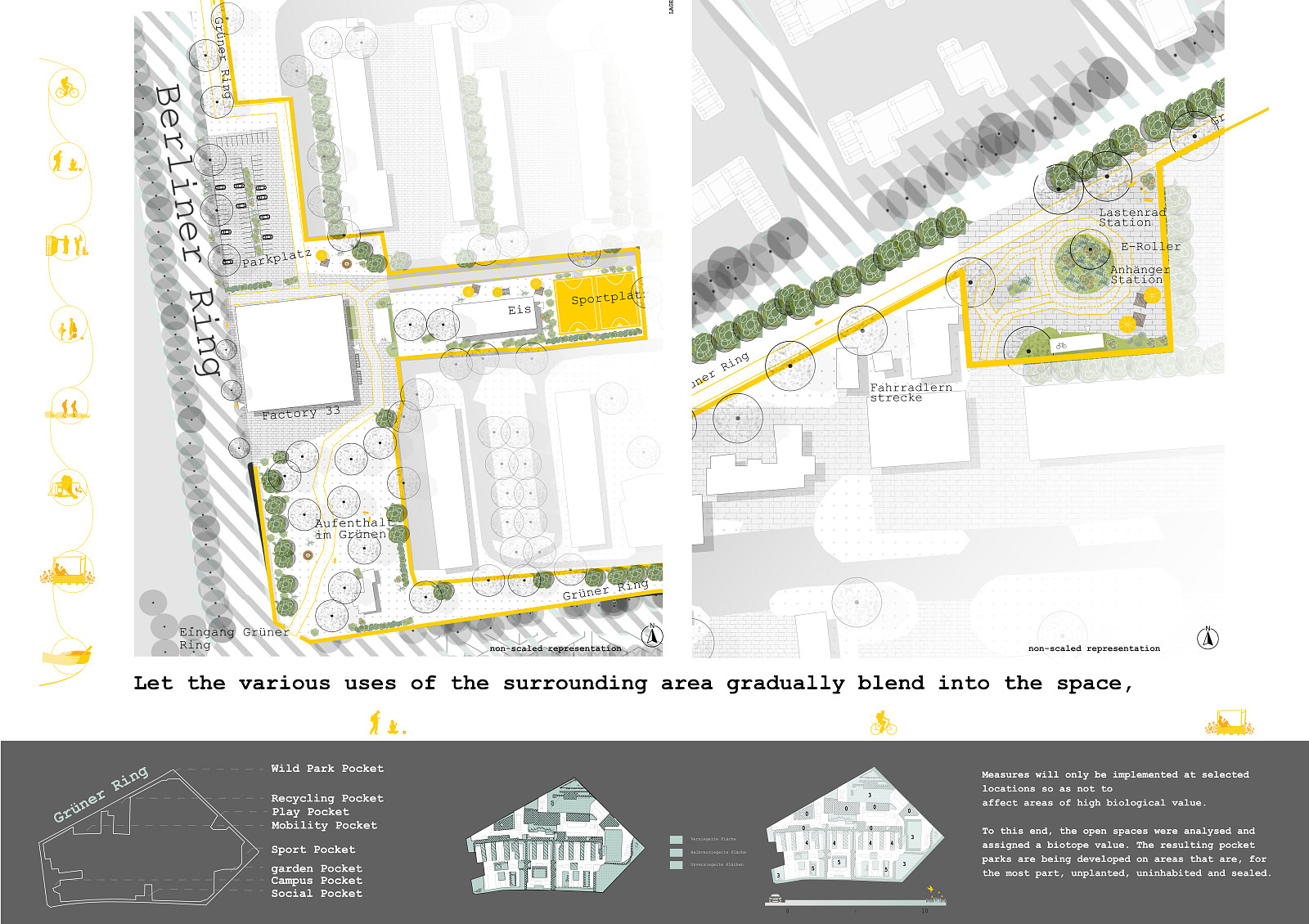
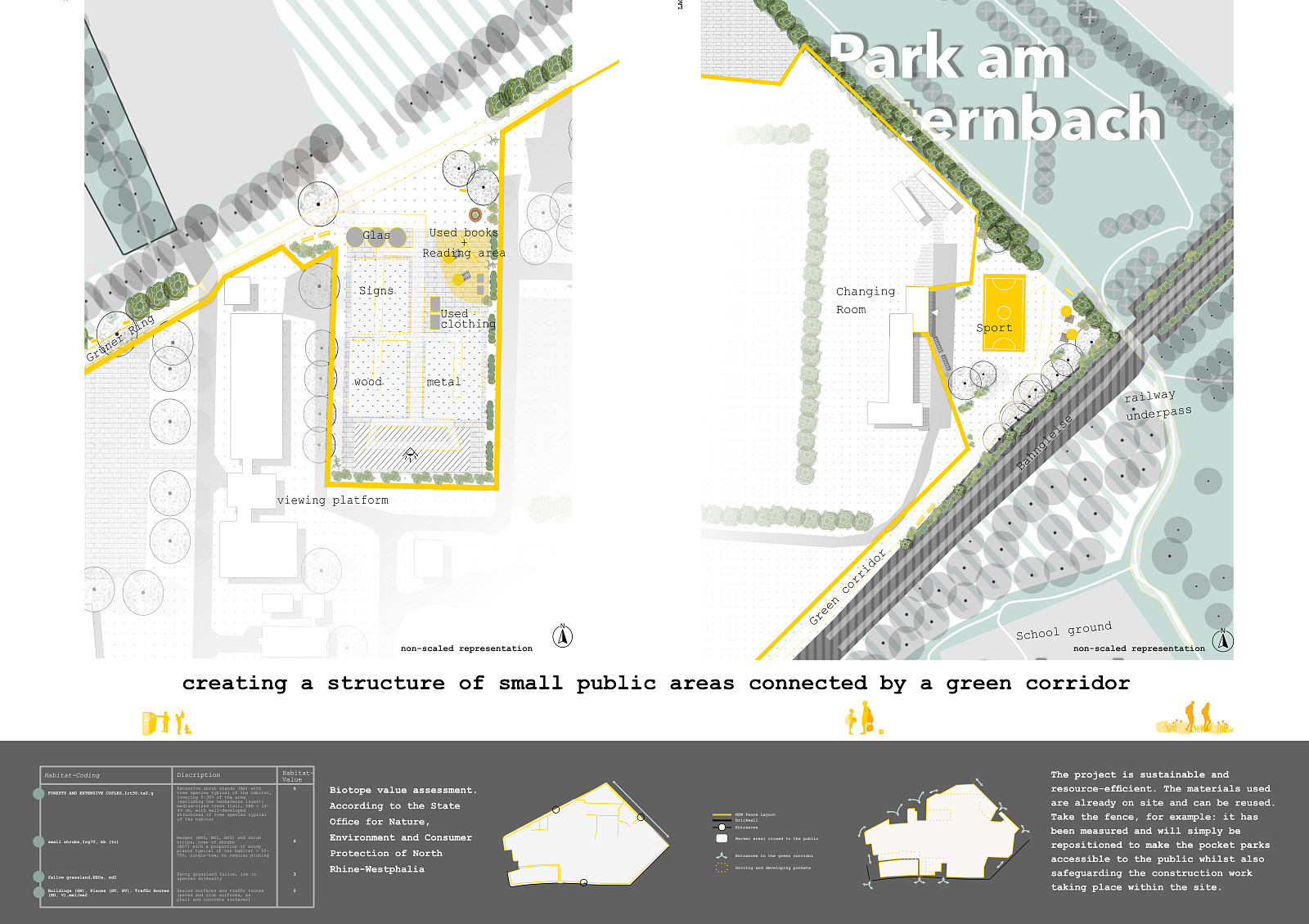
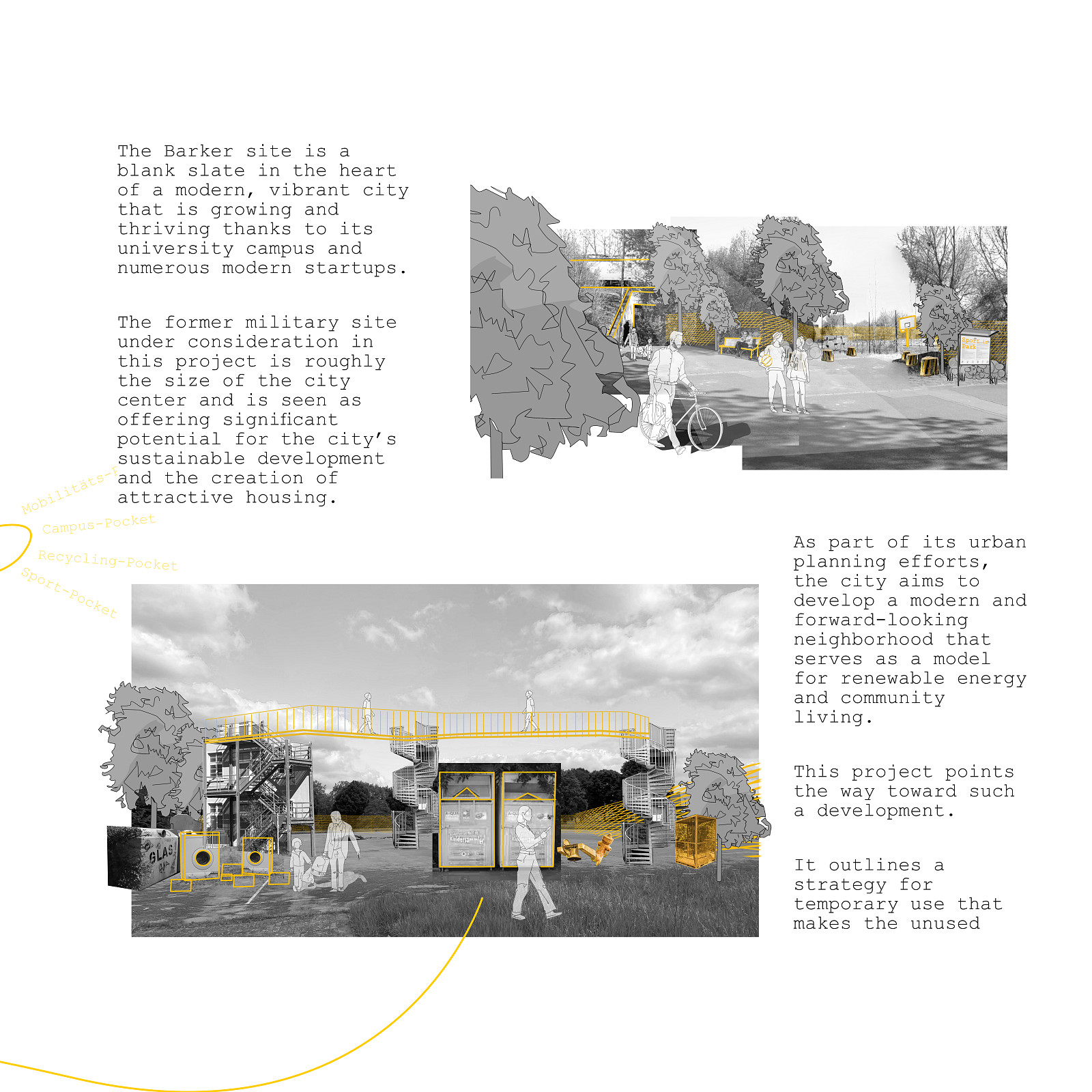
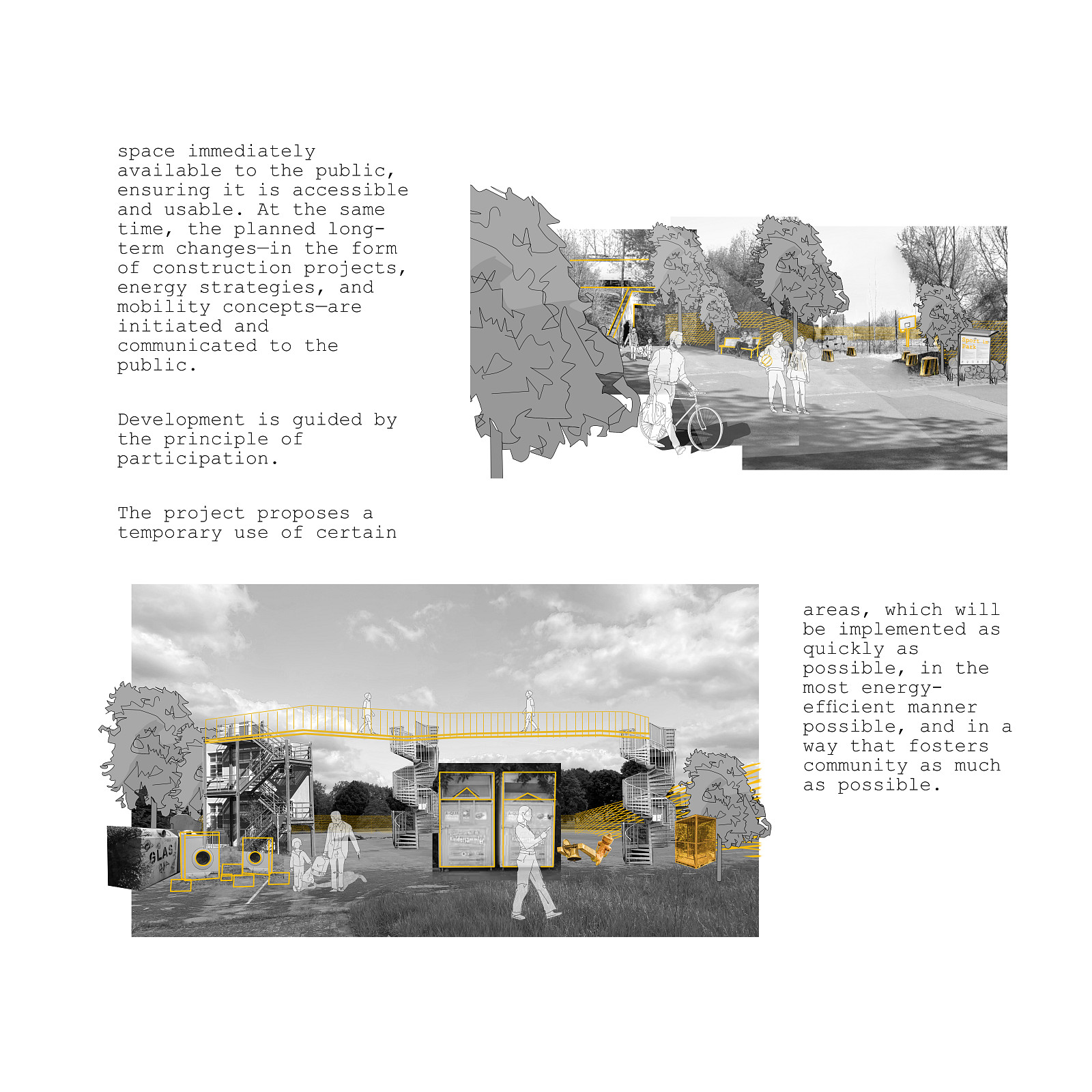
It outlines a strategy in which individual sections of the site are redesigned using existing materials and opened to the public. The aim is to create several small pockets or park areas whose primary use adapts to the existing qualities of the immediate surroundings and gives them more space. The planned open-space units are flexible and can be developed depending on usage and capacity. They can grow in response to demand and are intended to capture and channel input from the public, in the spirit of active urban planning participation as outlined in the German Building Code. In doing so, the pockets grow not only as individual entities but also as part of the envisioned model for the future Paderborn district.
The project utilizes areas that have previously had little ecological value. Those parts of the site that are currently landscaped or overgrown with wild vegetation are to remain as they are and initially develop without human intervention.
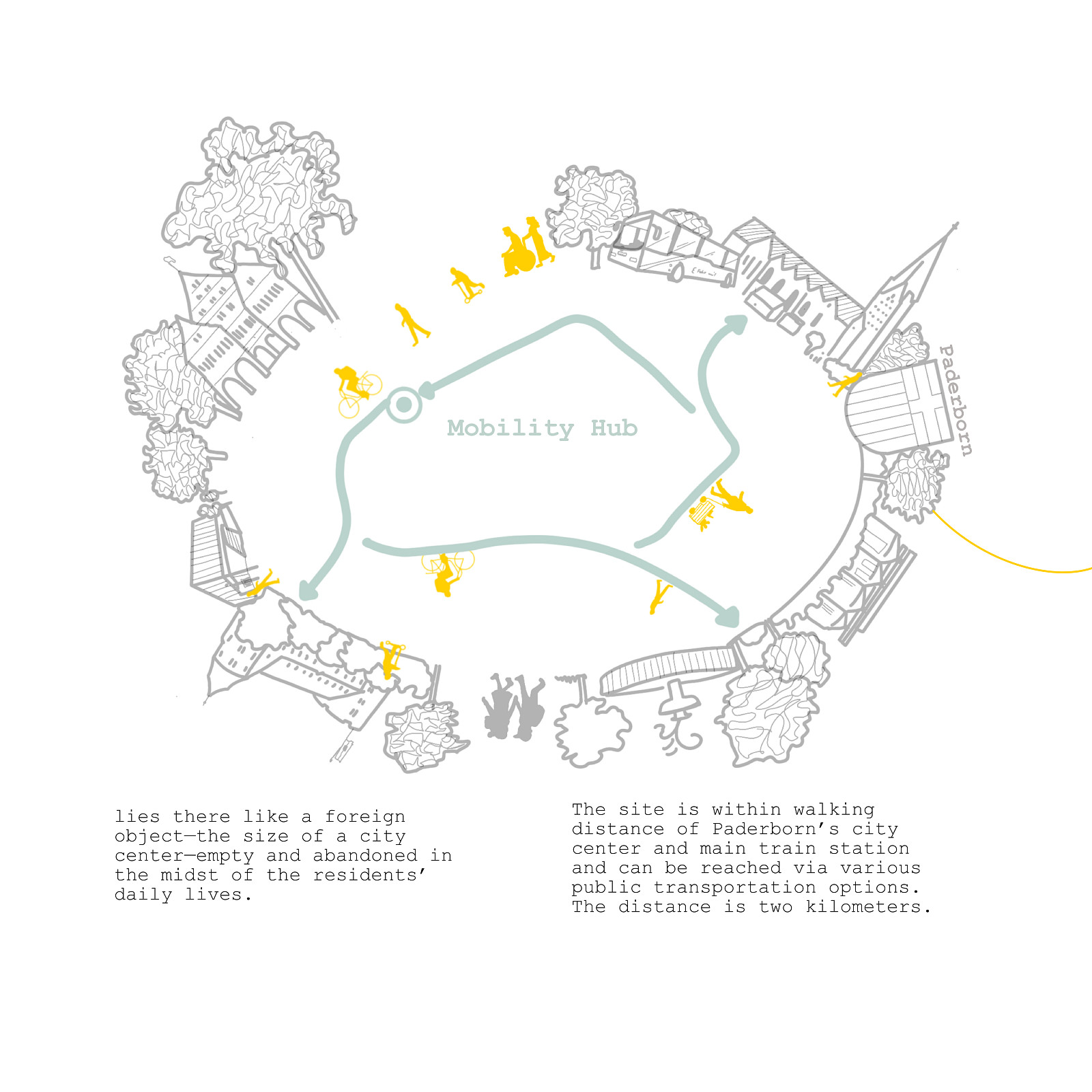
The created pockets serve as an introduction and initial rapid implementation of the biological, social, and infrastructural elements the city aims to establish on the site. These pockets mark the beginning of the so-called Urban Mile, which runs through the neighborhood from west to east and offers various uses beyond residential living (Campus Pocket), as well as the Green Hashtag developed by the city, which creates a green north-south connection with the additional function of an air corridor through the future neighborhood.
Technické informace
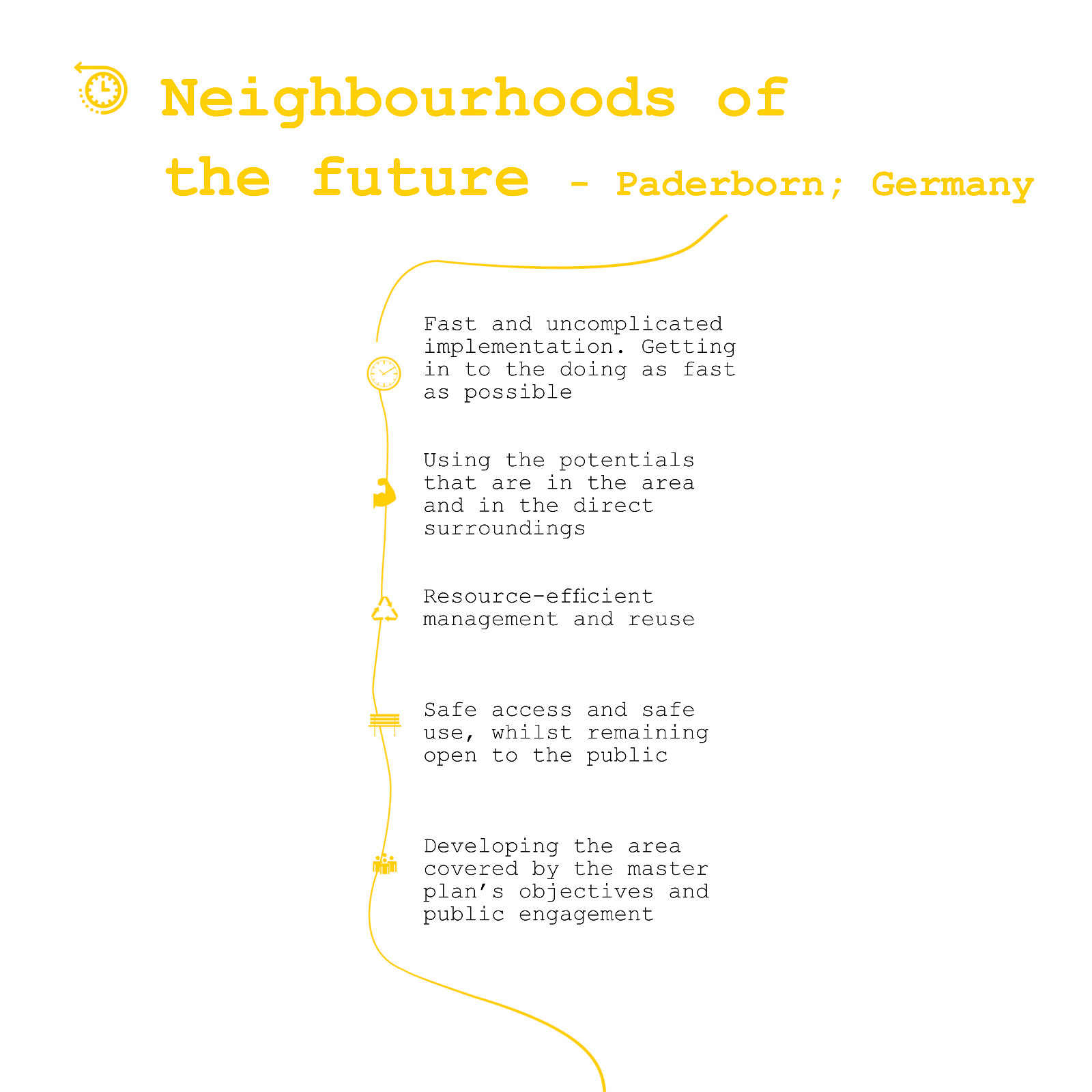
The project aims to get started as quickly as possible, based on the premise that residents are experts in their own lives. The open space itself is what holds value. Uses are proposed, and the parks are designed as DIY projects in collaboration with the local Innovation Campus and the VHS Paderborn (adult education center).
To develop and build up the neighborhood simultaneously, the pockets are shielded from potential construction work by a fence that has been merely adapted.
The result in the first phase is an additional public space covering approximately 27,000 m², with a potential expansion providing about 52,000 m² of additional space for people. This is achieved—in a manner of speaking—simply by shifting the fence slightly. The rest is accomplished by the unique design of the spaces on-site and the local people who shape the space through their use of it.

Copyright © 2026 INSPIRELI | All rights reserved. Use of this website signifies your agreement to the Terms of Use, Privacy Policy, and use of cookies.