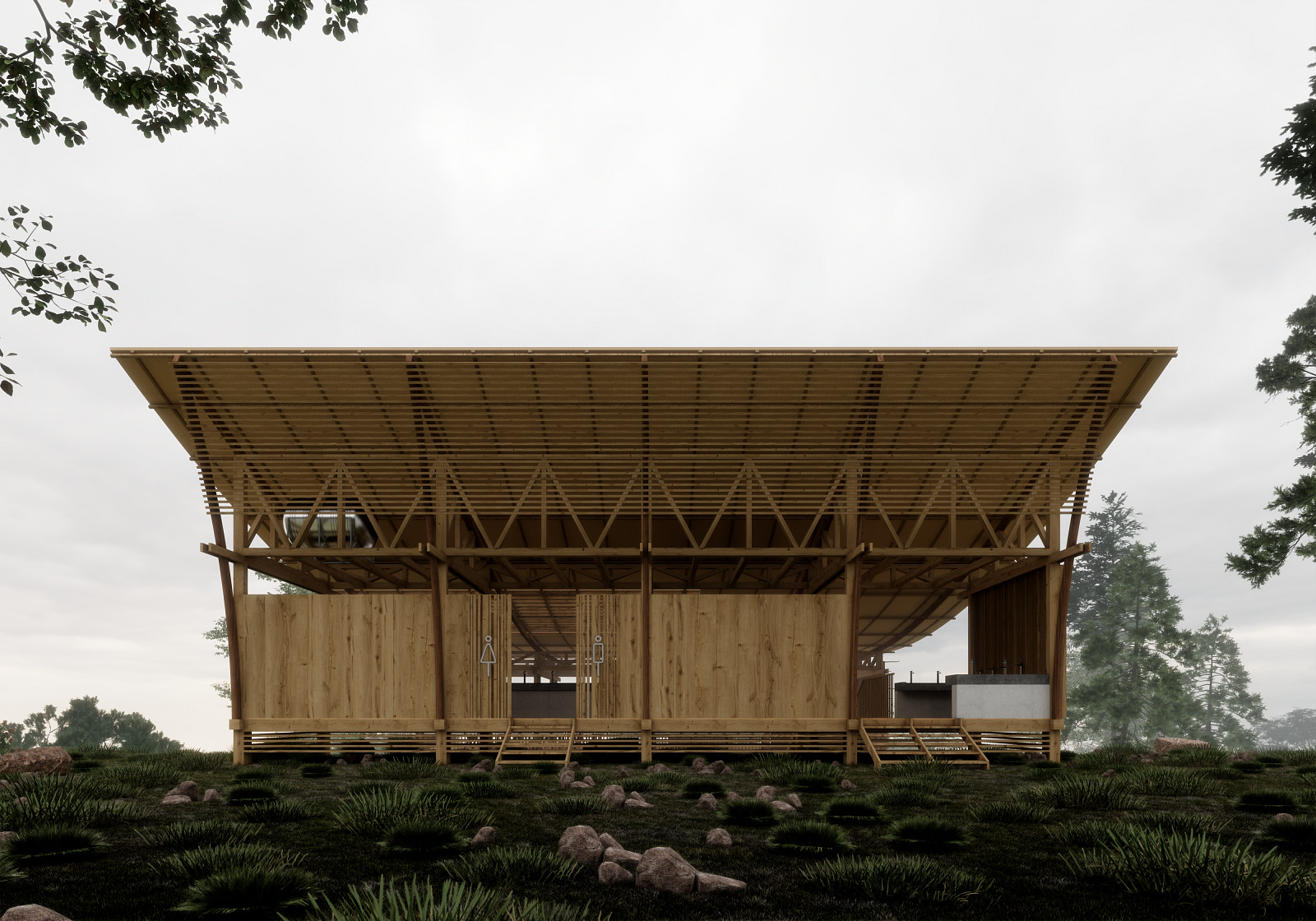
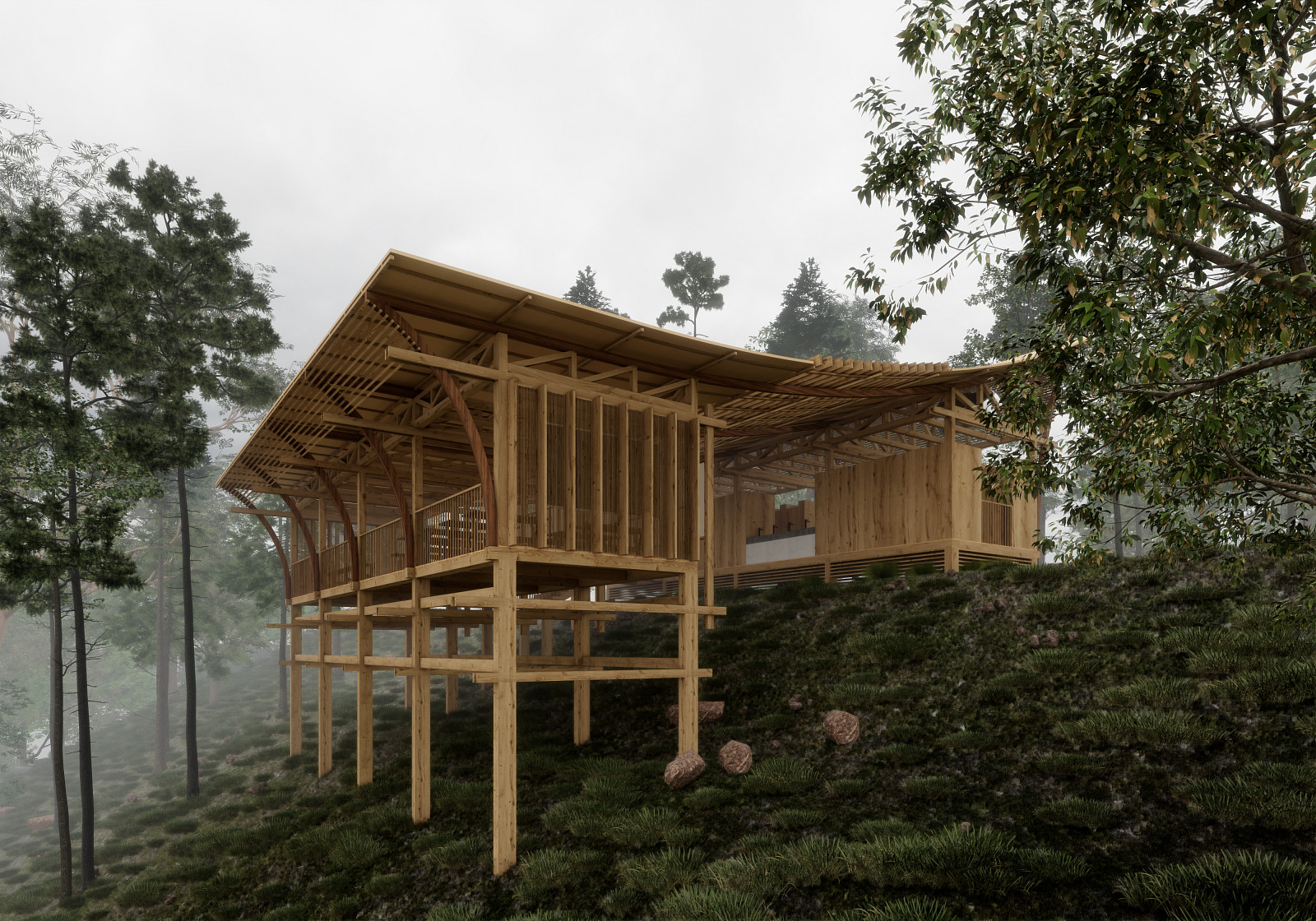
V-NEST 80


Idea projektu
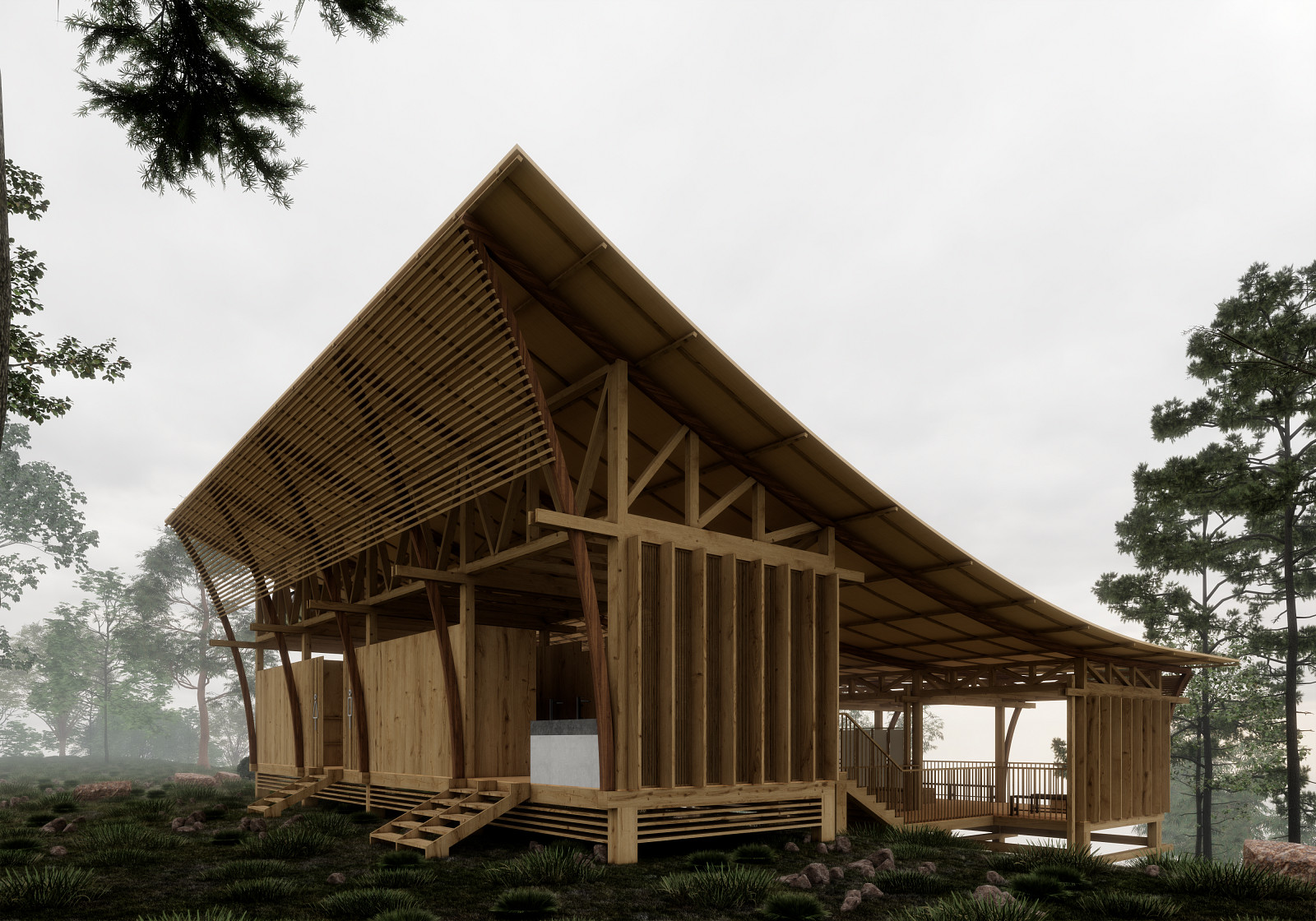
Inspired by the profound loss and subsequent resilience following Typhoon Yagi in Làng Nủ and other mountainous communities in Vietnam, V-NEST 80 emerges not merely as a spatial solution, but as a "nest" for sheltering and healing. The project carries deep symbolic weight, commemorating 80 years of Vietnam's independence through the nation's enduring spirit of solidarity.
In the wake of natural disasters, children and the elderly are invariably the most vulnerable demographics. Beyond physical destruction, the true peril lies in the outbreak of post-disaster epidemics driven by deteriorating living conditions. Therefore, safeguarding these vulnerable groups is V-NEST 80’s paramount mission. Establishing a safe, standardized sanitation facility is not just about meeting basic needs; it acts as a critical "shield" to prevent cross-contamination, protect lives, and sustain the community during times of crisis.
Furthermore, recognizing the highly fragmented terrain and logistical challenges of relief efforts in the Northern mountainous regions, this "nest" is conceived as a highly adaptable "responsive architecture" model. Utilizing a modular structural system, the building is exceptionally easy to assemble, dismantle, and transport. Unbound to a fixed coordinate, V-NEST 80 carries the mission of a recovery "seed"—ready to be rapidly deployed, replicated, and sprouted in any remote village in need of refuge.
The core philosophy transitions "from the low notes of disaster to the resonant chorus of community renewal." It is a place where clean water, healthcare, and education are meticulously interwoven, forming sturdy pillars to protect the youth of the highlands from nature's harshness, while guiding the community toward a sustainable tomorrow.
Popis projektu
V-NEST 80 is designed with high functional adaptability: transitioning seamlessly from an emergency relief station during and immediately after a disaster, into a sustainable community hub as normalcy returns.
The heart of the building is the sanitary block and first aid station, engineered to the highest epidemiological standards. In post-disaster scenarios, damp environments are breeding grounds for gastrointestinal and respiratory infections. This functional block serves as a quarantine barrier against pathogens, providing clean water and safe sanitation to directly protect the fragile immune systems of children and the weakened health of the elderly.
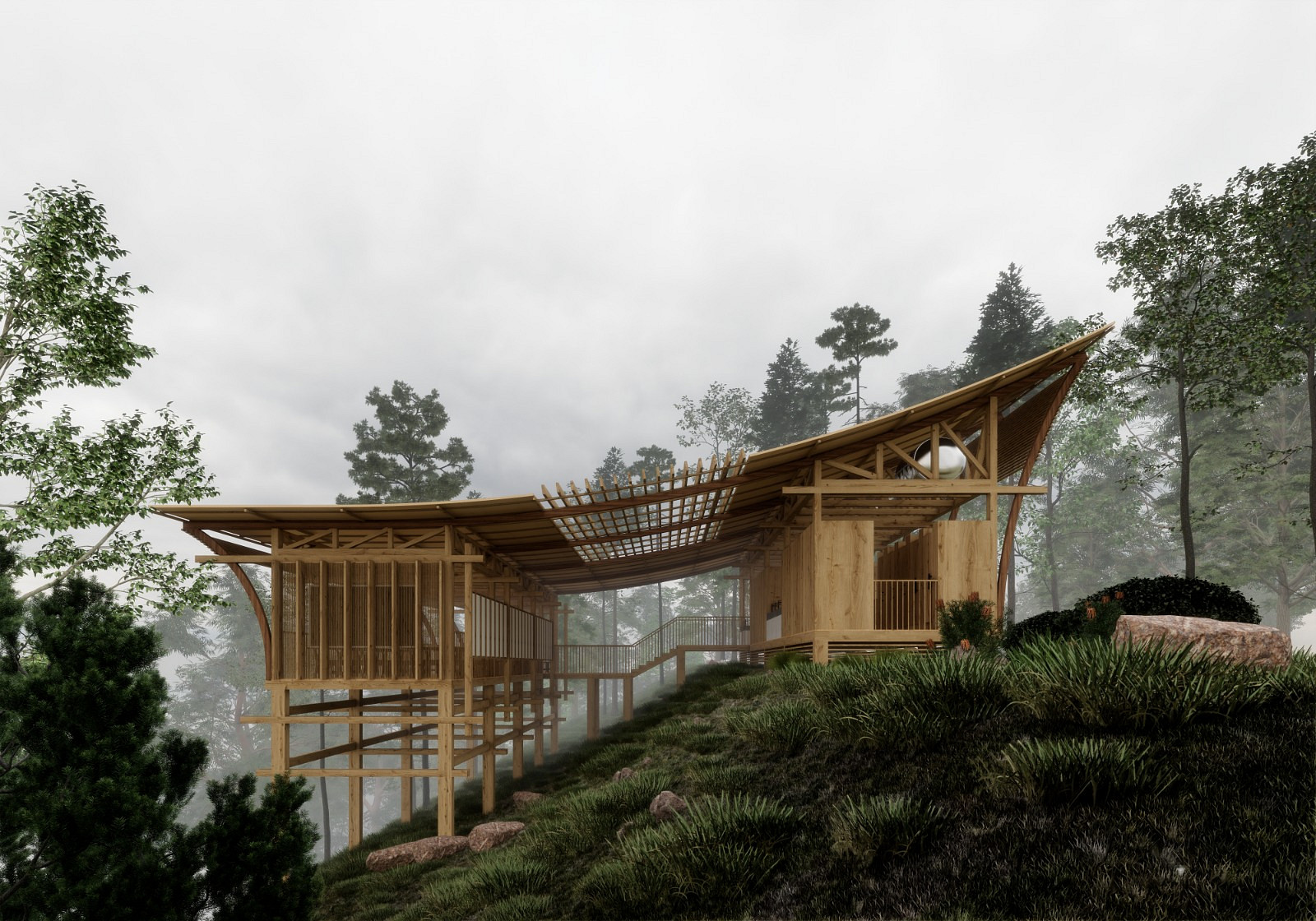
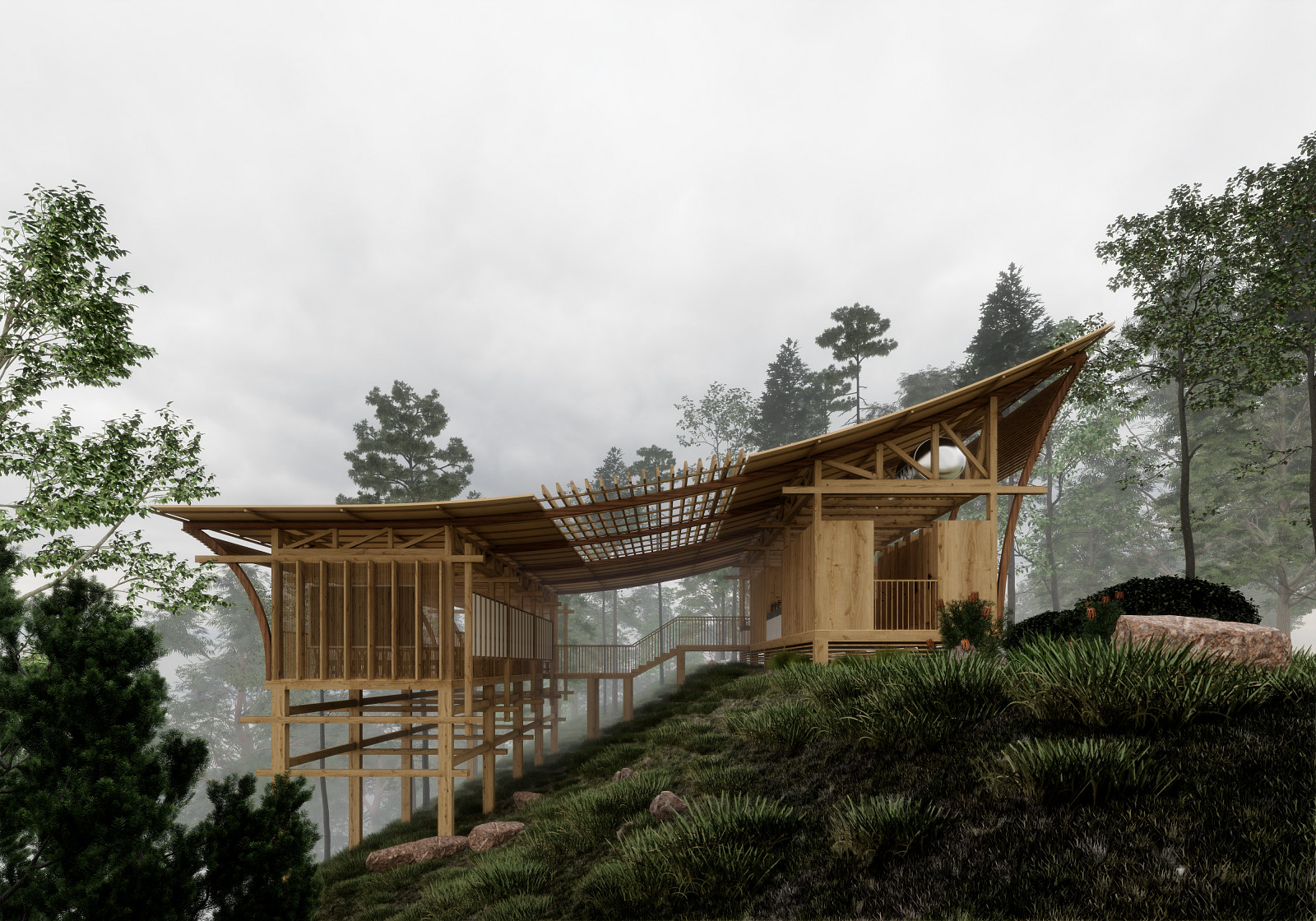
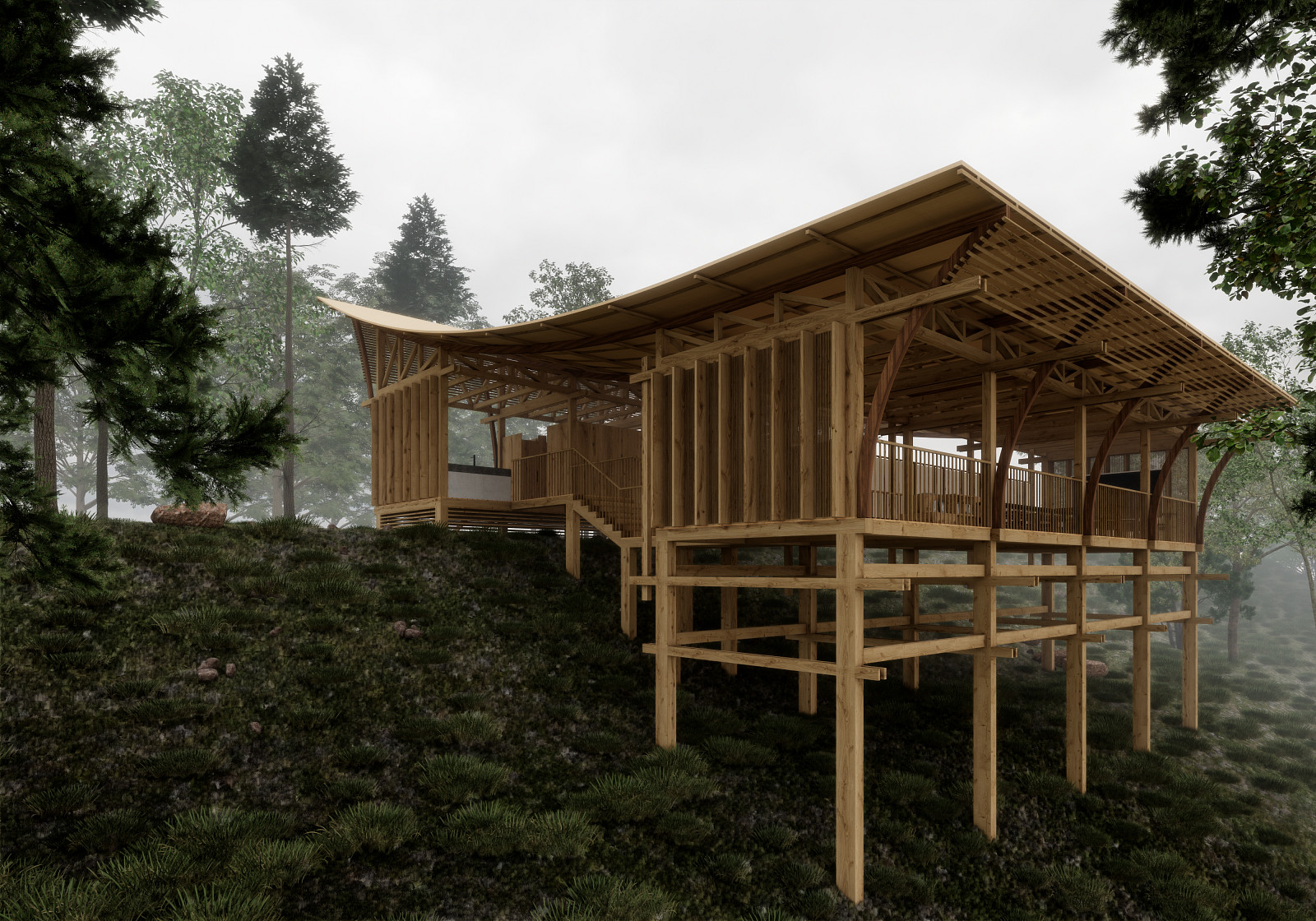
Going beyond physical healing, V-NEST 80 nurtures life and knowledge. Reading and study areas are interspersed within an architectural massing that echoes the vernacular stilt house (nhà sàn). Without requiring site leveling that would disrupt the natural topography, the structure rests gently on the hillside. It creates a safe, dry haven where the sound of children learning can dispel the devastation of storms, bringing the peaceful rhythm of life back to the village.
Technické informace
To meet the demands of emergency relief in the rugged, heavily bisected terrain of the Northern mountains, the technical resolution of V-NEST 80 prioritizes mobility and epidemic prevention:
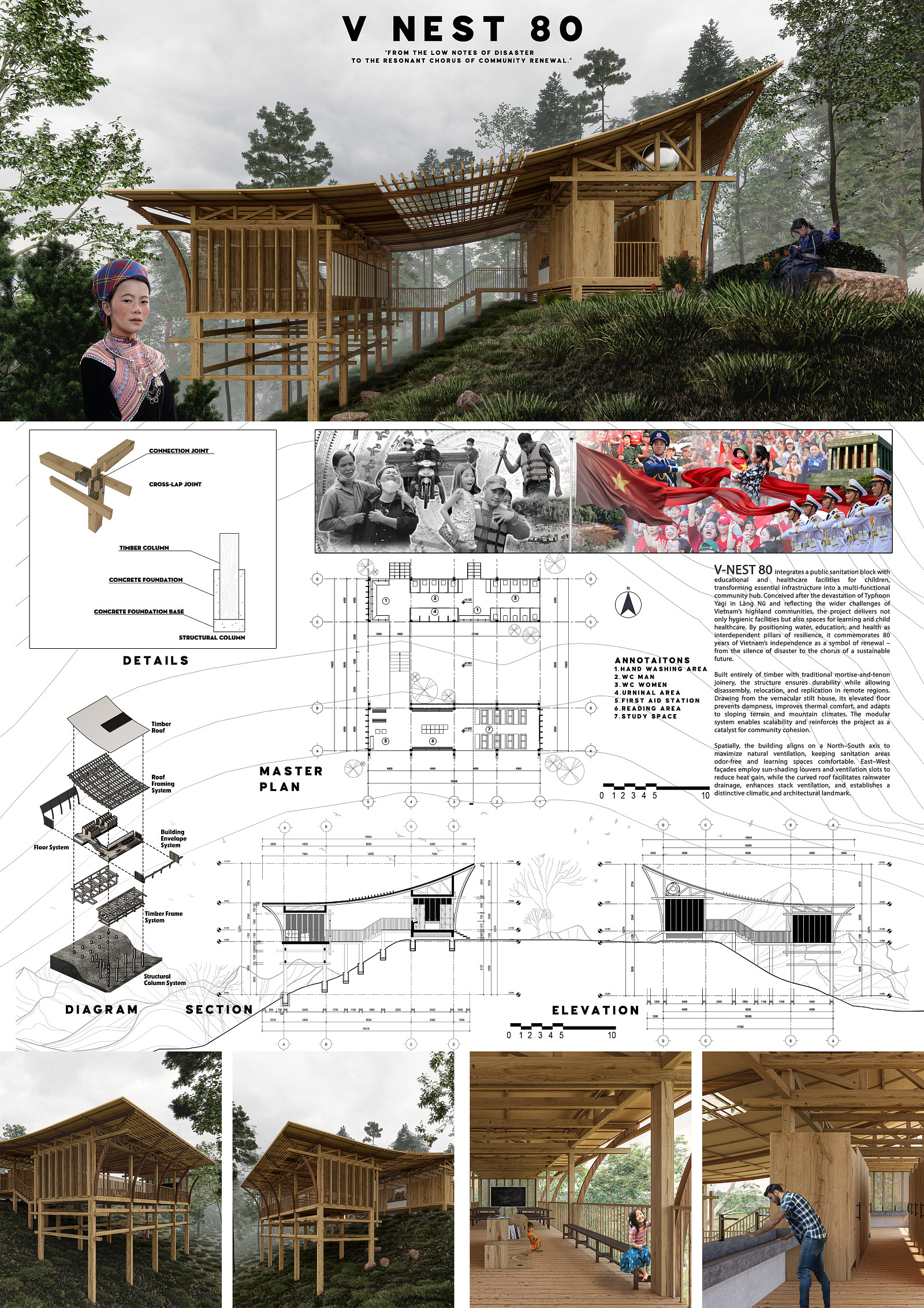
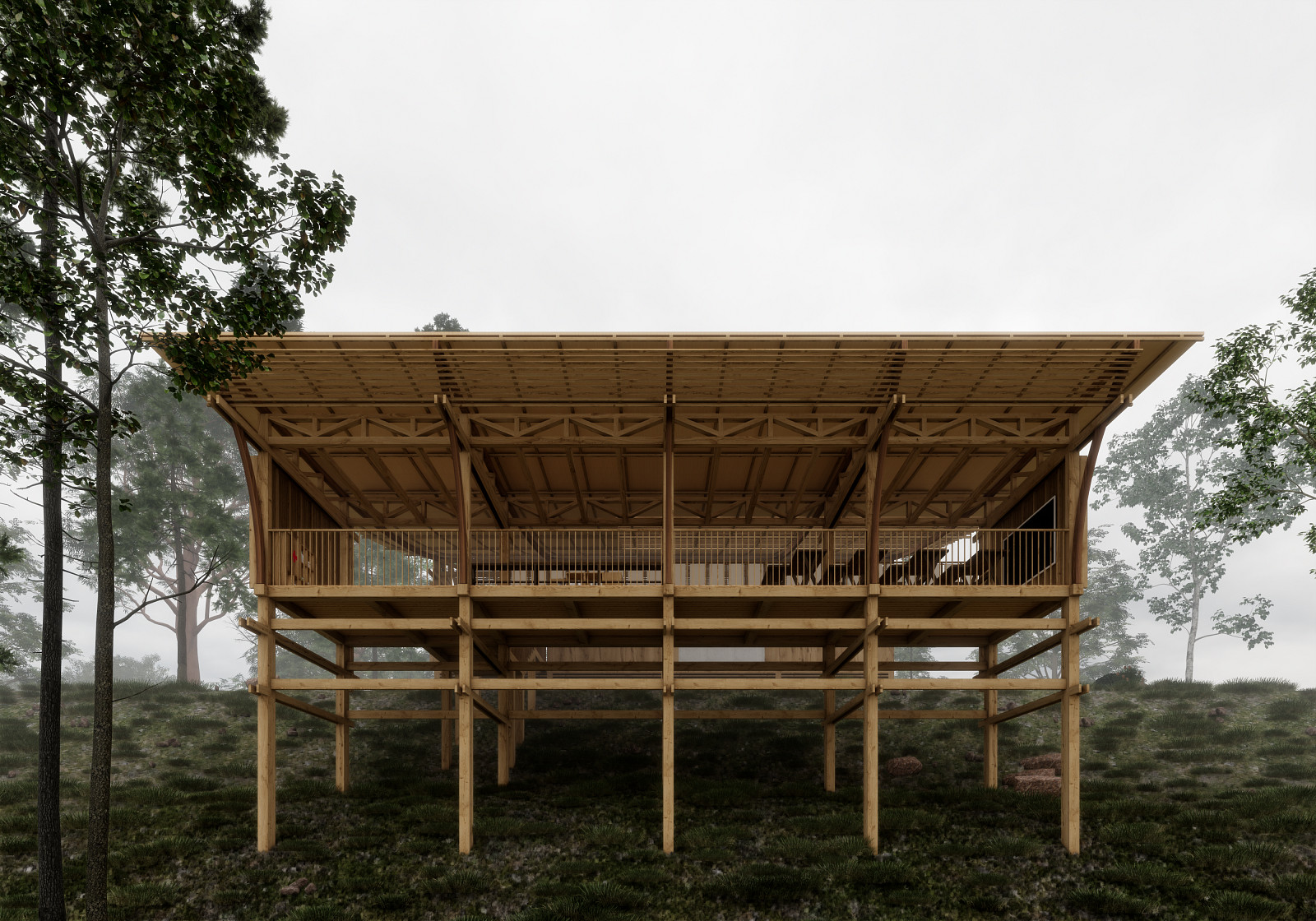
Ultra-Fast Prefabricated Modular Structure: The entire complex employs a prefabricated modular system utilizing locally sourced timber. The project's highlight is the application of traditional mortise and tenon joinery. This allows for exceptionally rapid assembly and disassembly without the need for heavy machinery or highly specialized labor. Local residents can manually dismantle, pack, transport, and reassemble the structure in the most inaccessible terrains.
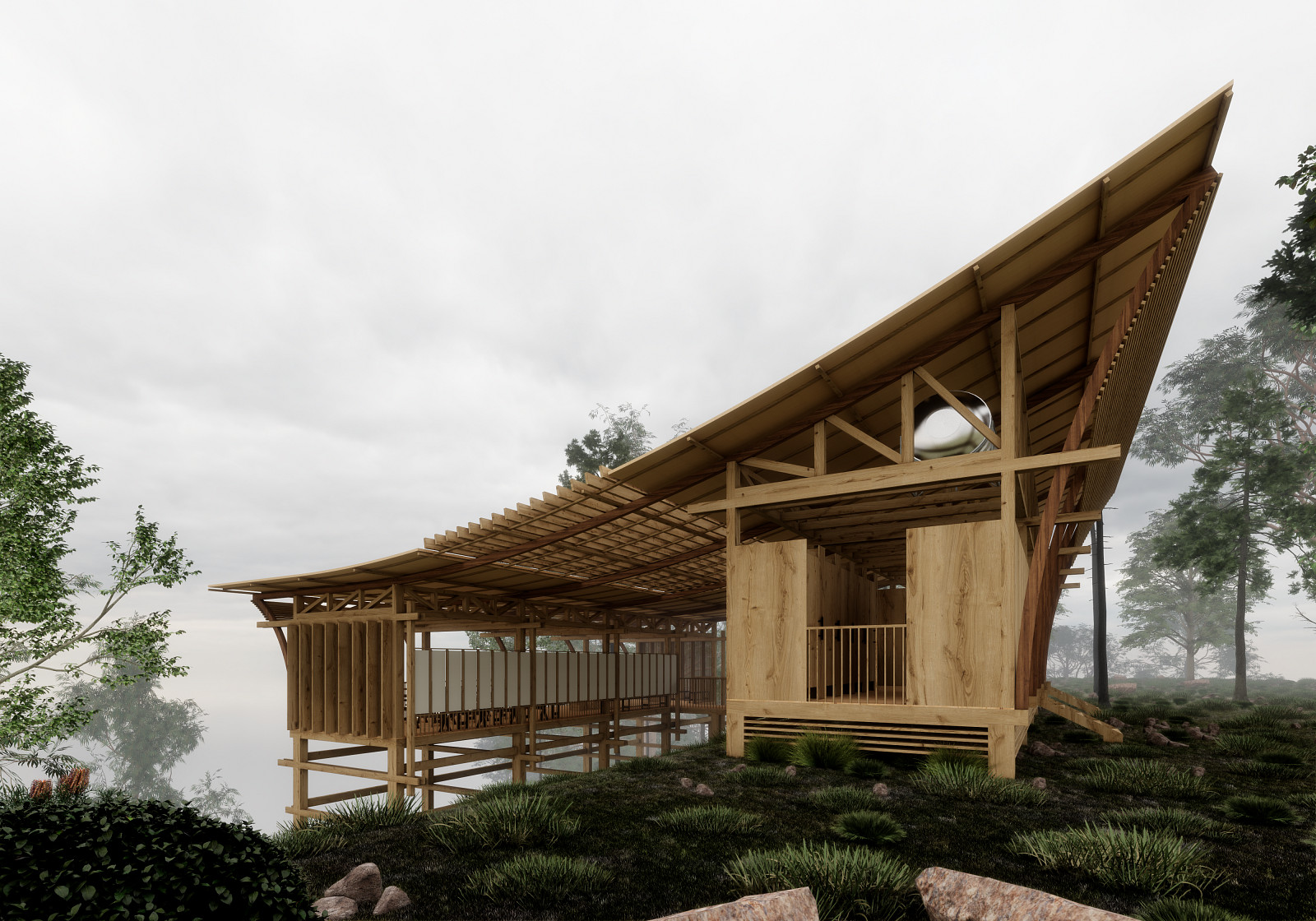
Infection Control Spatial Zoning: The floor plan strictly segregates "clean zones" (study and first aid areas) from "risk zones" (sanitation blocks). The sanitation system maximizes natural cross-ventilation to ensure continuous air exchange, keeping surfaces dry and mitigating the proliferation of disease-causing bacteria and mold.
Topographic Adaptation and Flood Resistance: A timber column system resting on point concrete footings elevates the entire structure. This design not only anchors the building firmly on steep slopes but also entirely eliminates the risk of flooding, insulating the living spaces from ground moisture to ensure a warm and dry interior.
Passive Design & Microclimate Control:
Geometric Orientation: The main axis is aligned North-South to capture valley breezes, while the East-West facades feature timber shading louvers to significantly reduce solar heat gain.
Aerodynamic Roof System: The curved, sloped roof harmonizes with the mountainous morphology while facilitating rapid rainwater drainage. Crucially, the roof's geometry creates a pressure differential that drives stack ventilation, continuously drawing damp air from below and expelling it outwards, ensuring the interior environment remains fresh and hygienic.


Copyright © 2026 INSPIRELI | All rights reserved. Use of this website signifies your agreement to the Terms of Use, Privacy Policy, and use of cookies.