THE THAW ARCHIVE


Idea projektu
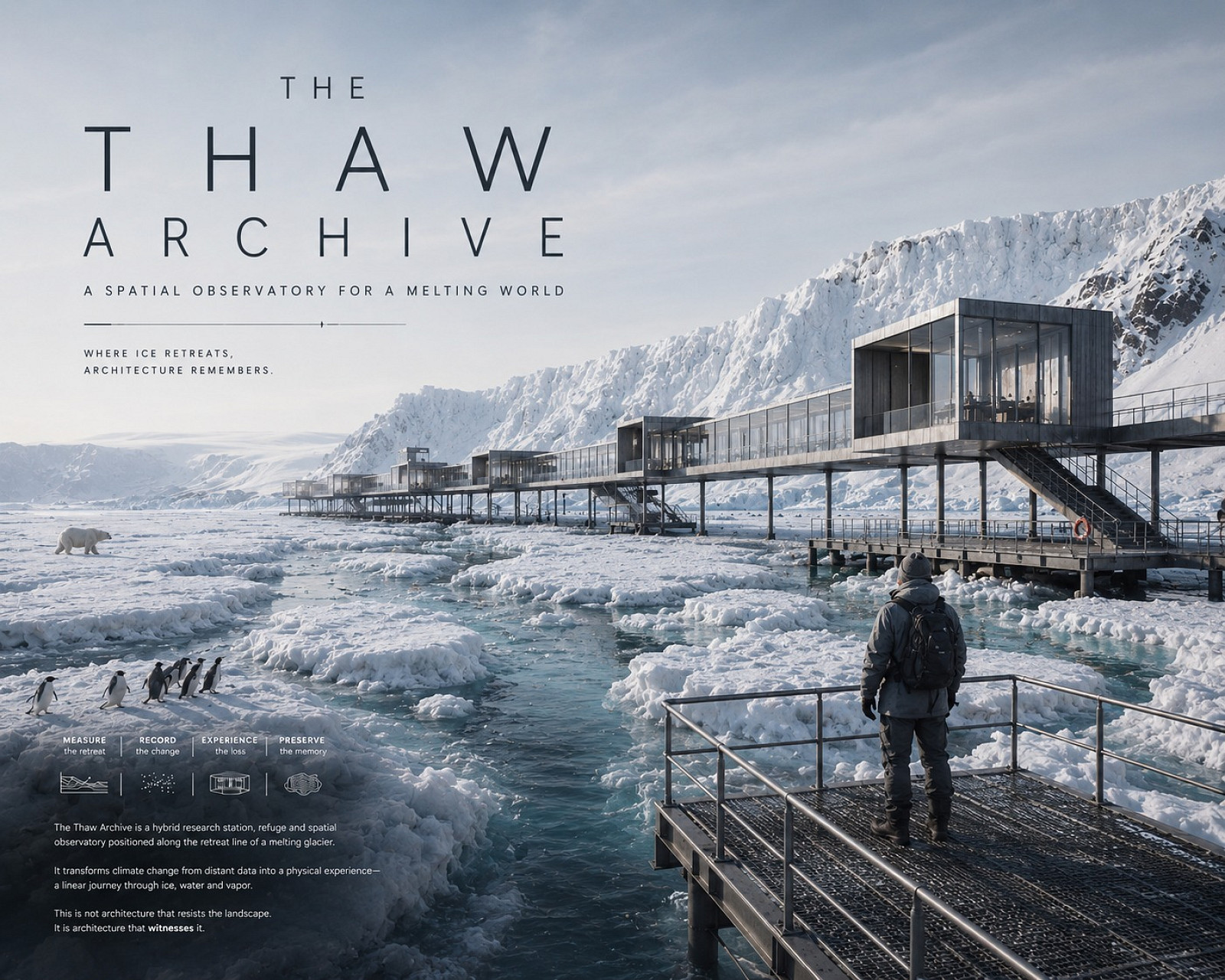
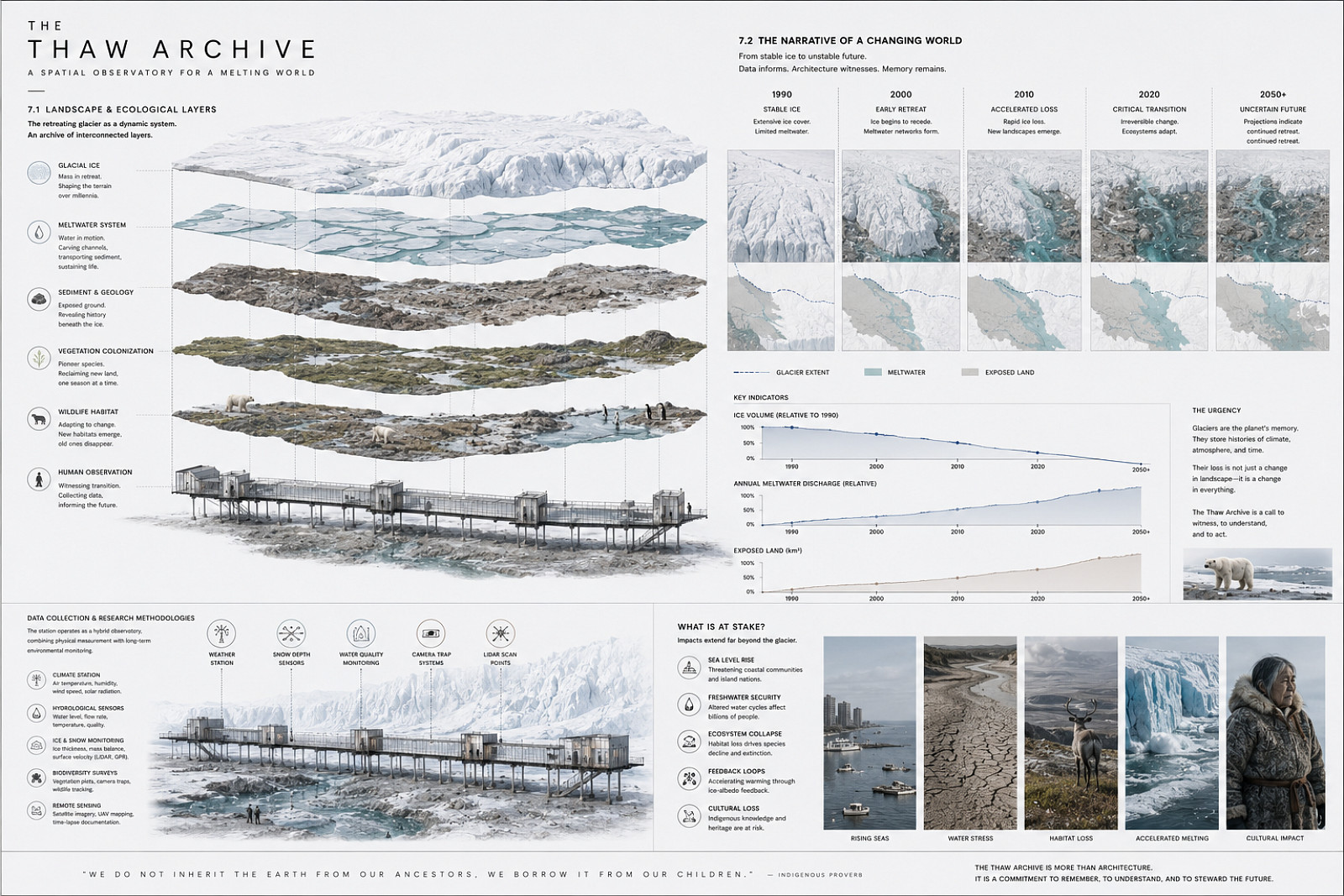
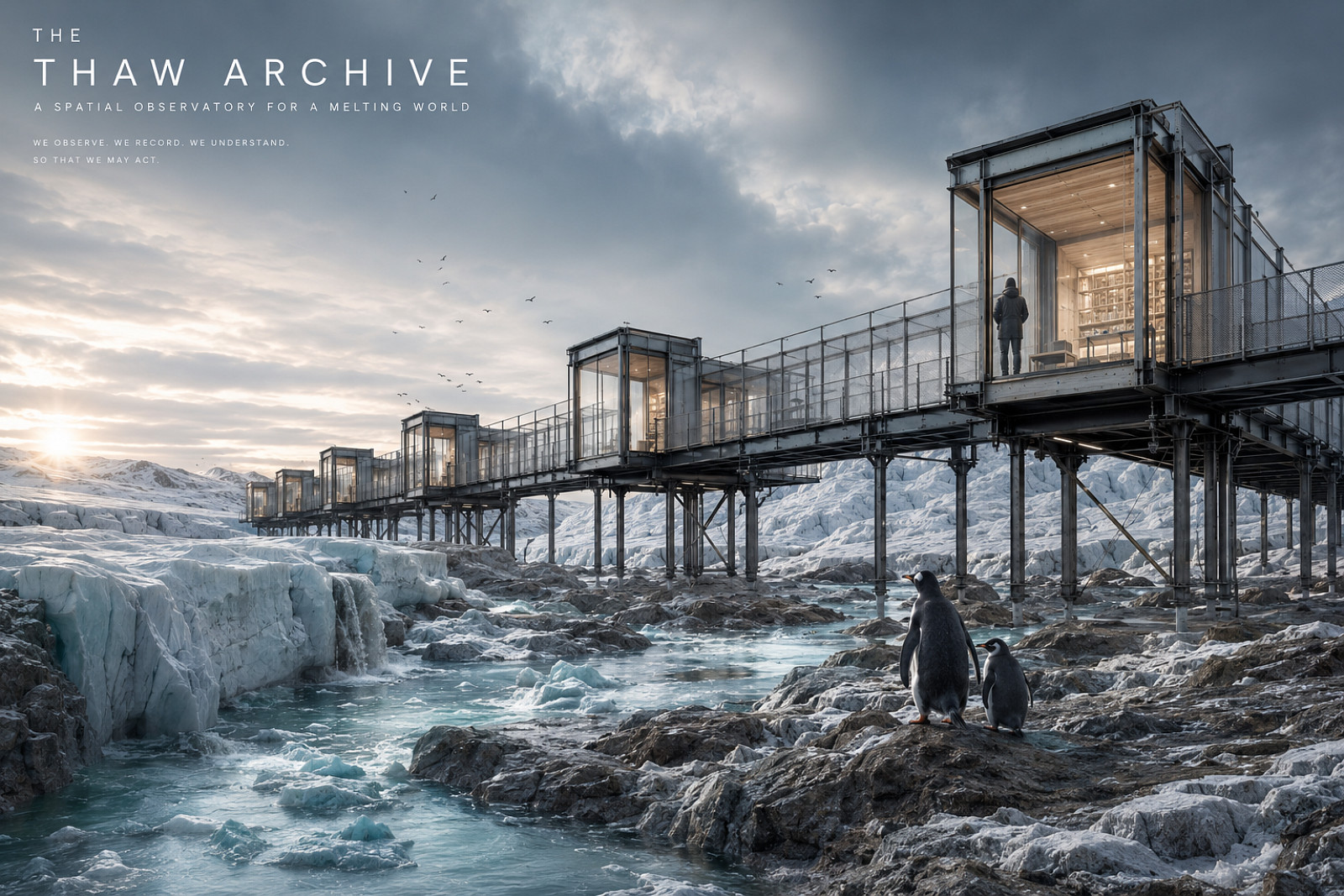
THE THAW ARCHIVE begins from the recognition that in Antarctica, architecture starts where permanence ends. The glacier is no longer a stable backdrop, but a body in transition fracturing, thinning, melting, and retreating. In such a condition, architecture cannot be conceived as a fixed object placed upon a neutral site. It must emerge from instability and operate within continuous change.
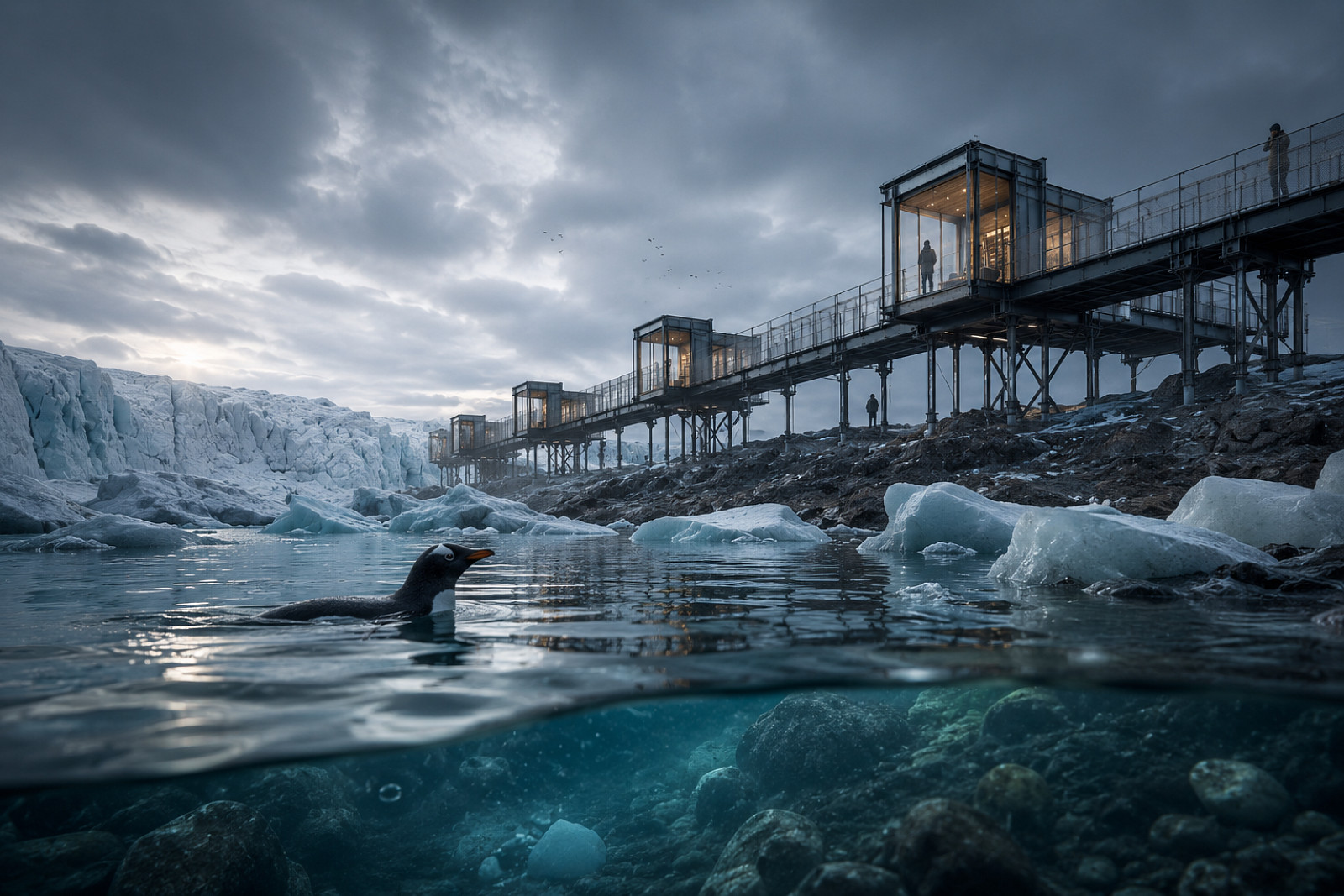
The project proposes an architecture that does not resist the melting landscape, but inhabits it. Rather than acting as a monument of control, it becomes a system of calibration that measures, adapts to, and reveals the transformation of ice into water and water into vapor. The goal of the project is to make environmental change spatially legible and to redefine architecture as a medium for engaging instability, time, and loss.
Popis projektu
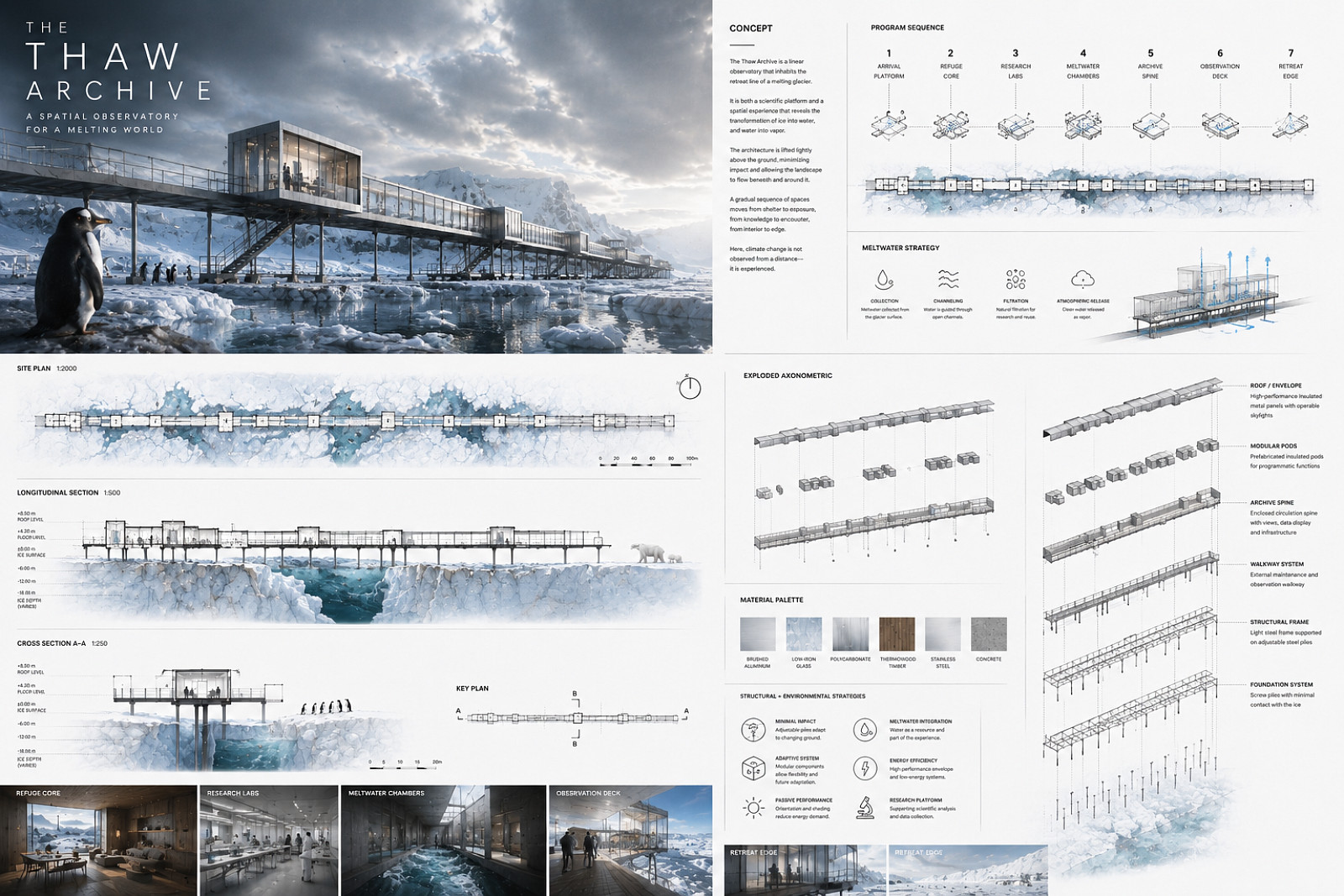
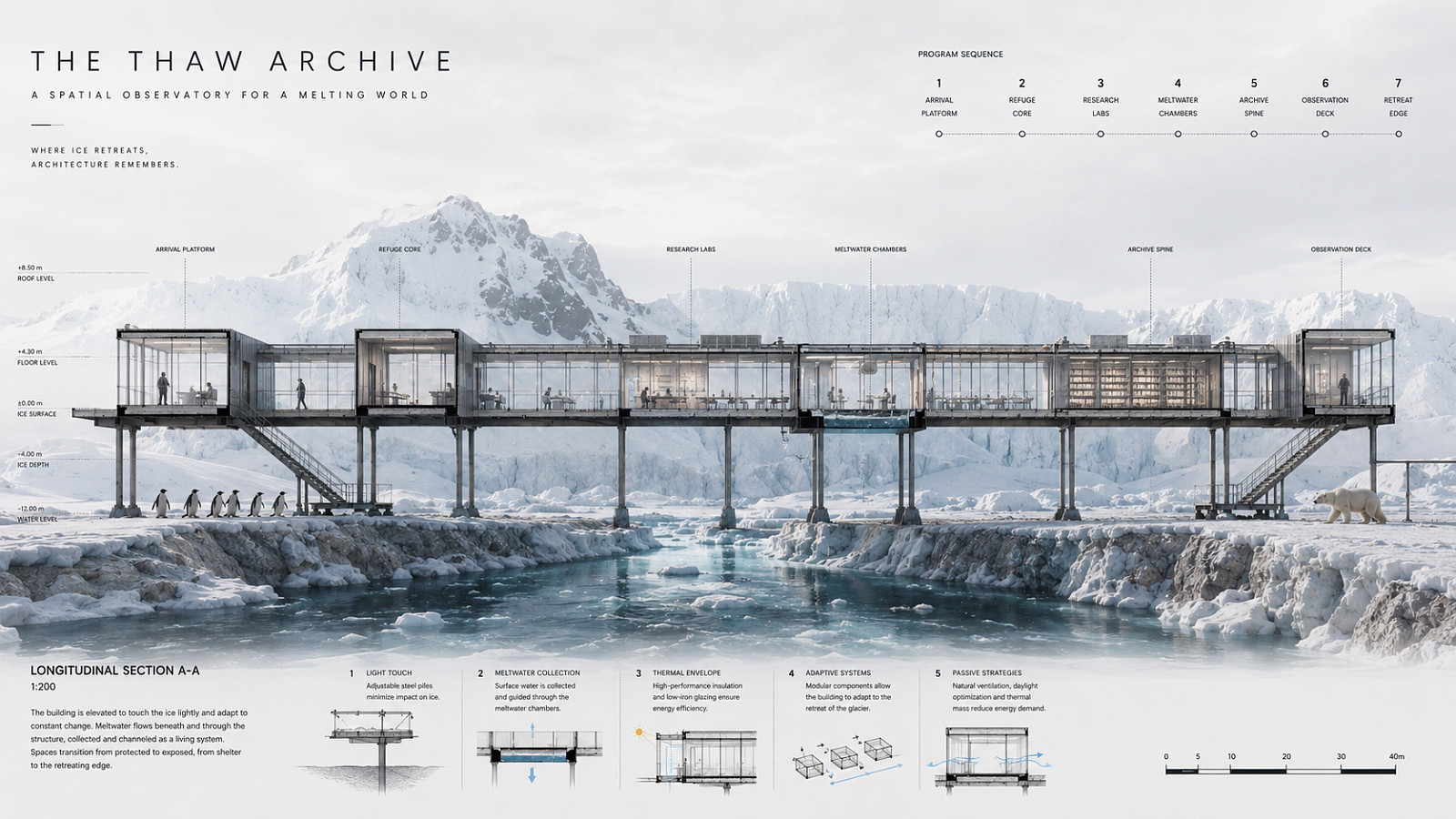
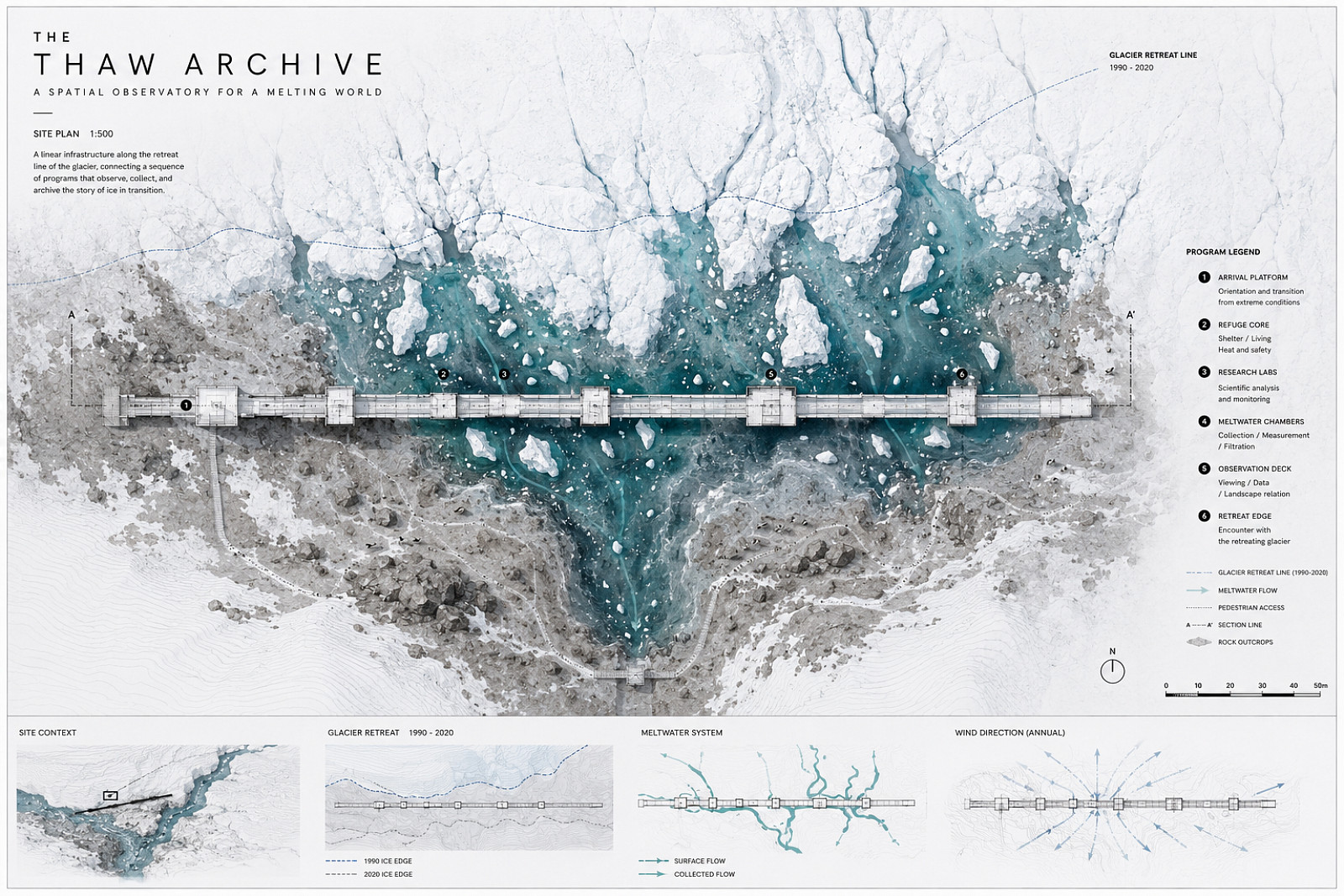
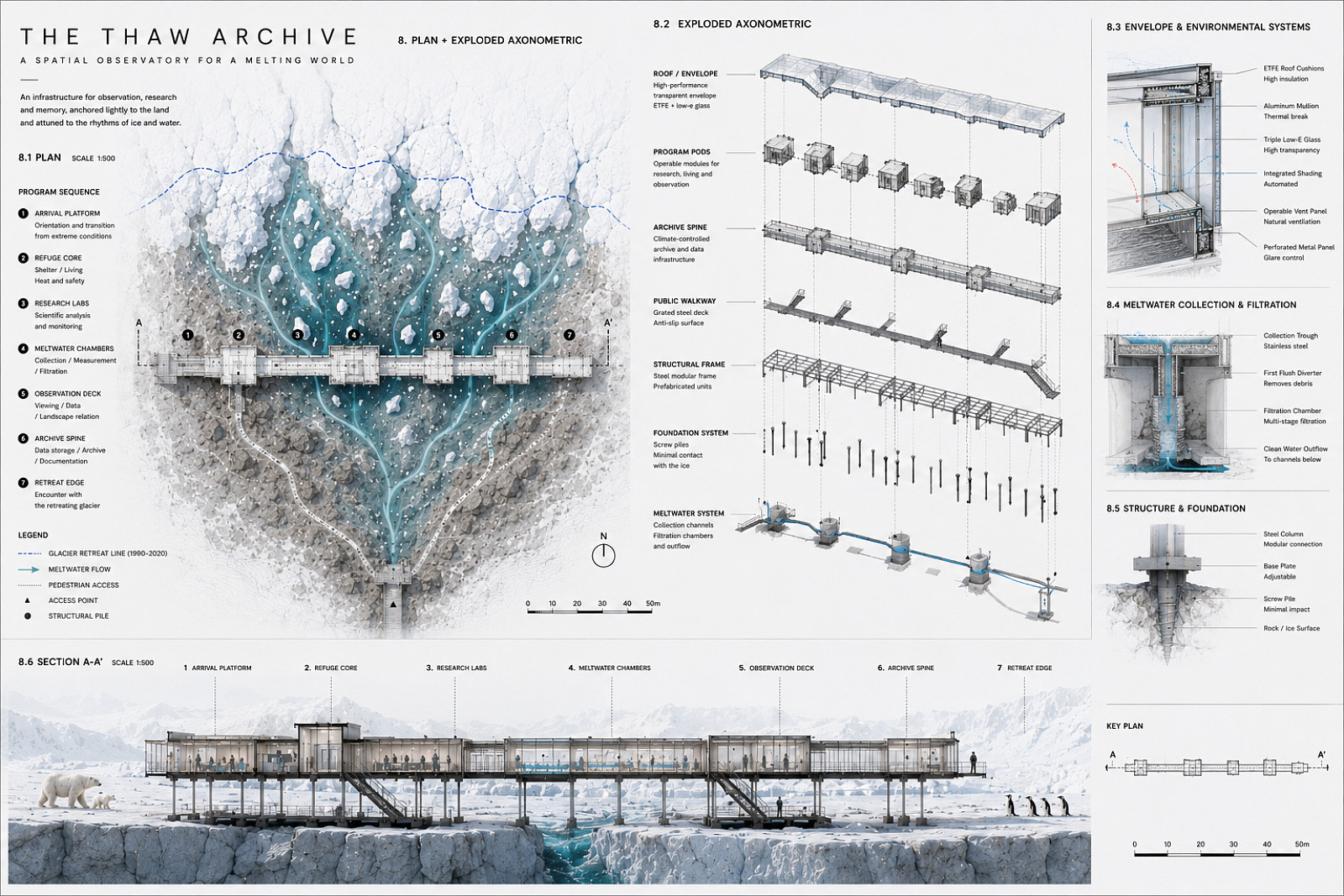
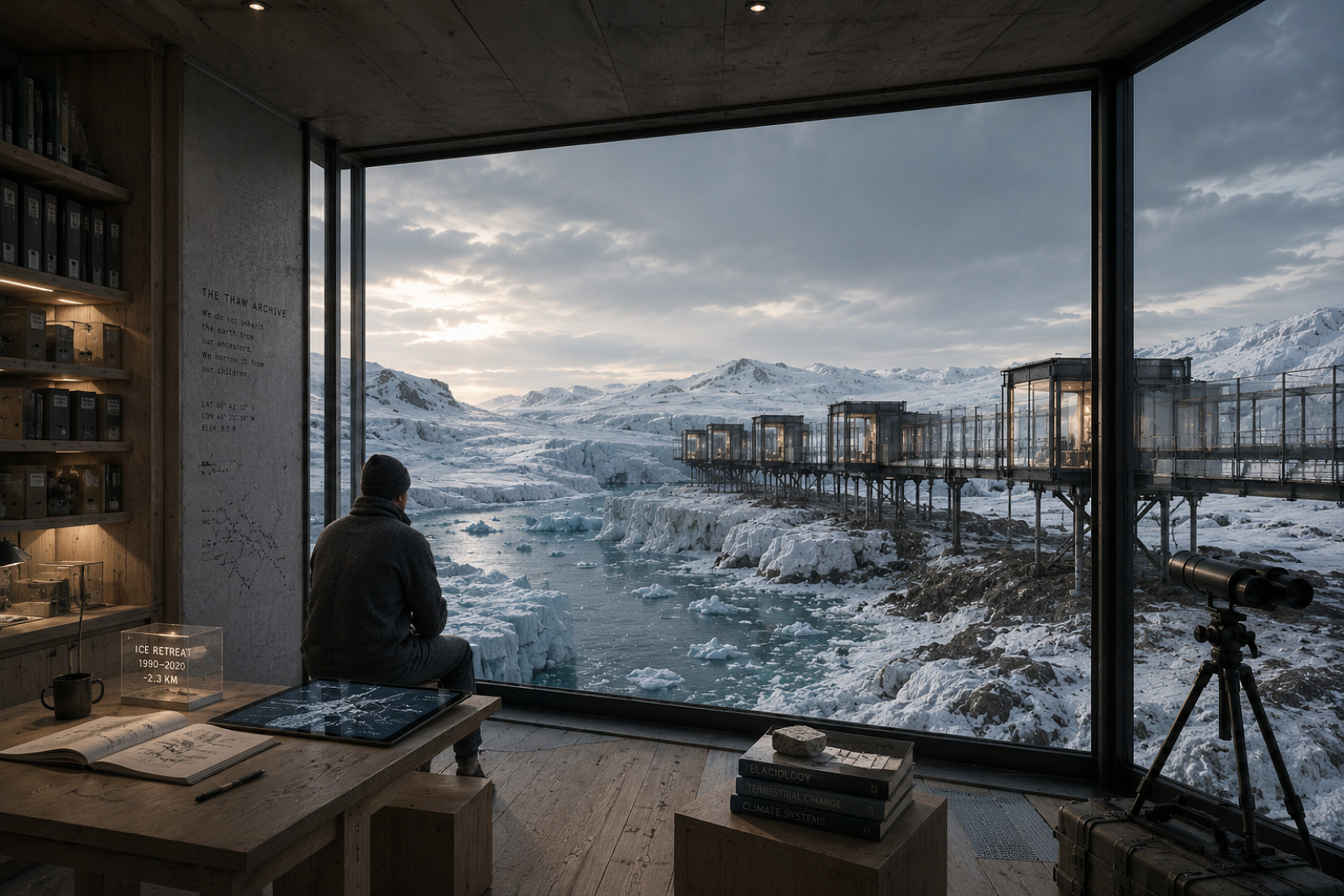
The project is organized as a linear spatial sequence positioned along the retreat line of a glacier. It unfolds as a gradual transition from shelter to exposure, from interior to exterior, and from protection to confrontation. Movement through the project becomes a movement deeper into the condition of disappearance itself, allowing the visitor or researcher to experience climate change not as abstract information, but as physical transformation through section, atmosphere, and proximity.
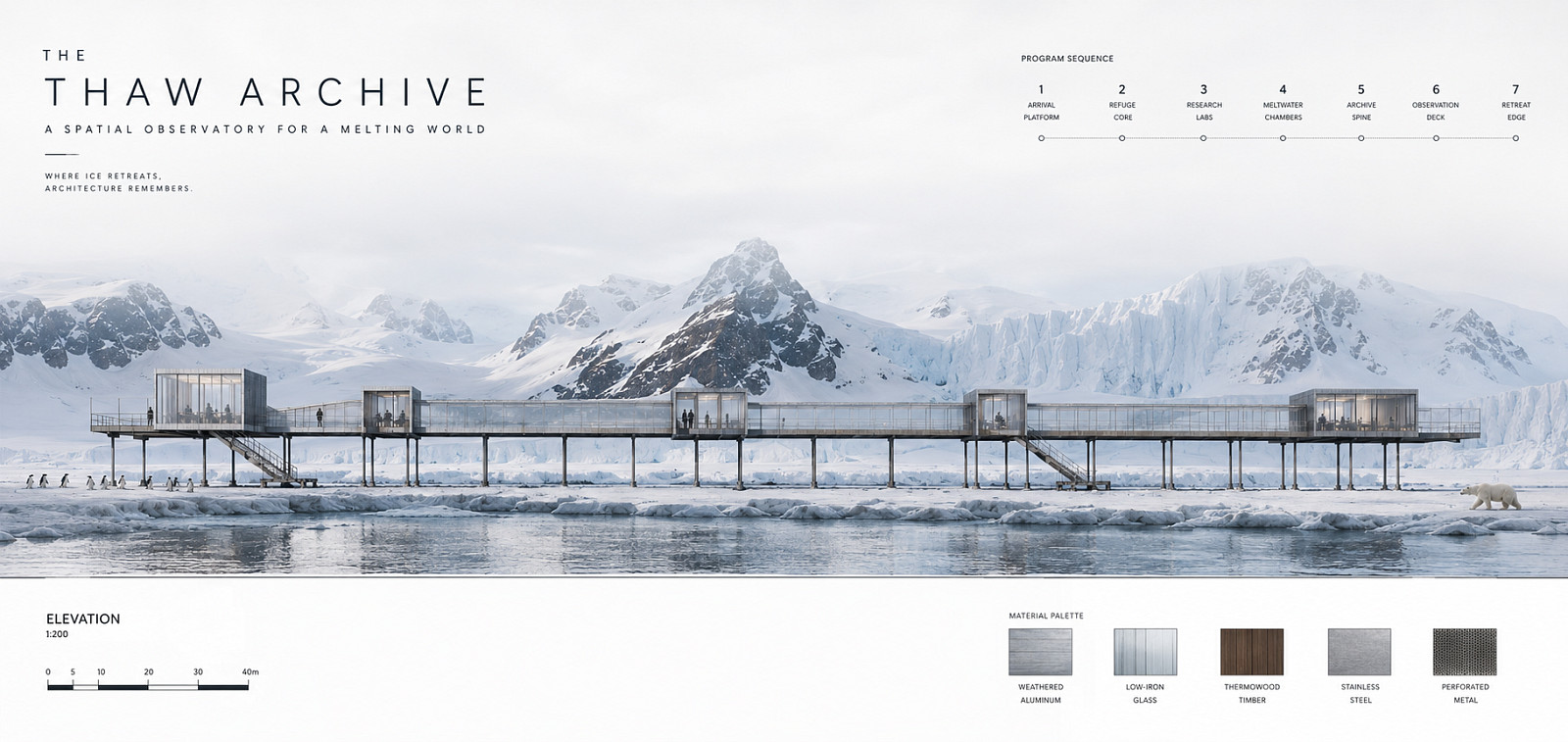
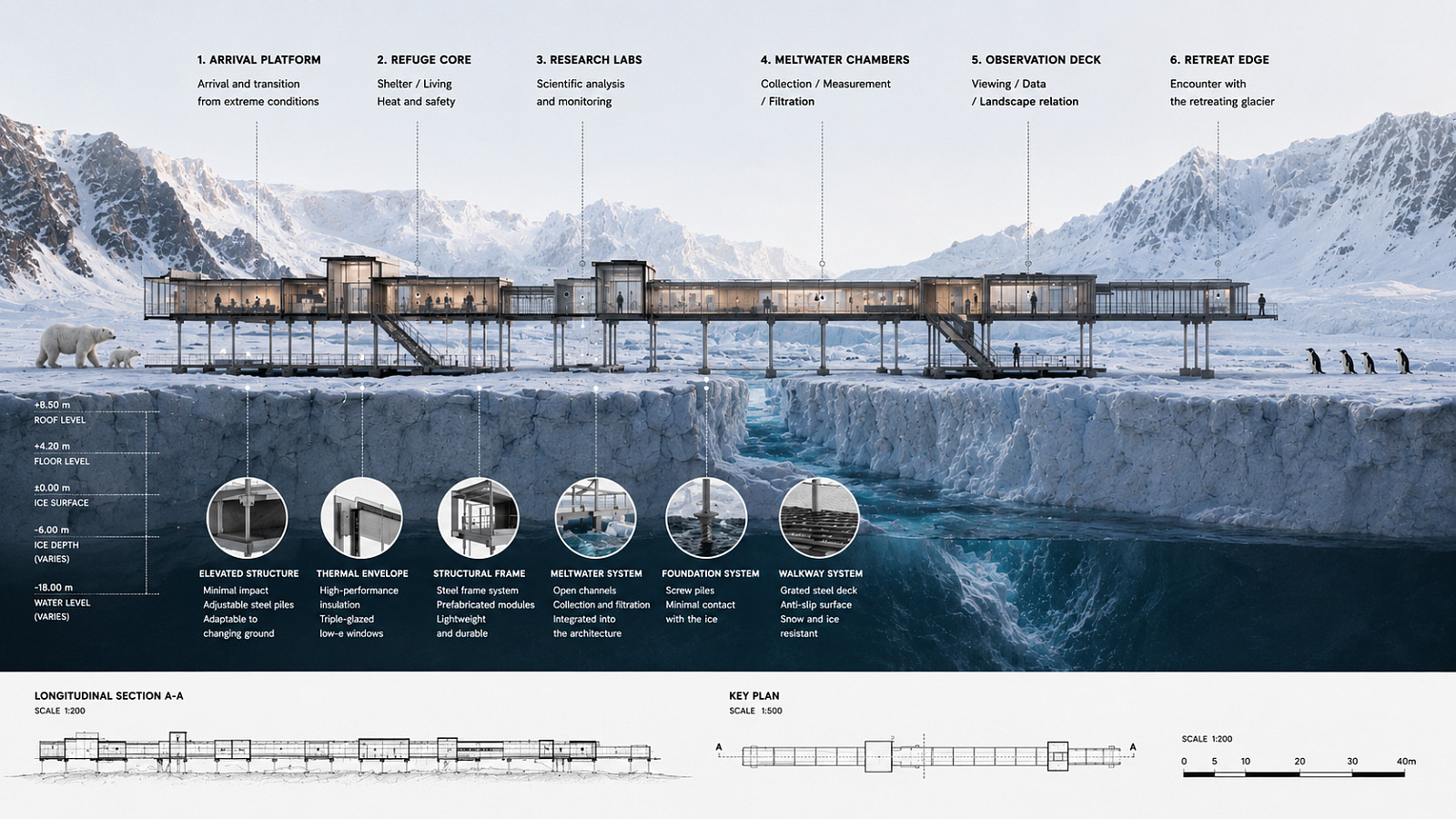
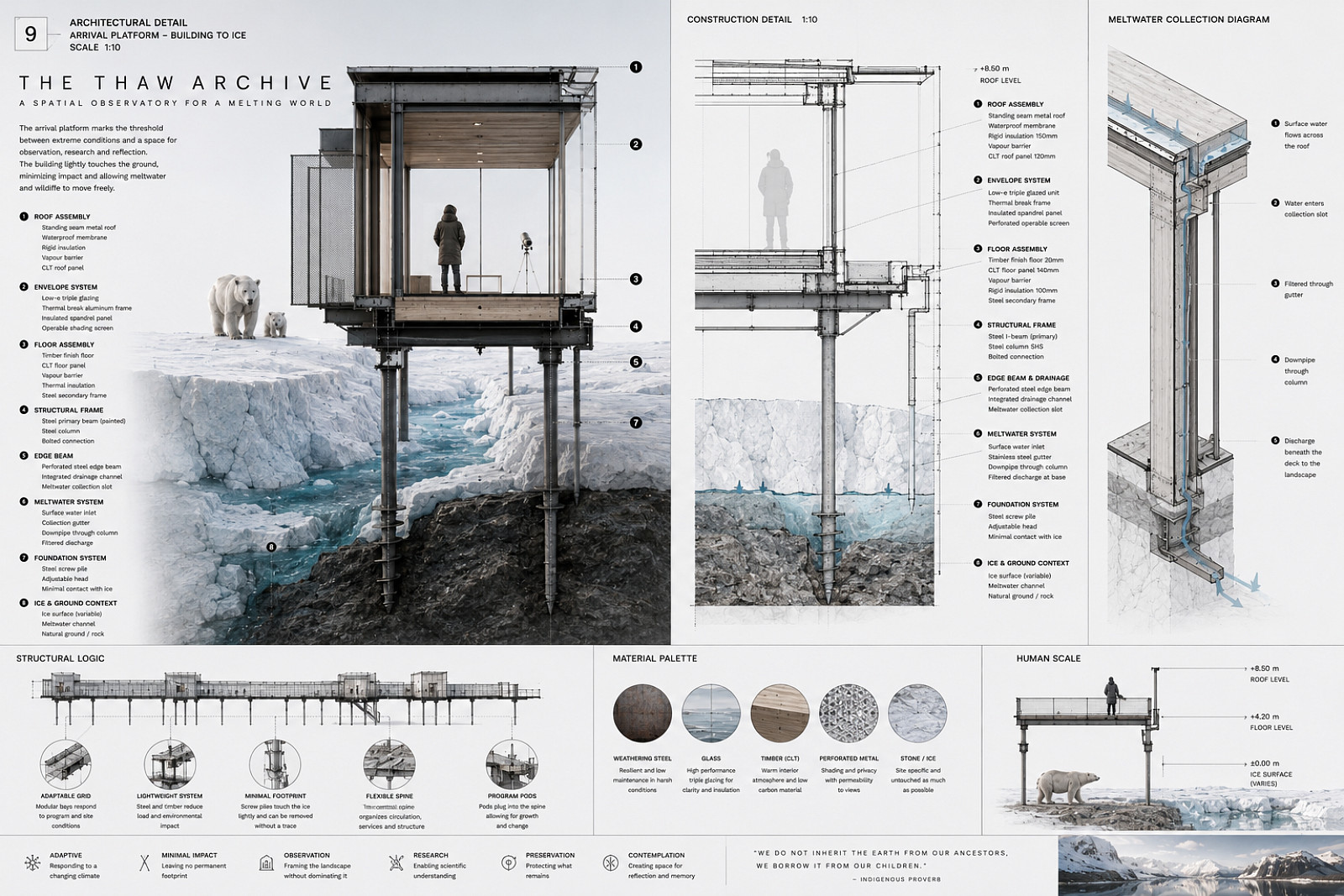
The architecture is lifted lightly above the ground, touching the ice with minimal force. Its structural system is conceived as temporary, adjustable, and reversible, acknowledging that the site cannot be stabilized, only engaged with. Rather than claiming the ground as permanent foundation, the building negotiates with it through a light and precise relationship between support, load, and change. In this way, instability is not treated as a technical problem to eliminate, but as a primary condition shaping the design.
Meltwater plays a central architectural role. It is not treated as waste, but as matter to be collected, revealed, and made present. Channels of flowing water move through the architecture, reflecting light, altering temperature, and registering time. Ice, liquid, and vapor are understood not only as environmental states, but as active spatial agents. THE THAW ARCHIVE therefore functions simultaneously as a research station, a refuge, and an experiential archive, making loss visible through architecture rather than attempting to conceal it.
Technické informace
The project is designed as a lightweight elevated structure positioned along a dynamic glacial edge. Its architectural system combines adjustable support elements, modular elevated walkways, sheltered enclosed volumes, and open environmental interfaces that allow the building to adapt to changing ice conditions over time. The structure is intentionally reversible and minimally invasive, reducing direct pressure on the unstable ground while allowing recalibration, maintenance, and phased transformation as the glacier retreats.
Environmental performance is embedded in the building’s relation to thaw. The architecture is organized to reveal and collect meltwater through integrated channels, basins, and exposed flow paths that register environmental change as a visible part of the spatial experience. Enclosed research and refuge spaces are thermally protected, while transitional zones mediate between interior shelter and direct exposure to the landscape. Material logic emphasizes lightweight durable systems, resistance to cold and moisture, and precise detailing suited to freeze-thaw conditions. In this way, the project combines scientific function, climatic response, and spatial awareness within one architecture of instability.

Copyright © 2026 INSPIRELI | All rights reserved. Use of this website signifies your agreement to the Terms of Use, Privacy Policy, and use of cookies.