SECOND MOTION


Idea projektu
SECOND MOTION begins from the understanding that after injury, space is no longer neutral. A threshold, a slope, a corridor, a pause, or a turn in the path become charged with effort, memory, risk, and possibility. For a body in transition, architecture is not background. It becomes support, resistance, orientation, and measure. The project therefore proposes a new civic landscape for war-injured bodies and amputees in which rehabilitation, movement, adaptation, and public life are brought into direct relationship.
Rather than treating recovery as something hidden within a medical institution or separating sport from healing, the project creates a spatial continuum where therapy, training, rest, confidence, and collective presence are interwoven. The goal of the project is to redefine rehabilitation as a visible and civic condition, transforming architecture itself into a medium through which movement can be rediscovered, endurance rebuilt, and dignity made public.
Popis projektu
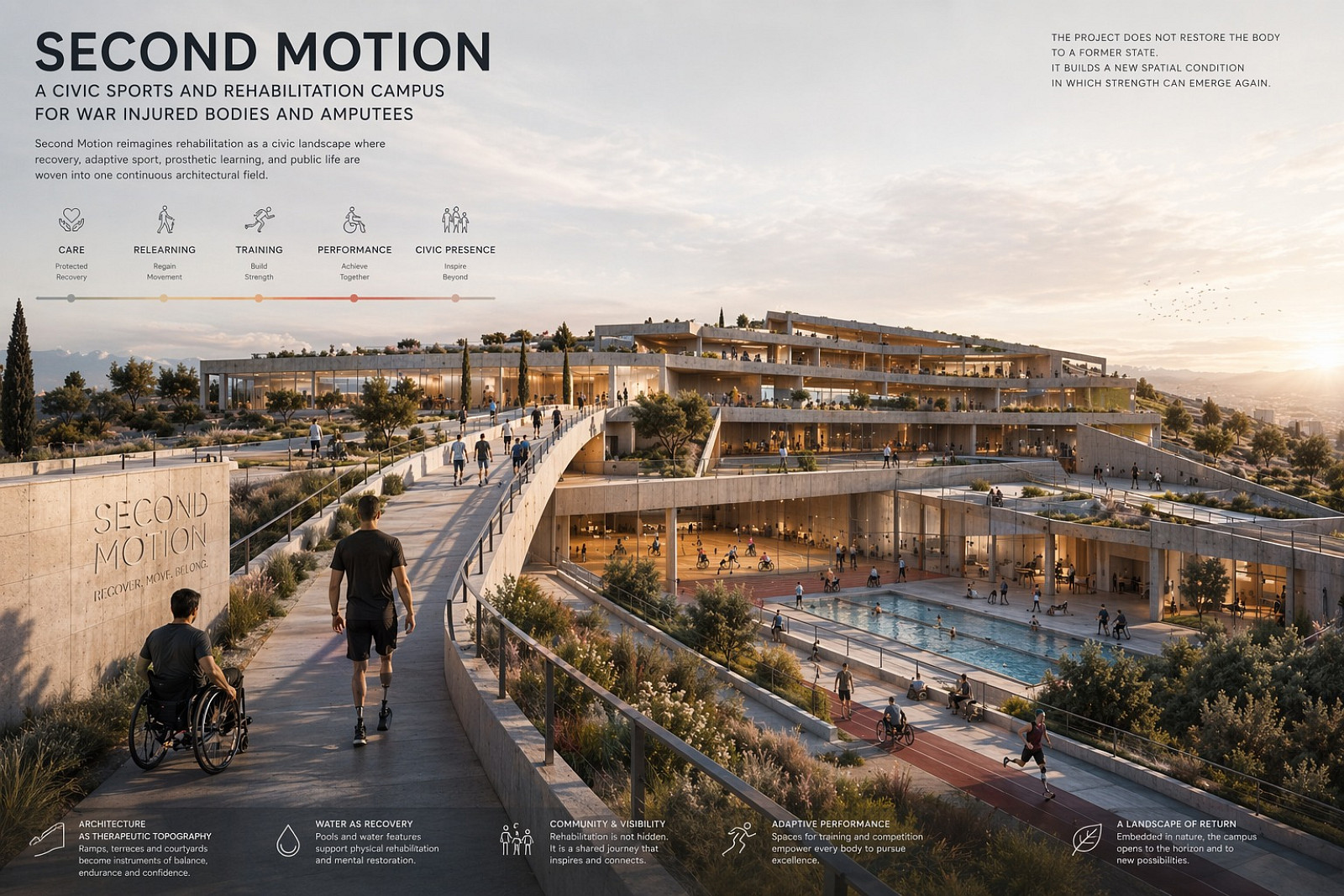
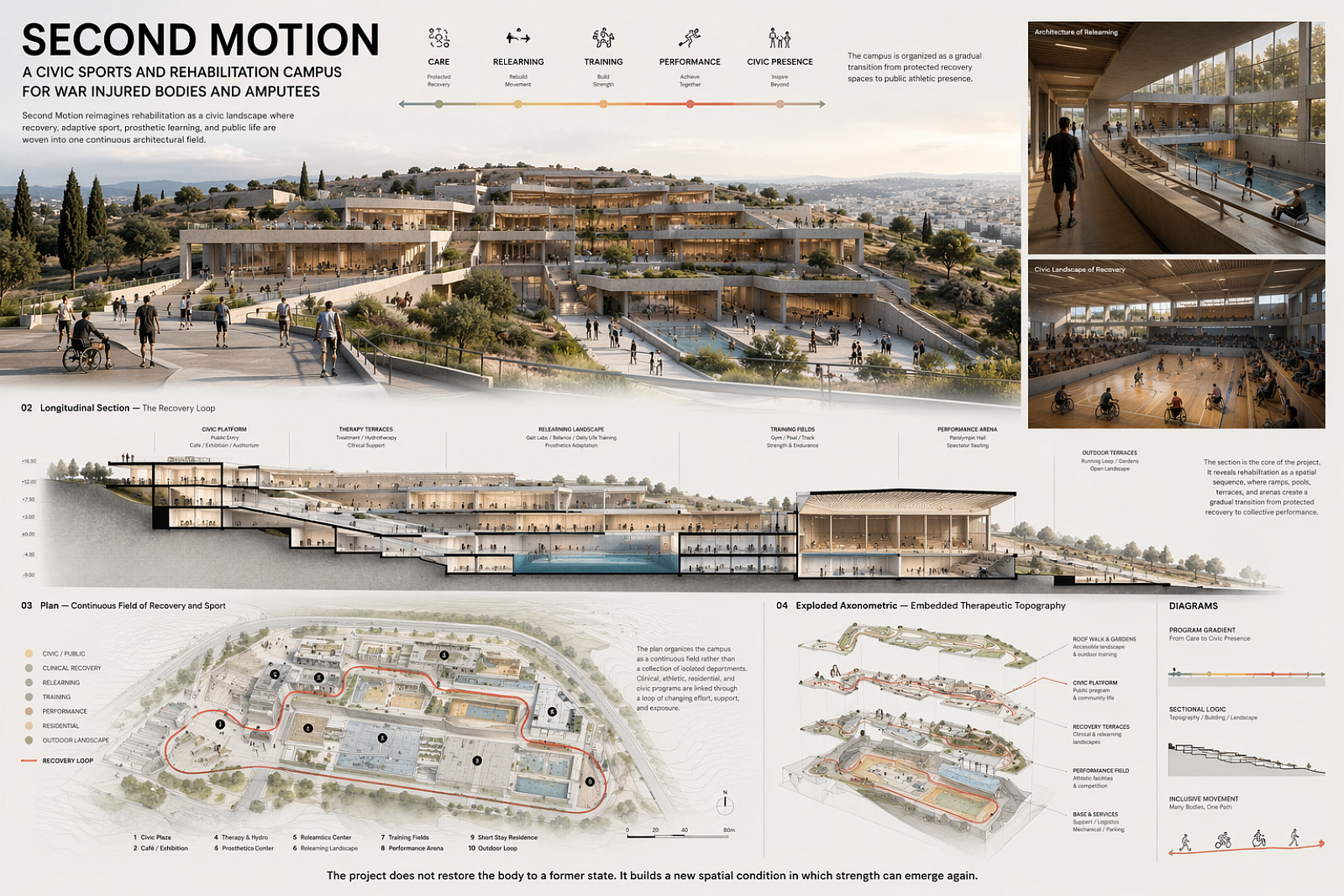
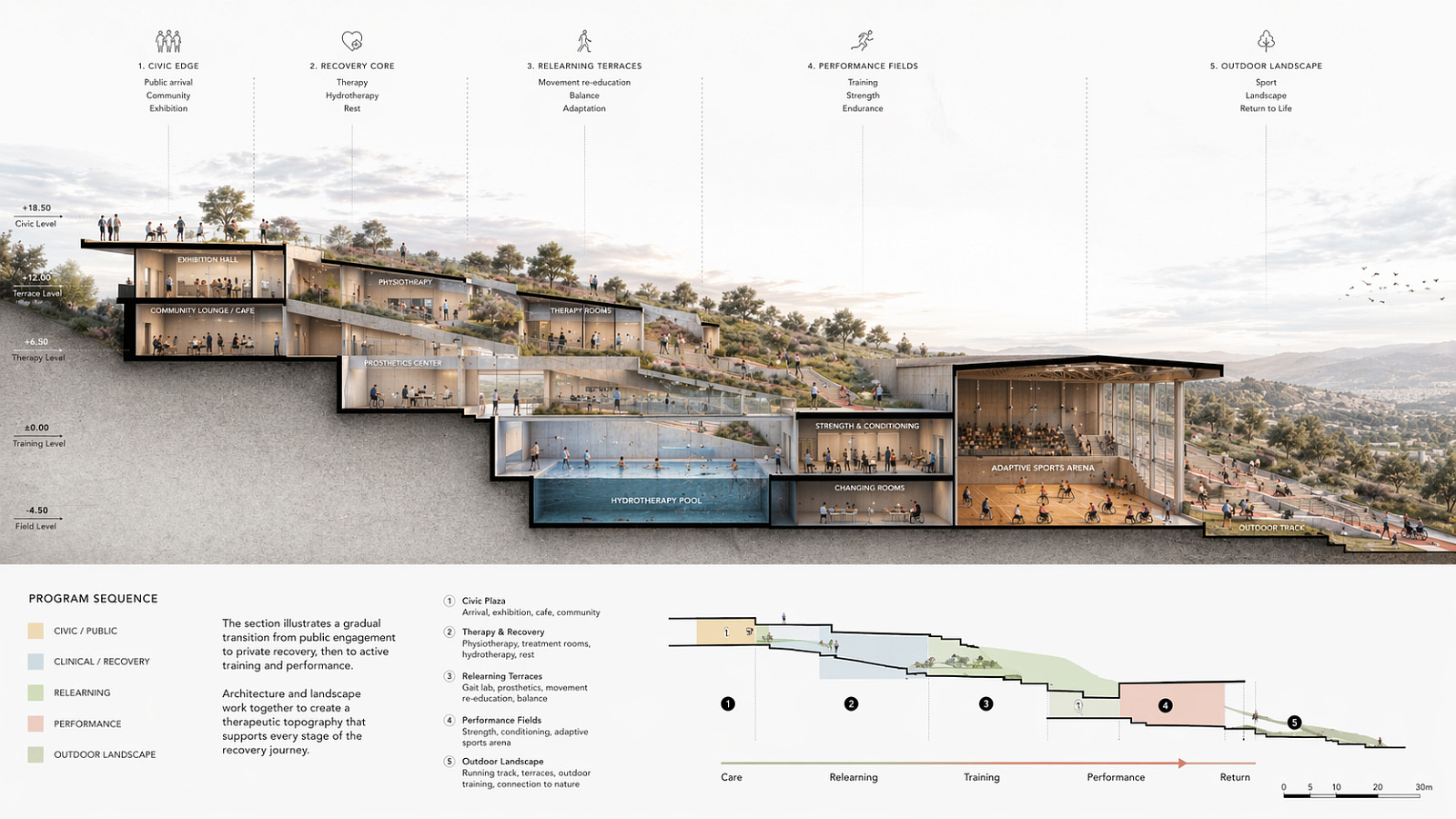
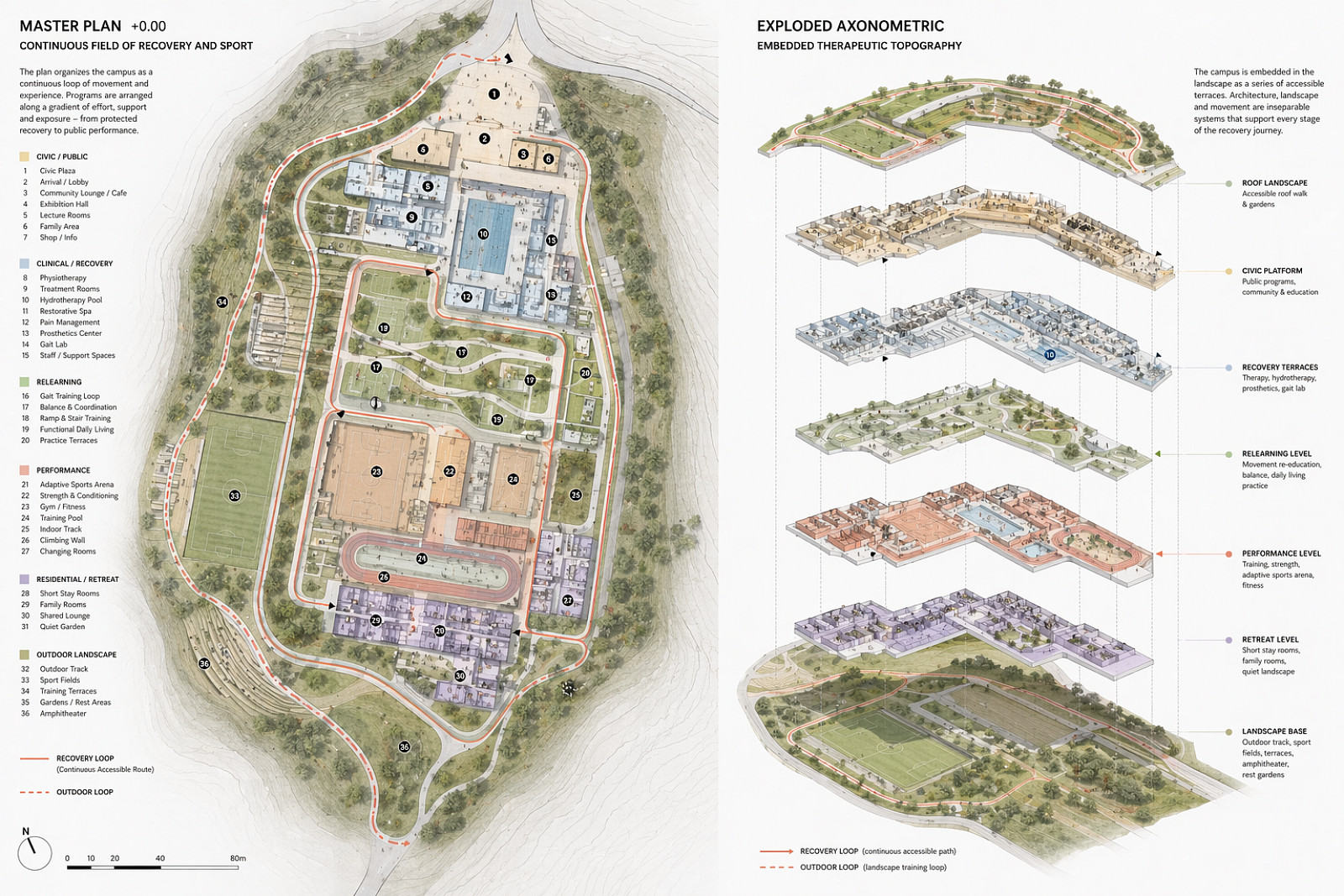
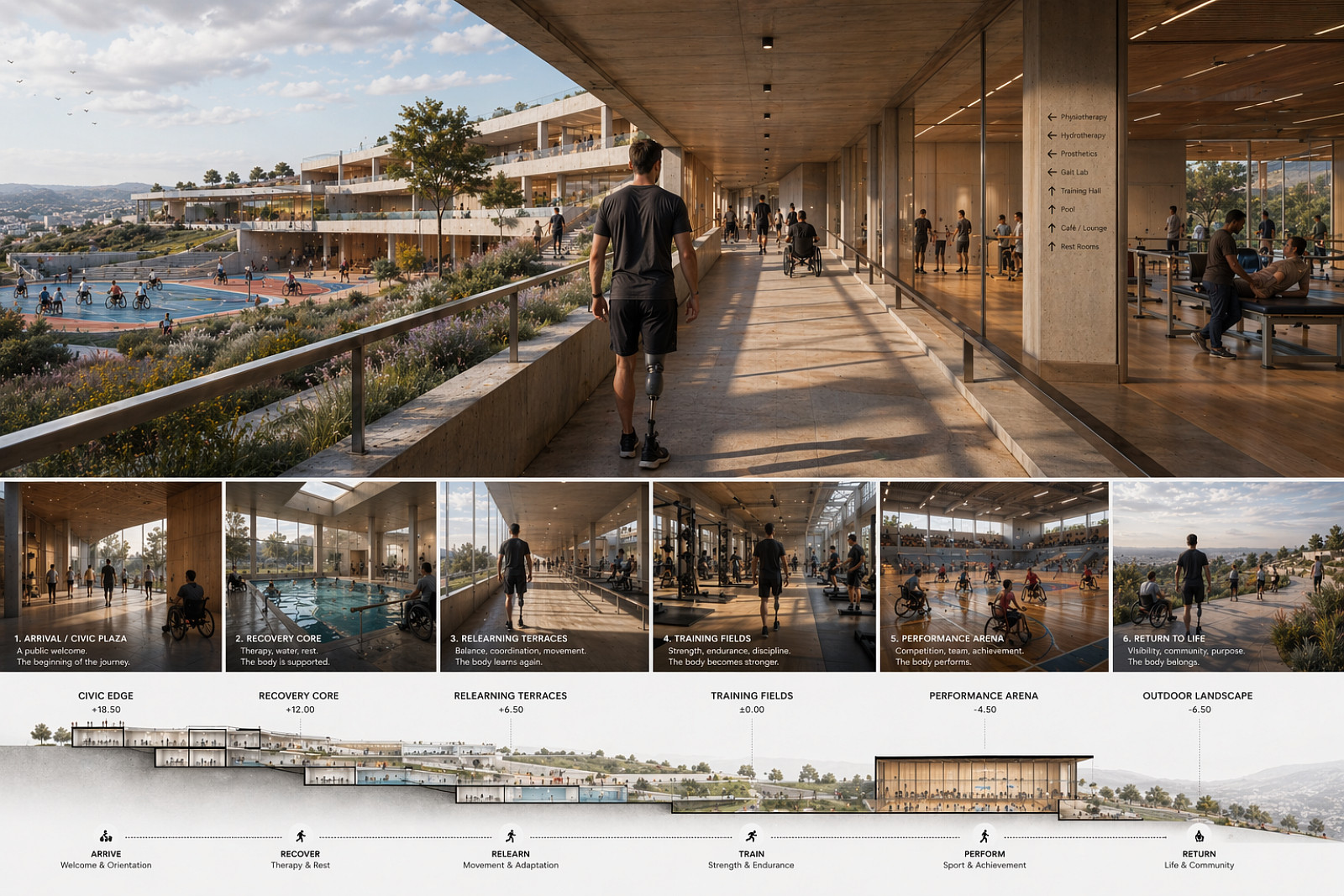
The project is conceived as a therapeutic topography embedded in the land. Instead of organizing the program as isolated departments or sealed buildings, it unfolds as a continuous campus landscape in which arena, clinic, pool, workshop, track, garden, and courtyard operate as interdependent layers of one architectural sequence. Movement through the site is not simply circulation between functions, but part of the rehabilitation process itself.
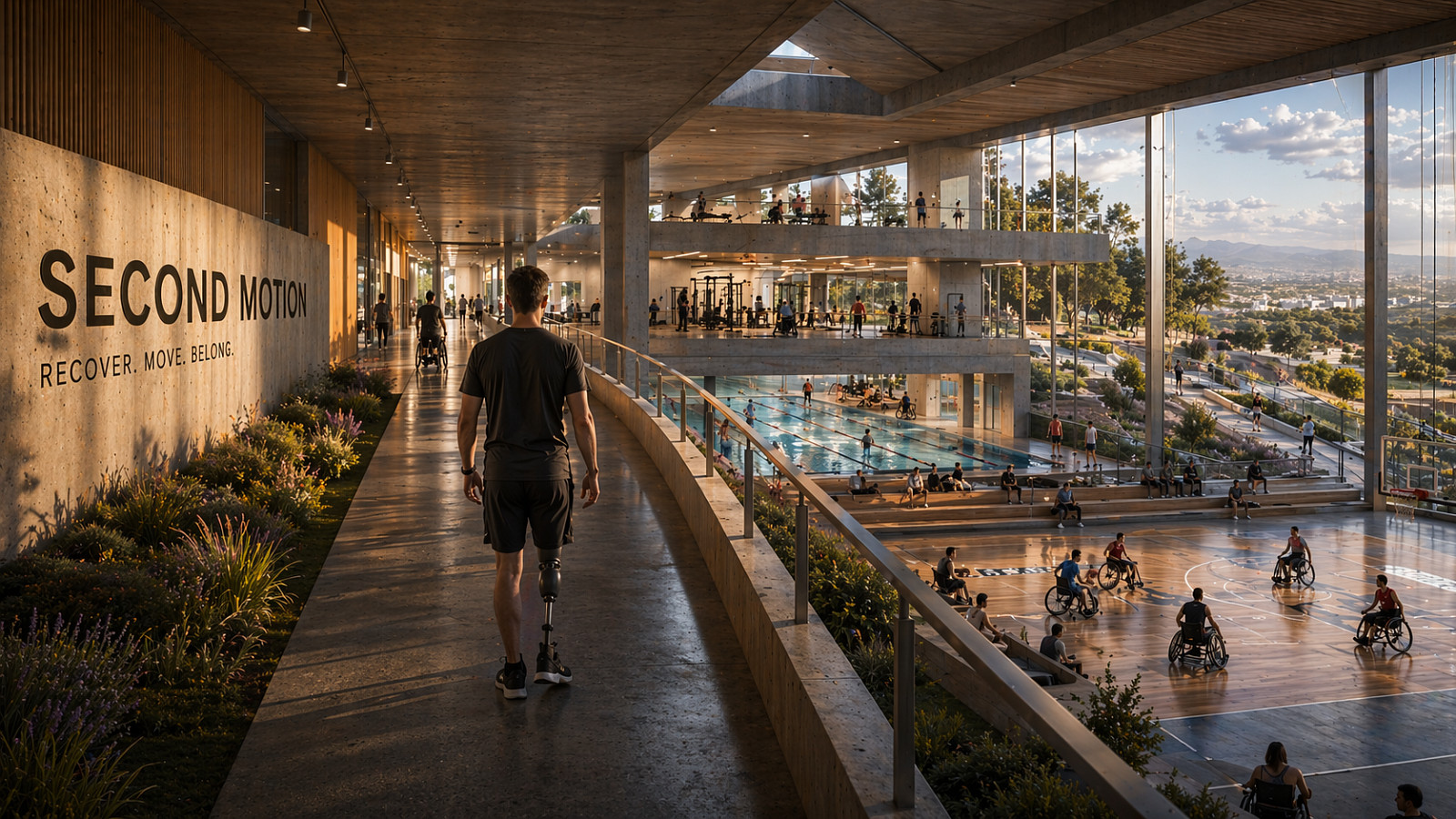
Ramps become instruments of balance and gradual relearning. Terraces become stages of progression and visibility. Pools offer spaces of resistance and release. Courtyards provide pause, confidence, and breath. Through this spatial organization, the campus allows different physical and emotional states of recovery to coexist without hierarchy. Therapy is not separated from training, and training is not separated from everyday social life. The project therefore resists the logic of institutional isolation and instead proposes recovery as a lived and public process.
SECOND MOTION is not architecture that accommodates disability after the fact. It is conceived from the beginning through bodies that move differently, recover differently, and inhabit time differently. Accessibility is not an added technical layer, but the conceptual foundation of the design. The project does not attempt to restore the injured body to an imagined past. It creates a new public condition in which movement, confidence, belonging, and strength can re-emerge through space.
Technické informace
The project is designed as a low-rise therapeutic campus integrated with the terrain and organized through accessible paths, ramps, terraces, courtyards, sports facilities, hydrotherapy spaces, clinical support areas, workshops, and restorative landscape zones. Its architectural system is based on continuous level transitions, step-free circulation, shaded exterior movement routes, and clear visual relationships between treatment, training, rest, and public gathering spaces. The spatial organization allows rehabilitation to unfold through gradual change in slope, surface, enclosure, and program rather than through isolated rooms alone.
Environmental performance is embedded in the campus layout and landscape strategy. Shaded courtyards, planted edges, water elements, and open-air circulation improve thermal comfort and support recovery through climate-responsive spatial sequences. Materiality emphasizes durability, tactile clarity, and calm through mineral surfaces, warm timber elements, integrated handrails, soft landscape transitions, and non-slip walking surfaces. The project combines accessibility, therapeutic performance, and civic openness within one coherent architecture, allowing healing, movement, and collective life to operate as a single public system.

Copyright © 2026 INSPIRELI | All rights reserved. Use of this website signifies your agreement to the Terms of Use, Privacy Policy, and use of cookies.