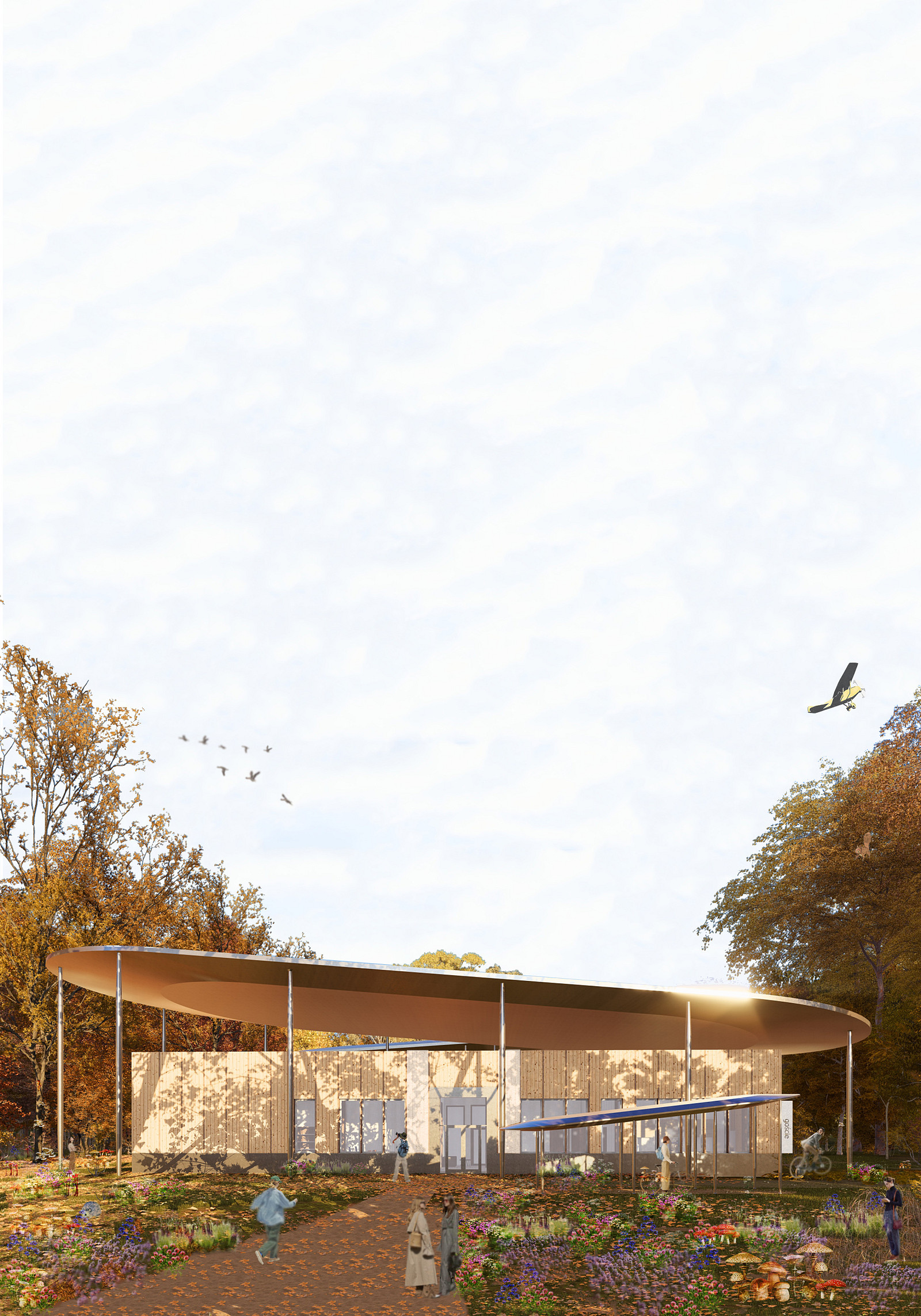
after rain... Biomaterials factory in Poland. Using mycelium as an insulating material


Idea projektu
This project explores the architectural potential of mycelium-based biomaterials as a sustainable alternative to conventional construction materials. It responds to the environmental impact of the building industry, which remains a major source of carbon emissions, resource depletion, and waste generation.
The central idea is to treat mycelium not as a finished product, but as a living process capable of forming biodegradable building components through natural growth. By combining fungal mycelium with agricultural waste substrates, low-carbon materials can be produced with minimal energy use.
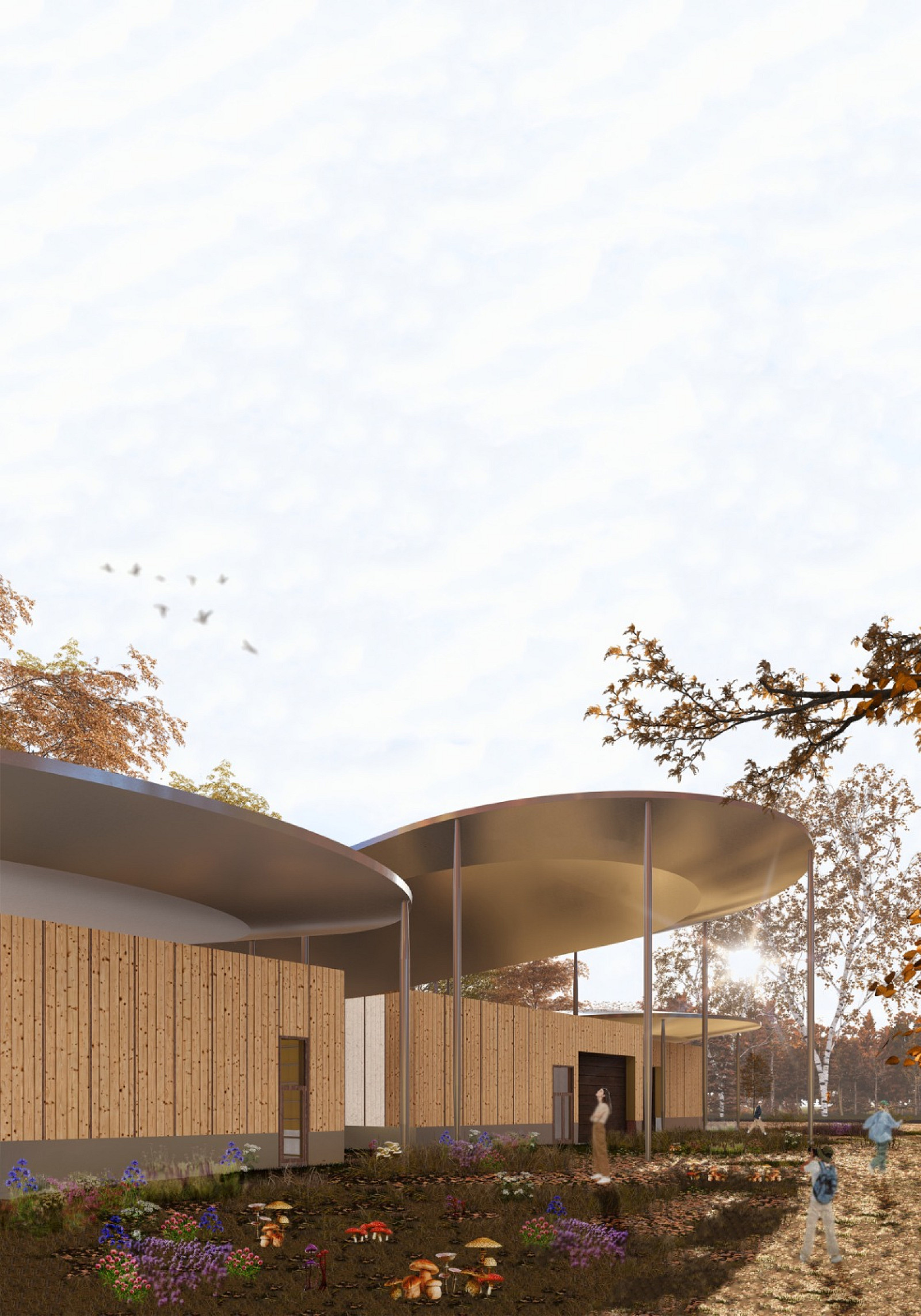
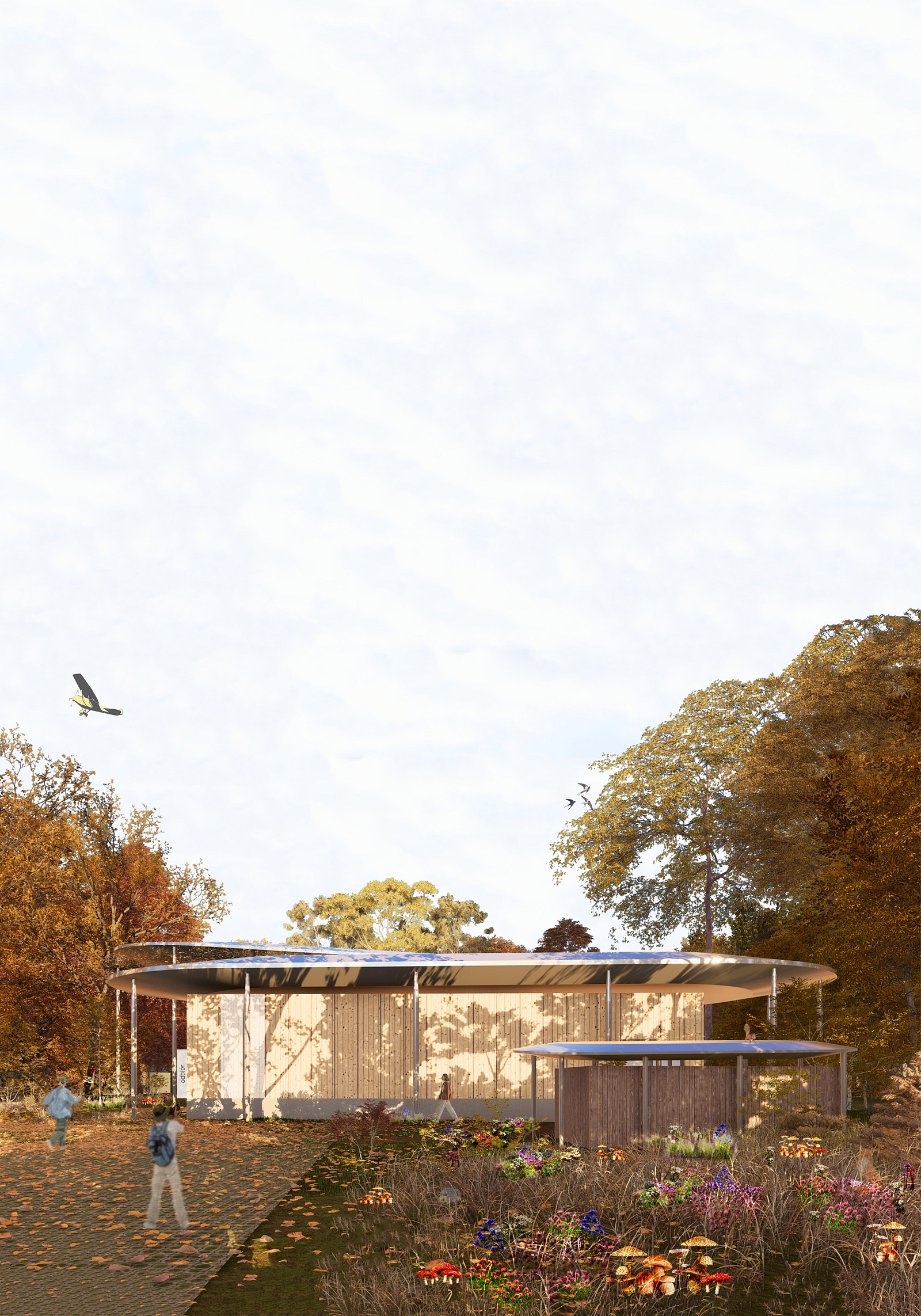
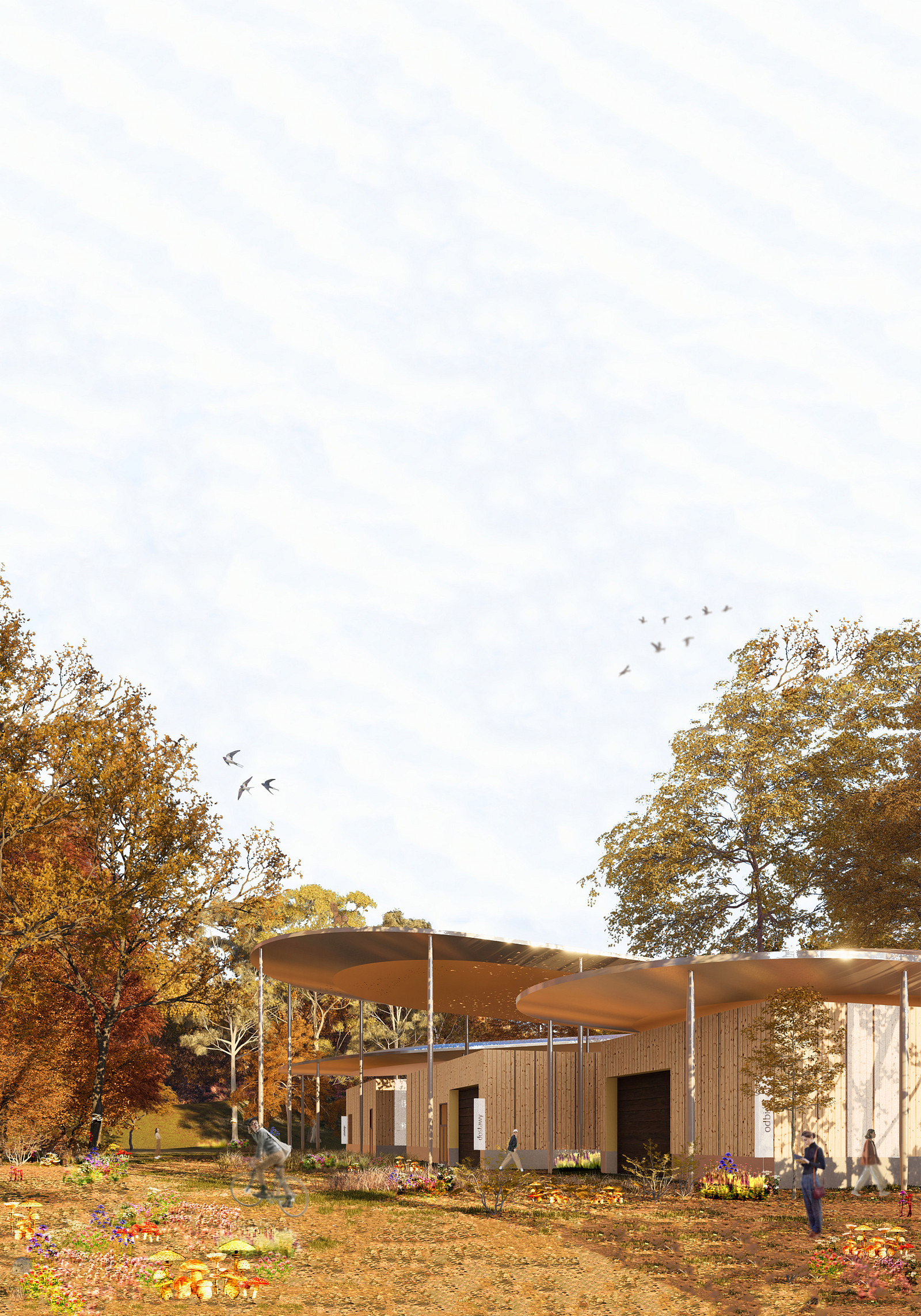
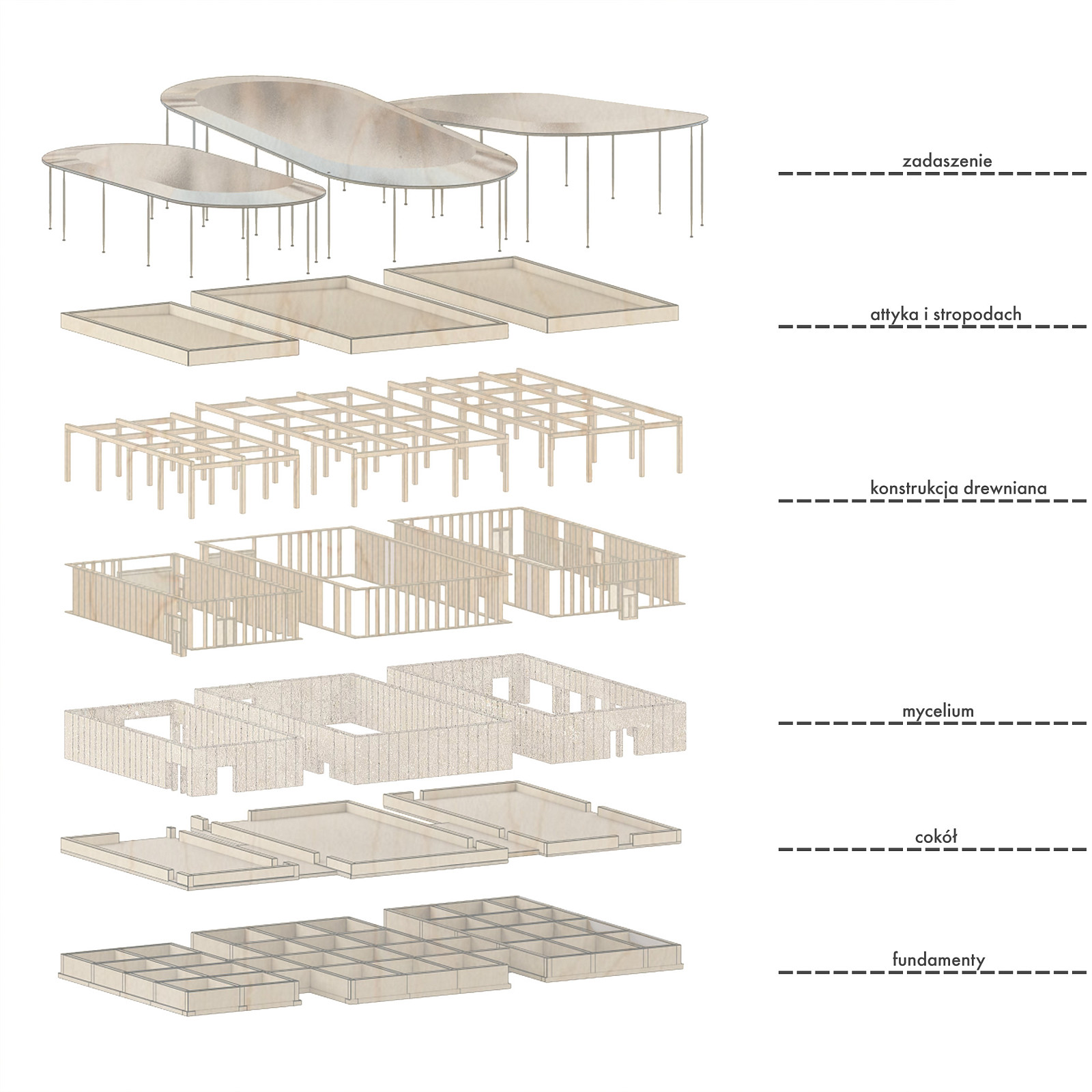
The project proposes a manufacturing complex dedicated to the cultivation and processing of mycelium-based construction elements. Its spatial organisation follows the production cycle, integrating research, fabrication, storage, and administration. A key research outcome is the development of an innovative wall system combining mycelium infill, timber structure, ventilated façades, and breathable clay plasters to improve durability and moisture control.
The main objectives of the project are:
To test mycelium as a viable material for building applications.
To reduce the environmental footprint of construction.
To transform agricultural waste into valuable products.
To develop architecture adapted to biological materials.
To promote circular economy principles and low-energy production.
Ultimately, the project presents a vision of architecture based on growth, regeneration, and cooperation with natural processes.
Popis projektu
The design of an innovative manufacturing complex dedicated to the research, cultivation, and production of mycelium-based construction materials. The proposal combines architectural, technological, and environmental strategies to create a functional industrial facility based on principles of sustainability and circular economy.
The project covers the development of a complete spatial and functional programme consisting of production halls, research laboratories, storage areas, administrative offices, staff facilities, and technical service zones. The internal layout is organised according to the sequence of the manufacturing process, including substrate delivery, preparation, inoculation, growth, drying, storage, and distribution of finished products.
The solution also includes the design of building envelopes using timber structural systems and experimental wall assemblies incorporating mycelium as an insulating material. Particular attention is given to moisture protection, durability, thermal performance, and fire safety through the use of ventilated façades, breathable clay plasters, protective roof overhangs, and appropriate material zoning.
The project further addresses site development, circulation systems, loading and service access, rainwater management, renewable energy integration, and landscape design. Technical, environmental, and aesthetic aspects are considered as an integrated whole.
The scope of the project therefore extends beyond a standard industrial building proposal, presenting a prototype model for future bio-based manufacturing architecture and the practical implementation of mycelium technologies in the construction sector.
Technické informace
The project consists of the design of a manufacturing complex for the cultivation, research, and production of mycelium-based construction materials. The facility is intended as a low-impact industrial development combining timber construction systems, sustainable material solutions, and energy-efficient technical infrastructure.
The complex is composed of several functionally independent but operationally connected zones: production halls, laboratories, warehouse spaces, administrative offices, staff facilities, and technical service areas. The spatial arrangement follows the technological production process, ensuring efficient circulation of raw materials, personnel, and finished products.
The primary structural system of the main buildings is based on prefabricated timber elements, including columns, beams, and roof structures. Selected auxiliary and protective external structures are designed in recycled steel. Foundations are designed as reinforced concrete strip footings and pad foundations, depending on structural loads and support conditions.
External wall assemblies consist of timber-framed partitions with bio-based insulation, including experimental mycelium infill panels in selected areas. In zones with increased fire or technical requirements, mineral wool insulation is applied. Wall systems are complemented by ventilated façade cladding, breathable internal clay or lime plasters, and moisture-control layers.
Roof structures are designed as lightweight pitched steel or timber roofs with integrated rainwater drainage systems. Rainwater is collected through gutters and internal downpipes located within external steel columns and directed to retention tanks for reuse. Selected roof surfaces are prepared for photovoltaic panel installation.
Vytvořeno pomocí:


Copyright © 2026 INSPIRELI | All rights reserved. Use of this website signifies your agreement to the Terms of Use, Privacy Policy, and use of cookies.