The Philippine-ASEAN Cultural Center: A Platform for Southeast Asian Cultural Convergence in the World


Idea projektu
Culture is the soul of a nation. It is one of the identities a country has for generations. In Southeast Asia, the culture is diverse, creating complex identities that make up each country. However, in the Philippines, the awareness and appreciation of ASEAN’s shared heritage remain limited, resulting in a fragmented understanding and cultural disconnect. This project, envisioned as a "Living Cultural Lab", the Philippine–ASEAN Cultural Center aims to address the current limited awareness and fragmented understanding of ASEAN's shared heritage within the Philippines. By recognizing this cultural disconnect, this study proposes to utilize architecture as a vital medium to facilitate cultural exchange, dialogue, and education. The goal is to create an environment where Southeast Asian identity can be experienced, learned, and celebrated, inspired by the region's cultural vibrancy and the growing need for inclusive cultural spaces.
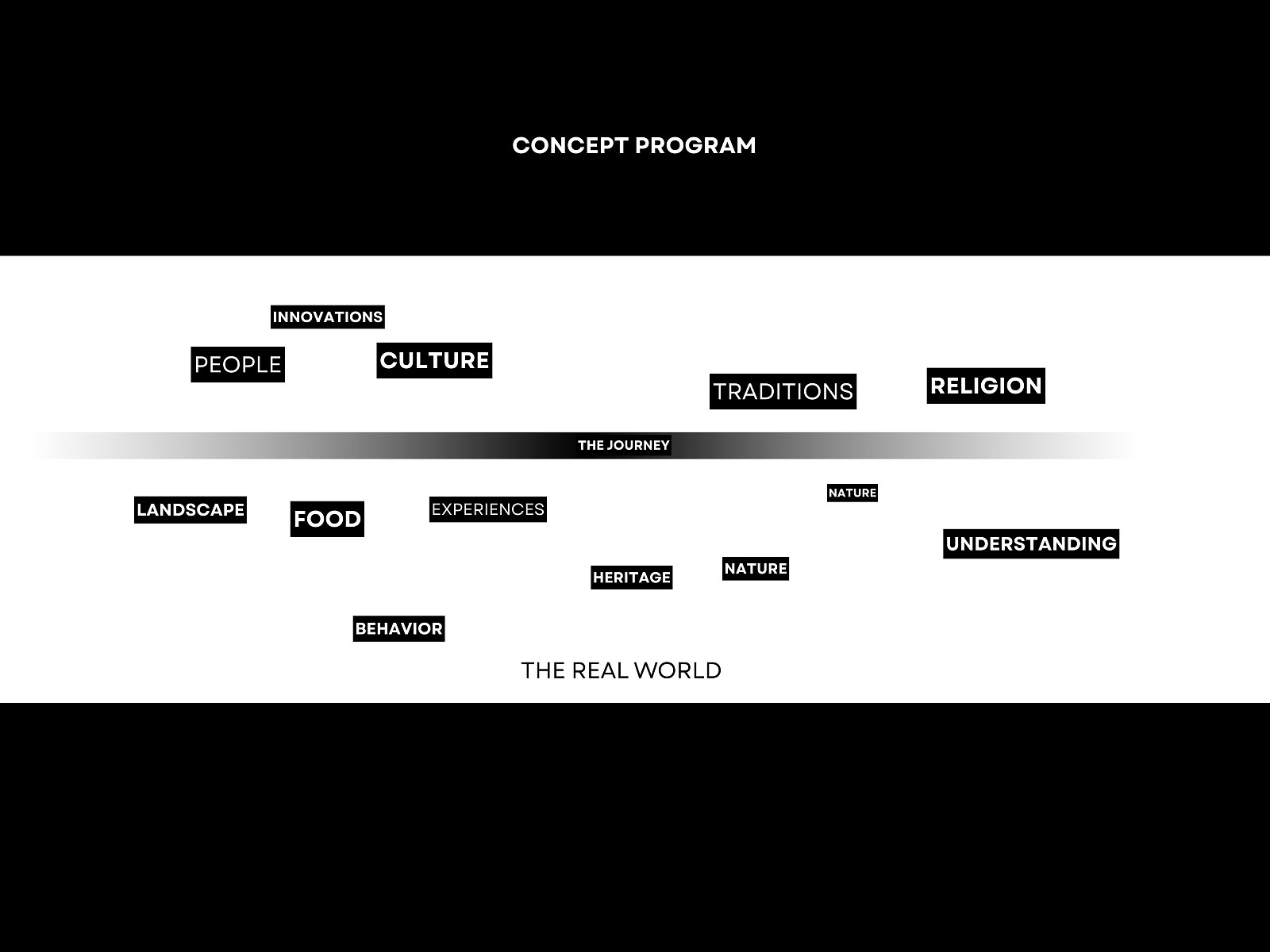
This architectural proposal is guided by the concept, "Culture Flows Here," drawing inspiration from the long history of river-based civilizations in Southeast Asia. This aspiration is realized through a sustainable and climate-responsive approach, seamlessly blending heritage, creativity, and innovation. The place is specifically designed to inspire learning, creativity, and collaboration among nations. In the end, this project goes beyond just a mere physical structure, envisioning a living platform dedicated to regional unity, sustainability, and cultural evolution. As a future architect, the researcher aims to contribute to cultural awareness and sustainable design by creating spaces where heritage, nature, and innovation coexist harmoniously for generations to come.
Popis projektu
Guided by the long-term vision of ASEAN called "ASEAN 2045: Our Shared Future," where it is envisioned as a people-centric, sustainable, and dynamic region, strengthening the regional identity and the collective growth by the year 2045.
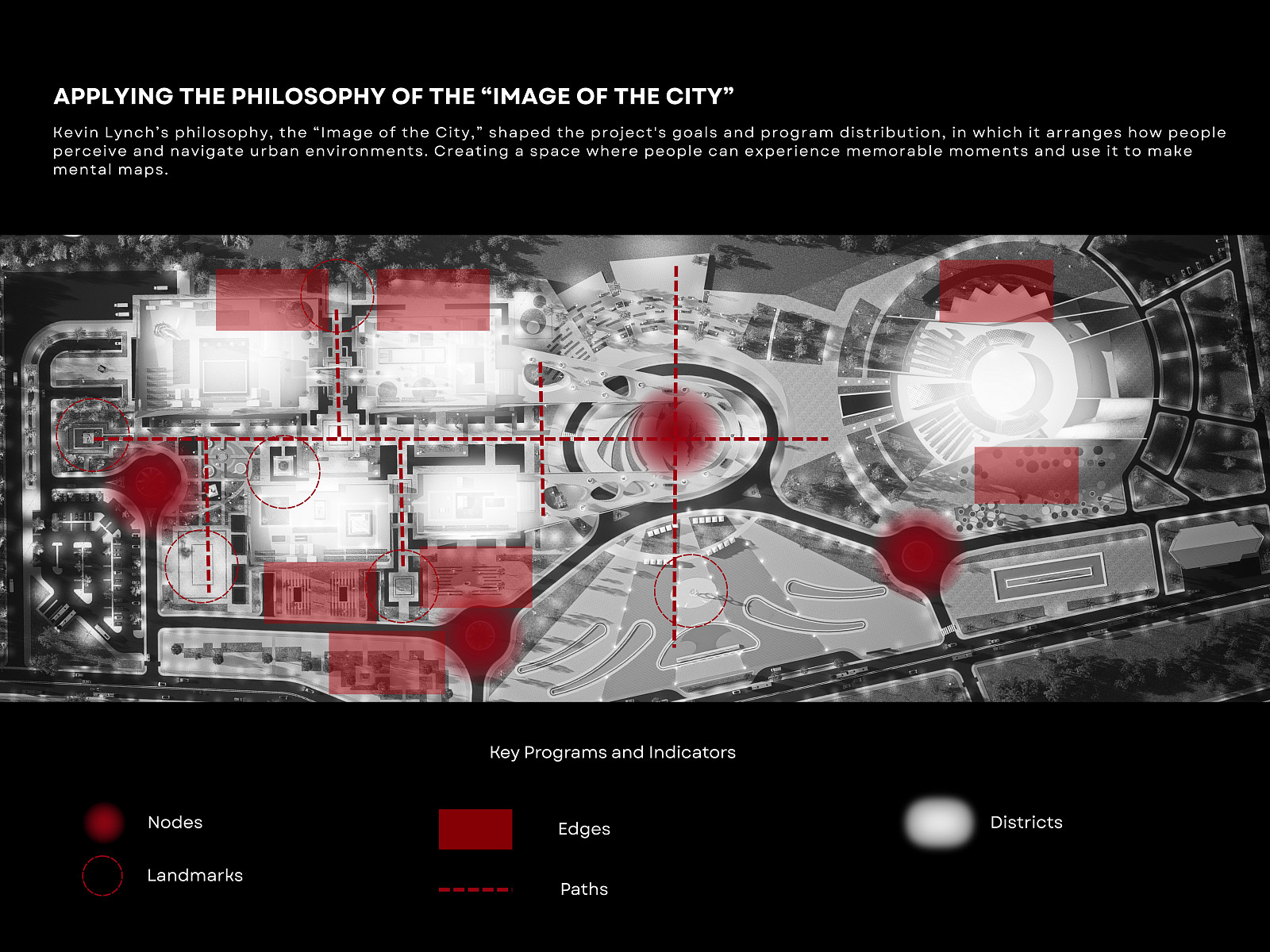
The project is supported by Kevin Lynch’s philosophy in “Image of the City,” in which he points out how individuals perceive or recall features in urban spaces. He highlighted that the most distinctive elements in the urban landscape are paths, nodes, edges, districts, and landmarks, which give shape to individuals’ mental representations of the city.
The project caters to various functions, such as domestic and international exchanges, cultural research and preservation, content creation, exhibitions, performances, education, and festivals, which are being implemented and showcased across various spaces within the centre.
The centre is divided into three thematic zones, which correspond with its goals: Evolving, Connecting, and Rooting. Evolving forms for development and innovation. Connecting is through forms of influence and exchange. Rooting is giving significance to our past and traditions. It is also divided into 6 sub-zones based on its functional purpose: Production, Exhibition, Learning, Administrative, and Public Zones.
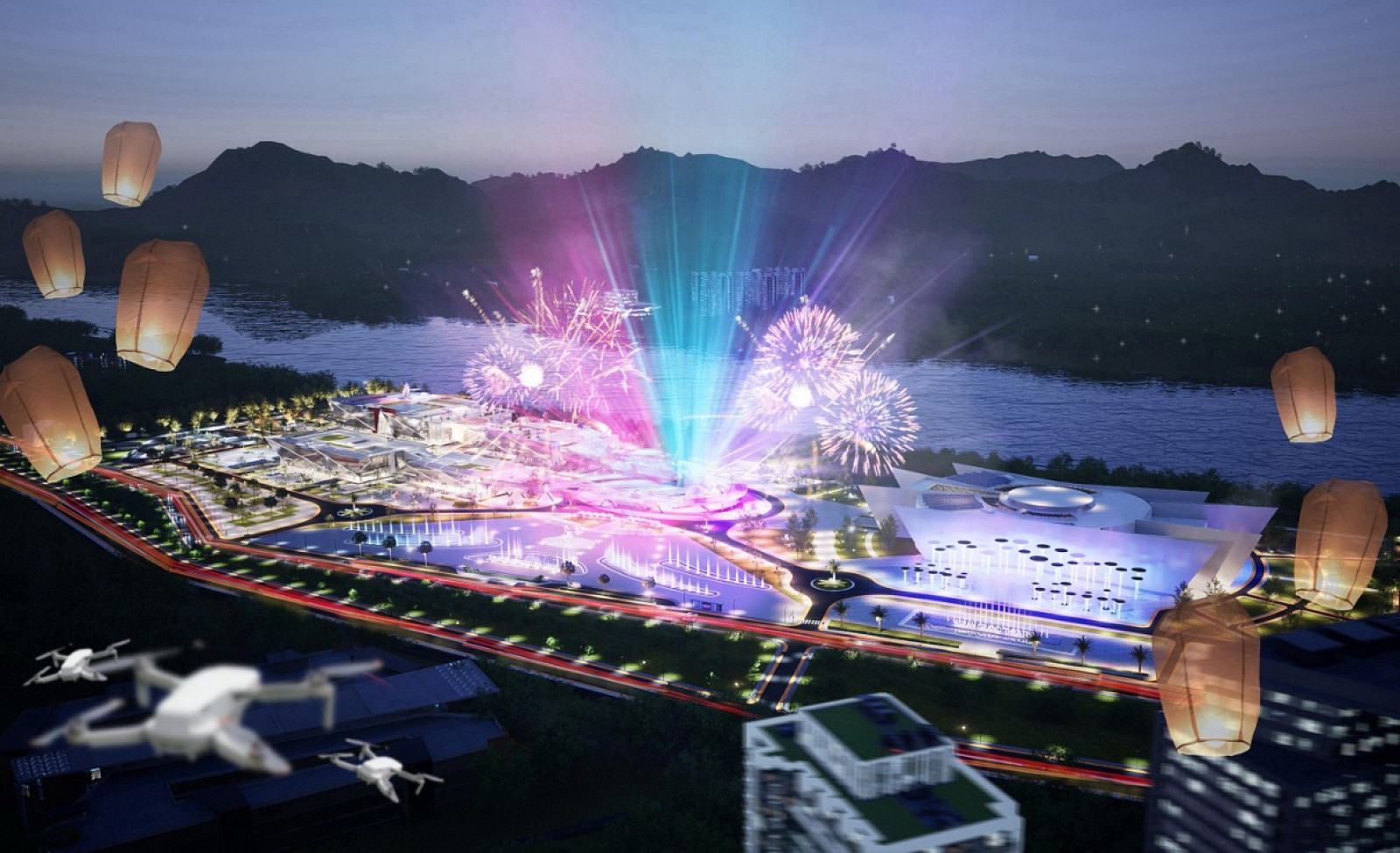
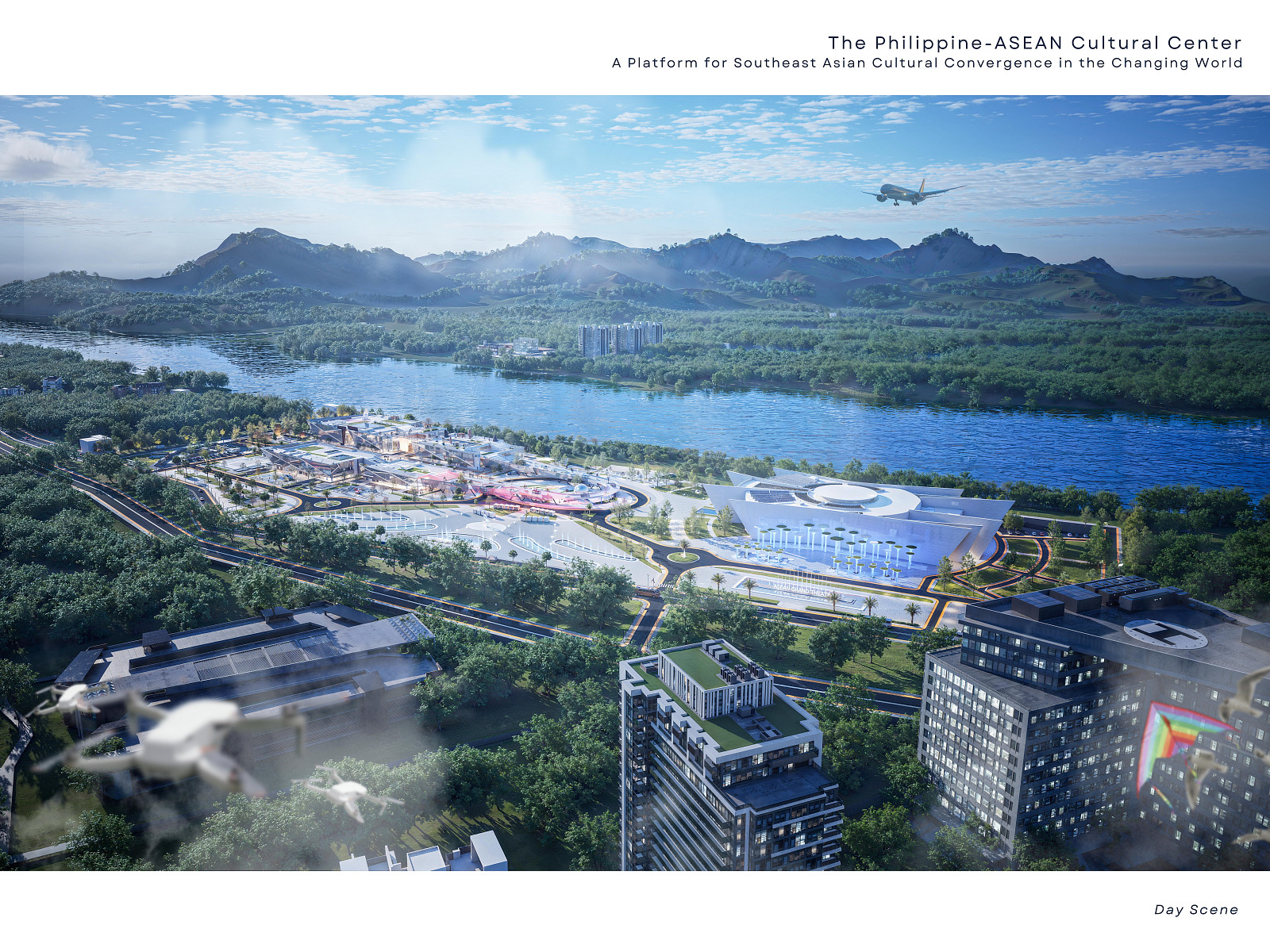
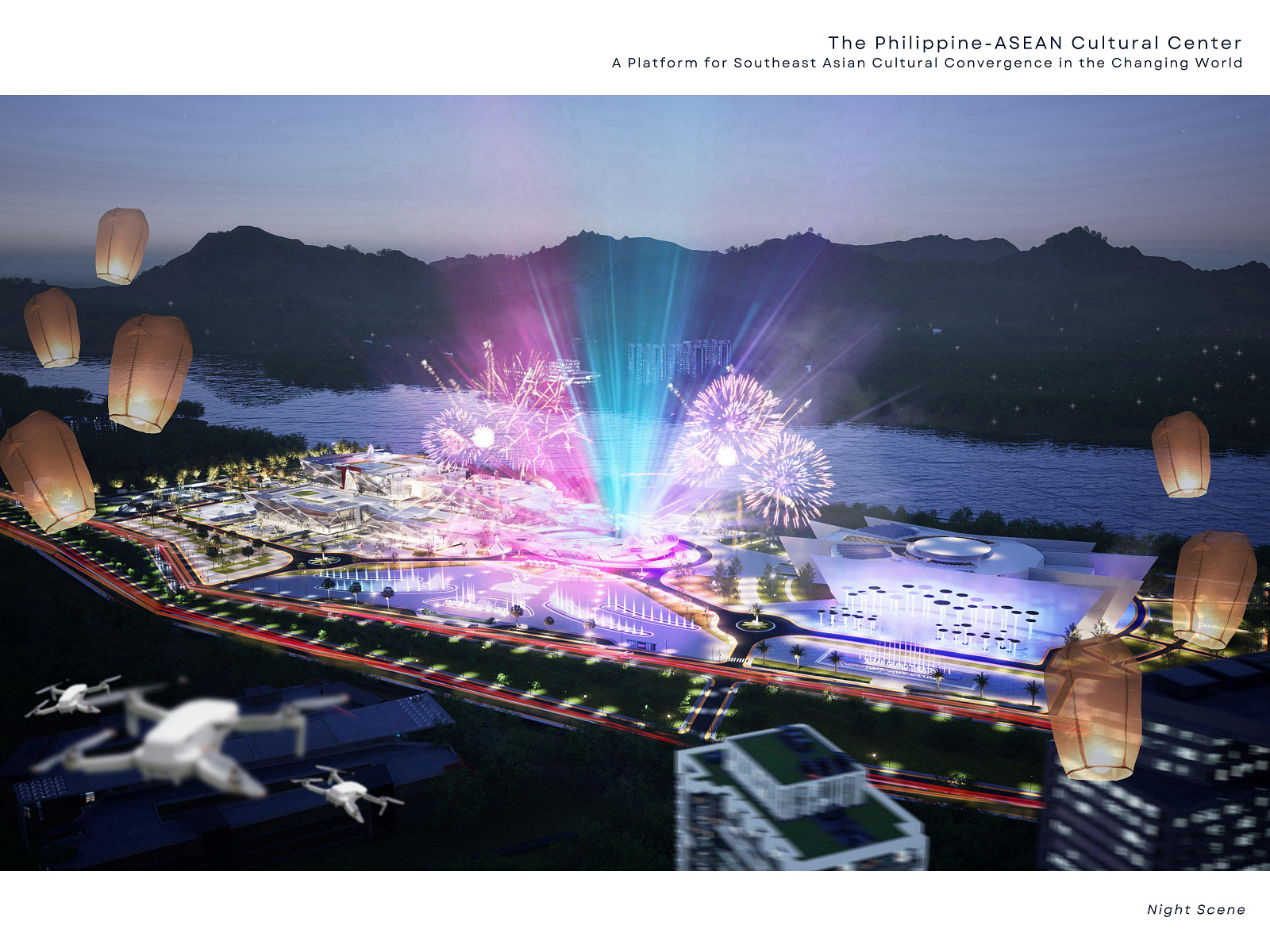
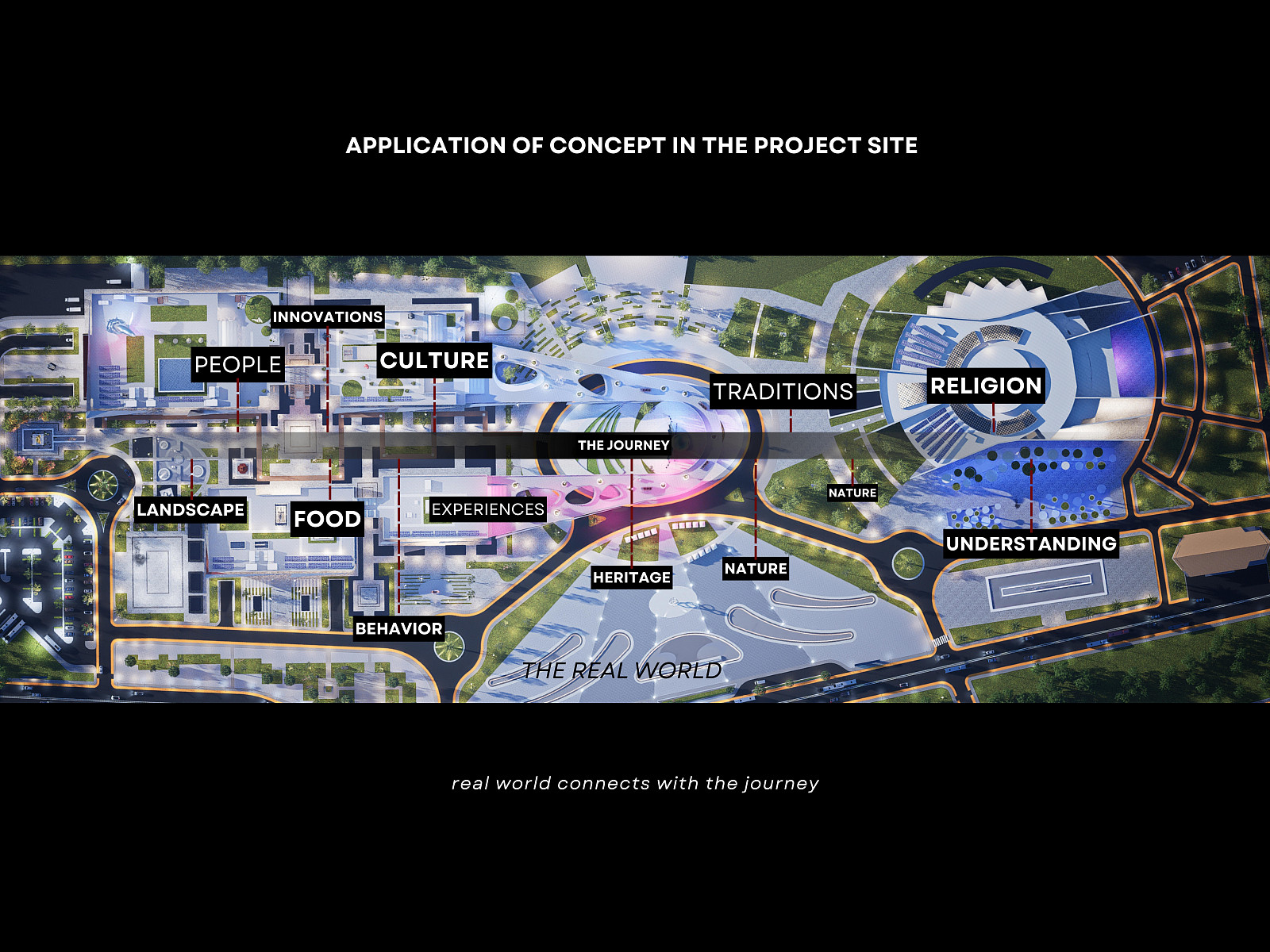
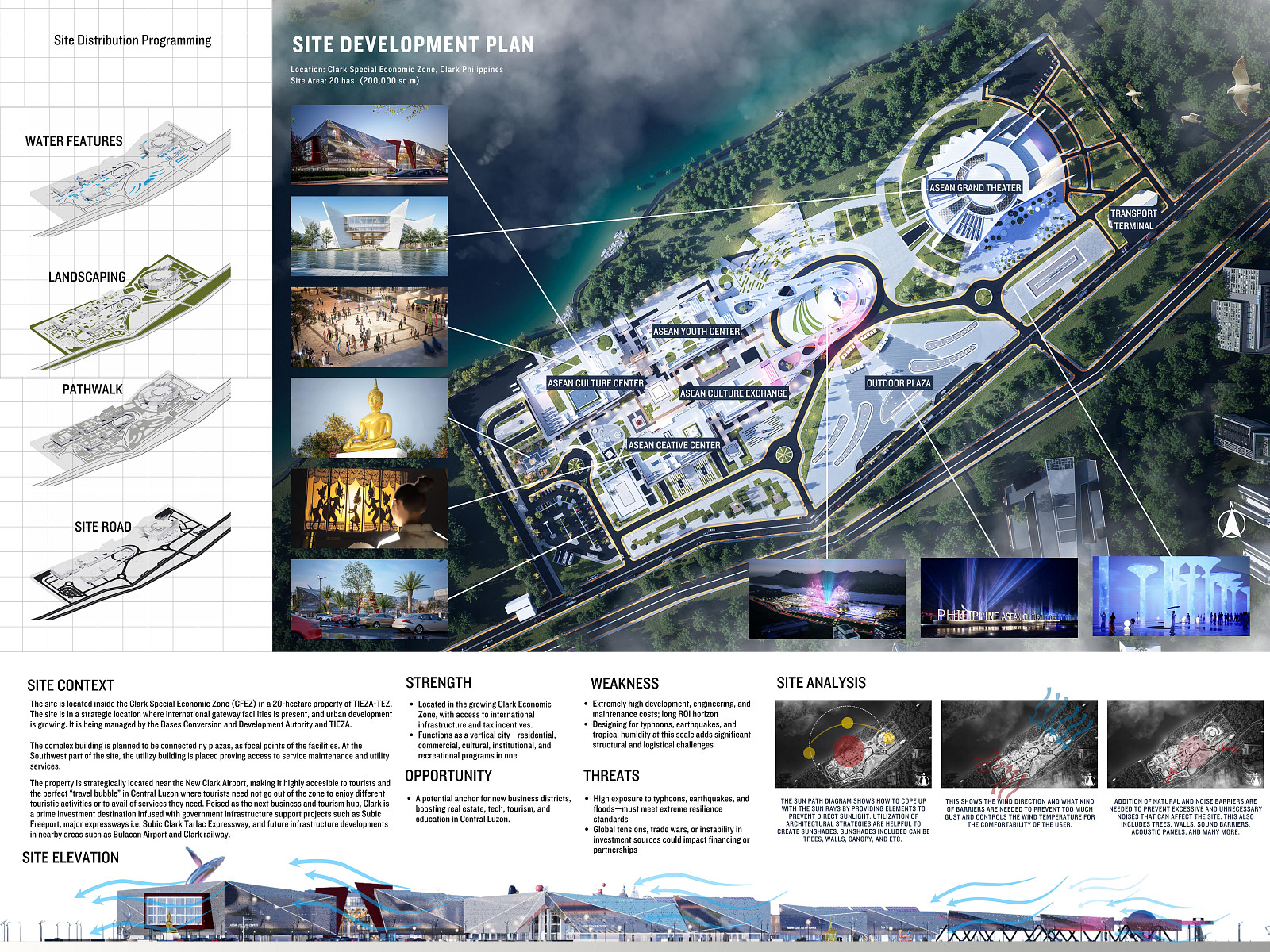
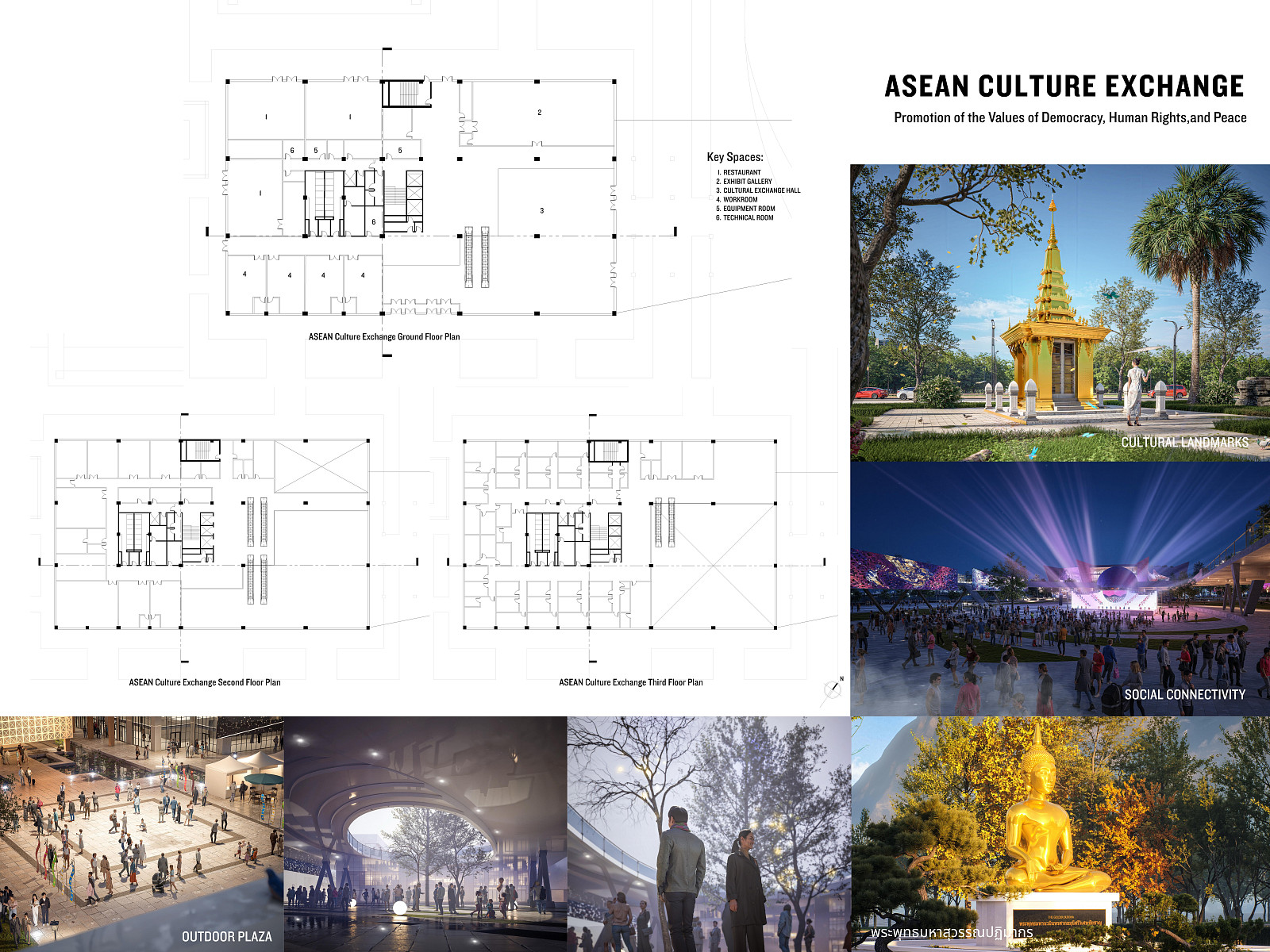
There are 5 Main Buildings that complete the project. The ASEAN Culture Center, ASEAN Creative Center, ASEAN Youth Center, ASEAN Culture Exchange, and the ASEAN Grand Theater. Between these spaces are open plazas and open grounds that are big enough to cater to a large volume of users. At the center of the site is a space for gathering and big events, which promotes social connectivity and acts as the focal point of convergence.
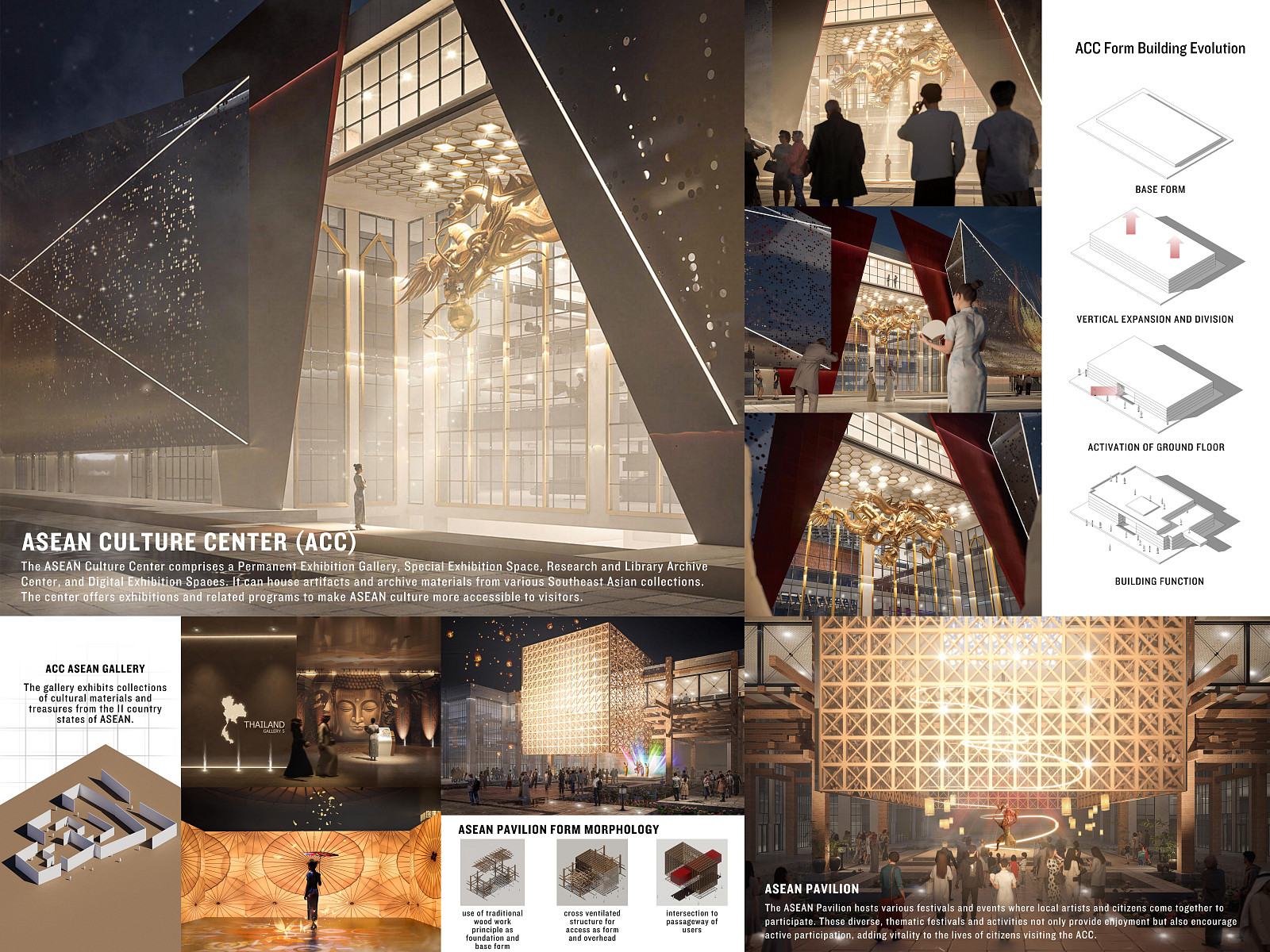
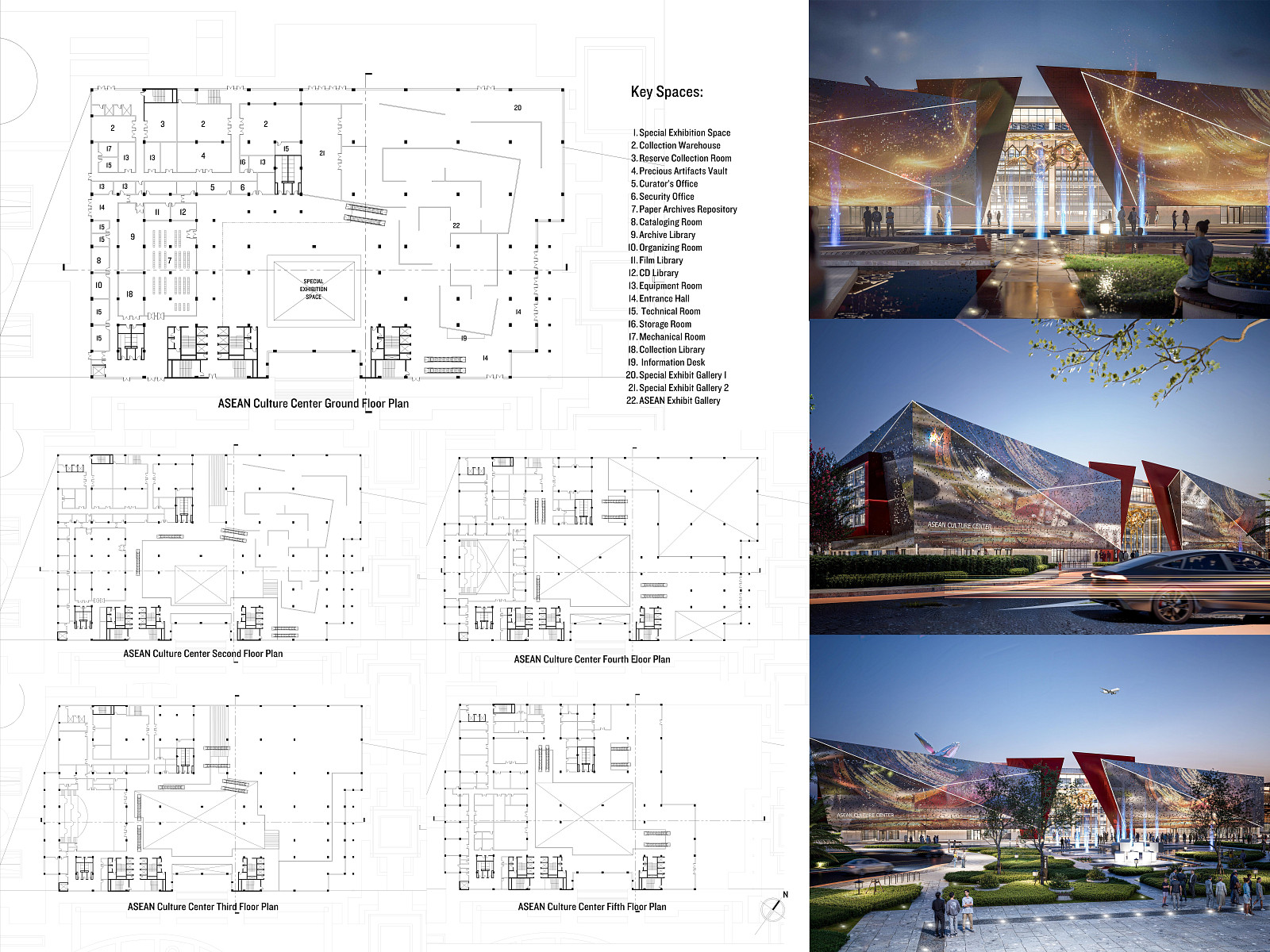
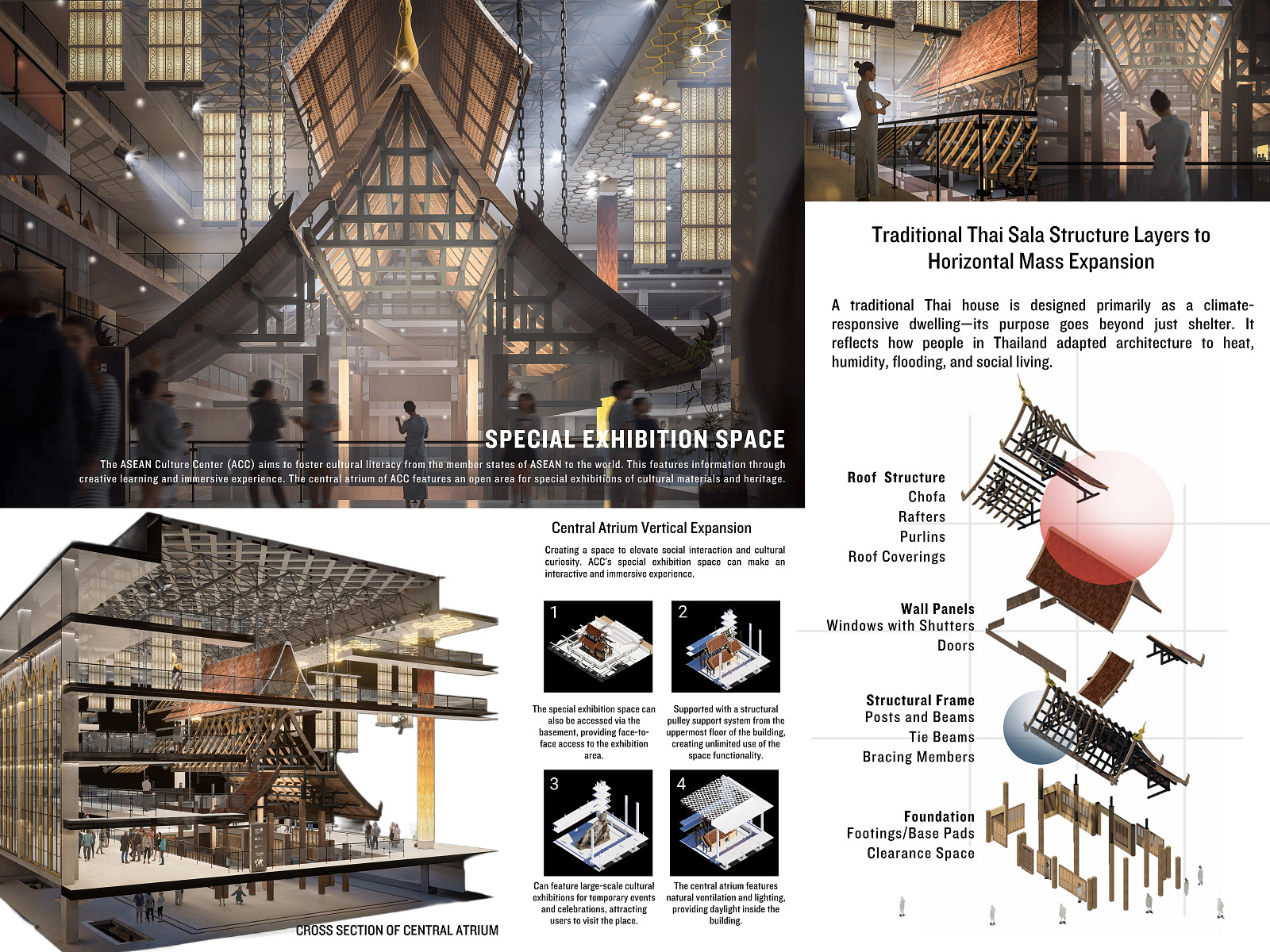
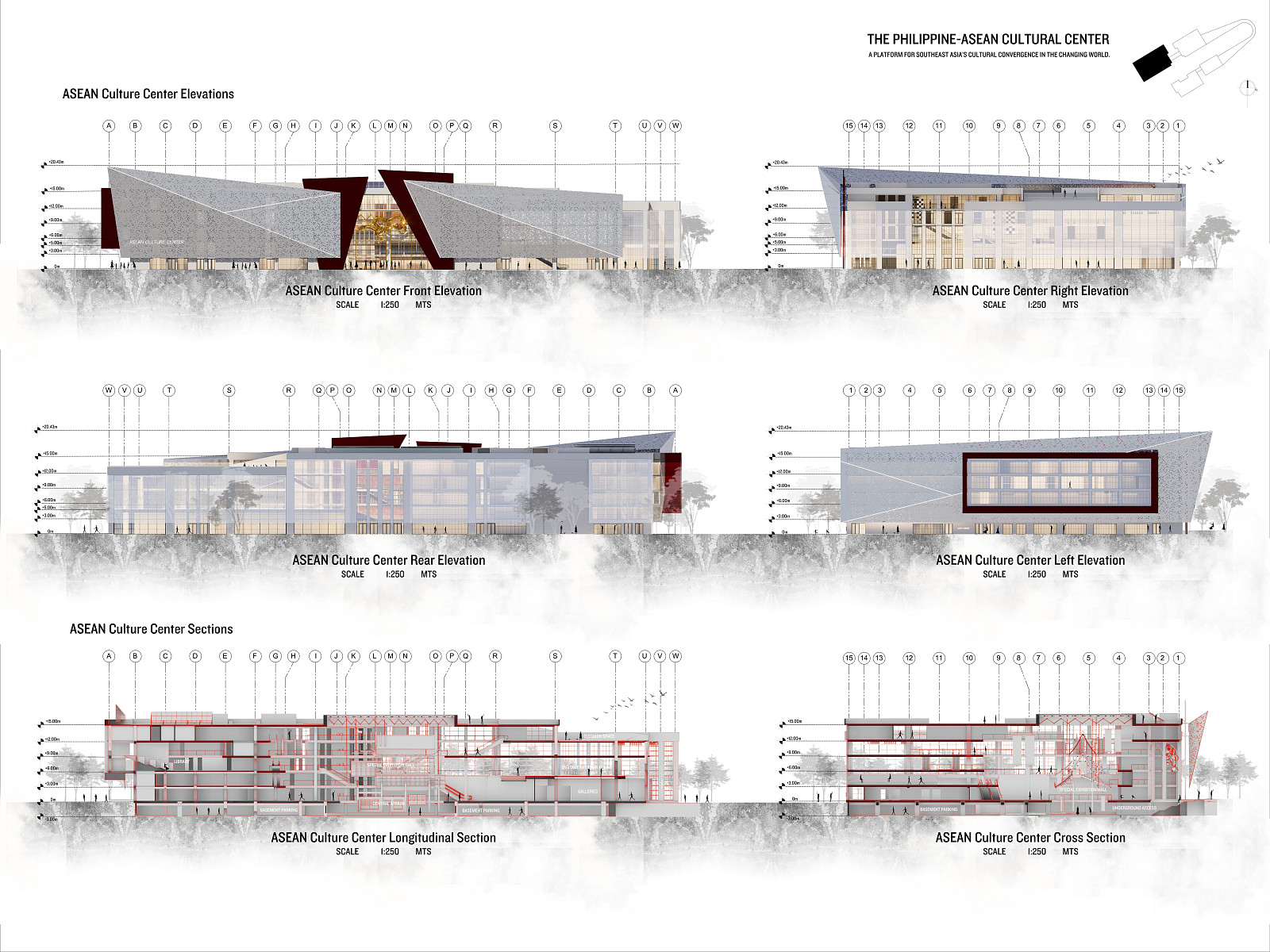
The ASEAN Culture Center will be a place for promoting a deeper understanding and creative utilisation of ASEAN cultures through learning and conducting research, organising and preserving cultural resources. With these tasks, it develops exhibitions, browsing, and interactive content, along with related programs such as education. It is a five-storey building that offers key spaces such as a Permanent Exhibition, Galleries, a special exhibition hall, a Library, a Digital Innovation Hall, an Archive and Reading Centre, and Conference Halls.
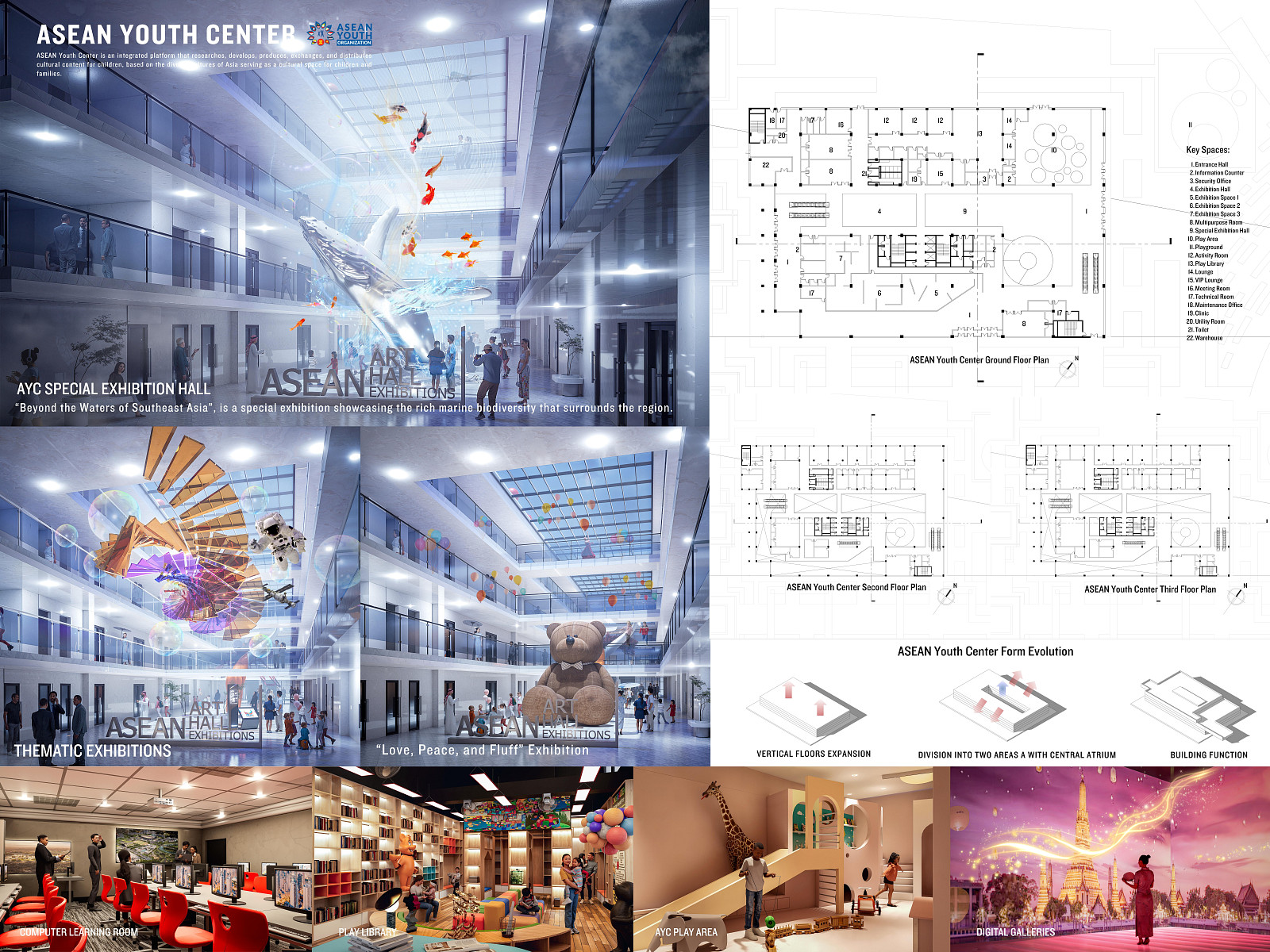
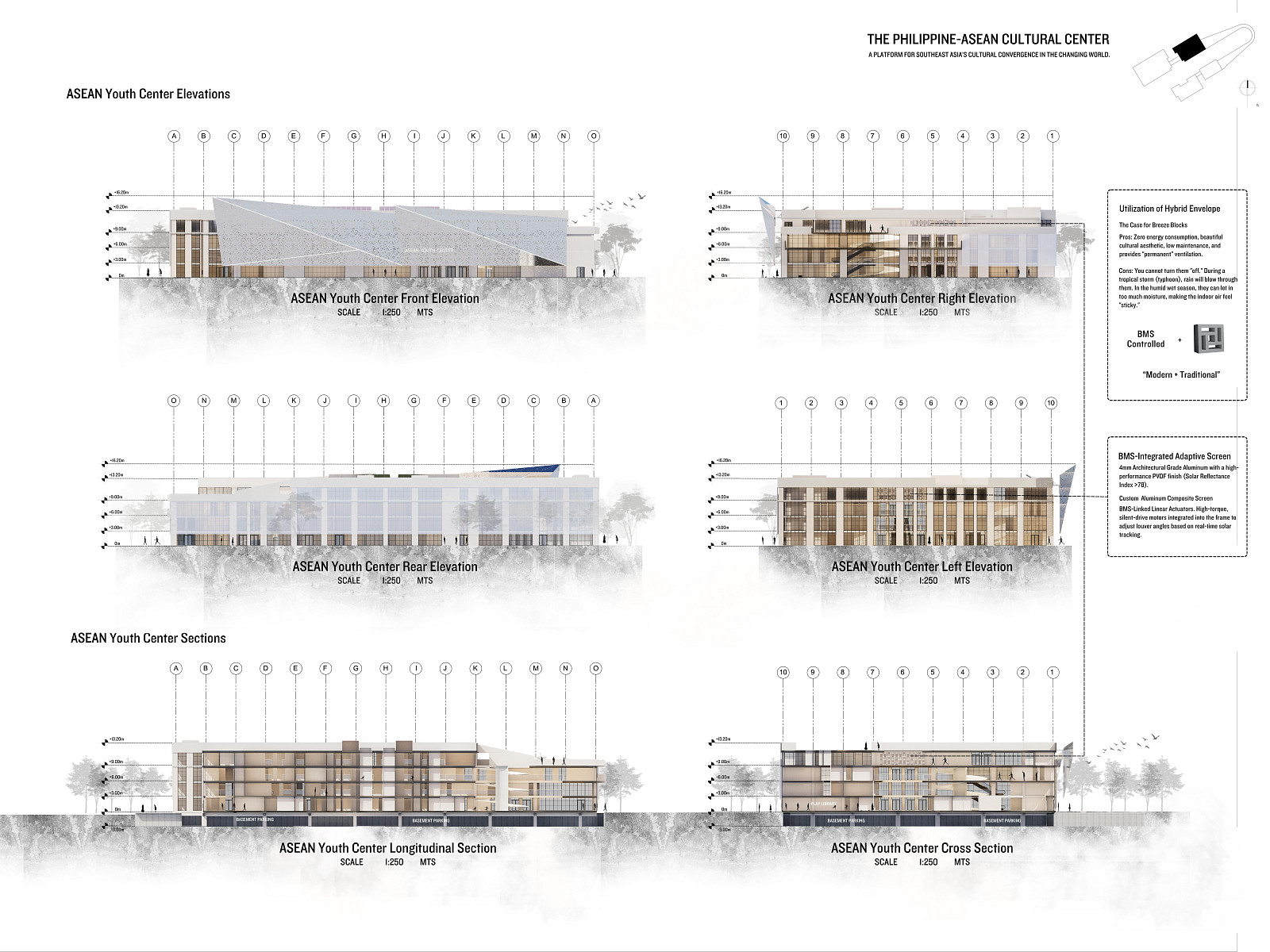
The ASEAN Youth Center is an integrated platform for research, development, exchange, and distribution of cultural content for children, based on the diverse cultures of Southeast Asia, serving as a cultural space for children and families. It also houses the ASEAN Academy and ASEAN Youth Philippines, a non-profit and non-governmental organization established to promote international understanding and goodwill parallel to the ASEAN Motto, and constitutes one vision, identity, and community.
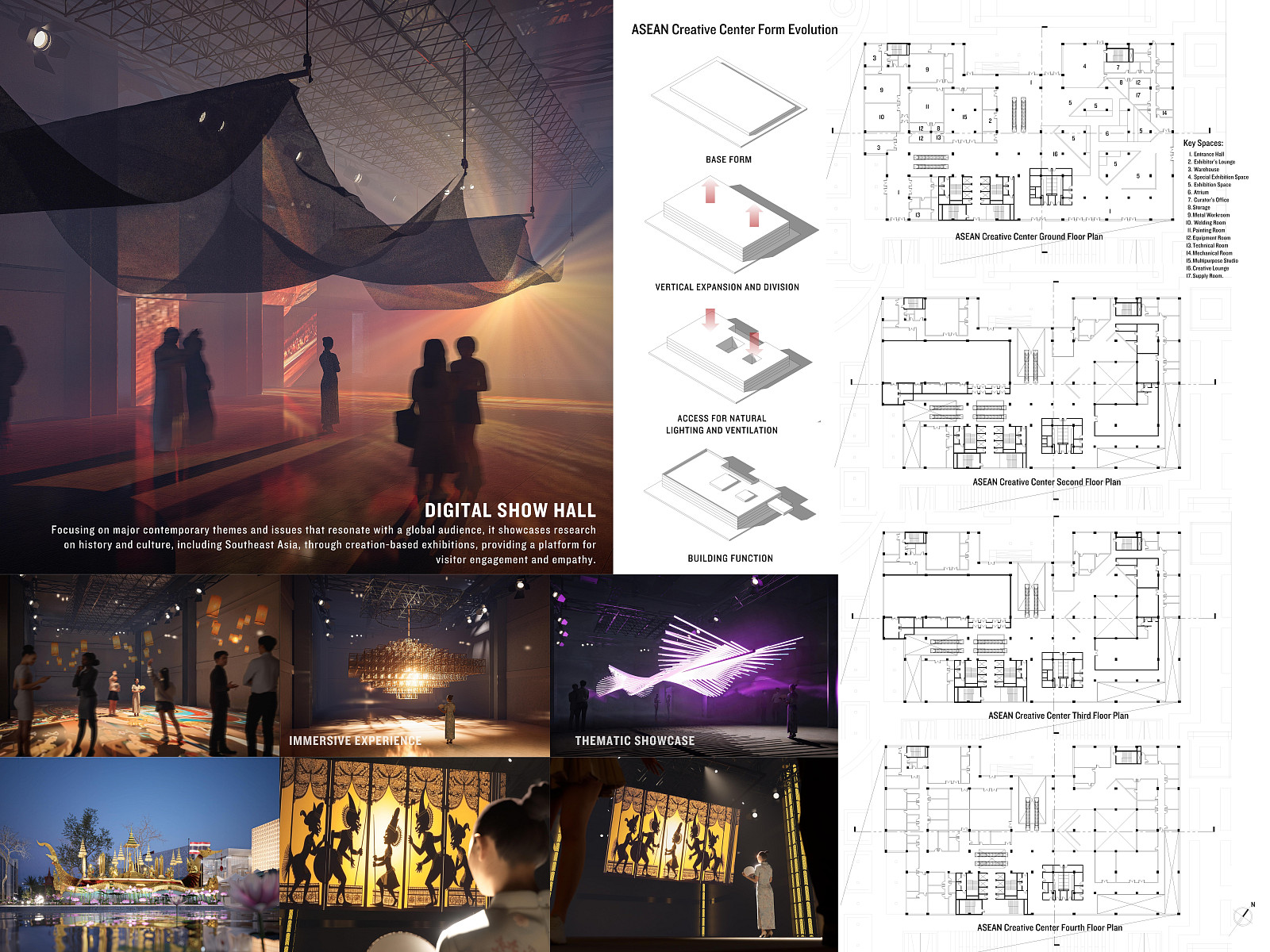
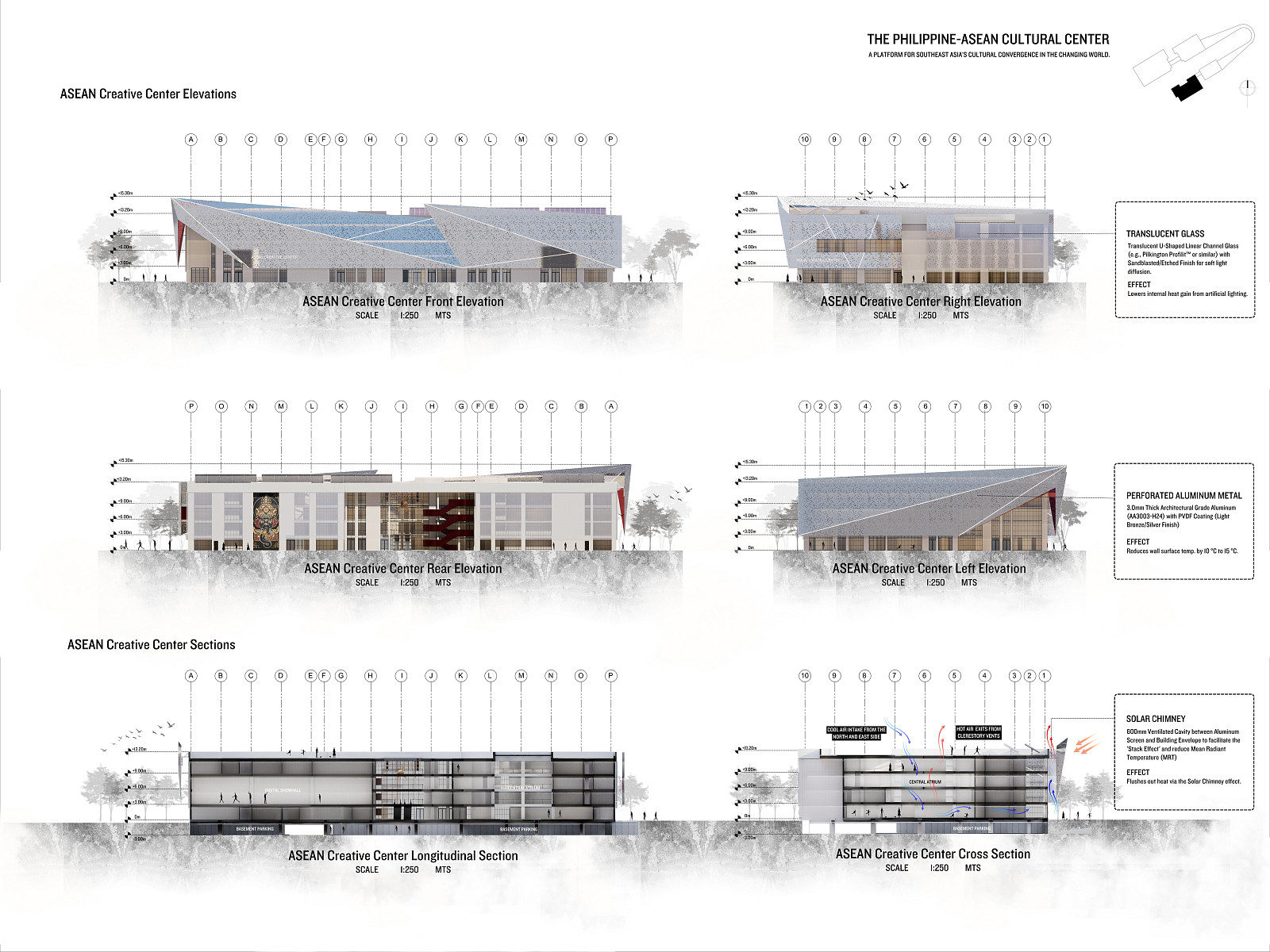
The ASEAN Creative Center is a hub for the creation of convergence content through technology research, experimentation with creative ideas, and production of tangible content. This space includes workshops, galleries, exhibitions, artist studios, and a digital show hall. It features a rapid prototyping studio for both digital and analogue-based production, such as sculptural works and prototypes in wood working, metal processing, and machinery.
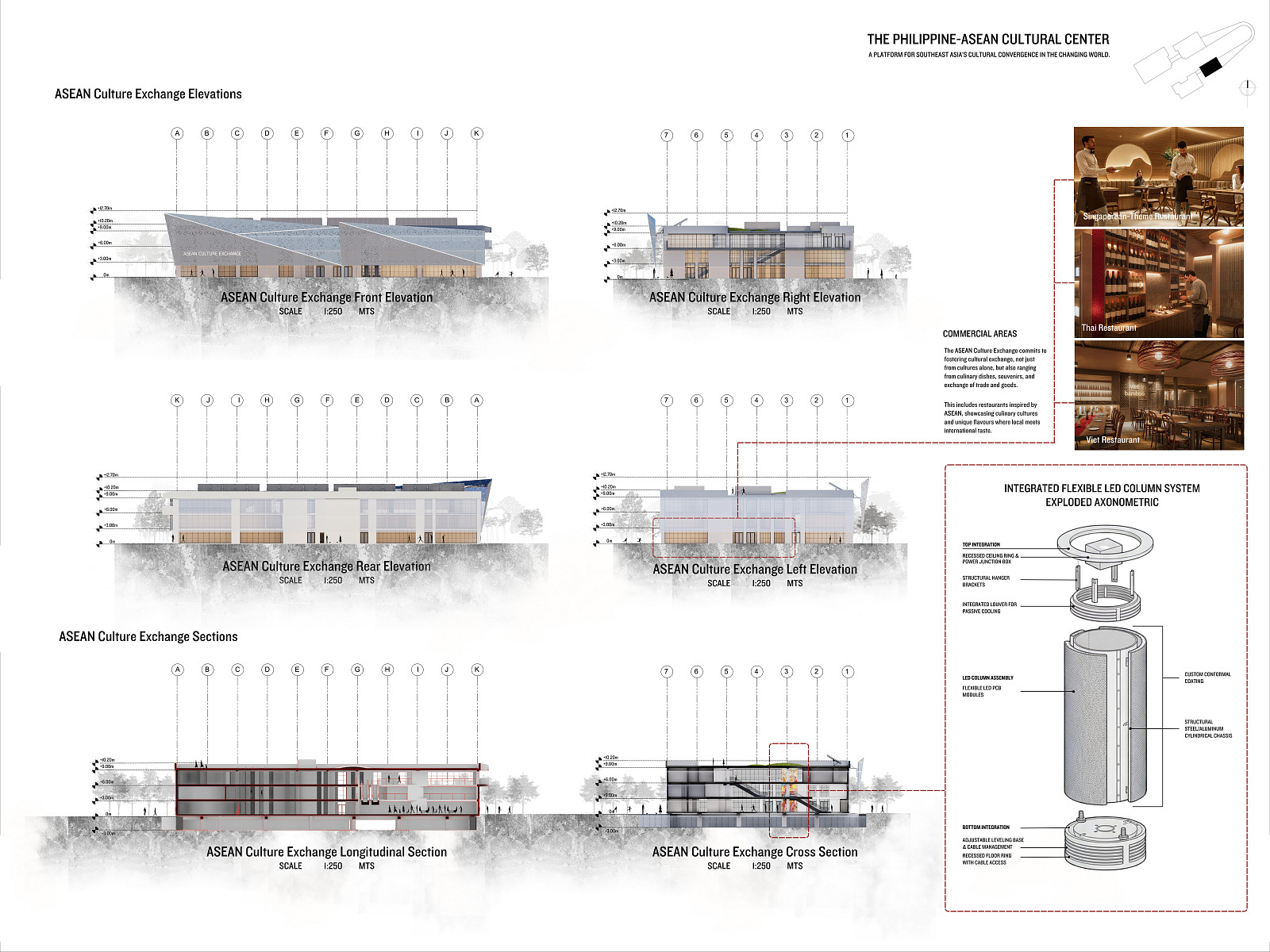
ASEAN Culture Exchange focuses on the promotion of the values of Democracy, Human Rights, and Peace. It features a large Cultural exchange hall in celebration of cultural exchange events and projects. This also houses the administrative offices that manage the site, including the Office of the President and the organization.
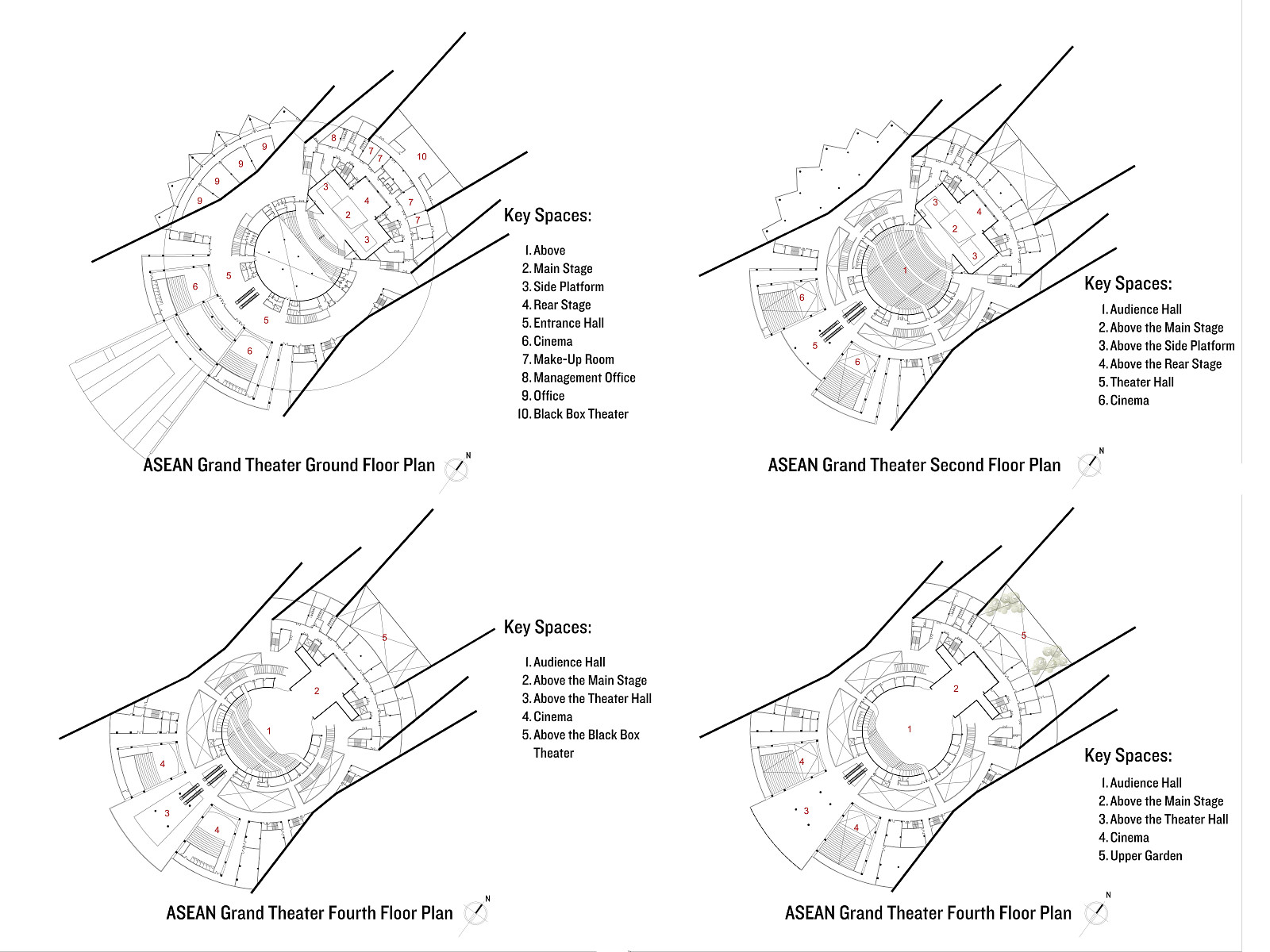
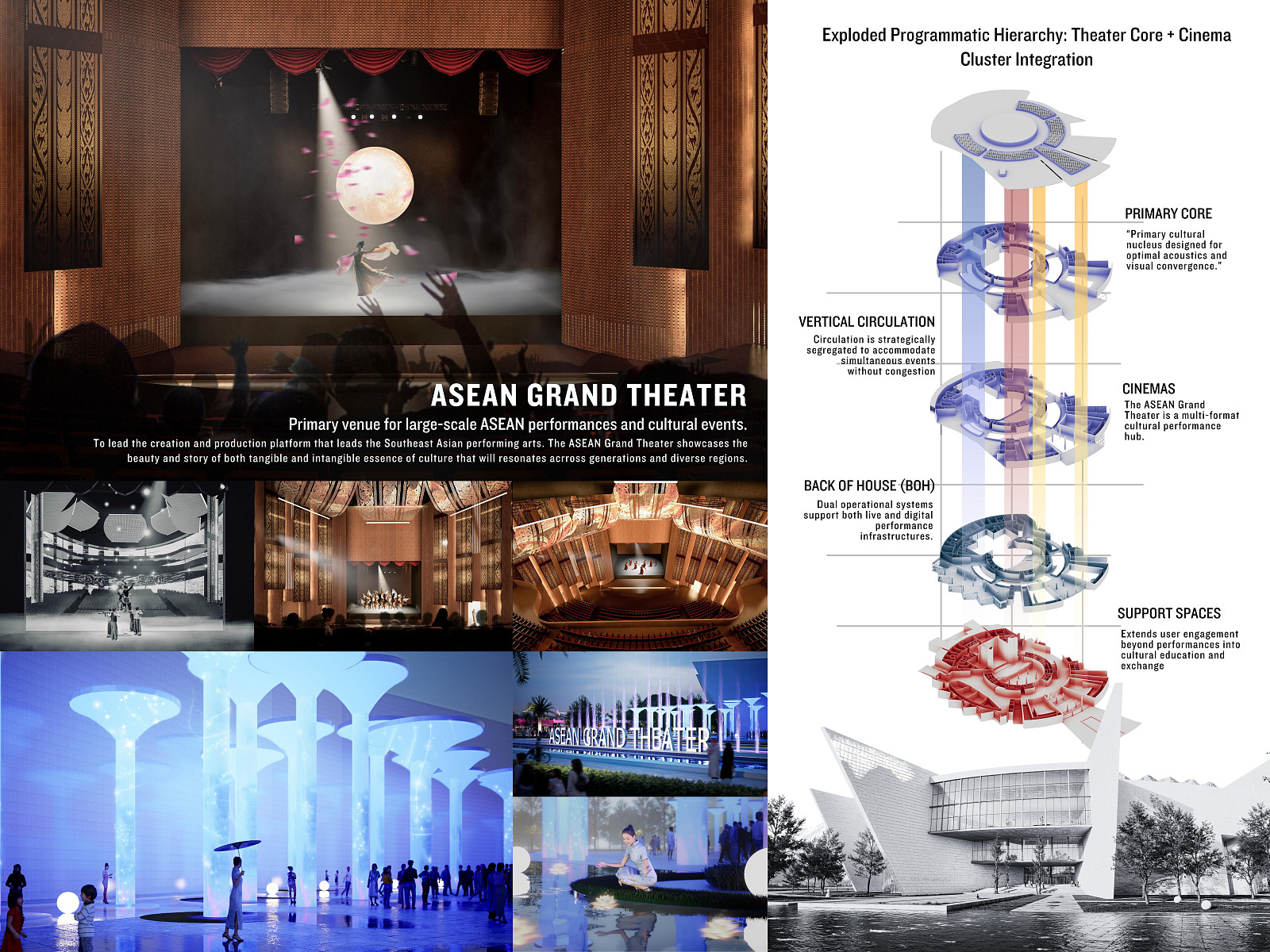
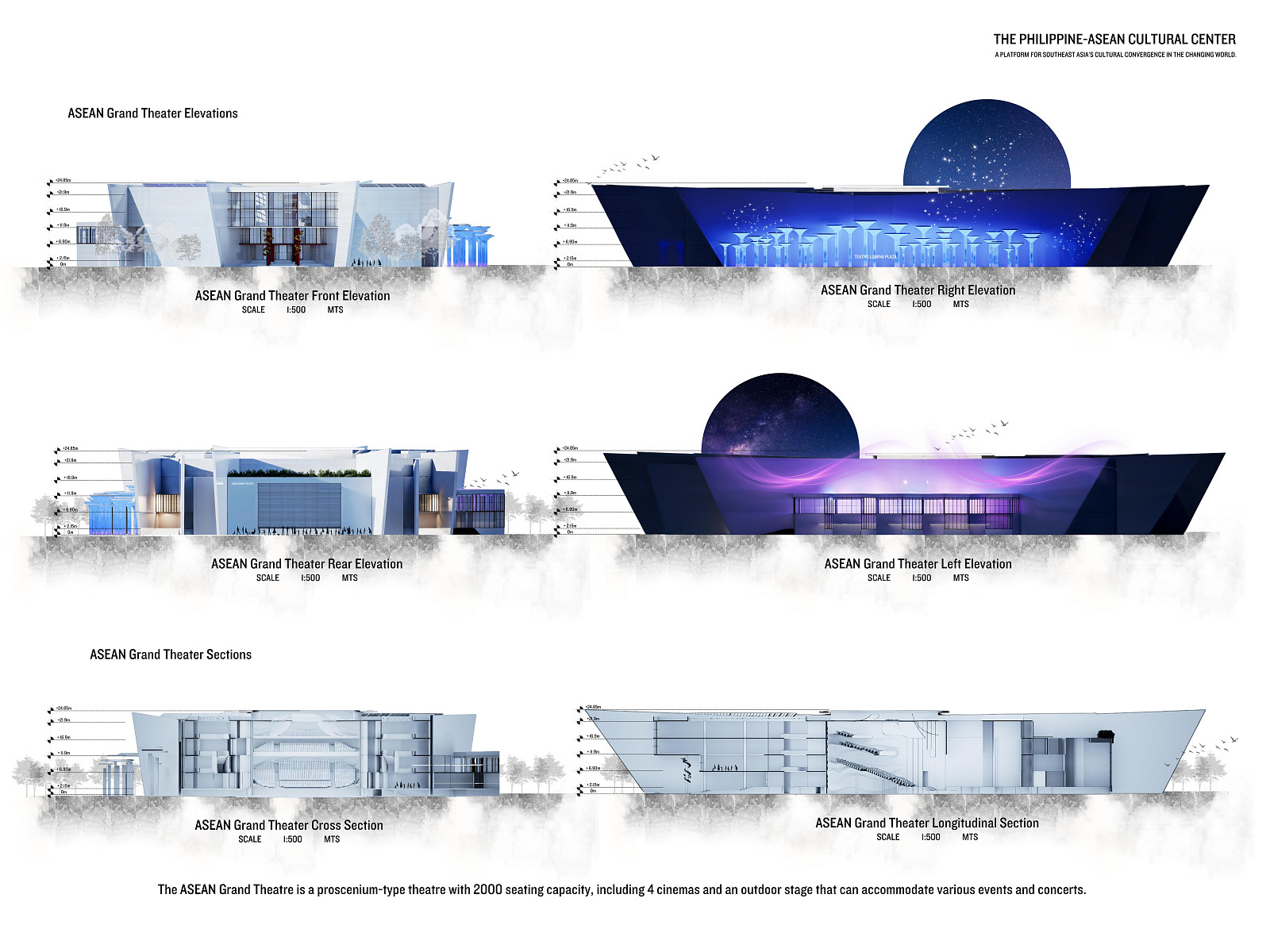
The ASEAN Grand Theatre is a proscenium-type theatre with 2000 seating capacity, including 4 cinemas and an outdoor stage that can accommodate various events and concerts. It produces experimental plays and showcases cultural performances, sharing stories through unique performances, ranging from classical and modern musicals from diverse cultures.
Technické informace
One of the project goals is the idea of reducing the temperature in both indoor and outdoor settings. Since the concept was related to the rivers, we placed water features as a cooling agent during the dry season and a storm management tool during the wet season.
During the dry season, these water features act as retention ponds in cooling areas such as the plazas. These water retention ponds facilitate the Evaporative Cooling Effect; not only that, but it is placed in a direction where the cool air or the amihan blows across the water, and this chilled air enters the building openings. It is estimated that this chilled air can drop local temperature by -2 degrees to -4 degrees.
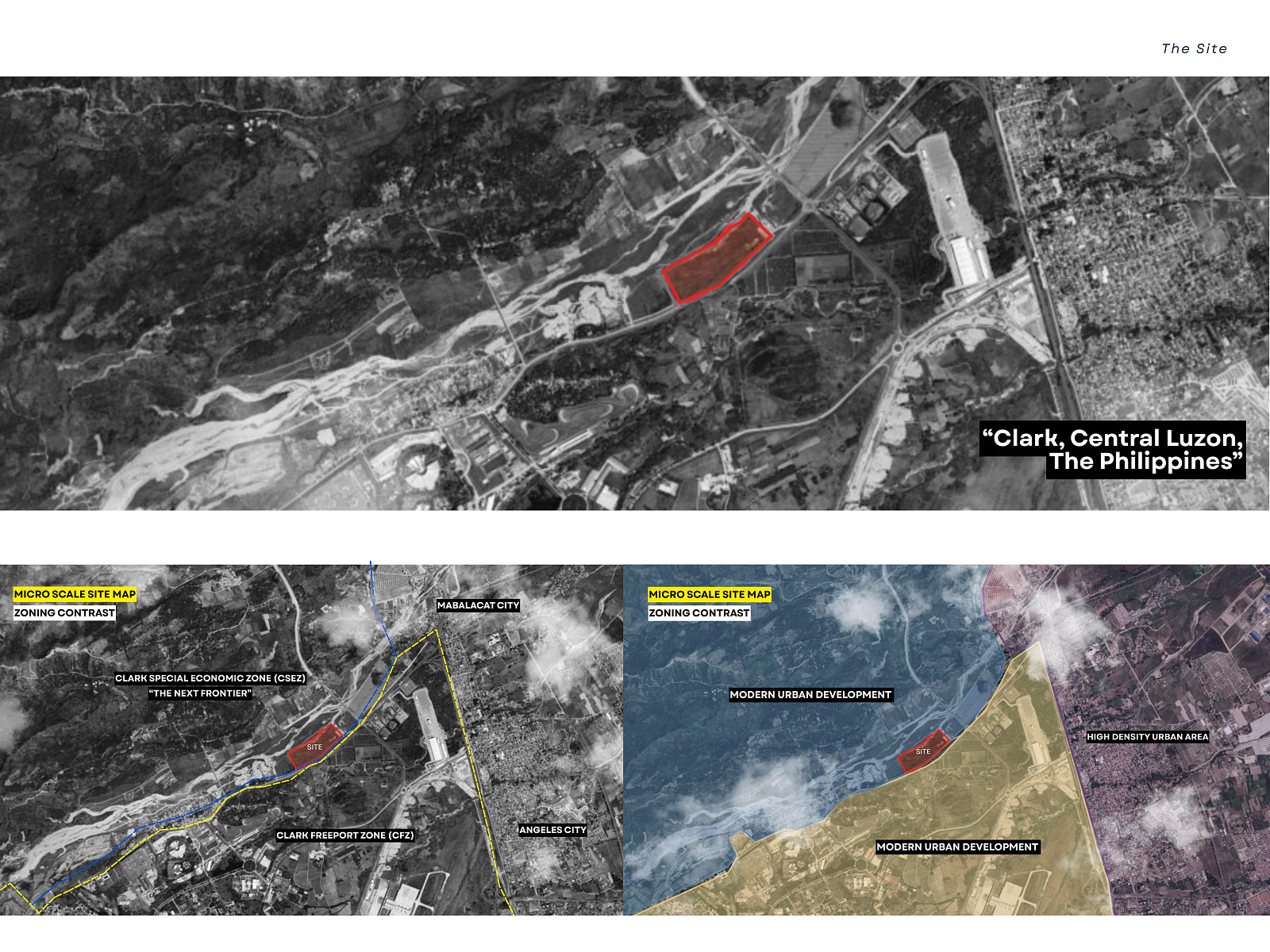
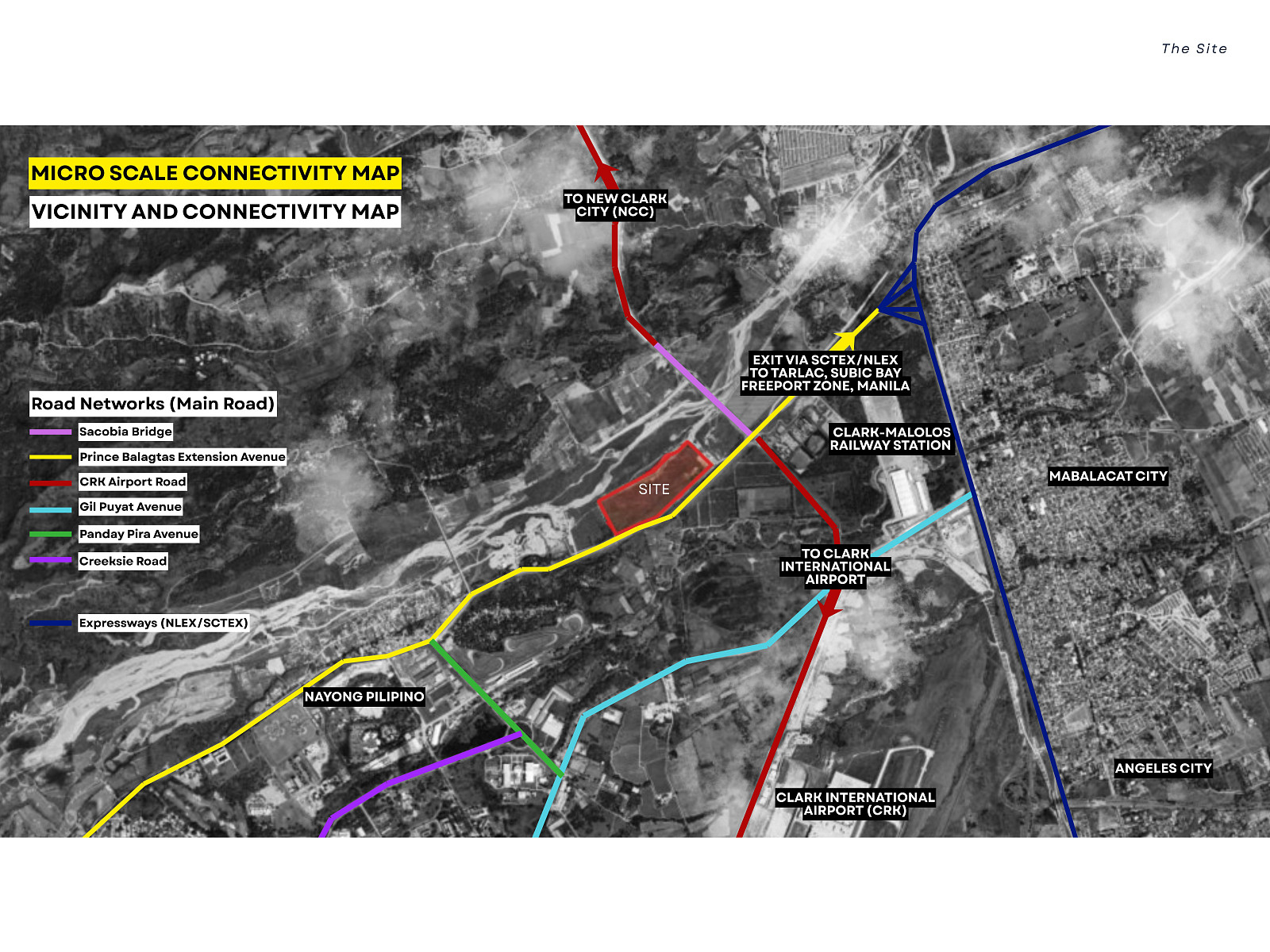
During the wet season, these water features act as bioswales. They collect heavy rainfall, preventing the site from flooding. The excess water will be stored in a rainwater collector reservoir, and when it is full, the excess will be spilt towards the Sacobia River. These bioswales are integrated with aquatic plants (like lotus or water hyacinth) to naturally filter the runoff before it can be used again.
For the facade system, the buildings on the west side of the complex were integrated with two types of facade systems based on the solar orientation. Since the building orientations are the same, the west and the southwest of these structures are the critical orientations for the most intense heat, and stay at a lower angle, hitting the walls directly. These critical zones are then placed with a perforated aluminium metal as a material for the facade to block the direct sun. Why aluminium?
It is lightweight, and it doesn't require any heavy structural support when used as a facade. Aluminium can reflect 95% solar radiation to the atmosphere. Unlike concrete or brick, it absorbs heat and radiates it back inside at night (thermal lag), aluminium stays relatively cool because it doesn’t store heat well. It is also corrosion-resistant; aluminium produces a protective oxide layer. So unlike steel, it does not rust. Aluminium is 100% recyclable without losing its quality, which is a part of the circular economy. Aligning with the UNSDGs 11, 13, 7, 12. Now with this, it can reduce the temperature of the building exterior walls by 10 degrees to 15 degrees, which translates to an indoor temperature reduction of roughly 3 degrees to 5 degrees.
The North & East sides of the structures receive the morning sun and consistent glare-free indirect light. So, how it works: the use of translucent glass allows the natural daylight to pass through. The translucent glass diffuses the light; the material is considered a U-Value optimised glass (that has low-e coating), which ensures that while the light comes in, the heat stays out.
The project also implemented the use of “ultra–fined mist” systems at entrances and the plaza. Unlike regular misters that get you wet, these nozzles produce droplets so small they evaporate instantly. This "flash evaporation" can drop the air temperature in the immediate area by -7 to -10 degrees.
For outdoor areas, standard asphalt in summer can hit up to 60 degrees. The center will use porous materials that "hold" rainwater (or water from the misting systems) and slowly release it, cooling the ground as it evaporates. This will prevent the ground from radiating heat back up at the building.
Lastly, with the use of advanced technology. The center will integrate BMS (Building Management Systems), making it a “smart” building that resonates with real-time updates.
The BMS syncs with PAGASA (Philippine weather bureau) data. If a heatwave is forecasted for Central Luzon, the building automatically initiates “Night Flushing". Night flushing is a passive cooling HVAC strategy that taps into the natural drop in temperature after sunset to expel accumulated heat within a building's thermal mass. During the day, buildings absorb heat from occupants, equipment, and sunlight, which can lead to overheating. Since this is an assembly building, the more people, the more heat it will release.
The BMS will start Night flushing systems by opening parts of the building envelope, such as windows or vents, to allow cool night air to circulate and remove stored heat. Night flushing can reduce the next day’s peak indoor temperature by 3 degrees to 5 degrees.

Copyright © 2026 INSPIRELI | All rights reserved. Use of this website signifies your agreement to the Terms of Use, Privacy Policy, and use of cookies.