Haryana Museum
Idea projektu
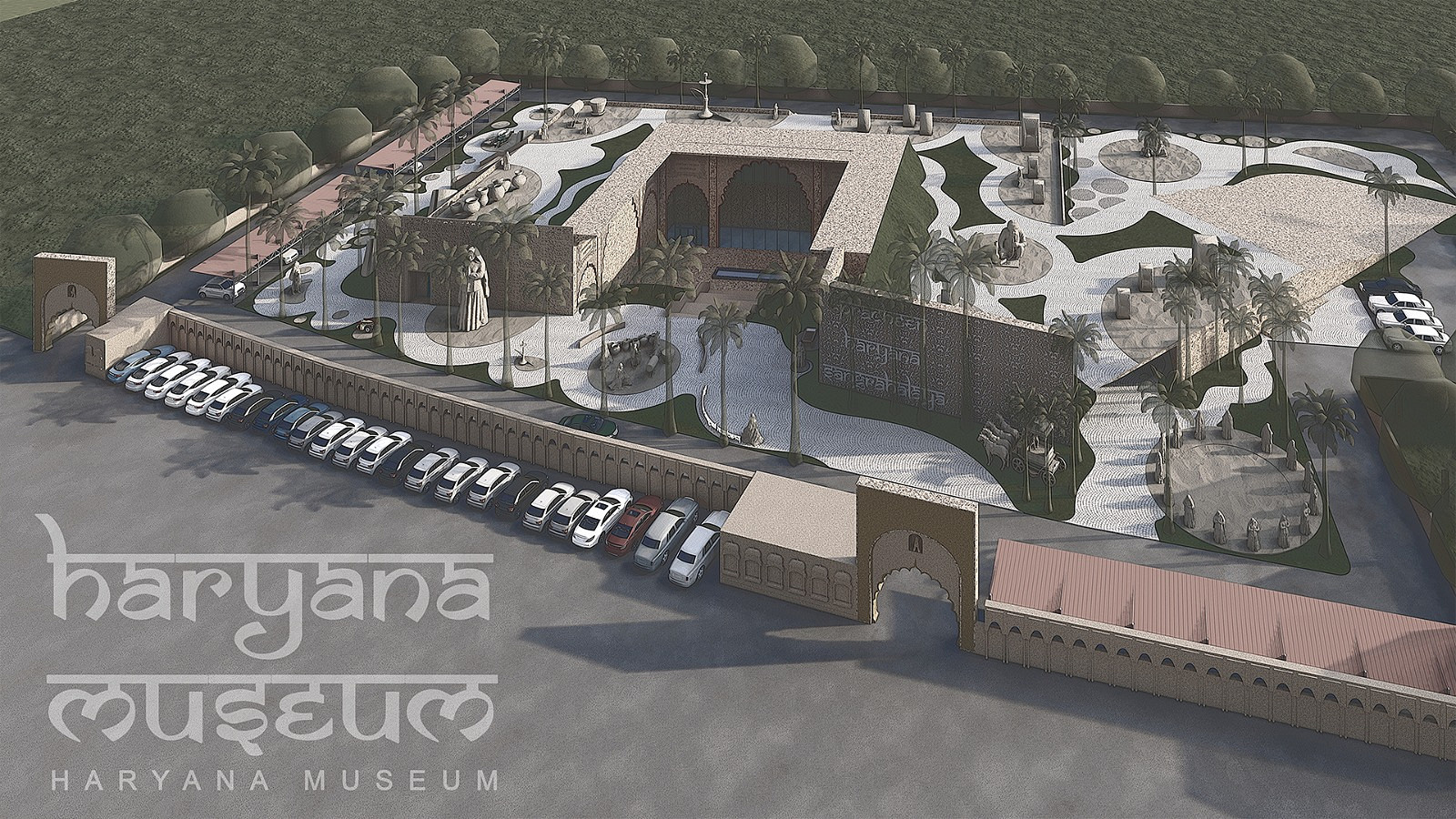
The core idea behind the Haryana Museum is to create a living cultural experience that preserves and presents the essence of Haryana in an engaging and contemporary manner.
The design concept is inspired by the connection between people, land, tradition, and community life that defines the identity of Haryana. Rather than functioning as a conventional static museum, the project is envisioned as an interactive cultural journey where architecture, landscape, light, and spatial movement collectively narrate the story of the state. Open gathering spaces, transitional courtyards, and experiential galleries are designed to encourage exploration, social interaction, and learning, while the built form reflects strength, simplicity, and regional character.
The museum acts as a bridge between past and future, creating awareness and appreciation for Haryana’s heritage among present and future generations.
Popis projektu
The Haryana Museum is envisioned as a contemporary cultural landmark that celebrates the rich heritage, traditions, crafts, and evolving identity of Haryana through architecture and spatial storytelling.
The project aims to create a strong connection between history and modernity by blending traditional architectural values with contemporary design principles. Through its carefully planned circulation, experiential spaces, and culturally responsive material palette, the museum provides visitors with an engaging journey that reflects the social, agricultural, artistic, and historical significance of the state while establishing a vibrant civic destination for education, recreation, and cultural exchange.
Technické informace
The museum is designed using a durable and regionally responsive construction system that combines strength, efficiency, and environmental sensitivity.
The primary structural framework consists of reinforced cement concrete (RCC) columns, beams, and slabs, ensuring stability and long-term structural performance.
AAC (Autoclaved Aerated Concrete) blocks are used for wall construction due to their lightweight nature, thermal insulation properties, and energy efficiency.
In the lower ground and basement levels, RCC retaining walls are incorporated to safely withstand soil pressure and provide structural support below ground level.
The north light tunnels are designed using a combination of RCC and glass to allow controlled natural daylight into the interior spaces, creating a soft and diffused lighting environment suitable for exhibition areas.
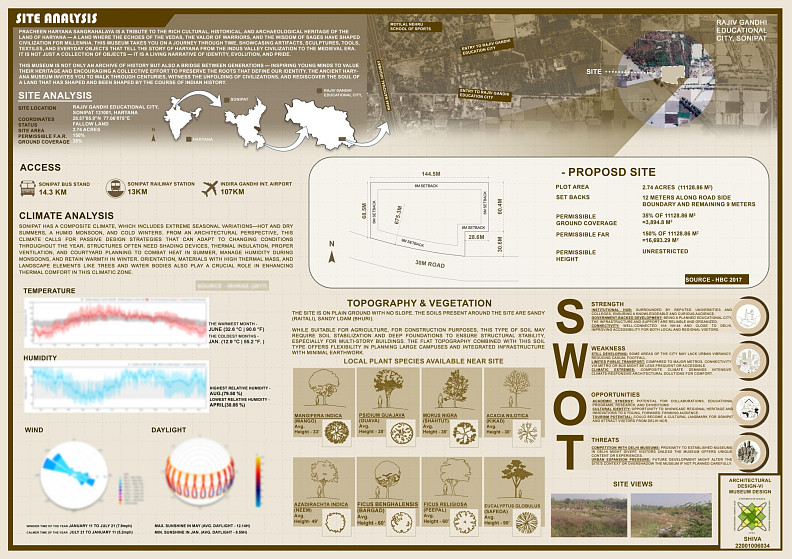
The landscape design follows the ecological and climatic character of the Delhi NCR region, incorporating native vegetation, shaded outdoor spaces, and climate-responsive site elements to enhance user comfort and strengthen the connection between architecture and nature.
Dokumentace

Copyright © 2026 INSPIRELI | All rights reserved. Use of this website signifies your agreement to the Terms of Use, Privacy Policy, and use of cookies.