
Gardens of Water


Idea projektu
São Paulo is one of the most impermeable cities in the world. Decades of unchecked urbanization have buried its rivers, sealed its soils beneath concrete, and severed the natural water cycles that once defined this territory. Every rainy season makes the consequences undeniable: catastrophic floods paralyze the city, displace communities, and claim lives — not because there is too much water, but because the city has lost the capacity to receive it. This project begins with that urgency: the necessity of making São Paulo permeable again, not only hydrologically, but culturally and spatially.
At its core, Jardins da Água proposes the restoration of the circular cycle of water — allowing rain to be absorbed, filtered, stored, and returned to the city — not as a technical infrastructure problem, but as a cultural and ecological act. The guiding framework is the ancestral knowledge of Guarani communities, whose water rituals — invoking rain, spiritual cleansing in sacred rivers, and the communal practice of sharing yerba mate — reveal something the contemporary city has silenced: that water is not a resource to be managed, but a living entity to be honored, and that the health of a river and the memory of a people flow inseparably together.
Inspired equally by the participatory art of Lygia Clark and the Indigenous cosmologies documented by Claudia Andujar, the project positions ritual as a collective act of restoration. Just as Clark's psychosocial propositions transformed space into a site of healing through touch, presence, and shared vulnerability, this architecture transforms water into a medium of reconnection — inviting residents and visitors into sensory and symbolic encounters that link body, community, landscape, and ancestral memory.
The project therefore proposes a visible, functional, and symbolic water cycle woven into the urban fabric: a system that collects rainwater, filters it through permeable landscapes, stores it at the neighborhood scale, and redistributes it through public and residential spaces. Ecological corridors, bioswales, living ground surfaces, and communal water spaces work together not only to reduce flooding and consumption, but to make the movement of water legible and meaningful to those who live alongside it.
Rooted in the memory of Guarani territory and responding to the contemporary crisis of an impermeable city, Jardins da Água is an architecture of reconnection: a living environment where permeability is not merely a hydrological strategy but a cultural stance — an act of respect toward water, land, and the communities who have always known how to care for both.
Popis projektu
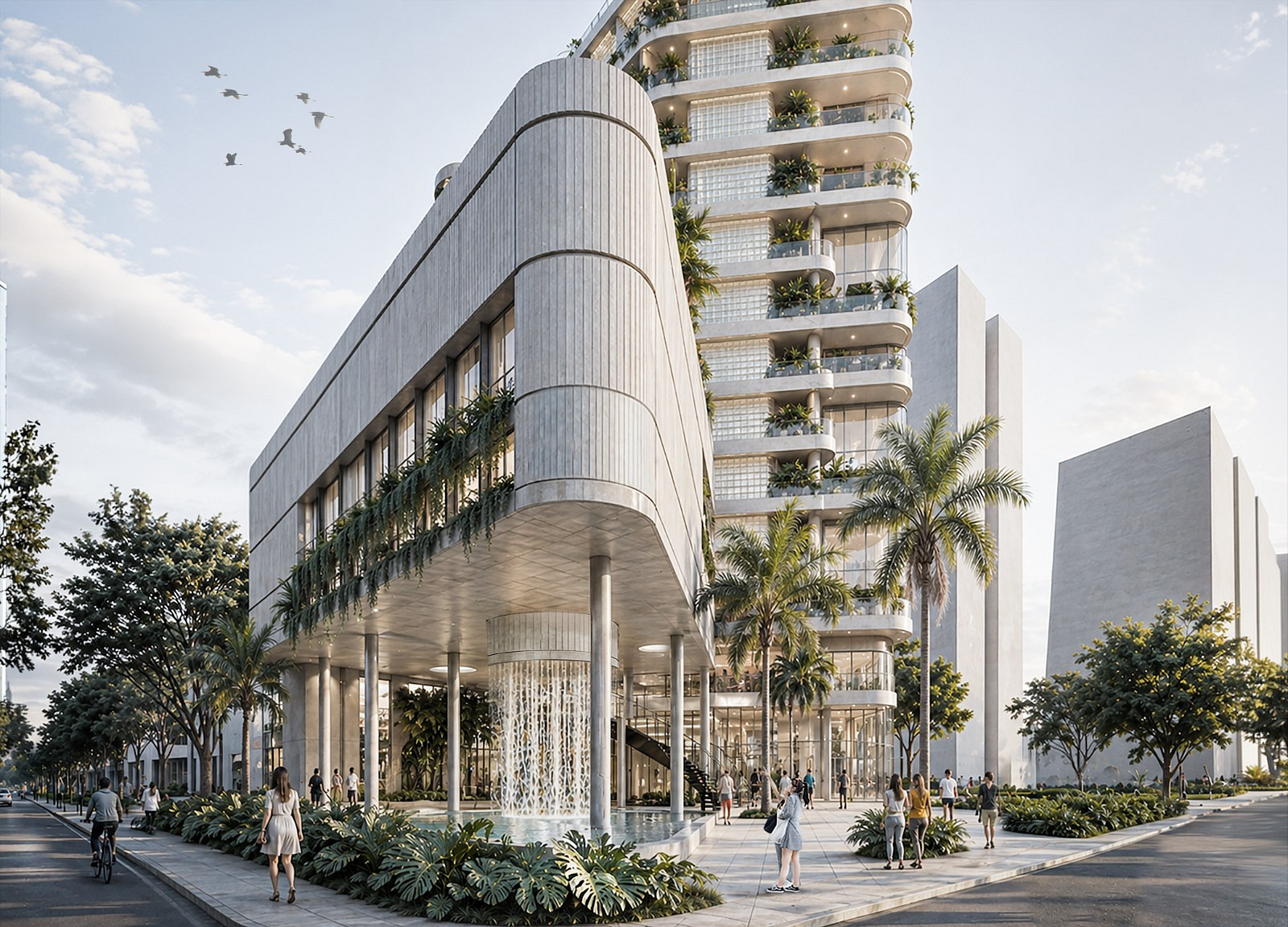
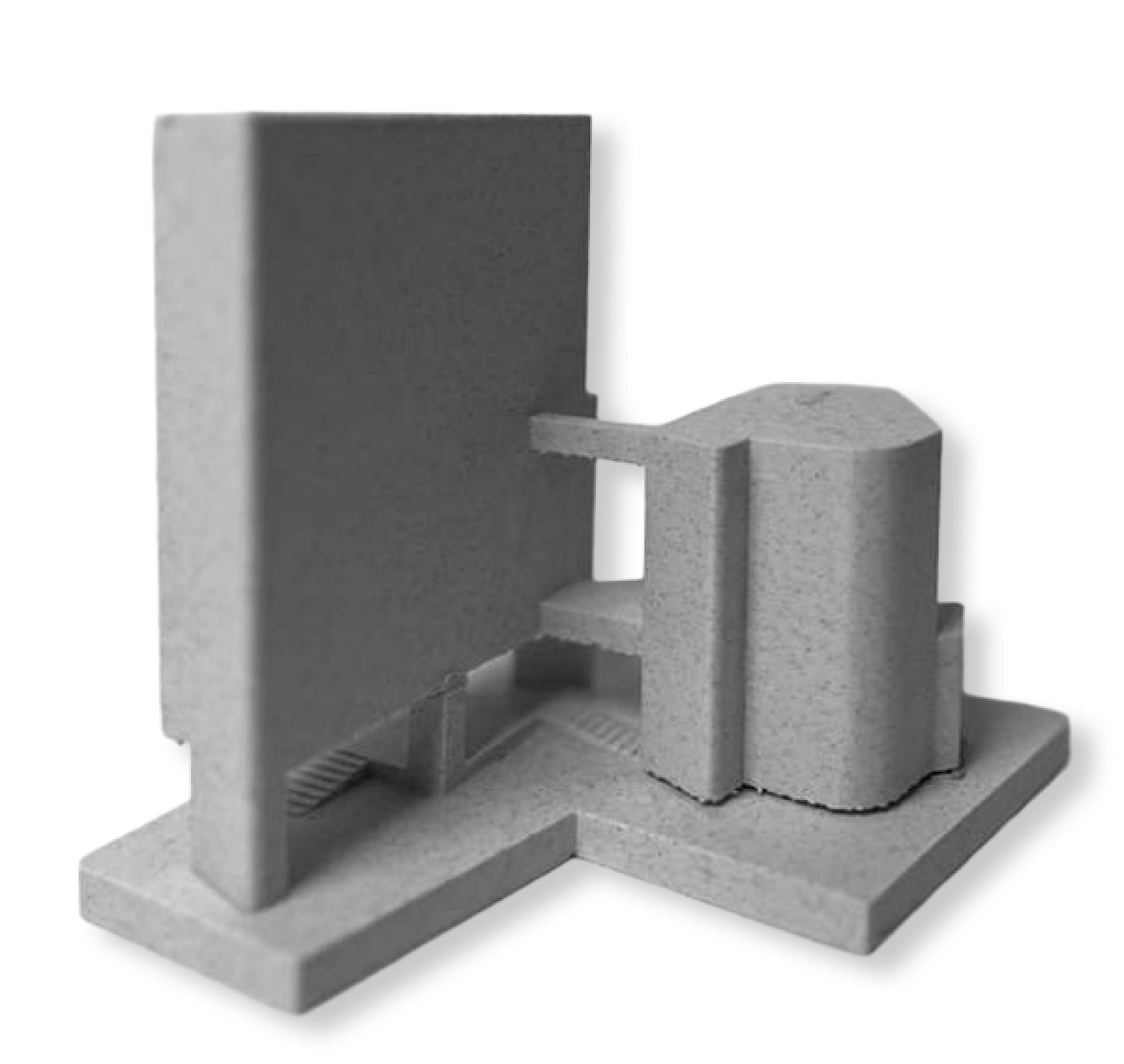
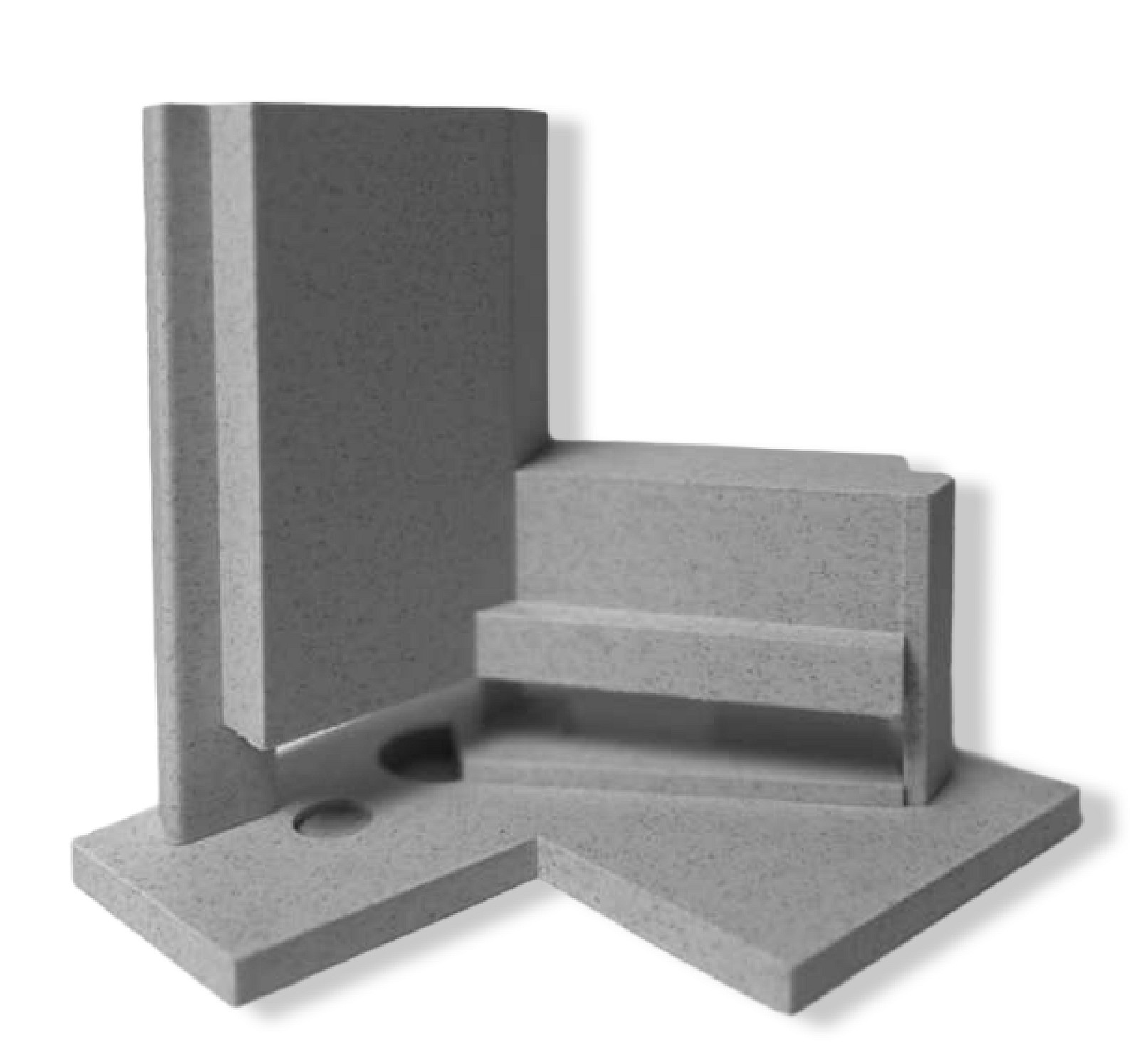
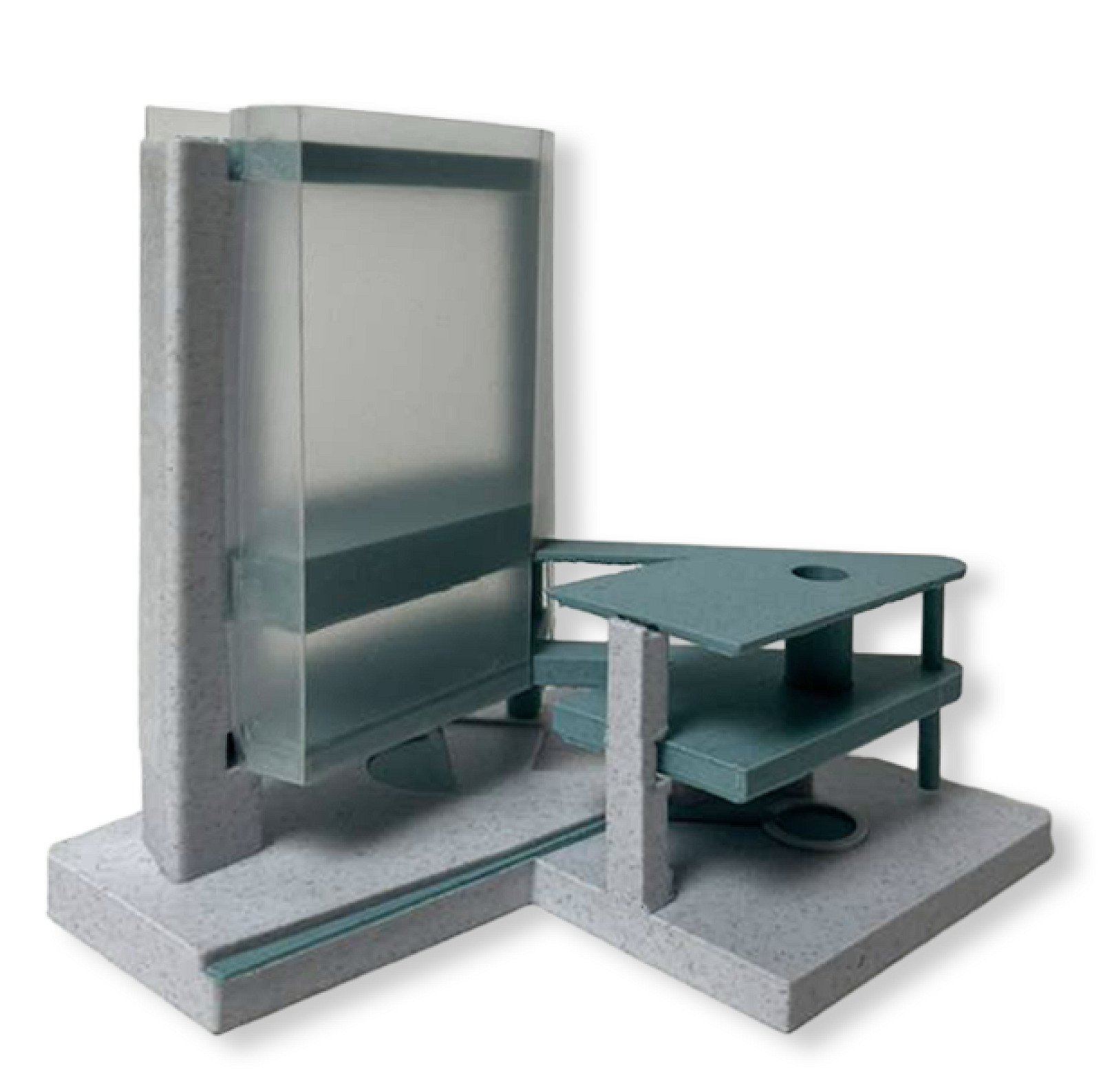
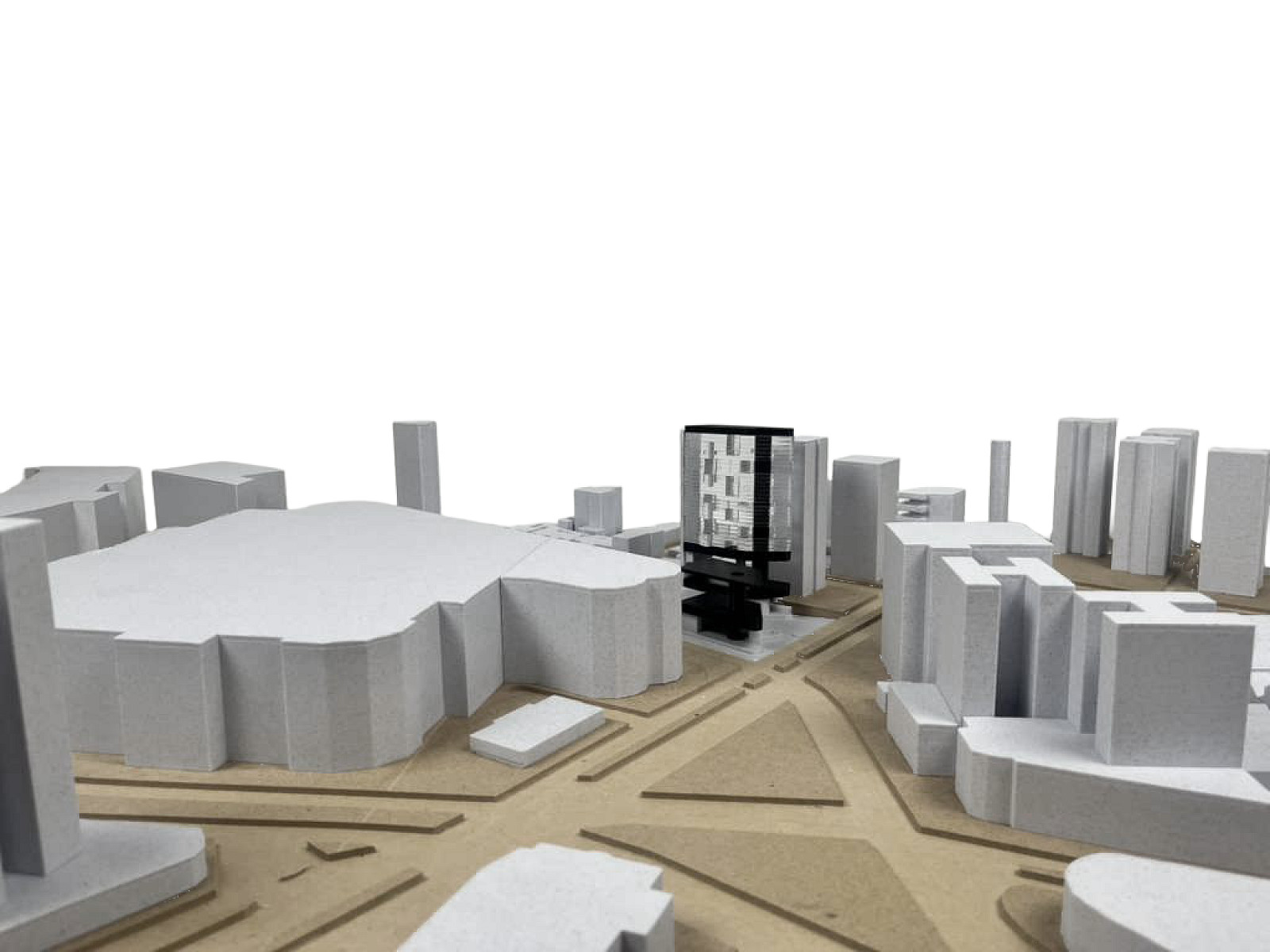
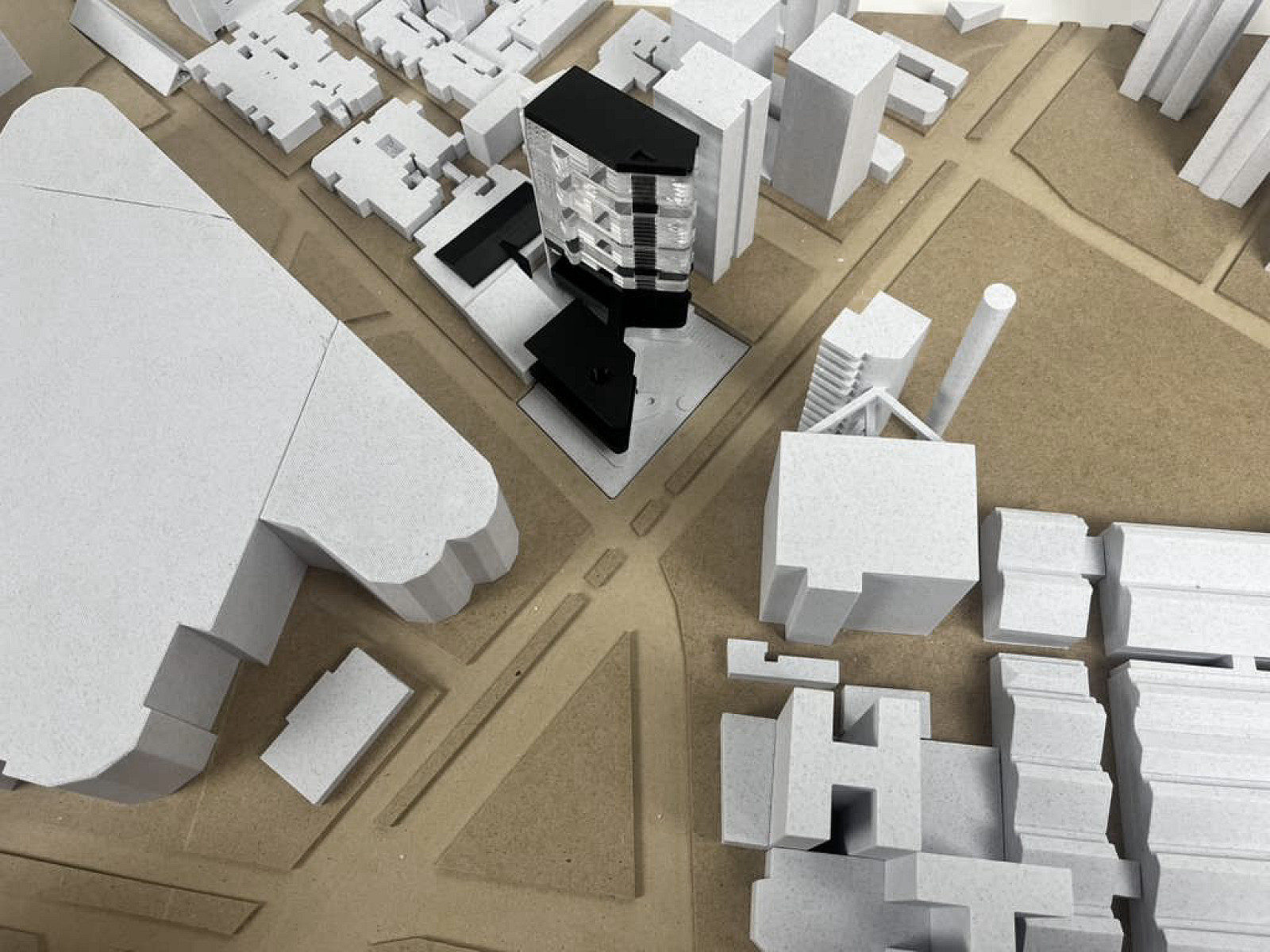
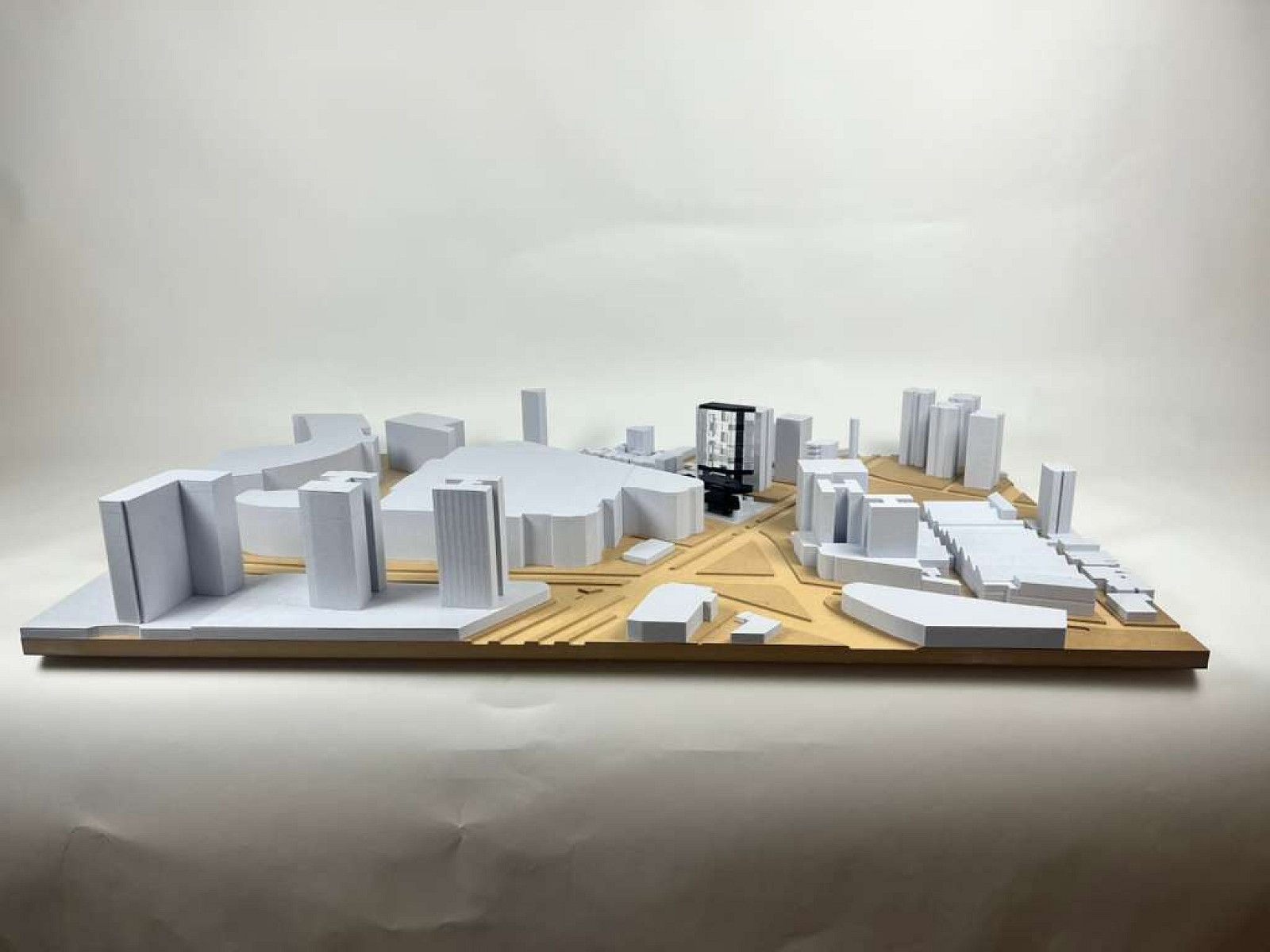
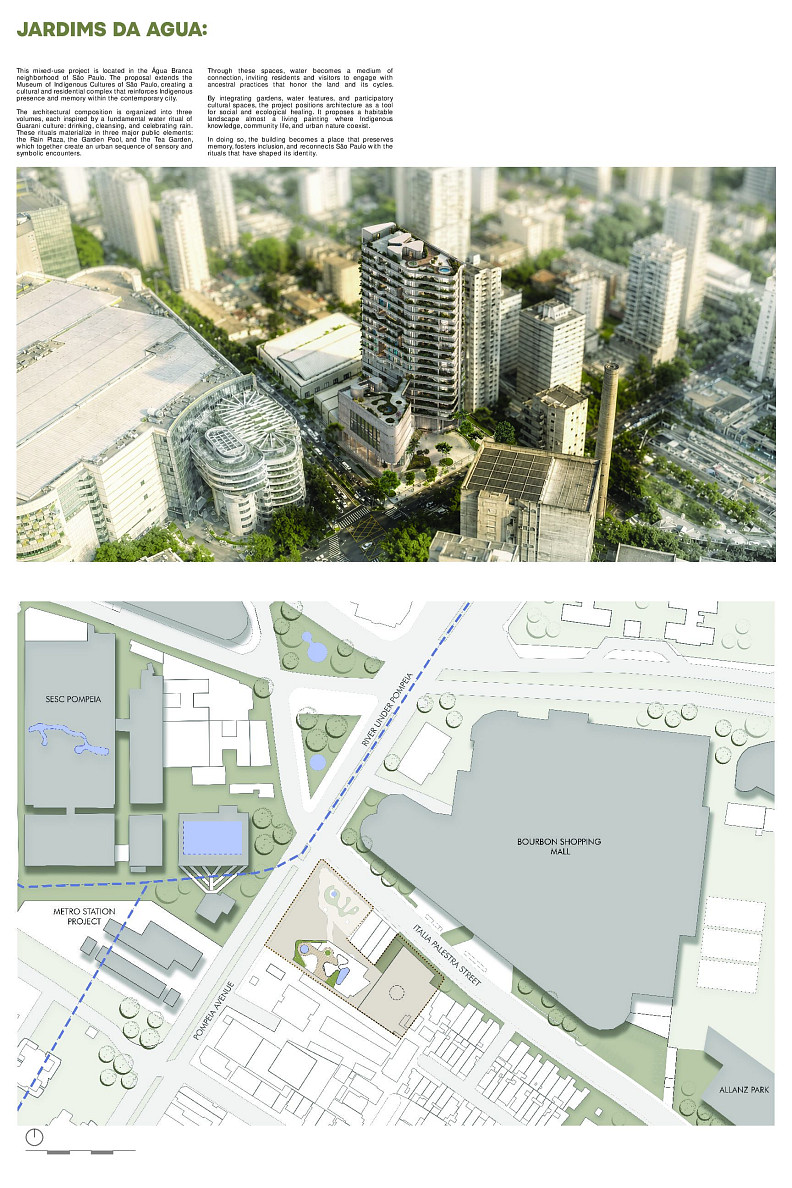
Jardins da Água is a mixed-use complex located in the Água Branca neighborhood of São Paulo, extending and activating the Museum of Indigenous Cultures. The architectural composition is organized into three volumes — each inspired by a fundamental Guarani water ritual — and a continuous public landscape that transforms Rua Palestra Itália into a pedestrian living corridor connecting SESC Pompeia, Bourbon Shopping Mall, Allianz Parque, and the Museum of Indigenous Cultures into a unified cultural and ecological axis.
The three public anchors of the project materialize the rituals of invocation, cleansing, and communal sharing:
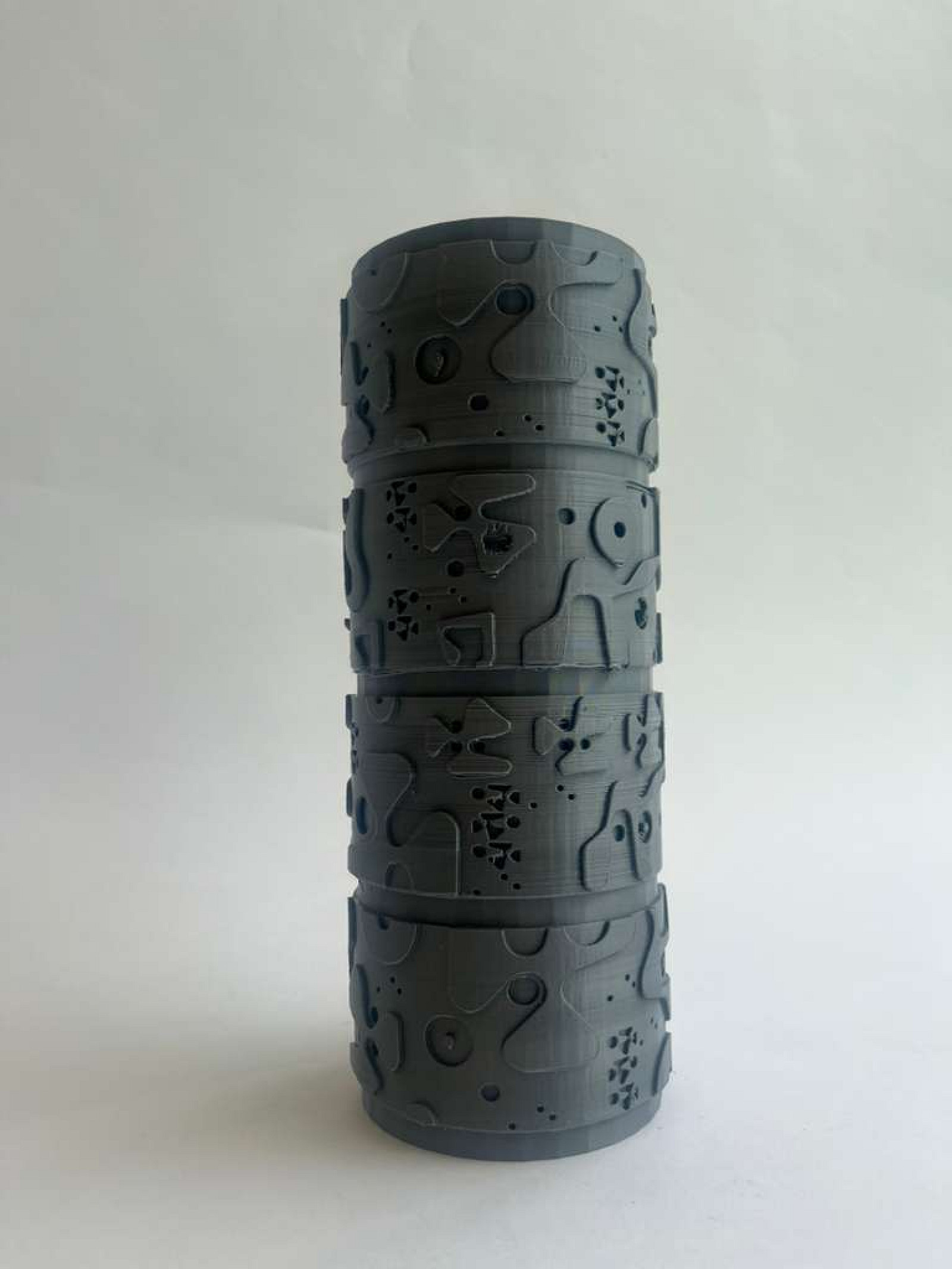
The Rain Plaza is a civic space shaped by the ritual of invoking rain. Vertical water collectors, a monumental rain wall cylinder clad in hand-cast concrete tiles bearing Indigenous iconography, and shaded gathering areas create a space where the arrival of water is celebrated rather than managed. The plaza establishes a visual and experiential dialogue with SESC Pompeia, affirming both buildings as landmarks of cultural memory along the same urban corridor.
The Garden Pool is a communal courtyard that reinterprets the Guarani practice of spiritual cleansing — the dawn-to-dusk bathing rituals performed in sacred lakes to connect participants with ancestors and restore spiritual strength — as a contemporary space for collective well-being. Pools, playgrounds, and layered gardens transform this act of purification into an inclusive public landscape available to residents and visitors alike.
The Tea Garden, housed within the adaptively reused industrial warehouse, draws from the Yerba Mate ritual — the communal practice of sharing tereré made with cold water and medicinal herbs as an act of social bonding and care. The terraced landscape integrates water, native vegetation, and social interaction, preserving the industrial memory of the district while giving it new ecological purpose.
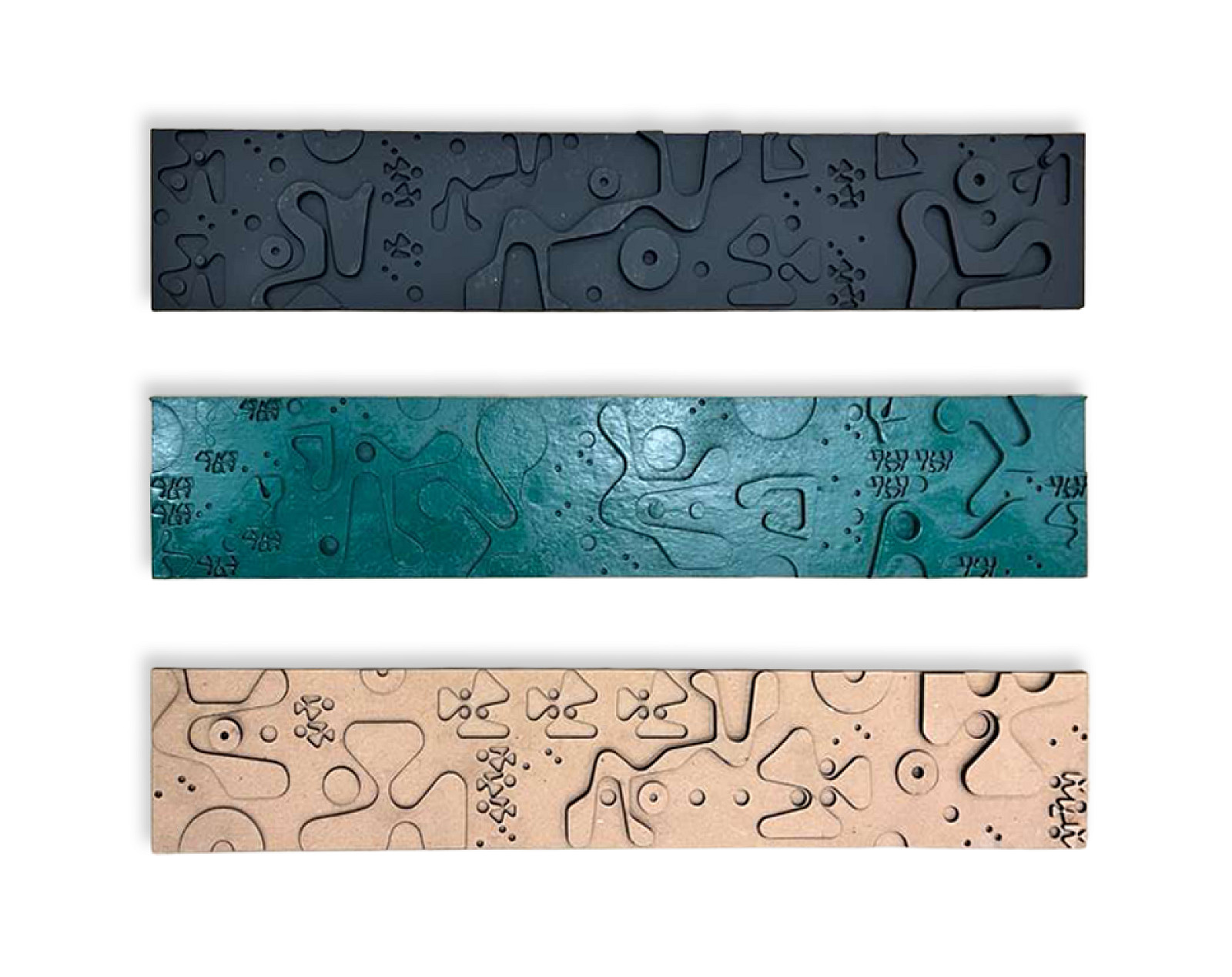
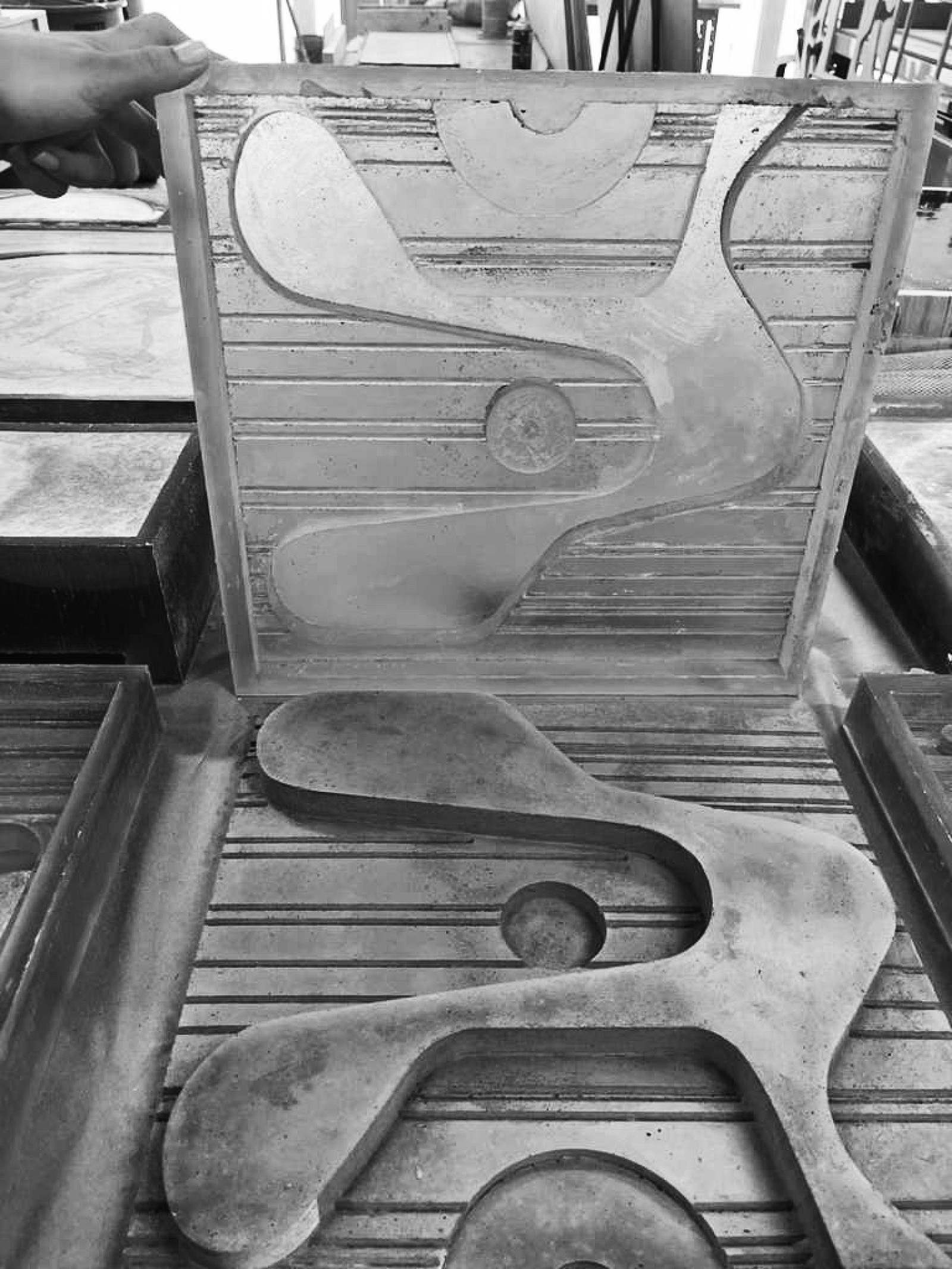
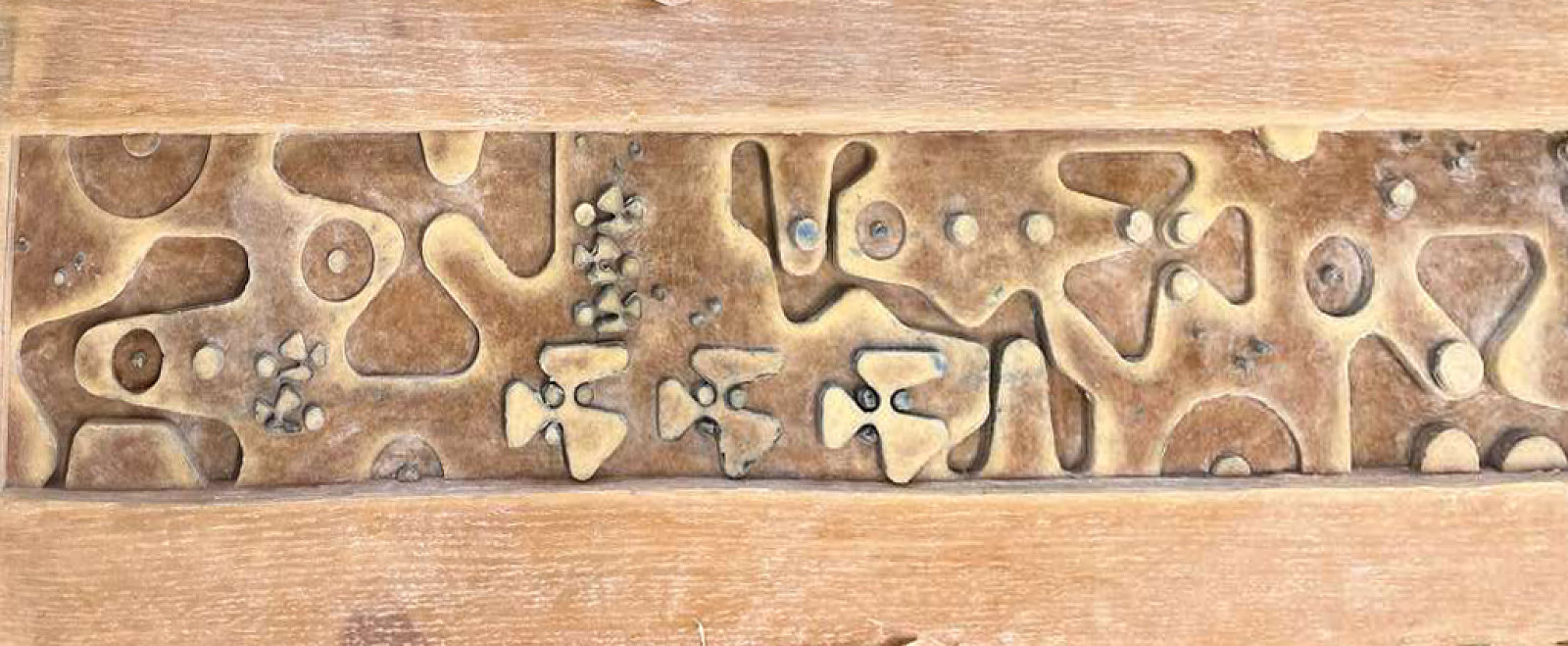
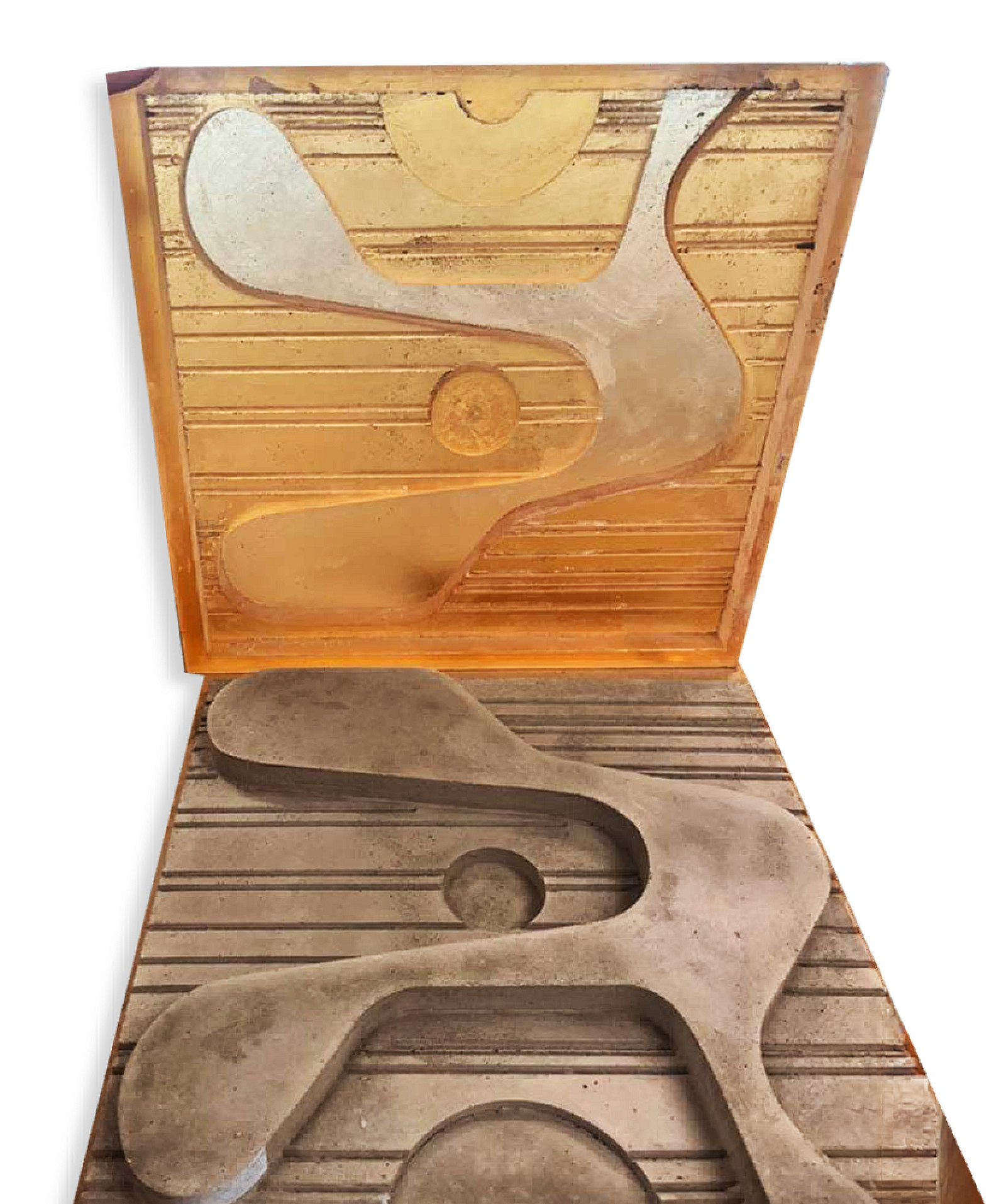
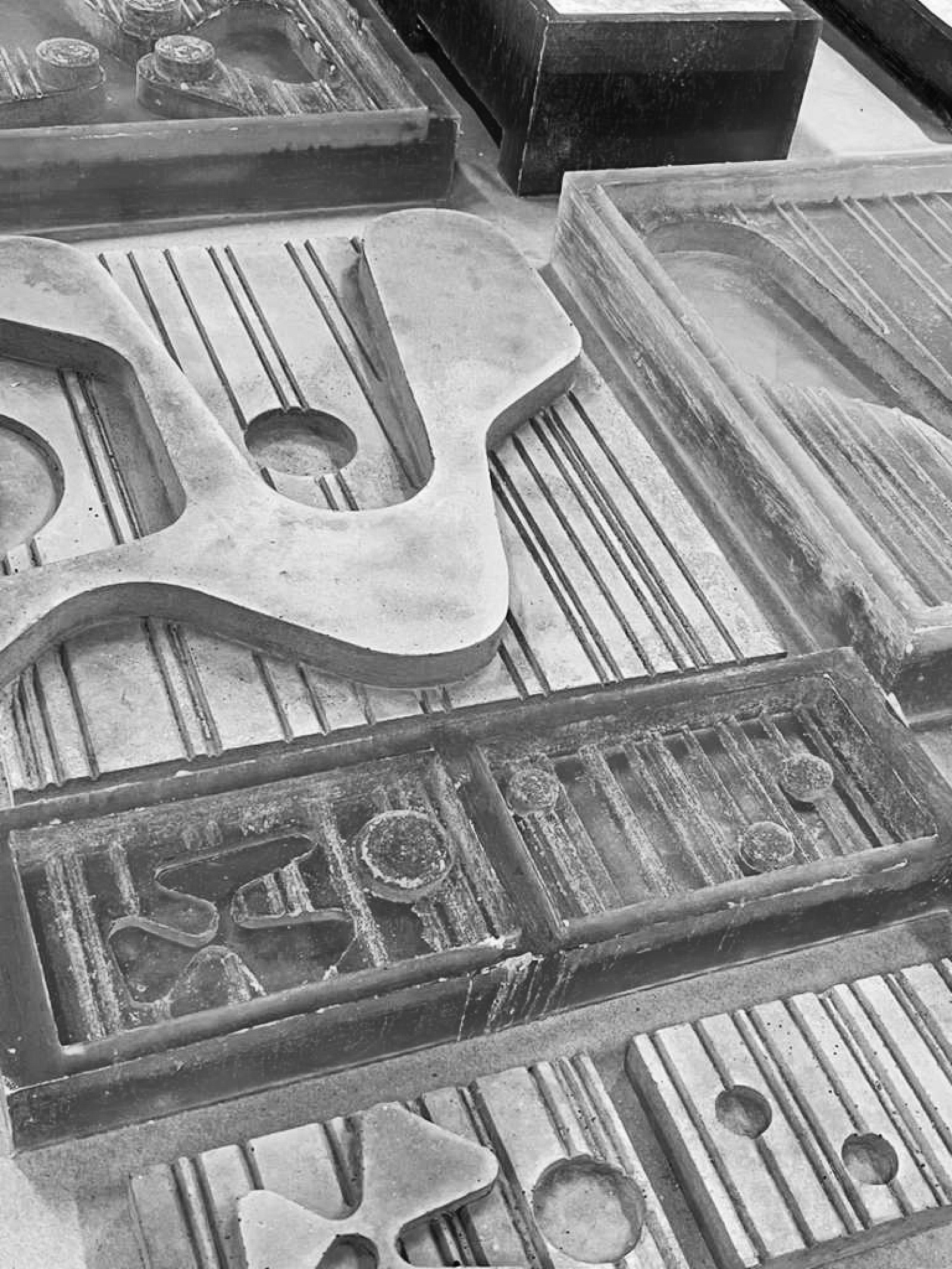
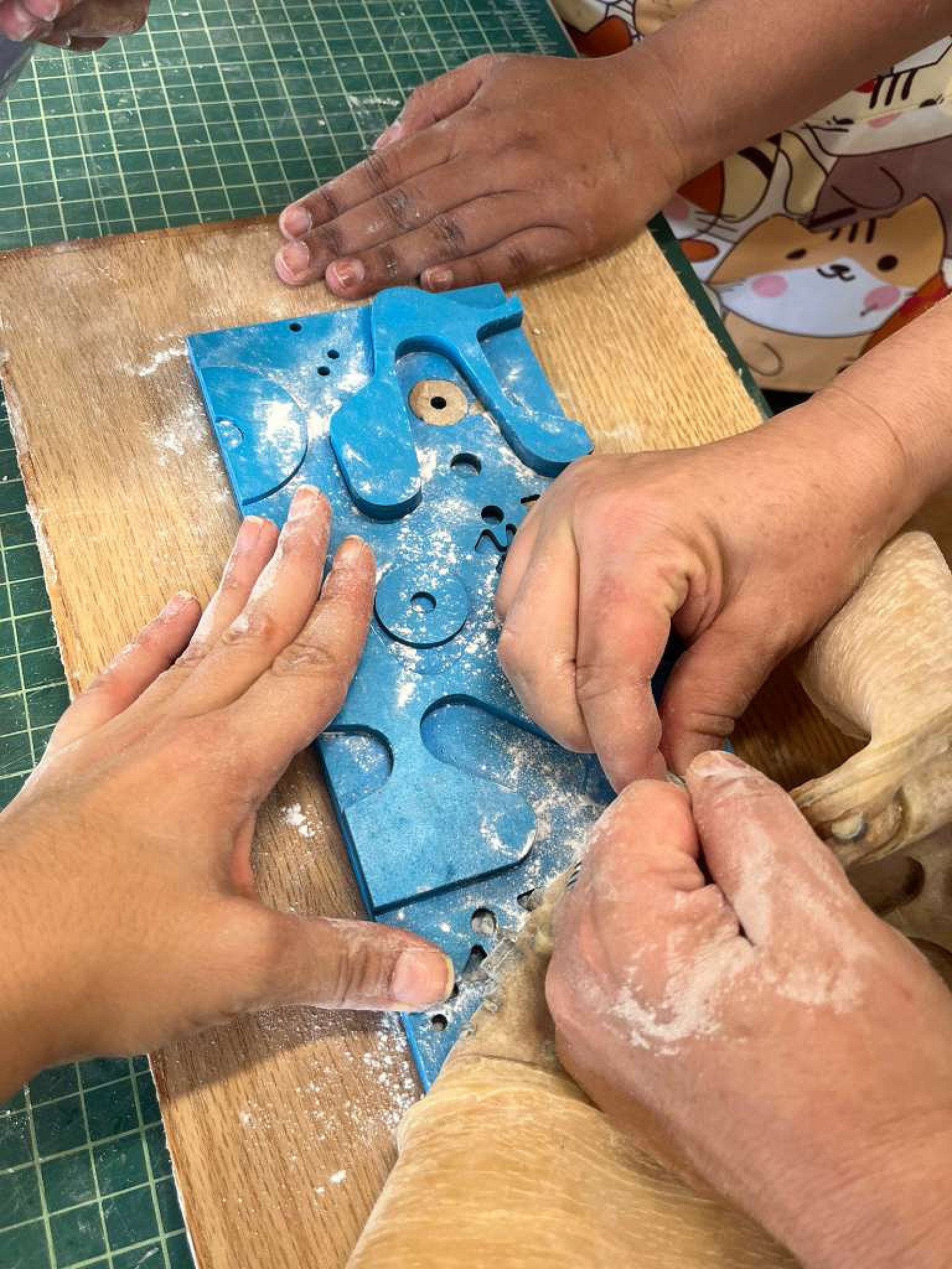
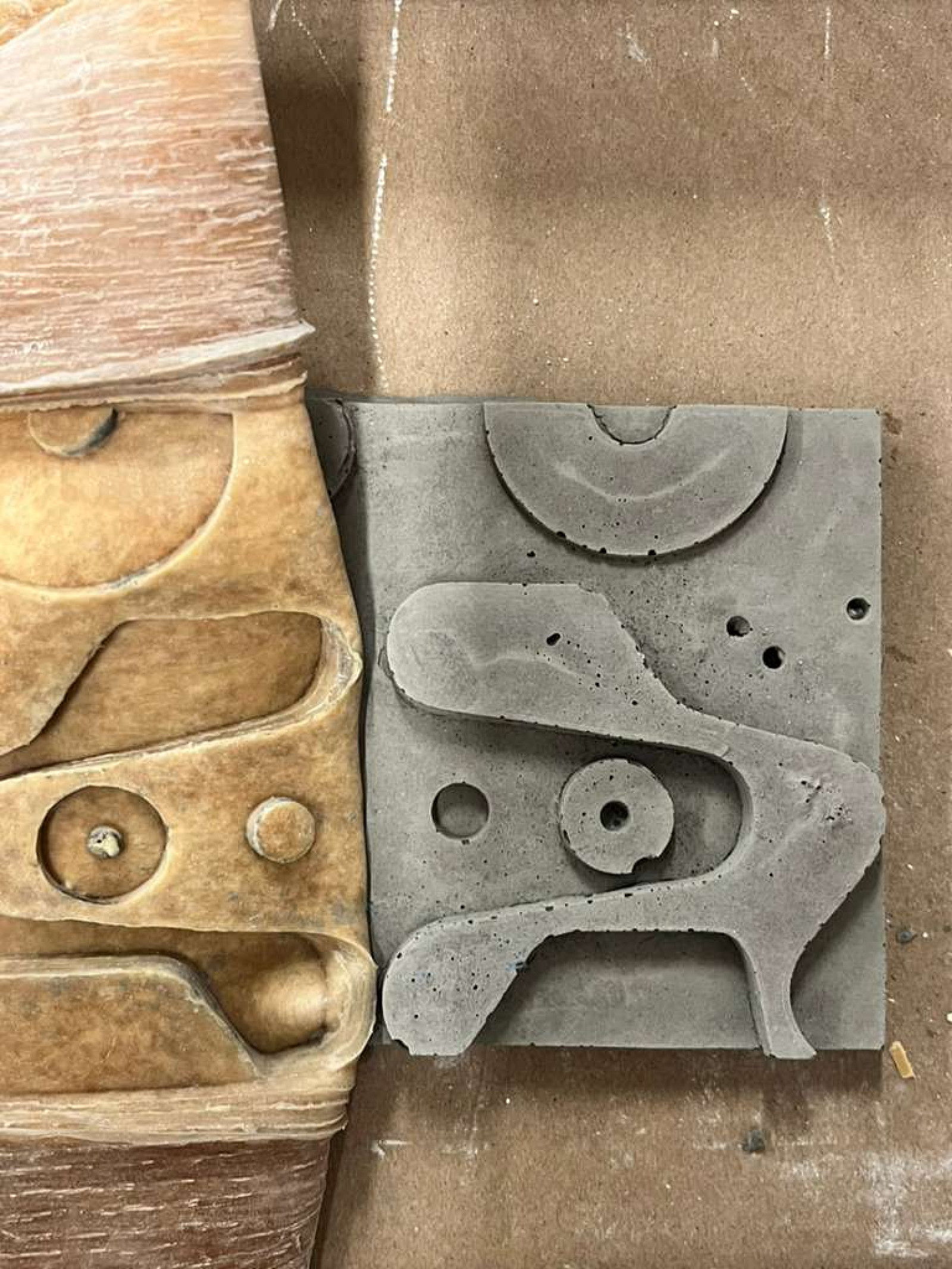
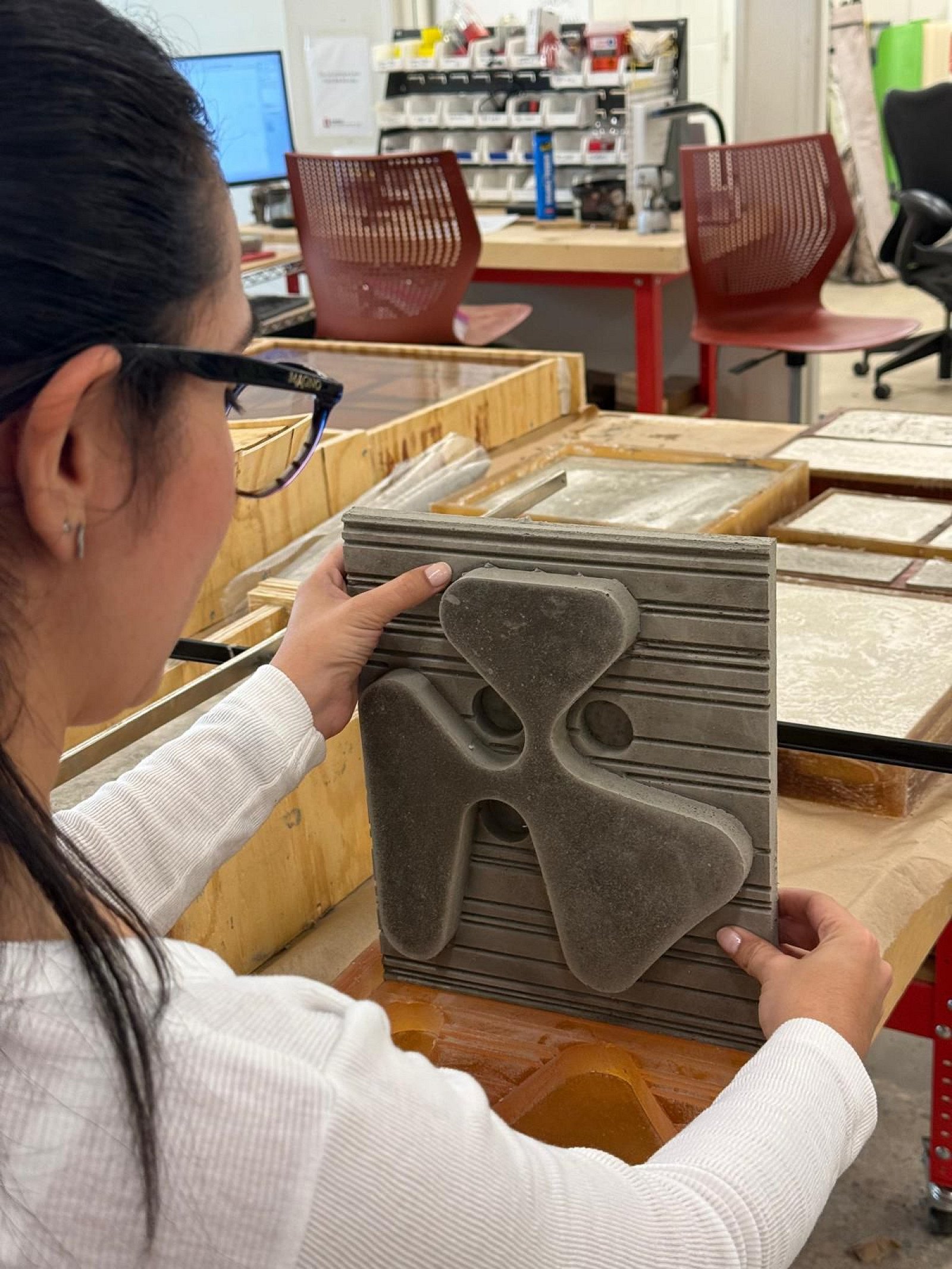
The museum program spans multiple levels and includes galleries, craft workshop spaces, an Indigenous storytelling space, a dance rehearsal platform, an auditorium, and commercial areas. The museum facade operates as a monumental mural, with each level narrating a different cultural layer — art gallery, dance, craft making, storytelling — using concrete panels produced through an experimental latex and urethane casting process that transfers hand-designed Indigenous motifs into architectural surfaces at building scale.
The residential tower introduces four housing typologies — studios, one-bedroom, two-bedroom, and three-bedroom apartments — designed to accommodate diverse household structures. Units feature private balcony pools or garden terraces, while all residents share access to public pools and communal gardens distributed across multiple levels. These vertical landscapes create a fluid gradient of public, semi-public, and private space, making ecological life not a luxury but an everyday condition of inhabitation.
Technické informace
Jardins da Água is a high-density mixed-use complex that integrates cultural, residential, and ecological systems through a coherent architectural and structural strategy.
Structural system: The museum extension and residential tower are constructed using reinforced concrete cores and slabs, chosen for their thermal mass, durability, and capacity to support the large spans required by galleries, public platforms, and multi-level gardens. The adaptive reuse of an existing industrial warehouse — transformed into the Tea Garden — reduces embodied carbon and preserves the industrial character of the Água Branca district. Selective demolition and structural reinforcement adapt the existing building to new landscape and cultural functions without erasure of material memory.
Facade and materiality: The museum facade is developed as a large-scale architectural mural using hand-cast concrete panels produced through latex and urethane mold processes. Designs are developed digitally, laser-cut into cardboard or CNC-milled in MDF, then transferred into flexible molds from which concrete panels are cast. This technique allows precise reproduction of Indigenous-derived iconography at architectural scale while maintaining craft quality and enabling iterative production.
Water infrastructure: The project operates as a closed-loop rainwater system. Vertical water collectors and rooftop harvesting tanks capture rainfall and channel it through permeable pavements and bioswales. Collected water feeds gardens, balcony vegetation, and public pools; filtered and redistributed water irrigates the living corridor and ecological corridors across the site. This infrastructure makes the hydrological cycle legible and functional simultaneously, embedding water management into the spatial experience of the project.
Environmental strategies: Natural ventilation is achieved through open-air corridors and the vertical organization of volumes. Shading devices, green roofs, and water-based microclimate regulation reduce thermal load across the complex. Permeable surfaces throughout the ground plane restore hydrological balance by reducing surface runoff — directly responding to São Paulo's chronic flooding crisis — while native vegetation supports urban biodiversity and atmospheric cooling.
Program distribution:
Ground level: Rain Plaza, museum lobby, river corridor, commercial areas, Tea Garden, public gardens, and pedestrian living corridor.
Levels 3–7: Museum galleries, craft workshops, Indigenous storytelling space, dance rehearsal platform, auditorium, and the rain wall cylinder.
Levels 8–21: Residential units across four typologies — studios, one-bedroom, two-bedroom, and three-bedroom apartments — with private balcony pools or garden terraces and shared access to public pools and communal gardens.
Circulation: A combination of open-air staircases, elevators, and vertical cores connects cultural and residential programs while preserving visual and physical continuity between the public landscape and upper levels.
Urban landscape system: Native vegetation, water gardens, permeable paving, and the pedestrian living corridor along Rua Palestra Itália connect SESC Pompeia, Bourbon Shopping Mall, Allianz Parque, and the Museum of Indigenous Cultures into a continuous ecological and cultural axis — extending the project's impact well beyond its site boundary and into the city's daily life.
Dokumentace


Copyright © 2026 INSPIRELI | All rights reserved. Use of this website signifies your agreement to the Terms of Use, Privacy Policy, and use of cookies.
