Breathing Pavilion


Idea projektu
The project begins with an understanding of Rawalpindi as a city with strong cultural identity and active everyday life. The intention was to express this character through a small pavilion that feels meaningful despite its limited size.
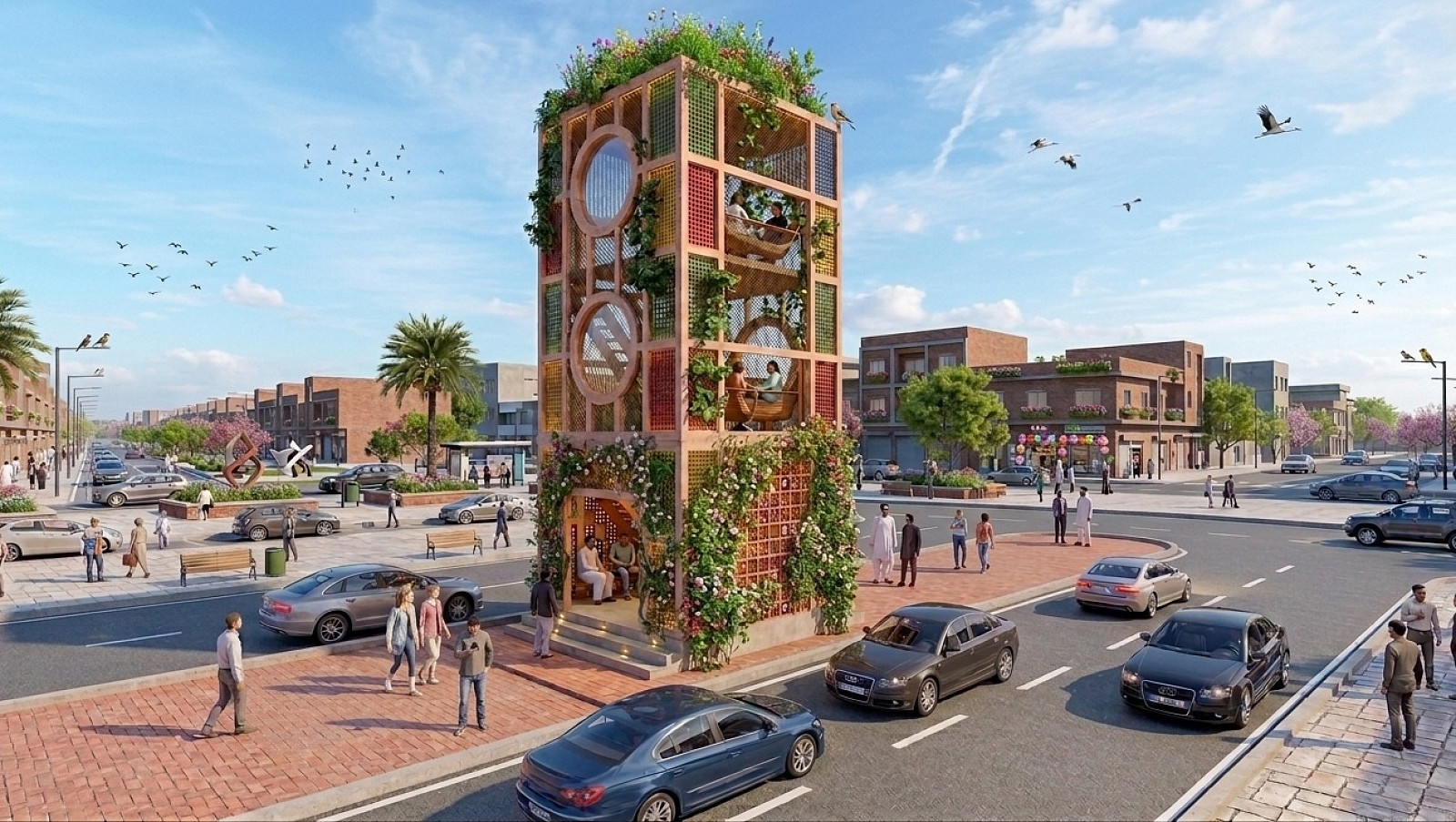
Instead of spreading horizontally, the design focuses on a vertical form to create a stronger spatial experience. People are naturally drawn to elevated points where they can pause and observe their surroundings. This idea shaped the core concept.
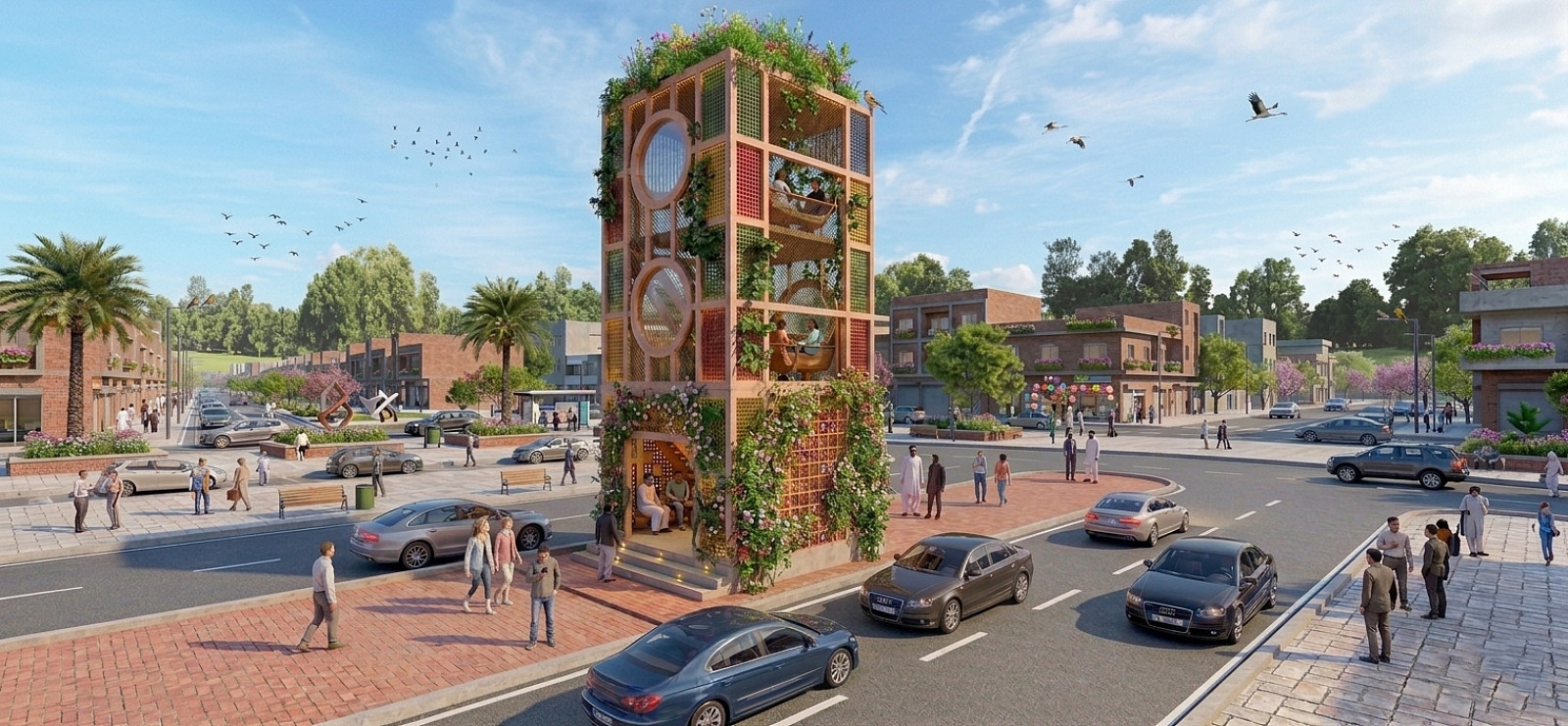
The pavilion offers framed views of the city, allowing users to engage with movement, traffic, and daily life from different heights. It becomes a place of pause, reflection, and connection with the urban environment.
This project received a 3rd Place Award at the national level from BAE IAP Pakistan, recognizing its conceptual clarity and spatial quality.
Popis projektu
The pavilion is designed as an open and welcoming public space that can be used by everyone. It avoids physical and visual barriers, allowing easy access and movement throughout the structure.
The layout creates a simple circulation path that guides users upward while also offering spaces to stop, sit, and interact. Each level provides a slightly different experience, encouraging people to explore the space at their own pace.
The design connects users with the city through views, shade, and spatial openness. It does not belong to any specific group, instead it feels shared and inclusive.
Despite its small footprint, the pavilion acts as a social and urban connector, offering a calm space within a busy environment.
Technické informace
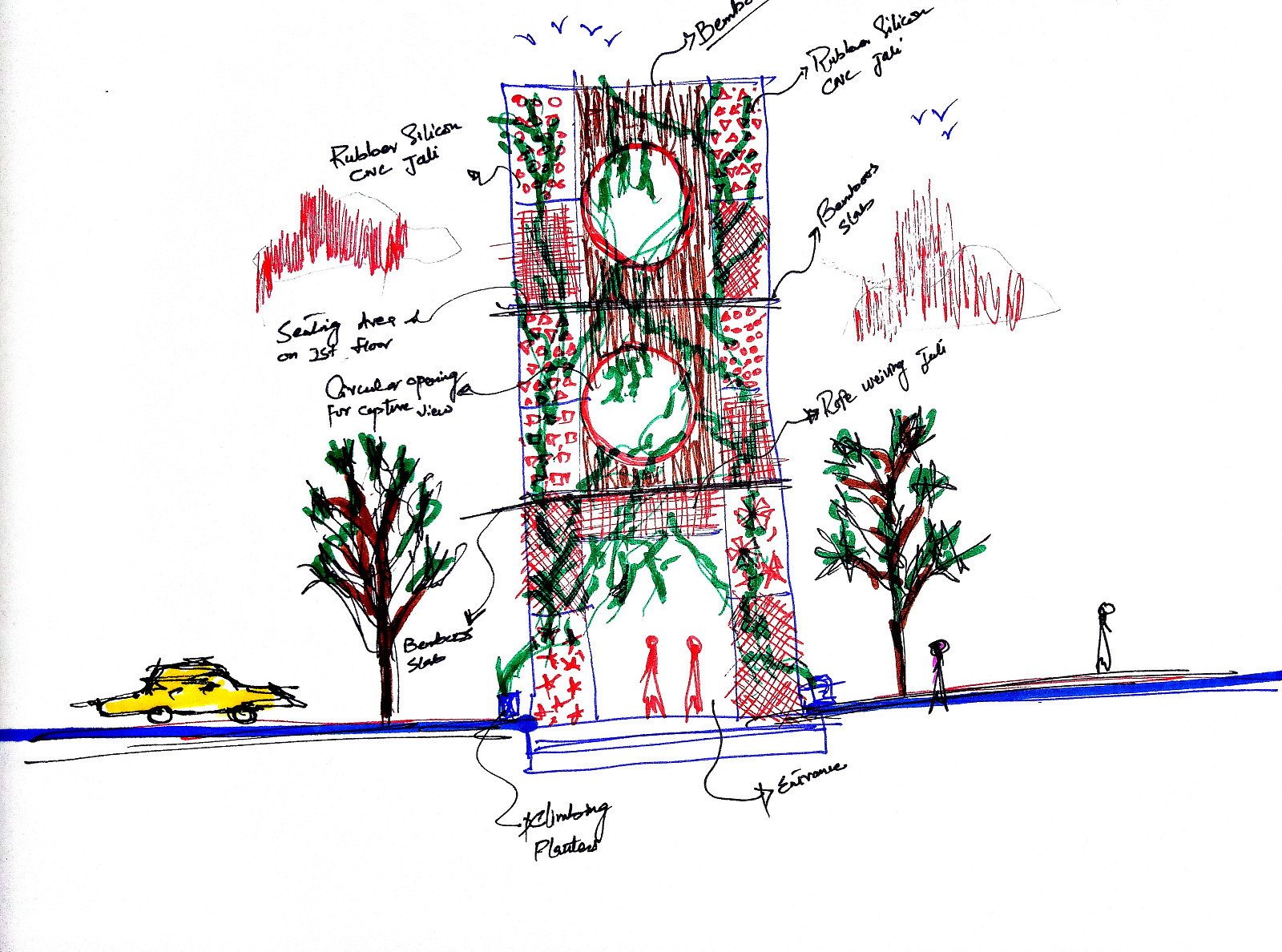
Sustainability is integrated into the design from the beginning. The structure uses carefully positioned openings to allow natural airflow, reducing the need for mechanical cooling. These openings also bring in daylight and create visual links with the surroundings.
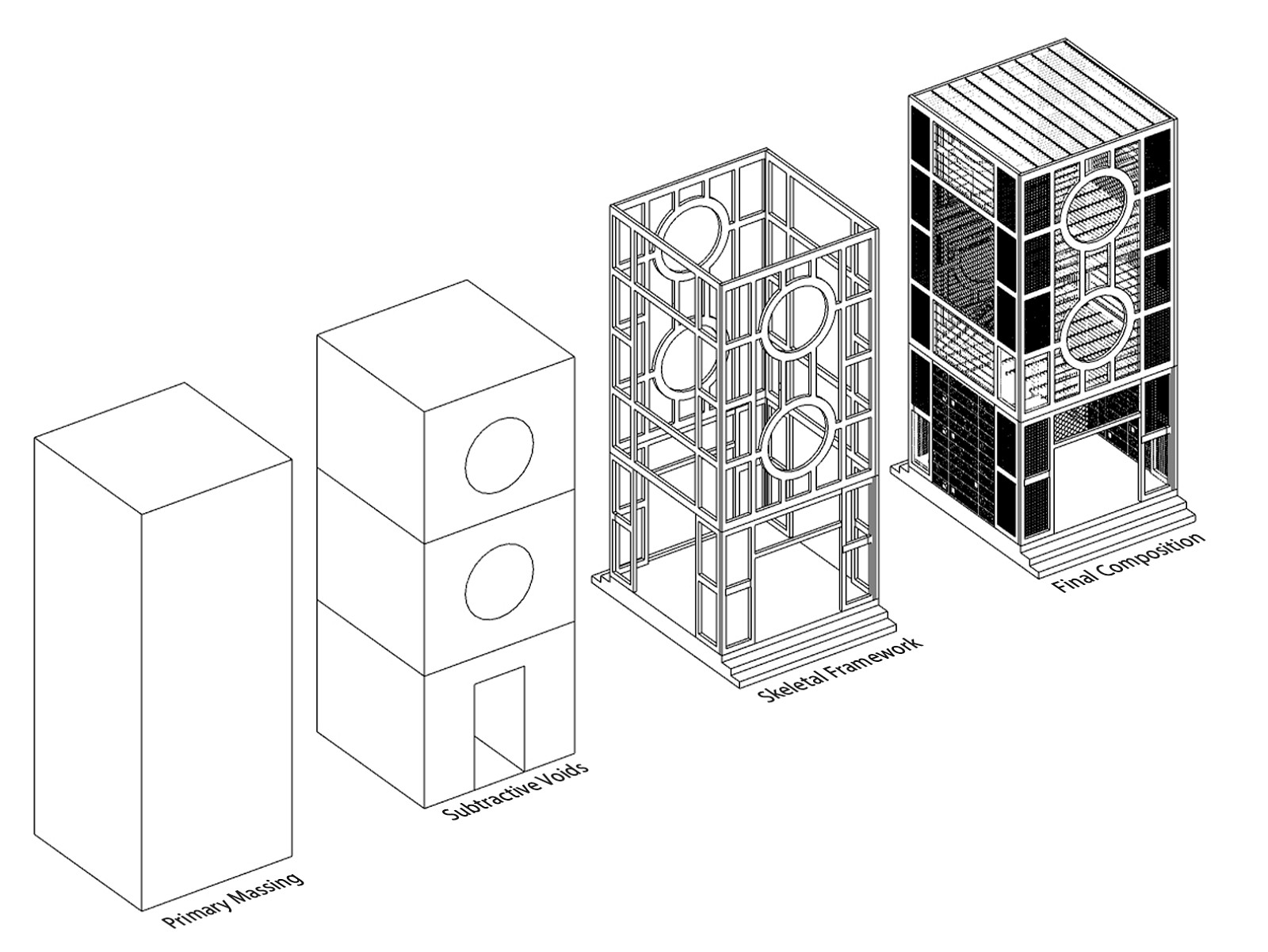
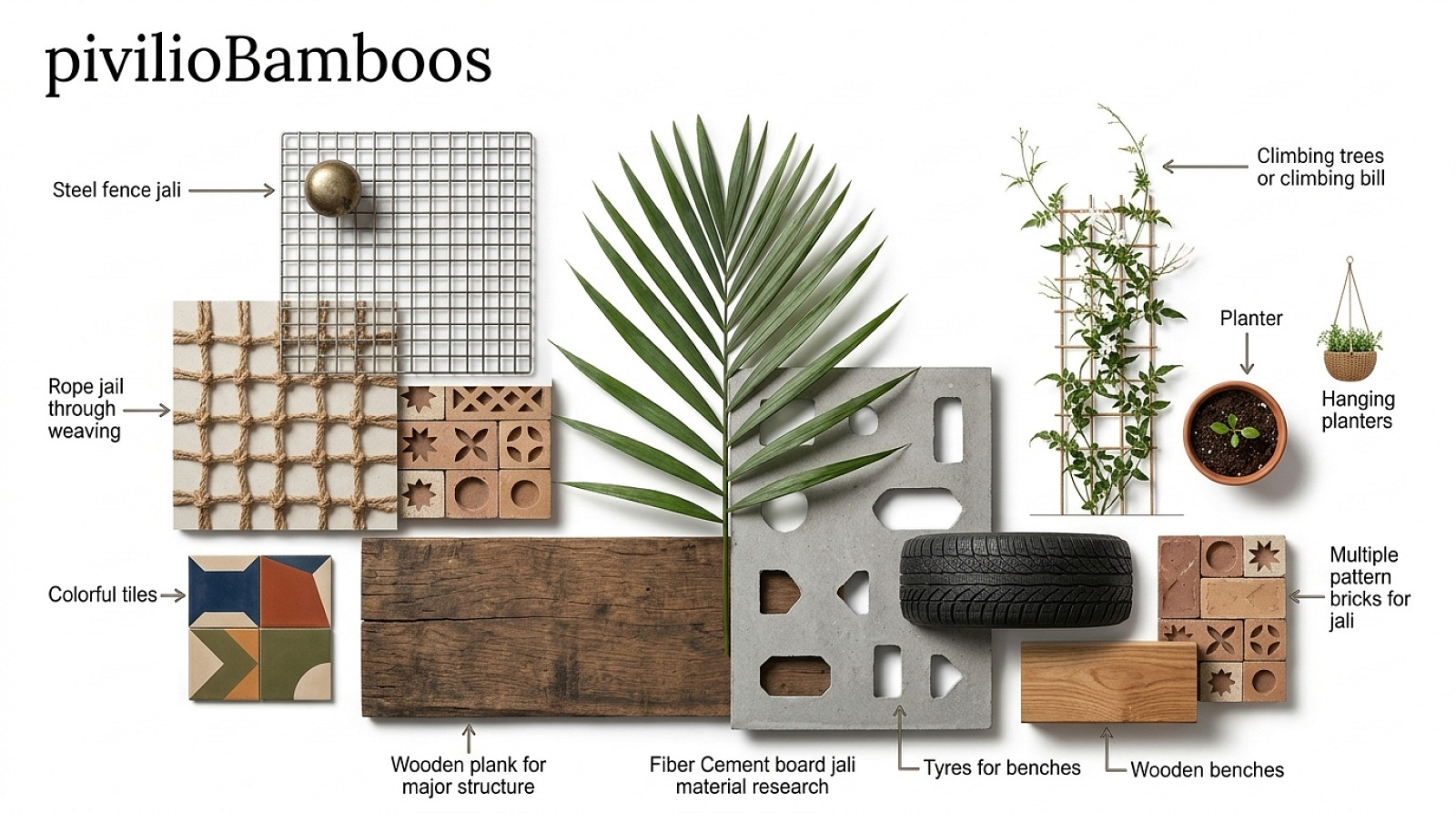
The form is developed by carving voids into a simple volume. This improves ventilation while also enhancing spatial quality. An outer layer of climbing plants is introduced to reduce heat gain, filter dust, and improve air quality.
Traditional elements such as jaali screens are used to control sunlight and airflow. These elements respond to the local climate while maintaining a connection with regional architectural practices.
The overall construction cost of the pavilion, based on current material rates, is approximately 1300 USD. This reflects a low cost, resource efficient approach that relies on simple materials and passive design strategies to achieve comfort and performance.


Copyright © 2026 INSPIRELI | All rights reserved. Use of this website signifies your agreement to the Terms of Use, Privacy Policy, and use of cookies.
