Sanga


Idea projektu
In today’s digital age, Filipinos have become deeply immersed in internet use. Almost all Filipino internet users use a mobile phone to go online: about 98.8 % of individuals aged 10 and over who use the internet access it via a cell phone (PSA, 2025). An estimated 50.94 million Filipinos are smartphone users, with a smartphone penetration rate of about 73.7% of the population (Slotta, 2025).
While these platforms provide efficient means of communication, they often reduce opportunities for physical interaction, outdoor engagement, and focused learning. Despite this, digital tools remain essential for research and information access, shaping how knowledge is consumed in contemporary society. This project proposes a public library that responds to this duality, acknowledging the digital while reintroducing the value of physical, exploratory learning.
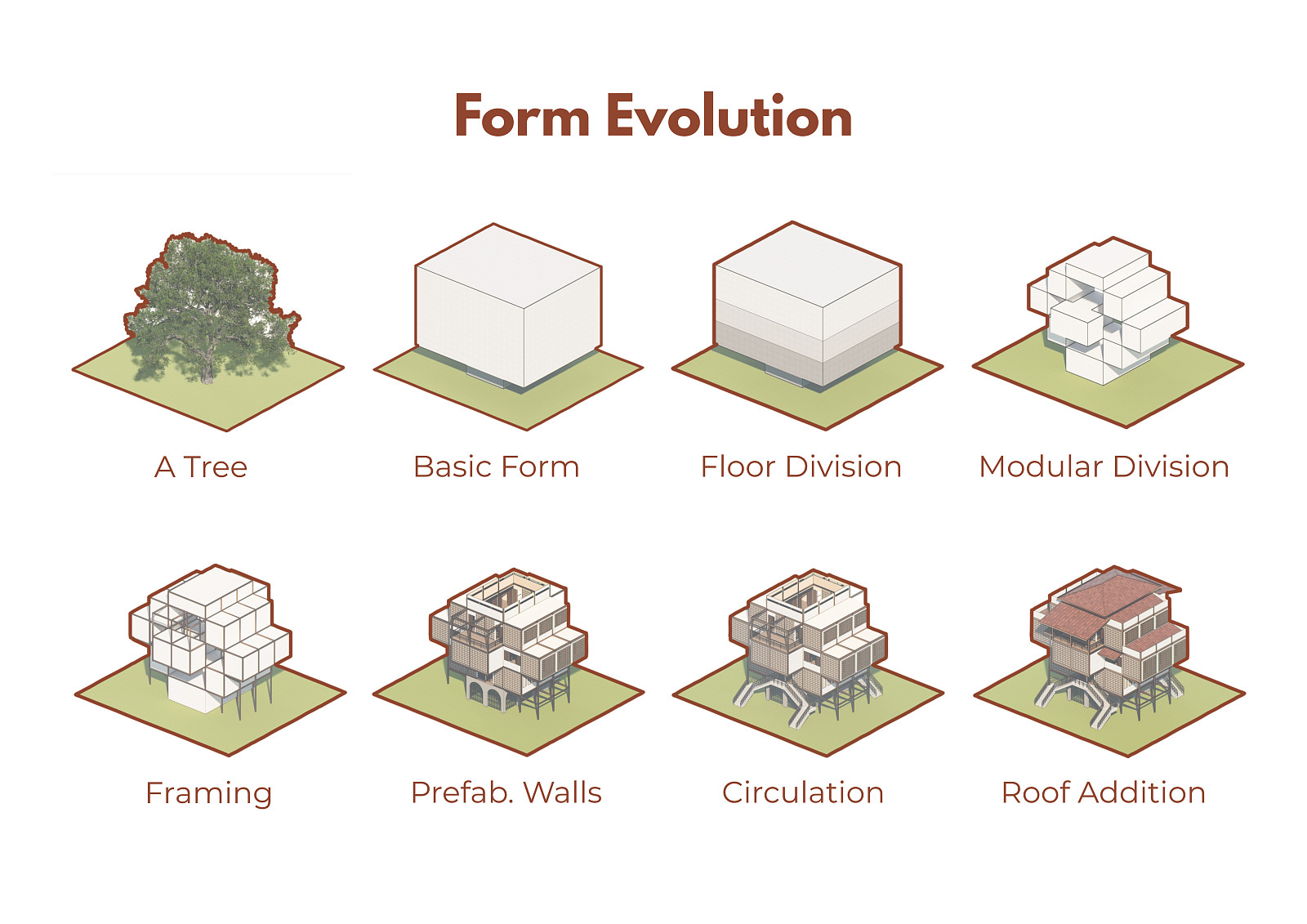
“Sanga,” or “tree branch” in English, draws inspiration from the nostalgic experience of playing under a tree, a familiar scene in Filipino childhood. It reimagines the library not merely as a place for reading but as a dynamic, social, and adaptive space.
Popis projektu
The proposed public library is located in Catmon, a barangay in the historic city of Malolos, which is renowned for its Spanish colonial heritage structures (bahay na bato). The barangay experiences occasional flooding, making site considerations important for the library’s design. The selected site is conveniently situated near the barangay school and barangay hall, providing accessibility for the local community.
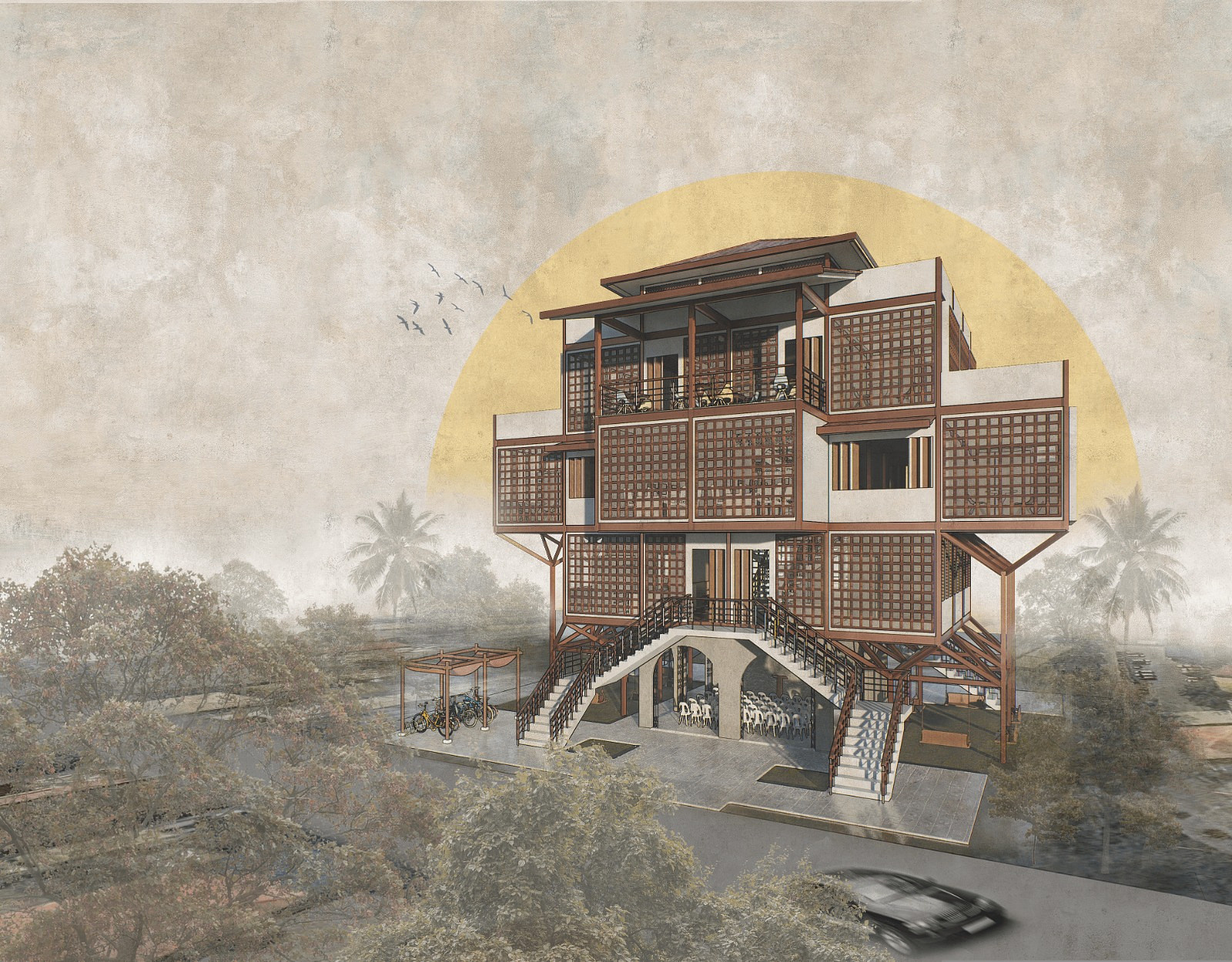
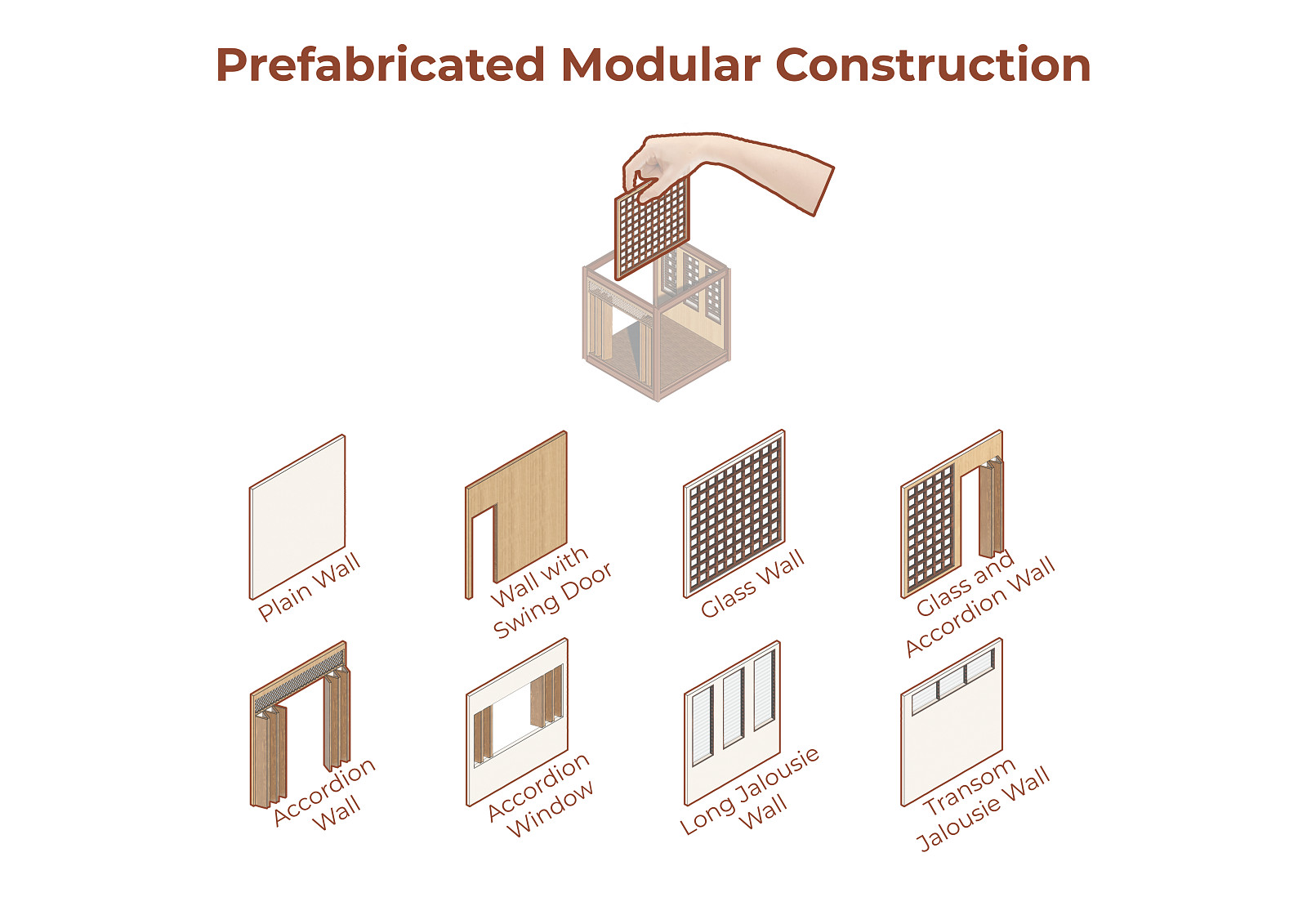
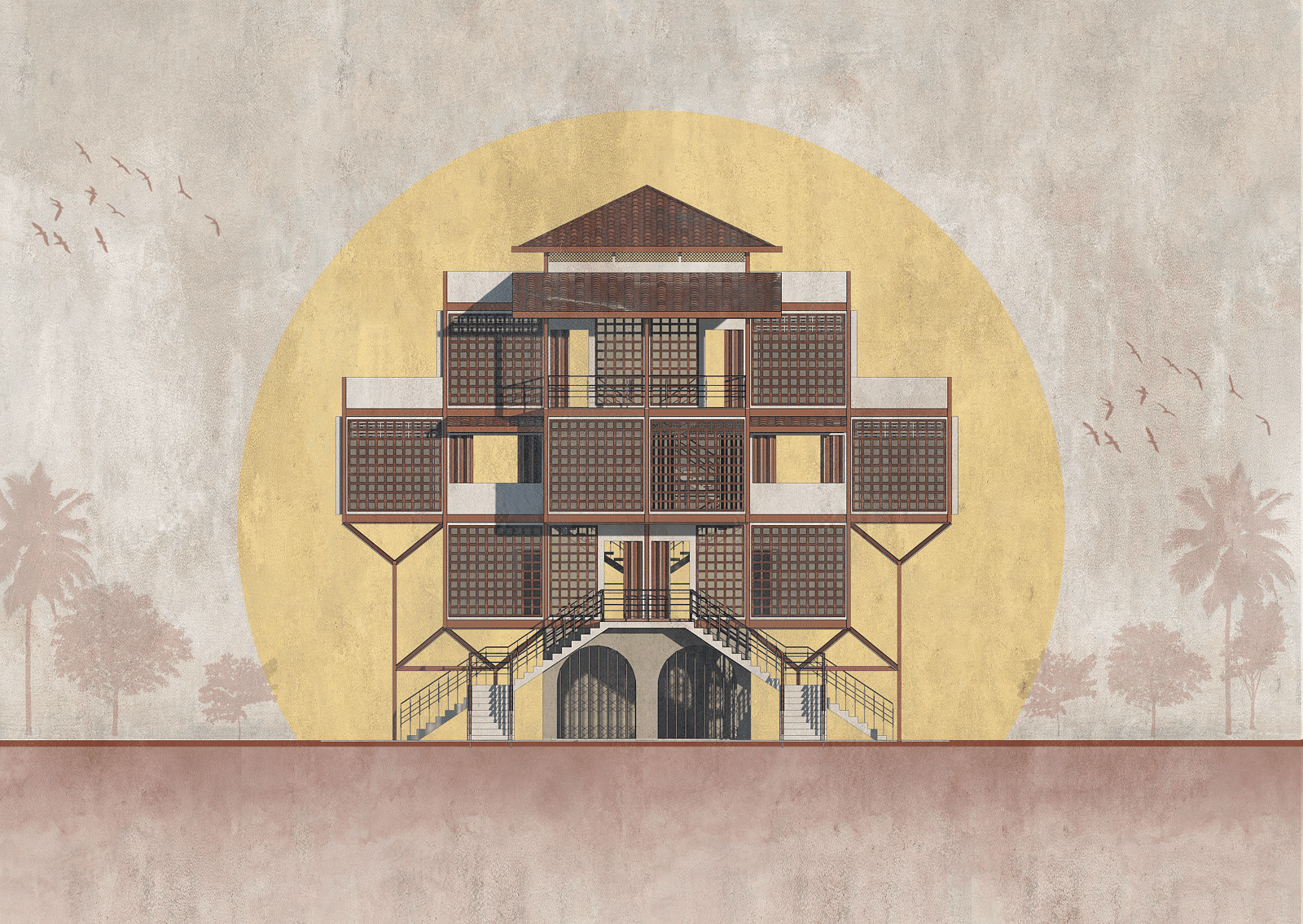
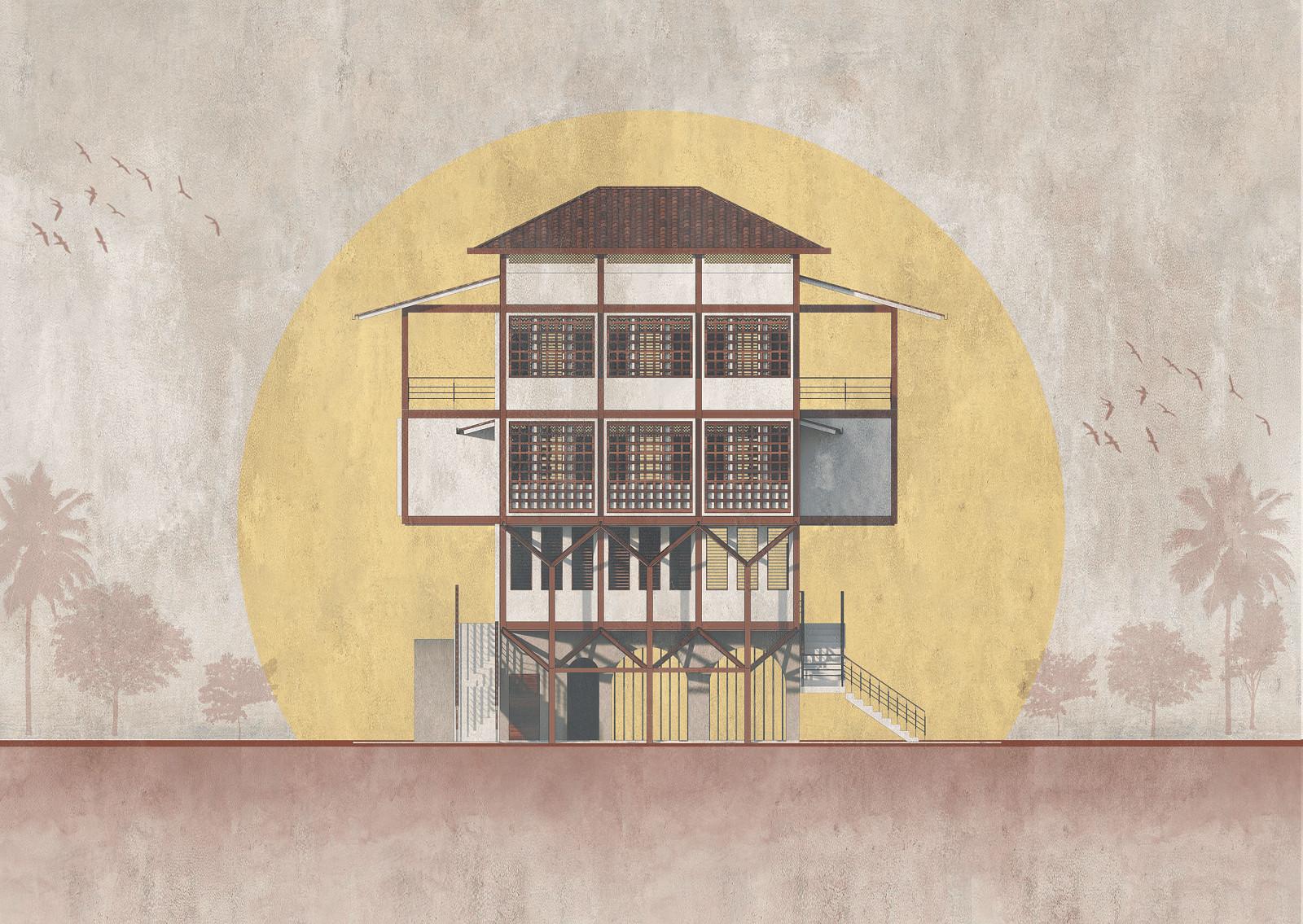
The design approaches the “sanga” concept and the existing site condition through a vernacular approach, reinterpreting the Filipino vernacular house "bahay na bato" to achieve climatic responsiveness, spatial permeability, and cultural continuity. Combined Metabolic Architecture, using modular and prefabricated construction, the design establishes a cost-efficient and replicable model for libraries.
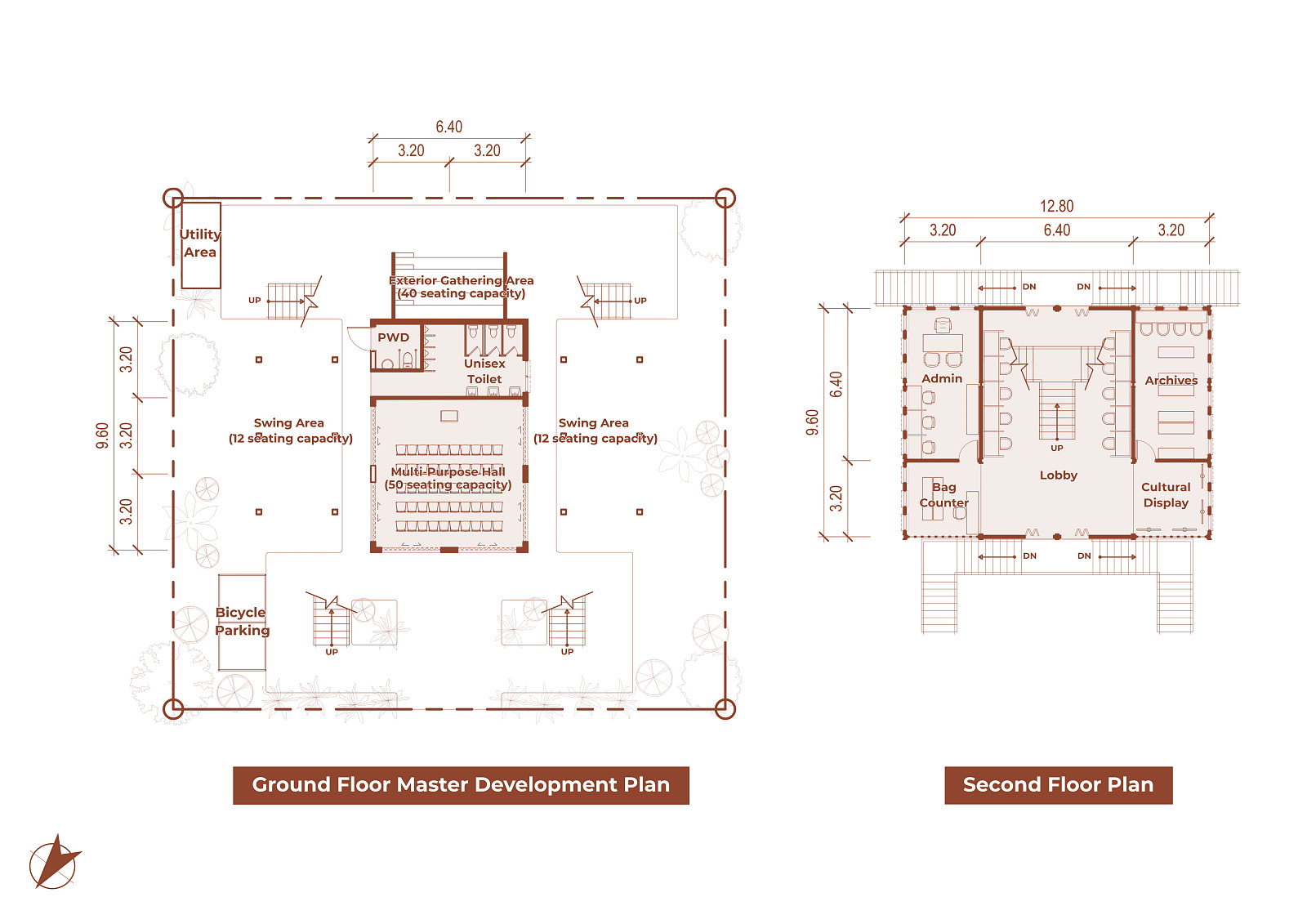
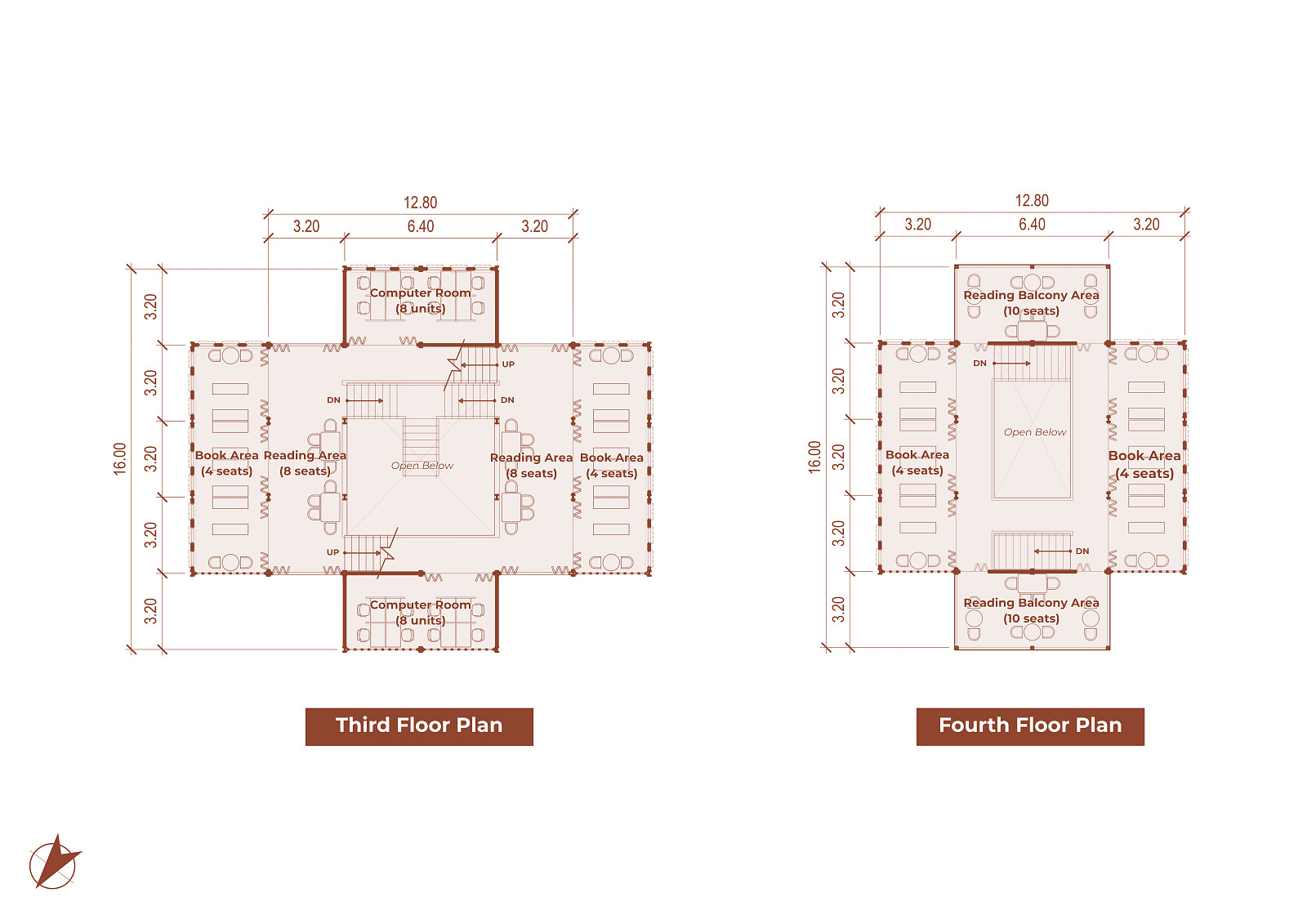
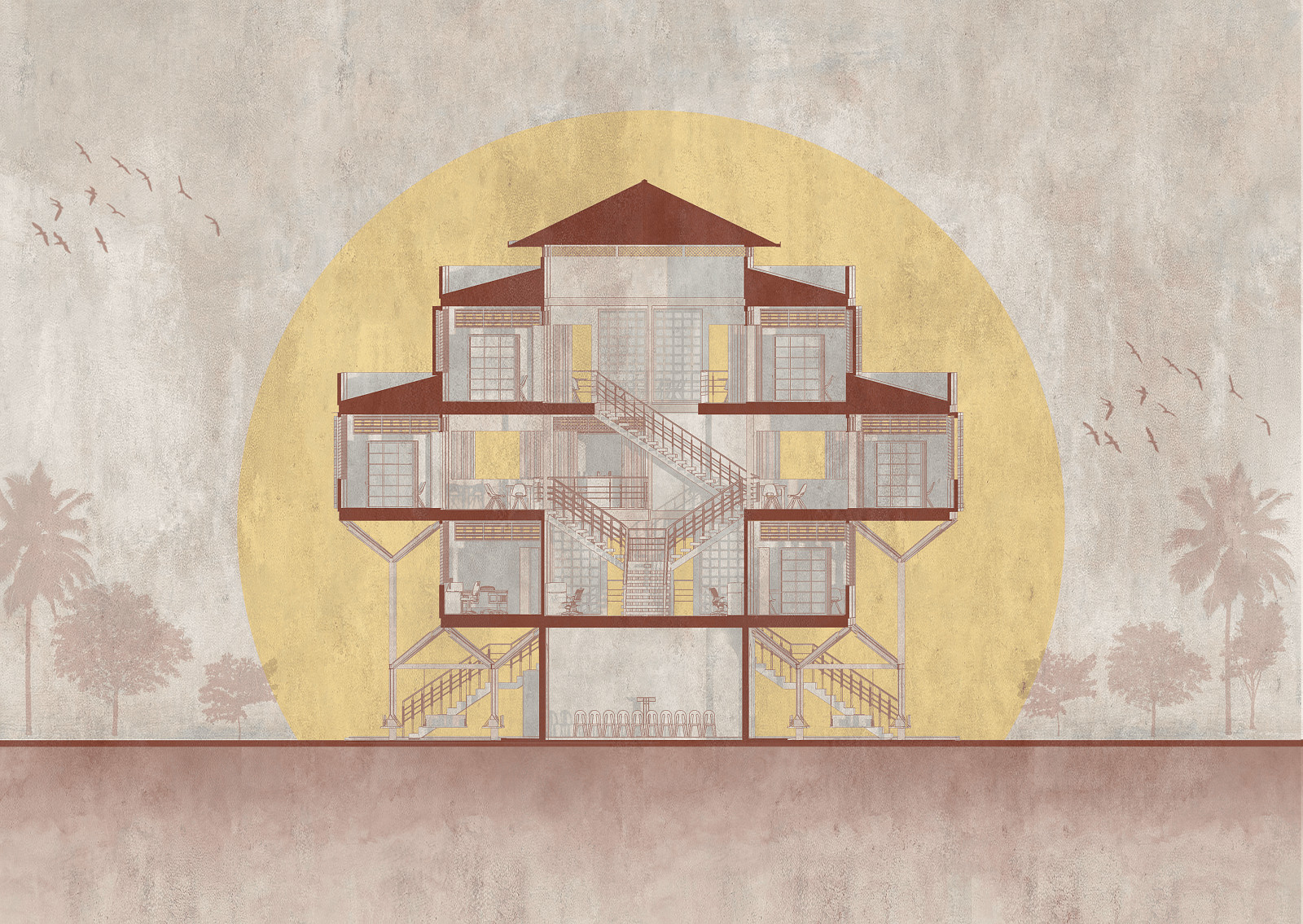
The proposal’s planning and form development are derived from the natural logic of a tree. The act of branching is spatially translated into a network of interconnected modules that encourage movement. Just as branches extend in multiple directions, the layout promotes non-linear navigation, allowing users to discover spaces organically rather than follow rigid paths.
Technické informace
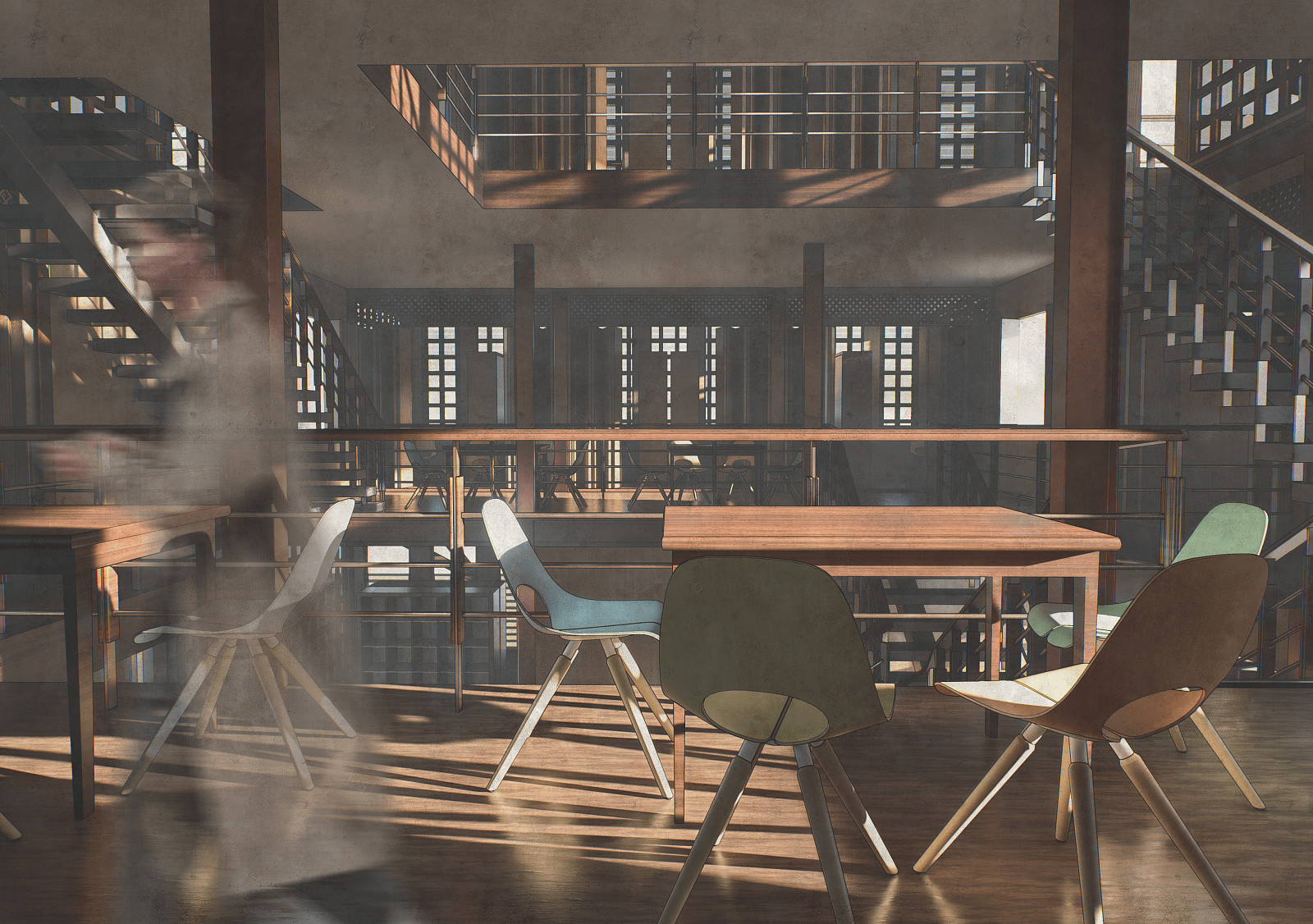
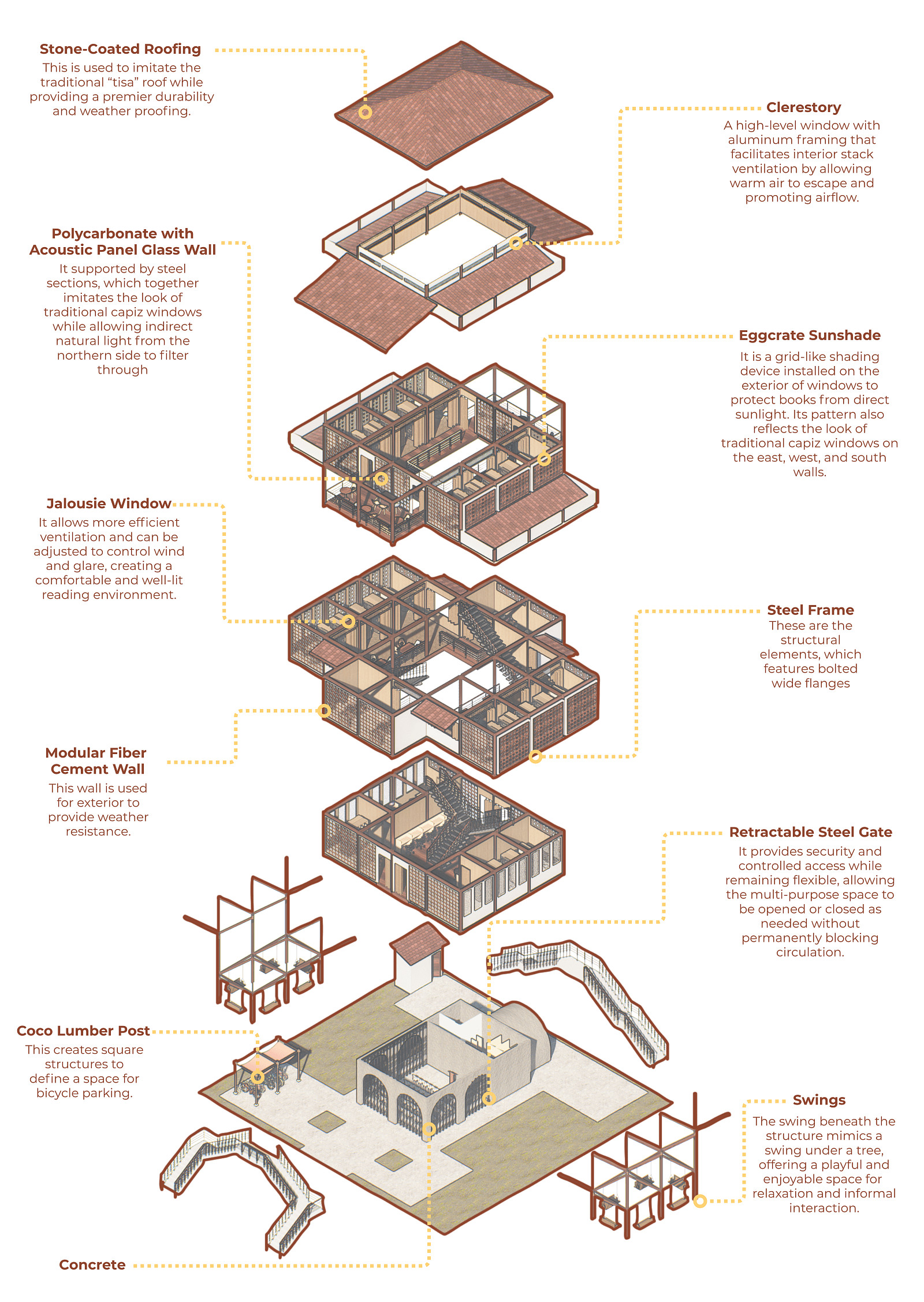
The library is envisioned as an adaptive space through the application of metabolic architecture principles. Like a tree that renews its leaves, the building is designed with reconfigurable modular walls that allow spaces to evolve. A floor grid system reinforces this flexibility, enabling various spatial configurations depending on user needs. Beneath this system lies a provision for ducts and wiring, ensuring the capability of the library to accommodate both traditional and computer rooms. To reinforce the modular approach furthermore, the structure utilizes a bolted steel frame system, enabling efficient assembly and allowing flexible reconfiguration or future adaptation of spaces.
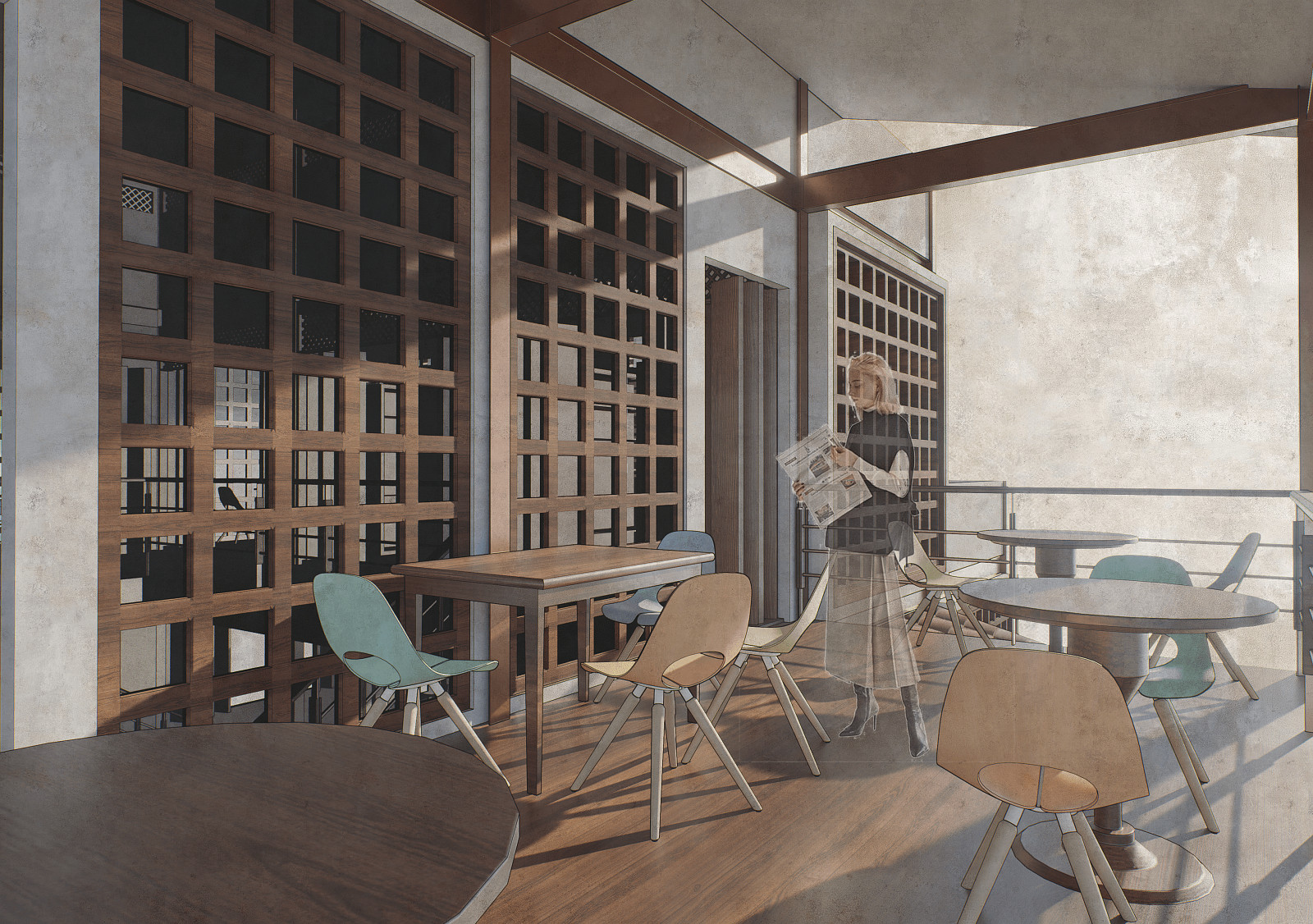
Passive cooling strategies such as stack ventilation are employed to regulate airflow, balancing ventilation while protecting books with the use of bookshelves with glass door to protect the books from dust accumulation. The façade utilizes grid-patterned glass walls and eggcrate sun shading devices, reflecting the image of “capiz windows” seen in bahay na bato. This approach not only enhances environmental performance but also aligns with the heritage character of Malolos.
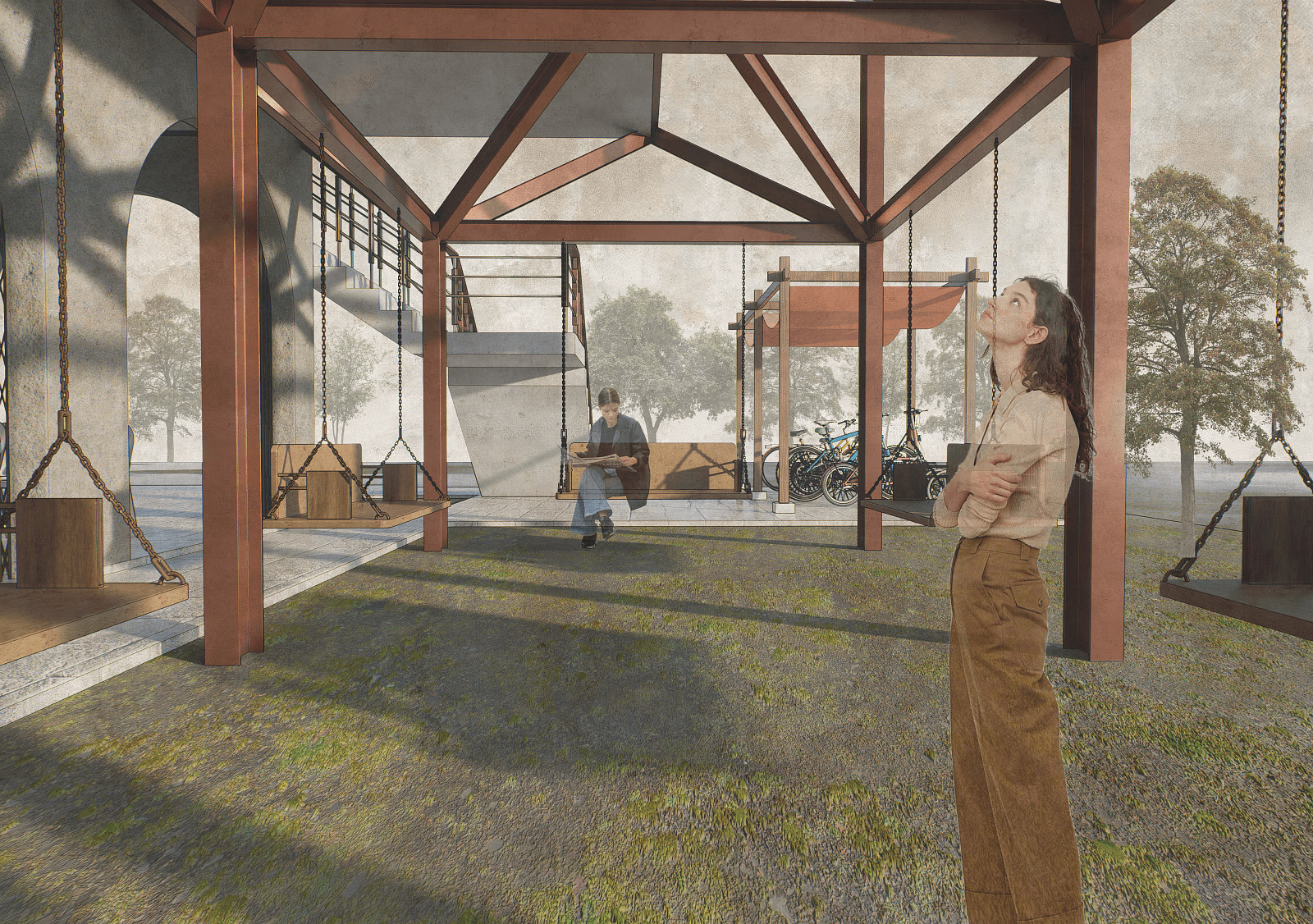
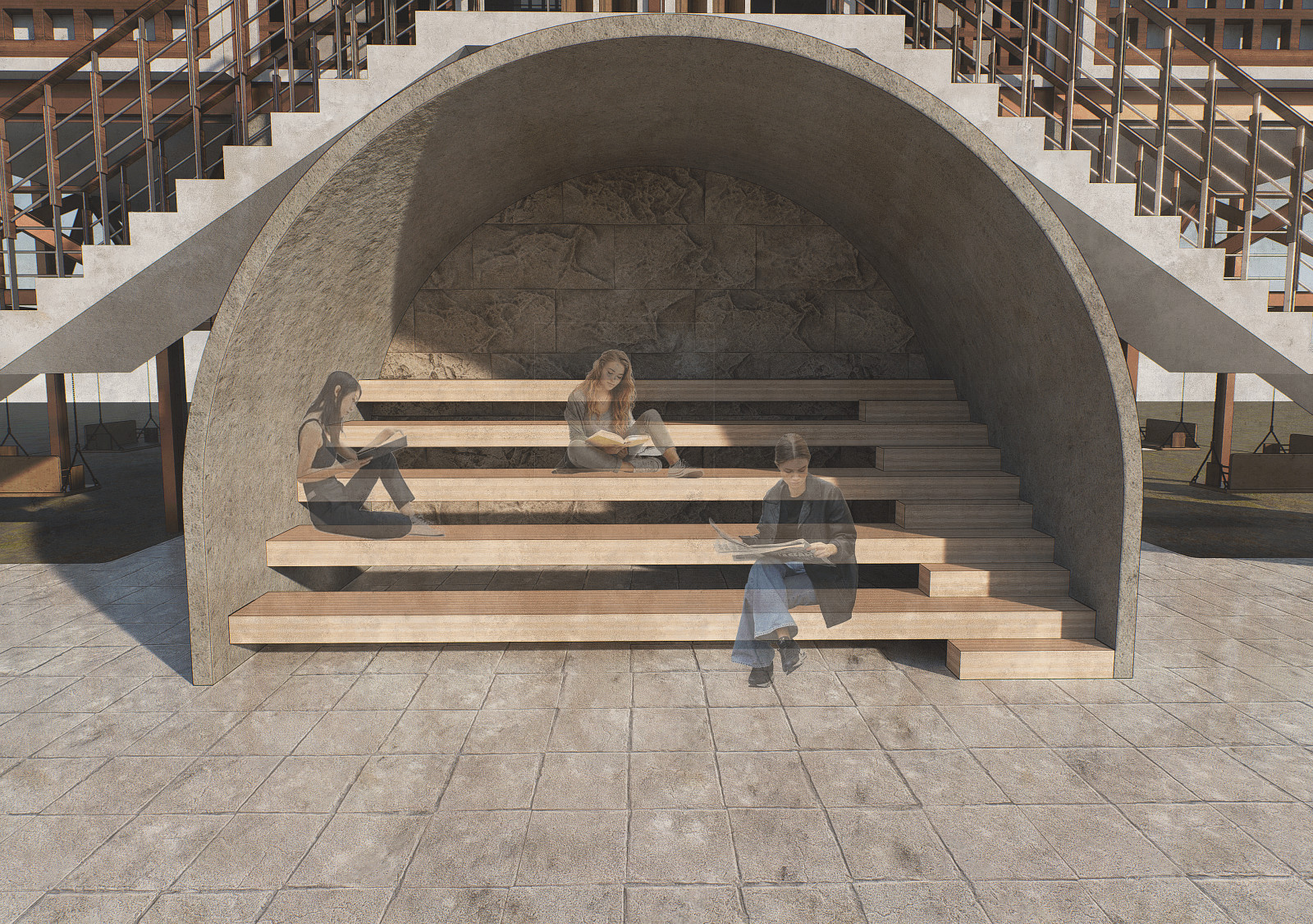
The proposed public library promotes 24/7 reading area accessibility, acknowledging diverse user schedules and community needs. The design considers Filipino proxemics, favoring close, interactive spatial relationships through an open-plan layout. Beneath the protruding modules, swings are integrated, transforming residual spaces into playful, interactive areas that translates a concept of “playing under a tree.”

Copyright © 2026 INSPIRELI | All rights reserved. Use of this website signifies your agreement to the Terms of Use, Privacy Policy, and use of cookies.