primary school


 Faten
Faten
Idea projektu
Project Title: Primary School Design
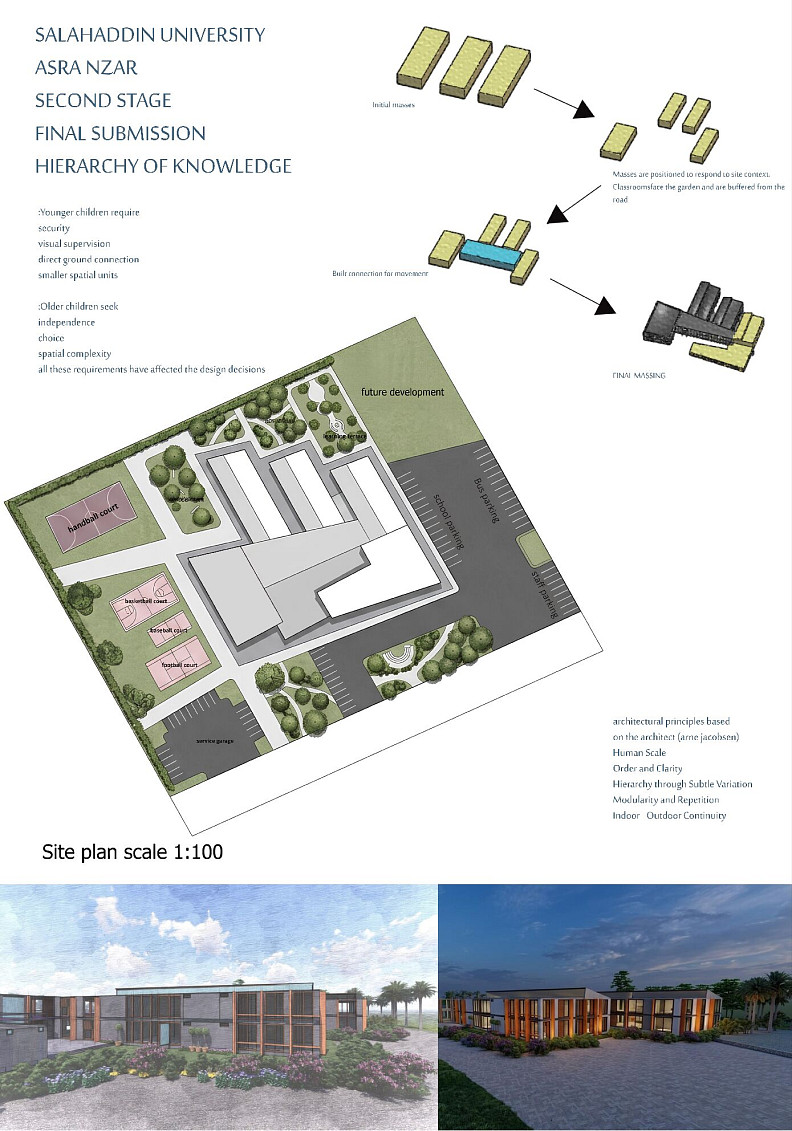
Concept: Hierarchy of Knowledge
Inspiration & Problem Statement
The inspiration behind this project stems from a fundamental question: how does space shape a child's ability to learn and grow?
In warm-climate regions, primary school design often overlooks the relationship between a child's age, their need for security, and their readiness for independence. The challenge is not simply building classrooms; it is creating an environment where every spatial decision supports a child's developmental stage.
The central design problem faced in this project was circulation, one of the most critical yet complex aspects of school design. Three layers of movement had to be resolved simultaneously:
Vehicular circulation: separating car access and parking from pedestrian zones entirely
Student pedestrian flow: ensuring safe, calm pathways for children away from roads and service areas
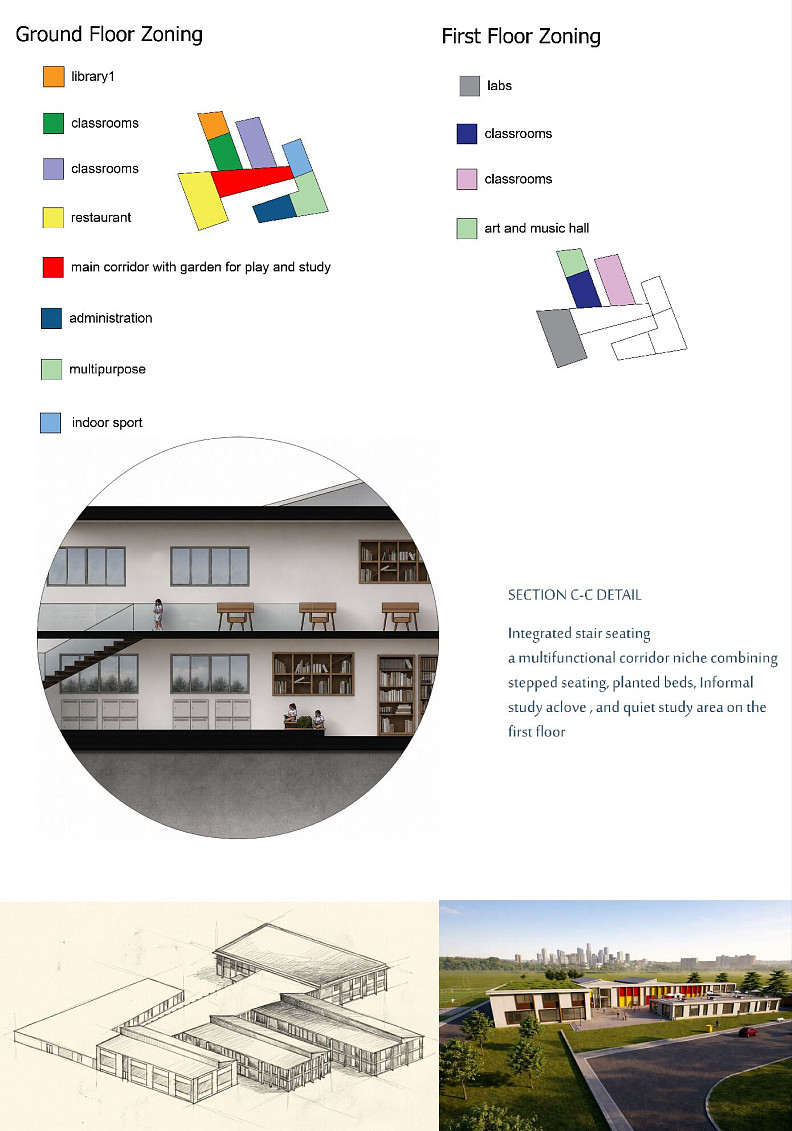
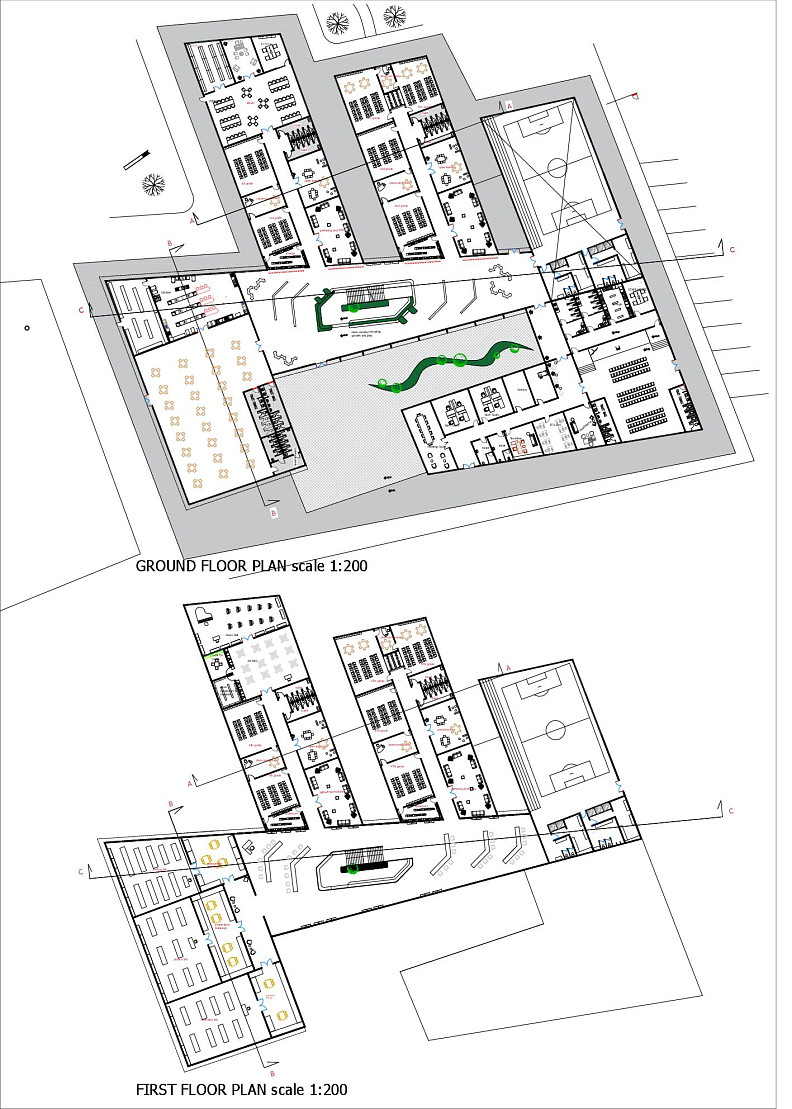
Spatial zoning: positioning classrooms away from noise sources, placing them toward the garden, while locating the entrance and administrative areas closer to the road and parking
Sports facilities: basketball and football courts were also deliberately positioned away from classroom wings to protect the acoustic and visual calm of learning spaces.
Goals & Objectives
1. Safety & Security
Ensure complete separation between vehicular and pedestrian movement, giving priority to the child's physical safety at every point of entry and transition.
2. Age-Responsive Design
Design spaces that respond directly to the developmental needs of each age group:
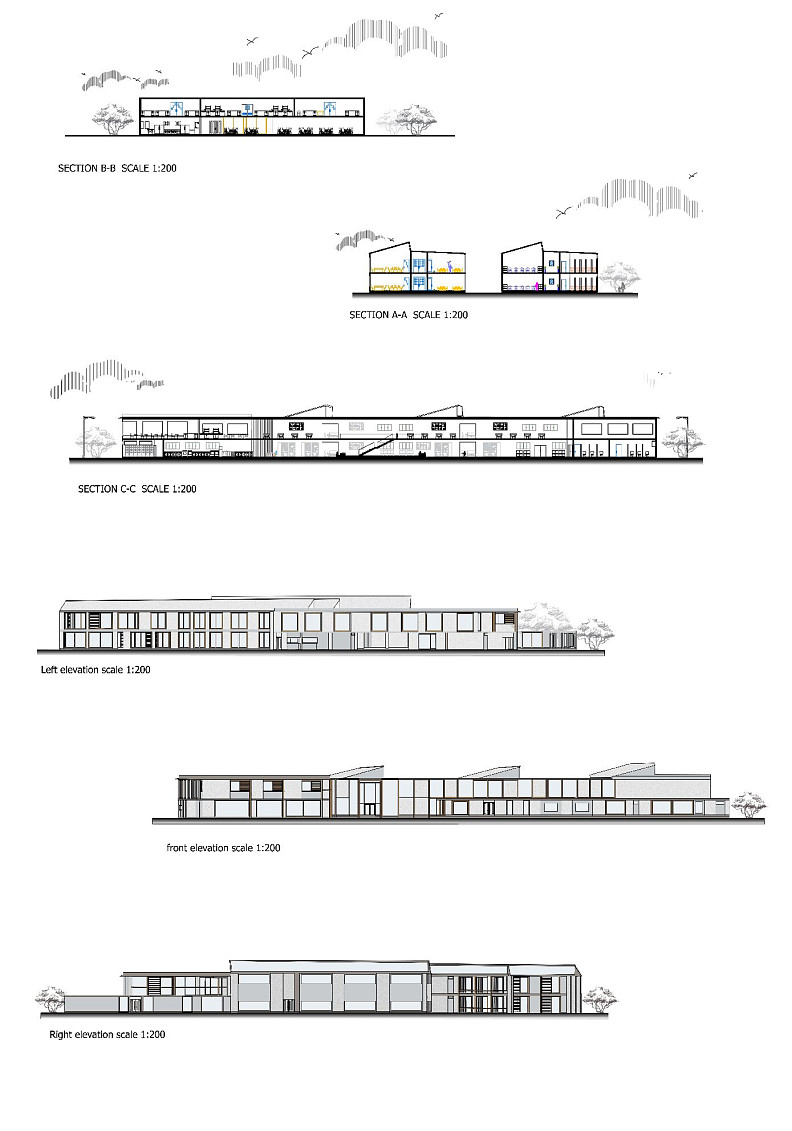
Younger children → enclosed, smaller-scale spaces; direct ground-level connection; strong visual supervision by teachers; simple, legible circulation with minimal traffic
Older children → larger, more open and complex spaces; greater independence in movement; access to upper floors, open terraces, and dynamic learning environments
3. Learning Environment Quality
Locate all classrooms away from road noise, parking areas, and sports courts, orienting them toward gardens and open green space to create quiet, focused, and stimulating places for learning.
4. Climate-Responsive Design
Respond to the warm climate through spatial planning. open corridors, shaded outdoor areas, cross-ventilation strategies, and planted beds integrated into the building's social spaces.
5. Multifunctional & Social Spaces
Move beyond the corridor as mere circulation. transform transitional spaces into places of informal learning, social gathering, and rest, as seen in the integrated stair seating niche on the first floor.
The Core Design Philosophy:
A child should feel held by their school when they are young, and released by it as they grow.
Popis projektu
Modern Primary School (Educational Building)
Final Space Program of the School
Space Program of the Modern Primary School (288 students) future expansion 6 classes (7,8,9) .
Learning Area From 1st to 2nd stages: 96 students
No. Name of Space No. Net Area (m2)
Required Area (m2)
1 Lobby + Gathering area 1 100 100
2 Indoor Classroom 4 63 m2 (9*7m) 252
3 Restroom (one toilet/20students) 9 4 36
4 Classroom annex room 2 12 24
5 Student Storage Area (Lockers) - variable ……….
6 Open Learning Space 1 variable ……….
Learning Area From 3rd h to 4th stages: 96 students
1 Lobby + Gathering area 1 100 100
2 Indoor Classroom 4 63 m2 (9*7m) 252
3 Restroom (boy) 5 4 20
4 Restroom (girl) 5 4 20
5 Classroom annex room 2 12 24
6 Student Storage Area (Lockers) - variable ……….
7 Open Learning Space 1 variable ………
Learning Area From 5th to 6th stages: 96 students
1 Lobby + Gathering area 1 100 100
2 Indoor Classroom 4 63 m2 (9*7m) 252
3 Restroom (boy) 5 4 20
4 Restroom (girl) 5 4 20
5 Classroom annex room 2 12 24
6 Student Storage Area (Lockers) - variable ……….
7 Open Learning Space 1 variable ………
Educational & Entertainment Activities
1 Science Laboratories
(Biology, Chemistry, and Physics), (Teaching and Practical area)
(Note: each lab has to include Lab Hall+1 room for preparation+1 store room for materials and equipment)
3
90m2 (9*10m)
270
2 Computer Laboratory 1 72m2 (8*9m) 72
3 Music& Art Hall (including: art hall with washing area+ room for crafts+ room for materials +store room)
1
72m2 (8*9m) 72
4 Sports hall with changing rooms & Toilets (male and female) 1 (15 *28m)+ 60m2 480
5 Interior Gardens for teaching and playing 2 Depend on design ………….
Multipurpose hall
1 Main hall (seating area) 1 120m2 (8*15m) 120
2 Changing Room + Toilet (boy) 1 24 24
3 Changing Room + Toilet (girl) 1 24 24
4 Storage 1 30 30
5 Staff Room 1 24 24
6 Toilets for male &female (guests) 2 20 40
Library
1 Library (Student seating area) 1 170m2 (10*17m) 170
2 Admin. Room+ Toilet 1 30 30
3 Staff zone 1 24 24
4 Books storage 1 40 40
Administration
1 School Entrance & Lobby, Reception 1 72 72
2 Headmaster 1 32 32
3 Secretary 1 16 16
4 Meeting Room 1 54 54
5 Staff Room 2 28 56
6 IT Room 1 24 24
7 Medical Room 1 16 16
8 Service Room 1 12 12
9 Staff Restroom (male) 2 6m2 (with hand washing area) 12
10 Staff Restroom (female) 2 6 m2 (with hand washing area) 12
Services
1 Restaurant (Seating Area: Students) 1 300 300
2 Seating Area: Staff (teachers) 1 80 80
3 Kitchen and Storage (with staff restrooms, changing)s 1 100 100
4 Restrooms for Teachers (male & female) 2 4 8
Restrooms (Boys) 3 4 12
5 Restrooms (Girls) 3 4 12
6 Equipment Store 1 30 30
Outdoor Facilities
Outdoor Learning Terrace 6 24 144
Football court 1 (14 *26m) 364
Basketball court 1 (15 *28m) 420
Volleyball court 1 (9 * 18m) 162
Large handball court 1 (20*40m) 800
Long jump path 1 45m length ………….
Staff Car Park 20 Depends on the design (standards)
School parking 30 Depends on the design (standards)
Bus park 6 Depends on the design (standards)
Amphitheater 1 Depends on the design (standards)
School garden …….. ………….
Technické informace
Structural System
Reinforced concrete frame structure with concrete columns and slabs.
Foundation
Isolated footings.
Walls
Load-bearing and non-load-bearing brick masonry walls throughout the building.
Flooring
Ceramic tiles in classrooms and corridors / exposed concrete in open and transitional areas / timber decking in stair seating niches and social spaces.
Vehicular Areas
Asphalt paving for the parking area and vehicular access road.
Pedestrian & Landscape Paving
Brick paving for pedestrian pathways leading to garden areas and landscape zones.
Windows & Glazing
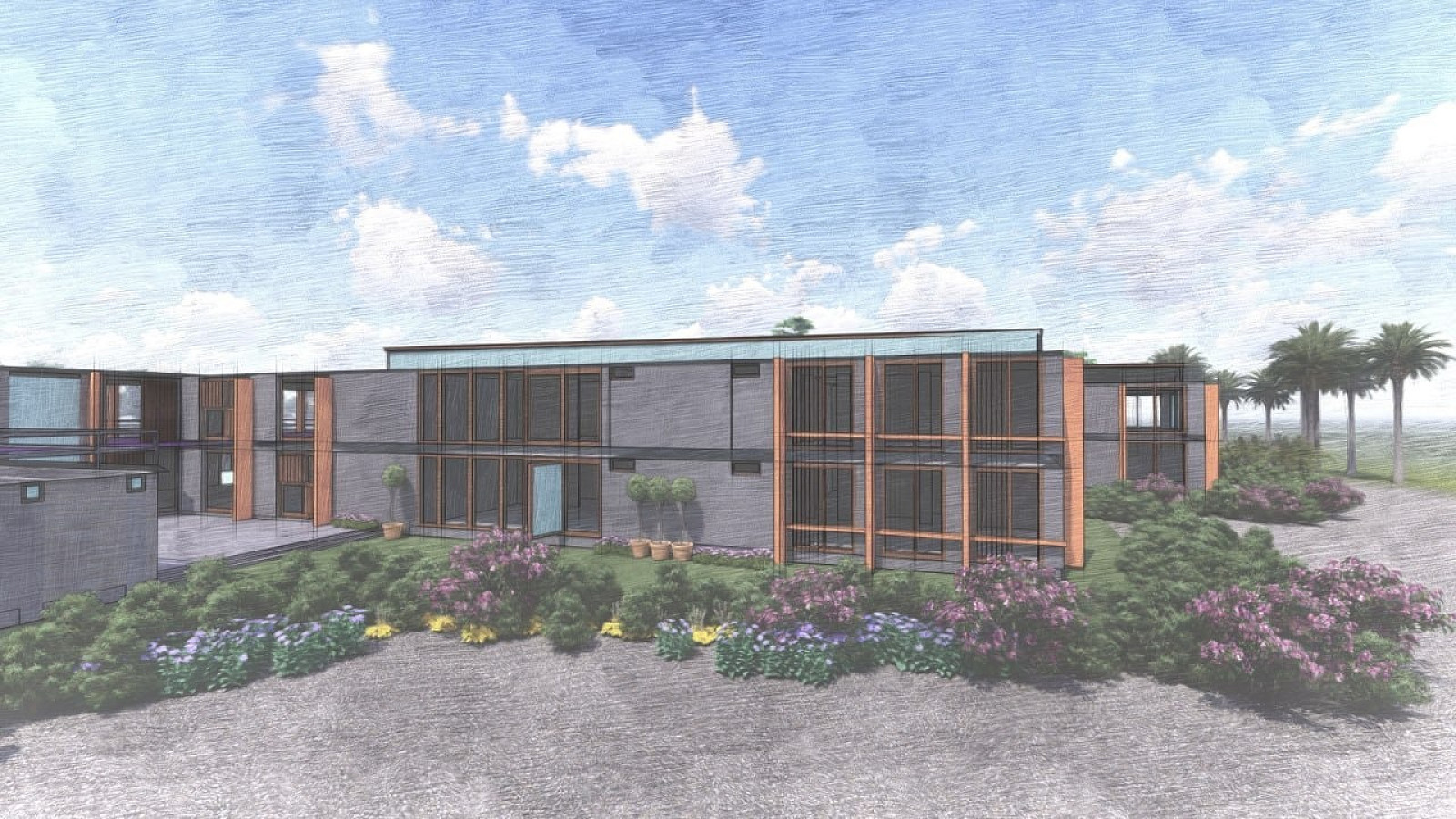
Wooden-framed double glazed panel windows — providing natural light while maintaining thermal comfort suited to the warm climate.
Façade Finish
White plaster render applied to external walls, giving the building a clean, unified appearance.
Dokumentace

Copyright © 2026 INSPIRELI | All rights reserved. Use of this website signifies your agreement to the Terms of Use, Privacy Policy, and use of cookies.
