Revitalization of Idrakpur Fort at Munshiganj


 Latifa Sultana
Idea projektu
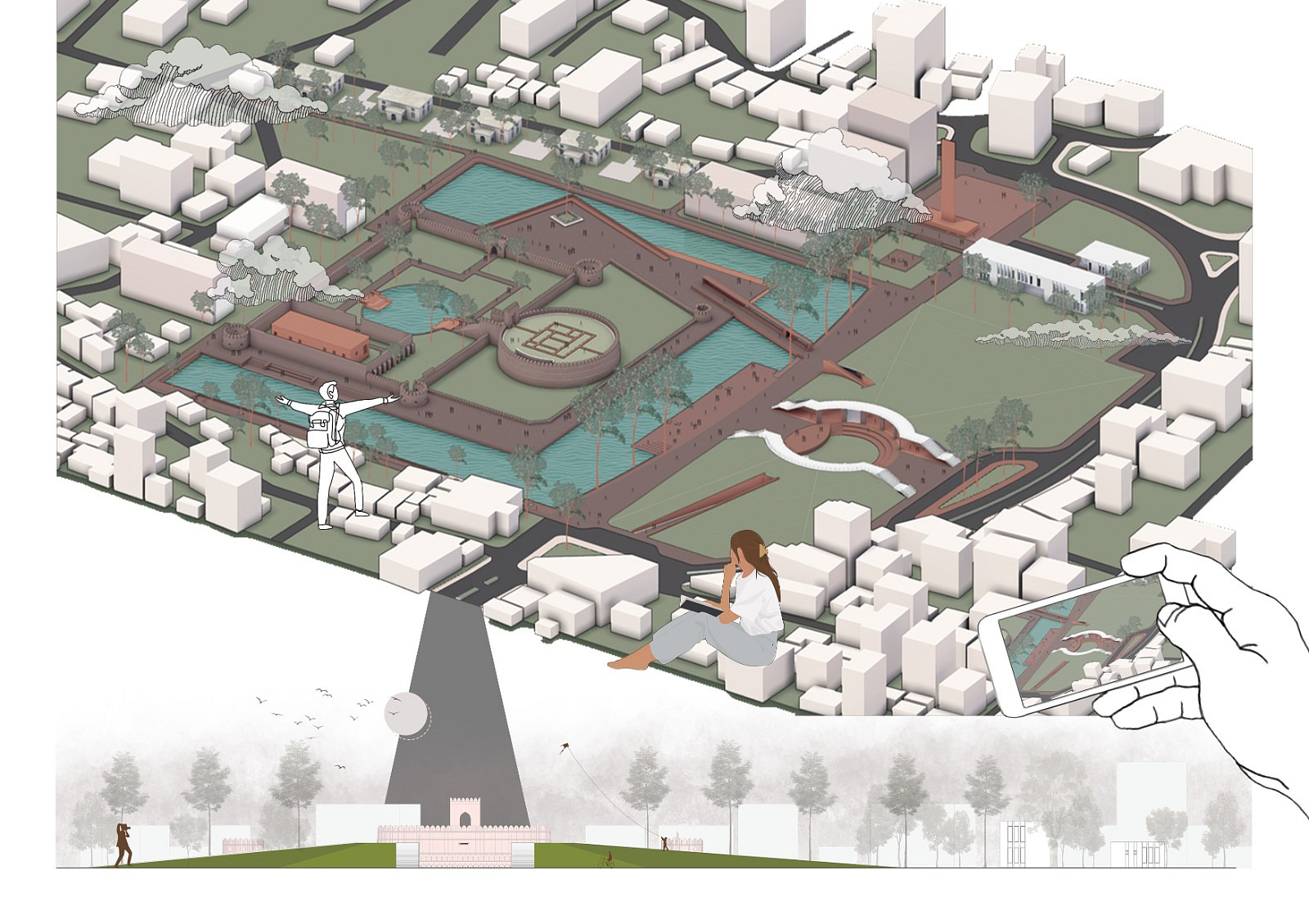
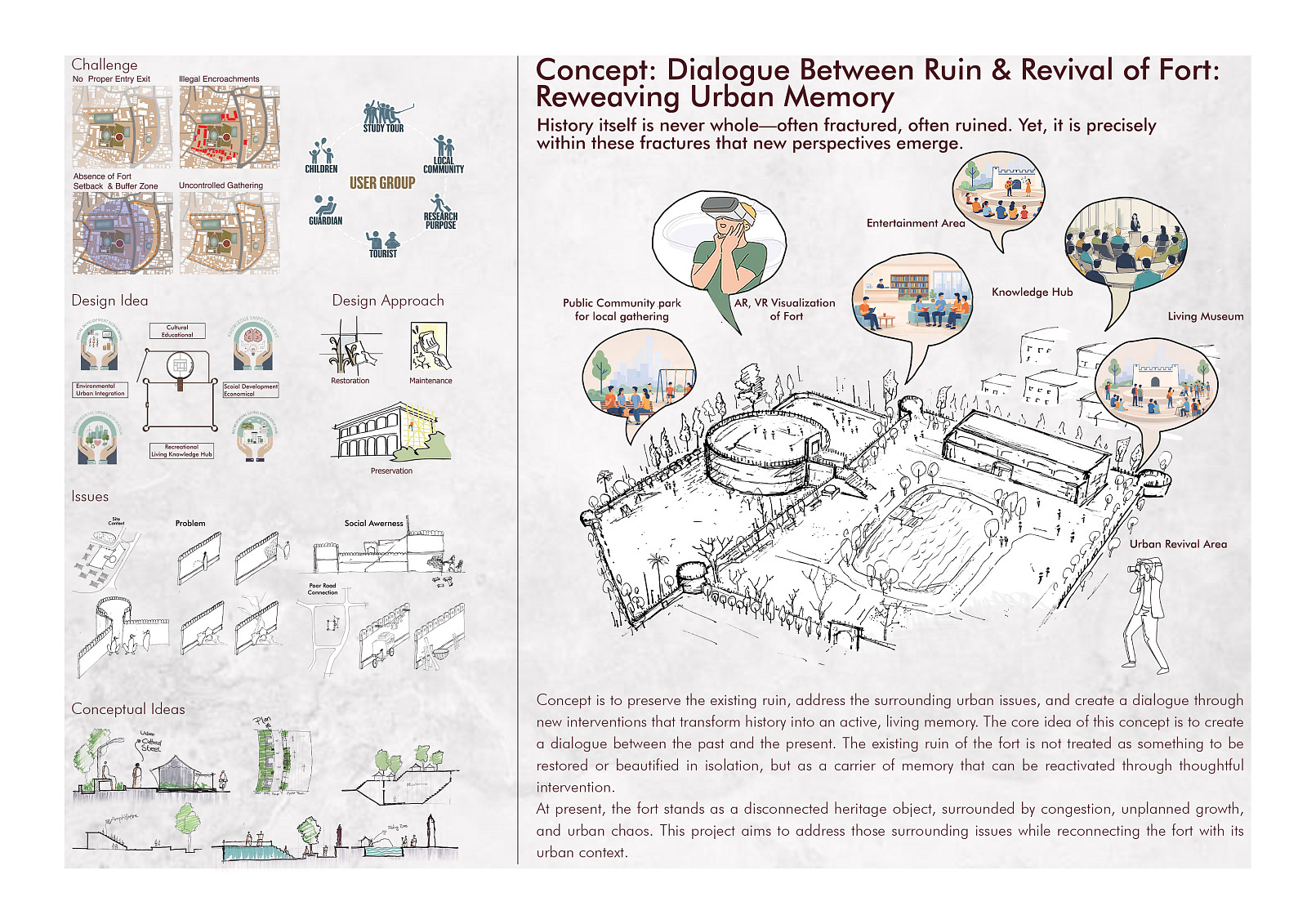
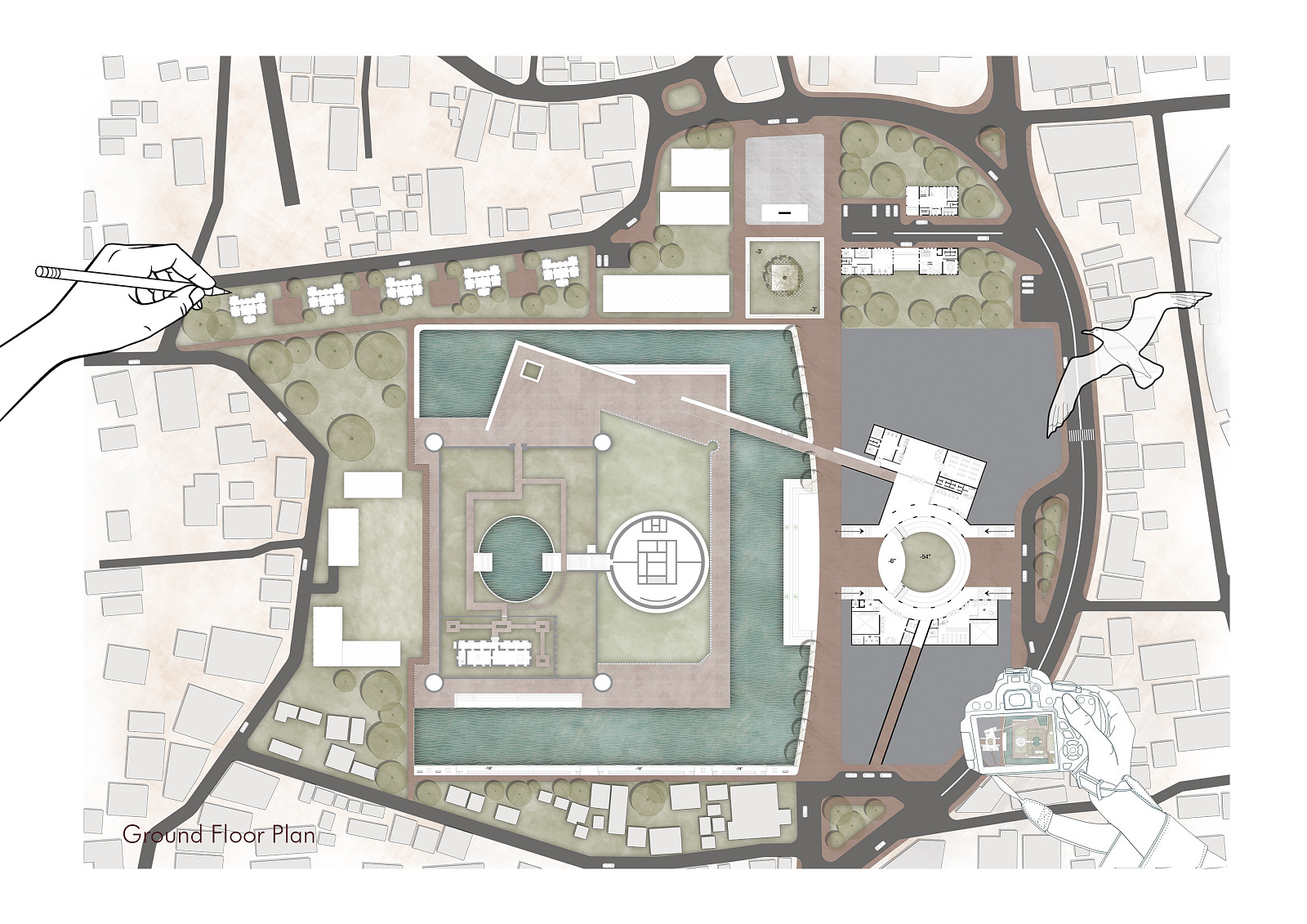
Creating a contextual archaeological museum and heritage-sensitive landscape system that breathes new life into the historic Idrakpur Fort site, transforming an endangered monument into a vibrant public landmark integrating heritage conservation, education, and community engagement.
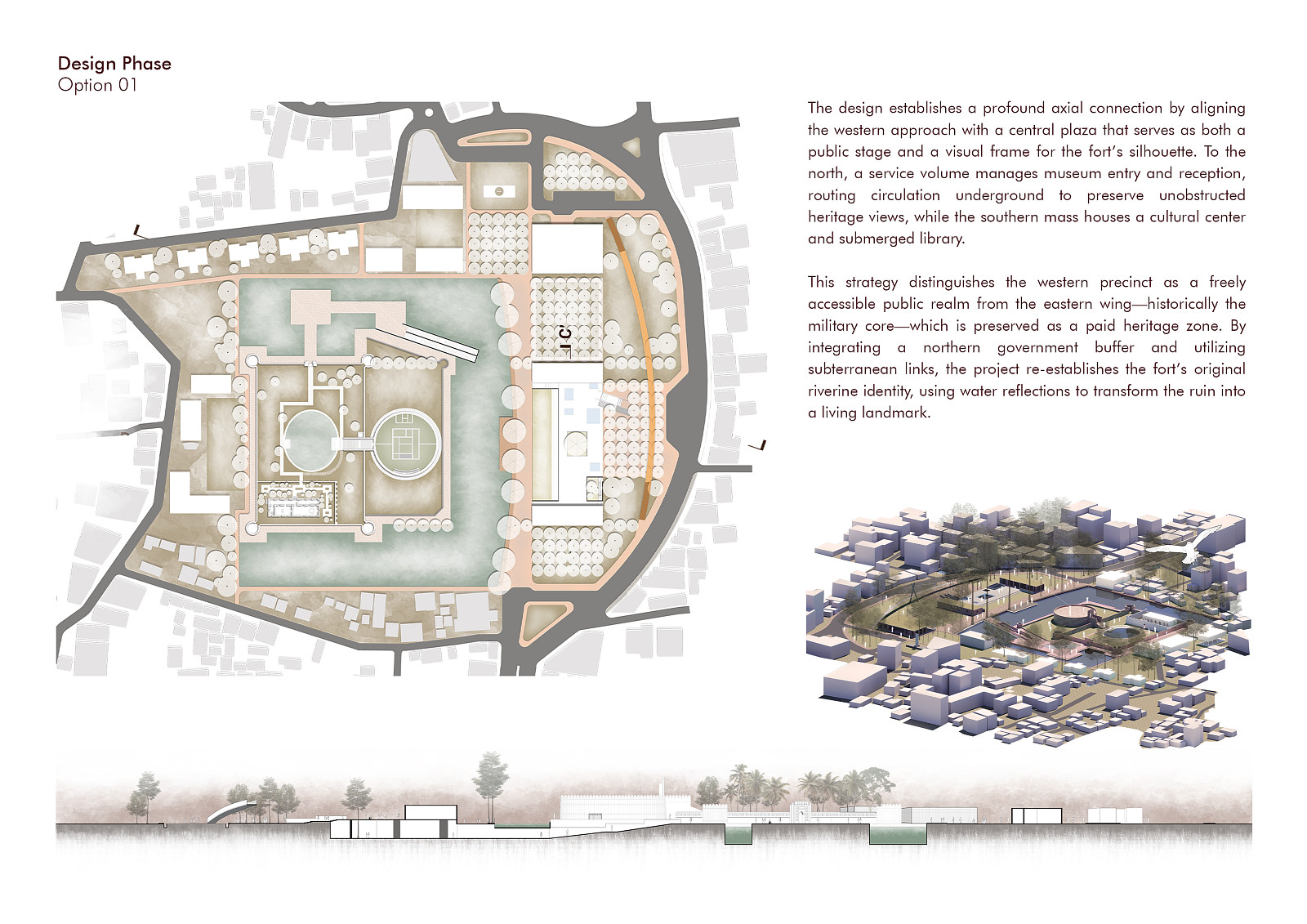
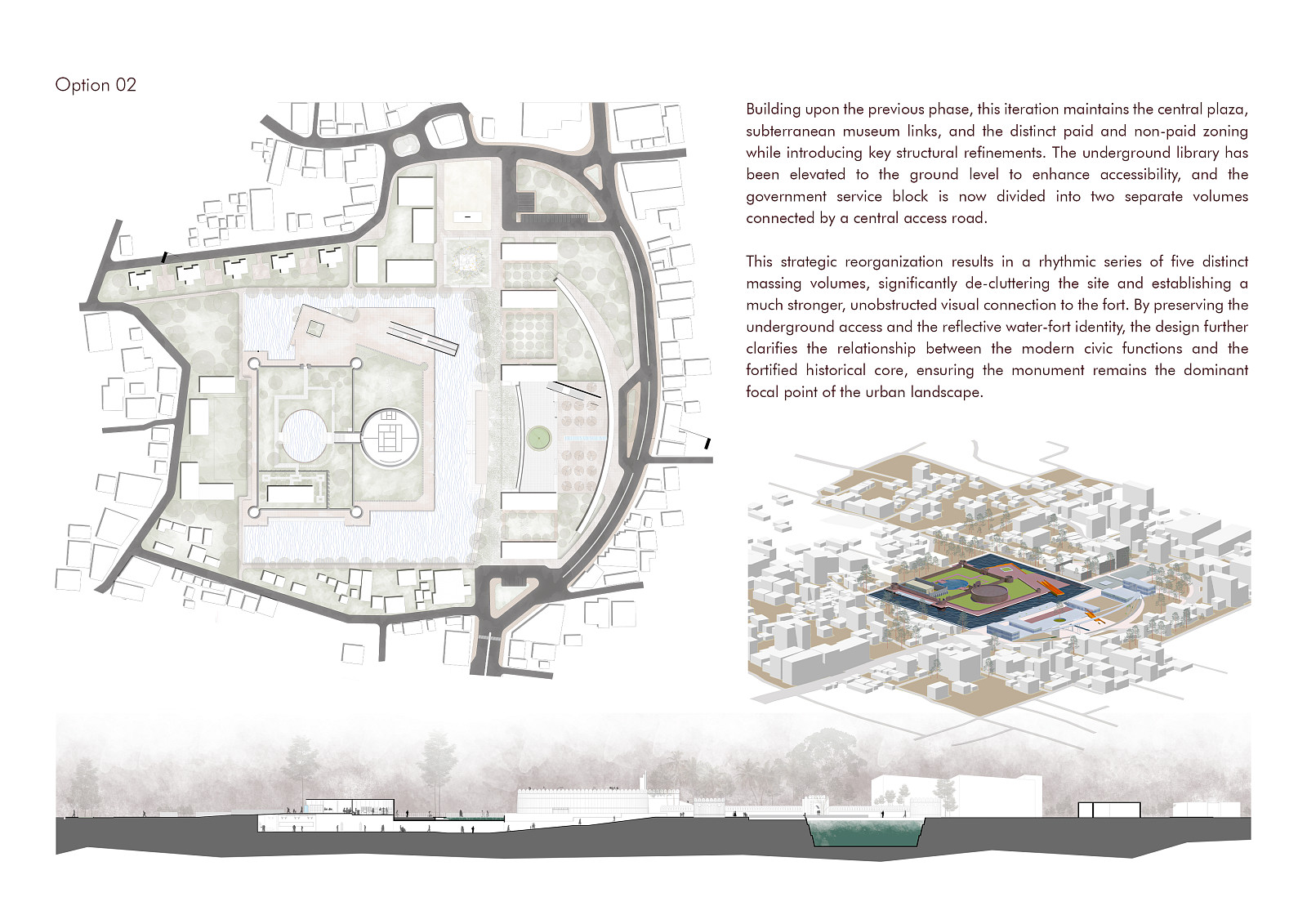
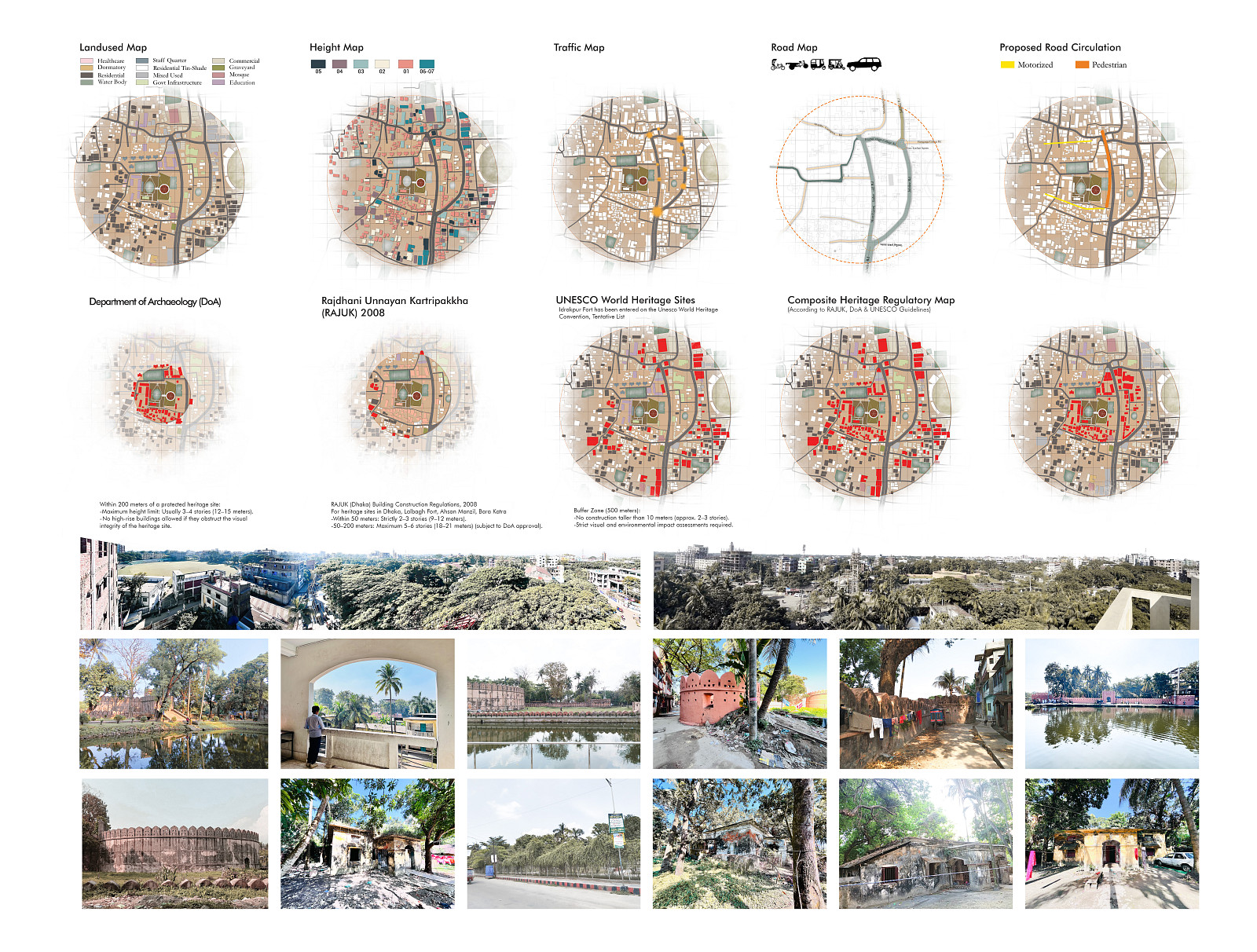
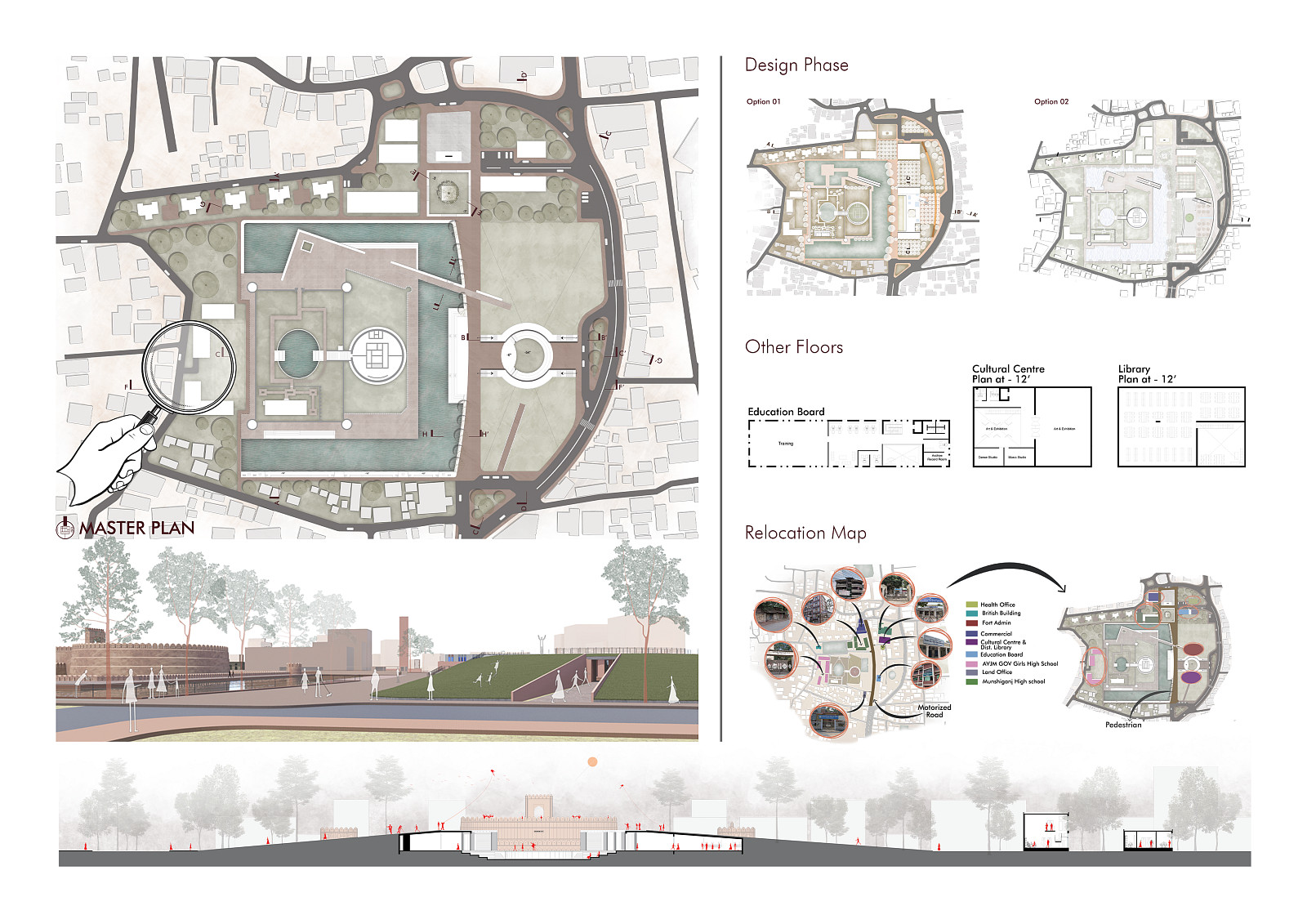
To achieve this, the project strictly follows international and local heritage rules and regulations to systematically dismantle the existing urban obstacles and visual blockages that have long suffocated the monument's historical prominence. Furthermore, the design addresses the chaotic immediate surroundings by reorganizing and relocating the cluttered, unorganized government infrastructures into a well-structured, cohesive layout. This critical urban decluttering restores the fort’s visual dominance, reclaims its historic viewsheds, and establishes a seamless connection between the ancient structure and the contemporary urban fabric.
Popis projektu
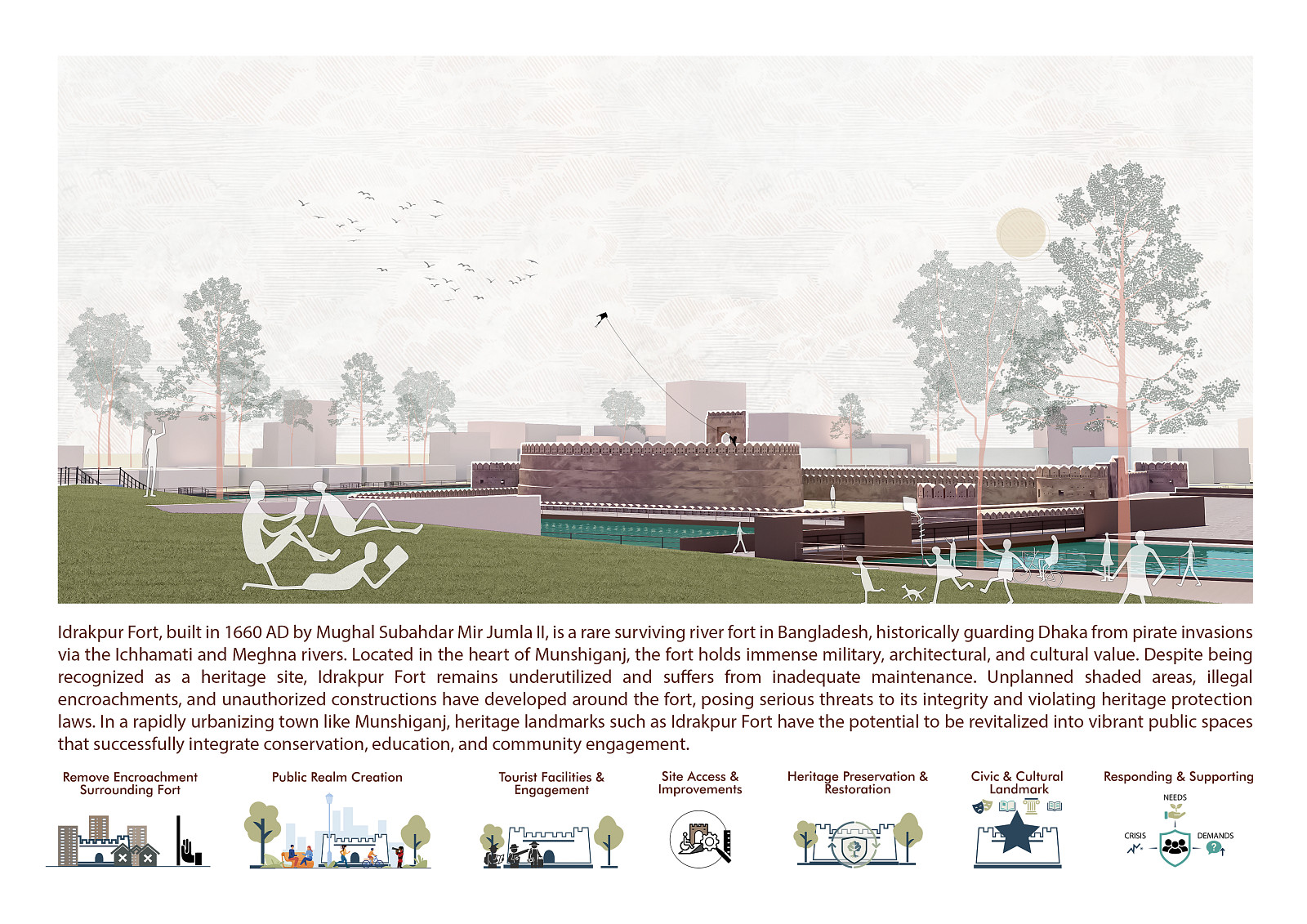
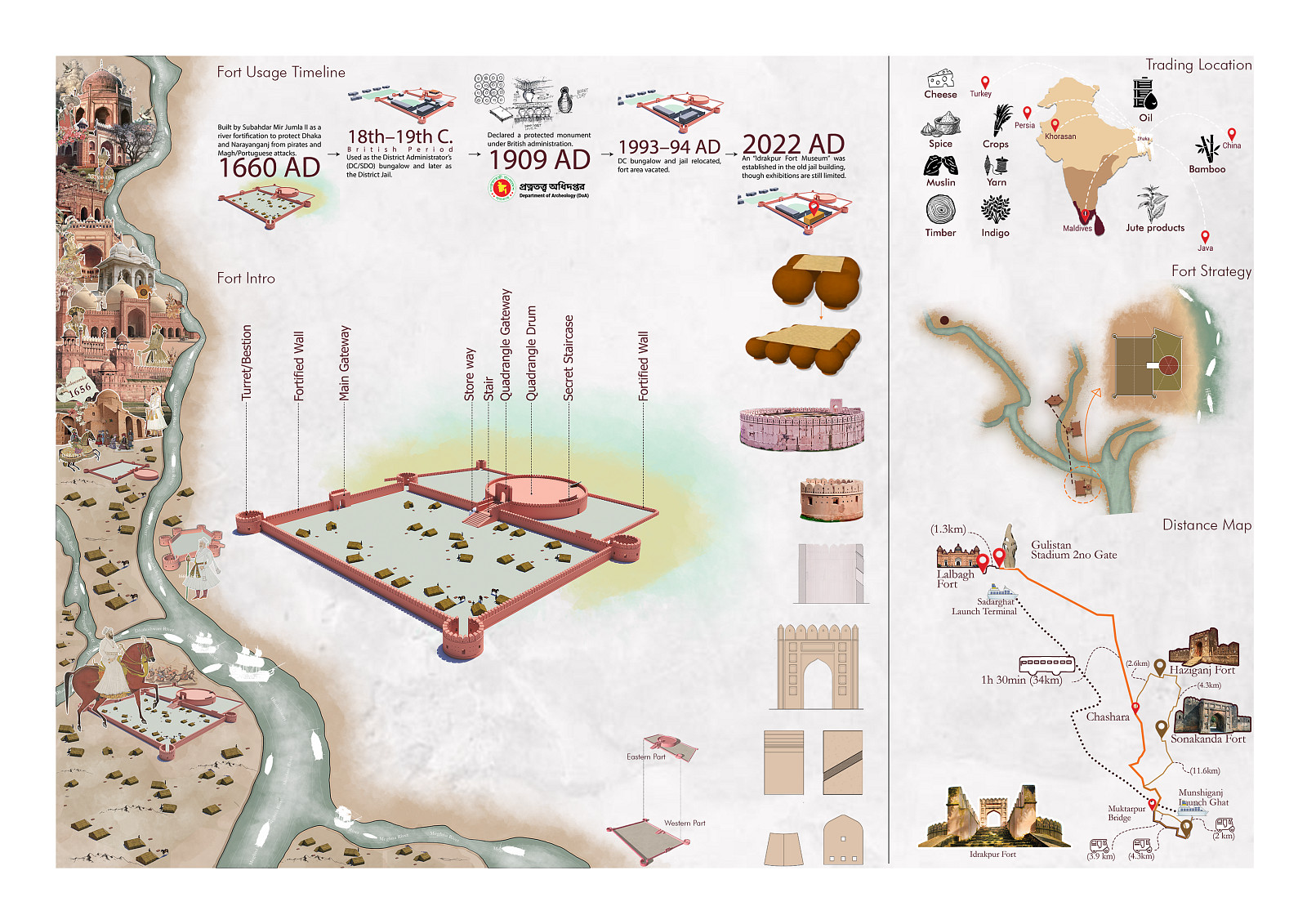
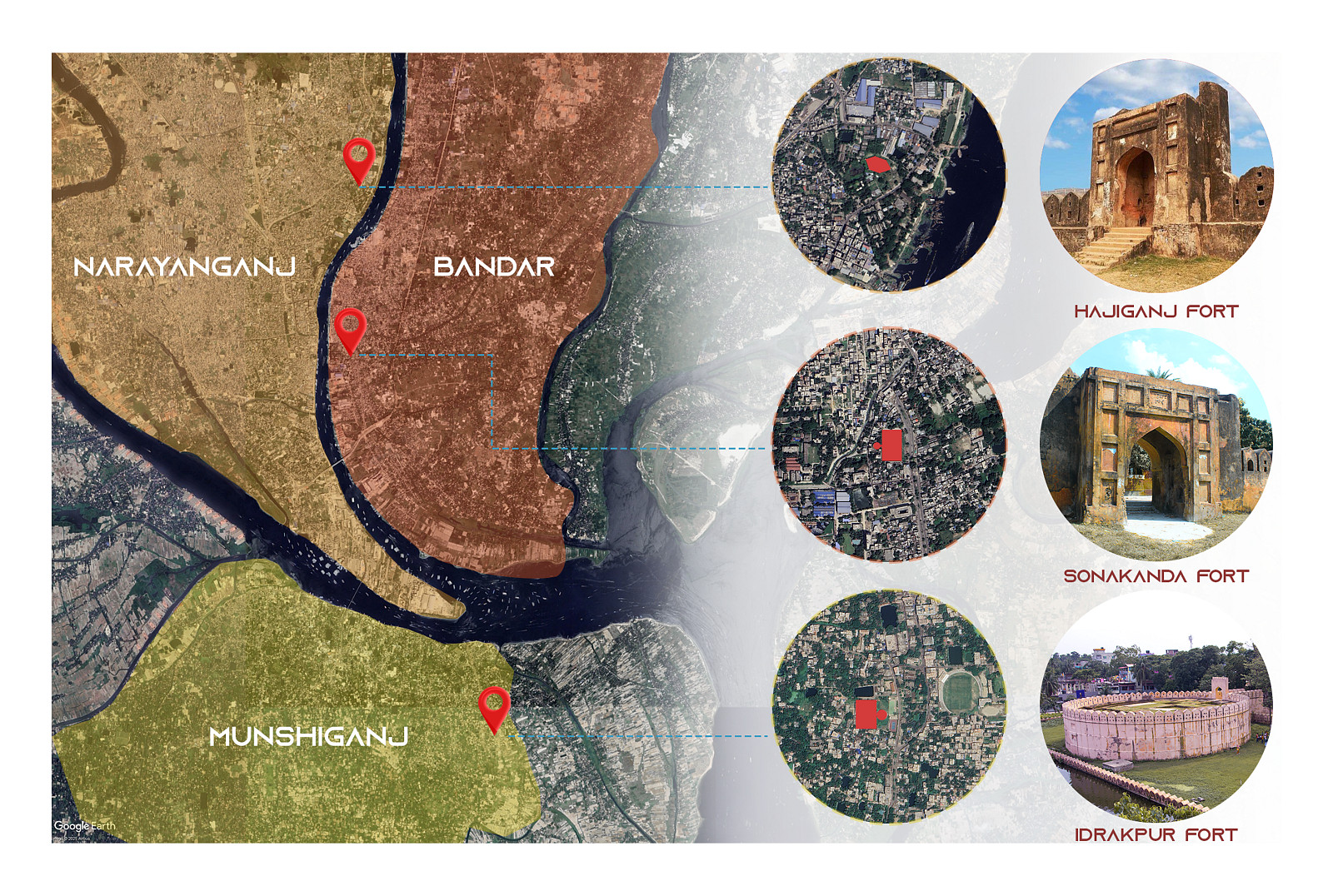
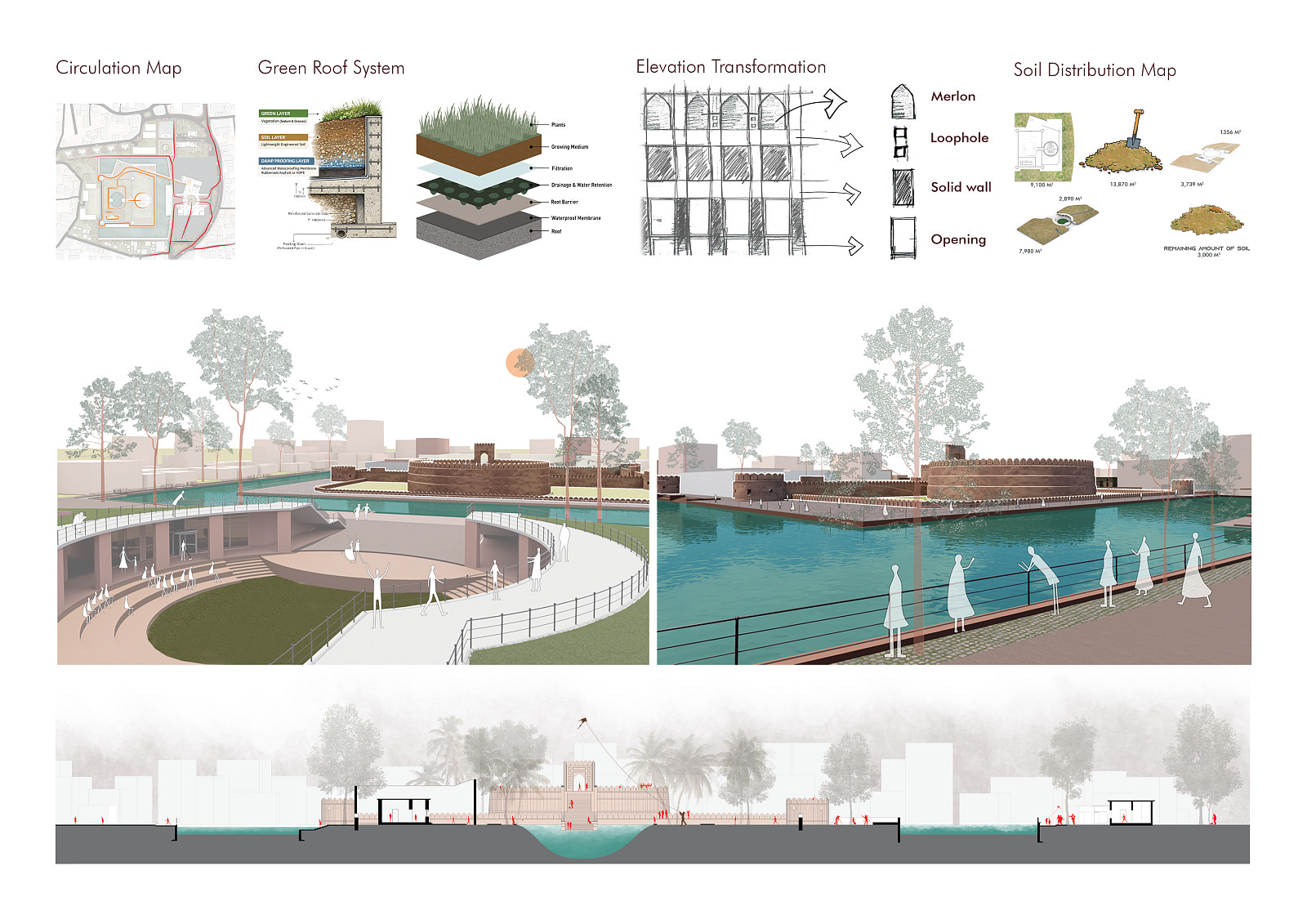
Idrakpur Fort, built in 1660 AD by the Mughal Subahdar Mir Jumla II in Munshiganj, Bangladesh, is one of the most significant surviving 'Water Forts' of the 16th century. Over centuries, rapid urbanization, illegal encroachments, and unauthorized constructions have isolated the fort from its community. The design concept, 'Dialogue Between Ruin & Revival (Reweaving Urban Memory)', creates an active dialogue between past and present. Rather than treating the existing ruin as an isolated historical object, the design reactivates it as a dynamic carrier of memory that addresses surrounding urban chaos and unplanned growth. The conceptual architectural response derives from the fort's original essence: Water (river defense identity), Defense (military history), and Interpretation (translating heritage for modern generations).
Technické informace
Site area is 16.27 acres. The project type is Conservation, developed as a thesis (X - Thesis design studio). To respect the historic fabric and maintain the visual prominence of the fort's bastions, the newly proposed archaeological museum adopts a low-height, partially sunken architectural form. This strategic intervention ensures that the monument remains completely unobstructed from the urban core, seamlessly reweaving the fort back into the context of contemporary public life.

Copyright © 2026 INSPIRELI | All rights reserved. Use of this website signifies your agreement to the Terms of Use, Privacy Policy, and use of cookies.